Custom Umbrellas for Healthcare Outreach
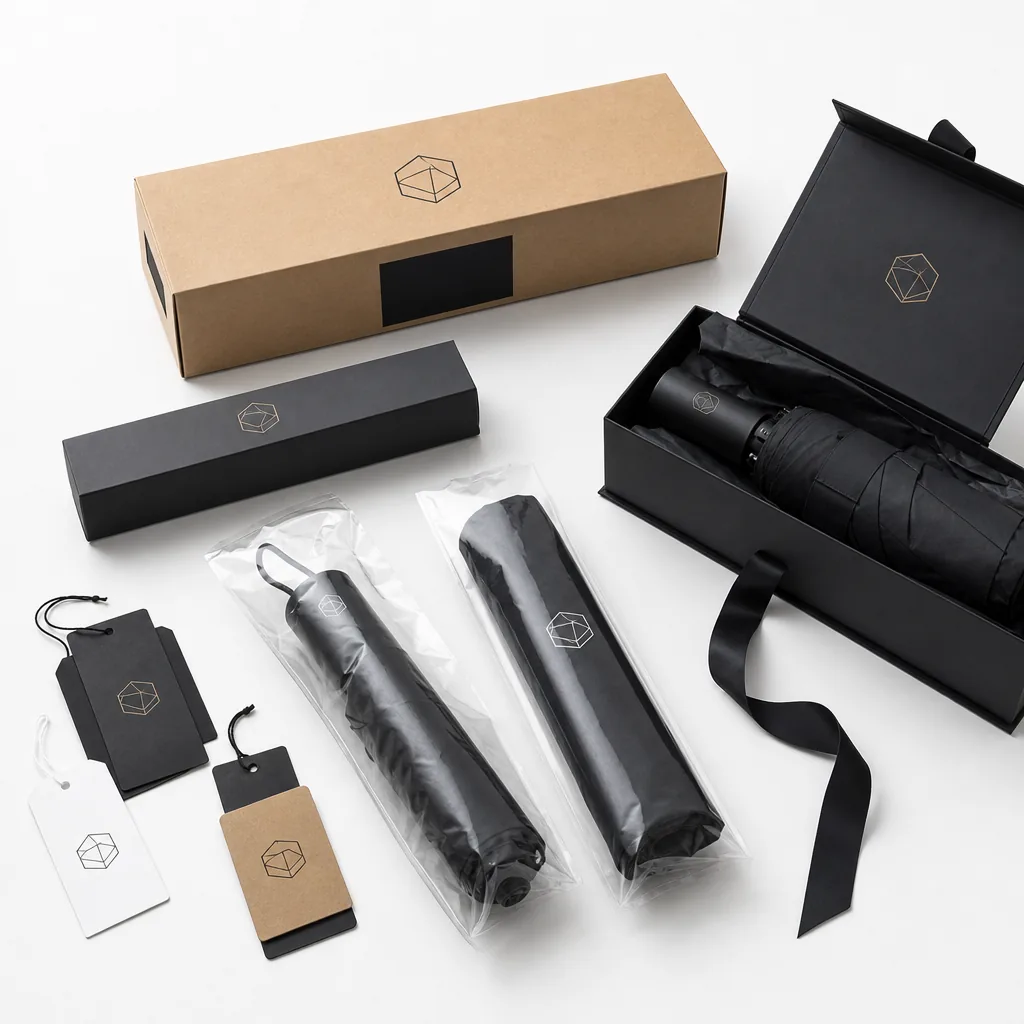
Healthcare campuses need umbrellas that hold up to constant handoffs, weather changes, and branding standards without creating extra maintenance work. When we build healthcare umbrellas for hospitals, clinics, and outreach teams, we focus on frame strength, quick-dry fabrics, clean logo placement, and packaging that arrives ready for campus distribution. The real challenge is balancing patient-facing presentation with durable construction and delivery terms that fit procurement timelines.
Where Healthcare Umbrellas Add Real Operational Value
The operational value of healthcare umbrellas is at the point of movement, not in the gift bag. Entrances, shuttle stops, and the walk from parking to clinic all create the same problem: people arrive wet, carrying paperwork, or helping a family member, and the umbrella has to be easy to open, easy to hand off, and not feel flimsy in a crosswind. For that reason, healthcare buyers usually favor 21" or 23" automatic-open models with fiberglass ribs, 190T or 210T pongee, and a clean vented canopy over novelty shapes or oversized handles. Patient outreach umbrellas work best when they are simple to operate with one hand, because volunteers and front-desk staff are not going to train anyone on a complicated mechanism.
Branded campus umbrellas also have to look controlled under real use. A hospital logo on a straight, well-cut panel reads professional; a wrinkled canopy with weak stitching does not. For outdoor volunteer events, screening days, and donor drives, we usually recommend auto-open-close or manual-open styles depending on the audience, with UPF 50+ umbrellas if the site has long sun exposure. The practical choice is a double-canopy vented windproof build in 23" to 27" sizing, not because it is flashy, but because it holds up when staff are guiding visitors across open lots or standing under temporary tents. OEM promotional umbrellas for healthcare are more about durability, weight, and predictable stocking than extra features that add failure points.
Inventory reliability matters more than almost anything else. A clinic chain or public health team does not want a one-off color that can never be repeated, and they do not want to reorder after a short run disappears. Our standard practice is to lock the canopy material, rib count, and print method early so the same spec can be reordered without requalification, which is why healthcare umbrellas fit better into procurement than trend-driven promo items. For patient outreach umbrellas included in kits, buyers usually want packed size, carton count, and lead time spelled out clearly, along with AQL 2.5 inspection and a stable MOQ. If the program needs FOB or DDP delivery, the umbrella should still be boring in the best possible way: consistent, easy to distribute, and ready when the next outreach day is scheduled.
Material and Construction Choices for Frequent Public Use
For healthcare umbrellas, the frame choice should be driven by how often the umbrella is carried, opened, and walked across a campus, not by catalog specs alone. Fiberglass frames are the better default for patient outreach umbrellas and branded campus umbrellas because they flex under gusts, come back without staying bent, and do not produce the sharp rattling that steel can create when staff are moving between buildings. Steel still has a place on lower-cost OEM promotional umbrellas or in static distribution programs where price matters more than daily handling, but it is heavier, louder, and more likely to feel harsh in the hand after repeated use. On open medical campuses, that difference matters because people notice weight and balance before they notice canopy graphics. Rib count also changes the experience: 8K umbrellas are simpler, lighter, and usually adequate for compact folding units, while 16K builds distribute load better, hold a rounder canopy in wind, and are usually the safer choice for large-panel branded umbrellas used by staff, volunteers, and patients.
Canopy fabric matters just as much as the frame. 190T pongee is common for cost-controlled programs because it prints well, dries quickly, and keeps weight down, but 210T pongee is the stronger choice when umbrellas will be handed out in volume and then used for months on a medical campus. The tighter weave gives a cleaner hand feel, better opacity for logos, and slightly better resistance to abrasion from repeated folding and storage in cars, carts, or reception areas. UPF 50+ umbrellas are worth specifying when the walk between parking, parking shuttles, clinics, and outpatient buildings is long enough that people spend real time in direct sun, especially in summer or in regions with strong UV exposure. In that setting, the canopy is not just a rain cover; it is a basic comfort item that helps staff and visitors stay cooler and reduces complaints about glare and heat during outdoor wayfinding.
For this use case, I would avoid overbuilding with unnecessary weight and instead tune the umbrella to the campus workflow. A 16K fiberglass frame with 210T pongee is a strong balance for frequent public use because it handles wind, feels quieter in motion, and still stays manageable for older patients or visitors carrying bags and paperwork. If the program is more about mass distribution than daily commuting, an 8K design can still work, but it should be paired with a well-stitched canopy, reinforced stress points, and a grip that is easy to hold with one hand. Our standard practice is to match the spec to the walk pattern: short transfer from parking to entrance can tolerate a lighter build, while long cross-campus routes justify UPF 50+, better rib flex, and a more durable canopy so the umbrella remains useful after the first storm instead of becoming a throwaway item.
Branding Rules for Clinical and Community Settings
For healthcare umbrellas, the safest branding approach is low-contrast and disciplined. On campuses, clinics, and donation events, I would avoid high-gloss black-on-white logos that read like retail advertising. A muted base such as navy, charcoal, forest green, slate blue, or warm gray usually works better, especially on branded campus umbrellas used by staff, volunteers, and outreach teams. If the umbrella is meant for patient outreach umbrellas or UPF 50+ umbrellas handed out at screenings, one logo location on a single panel or a small mark near the tie strap is usually enough; overprinting every panel makes the piece look commercial. ZheBrella’s standard practice is to match ink opacity to canopy color early, because a logo that looks sharp in art files can disappear on 190T pongee or show too aggressively on a light PVC canopy. The goal is visible identification, not billboard behavior.
Panel count matters more than most buyers expect. A 6K or 8K frame gives you wider panels, which makes a large logo easier to read, but the artwork sits closer to the seams and can distort if the panel is narrow at the crown; 10K or 16K constructions spread the logo across smaller panels, which is cleaner for subtle OEM promotional umbrellas but limits how much text you can use. For healthcare umbrellas, I recommend one-location printing on the leading panel for a logo plus a short web address, or two-location printing if you need a second mark on the opposite side for crowds and shuttle drop-offs. Keep the second placement smaller than the first, otherwise the umbrella starts to look like event merch instead of a controlled institutional item. The practical rule is simple: if someone should recognize the organization from 10 to 15 feet away, print one clear logo, not a wraparound design with too many words.
Purchasing Controls for Chain Facilities and Outreach Teams
For healthcare umbrellas, the buying process has to be tighter than it is for a one-off promo order. Chain facilities and outreach teams usually need repeatable SKUs, not random one-time specs, because procurement, stocking, and reorders all depend on the exact same canopy size, frame, handle, and print placement. In practice, that means defining the SKU before production starts: 21" or 23" for patient outreach umbrellas, a fixed mechanism such as manual or auto-open, one canopy fabric spec, one rib package, and one approved decoration method. ZheBrella’s standard practice is to lock those details into the PO so the factory does not substitute a cheaper shaft, lighter fabric, or different carton count after approval. If the buyer wants branded campus umbrellas to move through multiple hospital sites, the carton pack, inner packing, and master carton dimensions also need to stay consistent so receiving teams can store and redistribute units without rework.
MOQ matters because healthcare buyers often want controlled replenishment, not oversized inventory. A sensible order structure is sample first, then pre-production sign-off, then bulk release, especially when the umbrella carries a hospital logo, department name, or outreach message. Sample sign-off should confirm frame feel, open/close action, canopy color, logo size, and edge finishing before print proof approval is issued. Print proofs need to show the exact Pantone match or approved CMYK range, the artwork position on each panel, and the copy that will appear on patient outreach umbrellas, because small shifts become obvious on a large canopy. For OEM promotional umbrellas, facility teams should also specify the acceptable substitute rules in writing: whether an equivalent fiberglass rib is allowed, whether a carton count can change, and whether fabric weight can vary. Without that, reorders become inconsistent and internal approval gets slow.
Inspection standards should be explicit, not implied. AQL 2.5 is the right baseline for visible defects on healthcare umbrellas when the order is going into hospitals, clinics, or campus events, because the buyer needs a defensible quality gate for panel misprints, broken tips, loose stitching, crooked buttons, and carton damage. The inspection plan should define what is major, minor, and critical, and it should also state whether random samples are pulled from finished goods only or from packed cartons as well. Chain facilities usually care about steady delivery more than heroic customization, so the cartons, labels, and outer marks must stay repeatable across every shipment. If the SKU is approved once, the next run should match the first run unless the buyer issues a new spec revision. That is the difference between a usable procurement program and a constant exception process for healthcare umbrellas and other branded campus umbrellas.
Delivery Models for Hospitals, Clinics, and Events
For hospitals and multi-site clinics, FOB works best when procurement is centralized and the receiving team can consolidate cartons, inspect one lot, and distribute internally. That is usually the cleanest path for healthcare umbrellas because the buyer can control freight, customs, and inventory timing from one dock instead of pushing parcels to ten addresses. On standard replenishment, I would plan 25 to 35 days for production after deposit and approved samples, then the ocean transit or domestic line-haul on top. For branded campus umbrellas, FOB also makes sense when the buyer wants consistent packing, master cartons, and one AQL 2.5 inspection before release. In practice, this model is strongest for repeat orders of 1,000 units or more, especially when you are locking in a single panel color, handle style, and print method across a system.
DDP is the better fit when the program is distributed across outpatient centers, research buildings, or event teams that need patient outreach umbrellas shipped directly to each site. It reduces the internal workload on the buyer, which matters when the shipment includes gift kits, welcome bags, or conference packs that must arrive ready to hand out. Our standard practice at ZheBrella is to pre-pack these as individual polybags, then bulk them into labeled inner cartons so the receiving staff can count units without opening every box. For OEM promotional umbrellas, DDP is also the safer choice when the delivery window is narrow and the buyer does not want customs delays to hit a flu-season campaign or a storm-season response program. The tradeoff is that DDP needs cleaner address files, more exact carton dimensions, and earlier sign-off on artwork and packing lists.
The inventory strategy matters as much as the delivery term. I would keep spare stock equal to 10 to 20 percent of the forecast for healthcare umbrellas, because demand spikes are predictable: flu season, hurricane season, and last-minute community outreach events all pull units faster than a normal reorder cycle. That buffer also helps when you are mixing UPF 50+ umbrellas with standard rain models, since the canopy fabric and coating choices can change lead time if one SKU is constrained. For campuses, a practical replenishment plan is a 15-day trigger point for domestic DDP restocks and a 30-day trigger point for FOB reorders, with spare inventory stored in plain cartons rather than gift packaging so it can be converted quickly. If the program includes multiple sites, ship half the reserve as branded campus umbrellas and keep the rest as unprinted overstock for emergency use.
Frequently Asked Questions
What umbrella features matter most for hospital visitors and staff?
A simple auto-open umbrella with a stable fiberglass frame and quick-dry pongee is usually the best fit. If the campus has long outdoor walks, add UPF 50+ and a larger canopy diameter.
How can a healthcare buyer avoid inconsistency across reorders?
Lock the specification sheet to exact rib count, fabric weight, handle style, and print location before the first order. Reconfirm the approved sample on every repeat run and inspect to AQL 2.5 before release.
What umbrella size is best for hospital entrances and shuttle stops?
For covered walkways and quick patient transfers, 25-27 inch straight umbrellas are common because they are easy to hand out and store. If the goal is stronger rain coverage for valet or shuttle use, a 30-32 inch golf-style umbrella gives better protection.
What print method works best for clean healthcare branding?
For simple logos, screen printing or one-color transfer printing is usually the most cost-effective choice. If the design includes small text or multiple colors, a digital print panel is better, but minimum order quantities are often higher, typically 300-500 pieces per style.
What lead time should a distributor expect for a custom hospital umbrella order?
Most OEM umbrella orders take about 25-40 days after artwork approval and deposit, depending on order size and customization. If the order includes special fabric, custom handle colors, or individual packaging, plan for an extra 5-10 days.
Looking to Launch Your Custom Umbrella Line?
ZheBrella is a Zhejiang-based OEM/ODM umbrella manufacturer with 17 years of export experience. Free design, low MOQ from 100 pieces, windproof construction, full-color print.
Get Free Quote Now »People Also Search For
Related Articles

Branded Umbrellas for Patient-Transport Teams
Plan healthcare-campus umbrellas with UPF 50+, easy-grip handles, durable pongee canopies, and procurement rules that ke...
Read More »
Umbrella Programs for Campus and Visitor Transportation Services
Specify umbrellas for campuses and visitor transport, covering passenger comfort, weather exposure, branding options, an...
Read More »Umbrella Programs for Cruise Lines and Shore Excursions
Plan umbrella programs for cruise guests and shore teams with windproof specs, fast replenishment, and branding suited t...
Read More »