GRS (Global Recycled Standard) Certification for Umbrella Factories
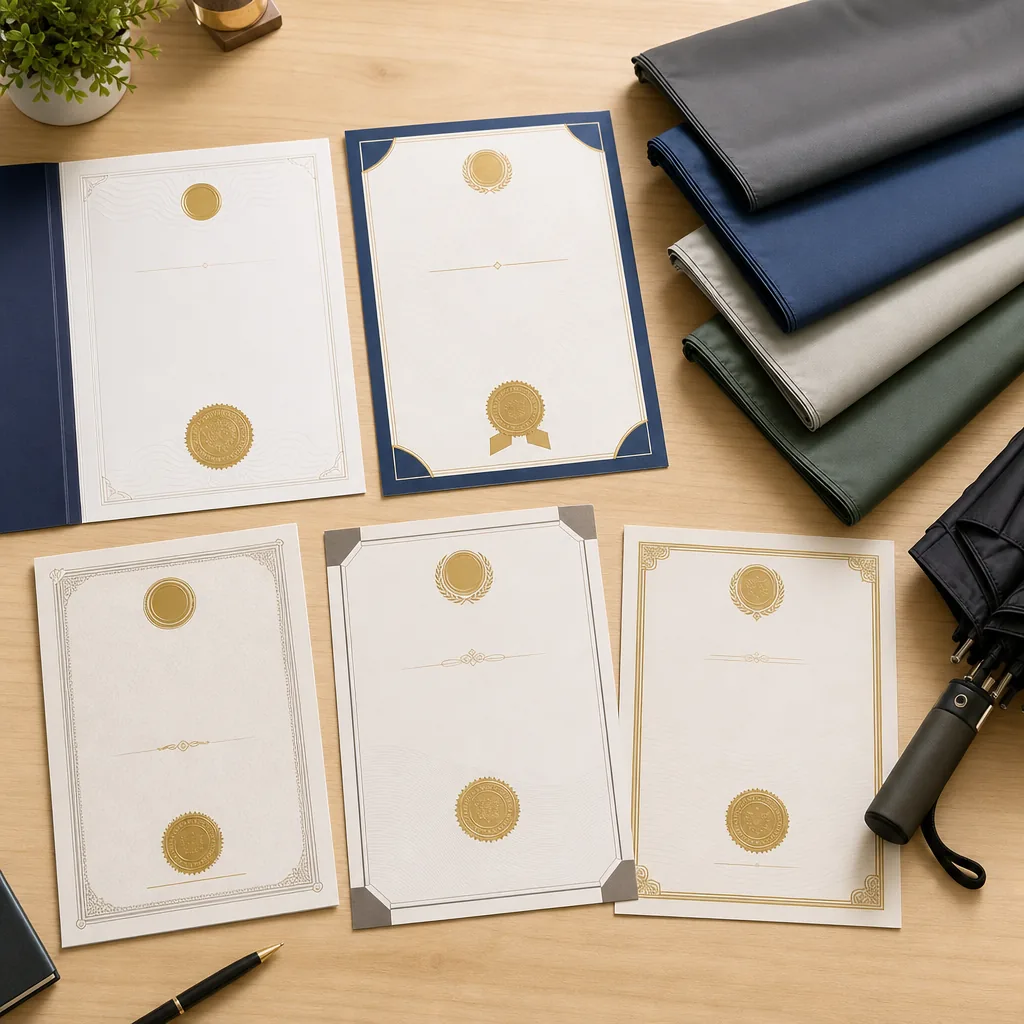
For buyers sourcing from Asia, the real challenge is not finding a supplier that says it uses recycled materials, but proving that the claim holds from yarn to finished umbrella. A GRS certification umbrella gives that proof when the factory can trace recycled content, document chain of custody, and pass third-party audits on-site. That matters because packaging, panels, handles, and trims often come from different mills and subcontractors.
What GRS certifies
GRS certification umbrella claims are not just about saying a canopy contains recycled polyester. The Global Recycled Standard checks the recycled content itself, then follows that material through the chain of custody from the recycler to the yarn mill, fabric converter, and final umbrella assembly. In practice, that means a factory has to show traceable inputs, controlled production records, and proper segregation or mass-balance handling depending on the certified scope. Without that paper trail, a recycled canopy claim is just marketing copy. A legitimate GRS umbrella supplier should be able to support the claim with a GRS transaction certificate tied to the specific shipment, style, and volume.
GRS also looks beyond the material content. A Global Recycled Standard factory has to meet social and environmental criteria across the supply chain, including restrictions on hazardous chemicals, wastewater management, worker health and safety, and labor practices. For umbrellas, that matters because the product often combines recycled fabric with non-recycled parts like frames, handles, and packaging, so auditors care about how the certified scope is defined and whether the non-certified components are properly excluded from the claim. A real recycled umbrella certification is therefore a compliance system, not a label. Buyers should ask for the scope certificate, the transaction certificate, and evidence that the claimed recycled percentage matches the order documents and production records.
Scope certificate vs transaction certificate
A scope certificate and a transaction certificate are not the same thing, and buyers who treat them as interchangeable usually create avoidable delays. A scope certificate proves the factory is inside the GRS system: the site has been audited, its material flow is controlled, and it is allowed to process and trade recycled content under the standard. In other words, it answers the question, “Is this a Global Recycled Standard factory?” For a GRS certification umbrella order, that matters because the facility must be able to segregate recycled yarn, track input/output, and keep the paperwork clean from cutting room to packing. Without a valid scope certificate, the factory cannot claim GRS status for the product, even if it can source recycled fabric from a supplier.
The transaction certificate is the shipment-level proof. It is issued for a specific order after the certified transaction is verified, and it ties the recycled-content claim to actual production and shipping documents. That is why a GRS umbrella supplier cannot just show a scope certificate and call the job certified. If the buyer needs a recycled umbrella certification for customs, brand compliance, or retailer onboarding, the transaction certificate is the document that proves the finished umbrellas in that PO are covered. It should match the factory name, buyer, product description, quantities, and shipment references. If any of those details drift, the certificate can be rejected or the claim becomes unusable downstream.
In practice, the scope certificate tells you the factory is eligible; the transaction certificate tells you this batch is covered. That distinction matters most when recycled content is mixed with virgin material, because the chain of custody has to be documented at each step. On the shop floor, we treat it like a controlled material system: incoming recycled yarn is tagged, cutting tickets are separated, and the shipment file is closed only after the final packing list, invoice, and production record line up. For a GRS certification umbrella program, buyers should ask for both documents up front, then verify the certificate number, validity dates, and the exact company name against the shipment paperwork. If one of those pieces is missing, the order is not really certifiable, regardless of what the sample looks like.
Reading a GRS certificate
A GRS certification umbrella claim starts with the name on the certificate. Check the certified entity exactly as it appears on the invoice, packing list, and contract, because a valid recycled umbrella certification is tied to a specific legal company, not to a brand name or a trading alias. If the document shows a different factory, exporter, or agent, you should treat it as a different scope. For a Global Recycled Standard factory, the product scope matters just as much: the certificate should name the relevant category, such as umbrellas, finished accessories, or textile components, and it should not be limited to unrelated items like bags or apparel. If the scope only covers fabric supply, that does not automatically make the finished umbrella claim valid. In practice, I check whether the certified entity is the actual GRS umbrella supplier, whether the product category matches the order, and whether the recycled content claim can be traced through the paperwork without gaps.
Next, verify the validity dates and the certification body before you trust the certificate number. A real GRS certificate must be in date on the day of shipment or purchase, and the issuing body should be a recognized third-party certification body with traceable accreditation. If the certificate has expired, been suspended, or lists a body you cannot verify, the document is useless for compliance review. For finished goods, the GRS transaction certificate is the stronger proof because it connects a specific lot of umbrellas to recycled material inputs through the chain of custody; without it, the certificate alone only proves that the company was certified, not that your shipment qualifies. For procurement teams, this is the difference between a paper claim and a defensible file. A proper GRS certification umbrella review always ends with three checks: who is certified, what products are in scope, and whether the dates and certifier still hold on the shipment date.
Why buyers increasingly require it
Retailers are asking for GRS certification on umbrellas because it gives them a paper trail they can defend when sustainability claims get audited. A GRS certification umbrella is not just “made with recycled material”; it ties the recycled input back through the supply chain, checks chemical restrictions, and requires chain-of-custody control at each conversion step. That matters when buyers are trying to support corporate ESG targets, private-label sustainability programs, or public commitments to reduce virgin polyester and plastic consumption without getting accused of greenwashing. In practice, the certificate becomes part of the commercial file alongside the PO, spec sheet, and test reports.
A Global Recycled Standard factory is easier for procurement teams to approve because the risk is lower. They can ask for the GRS scope certificate, verify the transaction certificate for each shipment, and confirm that the recycled content claim matches the actual production lot. That is a different level of control from a generic “eco umbrella” statement on a sales sheet. For brands selling through department stores, airport retail, or promotional channels, this documentation is often the difference between getting listed and getting rejected by compliance. It is especially important when the umbrella uses recycled pongee, recycled polyester canopies, or recycled plastic components in handles and sleeves.
For buyers, the main value of a GRS umbrella supplier is not the label itself, but the discipline behind it. The standard forces clearer material traceability, better segregation of certified and non-certified goods, and more realistic claims about recycled content percentages. That reduces disputes later when a retailer’s legal team asks for proof or when an end customer requests documentation for a sustainability report. The recycled umbrella certification also helps when companies compare sourcing options across factories in China, Vietnam, or elsewhere, because they can benchmark on the same third-party standard instead of relying on self-declared claims. In this market, verified documentation is becoming a purchasing requirement, not a nice-to-have.
Limits of certification
A GRS certification umbrella proves the recycled content trail, not that the umbrella will survive abuse on its own. The certification audit is about the chain of custody: recycled polyester in the canopy, recycled plastic in selected components, documented segregation on the line, mass balance records, and a valid GRS transaction certificate. If a buyer wants a true recycled umbrella certification claim, they still need the paperwork to match the actual lot, colorway, and shipment, because a Global Recycled Standard factory can only sell the claim when the inputs and processing records line up. That matters for a GRS umbrella supplier, but it does not replace material selection or engineering. A 190T recycled pongee canopy with a fiberglass frame can be a better product than a heavier-looking alternative if the stitch density, resin cure, and rib geometry are right.
The hard limit is durability: GRS does not test whether the frame survives 50 mph gusts, whether the auto-open mechanism jams after 3,000 cycles, or whether a UV coating peels after summer use. That still has to be controlled by incoming inspection, in-process checks, and final AQL 2.5 sampling. On the floor, I would still inspect rib straightness, tip retention, canopy seam tension, and open-close alignment, because recycled yarn does not forgive sloppy cutting or weak stitching. A GRS certification umbrella can be fully compliant and still fail a retail complaint if the ferrule cracks, the canopy shrinks, or the print delaminates. The right standard is both: certification for content and traceability, then normal umbrella QC for function, wind resistance, and finish.
Frequently Asked Questions
What's the difference between a GRS scope certificate and a transaction certificate?
A scope certificate shows a facility is GRS-certified for certain products; it does not prove your order used recycled material. A transaction certificate (TC) is issued for a specific shipment and is the document that actually verifies the recycled content you bought. Always ask for the TC.
Does GRS guarantee my umbrella is high quality?
No. GRS verifies recycled content, chain of custody, and certain social/environmental criteria — not product performance. A GRS umbrella can still have a weak frame. Treat sustainability certification and quality inspection (AQL) as two separate checks.
What documents should I request before placing a recycled umbrella order?
Ask for the factory's GRS scope certificate, the transaction certificate for the shipment, and the certificate number on the recycled material input. For large orders, buyers often also request the latest audit date and the certified product range to confirm the style is covered.
Does a GRS certificate prove the umbrella contains 100% recycled materials?
No. GRS verifies recycled content and traceability, but the actual recycled percentage can vary by component and product. Many umbrella programs use recycled polyester canopy fabric while handles, shafts, or tips may still be non-recycled.
How long does it usually take a factory to prepare GRS-compliant umbrella production?
If the factory is already certified, sample and production preparation is often 2 to 4 weeks depending on material availability. If recycled fabric needs to be sourced and verified, the timeline can extend to 4 to 8 weeks before mass production starts.
Looking to Launch Your Custom Umbrella Line?
ZheBrella is a Zhejiang-based OEM/ODM umbrella manufacturer with 17 years of export experience. Free design, low MOQ from 100 pieces, windproof construction, full-color print.
Get Free Quote Now »People Also Search For
Related Articles
RPET Recycled Umbrellas: Buyer Specs for Sustainable Lines
Compare RPET pongee, recycled claims, coatings, frames, and packaging so eco umbrella programs meet price targets, lead ...
Read More »How to Evaluate Umbrella Factory Capacity Before Ordering
Learn how to verify an umbrella factory’s real output, staffing, and QC capacity so you can match MOQ, lead time, and or...
Read More »
Private Label Umbrella Assortments for Retail Buyers
Plan retail umbrella assortments with size mix, fabric specs, packaging, MOQ tiers, inspection points, and landed-cost l...
Read More »