How to Evaluate Umbrella Factory Capacity Before Ordering
Before you place a program order, the real question is whether the factory can turn your spec into finished umbrellas at the pace, quality level, and consistency your launch needs. On the floor, capacity is not just line count; it depends on sewing bottlenecks, frame supply, labor skill, QC staffing, and how much of the schedule is already committed to other buyers. For buyers comparing MOQ, lead time, and risk, understanding umbrella factory capacity is the difference between a smooth shipment plan and a missed season.
What factory capacity should buyers verify
Buyers should not stop at the headline monthly output number, because that is usually the easiest figure for a factory to inflate. Real umbrella factory capacity has three layers: normal monthly output, peak seasonal output, and true OEM/ODM capacity. Normal output tells you what the plant can make on a steady schedule with existing labor. Peak seasonal output is what it can push during rainy season or year-end promotional spikes by adding overtime, temporary workers, or second-shift packing. True OEM/ODM capacity is narrower and more honest: it is the volume the umbrella OEM supplier can sustain while still handling custom frames, private molds, logo printing, color matching, and packaging changes without breaking lead time control.
The practical production capacity audit should start on the floor, not in the sales deck. Count sewing lines, measure how many canopy panels each line finishes per shift, and check whether those lines are balanced with rib assembly stations. A plant can have plenty of sewing machines but still choke if rib riveting, stretcher fitting, or shaft insertion is understaffed. Packing throughput matters just as much; if cartons, polybags, hangtags, and palletizing cannot keep pace, finished umbrellas pile up and ship dates slip. For MOQ planning, ask for the maximum output by size and mechanism separately, because a 21-inch manual umbrella and a 30-inch auto-open-close model do not consume the same labor.
For a real umbrella factory capacity review, I would verify three numbers against one another: stated monthly output, weekly peak output, and the actual line balance under a live order mix. Then ask for the station count for sewing, rib assembly, final testing, packing, and carton loading, plus the defect-control system used at AQL 2.5. If a factory cannot show stable staffing, spare machine coverage, and a repeatable inspection routine, its capacity is not dependable even if the brochure number looks high. The useful question is not “How many pieces can you make?” but “How many acceptable pieces can you ship on time when the order includes branding, mixed colors, and strict packaging specs?”
How to inspect capacity during a supplier audit
Start with hard numbers, not a sales deck. A real umbrella factory capacity check begins with machine counts that match the product mix: tube cutting, rivet setting, automatic frame assembly, canopy cutting, sewing, printing, and final packing. If a supplier says they can handle 100,000 pieces a month, ask how many lines are dedicated to 21" folding umbrellas versus 27" golf umbrellas, how many fiberglass rib stations are running, and whether the factory is doing one shift or two. For an umbrella OEM supplier, that split matters more than the headline number, because 8K manual umbrellas and 16K vented golf models do not move through the same bottlenecks. A proper production capacity audit also checks the sample room separately, since a busy sample-room team can hide a weak bulk line until your PO lands.
Verify the labor side with the same discipline. Ask for the actual headcount by process: cutting, sewing, printing, frame assembly, inspection, and packing, plus shift schedules and overtime policy. If the factory claims fast MOQ planning and short lead time control, have them show recent output records by week, not just average monthly output. Photos should include machine nameplates, work-in-process racks, and finished-goods storage with date stamps; video calls should walk through the line in real time, not a pre-recorded montage. On-site evidence is better: see how many operators are assigned per table, whether quality checkpoints are embedded after stitching and after open-close testing, and whether AQL 2.5 inspection is actually written into the flow rather than mentioned only in a quote.
Do not skip the documentation trail, because umbrella factory capacity is easy to overstate on paper and hard to fake in a live audit. Ask for production logs, delivery records, and line balance charts that show daily throughput against confirmed orders. A credible factory can explain where capacity is constrained: printing curing time, canopy sewing labor, frame sourcing, or carton packing space. If they cannot show those bottlenecks, they probably have not measured them. The best buyers request a photo set, a live video walk-through, and one recent order file with inspection reports so they can compare claimed output against actual shipment history before they commit to volume or lock in a lead time.
Which specifications slow production down
The slowest jobs are usually the ones that look simple on a spec sheet but force extra handwork on the line. Auto-open and auto-open-close mechanisms add spring loading, trigger testing, and more reject risk than manual open frames; if the button travel is off by even a small amount, the shaft feels sticky or the unit fails after a few cycles. A double-canopy windproof build is slower again because you are assembling more ribs, more vents, and more stitching points, so the frame station and canopy sewing station both lose speed. When customers ask an umbrella OEM supplier to quote those features without checking the actual umbrella factory capacity, they usually underestimate how much the mechanism choice changes takt time and final output.
Fabric choice is another real bottleneck. Pongee 210T handles better and feels denser than 190T, but it also tends to tighten sewing tolerances, especially on curved panels and seam alignment; 190T is easier to run fast, while 210T can expose cutting drift and needle damage sooner. Pantone color matching slows things further because it is not just ink on fabric; it is shade control across panels, strike-off approval, and rework when batch dye lots shift. In a production capacity audit, I look at how many custom colors, print positions, and canopy constructions are mixed in the same order, because that mix usually matters more than the headline quantity for lead time control.
The right way to judge umbrella factory capacity is to separate theoretical output from usable output. A factory may say it can make 20,000 pieces a day, but once you add custom panels, multi-color printing, and inspection at AQL 2.5, the real number can fall sharply because sorting, rework, and packing all consume labor that the sales team never counts. MOQ planning should match the slowest shared process in the order, not the prettiest line item on the quote; otherwise a small batch of complex umbrellas can block larger standard runs and push the shipment window back.
How capacity affects MOQ and lead time
Umbrella factory capacity is not just a number on a brochure; it is the real limit on how many frames, canopies, and finished units can move through cutting, sewing, assembly, and inspection without slipping. For a basic 23" manual umbrella with a standard 190T pongee canopy, steel ribs, and one-color screen print, a competent umbrella OEM supplier can usually quote a manageable MOQ and a straightforward schedule: sample approval in about 7 to 10 days, bulk production in roughly 20 to 30 days, and an order size that stays efficient because the materials and tooling are already in the normal run. Once you move into auto-open-close mechanisms, fiberglass ribs, or 210T fabric with UV coating, every step gets slower because the line needs extra setup, more QC checks, and tighter lead time control.
A production capacity audit should separate true throughput from promised throughput. If the factory is already running retail programs, export cartons, and AQL 2.5 inspections at full tilt, a large branded order may force a higher MOQ just to justify the changeover loss, especially when you need custom canopy colors, pantone matching, bent handles, or special packaging. In practice, standard bulk programs often sit in the 1,000 to 5,000 piece range with 25 to 35 day lead times after sample approval, while highly customized work can push MOQ to 3,000 to 10,000 pieces and stretch total timing to 45 to 60 days because sampling, lab dips, frame testing, and print alignment all add friction. The more unique the build, the more umbrella factory capacity gets consumed by setup instead of output.
The best way to read a supplier’s capacity is to ask where the bottleneck sits: frame welding, panel cutting, sewing line balance, or final packing. A plant with enough sewing heads but weak rib assembly will still miss dates, even if it looks busy on paper. For buyers, that means MOQ planning and lead time control should be tied to the exact construction: 8K or 10K standard foldables are easier to schedule than 16K vented storm umbrellas with double-canopy vents, and a simple POE promo umbrella is faster than a sublimated golf model with Teflon finish. If the supplier cannot show line-by-line output, sample turnaround, and weekly shipment history, treat the quoted capacity as marketing, not production truth.
What to include in a supplier capacity request
The capacity request should start with hard production numbers, not vague claims. Ask the umbrella factory capacity by product family: straight umbrellas, folding umbrellas, golf umbrellas, kids’ umbrellas, and promotional models, with monthly output split by 21"/23"/27"/30" sizes, 8K/10K/16K frame counts, and canopy material such as 190T or 210T pongee, POE, PVC, or EVA. A serious umbrella OEM supplier should also state how much of that output is manual open, auto-open, or auto-open-close, because the assembly bottleneck is not the same across mechanisms. If they cannot separate the lines, they do not really know their own throughput. I also ask for the percentage mix of fiberglass versus steel ribs, plus whether vented double-canopy windproof models are built on the same line or require a separate run.
A proper production capacity audit should include the inspection and packaging flow, not just sewing and assembly. Request the AQL 2.5 checkpoint layout: incoming frame inspection, in-process rib and canopy checks, final open-close cycle testing, carton drop testing, and finished-goods sampling before packing. Ask how many inspectors are assigned per shift, what daily reject rate they usually see, and whether they can hold lot traceability from cut panels to master cartons. Packaging capability matters because it often limits shipment volume; specify whether they can do individual polybags, hangtags, belly bands, color boxes, PDQ trays, barcode labels, and export master cartons, plus how many sets per carton for each umbrella size. If the supplier cannot show packaging line speed, your nominal production figure is not usable.
For MOQ planning and lead time control, ask for the minimum order by style, colorway, and print method, then have them separate standard stock runs from custom OEM runs with sublimation, screen print, or heat transfer. A real capacity sheet should also state FOB and DDP support by destination, port cut-off schedules, and how many days they need for sampling, pre-production approval, bulk production, and packing. I expect the answer to include current booked capacity versus open capacity for the next 30 to 90 days, because an umbrella factory capacity number is meaningless if 80 percent is already committed. If they can only quote a theoretical maximum but not a calendar-based slot, you still do not have lead time control.
Frequently Asked Questions
How do I know if an umbrella factory can handle a seasonal spike?
Ask for peak-season output by product type, not just annual capacity. A reliable factory should show line allocation, overtime plans, and finished-goods buffer space for high-volume months.
Does higher capacity always mean faster lead times?
Not necessarily. Complex builds such as double-canopy windproof umbrellas or custom printing can still extend lead time even in a large factory. Capacity matters most when it is matched to your exact spec mix.
What production records should I ask for to confirm actual umbrella output?
Ask for the last 3 to 6 months of daily output logs by SKU, line attendance records, and shipment records tied to purchase orders. A reliable factory should be able to show line-by-line capacity, rework rates, and how many units were shipped during peak months.
How much buffer should I build into lead time during the rainy season or holiday peak?
For repeat styles, buyers commonly add a 7 to 14 day buffer on top of the quoted production window. For new OEM programs with custom frames, fabric colors, or packaging, a 15 to 20 percent schedule buffer is safer during peak months.
How can I tell whether a factory can handle my MOQ without subcontracting?
Compare your MOQ to the factory's in-house cutting, sewing, frame assembly, and inspection throughput, not just total monthly capacity claims. If one process is outsourced or overloaded, ask for the subcontractor name, QC flow, and whether your order can still meet AQL 2.5 and the agreed ship date.
Looking to Launch Your Custom Umbrella Line?
ZheBrella is a Zhejiang-based OEM/ODM umbrella manufacturer with 17 years of export experience. Free design, low MOQ from 100 pieces, windproof construction, full-color print.
Get Free Quote Now »People Also Search For
Related Articles
Private Label Umbrella MOQ and Cost Planning for Buyers
Learn how MOQ, unit cost, and lead times interact when sourcing private label umbrellas, with practical numbers for bett...
Read More »
Private Label Umbrella Assortments for Retail Buyers
Plan retail umbrella assortments with size mix, fabric specs, packaging, MOQ tiers, inspection points, and landed-cost l...
Read More »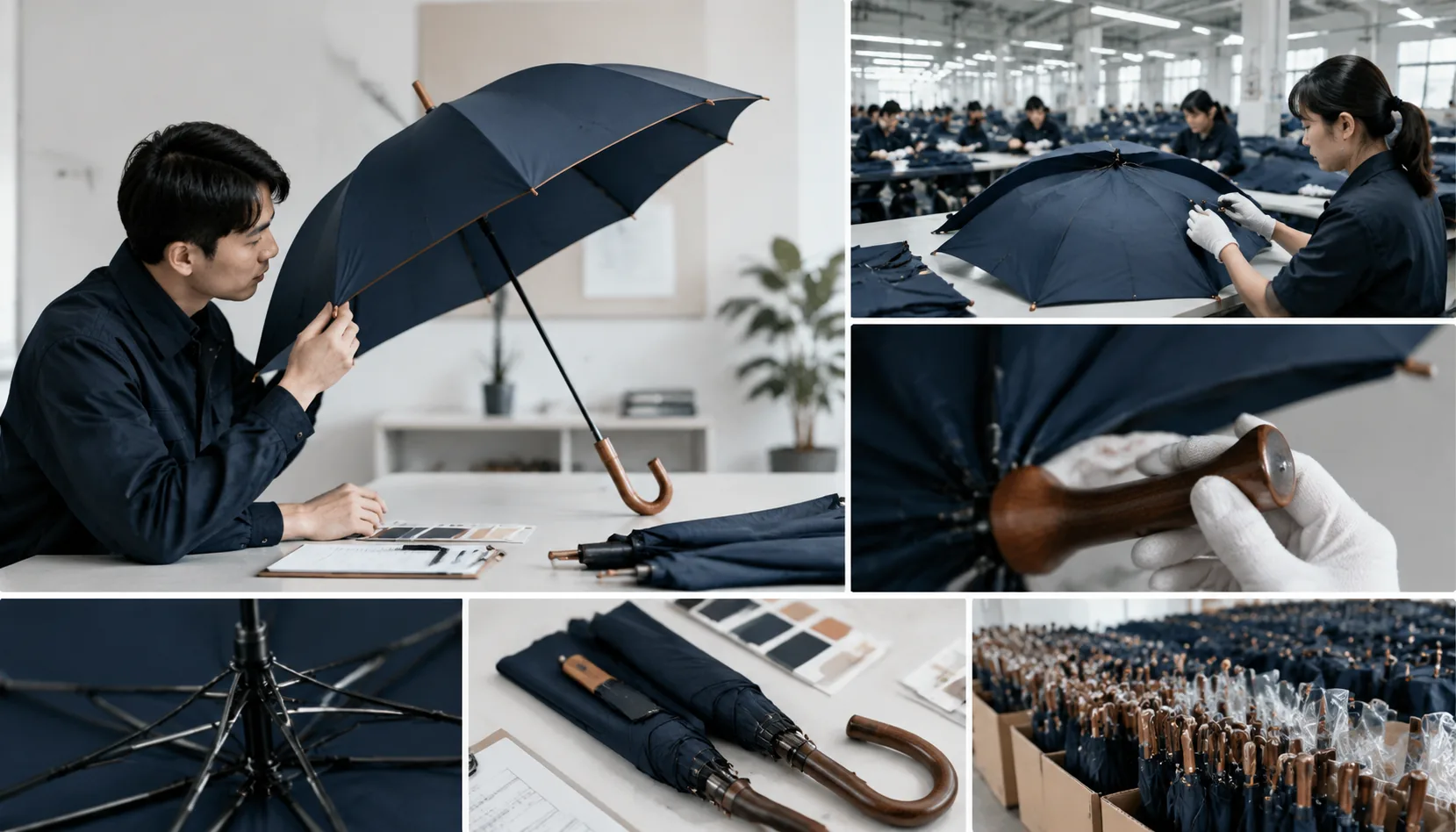
How to Audit Umbrella Samples Before Approving Mass Production
Use a practical sample-audit checklist to catch fabric, frame, print, and packing issues before umbrella mass production...
Read More »