How to Audit Umbrella Samples Before Approving Mass Production
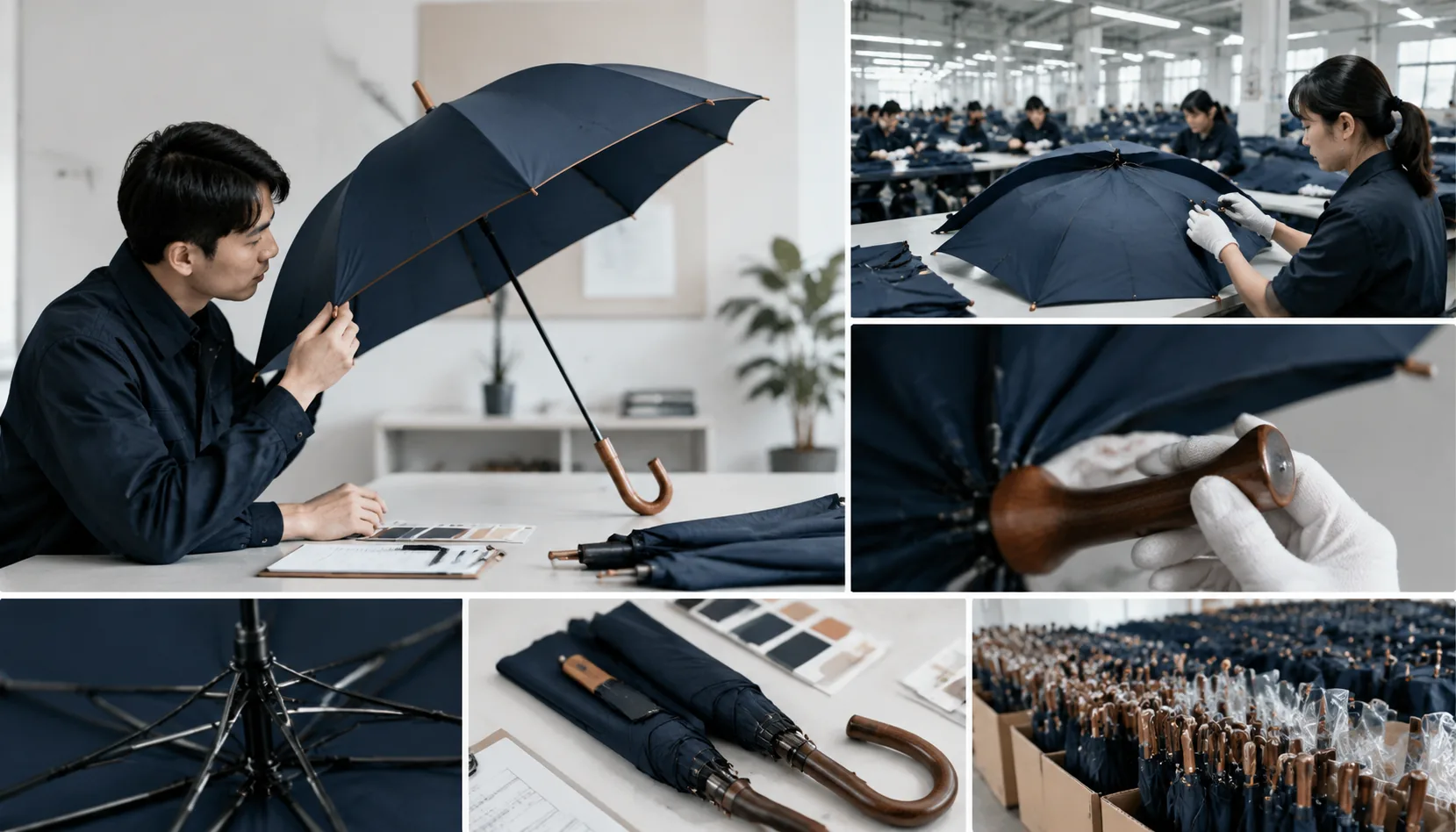
Approving an umbrella sample too quickly is how small mismatches in canopy color, frame gauge, print registration, or packing method turn into thousands of off-spec units on the production line. A disciplined umbrella pre-production sample audit lets buyers verify materials, opening action, stitching, logo placement, and carton details against the approved standard before we cut fabric and lock tooling on the factory floor.
Why Sample Approval Matters Before PO Release
The sample stage is where most avoidable umbrella failures are still cheap to fix. A proper umbrella pre-production sample audit catches the mistakes that do real damage later: a 23-inch frame built instead of a 21-inch compact, steel ribs substituted for fiberglass, or a canopy cut too shallow so the open diameter misses spec by 2 to 3 cm. Once fabric is bulk-cut and rib sets are plated, those errors stop being sample-room issues and turn into rework, delayed ETD, and margin loss. On the factory floor, I have seen buyers lose three weeks because the approved artwork fit an 8K panel layout, but production used a different arc and panel width. That is exactly why a disciplined sample approval checklist matters before PO release, not after deposit is paid and materials are already moving.
Color and material mistakes are even more expensive because they multiply across every unit. A navy logo that looks acceptable on screen can shift badly on black pongee 190T/210T if the print method, white underbase, or Pantone target was not locked at sample stage. The same goes for canopy hand feel and performance: 190T pongee, 210T pongee, POE, and recycled PET all tension differently on the frame, so buyers should confirm drape, stitch density, water repellency, and panel alignment before signing off. If the program includes an auto-open shaft, run an auto-open mechanism test for repeated cycles and check spring force, runner travel, and lock position consistency. These are basic umbrella quality control points, but skipping them is how a clean-looking prototype turns into a bulk order with high defect rates.
Packaging is the last place buyers underestimate risk, and it often causes the most frustrating claims because the umbrella itself may be fine. A wrong hangtag, barcode, warning label, or carton assortment can trigger relabeling at destination, Amazon chargebacks, or customs delays under DDP shipments. Our standard practice is to treat the sample as both a product approval and a packing approval, including inner sleeve material, insertion direction, master carton count, carton marks, and drop resistance. When this is documented upfront, the bulk inspection can focus on execution under AQL 2.5 inspection instead of arguing over moving specifications. A thorough umbrella pre-production sample audit shortens approval loops, protects ship dates, and gives the buyer a measurable reference for final acceptance.
Check the Core Build: Frame, Ribs, Shaft, and Mechanism
Start with the frame, because a pretty canopy does not save a bad umbrella. In an umbrella pre-production sample audit, I always match the rib material to the real use case, not the sales sheet. Fiberglass ribs are the better choice for wind resistance and flex recovery, especially on 23 inch and 27 inch golf or promotional umbrellas expected to survive gusts above 40 to 50 mph. Steel ribs are cheaper and feel crisper in hand, but they add weight and are more likely to take a permanent bend if the section gauge is too light. Rib count matters too. An 8K construction is the standard balance of coverage, weight, and tooling cost, while 16K gives a denser, rounder silhouette that looks more upscale on fashion umbrellas but increases frame weight, sewing complexity, and unit cost. If the spec calls for pongee 190T 210T, check whether the heavier fabric is overloading a light frame, because that mismatch shows up quickly in slow opening and weak spring action.
Then run the mechanism like a factory inspector, not like a shopper opening it once in a showroom. For manual umbrellas, check runner travel from fully closed to fully locked and make sure there is no catching at the top notch, no rib hesitation, and no side play in the shaft. For an auto-open mechanism test, fire the spring at least 10 to 20 cycles on the sample and watch whether the canopy snaps open evenly or one side lags behind. On auto-open-close styles, the common failure point is not opening but retraction force: the shaft should telescope back without grinding, and the handle button should not stick after repeated presses. A good sample approval checklist should also include lock stability under light shake and downward pressure, because weak top locks often pass visual review but fail after carton vibration in transit.
Finally, sight down the shaft the same way we do on the assembly floor. A straight shaft should not wobble when rolled on a flat table, and the top cap, ferrule, and handle should sit on the same centerline without visible lean. Check the runner for burrs, plating dust, or paint buildup that can scratch the shaft and create premature wear. At ZheBrella, our standard practice is to reject samples with inconsistent rib symmetry, uneven stretcher angles, or crown misalignment even before canopy printing review, because these are structural issues that no later umbrella quality control or AQL 2.5 inspection can truly fix. If the frame feels nose-heavy, opens with uneven tension, or needs extra force to lock, stop the umbrella pre-production sample audit there and send it back for frame correction before mass production approval.
Verify Fabric, UV, and Print Specifications Against the Tech Pack
Start with the canopy spec, because factories swap fabric weight more often than buyers expect when prices move. In an umbrella pre-production sample audit, I do not accept “pongee” as a description; the tech pack should state 190T or 210T, yarn density, coating requirement, and canopy color code. A 210T pongee usually feels tighter and slightly crisper in hand than 190T, with better print stability and a cleaner surface for fine logo edges, while 190T can feel softer and is common on cost-driven promo orders. Check the fabric hand feel against the approved swatch, then verify actual roll labels or mill test data if the order is large. Water repellency should bead immediately and roll off after a light spray test, not soak into the weave around stitch lines. If the brand claims UPF 50+, ask for the treatment declaration or lab report tied to that exact fabric lot, because a generic certificate from another color or another season is not enough for real umbrella quality control.
Print problems are easiest to catch at sample stage and expensive to argue about after cutting 3,000 canopies. Use the sample approval checklist to measure logo width, height, and distance from panel seams, tip area, and lower edge, because even a 5 to 8 mm shift becomes obvious on an 8K or 10K umbrella when the panels rotate around the frame. Panel alignment matters most on repeating artwork, stripes, and designs that cross seam lines; open the umbrella fully and inspect from above, eye level, and underneath to see whether the artwork tracks evenly across all panels. On light canopies, look for pinholes, dye contamination, and fuzzy print edges. On dark canopies, look for weak opacity, muddy whites, and inconsistent color buildup, especially with screen print over black 190T or 210T pongee.
Do not separate print approval from function approval, because canopy behavior changes once the frame is cycled. Run an auto-open mechanism test at least 20 to 30 cycles on the sample, then recheck whether the printed panels stay centered, whether seam tension distorts circles or straight lines, and whether the canopy still closes cleanly without scuffing the artwork. If the order includes vented double-canopy construction or UV-coated fabric, inspect edge cleanliness around vents, stitch perforation neatness, and any coating marks near the seam allowance. Our standard practice is to lock these points before bulk cutting, then inspect mass production against the same sample under AQL 2.5 inspection, because once fabric, coating, and print position drift together, the whole order starts failing for reasons that are avoidable at pre-production stage.
Test Functional Performance and Define Acceptance Standards
Start with repeatable function tests, because cosmetic approval means nothing if the frame fails on day three of use. For a straight or folding sample, I would run at least 50 open-close cycles by hand before sign-off, and 100 cycles if the project uses an auto-open mechanism test as a selling point. Watch for slow spring return, runner sticking, misaligned notch engagement, and handle looseness after cycling. On 8K and 10K frames, check whether all ribs open to the same angle and whether the canopy crown sits centered instead of pulling to one side. This is the core of an umbrella pre-production sample audit: convert a “looks fine” comment into measurable pass-fail criteria the factory can repeat on the line.
Then inspect the sewn canopy like a production inspector, not like a designer viewing artwork. Check stitch density and tension along every panel seam, especially where pongee 190T 210T fabric meets the rib pocket and tip area; loose upper thread or over-tight bobbin tension will show up first as seam puckering and poor canopy symmetry. Measure opposite panel lengths and compare edge drop around the full circumference so the closed shape is even and the open profile is balanced. Tip security matters more than many buyers realize: pull each tip and cap firmly to confirm the adhesive and mechanical fixing hold, because loose tips are a common field failure on lower-cost steel-rib umbrellas. For double-canopy vented models, verify the top and lower canopy alignment so vents are even and not partially blocked by bad sewing.
Do a basic wind resistance check before approval, even if the order will not go through a formal wind tunnel. For a double-canopy sample, open the umbrella and apply controlled opposing force or use a shop fan to see whether the frame inverts cleanly and resets without permanent rib deformation; a credible standard for mid-range fiberglass-rib models is surviving 50+ mph equivalent testing, while economy steel frames should have a lower stated threshold. Record every finding in the sample approval checklist, then map those items directly to umbrella quality control during bulk production. At ZheBrella, standard practice is to tie sample tolerances and defect definitions to AQL 2.5 inspection, so issues like skewed canopy shape, weak tip fixing, failed cycle performance, or vent misalignment are not argued subjectively after 5,000 pieces are already packed.
Approve Packaging, Commercial Terms, and Next-Step Timing
Do not sign off the umbrella pre-production sample audit until packaging is checked as hard as the umbrella itself. I’ve seen good canopies ship in the wrong sleeve, wrong carton count, or with a hangtag barcode that does not match the PO, and that creates warehouse problems faster than a minor sewing defect. Confirm the sleeve material and size first: standard polyester sleeve, self-fabric pongee 190T/210T sleeve, or clear PVC/POE bag, plus whether it includes a plastic tip pocket, drawstring, or hook-and-loop closure. Then verify hangtag copy, UPC/EAN placement, country-of-origin marking, warning text, and string attachment position on the handle or top notch. For the inner box and master carton, lock in dimensions, units per carton, gross and net weight, carton marks, drop-test requirements, and whether the packed umbrella length fits the approved size, such as 21", 23", or 27". A solid sample approval checklist should include packed photos with a ruler and carton weight readings, not just loose umbrella photos.
Commercial terms should be frozen at the same approval stage, not handled later over email. Confirm the exact MOQ by color and print design, because 500 pcs total is very different from 500 pcs per SKU when you are buying mixed canopies, special handles, or custom boxes. Lock final lead time from deposit date and from artwork confirmation date; in our standard practice at ZheBrella, packaging changes after sample approval usually add 3 to 7 days for reproofing and carton rebooking, while a handle or frame revision can push 10 to 15 days because assembly parts must be remade. Also confirm whether pricing is FOB Ningbo/Shanghai or DDP to final warehouse, and make sure carton count assumptions match the freight quote. If you have already run an auto-open mechanism test or windproof check on the sample, note that any component substitution after approval invalidates those results and should trigger fresh umbrella quality control review.
Before mass production starts, require the supplier to retain a signed golden sample for both the umbrella and the packaging set, ideally one stored at the factory and one sent to the buyer or inspection party. That golden sample is what the line QC team, inline inspector, and final AQL 2.5 inspection team should judge against, including print tone, wrist strap style, sleeve fit, and carton markings. Put revision rules in writing: what counts as a cosmetic correction, what requires a new pre-production sample, and who pays for remake cost if artwork, labels, or packing instructions change after approval. A practical next-step timing plan is simple: 2 to 3 days for final document confirmation, 7 to 12 days for material booking and printing prep, then 25 to 35 days for bulk production on a normal custom order. A disciplined umbrella pre-production sample audit prevents the usual last-minute argument where the umbrella passed, but the packed product was never truly approved.
Frequently Asked Questions
What is the difference between a sales sample and a pre-production sample?
A sales sample may show general style or print capability, but a pre-production sample should match the confirmed BOM, packaging, and workmanship standard. Buyers should approve mass production based on the pre-production or golden sample, not an early display sample.
How many open-close cycles should be tested on an approval sample?
For a sample check, buyers often ask for dozens of repeated cycles to detect sticking, weak springs, or misalignment early. For automatic styles, cycle testing matters even more because auto-open and auto-open-close mechanisms are common failure points if tolerances are loose.
How many umbrella samples should a buyer audit before approving mass production?
For most OEM umbrella orders, buyers should review at least 2–3 finished pre-production samples per color or print design. If the order includes different frames, fabrics, or mechanisms, each variation should be tested separately before approval.
What umbrella functions should be tested during sample approval?
Open and close each umbrella at least 20–30 cycles, checking the runner, ribs, tips, shaft alignment, handle fixing, and auto-open or auto-close response. Any sticking, loose rivets, canopy imbalance, or delayed spring action should be corrected before bulk production.
Can packing details be approved at the same time as the umbrella sample?
Yes, packing should be checked with the sample, including polybag size, warning label, hangtag, carton marks, inner quantity, and master carton dimensions. This prevents delays later if the distributor requires retail-ready packaging or barcode labels.
Looking to Launch Your Custom Umbrella Line?
ZheBrella is a Zhejiang-based OEM/ODM umbrella manufacturer with 17 years of export experience. Free design, low MOQ from 100 pieces, windproof construction, full-color print.
Get Free Quote Now »People Also Search For
Related Articles
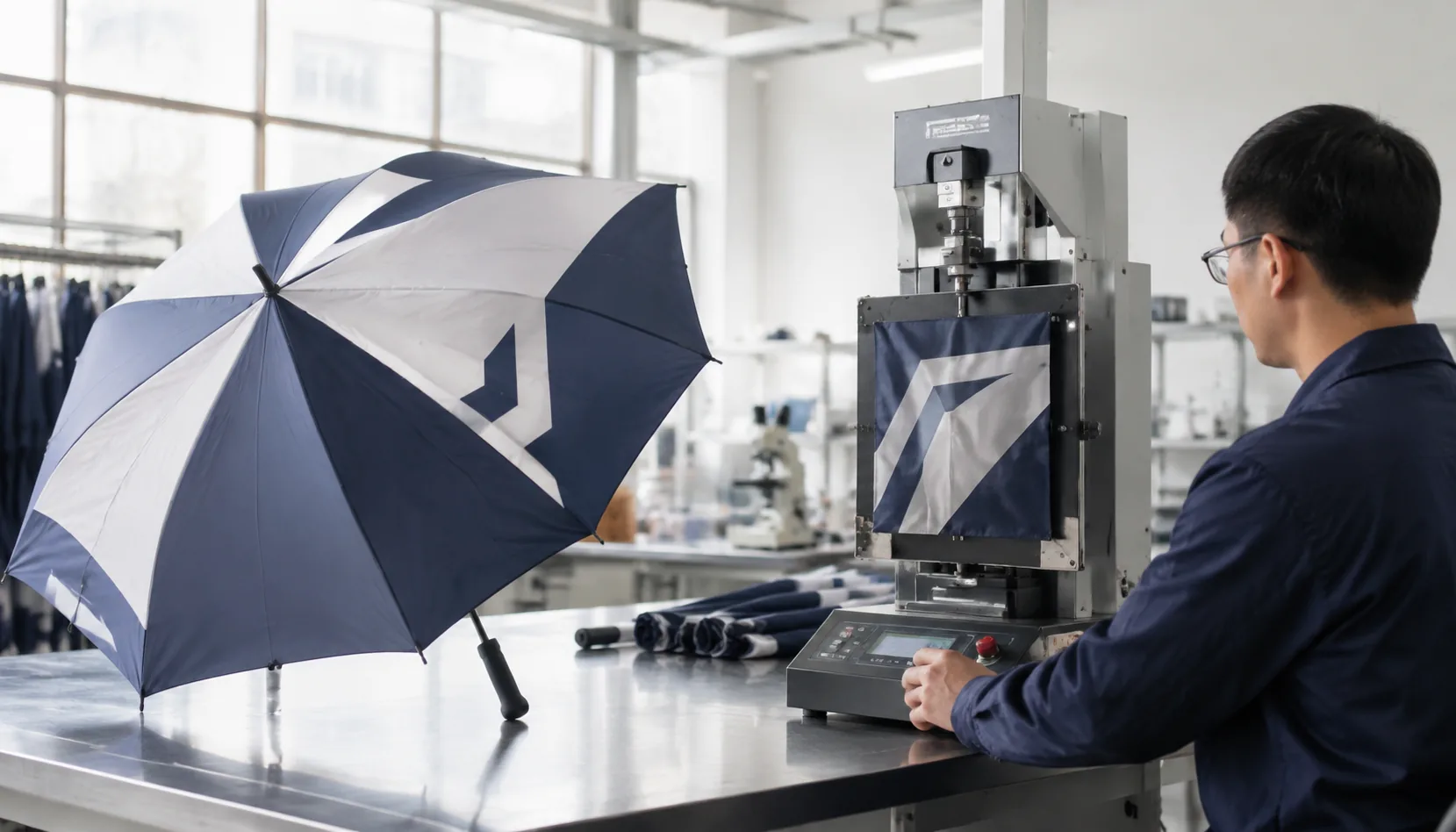
Print Durability Testing for Branded Umbrella Programs
Compare rub, adhesion, rain, UV, and folding tests for umbrella prints, with practical specs for 190T/210T pongee and AQ...
Read More »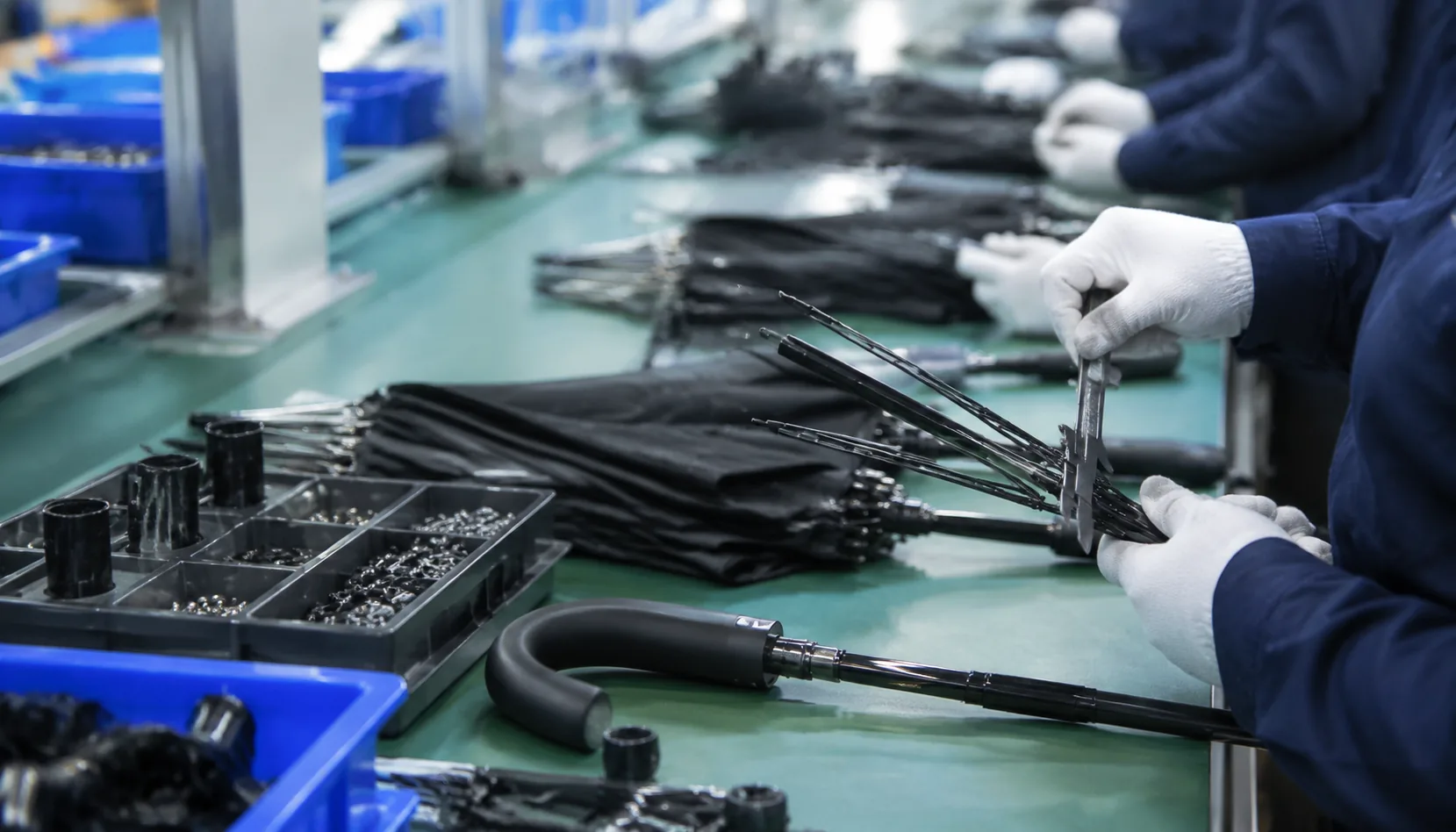
Inline Umbrella Assembly QC Gates Before Final Inspection
Map practical in-line QC gates for frames, canopies, auto-open mechanisms, and export packing so defects are caught befo...
Read More »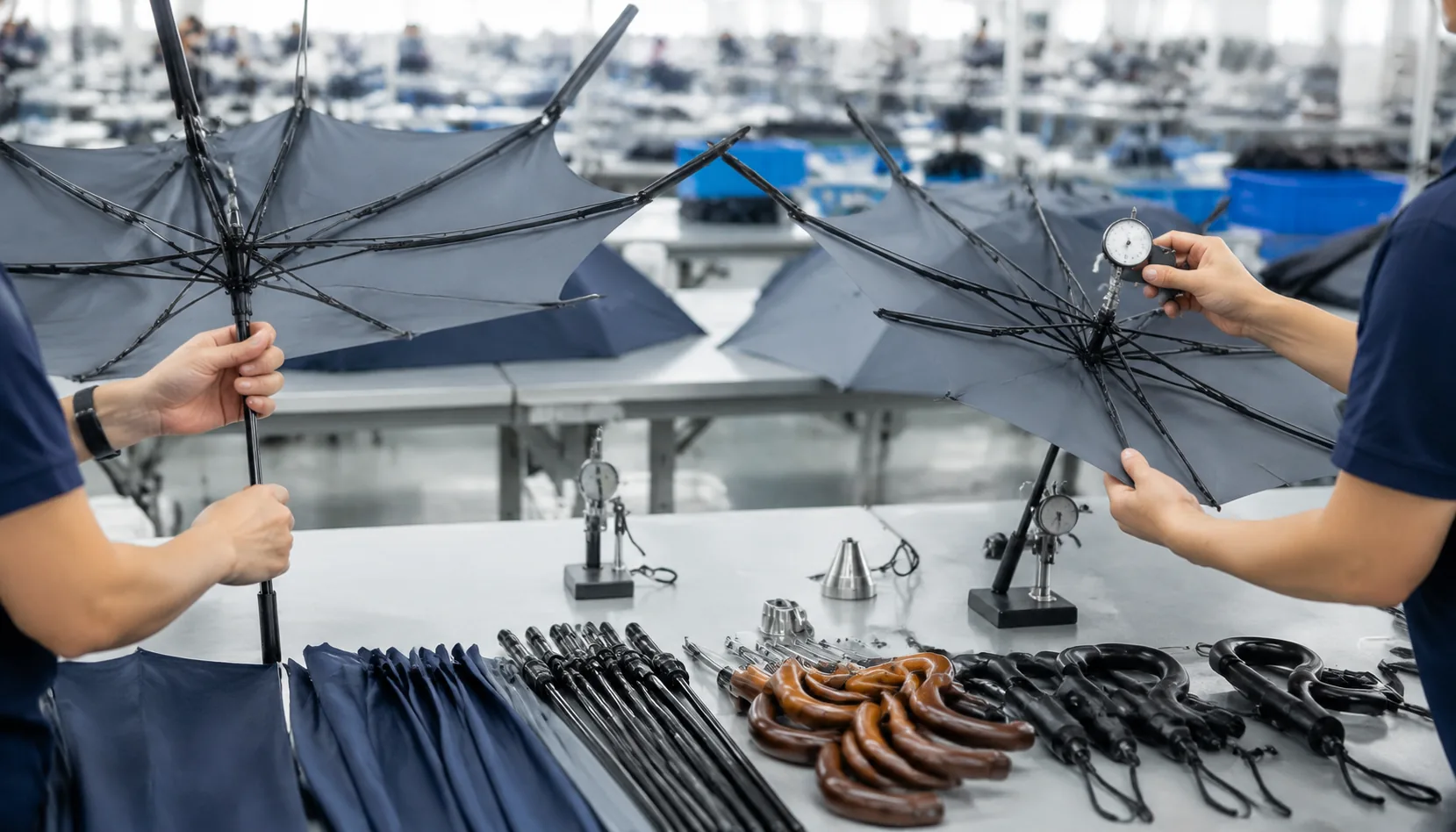
Inline Umbrella Assembly Checks Before Final Inspection
Use inline assembly checks to catch frame, fabric, handle, and mechanism issues earlier, reducing rework before final AQ...
Read More »