Print Durability Testing for Branded Umbrella Programs
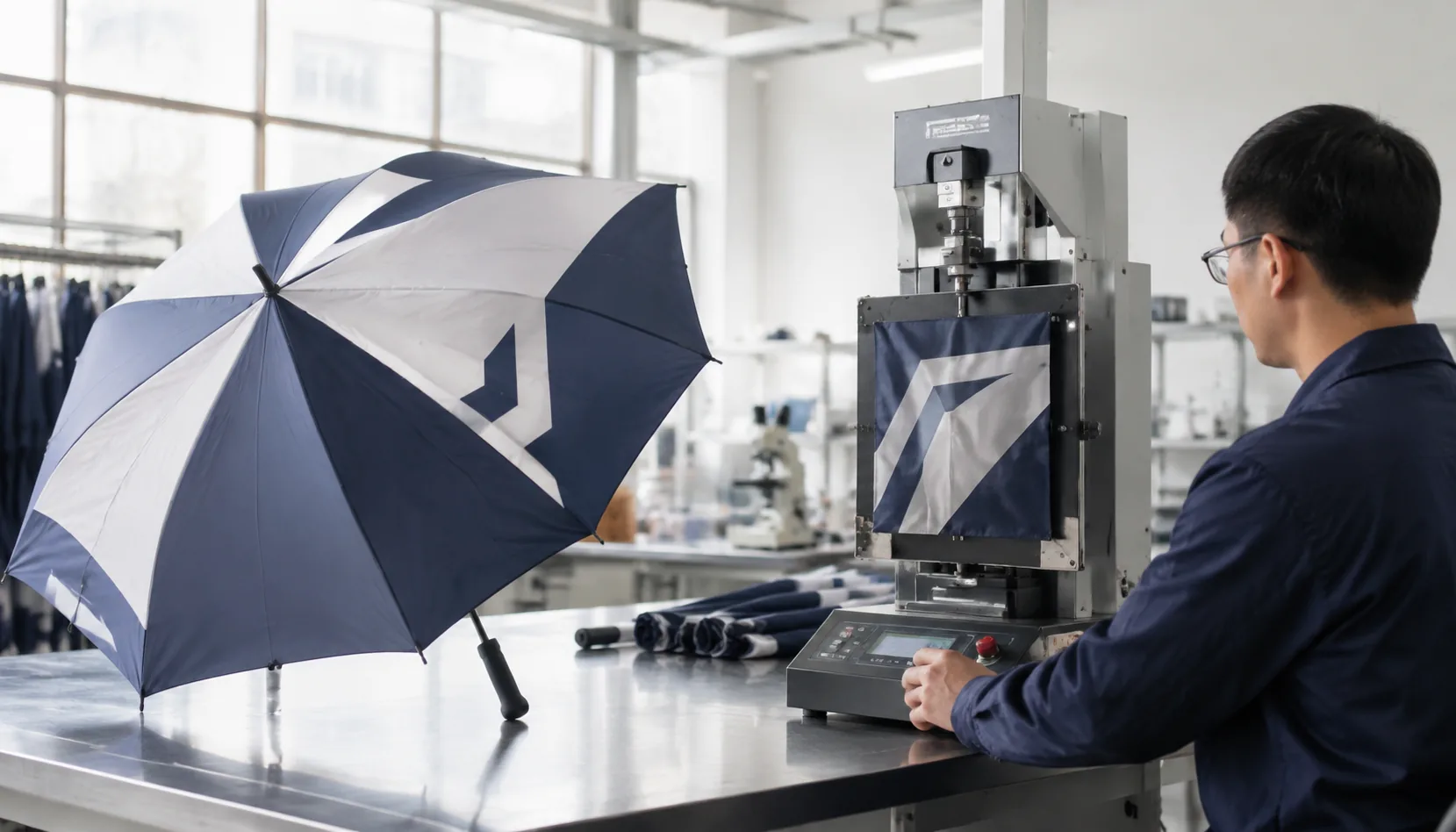
For branded umbrella programs, the print usually fails before the frame: a logo cracks on 190T pongee, color lifts after wet folding, or a dark panel shows scuff marks from carton vibration. On our Songxia production floor, umbrella print durability testing means checking rub resistance, tape adhesion, rain exposure, UV fade, and repeated opening and folding before the order reaches AQL 2.5 inspection.
What Print Durability Means for Umbrella Buyers
Print durability is not a vague promise that a logo “looks good.” For a buyer, it means the printed mark survives the real abuse of an umbrella: wet folding, hand rubbing, canopy creasing, storage heat, and repeated opening against rib tension. In umbrella print durability testing, I look first at logo adhesion test results, because poor adhesion shows up fast on coated 190T or 210T pongee, especially when the ink film sits on top instead of biting into the fabric finish. Then we check color retention after rain exposure, dry and wet rub resistance, and whether fine lines crack across fold points near the ribs. A pass sample should not leave visible ink on a white cotton rub cloth, bleed after a 30-minute water soak, or show peeling when tape is pulled sharply from the printed area.
The test level should match the program, not someone’s generic checklist. A one-day event giveaway with a 21 inch manual umbrella may only need basic branded umbrella quality control: correct Pantone match, 50 dry rub cycles, 20 wet rub cycles, and no logo transfer after simulated rain. A retail program is different. A 23 inch auto-open or 27 inch golf umbrella with fiberglass ribs, Teflon-coated pongee, and a large panel print should survive more aggressive checks, often 100 to 200 rub cycles, repeated open-close handling, and crease inspection after packed storage. Pongee umbrella printing by screen print, heat transfer, and sublimation all fail differently: screen ink can crack, transfer film can lift at the edge, and sublimation can shift color if the fabric lot or heat profile is unstable.
AQL umbrella inspection should include print durability checkpoints, not just frame, stitching, and carton marks. For export orders we normally set visual print defects under AQL 2.5, then define separate functional tests for adhesion, rubbing, rain exposure, and fold-line cracking because a clean-looking logo at final inspection can still fail after two uses. Our standard practice at ZheBrella is to approve a pre-production printed panel before mass sewing, then pull samples during canopy production so problems are caught before 5,000 finished umbrellas are packed. Buyers should also separate logo risk by placement: a small one-color logo near the lower panel has less stress than a full-panel retail graphic crossing multiple fold lines. That is why serious programs specify test methods, acceptable limits, and retest rules in the PO instead of relying only on a signed print proof.
Core Tests for Logo Adhesion and Rub Resistance
The fastest way to catch weak logo bonding is to abuse the print before the umbrella ever reaches AQL inspection. For umbrella print durability testing, I start with dry rub and wet rub because they expose poor curing, wrong ink selection, and dirty fabric faster than a visual check. On 190T or 210T pongee, we typically rub the printed logo 20 cycles dry with white cotton cloth, then 10 to 20 cycles wet with a cloth dampened in clean water. A small amount of color transfer can be acceptable on dark logos, but peeling, powdering, or edge lifting is not. Screen print on pongee usually performs well if the ink is matched to polyester and fully cured; under-cured ink feels slightly tacky and fails the wet rub first. Digital print can show surface abrasion earlier, especially on dark flood areas. Heat transfer should not crack or whiten at the edge after rubbing, but thick transfer films often reveal stress where the canopy folds.
A tape adhesion check is the most useful low-cost logo adhesion test for branded umbrella quality control because it attacks the ink-to-fabric bond directly. We press 3M-style clear tape firmly over the printed area, hold it for a few seconds, then pull back at roughly 180 degrees in one quick motion. On screen-printed pongee umbrella printing, clean separation with no visible ink pickup is the target; tiny loose fibers from the fabric are less concerning than actual pigment removal. For heat transfer logos, I pay close attention to corners, fine lettering, and registration marks because lifting usually starts there. Digital printing needs a different reading: the issue is often scuffing or coating disturbance rather than full ink peel. A light fingernail scratch check across solid color and small text is also practical, especially for promotional umbrellas that will be bundled, boxed, and handled at events before use.
Fold-line observation is where many decent-looking prints fail in real life. A logo placed across a canopy crease, seam allowance, or tight fold zone may pass flat-table inspection but crack after repeated opening and closing. In our standard practice, we open and close a sample umbrella 30 to 50 cycles, then inspect the print under normal light and angled light for whitening, hairline cracks, transfer lifting, or abrasion from rib contact. This matters more on 23 inch and 27 inch straight umbrellas with larger logo panels because buyers often request oversized branding near the fold path. During AQL umbrella inspection, inspectors should not only count major print defects like peeling, stains, and misregistration; they should also flag early fold-line damage because it predicts field complaints. Good artwork placement, correct curing temperature, and choosing screen print versus heat transfer based on logo complexity will prevent more failures than any final inspection can remove.
Weather Exposure: Rain, UV, and Coating Compatibility
Coating compatibility is where umbrella print durability testing usually succeeds or fails before the first rain test. On 190T and 210T pongee, the print is not bonding to “fabric” in a simple sense; it is bonding to whatever finish is on top of the polyester yarn. Standard water-repellent treatment lowers surface energy, so plastisol, rubber ink, and heat-transfer glue can bead or sit too shallow unless the ink system is adjusted. Black glue and silver coating are more difficult because they create a barrier layer with different flexibility and heat response than plain dyed pongee. UPF 50+ finishes can also contain UV absorbers or acrylic binders that interfere with curing. Our standard practice at ZheBrella is to confirm the exact canopy recipe before mass printing, because the same white logo that passes on untreated 190T pongee may crack, peel, or gray out on black-glue 210T after folding and wet storage.
Rain simulation should test both adhesion and appearance, not just whether the logo remains visible. For branded umbrella quality control, we normally run a spray or shower test for 30–60 minutes, then inspect after surface drying and again after 24 hours because delayed whitening, edge lift, and glue migration often appear later. A basic logo adhesion test uses cross-hatch cutting plus 3M tape pull, but I also like wet rub testing with a white cotton cloth for dark logos and dark cloth for white logos. Heat-transfer prints on coated pongee need special attention at the edges, especially near panel seams where the canopy stretches over 8K or 10K frames. 190T pongee has a looser, lighter hand, so coating penetration is less uniform and pinhole wetting is more common. 210T gives a smoother print face, but heavy coating can make the surface slicker and less forgiving if curing temperature is too low.
UV exposure is the second half of pongee umbrella printing risk because a print can pass rain testing and still fade or embrittle after outdoor use. For event umbrellas, 24–48 hours of accelerated UV may be enough as a screening test; for retail or golf umbrellas, I prefer 72 hours or more, followed by folding, rubbing, and tape pull after cooling. Silver-coated and black-glue canopies reflect or absorb heat differently, so the ink film may age at a different rate than the fabric beside it. White ink over dark 190T is especially vulnerable to yellowing if the wrong binder is used, while metallic and neon colors often lose brightness fastest. In AQL umbrella inspection, print defects should be classified clearly: minor for slight shade variation within approved tolerance, major for flaking, bleeding, misregistration, or logo distortion, and critical if coating incompatibility causes transfer onto hands, packaging, or adjacent canopy panels during wet packing. Good umbrella print durability testing catches these failures before cartons leave the factory.
Frame Design and Use Cycles in Durability Checks
Frame design changes where print failure starts, so umbrella print durability testing cannot be limited to rubbing the logo on a flat fabric swatch. Fiberglass ribs flex and rebound, which is good for wind resistance, but that flexing puts repeated tension into the canopy seams and logo panels. Steel ribs are stiffer, so they transfer more shock to the runner, stretcher joints, and panel corners during snap-open action. On a standard 8K frame, each canopy panel carries wider load zones; on a 16K frame, the load is divided more evenly, but there are twice as many seam lines that can distort a printed logo if sewing tension is not balanced. For branded umbrella quality control, I always want the print tested on assembled umbrellas, not only on cut pongee panels, because the real stress appears after the canopy is pulled over the frame and locked into shape.
Double-canopy windproof frames add another layer of risk because the vented top panel moves differently from the lower canopy in gusts. A logo printed across or near a vent seam can pass a basic logo adhesion test and still show cracking, edge lift, or color whitening after repeated flexing. With pongee umbrella printing, especially on 190T or 210T fabric with heat-transfer or screen print ink, panel tension must be reviewed after assembly: no diagonal drag lines, no puckering at rib tips, and no uneven stretch around the crown. For vented 23 inch and 27 inch models, we check whether the upper canopy floats correctly without rubbing the printed area underneath. A windproof frame that survives 50+ mph in a wind tunnel is not automatically safe for decoration; the airflow movement can create micro-abrasion between layers if the logo is placed carelessly.
Open-close cycle checks are where weak mechanisms and weak prints both reveal themselves. Manual frames are slower and usually gentler, while auto-open and auto-open-close mechanisms create a sharp acceleration that stresses the runner, spring, shaft lock, rib joints, and canopy attachment points at the same moment. For production approval, our standard practice at ZheBrella is to cycle branded samples at least 100 to 300 times before shipment review, then inspect print edges, ink cracking, transfer film lifting, and panel distortion under normal light and angled light. In AQL umbrella inspection, this should be tied to functional defects as well as decoration defects: a logo that looks fine before cycling but lifts after repeated opening is not acceptable for retail or promotional programs. The best umbrella print durability testing records frame type, rib count, fabric, coating, print method, and mechanism together, because those variables decide the real service life of the branding.
Setting QC Criteria Before Mass Production
QC criteria must be frozen before fabric cutting, not argued about after 5,000 canopies are printed. For umbrella print durability testing, I require one signed golden sample for construction and one signed print panel for color, logo size, registration, opacity, and hand feel. The file should state the exact canopy fabric, such as 190T or 210T pongee, plus printing method: screen print, heat transfer, sublimation, or digital. Pongee umbrella printing behaves differently from POE or PVC because ink sits into the weave instead of on a slick film, so the approved sample must include the final coating, whether water-repellent, Teflon, black UV backing, or UPF 50+. The logo adhesion test should be defined in writing: 3M tape pull, wet rub, dry rub, folding abrasion, and 24-hour water exposure are common. If the buyer wants retail-grade durability, I would add open-close cycling and packed-carton compression because many print failures happen at fold lines, not on flat fabric.
AQL umbrella inspection should be written into the PO with AQL 2.5 for major defects and a tighter internal screen for critical safety issues. Defect classifications need plain examples: critical defects include sharp exposed rib ends, failed runner lock, wrong logo trademark, or ink containing restricted substances; major defects include logo peeling, wrong Pantone beyond agreed tolerance, crooked placement over 5 mm, broken stitching, failed auto-open, or canopy leakage; minor defects include loose thread, small washable chalk mark, or slight handle scuff outside the logo area. Branded umbrella quality control also needs hold points: pre-production sample approval, first-article print approval, inline inspection after 10-20% output, final random inspection after 100% packed, and shipment release only after photo report signoff. Our standard practice at ZheBrella is to include close-up photos of print edges, rib tips, runner, handle logo, carton marks, and any rejected defects so overseas buyers can approve without guessing.
MOQ and lead time must be tied to QC expectations because testing is not free time. A 500-piece rush order with one-color screen print may only need 3-5 days for sampling and 15-20 days for production, while a 3,000-piece automatic 23-inch umbrella with 8K fiberglass ribs, multi-panel heat-transfer logos, and UPF coating often needs 25-35 days after sample approval. If the buyer requests lab testing, carton drop testing, or repeated umbrella print durability testing after a logo revision, add 3-7 days before bulk release. The PO should also list documentation by trade term: FOB buyers usually need packing list, commercial invoice, carton dimensions, HS code, and inspection report; DDP buyers also need consignee details, Amazon or retail routing labels, compliance files, and delivery address rules. Do not let production start on verbal approval. The safest control is simple: no approved sample, no bulk print; no passed final inspection, no shipment booking.
Frequently Asked Questions
Which umbrella print method is most durable for repeated folding?
Heat transfer can perform well for detailed logos, while screen printing is strong for simple solid-color marks. The best choice depends on fabric coating, fold location, and approved durability test results.
Can print durability testing be added to a normal umbrella order?
Yes. Buyers should request the tests before sampling so the factory can select compatible ink, coating, and curing conditions. Extra testing may add time before bulk production approval.
What print durability tests should be included before mass production of branded umbrellas?
For OEM umbrella orders, buyers should request a dry/wet rub test, cross-hatch or tape adhesion test, water spray or rain simulation test, UV exposure test, and repeated open-close folding test. These are usually checked on pre-production samples before bulk printing begins.
Are 190T and 210T pongee fabrics tested differently for logo adhesion?
The test methods are similar, but 210T pongee has a tighter weave and may hold screen printing or heat transfer more consistently. For both fabrics, the print should be tested after curing and again after folding, because cracking often appears on panel creases.
What AQL level is normally used for printed umbrella inspection?
Many importers use AQL 2.5 for major defects such as logo peeling, color mismatch, misplacement, or visible print cracking, and AQL 4.0 for minor cosmetic issues. Critical defects, such as unsafe frame components or severe dye transfer, are usually set at 0 acceptance.
Looking to Launch Your Custom Umbrella Line?
ZheBrella is a Zhejiang-based OEM/ODM umbrella manufacturer with 17 years of export experience. Free design, low MOQ from 100 pieces, windproof construction, full-color print.
Get Free Quote Now »People Also Search For
Related Articles
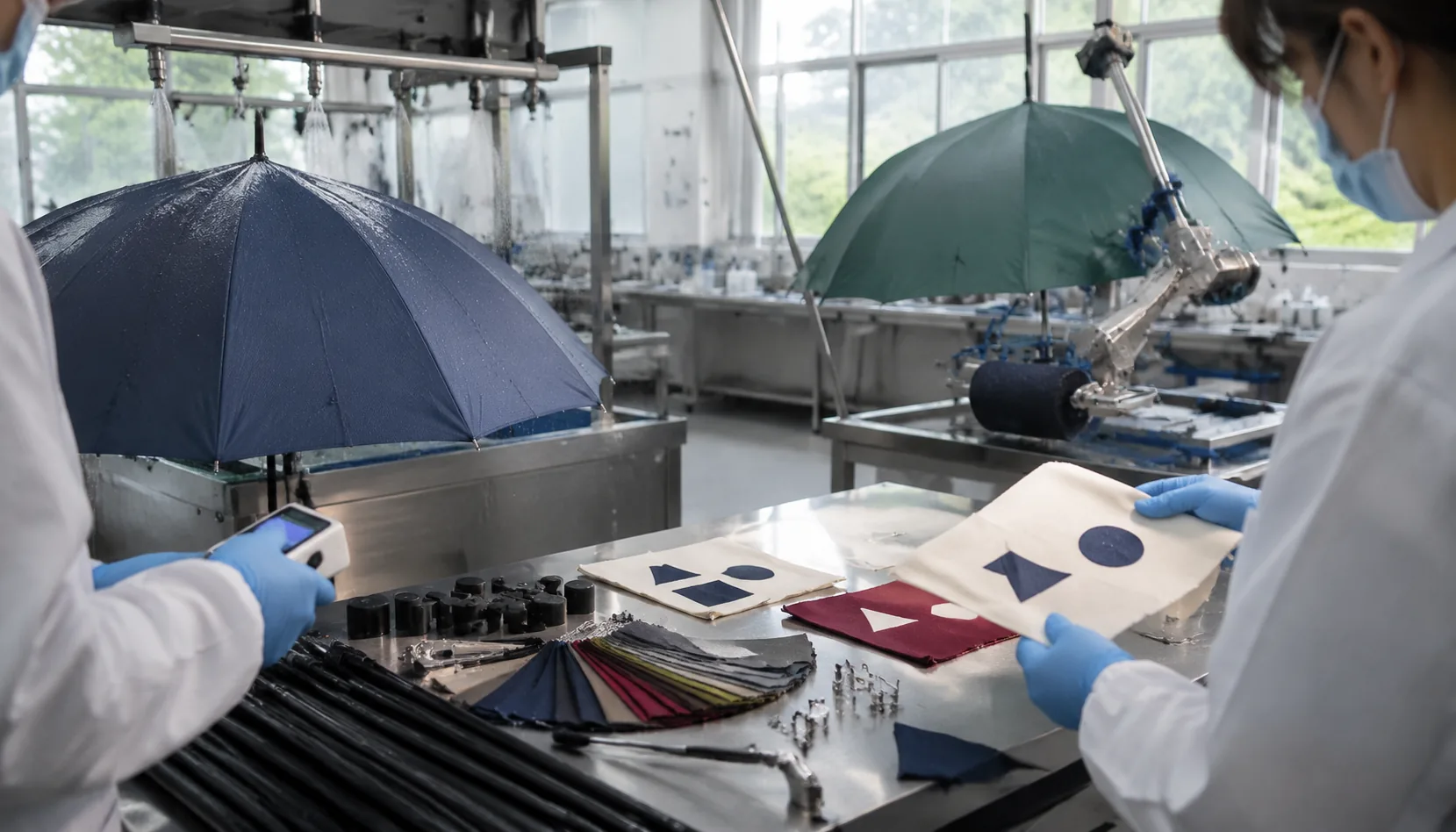
Logo Durability Testing for Branded Umbrella Programs
Plan branded umbrella orders with logo durability checks, AQL 2.5 inspection points, fabric tests, and approval steps be...
Read More »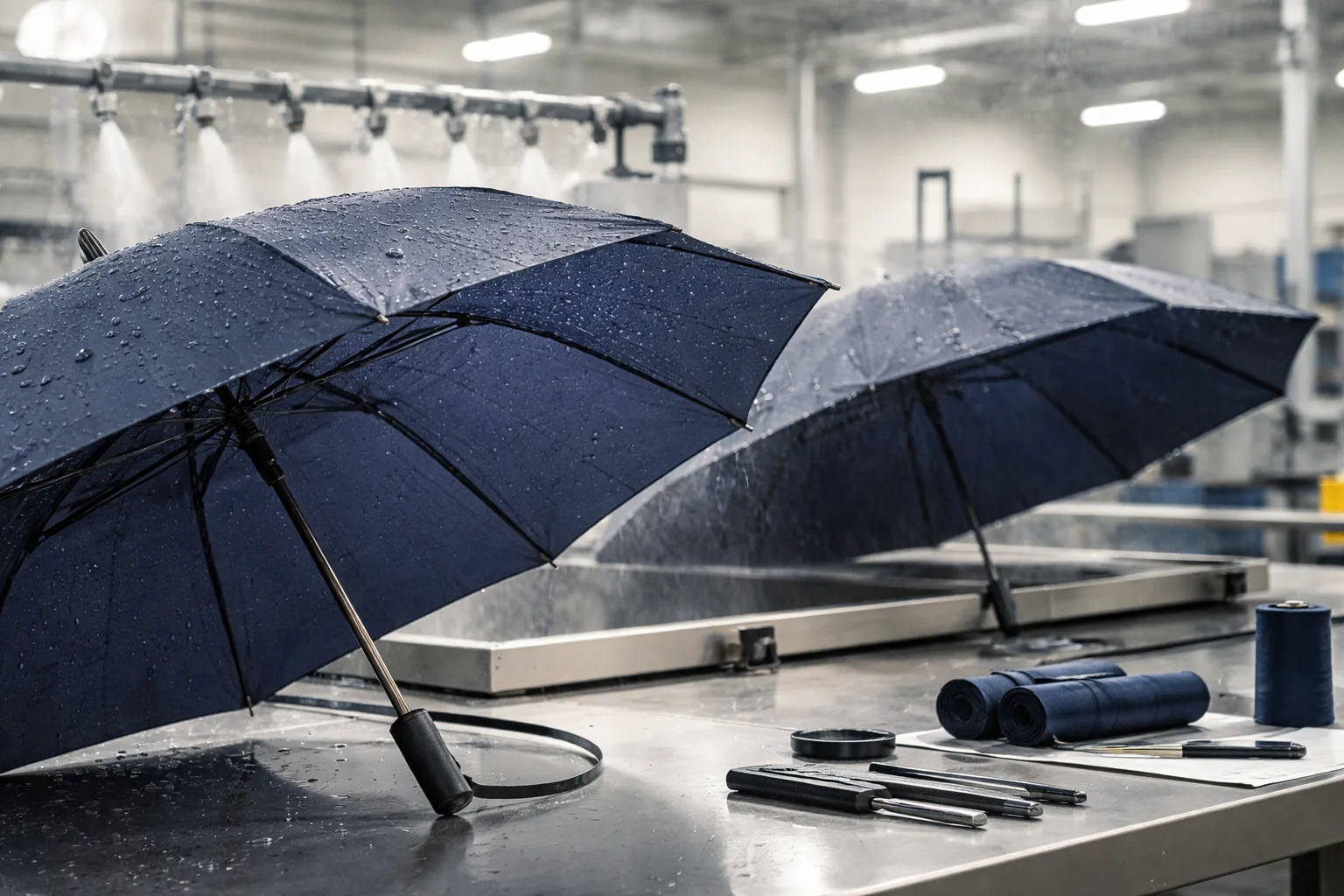
Logo Durability Testing for Branded Umbrella Orders
Build a logo durability test plan for branded umbrella orders, covering adhesion, rub, water, folding, AQL 2.5 checks, a...
Read More »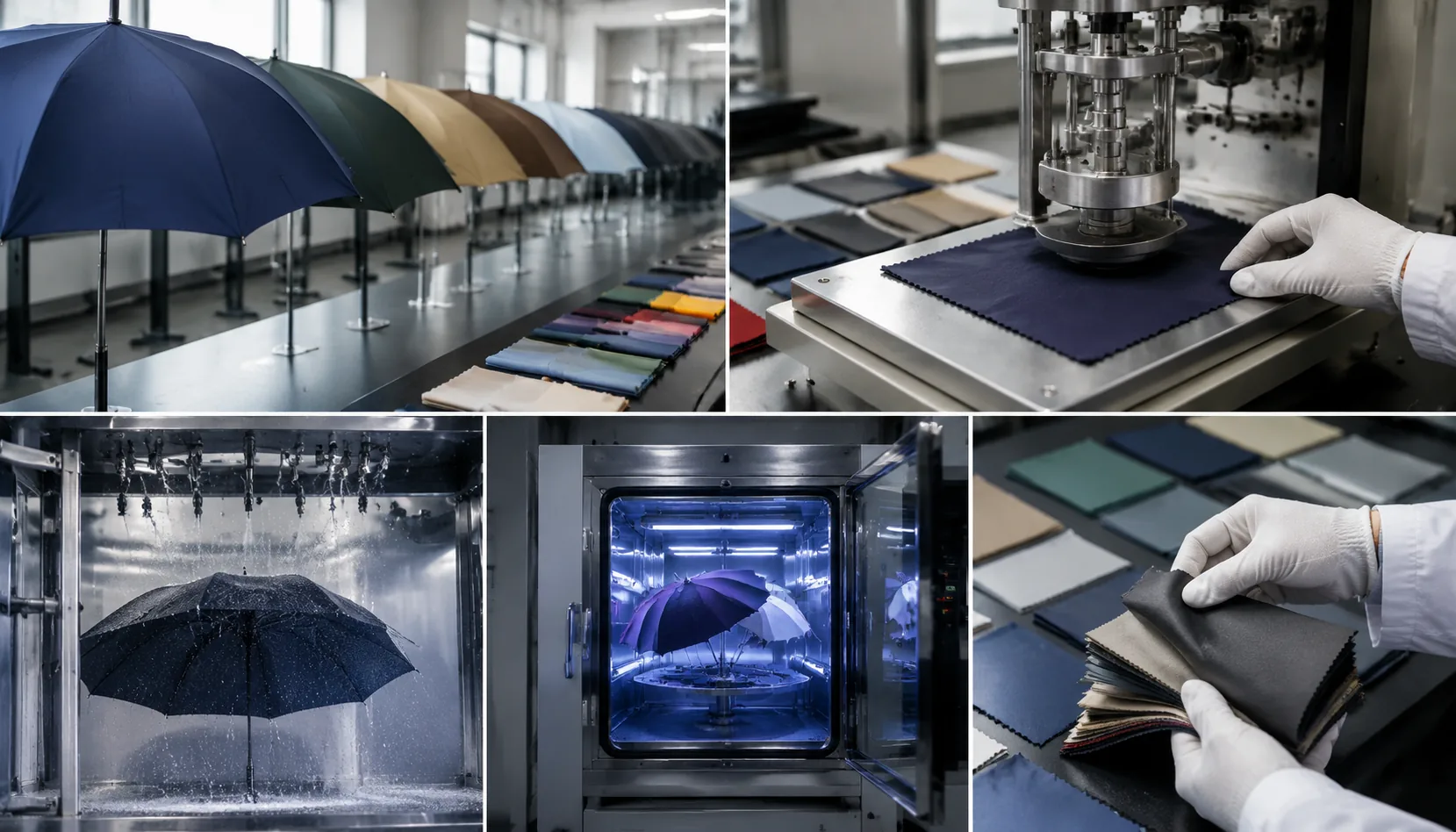
Logo Print Durability Tests for Branded Umbrella Orders
Learn which rub, tape, fold, and wet tests help buyers confirm umbrella logo durability before bulk production and final...
Read More »