How to Select a Compact UV Umbrella for Travel and Gifts
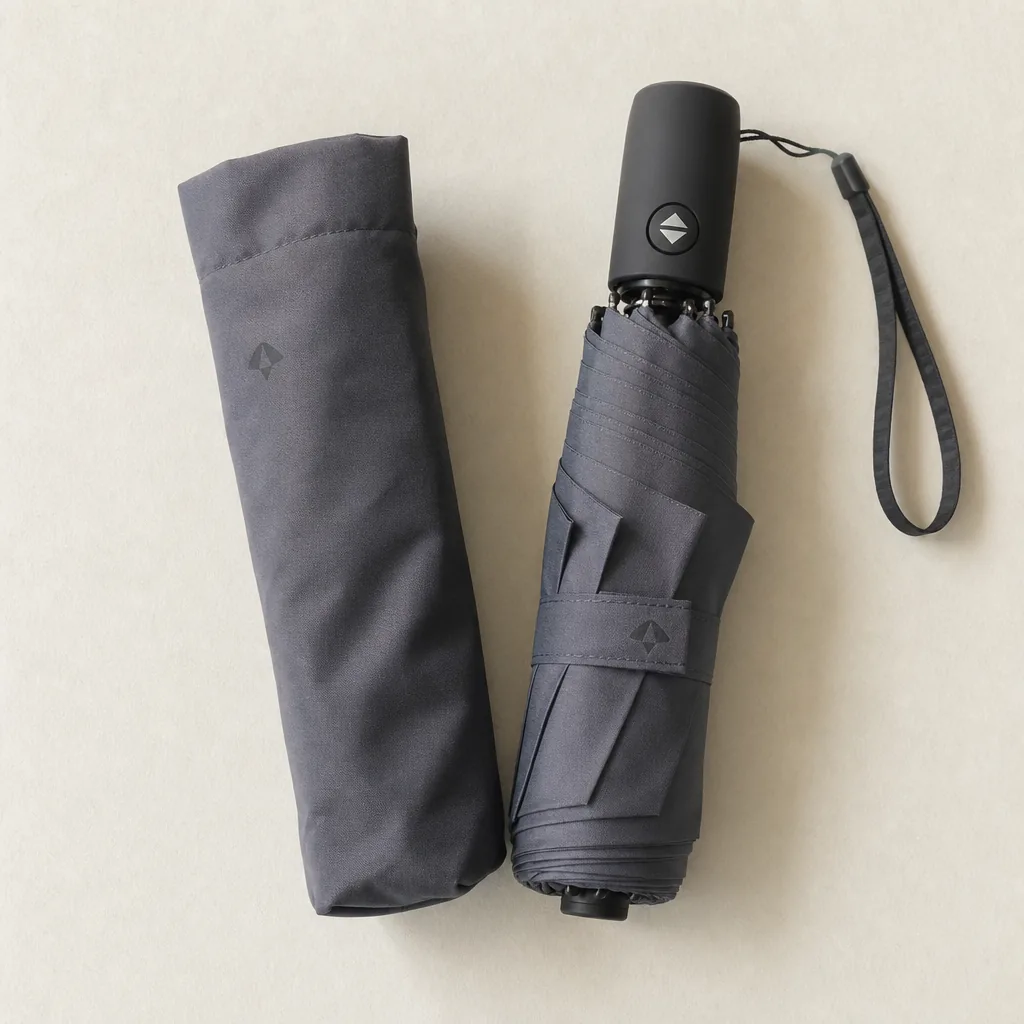
Buying a compact UV umbrella looks simple until the samples hit the bench: one folds too long for carry-on kits, another opens weakly in wind, and a third fails after a few hundred cycles because the frame, canopy coating, and ribs were not matched properly. On a real production line, the right compact UV umbrella specification has to balance UV protection, folded length, weight, opening feel, and carton efficiency, especially when you are sourcing for travel retail or gift programs with tight MOQ and shipping targets.
What makes a compact umbrella suitable for travel and gifting
For travel, the decision starts with closed length, weight, and how the umbrella carries in real use. A practical compact UV umbrella specification is usually a 21" canopy with an 18–23 cm folded length and a finished weight around 220–320 g, which fits backpacks, tote bags, and airline personal items without feeling flimsy. For a lighter frame, use fiberglass ribs and a fiberglass shaft on 6K–8K folding construction; steel adds stiffness, but it also adds weight and makes the product less comfortable for daily carry. For canopy fabric, specify 190T or 210T pongee with a black UV layer or a labeled UPF 50+ finish. That combination blocks more light than thin decorative polyester and gives the buyer a clearer value signal. If the target use leans toward rain protection as well as sun, a 23" model gives more coverage, but it also increases packed size and landed cost.
Packaging should match the channel, because it changes perceived value as much as the umbrella itself. A folding umbrella OEM program for retail or corporate gifting usually needs a printed sleeve, color box, hangtag, and, for higher-end sets, a zipper pouch or EVA case. A polybag works for low-cost giveaways, but it lowers shelf appeal and makes the same product look like a promo item. A rigid paper box or coordinated gift set supports a higher selling price and stronger margin, especially for a custom gift umbrella. Buyers should also match the packaging to the end use: travel retail needs compact, protective pack-out; gifting needs presentation and unboxing value. That is why a travel sun umbrella buyer guide should treat packaging as part of the compact UV umbrella specification, not an add-on after the frame and fabric are chosen.
End use also changes the price point, lead time, and QC risk. A low-cost promo order can use manual open, an 8K frame, FOB terms, and a lower MOQ, while a premium gift program may justify auto-open-close, Teflon water repellency, and tighter inspection at AQL 2.5. Auto mechanisms improve convenience for frequent travelers, but they add spring and runner wear points, so the factory needs stricter cycle testing before shipment. If wind resistance matters, fiberglass ribs and a vented double canopy are a better choice than a heavier steel frame. In practice, the right specification is the one that matches the channel: 21" for easy carry, 23" for added coverage, and packaging strong enough to support the target price without inflating freight or damage risk.
Choosing the right folding structure and mechanism
For a compact UV umbrella specification, the folding structure is one of the biggest drivers of breakage, pack size, and perceived quality. A 3-fold frame is the standard choice for a travel sun umbrella buyer guide because it uses fewer hinge points, usually opens faster, and is less prone to shaft play than a 5-fold design. A 5-fold style packs shorter for gift sets, handbags, and some airline carry-on kits, but the extra joints raise the risk of runner misalignment, loose ferrule fit, and tip pullout after repeated use. Buyers should verify shaft wall thickness, rib material, and joint tolerance in samples, and they should not judge performance by canopy print alone. Fiberglass ribs usually handle flex better than steel ribs, but frame stability still depends on the full build — rib count, hinge fit, and how well the tips seat after cycling. An 8K or 10K frame is common on lighter models; a 16K layout is generally more stable on stronger frames. In sample testing, wobble at the crown usually points to poor joint fit, not the fabric.
Auto-open and manual operation serve different users, and the choice affects cost, weight, and failure rate. Auto-open is better for commuters and tourists who need one-hand use, and it is common on an UPF 50+ compact umbrella. Manual operation is simpler, lighter, and often preferred in a folding umbrella OEM program when the buyer wants fewer spring parts and lower return risk. The tradeoff is slower deployment, so buyers should check button return, release force, and whether the top lock engages fully every time. Run the sample through 30 to 50 open-close cycles, then confirm the shaft seats cleanly, the release does not stick, and the canopy does not invert under normal shaking. Also test the lock under light torsion; if it slips in hand, that is a production risk, not a sampling anomaly.
Sample use should mimic travel handling, not a bench test. Open the umbrella one-handed, close it with gloves if the end user is outdoors, and shake it overhead to check side play at the crown, runner travel, and rib alignment. For a custom gift umbrella, listen for a clean latch sound and make sure the last 10 mm of closing stroke does not require extra force, which often indicates poor spring tuning or a misaligned shaft. Buyers should also confirm the target size early — 21", 23", 27", or 30" — because the same mechanism can feel acceptable in a 21" travel model and loose in a larger frame. If the lock releases under light torsion, rejects show up fast in field use even when the canopy, coating, and decoration pass visual inspection. That is the sample decision point that protects cost, lead time, and customer complaints.
Frame, ribs, and durability trade-offs in small formats
For a compact UV umbrella specification, the frame matters more than the print or handle finish because it determines how long the umbrella survives daily carry and repeated open-close cycles. Fiberglass ribs are the strongest default for an UPF 50+ compact umbrella: they flex under gust load, resist permanent bending, and usually recover better than steel in a pocket-size frame. Steel ribs feel rigid at first open, but they add weight, can corrode if stored wet, and often deform at the rib tip or joint when a user forces the canopy into wind. Mixed builds are common in folding umbrella OEM programs because they balance cost and durability: fiberglass ribs with a steel shaft improve the main load path while keeping the umbrella compact. Shaft stability is critical. If the shaft wobbles, the runner tracks unevenly, the top joint wears faster, and failure starts at the mechanism long before the canopy fabric does.
Rib count changes how a small canopy behaves. An 8K compact umbrella has fewer hinge points, wider panels, simpler sewing, and lower cost, which makes it a practical choice for travel giveaways, promotional orders, and many custom gift umbrella projects. A 16K frame divides the canopy into narrower panels, so the umbrella opens rounder, flutters less, and usually feels more refined in hand. The trade-off is more parts, more stitching, and more joints that can loosen if the compact UV umbrella specification is built on weak wire or poor riveting. In a travel sun umbrella buyer guide, 8K is enough for light commuting and price-sensitive programs, while 16K is better when the buyer wants smoother canopy tension and better wind handling without moving to a larger 23-inch or 27-inch size. Rib count should support the use case, not just the sales sample.
Most failures in compact umbrellas come from wear at the moving parts, not from the canopy coating. The usual weak points are the runner, the top tip, the rib rivet, and the secondary hinge; after repeated use, these parts loosen, crack, or pull out before the fabric shows real damage. That is why hinge quality, shaft straightness, and clean lock engagement matter more than color matching or packaging when you evaluate a folding umbrella OEM sample. A heavier mixed frame often lasts longer than an ultra-light build because it keeps the ribs seated and reduces play at the joints. For a custom gift umbrella, that difference shows up in return rate and customer complaints: if the user has to force the umbrella shut, service life drops fast. Before approving a compact UV umbrella specification, check how the frame closes under hand pressure, how much the shaft flexes, and whether the ribs stay aligned after multiple cycles.
Sun protection specs for compact UV products
For a real UPF 50+ compact umbrella, start with the canopy spec, not the artwork. Request pongee 190T or 210T by name, then ask for the coating type and side of application: black UV coating, silver coating, or a multilayer acrylic/PU finish. 210T gives a tighter weave and usually better print definition; 190T is the lower-cost baseline for travel packs and giveaway programs. In a compact UV umbrella specification, also confirm the rib count and frame material. An 8K or 10K folding frame with fiberglass ribs generally resists flex and corrosion better than steel ribs, especially in repeated open-close cycles. If the supplier only says “sun protection,” require the lab basis: report number, test method, and whether the UPF result applies to the fabric swatch or the finished canopy, because those are not the same thing.
Color matters, but it cannot replace testing. Dark outer colors such as black, navy, dark green, and burgundy usually improve light blocking and are easier to defend in a custom gift umbrella quote. Light colors can still achieve UPF 50+ compact umbrella performance if the weave and coating are verified, but the buyer should see a finished-canopy test, not a marketing claim. For logo decoration, ask whether the print is screen printed, heat transferred, or sublimated, since each method affects coating integrity and seam edges differently. Pinhole risk matters on a folding umbrella OEM order: poor registration or heavy ink can reduce sun-blocking performance at panel corners, which is where failures often start.
If the umbrella must handle both rain and sun, state that clearly in the RFQ and PO. That changes the specification: request a water-repellent finish such as Teflon or another DWR treatment, plus confirmation that the seams and tips are built for wet-dry cycling. Ask for the fabric weight, coating composition, and whether the offer is for sun-only or rain-plus-sun use. For comparison shopping, confirm MOQ, lead time in days, and whether pricing is FOB or DDP so every quote is on the same basis. For a travel sun umbrella buyer guide, the buying rule is simple: do not approve a compact UV umbrella specification without lab documentation, exact fabric and coating details, and a clear statement of intended use.
Packaging, MOQ, and import terms for gift programs
FOB works when the buyer wants to book ocean or air freight and compare carrier rates directly; DDP is better for a custom gift umbrella program that needs a fixed landed cost and no customs work. Before you request a quote, lock the compact UV umbrella specification: folded length, open diameter, rib count, canopy fabric, net and gross weight, inner pack count, and master carton size. In travel programs, a 21"/23" folded umbrella usually packs more efficiently than a 27" unit, and even 1–2 cm of folded length can change carton density, pallet count, and cubic-meter freight cost. For a UPF 50+ compact umbrella, that packaging impact can matter as much as the canopy material because freight often erodes margin faster than the unit price does.
For packaging, match the channel: sleeve only for mass promotion, printed gift box for corporate sets, or barcode-ready retail packs when the buyer needs scanability at receiving and store level. Ask the folding umbrella OEM to quote MOQ separately for each option, since sleeves usually support lower MOQ than custom boxes, inserts, and printed hang tags. A practical sampling timeline is 7–10 days for existing materials and 10–15 days when new artwork or gift-box tooling is required. Keep quality control at AQL 2.5 and specify what is checked: appearance, seam alignment, rib action, print registration, barcode legibility, and carton damage. Confirm whether the sample is a pre-production sample or a hand-built approval sample, because the risk profile is different.
Packing details should be written into the purchase order to reduce claims on export shipments. State the barcode position, sleeve or tissue requirement, poly bag use, and any carton drop-test standard before production starts. Weak sleeves, crushed gift boxes, and scuffed barcodes show up fast on DDP shipments, especially when cartons are tightly loaded for freight efficiency. If you are comparing suppliers in a travel sun umbrella buyer guide, use total landed cost, not unit price alone: folded size affects carton loading, carton loading affects freight, and freight often decides whether a compact umbrella is profitable or not. That is the real buying filter for a compact UV umbrella specification used in retail or gift programs.
Frequently Asked Questions
What closed length should a buyer request for a travel UV umbrella?
Many travel programs aim for a compact closed length that fits a bag, often around 9 to 11 inches depending on the market. The right size depends on the target user, weight limit, and whether the product is sold as a premium gift or a mass promo item.
Can a compact umbrella still be specified with UPF 50+?
Yes. Buyers can request UPF 50+ on compact umbrellas if the fabric and coating are selected correctly and test results are available. Ask for a sample report and confirm that print or coating choices do not reduce protection performance.
What folding length is most practical for airline travel and gift sets?
For travel retail, a closed length of 18-23 cm usually fits handbags, carry-ons, and boxed gift sets well. In B2B orders, 5-fold models are often chosen for compactness, while 3-fold models give a larger canopy and stronger frame.
Which canopy fabric and coating balance UV performance with retail cost?
190T or 210T pongee with a black UV coating is a common mid-range option because it supports UPF 50+ claims and keeps unit cost controlled. Silver coating can reduce heat effectively too, but many buyers prefer black coating for a cleaner retail appearance and lower risk of visible scuffing.
How do compact size and carton packing affect shipping cost on OEM orders?
Smaller 5-fold umbrellas can improve carton efficiency and lower cubic volume per 1,000 units, which matters more than net weight in sea and air freight. Buyers should confirm folded length, individual pouch or box size, and master carton dimensions before approving final specifications, especially for gift programs with custom packaging.
Looking to Launch Your Custom Umbrella Line?
ZheBrella is a Zhejiang-based OEM/ODM umbrella manufacturer with 17 years of export experience. Free design, low MOQ from 100 pieces, windproof construction, full-color print.
Get Free Quote Now »People Also Search For
Related Articles

Top 5 Folding Umbrella Specs for Airline and Hotel Gifts
Use five sourcing criteria to specify compact folding umbrellas for airline kits, hotel amenities, travel retail, and gu...
Read More »
UV Compact Umbrellas: How Buyers Compare Sun and Rain Specs
Compare UV compact umbrella specs for sun and rain use, including UPF 50+, pongee options, frame materials, folding stru...
Read More »
How to Choose a Compact Umbrella for Retail Programs
Compare compact umbrella sizes, frame builds, and order terms to pick a retail-ready model with reliable quality and fas...
Read More »