UV Compact Umbrellas: How Buyers Compare Sun and Rain Specs
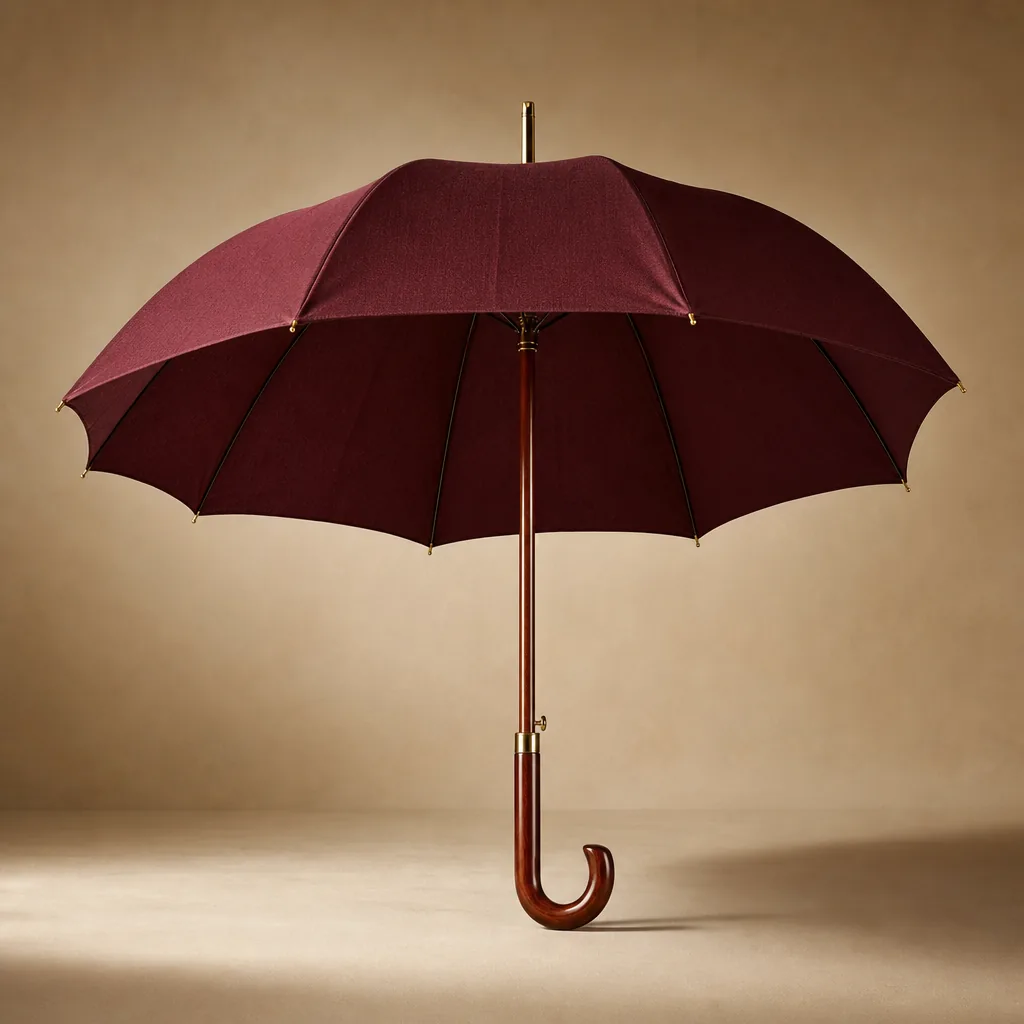
When buyers compare compact umbrellas for UV and rain programs, the spec sheet can look similar while factory performance is very different. As a uv compact umbrella supplier on the production floor in Songxia, we check how UPF 50+ coating, pongee density, frame material, rib count, folding structure, MOQ, and lead time work together—not just how they read in a quote.
When a UV Compact Umbrella Makes Sense for Buyers
Choose a UV compact umbrella when one SKU must deliver shade, rain cover, and small retail-pack footprint. The best-fit programs are travel retail, cosmetics gifts-with-purchase, commuter assortments, and outdoor promotions in hot climates where users face midday sun and sudden rain. Before comparing unit prices, ask the uv compact umbrella supplier for a full build sheet: 21" or 23" canopy size, folded length, 8K/10K rib count, shaft material, manual or auto-open/auto-open-close frame, canopy fabric such as 190T or 210T pongee, UV test result, and spray or water-pressure rating. Also clarify MOQ, FOB or DDP pricing, and production lead time in days, because a low quote can disappear once coating, packaging, and delivery terms are added. A standard rain compact may use 190T/210T pongee and an all-steel budget frame, but that only proves basic water shedding; it does not confirm meaningful sun protection.
A real UPF 50+ umbrella depends on the full canopy system, not a logo claim. Buyers should specify UV-blocking fabric or coating, verify consistent coating coverage, and check seam, needle-hole, and fold-line exposure after repeated closing. For hot-climate commuter or travel sun umbrella OEM programs, 8K fiberglass or fiberglass-plus-steel ribs reduce breakage risk better than all-steel frames when wind follows afternoon heat. Double-canopy venting can improve stability, but it adds weight, folded volume, and cost, so reserve it for premium commuter or travel retail SKUs rather than low-cost cosmetics GWPs. ZheBrella separates rain-only samples from UV production samples and inspects coating continuity, seam holes, and folding abrasion under AQL 2.5 before shipment. That control reduces bulk risk: a swatch can pass UV testing while finished canopies fail at rubbed fold lines, coated gaps, or poorly controlled stitching.
Materials That Drive UV and Rain Performance
For a UV Compact umbrella, specify the canopy before the frame. A dependable UPF 50+ umbrella typically uses 190T or 210T pongee with an underside black-out, silver, titanium, or nano-ceramic UV coating that blocks both UVA and UVB after folding abrasion, not only on fresh fabric. Plain dyed polyester belongs in low-cost promotional programs, not retail sun protection. Pongee 190T is the lighter option: it folds smaller and suits 21" and 23" travel sun umbrella OEM orders where pocket size and freight weight matter. Pongee 210T has a denser hand, smoother drape, and more retail-grade appearance, especially with matte Teflon or fluorine-free water-repellent finishing. Keep rain and sun functions separate: the face-side DWR controls water beading, while the inner UV layer controls shade, glare, and heat transfer. Cheap one-layer coatings often crack after repeated open-close cycles.
Coating choice affects price, appearance, odor risk, and failure mode. Silver-coated 190T pongee is common for budget UPF 50+ programs, but it can look shiny and giveaway-grade. Black coating gives deeper shade and a cleaner retail look, with a slight weight penalty. Titanium or nano-ceramic coatings are better for premium sun umbrellas because they reduce heat transfer and avoid the plastic smell sometimes found in low-grade silver coatings. For rainy markets, 210T pongee with Teflon or equivalent fluorine-free DWR is the safer compact umbrella materials specification because the fabric recovers better after wet folding and, with correct needle size and seam tension, is less prone to seam leakage. Buyers comparing any uv compact umbrella supplier should request UV test results after rubbing or folding simulation, plus coating-adhesion checks before bulk cutting. Coating failures usually appear after sewing, when replacement panels drive cost and delay.
The frame determines whether the umbrella still feels reliable after the canopy passes UPF testing. Steel ribs are economical and give a crisp action on manual or auto-open compact umbrellas, but they add weight and may corrode if plating is thin or users store the umbrella wet. Fiberglass ribs cost more, but they flex under gusts and recover better; for 23" windproof UV models, use a steel shaft with fiberglass ribs or a full fiberglass rib system. For 21" ultra-light travel umbrellas, an aluminum shaft with fiberglass ribs reduces carry weight, but it should not be sold as a storm umbrella. An 8K frame is the normal compact construction; 10K improves canopy tension and roundness but increases cost and packing diameter. Ask for wind testing around 30–40 mph for standard compact frames, and treat 50+ mph claims as credible only with reinforced ribs, strong stretchers, and a vented or well-tensioned canopy.
Folding Structure, Mechanism, and Carry Experience
Lead with carry specs, not fold-count claims. For a UV compact umbrella, buyers should compare closed length, finished weight, and mechanism life under repeated cycles. A practical 3-fold frame for a 21-inch or 23-inch canopy typically closes to 11 to 13 inches and fits a tote, backpack, or laptop bag without the repacking hassle common in ultra-short formats. A 5-fold pocket model can drop below 9 inches, but that convenience usually comes with lower shaft rigidity, more joints, and slower re-folding after use. For daily commuter programs, 3-fold is usually the safer choice because it balances portability with everyday reliability. Operation changes both cost and failure risk. Manual open frames are lighter and remove the spring set that often causes auto systems to fail first. Auto-open and auto-open-close frames add unit cost and weight, and they depend on tighter runner and latch tolerances, but they are easier to use one-handed when exiting a car or carrying samples. Any uv compact umbrella supplier worth considering should be able to discuss spring life, runner fit, and latch consistency, not just canopy fabric and color.
Handle and material choices shape carry comfort as much as frame geometry. Capsule handles save space, but a wider ABS or rubberized grip is usually more secure with wet hands and less fatiguing during repeated use. For travel and women’s retail lines, a short rounded handle with a wrist strap often works better than a flat minimalist shape because it pulls faster from a side pocket and slips less when hands have rainwater or sunscreen on them. Buyers should also check closed length with the sleeve on; a poorly cut sleeve can make a nominal 12-inch umbrella awkward to store. On frame build, aluminum shafts reduce carry weight, fiberglass ribs recover flex better than all-steel rib sets, and 190T or 210T pongee generally folds slimmer than thicker laminated sun fabrics used on some UPF 50+ umbrella programs. The tradeoff is wind tolerance: a compact 3-fold UPF 50+ umbrella with fiberglass middle ribs and reinforced tips can handle about 35 to 45 mph gusts in real use, but an auto-open-close frame with extra joints will remain less forgiving than a 27-inch stick umbrella. A reliable travel sun umbrella OEM should state that limit clearly and control it with AQL 2.5 final inspection covering mechanism action, strap stitching, and open-close smoothness.
How to Specify a UV Compact for Retail or Promotional Programs
Set the channel before you set the UV claim. For premium retail, buyers usually spec a 21-inch or 23-inch 8K frame with fiberglass ribs and 190T or 210T pongee, then choose either a black UV undercoating or a silver UV layer that can test to UPF 50+. That construction is a step above a basic rain umbrella: 210T pongee gives a cleaner canopy shape, print edges reproduce more sharply, and fiberglass ribs recover better after repeated open-close cycles than all-steel economy frames. For commuter use, auto-open-close should be approved only if the handle cost supports a stable spring set; low-cost AOC units fail earlier than manual frames, especially when the finished weight target is only 320 to 360 grams for handbag carry. Retail programs also need packaging locked early. Custom sleeves, woven labels, and hangtags are often non-negotiable, and MOQ is typically about 1,000 pieces per color for a new frame, or around 500 pieces if you use an existing mold from a uv compact umbrella supplier.
For gift-with-purchase, airline amenity, and event giveaway programs, start with landed cost, weight, and shipping volume. Airline and amenity kits usually require a 17-inch to 19-inch closed length and a lighter frame, often an aluminum shaft with mixed fiberglass and steel ribs, to stay inside kit weight limits. Event giveaways usually favor a manual-open 5-fold or slim 3-fold frame in polyester pongee because unit price, logo area, and carton efficiency matter more than full retail-grade UV performance; a UPF 50+ umbrella spec is often unnecessary unless the promotion is sun-use specific. The biggest source of cost creep is usually packaging, not canopy fabric: drawstring pouches, zip sleeves, printed cartons, belly bands, barcode labels, and market-specific polybag warnings can move the target price band faster than a fabric upgrade. MOQ can be 300 to 500 pieces for a standard canopy with a one-color screen print, while custom-dyed fabric, all-over heat transfer, molded handle badges, or gift boxes usually require 1,000 to 3,000 pieces per SKU. For small replenishment runs, DDP is often the lower-risk option because landed cost is clearer; FOB works better when the buyer consolidates travel sun umbrella OEM orders through Ningbo or Shanghai with the same uv compact umbrella supplier.
Testing, QC, and Claims Buyers Should Verify
Approve production only after the UPF 50+ claim is tied to the exact bulk canopy, not a generic mill swatch. For any UV compact umbrella, the test report should identify the finished fabric code, colorway, and post-coating construction actually being ordered—typically 190T or 210T pongee or polyester with black or silver coating—and confirm that the method measures both UVA and UVB transmission. Ask the uv compact umbrella supplier to link that report to the production fabric lot and coating batch so the claim remains traceable after dyeing, coating, and cutting. That control matters because UV blocking shifts with fabric weight, dye depth, and coating formula; a dark navy sample does not validate a pastel run, and one mill’s report does not automatically cover another lot. Confirm, in writing, that the tested sample was coated before testing and matches the final compact umbrella materials approved for mass production. If the factory cannot show lot-level traceability from report to bulk fabric, treat the UPF claim as unverified. Buyers should also avoid relying on black or silver coating alone; without testing, those finishes are appearance features, not proof of UV protection.
QC for sun-and-rain performance should separate coating checks from mechanical checks, because most failures appear in bulk production rather than pre-production samples. Inspect coated fabric roll by roll before cutting for streaking, pinholes under backlight, uneven laydown, and cracking along fold lines after repeated folding; these defects reduce UV blocking, hurt water resistance, and create poor fold memory on compact frames. Mechanical QC should include documented opening-cycle checks, runner lock engagement, spring response, shaft straightness, and pull tests at the top notch, ferrule, and handle joint. Seam quality needs equal attention: look for skipped stitches, loose thread at rib pockets, uneven panel tension, and needle holes that open under rain load. AQL 2.5 is a sound final-inspection baseline, but it should not be the only control point. Require in-line inspections during canopy sewing and frame assembly, then confirm finished-goods inspection before packing so coating inconsistency, weak seams, or frame drift are caught before they become a carton-level claim dispute.
Frequently Asked Questions
Can a compact umbrella really achieve UPF 50+ protection?
Yes, if the canopy fabric and coating are properly specified and tested. Buyers should ask for actual test documentation rather than relying only on factory claims or fabric color.
Is fiberglass necessary in a UV compact umbrella?
Not always, but it is useful when buyers want better flex and reduced breakage in windy conditions. Steel can lower cost, though it may add weight and be less forgiving under repeated stress.
What canopy coating is usually better for a compact umbrella that needs both UV blocking and rain performance?
For mixed sun-and-rain use, buyers often compare black glue and silver coating. Black glue commonly gives stronger light blocking and a darker under-canopy for glare reduction, while silver coating can reflect heat well but may show wear more visibly over time; both should be paired with a pongee canopy for better water shedding.
How do buyers choose between a 3-fold and 5-fold UV compact umbrella for retail programs?
A 3-fold model usually offers better frame stability, larger canopy size, and lower complaint rates, which suits daily-use retail lines. A 5-fold model packs smaller for travel collections, but importers should confirm rib thickness, total weight, and open-close cycle testing before placing volume orders.
What MOQ and lead time are typical for OEM UV compact umbrellas with custom fabric or printing?
For standard OEM compact umbrellas, MOQ often starts around 500-1000 pieces per color or design, depending on frame and canopy spec. Typical lead time is about 30-45 days after sample approval, while custom coatings, special handles, or retail packaging can extend production by 1-2 weeks.
Looking to Launch Your Custom Umbrella Line?
ZheBrella is a Zhejiang-based OEM/ODM umbrella manufacturer with 17 years of export experience. Free design, low MOQ from 100 pieces, windproof construction, full-color print.
Get Free Quote Now »People Also Search For
Related Articles
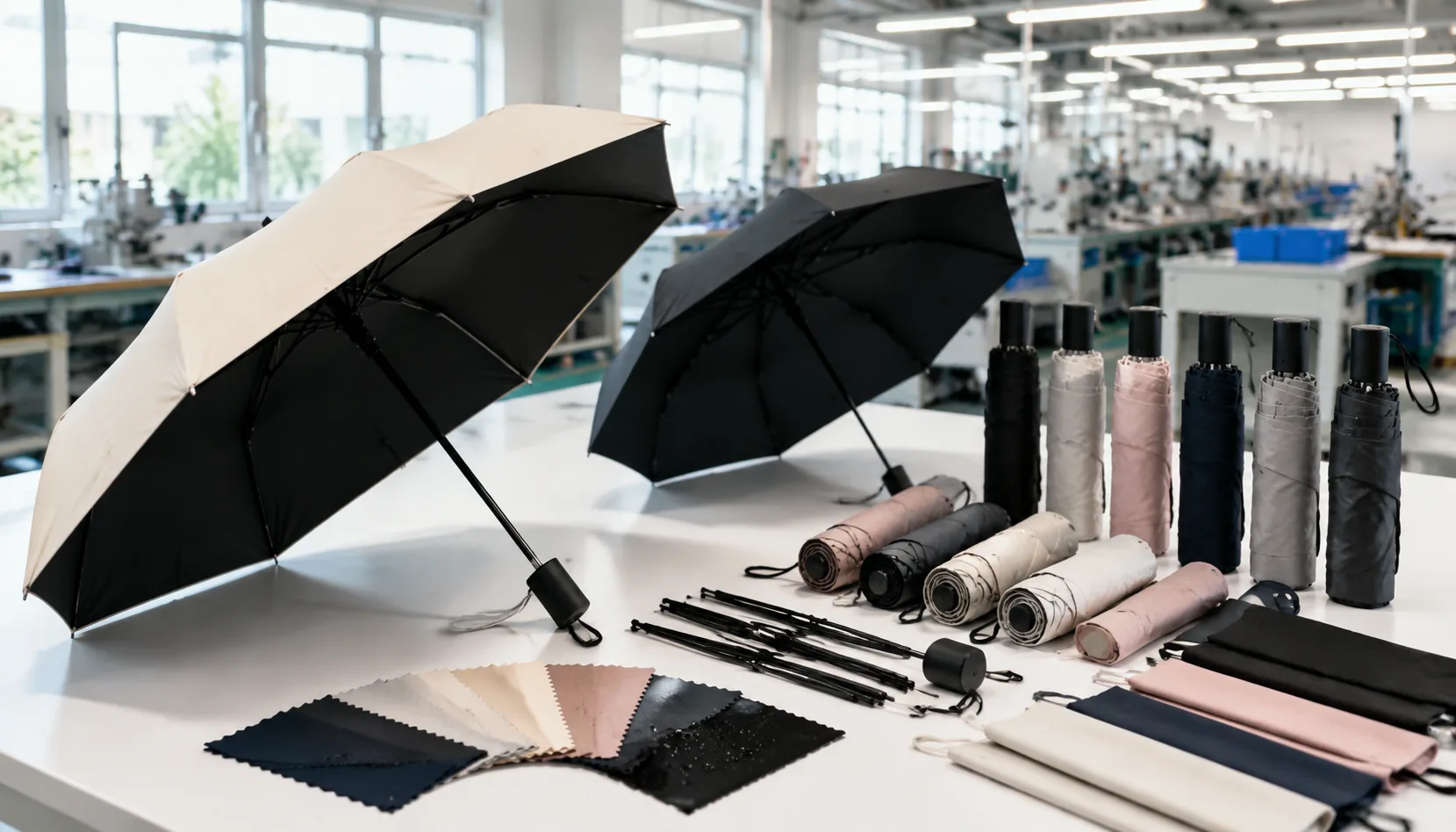
Foldable Sun Umbrellas for Retail and Travel Buyers
Plan foldable sun umbrella orders with UPF 50+ fabric, compact frames, coating choices, wind specs, MOQ, and QC points f...
Read More »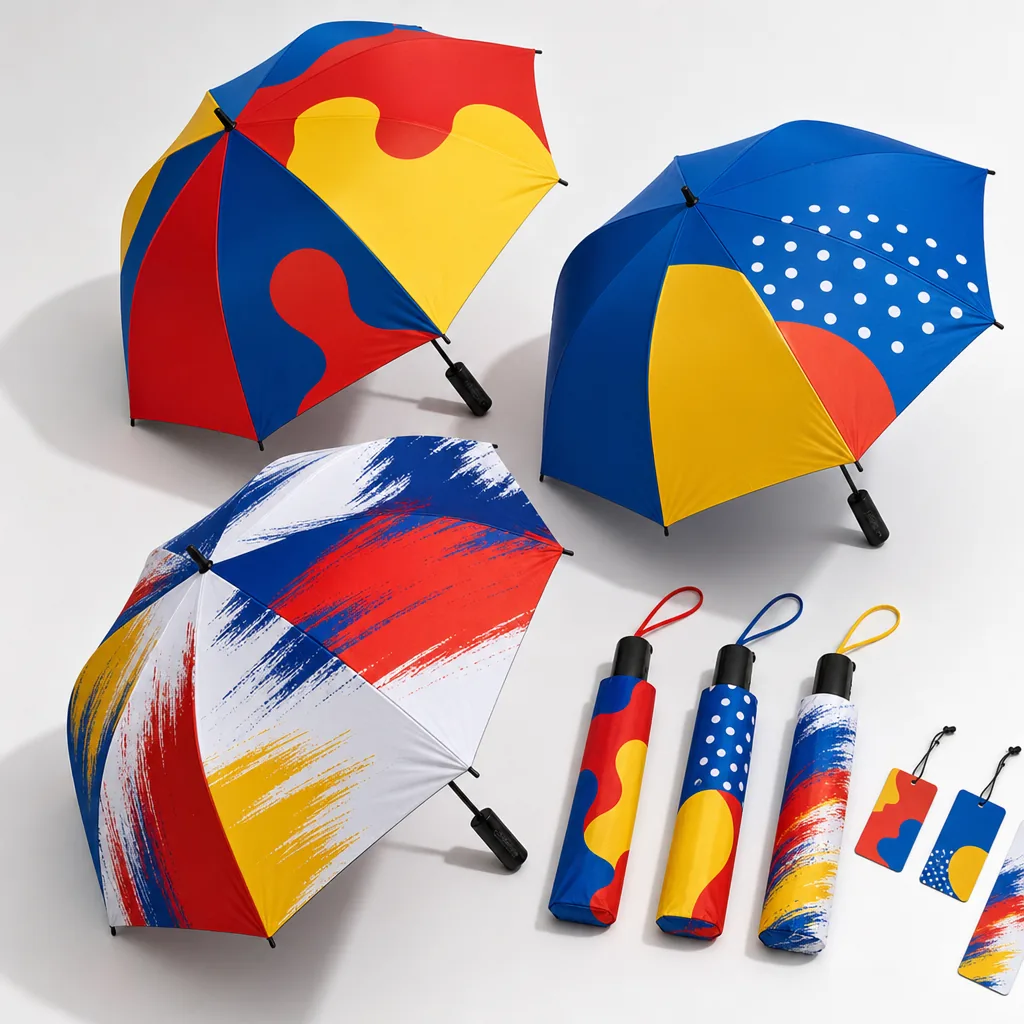
Travel Umbrella Specs for Airlines, Hotels, and Commuters
Compare 3-fold and 5-fold travel umbrella specs, fabric grades, frame materials, and pack sizes to source compact models...
Read More »Travel Umbrella Specs for Airline Amenity and Retail Programs
Compare 3-fold vs 5-fold travel umbrella specs, weight, fabric, mechanisms, and packaging to source compact models for a...
Read More »