Foldable Sun Umbrellas for Retail and Travel Buyers
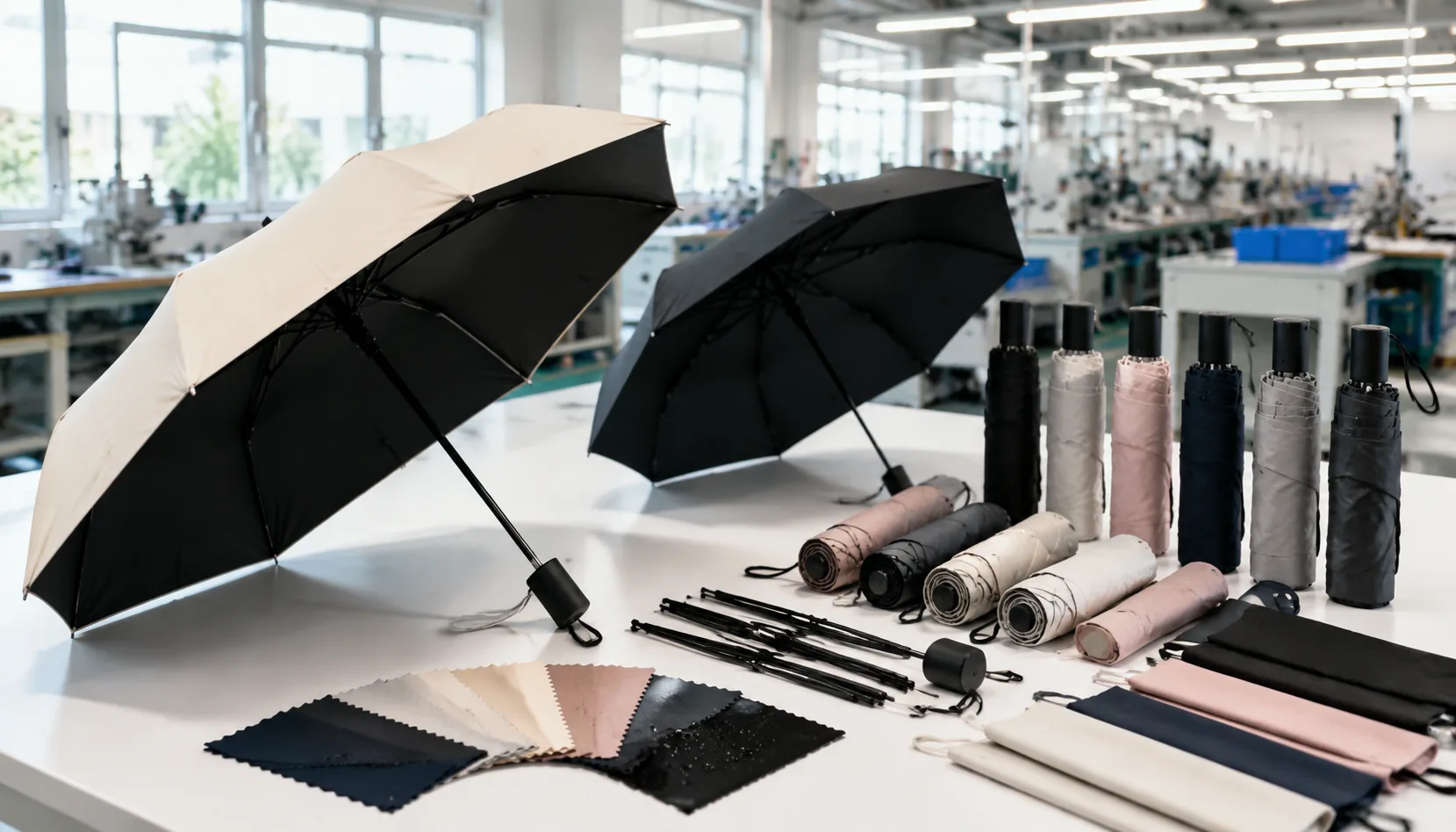
For travel retail buyers, foldable sun umbrellas look simple on a spec sheet, but small choices in coating, rib count, shaft tolerance, and packing size can decide whether the order sells through or comes back with claims. On our Songxia factory floor, the real work is balancing UPF 50+ protection, compact weight, opening feel, and wind performance before bulk production starts.
Define the Use Case Before Choosing the Frame
Sun protection adds another layer because UV umbrella fabric must be specified as a system, not just a color. A black-backed or silver-coated 190T pongee canopy can reach UPF 50+, but coating weight, hand feel, odor control, and fold marks all matter when the umbrella is packed tightly. PVC or POE can work for transparent fashion styles, but they are hotter in direct sun and less common for serious sun protection. As a compact sun umbrella supplier, ZheBrella’s standard practice is to match the canopy coating to the frame strength: lightweight steel for entry retail, fiberglass ribs for windy travel cities, and double-canopy venting when buyers expect 50+ mph wind-tunnel claims. That matching step is what keeps foldable sun umbrellas from becoming either too fragile to use or too heavy to carry.
UPF 50+ Canopy Materials and Coatings
UPF 50+ performance starts with the fabric stack, not the label sewn into the seam. For foldable sun umbrellas, the most common retail constructions are 190T or 210T polyester pongee with a black rubberized coating, silver PU coating, or a dense yarn-and-finish combination that passes UV testing without looking like a rain tarp. Black coating gives the strongest light blocking and usually the most stable UPF result after folding, rubbing, and wet-dry cycling. Silver coating reflects more visible light and looks cooler on the sales floor, but cheap silver layers can crease at rib contact points on 21" and 23" compact frames. High-density pongee is cleaner for fashion colors and logo printing, especially when buyers want navy, beige, blush, or brand-matched Pantone panels rather than the gray underside that coating creates.
For export orders, I do not accept verbal “UV protection” claims from fabric mills; we ask for UPF test reports based on standards such as AATCC 183, AS/NZS 4399, or EN 13758, depending on the destination market. A proper UPF 50+ result means the canopy blocks at least 98% of UVA and UVB transmission under lab conditions, but buyers should still confirm whether the report covers finished fabric, coated fabric before sewing, or only a lab swatch. Our standard practice at ZheBrella is to recheck bulk fabric lots before cutting when the order is a retail umbrella program above 3,000 pieces, because coating thickness can drift between dye lots. For UPF travel umbrellas, I also recommend checking rub fastness around fold lines; a canopy can pass UV on day one and still show pinholes after 500 open-close cycles if the coating is brittle.
Heat reduction is real but often oversold. A black-coated compact canopy can make the shade feel noticeably darker and reduce perceived heat by roughly 5–10°F compared with standing in direct sun, while a silver-coated canopy may reflect more radiant heat when the silver side faces outward. The handle, shaft, and frame still matter: a 6-rib mini umbrella with thin steel ribs flexes more, causing the canopy to touch the user’s head and trap warm air, while an 8K fiberglass-and-steel frame with a 23" arc gives better clearance. Color limitations are practical: white or pale yellow outer panels over black coating can look slightly gray from the underside, and dark sublimation prints may be muted by UV umbrella fabric treatments. If you are sourcing from a compact sun umbrella supplier, approve both daylight photos and lab dips before MOQ production, not just a digital mockup.
Ribs, Shaft, and Wind Resistance
For foldable sun umbrellas, the rib and shaft choice decides whether the product feels like a travel tool or a disposable giveaway. Aluminum keeps weight down, which matters on 21" and 23" compact models, but it bends permanently if the runner is forced open in gusty weather. Steel is cheaper and stronger in straight pull, so many retail umbrella program builds use a steel shaft with steel stretchers, but it adds 40–80 g and can rust if plating is thin. Fiberglass ribs cost more, yet they flex and return better, especially at the outer rib section where failures usually start. My preferred retail-grade construction is a black electroplated steel center shaft with fiberglass ribs or fiberglass end tips; it gives better abuse tolerance without making the umbrella feel heavy in a handbag or backpack.
An 8K compact frame is the practical baseline for UPF travel umbrellas because it balances canopy tension, folding thickness, and cost. A 10K frame looks more premium and makes the canopy rounder, but it increases sewing tolerance problems on 190T or 210T pongee if the panel cutting is not tight. For sun use, the canopy often matters as much as the frame: UV umbrella fabric with black glue, silver coating, or laminated blackout layers blocks heat better than a normal rain canopy, but these coatings make the fabric stiffer. That stiffness puts extra load on ribs during closing, especially on auto-open-close mechanisms. A compact sun umbrella supplier should test repeated cycling, not just quote UPF 50+ on the fabric roll.
Be careful with “windproof” claims on foldable sun umbrellas. A double-canopy vented design helps on 27" and golf umbrellas because air can escape cleanly, but on 21" or 23" folding frames the vent adds seam weight, bulk, and more leakage points without turning the frame into a storm umbrella. Realistic language is “wind-resistant” or “tested to withstand 35–45 mph gusts under controlled conditions”; claims above 50+ mph on a small 8K folding umbrella need wind-tunnel evidence and a clear test angle. Our standard practice at ZheBrella is to pair frame testing with AQL 2.5 inspection: rib opening symmetry, rivet tightness, runner lock strength, shaft wobble, and canopy seam tension are checked before packing, because most field failures come from small assembly errors rather than the headline material spec.
Open Mechanisms and Ergonomic Details
For foldable sun umbrellas, the opening mechanism should be chosen around the user’s real situation, not just the price sheet. Manual open is still the most reliable option for a retail umbrella program aimed at tourists, hotels, museums, and outdoor events because there is no spring shock, fewer failed buttons, and lower risk when children use it. A 21" or 23" three-fold manual frame with fiberglass ribs and a 190T or 210T UV umbrella fabric canopy can stay under 260–330 g, which matters when it sits in a handbag all day. Auto-open adds convenience for commuters stepping out of a taxi or train station, but it needs a cleaner runner, stronger shaft lock, and better button tolerance; cheap auto-open units often fail at the notch after 500–800 cycles if the spring is undersized or the plastic runner is too brittle.
Auto-open-close is the right choice when buyers want a higher retail ticket, but it must be engineered for safe closing force. I do not like compact models that require more than 8–10 kg of push force to reset the shaft, because travel users end up pressing the handle against their chest or luggage, which causes complaints and returns. A good UPF travel umbrella should close in two stages: button collapses the canopy, then the shaft compresses smoothly without finger pinch near the runner. For double-canopy vented windproof models, especially 8K fiberglass or mixed fiberglass-steel frames rated around 35–45 mph, the spring system must be matched to the extra canopy drag. Our standard practice at ZheBrella is to cycle-test auto-open-close samples before quoting bulk production, because mechanism feel changes after printing, coating, and final sewing tension are added.
Handle and accessory details decide whether the product feels retail-ready or like a giveaway. A compact sun umbrella supplier should offer straight ABS handles for low-cost programs, rubberized oval handles for wet grip, and short matte-finish ergonomic handles for premium foldable sun umbrellas. Wrist straps should be bar-tacked, not just looped through a thin plastic plug, and the strap opening should fit a larger hand or jacket sleeve, usually 170–190 mm in loop length. Sleeve fit also matters: if the sleeve is cut too tight around a coated UPF 50+ pongee canopy, customers struggle to repack it after use. For travel retail, I prefer a slightly wider sleeve with a pull tab, matching piping, and enough tolerance for heat-transfer logos or sublimation-printed fabric, because printed panels add stiffness and thickness after finishing.
Sampling, Compliance, and Import Terms
Sampling should prove three things before a retail buyer opens a PO: shade performance, folding durability, and print accuracy. For foldable sun umbrellas, I prefer a two-step sample process: first a blank pre-production sample using the exact frame, handle, shaft, and UV umbrella fabric; then a printed or color-matched approval sample after artwork and lab dips are locked. A 21" or 23" 8K compact frame with fiberglass ribs behaves very differently from a low-cost steel-rib frame after 500 open-close cycles, especially on auto-open-close mechanisms. For UPF travel umbrellas, ask for UPF 50+ test data on the actual coating system, not a generic fabric certificate. Silver coating gives strong UV blocking at a competitive cost, black glue improves shading and hand feel, and Teflon-treated 190T/210T pongee sheds rain better when the product is positioned as dual-use sun and rain.
AQL 2.5 final inspection should be written into the purchase terms, not treated as a polite request after production. Our standard practice at ZheBrella is to check canopy seam tension, rib tip alignment, runner locking, shaft wobble, coating scratches, color deviation, logo registration, barcode scan, carton drop condition, and open-close function by sampled lot. For a retail umbrella program, I would also add carton assortment checks because mixed-color PO errors are more common than frame failures. MOQ depends heavily on fabric and coating: stock-color 190T pongee with silver UV coating can often start around 500–1,000 pieces per color, while custom dyed pongee, black glue, special reflective coating, or sublimation panels usually push MOQ to 1,200–3,000 pieces. POE/PVC/EVA clear canopies are less common for sun lines and need separate aging checks because heat can change handle feel and canopy clarity.
Lead time for a clean repeat order is usually 30–45 days after sample approval and deposit, but retail launch timing should include 7–10 days for sampling, 3–5 days for artwork correction, and possible lab testing time if the buyer needs UPF or restricted-substance documentation. FOB Ningbo or Shanghai works best for experienced importers who already control freight and customs, while DDP is safer for smaller retailers or event buyers who need landed cost certainty and fewer surprises. A compact sun umbrella supplier should confirm HS code, carton dimensions, gross weight, and inner-pack method before quoting either term, because freight cost can move sharply on compact umbrellas packed with clamshells or gift boxes. For foldable sun umbrellas launching in spring or resort season, approve samples before Chinese New Year or at least 60 days before shelf date; waiting for final packaging approval often causes more missed deliveries than sewing capacity.
Frequently Asked Questions
Is 210T pongee always better for foldable sun umbrellas?
Not always. 210T feels denser and more premium, while 190T can reduce weight and cost; UPF performance depends more on coating and verified testing than denier alone.
Can a foldable sun umbrella also be windproof?
It can be reinforced with fiberglass ribs and quality joints, but compact frames have limits. Buyers should avoid overclaiming and request wind or cycle testing for the chosen structure.
What UPF rating should travel retailers specify for foldable sun umbrellas?
Most travel retail programs specify UPF 50+ fabric, which blocks at least 98% of UV rays. Buyers should request fabric test reports such as SGS, Intertek, or Bureau Veritas for the finished coated fabric.
What is a practical MOQ for private label foldable sun umbrellas?
A typical MOQ is 500–1,000 pieces per color for standard frames and fabrics. Custom handles, special coatings, or fully custom prints may require 1,000–3,000 pieces depending on material sourcing.
Which QC points matter most for compact UV umbrellas?
Key checks include UPF fabric verification, coating adhesion, open-close cycle testing, rib strength, shaft alignment, and packed size consistency. For travel retail, cartons should also pass drop testing and barcode or hangtag inspection before shipment.
Looking to Launch Your Custom Umbrella Line?
ZheBrella is a Zhejiang-based OEM/ODM umbrella manufacturer with 17 years of export experience. Free design, low MOQ from 100 pieces, windproof construction, full-color print.
Get Free Quote Now »People Also Search For
Related Articles
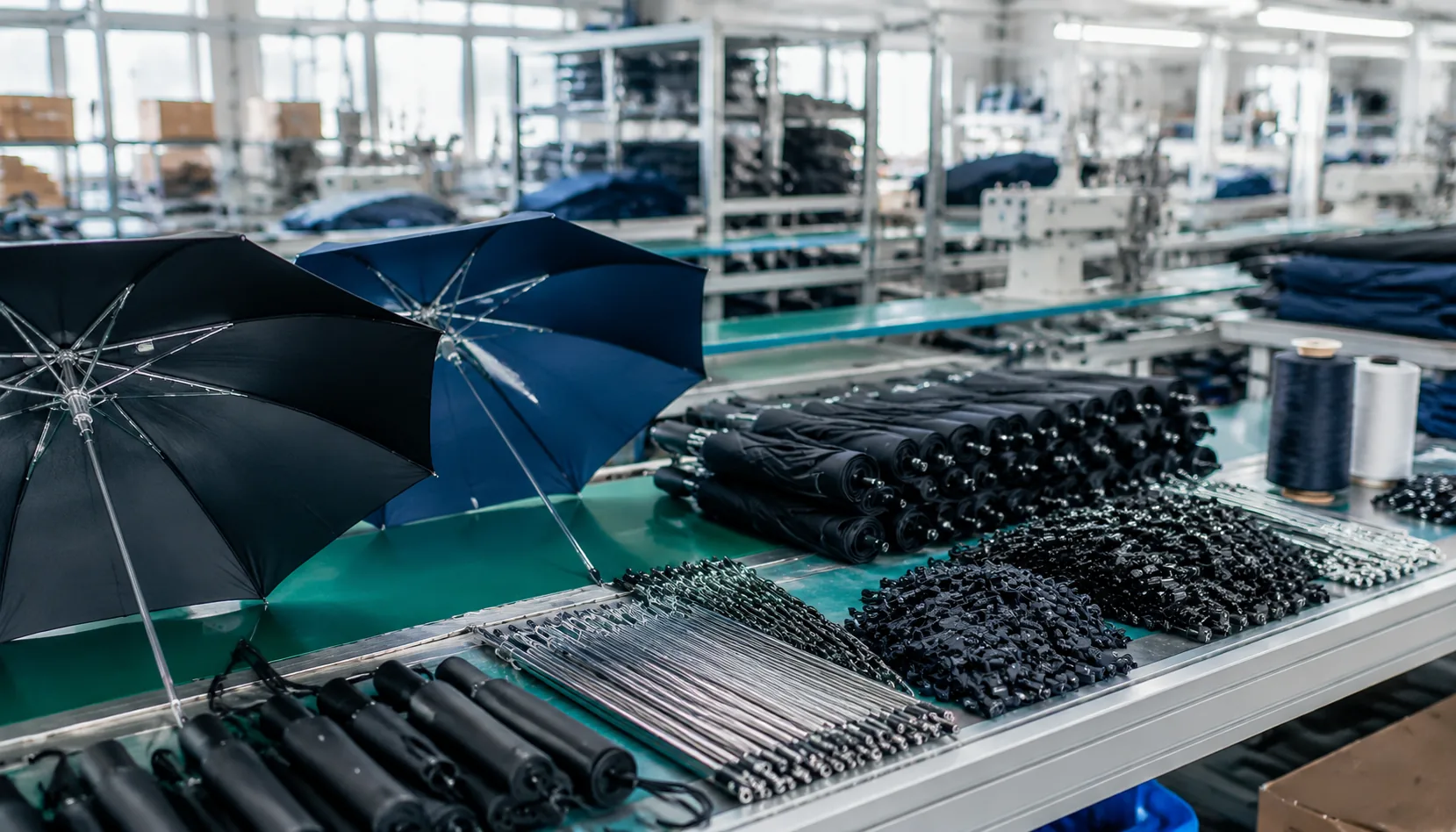
Mini Pocket Umbrellas: Sourcing Guide for Promo and Retail Kits
Compare mini pocket umbrella builds, 5-fold frames, pongee fabrics, auto-open limits, MOQ, QC, and packaging for retail ...
Read More »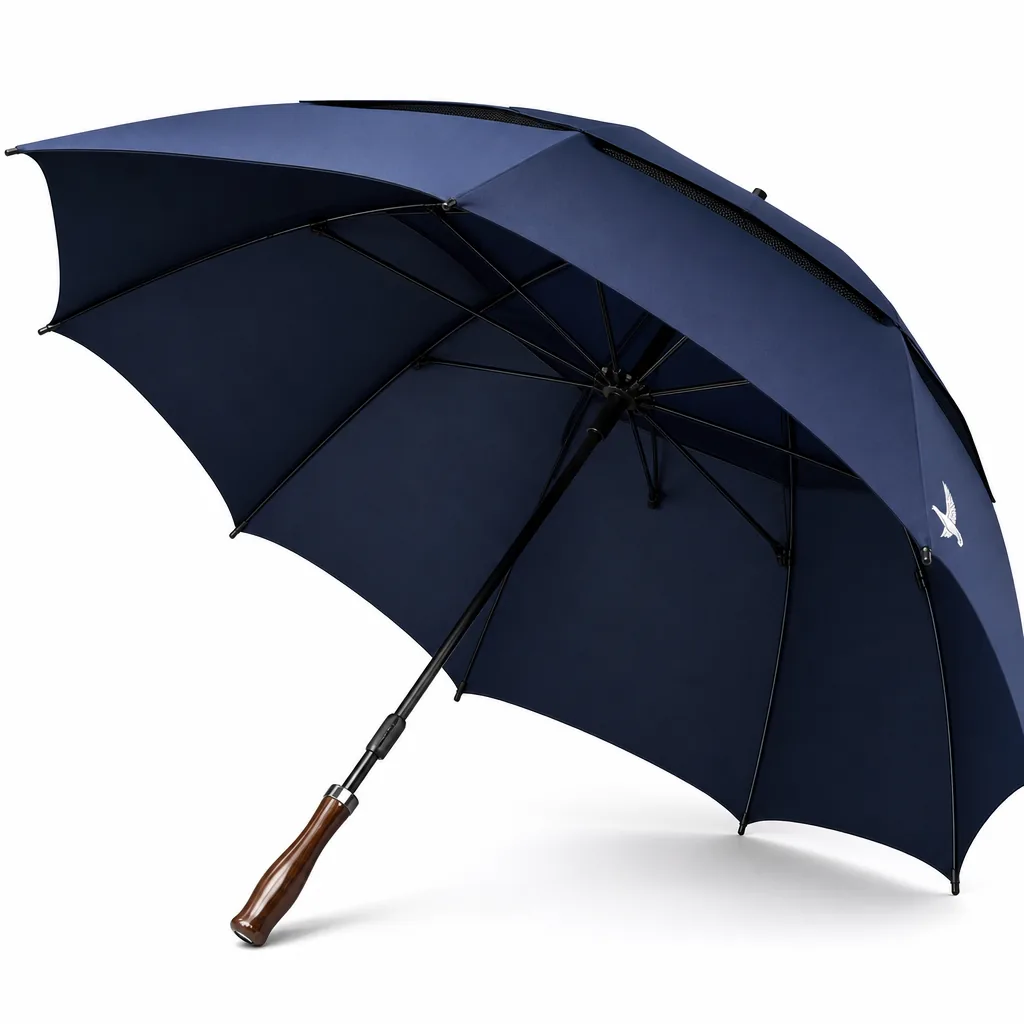
Airport Gift Shop Umbrellas: Compact Specs That Sell
Choose compact umbrella specs for airport retail: durable frames, fast-dry fabrics, barcode-ready packing, MOQ planning,...
Read More »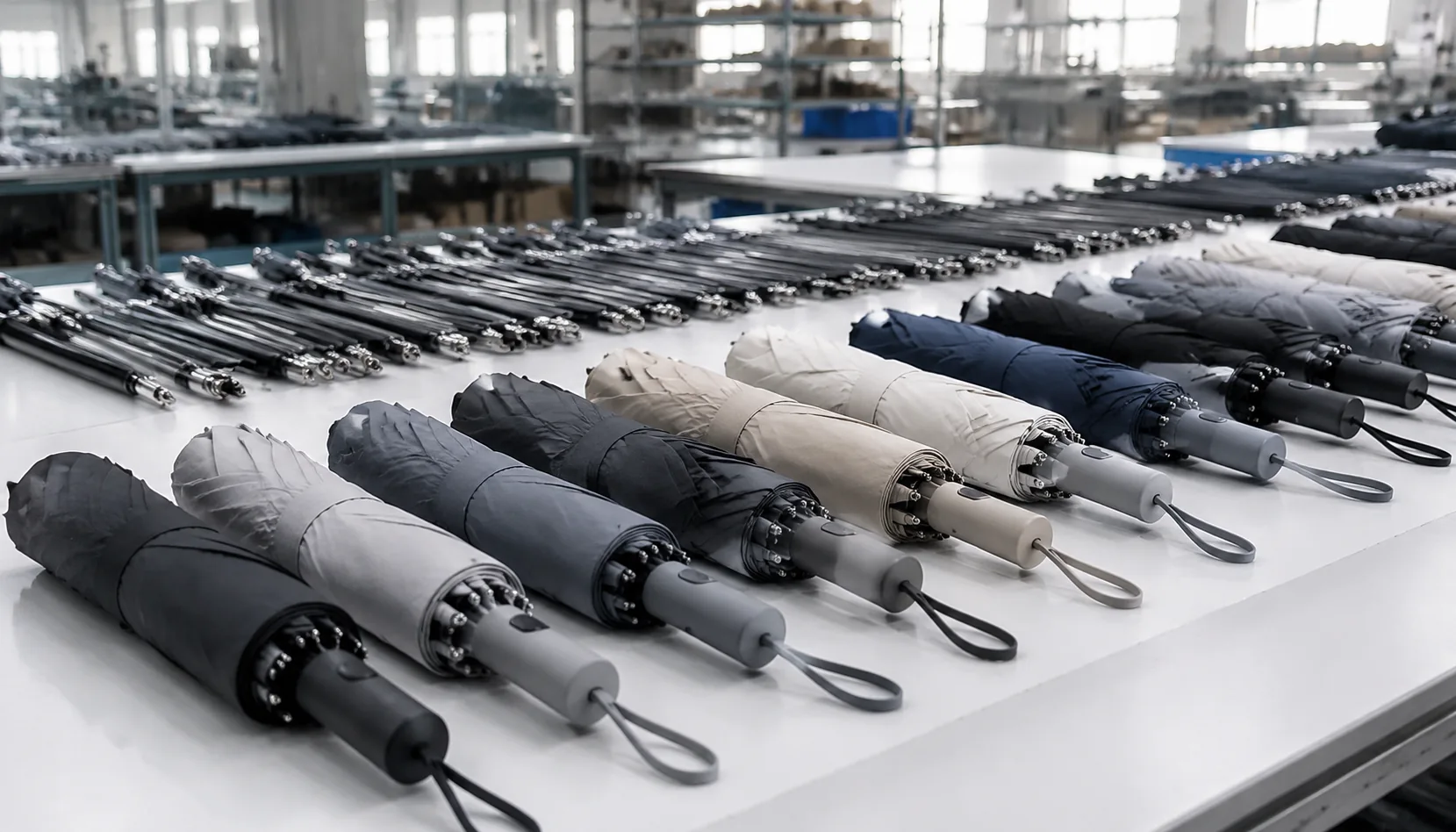
Private Label Compact Umbrellas for Retail Chain Buyers
Plan retail-ready compact umbrellas with 3-fold or 5-fold frames, 190T/210T pongee, barcode packaging, AQL checks, and r...
Read More »