Mini Pocket Umbrellas: Sourcing Guide for Promo and Retail Kits
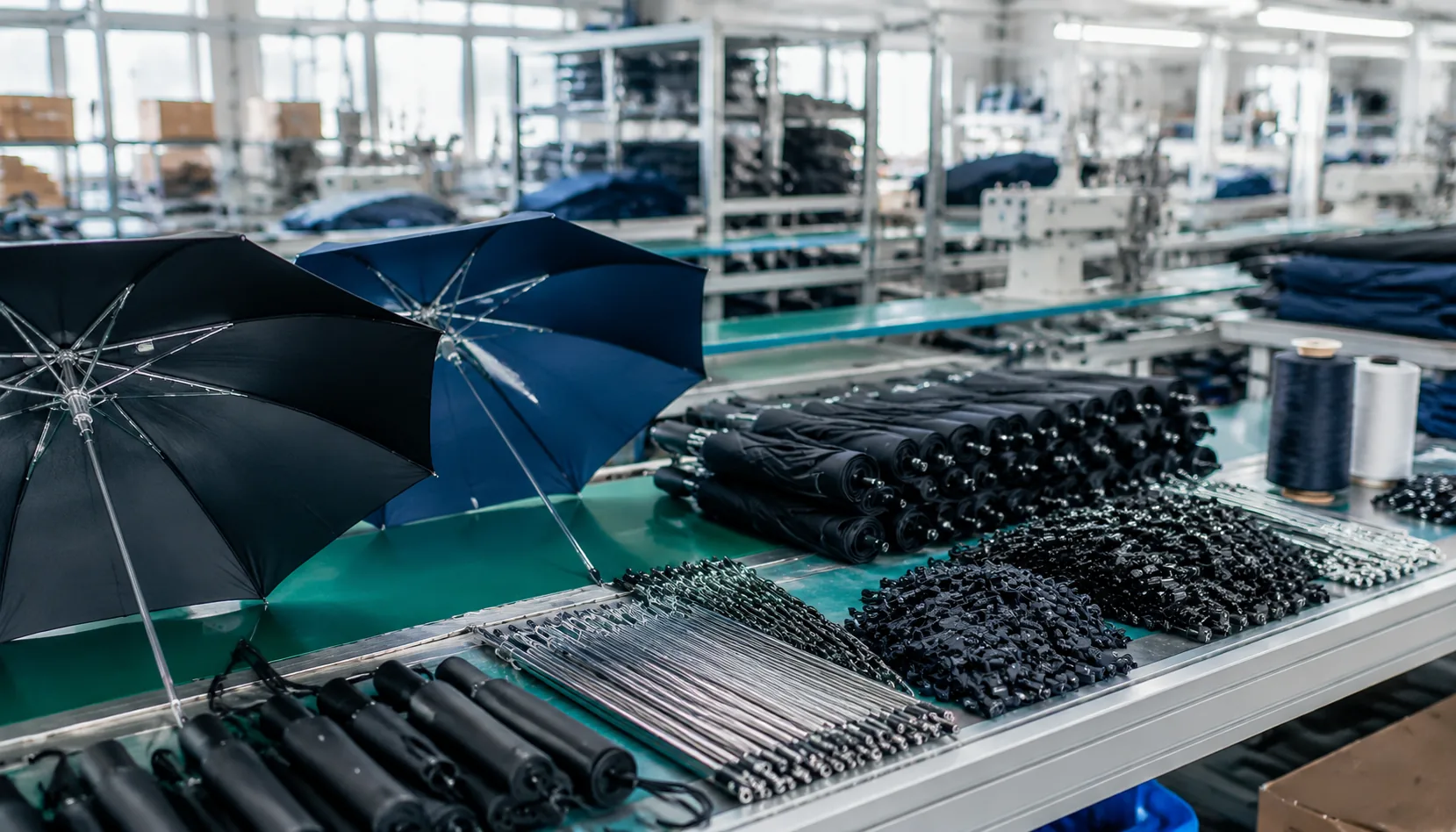
For promo kits and retail assortments, mini pocket umbrellas look simple until the complaints start: bent 5-fold ribs, slippery handles, fabric that wrinkles badly after packing, or cartons that fail a drop test before they reach the shelf. On our Songxia production floor, the real sourcing work is balancing compact size with frame strength, pongee density, coating choice, manual versus auto-open limits, MOQ, QC checkpoints, and packaging that protects both logo finish and sell-through presentation.
Define the Right Mini Umbrella Format
The first sourcing decision is not color or logo placement; it is the folded geometry. Capsule umbrellas use a rounded plastic shell, usually 6.5–7.5 inches closed, and look giftable in tech kits or hotel welcome packs, but the shell adds cost and limits handle options. Flat mini umbrellas fold into a slim rectangle, often 6–8 inches long and 1.5–2 inches thick, so they sit well in handbags, glove boxes, and retail blister packs. A true 5-fold umbrella compresses the shaft and ribs into more segments, reaching about 6–7 inches closed, but every extra hinge is also another tolerance point. When buyers ask for mini pocket umbrellas, I first confirm whether they mean a novelty capsule, a flat travel unit, or a serious rain tool that happens to be short.
Portability always takes something from canopy spread or frame stiffness. A 21 inch mini 5-fold umbrella may open to only 34–37 inches arc diameter, enough for one adult walking from parking lot to office, not enough for a golf course or two-person commute. Steel ribs feel solid in hand and keep unit cost down, but they add weight; fiberglass rib tips improve wind recovery but are harder to fit cleanly in ultra-short frames. For compact promo umbrellas, I usually avoid overselling windproof claims unless the design has at least reinforced joints, a decent runner, and 190T or 210T pongee canopy tensioned correctly. A tiny frame with loose sewing will invert before the material fails.
Perceived retail value comes from how the format feels when opened, not just how small it looks closed. Capsule items photograph well for campaigns, but retail travel umbrellas need a smoother runner, cleaner end caps, and a handle that does not feel like a toy. A 5-fold umbrella supplier should be able to show open diameter, closed length, frame weight, rib count, and packed carton dimensions before quoting; if not, the sample may differ from bulk production. Our standard practice at ZheBrella is to match format to channel: capsule for gift kits, flat manual units for mailers, and stronger 6–8 inch compact formats for retail pegs. A good pocket umbrella manufacturer will also flag when a 6 inch target makes the umbrella too fragile for AQL 2.5 inspection expectations.
Balance Frame Weight and Durability
Frame weight is the first trap in mini pocket umbrellas because buyers want a 17–19 cm closed length, then ask for “windproof” performance like a 23" stick umbrella. For true pocket sizes, the common build is a 5-fold aluminum shaft with steel ribs or mixed steel/fiberglass ribs. Aluminum keeps the center shaft light and corrosion-resistant, but it bends more easily if the runner is forced during closing. Steel ribs add spring memory and better cost control, yet they increase total weight and can rust if plating is poor. A 6K frame is lighter and packs flatter, suitable for giveaway kits and hotel amenities. An 8K frame feels more stable in hand and is the better choice for retail travel umbrellas where users will open and close it hundreds of times.
Fiberglass upgrades matter most at the outer rib sections, not everywhere. In a 5-fold umbrella, the stress concentrates at the rib tips, middle hinges, and stretcher-to-runner connection because every fold adds another pivot point. A pocket umbrella manufacturer should reinforce these joints with thicker rivets, clean hole punching, and washers or nylon bushings where the design allows. If the rib hole is rough or oversized, the umbrella may pass first inspection but loosen after 50–100 cycles. Our standard practice at ZheBrella is to cycle-test compact promo umbrellas before bulk sewing, because a pretty 190T pongee canopy cannot save a frame that twists under repeated folding stress.
A 16K frame is uncommon in pocket sizes for a practical reason: too many ribs crowd the small cap, runner, and folded canopy thickness. It also makes the umbrella harder to close neatly, especially with 210T pongee or UV black-coated fabric. For most mini pocket umbrellas, 6K and 8K are the realistic options; 10K can work for premium retail programs, but tooling and folding bulk must be checked early. If a buyer asks a 5-fold umbrella supplier for 16K, I usually redirect them to a 23" or 27" windproof model with a double-canopy vent. In pocket formats, durability comes less from rib count and more from balanced material selection, accurate riveting, and reinforced hinges at the first and second fold points.
Select Fabric and Weather Performance Specs
For mini pocket umbrellas, fabric choice is a balance between hand feel, packed diameter, and how cleanly the canopy folds back into the sleeve after use. 190T pongee is the practical baseline for compact promo umbrellas because it is light, folds small, and still gives a tighter weave than cheap polyester taffeta. 210T pongee feels denser and smoother, with better print definition for small logos, but it adds a little thickness at every fold panel; on a 5-fold frame, that extra bulk is noticeable when the closed length is only 17–19 cm. I normally recommend 190T for high-volume giveaways and 210T for retail travel umbrellas where the buyer will handle the product before purchase. If the project uses heat-transfer logos, both fabrics work, but sublimation is cleaner on white or light 190T/210T polyester because ink sits evenly without heavy hand feel.
Water-repellent finishing matters more than the fabric number on a small canopy. A decent DWR or Teflon-type coating should make rain bead and roll off within the first shake, not soak into the fold lines. For mini pocket umbrellas, seam density should be controlled because too many needle holes along the panel seams slow drying and can create weak leak points after repeated folding. We usually target neat, even stitching at 7–9 stitches per inch, with reinforced tips and a clean top cap seal. Faster drying comes from a smooth pongee surface, correct tension during sewing, and avoiding thick logo ink that blocks runoff. As a pocket umbrella manufacturer, ZheBrella checks canopy beading after spray testing and also inspects whether the umbrella can be packed back into its sleeve after 3–5 minutes of air drying, because that is how buyers actually use it.
UPF 50+ coating is practical when the kit is positioned for summer travel, resort retail, golf events, outdoor festivals, or airline amenity packs, but it should be specified early because silver, black, or UV-blocking inner coatings affect color, hand feel, and print method. A UPF 50+ compact canopy blocks roughly 98% of UV radiation when properly coated, but the fabric becomes less breathable and slightly stiffer, so it is not always necessary for low-cost indoor conference giveaways. Double-canopy vented windproof designs can survive stronger gusts, especially with fiberglass ribs, but they are not ideal for every 5-fold umbrella supplier program. The second canopy layer, vent overlap, extra stitching, and longer rib geometry add bulk, weight, and cost. For true pocket size, I prefer a well-tensioned single canopy with 6K or 8K steel-and-fiberglass ribs unless the buyer accepts a thicker sleeve for better wind performance.
Decide Branding, Packaging, and Kit Fit
Branding on mini pocket umbrellas has to be planned around geometry, not just logo size. A 19" or 21" 5-fold canopy has short panel height, tight seams, and more curve than a normal 23" stick umbrella, so a logo that looks clean at 180 mm on a golf umbrella may need to drop to 90–120 mm wide here. For single-panel screen printing, I usually keep artwork centered between ribs with at least 20 mm clearance from seam tape and 35 mm from the canopy edge to avoid distortion during sewing and closing. Heat transfer works better for gradients and small text on 190T or 210T pongee, while sublimation is suitable when the full canopy is white polyester and the buyer accepts higher setup discipline. If you are sourcing from a pocket umbrella manufacturer, ask for a printed panel mockup on the actual folded frame, not only a flat artwork proof.
The sleeve is often the best logo position for compact promo umbrellas because it stays visible after the umbrella is folded and handed out at an event. A woven label, rubber patch, or one-color screen print on the sleeve usually gives more daily exposure than a small canopy mark hidden in a bag. Handles can take pad printing or laser marking if they are ABS, PP, or aluminum, but the printable area may be only 25–45 mm wide on capsule-style 5-fold models. Capsule cases are popular for retail travel umbrellas, especially EVA or hard PP shells, but they add tooling checks: cap fit, hinge stress, and whether the wet canopy can realistically go back inside without the customer fighting it. Our standard practice at ZheBrella is to test logo abrasion on handles and cases during pre-production, because glossy coatings can fail tape tests even when the umbrella itself passes AQL 2.5 inspection.
Packaging should be specified before quotation, because it changes carton size, labor time, barcode workflow, and DDP freight cost. Distributor programs normally use a clear OPP bag with warning text, color sticker, UPC or EAN barcode label, and 12 or 24 pieces per inner carton; retail kits may need a printed hang tag, belly band, gift box, or PDQ display tray. For a 5-fold umbrella supplier, a typical master carton might hold 50 or 100 pieces depending on capsule case diameter, with gross weight around 13–18 kg and carton dimensions adjusted to avoid crushed gift boxes. If the umbrella goes into a larger onboarding kit, confirm the final folded length, usually 15–18 cm for true mini models, plus tolerance for sleeve thickness. Good suppliers will run a carton drop check, scan test barcodes, and provide carton marks with PO number, SKU, color ratio, quantity, and destination before FOB or DDP shipment.
Control MOQ, Lead Time, and Inspection Risk
MOQ control starts with fabric choice, not the logo. For mini pocket umbrellas, stock 190T pongee in black, navy, red, royal blue, and white can usually stay at 500–1,000 pcs per color because the mill roll is already available and the cutting loss is predictable. Custom-dyed fabric is a different job: expect 3,000–5,000 pcs per color, plus 7–10 days for lab dip approval and another 5–7 days if the buyer changes the shade after checking under D65 light. For compact promo umbrellas with a one-color screen print, the smarter route is often stock canopy plus custom sleeve print, because the case gives a clean branding surface without forcing dyed fabric MOQ. A 5-fold umbrella supplier should also confirm folded length before quotation; a 17–18 cm unit has tighter frame tolerances than a standard 21 inch compact, and cheap rib sets will fight the case during packing.
Pre-production samples should be treated as a risk filter, not a souvenir. A digital mockup is fast, but I do not trust color placement until we see one physical PP sample with the actual handle, sleeve, strap, canopy fabric, and print method. For stock fabric and screen print, PP sample timing is normally 5–7 days after artwork confirmation; heat-transfer or full-panel sublimation can take 7–12 days because film, positioning, and shrinkage need checking. Custom-dyed canopy adds the lab dip stage before sample making, so 12–18 days is more realistic. Bulk lead time for retail travel umbrellas is usually 25–35 days after PP approval for 1,000–5,000 pcs, and 35–50 days when custom fabric, gift-box packing, barcode labels, or carton drop-test requirements are added. Our standard practice at ZheBrella is to freeze artwork, Pantone, folded size, and packing method before collecting deposit, because changing one of those after cutting starts creates real scrap.
Inspection risk on small umbrellas is higher than buyers expect because the user feels every defect by hand. Under AQL 2.5, I would sample for folding smoothness, runner lock strength, rib alignment, canopy tension, shaft straightness, and case fit before checking cosmetics. The open-close cycle should not grind, the runner should lock without thumb pain, and the folded canopy should slide into the pouch without workers forcing it. On mini pocket umbrellas, misaligned 6K or 8K ribs can twist the canopy after only a few cycles, especially when the frame mixes aluminum shaft sections with thin steel ribs. For promo orders, also inspect logo position after folding; a good print on the open canopy can look crooked once packed. Require a pre-shipment report with defect photos, carton count, gross weight, and at least 20 cycle tests per inspected lot, because FOB and DDP claims become expensive once the goods leave Ningbo or Shanghai port.
Frequently Asked Questions
Can mini pocket umbrellas be auto-open?
Some compact umbrellas can use auto-open mechanisms, but very small 5-fold pocket styles are often manual because spring systems add length and weight. Buyers should confirm closed length and mechanism life testing before approval.
Are mini pocket umbrellas suitable for windproof claims?
They can be reinforced with fiberglass ribs, but pocket umbrellas have less leverage and smaller parts than full-size models. Avoid broad windproof claims unless the supplier validates the exact frame with wind or cycle testing.
What is the practical difference between a 3-fold and 5-fold mini pocket umbrella for retail kits?
A 5-fold frame usually collapses shorter than a 3-fold umbrella, which helps retail kits fit smaller boxes and gift sets. The tradeoff is a slightly more complex frame, so buyers should verify opening smoothness and rib strength during QC.
What MOQ is typical for custom mini pocket umbrellas with logo printing?
For OEM/ODM orders, MOQ often starts around 500-1,000 pcs per color or design, depending on canopy fabric, handle, and print method. Mixed colors may be possible, but packaging and logo setup usually affect the final minimum.
Are auto-open mini pocket umbrellas suitable for promotional giveaways?
Yes, but many factories limit auto-open to a compact manual-close design because very small frames can be harder to control during closure. For promo kits, buyers should confirm opening force, button durability, and whether the umbrella can pass repeated cycle testing.
Looking to Launch Your Custom Umbrella Line?
ZheBrella is a Zhejiang-based OEM/ODM umbrella manufacturer with 17 years of export experience. Free design, low MOQ from 100 pieces, windproof construction, full-color print.
Get Free Quote Now »People Also Search For
Related Articles
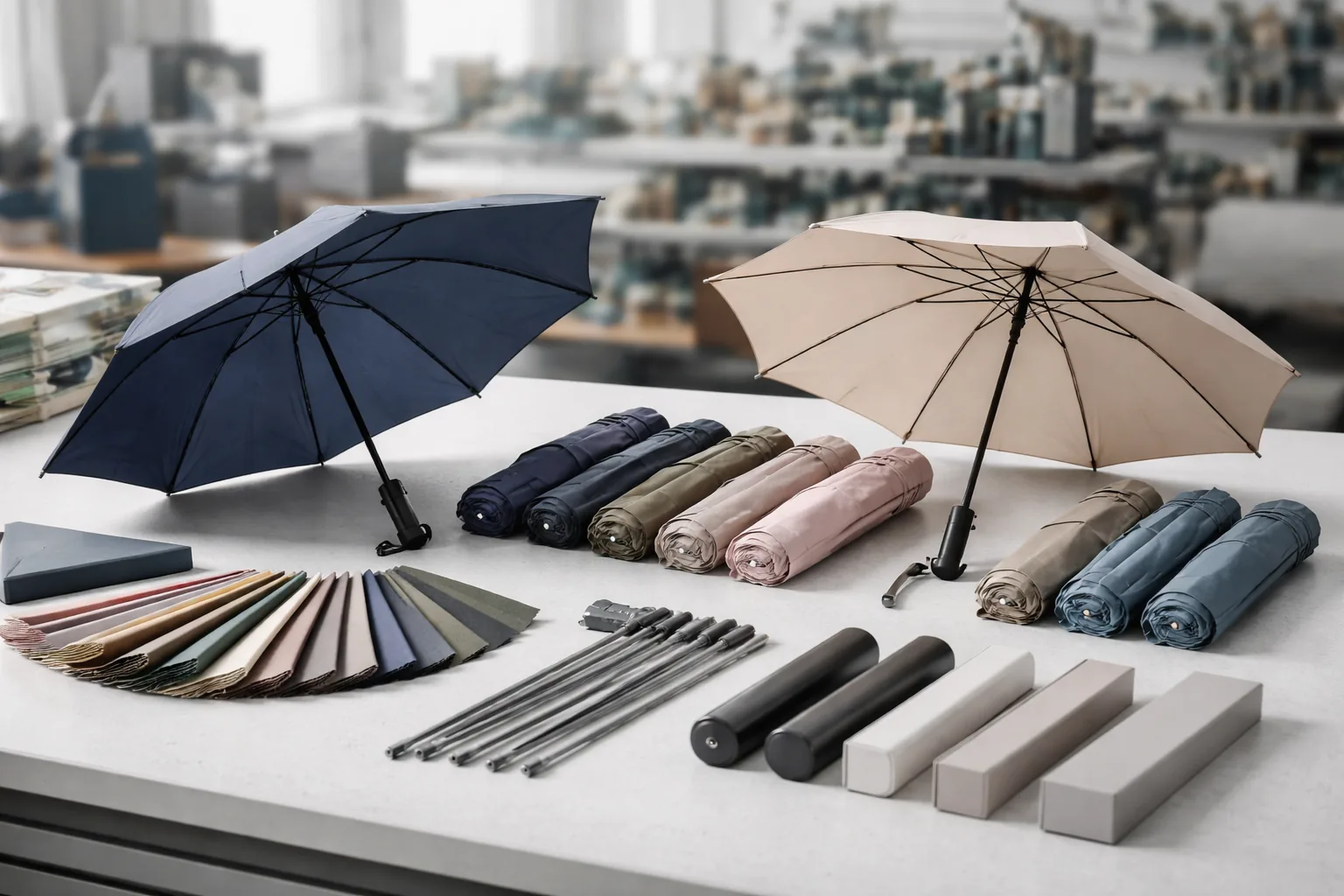
Flat Mini Umbrellas: Retail Buyer Spec and Sourcing Guide
Source flat mini umbrellas for retail with clear specs for folding structure, rib strength, pongee fabric, coating, pack...
Read More »
Mini Capsule Umbrellas for Promo Kits: Buyer Spec Guide
Learn how to specify mini capsule umbrellas for promo kits, from 5-fold frames and pongee fabric to printing, MOQ, lead ...
Read More »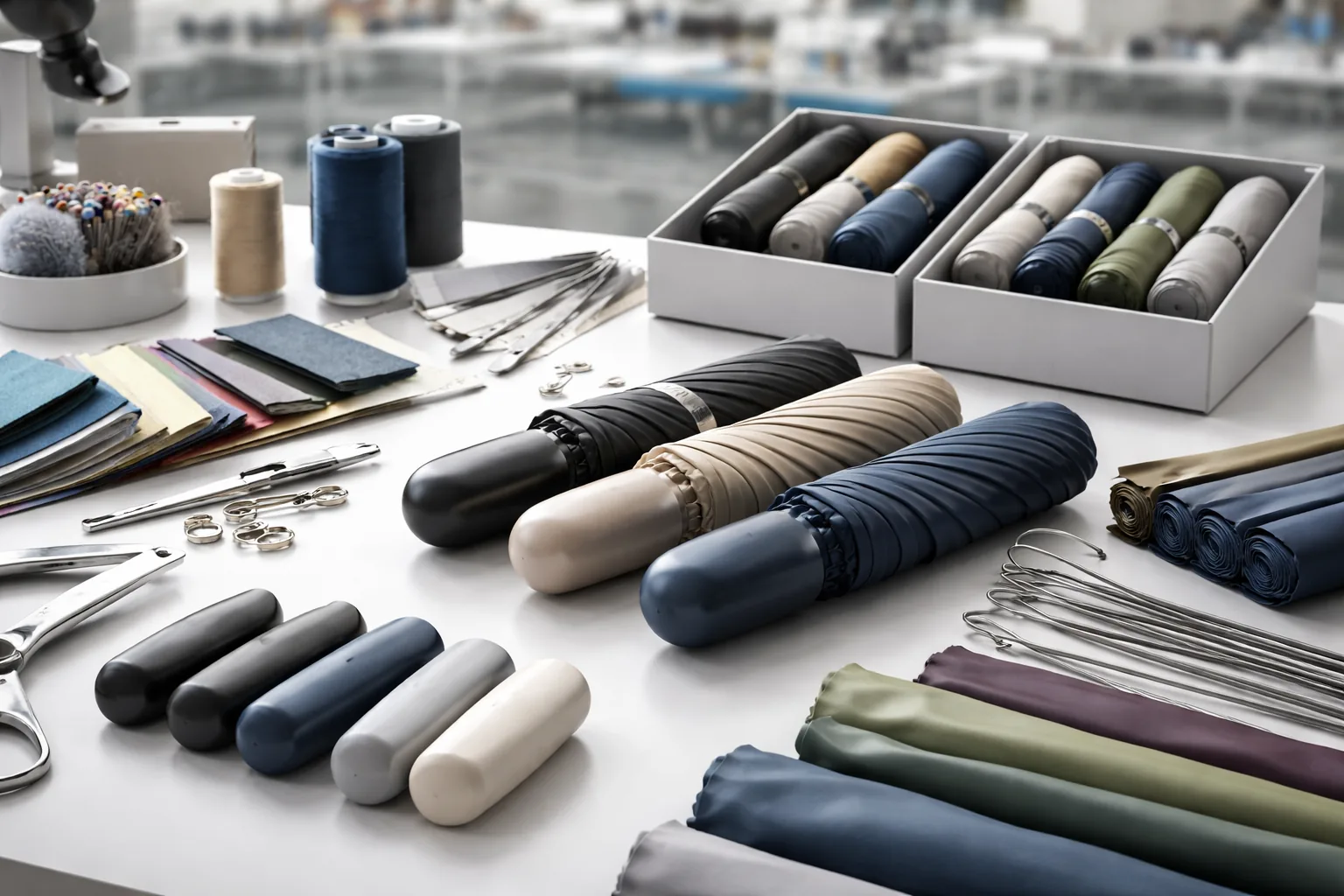
Mini Capsule Umbrellas: OEM Spec Guide for Promo Buyers
Source mini capsule umbrellas by comparing fold size, rib strength, pongee fabric, cases, MOQ, and QC needs for practica...
Read More »