Travel Umbrella Specs for Airline Amenity and Retail Programs
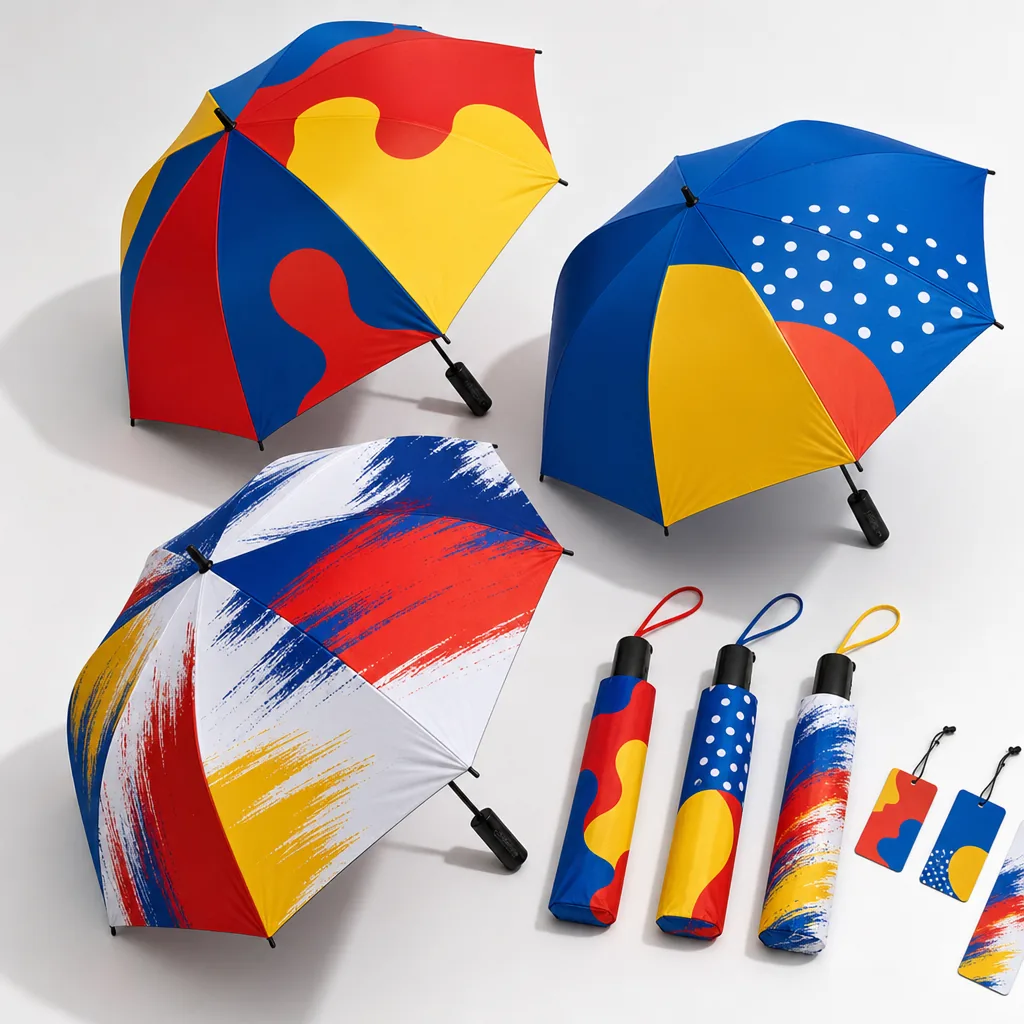
Buying travel umbrellas for airline amenity carts or retail sets is a balancing act between size, weight, durability, and packability. As a travel umbrella supplier working from the factory floor, I see how a few millimeters in folded length, a few grams in frame choice, or the wrong pouch spec can turn a promising program into returns, complaints, and missed margins.
Define the Use Case: Amenity Kit, Gift, or Retail Shelf
Airline amenity umbrellas should be specified for pack-out first and durability second. For an airline amenity umbrella, a closed length of 18 to 23 cm and a finished weight of 180 to 260 g usually works best in a kit, with a soft sleeve or EVA pouch expected to protect other items and reduce wasted space. A compact travel umbrella in this format should avoid exposed metal tips and sharp runner edges, since those can tear pouches and increase damage claims. 5-fold umbrella OEM constructions are common here because they collapse shorter than 3-fold frames, but they add joints, assembly time, and QC risk on the shaft, ribs, and locking runner. Keep the spec simple: fiberglass ribs for flexibility, a 190T or 210T pongee canopy, and carton counts that match the kit loadout so freight stays predictable.
Hotel gifting sits between amenity and retail, so the target shifts toward better hand feel and a cleaner presentation. A practical range is 23 to 28 cm closed and 220 to 320 g, often on a 21-inch canopy with fiberglass ribs and manual-open or auto-open construction. That size still fits a welcome kit, minibar drawer, or carry-on pocket, but it feels more substantial than a basic airline amenity umbrella. Packaging can stay light if the property is cost-sensitive: a printed sleeve, hang tag, or kraft box is usually enough. If the hotel wants a premium unboxing experience, a pouch or rigid box makes sense, but both increase unit cost and shipping volume. A travel umbrella supplier should match the handle thickness and canopy weight to the gift tier, because overly heavy models are the ones guests leave behind.
Retail travel accessories need the strongest shelf appeal and the most complete retail-ready umbrella packaging. Buyers usually accept a slightly larger compact travel umbrella, typically 24 to 30 cm closed, because shoppers expect a sturdier frame and a more believable canopy size. This channel often supports a printed carton, barcode label, insert card, and a sleeve that holds the canopy centered in transit; a pouch is optional, but a box is common when the umbrella is sold as a giftable item. For retail, the spec should also account for compliance and returns risk: smoother tips, tighter canopy stitching, and a consistent open-close cycle matter as much as price. ZheBrella separates airline amenity, hotel gifting, and retail use cases early because each one changes cost, lead time, and freight math, even when the tooling starts from the same canopy size.
Choose the Right Compact Structure and Materials
For airline amenity and retail programs, the frame choice should start with packed length, cycle life, and baggage-damage risk. A 3-fold compact travel umbrella usually closes to 23–25 cm, so it can use a sturdier shaft, fewer hinge points, and tighter ferrule alignment. That makes it the safer default for a travel umbrella supplier serving airline amenity umbrella programs, where repeated opening and closing matter more than the smallest size. A 5-fold umbrella OEM build compresses to about 18–20 cm, which is better for pocket carry and retail-ready umbrella packaging, but each added joint increases play, assembly cost, and the chance of looseness if the pivots are not held to tight tolerances. In practical buying terms, 3-fold gives better durability per dollar; 5-fold wins when shelf appeal and minimum packed size outweigh longer service life.
Material specs should match the failure mode you want to avoid. Aluminum shafts cut weight, but thin-wall aluminum can kink if users twist the top section during closing. Steel shafts are cheaper and stronger in straight compression, but they add weight fast and are less suitable for a compact travel umbrella unless the model is built for low-cost promotion. The most balanced build is an aluminum shaft with fiberglass ribs, using steel only in selected runner or stretcher parts. Fiberglass absorbs wind flex better than all-steel rib sets and reduces snap failures, which is why 8K remains the common rib count for travel umbrellas: it keeps the canopy round without adding unnecessary mass. With pongee 190T or 210T and a 95–105 cm open diameter, 8K is usually the best fit. Auto-open is feasible on 3-fold frames and some 5-fold models, but only if the spring, slider, and shaft tolerances are controlled tightly; once the unit climbs above about 260–280 g, auto-open-close starts to feel heavy, especially on a small handle. For most airline amenity umbrella orders, manual open or auto-open is the lower-risk choice; for retail, auto-open works when the mechanism stays reinforced and the weight target remains around 220–260 g.
Select Canopy Fabric, UV Features, and Drying Performance
For a compact travel umbrella, pongee 190T and 210T are the standard canopy choices. 190T is the lighter, more packable option, so it works well for a 5-fold umbrella OEM build where sleeve size and carton density matter for airline amenity umbrella programs and retail-ready umbrella packaging. 210T uses a tighter weave, which usually gives a smoother hand feel, better edge definition for screen print or heat-transfer logos, and a slightly more durable canopy after repeated stuffing. When you compare a travel umbrella supplier, ask for the finished canopy diameter, fabric denier or weave count, and coating type, not just “pongee”; those specs determine wrinkling, fit in the pouch, and how the umbrella looks after repeated open-close cycles.
A black UV coating is the usual upgrade when the buyer needs UPF 50+ without moving to a heavier POE or PVC canopy. It adds sun blocking and gives a darker base for logo visibility, but it also increases unit cost and slows drying because the coated face holds more moisture. On 21" and 23" frames, the coating can also make the hand feel firmer than uncoated pongee. For a price-sensitive promo order, plain 190T or 210T is usually the better buy; for an airline amenity umbrella where perceived value matters, the UV upgrade can justify the added cost. If the umbrella must cover both rain and sun use, specify whether the coating is full-panel or top-panel only, since partial coverage can protect the print area while reducing dry time.
Drying performance depends on the full build, not a “quick dry” claim. Uncoated 190T pongee sheds water faster and returns to the sleeve sooner, which is useful for carry-on storage and seat-pocket use. 210T gives a more premium feel and usually better print sharpness, but it may retain slightly more water depending on the finish. Once black UV coating is added, the coated side dries slower and feels stiffer, so buyers should weigh UPF 50+ against cleanup time and fabric hand feel. For mixed travel and retail programs, ask the travel umbrella supplier to quote coating coverage, panel count, MOQ, lead time in days, and AQL 2.5 inspection terms so cost, durability, and post-use drying are clear before launch.
Plan Branding, Packaging, and Carton Efficiency
For a compact travel umbrella, branding must fit a small, folded surface and survive repeated compression. The canopy still carries the main logo, but keep it simple: one-color screen print or a small heat-transfer mark positioned away from seams, tips, and the runner path. On a 5-fold umbrella OEM build, the best low-risk package is one canopy panel imprint, one sleeve print, and a small woven or printed handle tag if the handle design allows it. A travel umbrella supplier should avoid graphics that cross stitch lines or rib attachment points, because those areas stretch first and distort after dozens of open-close cycles. On 21" and 23" models, narrow marks and short text blocks hold up better than large full-panel art, which tends to wrinkle when the canopy is packed tight.
Carton inserts are usually more efficient than oversized hangtags for airline amenity umbrella and retail-ready umbrella packaging programs. A printed insert can carry the SKU, UPC, folding sequence, care copy, and warning text in the buyer’s language without adding snag risk or extra material weight. For hotel kits, inflight sets, or other compact travel umbrella programs, the insert can also show the correct unfolding order, which helps reduce guest misuse and returns. Keep dark-canopy artwork low-coverage where possible: heavy ink blocks may look clean at approval but become harder to read once the fabric creases in transit. If barcode control matters, the insert is the lowest-cost place to add it without changing the umbrella build.
Set Sourcing Terms: MOQ, QC, Lead Time, and Shipping
Set the frame spec before you discuss price or delivery. For a compact travel umbrella built on a stock 5-fold steel-and-fiberglass frame, MOQ is typically 500-1,000 pieces per color when you keep the factory’s standard handle, sleeve, and tie-strap. That is a private-label order, not a full 5-fold umbrella OEM program. Once you change the handle mold, runner, 6K rib geometry, or closed length to meet an airline seat-pocket limit, MOQ usually rises to 3,000-5,000 pieces and may increase again if tooling is required. The cost impact is not only the mold. Custom frames also need extra validation on shaft lock consistency, spring action, and drop resistance before bulk production starts. For an airline amenity umbrella, confirm packed length and packed diameter at the quoting stage. A 190T pongee canopy packs differently from 210T, and fiberglass ribs collapse differently from all-steel ribs, so fabric and frame choices can change whether the umbrella fits the approved pouch, tray, or galley-cart slot.
Build the schedule from the delivery date backward. A blank stock-frame sample is often ready in 2-4 days; a branded pre-production sample with matched canopy fabric, screen print or heat-transfer artwork, woven label, and retail-ready umbrella packaging usually takes 7-12 days. If the pouch must meet a fixed packed-dimension tolerance, allow extra sample rounds and approve those measurements in writing. For mass production, a repeat stock-frame order typically needs 25-35 days after sample approval and deposit, while a first-run custom frame is more realistically 40-60 days; lead times can extend in peak rain-season bookings, when rib assembly and canopy sewing capacity tighten first. Put QC terms directly in the PO: AQL 2.5 for major defects and 4.0 for minor defects is a practical export standard, with inspection points covering open-close function, canopy centering, seam slippage, print registration, needle damage, rust marks, and carton drop performance. FOB is sufficient when the buyer has a forwarder, can consolidate SKUs, and manages destination compliance. DDP is often the better choice for a smaller import program or pilot launch that wants one landed-cost figure and tighter coordination from the travel umbrella supplier through customs, duty, and final delivery.
Frequently Asked Questions
What is the most practical size for a branded travel umbrella?
For most travel programs, buyers choose a 5-fold umbrella around 17-19 cm closed or a 3-fold around 28-30 cm closed. The 5-fold wins on portability, while the 3-fold usually offers better durability and easier auto-open options.
Can a travel umbrella still offer UPF 50+ protection?
Yes, if the canopy uses a UV-blocking coating, often on pongee 190T or 210T fabric. Buyers should confirm test data because dark coatings can improve UV performance but may slightly affect hand feel and drying behavior.
What is the practical weight difference between 3-fold and 5-fold travel umbrellas?
A typical 3-fold travel umbrella is about 220-320 g, while a 5-fold model is often 160-260 g depending on frame and canopy size. For airline amenity programs, buyers usually prefer the lighter 5-fold option when packing space is limited.
Which umbrella spec is better for retail-ready packaging, 3-fold or 5-fold?
3-fold umbrellas usually display better in carton windows, sleeves, or gift boxes because they hold a more standard shape. 5-fold umbrellas are better when shelf space and shipping volume matter, but they may need tighter packaging inserts to prevent movement.
What lead time should a B2B buyer expect for custom travel umbrellas?
For standard OEM travel umbrellas, sample production is often 5-7 days and mass production is usually 30-45 days after artwork approval. If the order includes custom packaging or special fabric, plan on an additional 7-10 days.
Looking to Launch Your Custom Umbrella Line?
ZheBrella is a Zhejiang-based OEM/ODM umbrella manufacturer with 17 years of export experience. Free design, low MOQ from 100 pieces, windproof construction, full-color print.
Get Free Quote Now »People Also Search For
Related Articles
Travel Umbrella Specs for Airline Giveaways and Duty Free
Compare 3-fold and 5-fold travel umbrella specs, packaging, and freight tradeoffs so buyers can source compact branded u...
Read More »
Top 5 Folding Umbrella Specs for Airline and Hotel Gifts
Use five sourcing criteria to specify compact folding umbrellas for airline kits, hotel amenities, travel retail, and gu...
Read More »Travel Umbrella Specs for Airline, Hotel, and Retail Buyers
Compare travel umbrella specs that affect resale and guest use, from folded length and weight to frame materials, canopy...
Read More »