Travel Umbrella Specs for Airline Giveaways and Duty Free
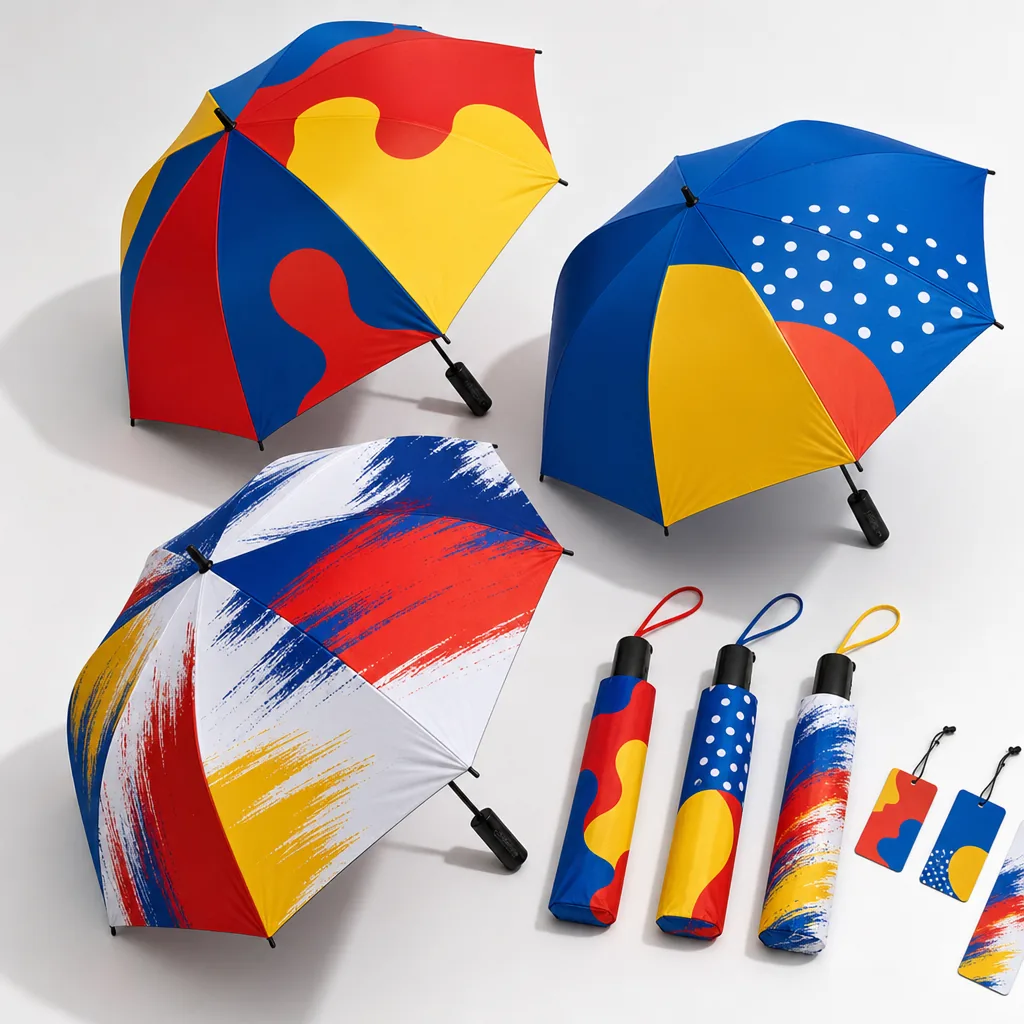
Airline and duty-free buyers often start with a target folded length, but the real costs show up later in rib strength, pouch fit, carton count, and logo placement tolerances. On our Songxia factory floor, a travel umbrella for giveaways is usually a choice between 3-fold reliability and 5-fold compactness, with each decision affecting packing speed, defect risk, and freight efficiency. Getting those specs clear before sampling prevents expensive surprises at shipment time.
Define the Right Travel Umbrella Format
Specify a 3-fold frame for airline amenity programs, lounge gifts, credit-card rewards, and most travel retail SKUs unless packed length is the main constraint. A standard 21-inch 3-fold closes at 27–30 cm and typically weighs 280–360 g, depending on steel, aluminum, and fiberglass content. It still fits a seat-back pocket, cabin tote, or hotel drawer, but the longer rib sections and smoother runner travel make it feel less fragile after a windy airport transfer. For a travel umbrella for giveaways, this format also supports 190T or 210T pongee, a straight or rubberized handle, and an auto open travel umbrella mechanism without pushing carton volume into an inefficient freight tier. Buyers targeting premium channels usually get better perceived value from the 3-fold because the open diameter, grip size, and frame stiffness feel closer to an everyday umbrella.
Use a 5-fold only when compactness protects the commercial model: duty free counter displays, inflight cart programs, hotel travel kits, or co-branded bundles where every centimeter affects planogram space and DDP freight. Typical closed length is 16–19 cm. Manual 5-fold umbrellas often weigh 190–260 g; reinforced versions can reach 230–300 g. The cost is higher breakage risk: more joints, more hinge play, smaller tips, shorter rib sections, and tighter assembly tolerances. A compact fold umbrella specs sheet should state the rib system, not just the fold count. Steel ribs reduce cost but add weight; aluminum with fiberglass end ribs improves recovery after inversion and keeps the frame lighter. Treat “5-fold, auto open-close, lowest price” as a red flag unless the program accepts modest wind performance and a shorter service-life expectation.
Portability adds value only until the umbrella feels disposable. A well-built 3-fold with 8K ribs, metal shaft, fiberglass-reinforced end ribs, and 190T pongee will usually outlast a souvenir-priced 5-fold designed mainly to minimize length and weight. For a duty free umbrella supplier program, match the format to the retail promise: 3-fold for reliable everyday travel use; 5-fold for emergency rain coverage and premium compactness. Logo umbrella packaging also changes both cost and shelf impact. A rigid gift box makes a 3-fold look like a branded accessory but increases carton volume; a sleeve or EVA pouch keeps a 5-fold pocketable and can reduce DDP freight cost. ZheBrella prototypes both formats, compares closed length, open diameter, drop-test results, and AQL 2.5 inspection data, then confirms MOQ and production lead time against the launch date.
Choose Materials That Balance Weight and Durability
Specify the frame by finished weight, opening stress, and failure mode, not rib count. A practical travel umbrella for giveaways is usually an 8K compact frame: fiberglass ribs, an aluminum center shaft, and steel or reinforced stretchers at hinge points. Fiberglass ribs flex back after inversion; steel ribs reduce unit cost and feel rigid, but can take a permanent bend if a traveler forces the canopy open in a 40 mph gust outside a terminal. Full aluminum frames save grams, yet thin-wall aluminum shafts can feel soft or develop runner wobble after repeated auto-open cycles. For 21" and 23" folding umbrellas, this fiberglass/aluminum/steel hybrid typically lands around 280–360 g finished weight, which affects air freight, duty-free carton replenishment, and airline amenity-kit limits.
Do not upgrade to 16K just because it sounds premium. In compact fold umbrella specs, 16 ribs mean more rivets, more sewing points, more inspection points, and a larger folded diameter. On a 21" auto open travel umbrella, that extra bulk can make the closed profile too thick for a seat pocket, amenity kit, or carry-on side slot. A well-tooled 8K fiberglass frame with tight rivets, balanced panel tension, and smooth runner action is lower risk than a loose 16K frame because fewer parts can misalign during packing, transit, and passenger use. If the program needs a stronger retail look, spend the added budget on a better handle, smoother push-button mechanism, tighter sleeve, or logo umbrella packaging before adding ribs most travelers will not count.
Fabric sets water resistance, folded thickness, and carton cube. 190T pongee is the standard airline choice because it folds flatter, dries fast enough for travel use, and accepts screen print or heat-transfer logos without making panels stiff. 210T pongee has a denser hand and can shed water better after coating, but it increases packed diameter on 3-fold frames and even more on 5-fold designs. For a duty free umbrella supplier program, 210T with Teflon water-repellent coating or UV black coating can support a higher shelf price; for mass airline distribution, 190T with a consistent water-repellent finish usually gives the safer cost-weight balance. Before production approval, confirm fabric GSM, coating side, shrinkage, panel cutting tolerance, and finished folded diameter so the canopy does not pull ribs inward or form rain pockets at the seams.
Match Mechanisms and Safety to End Users
For airline crews, commuters, and frequent travelers, the mechanism choice matters more than the handle shape. A manual 3-fold is still the safest low-cost option for a travel umbrella for giveaways because it has fewer moving parts, lower pinch force, and better tolerance when users close it carelessly at a boarding gate or taxi stand. Auto-open travel umbrella models feel more premium and are practical when one hand is holding luggage, but the open button, runner notch, spring, and shaft lock must be checked carefully. In compact fold umbrella specs, I normally separate 21-inch 6K budget frames from 23-inch 8K better-grade frames; the larger canopy needs stronger ribs and a cleaner runner action, especially if the frame uses steel ribs instead of fiberglass ribs.
Auto-open-close umbrellas are the most convenient but also the easiest to under-spec. The common failure points are not mysterious: spring fatigue after repeated cycling, broken plastic runner ears, loose rivets at the stretcher joints, bent center shafts, and buttons that jam after the canopy is wet and folded under pressure. For duty free programs, the buyer should request cycle testing before approving mass production, not after receiving complaints. A serious duty free umbrella supplier should test at least 300–500 open/close cycles for standard orders and 1,000 cycles for premium programs, with inspection on button rebound, shaft locking, and canopy tension. If the sample only works when opened slowly by a sales rep, it will not survive real passengers forcing it closed in an airport corridor.
Pinch-risk is often ignored in promotional buying, but it becomes important when the end user may be elderly, carrying a child, or wearing gloves. The runner should have a smooth collar, the button should not require excessive thumb force, and the closing stroke on auto-open-close models should not snap back unpredictably. For a travel umbrella for giveaways, I prefer rounded plastic tips, covered spring areas, and a clean instruction tag inside the sleeve if the mechanism is not intuitive. Logo umbrella packaging also affects safety and returns: a sleeve that is too tight encourages users to force the ribs, while a carton packed too tightly can preload the frames before delivery. Our standard practice at ZheBrella is to approve the mechanism separately from print color, because a beautiful logo on a weak mechanism still becomes a complaint within the first rainy week.
Plan Branding, Packaging, and Carton Efficiency
For a travel umbrella for giveaways, place the primary logo on one canopy panel, not across rib seams. A 180–220 mm wide mark fits most 21" and 23" compact folds and avoids distortion when the canopy is tensioned. Use screen printing for 1–3 solid colors on 190T or 210T pongee; choose heat transfer for gradients, small sponsor marks, or fine text, and run a post-curing fold test to catch film cracking. The strap is the lowest-cost branding position visible when the umbrella is closed; keep artwork within a 60–90 mm length so the Velcro or snap still functions. Match handle decoration to the material: pad print on ABS, laser mark on metal trim, and adhesion testing for rubberized coatings. For the sleeve, use either a repeat logo or a restrained secondary mark. A printed pongee sleeve protects the canopy from abrasion and keeps the brand visible in hotel rooms, aircraft seat pockets, and shopping bags.
Lock logo umbrella packaging before the salesman sample, not after artwork approval. The same compact fold umbrella specs can ship in an OPP bag, matching pongee sleeve, EVA zipper pouch, kraft tuck box, slim color box, or rigid gift box, but each option changes shelf presentation, carton cube, and damage risk. For duty free shelves, a slim color box with a product photo or window usually holds shape better than a loose pouch after repeated handling. Confirm barcode position, SKU label size, country-of-origin wording, multilingual care label, export carton marks, and any auto open travel umbrella spring warning before mass production artwork is released. As a duty free umbrella supplier, ZheBrella requests a pre-production packed sample, then checks barcode scanability, sleeve fit, box corner crush, and pack stability with a basic shake test before freezing the carton dimensions.
Quote air shipments from packed dimensions, not only open diameter, rib count, fabric, or handle type. A 21" 8K manual model in a thin pongee sleeve may fit 60 pcs in an export carton around 45 x 32 x 28 cm; an auto-open-close unit with EVA pouch and color box may drop to 24 or 36 pcs. Airfreight is billed by actual or volumetric weight, commonly L x W x H / 6000 for air cargo, so bulky gift packaging can raise landed cost even when the umbrella weight changes little. Inner packs of 6 or 12 pcs simplify AQL 2.5 inspection pulls and duty free replenishment, but unnecessary inner cartons waste cube. For a travel umbrella for giveaways shipped by air, use flat sleeves or slim boxes unless the retail margin justifies EVA or rigid packaging.
Set Order Terms, QC, and Delivery Windows
Set MOQ by the part that controls production, not by the print area. A stock 21" or 23" 3-fold frame with steel shaft, fiberglass ribs, 190T/210T pongee canopy, fabric sleeve, and one-panel screen print usually starts at 500–1,000 pcs per color for a travel umbrella for giveaways. Custom handle tooling, special rib colors, private Pantone shaft paint, plated trim, or a shaped EVA case typically moves MOQ to 3,000–5,000 pcs because injection molding, painting, anodizing, and accessory suppliers each impose batch minimums. For duty free, a 23" auto open travel umbrella in 190T or 210T pongee gives a stronger retail presentation than a 21" manual mini while still fitting cabin-bag purchase behavior. Lock compact fold umbrella specs before pricing: rib count, open diameter, folded length, finished weight tolerance, coating such as water-repellent or UPF 50+, sleeve construction, carton dimensions, and gross weight. Without these details, freight and landed cost are only estimates.
Apply AQL 2.5 under ANSI/ASQ Z1.4 to finished goods, and define pass/fail points before production starts. For compact umbrellas, inspect carton marks, then sample the auto-open or auto-open-close action, runner lock strength, rib-tip stitching, ferrule alignment, canopy tension, seam leakage risk, sleeve fit, and folded length. Logo programs need tighter visual control: print registration within about ±3 mm, no ink bleeding on 190T/210T pongee, no scratches on plated or painted handles, readable barcodes, correct route or SKU labels, and approved logo umbrella packaging. Treat broken ribs, failed open/close action, exposed sharp wire ends, and wrong artwork as major defects. Reject mildew odor, dirty canopy panels, mixed color lots, and incorrect carton markings; these failures trigger claims at airline handout points, airport retail counters, and duty free umbrella supplier receiving docks.
Build the schedule from approved sample date, not PO date. With stock fabric and a stock frame, allow 5–7 days for a digital mockup and pre-production sample. Add 10–15 days for lab dips, UV or UPF 50+ coating confirmation, custom sleeve artwork, retail insert cards, barcode layout, or packaging dielines. Bulk production for 1,000–5,000 pcs normally runs 25–35 days after sample approval; plan 40–55 days during peak rainy-season buying, Golden Week, or Chinese New Year. Use FOB Ningbo or Shanghai when the buyer has a forwarder consolidating airline amenities, retail bags, or other China-origin cargo. Choose DDP when the higher unit price reduces execution risk, especially for smaller travel umbrella for giveaways programs under 2,000–3,000 pcs shipping to multiple U.S. or EU locations, because customs entry, duties, inland trucking, and appointment delivery are built into the landed cost.
Frequently Asked Questions
What umbrella size works best for airline or travel retail programs?
Most programs choose compact 3-fold or 5-fold umbrellas with a 21 to 23 inch canopy and closed length around 7 to 12 inches. That size fits carry-ons and gift sets while keeping carton density efficient.
Are auto-open-close travel umbrellas reliable enough for promotional orders?
They can be, but the mechanism needs cycle testing because compact springs and runners take more stress than manual frames. Buyers should request pre-production testing and inspect mass goods to AQL 2.5 before shipment.
What folded size works best for airline passenger giveaways?
Most airline giveaway projects use 3-fold umbrellas around 23–28 cm when folded because they balance cost, wind resistance, and branding space. 5-fold umbrellas can fold to about 16–19 cm, but the smaller frame usually costs more and has a tighter canopy.
Which packaging is better for duty free travel umbrellas?
Duty free programs usually prefer a printed sleeve, color box, or hangable retail pouch with barcode and care label. For airline giveaways, a fabric sleeve or simple polybag is more common to reduce unit cost and carton volume.
Do auto open travel umbrellas increase freight cost?
Auto open models are usually heavier than manual compact umbrellas because of the spring mechanism and shaft structure. A typical auto open 3-fold umbrella may add 30–80 g per unit, which can affect air freight cost on large orders.
Looking to Launch Your Custom Umbrella Line?
ZheBrella is a Zhejiang-based OEM/ODM umbrella manufacturer with 17 years of export experience. Free design, low MOQ from 100 pieces, windproof construction, full-color print.
Get Free Quote Now »People Also Search For
Related Articles
Travel Umbrella Specs for Airline, Hotel, and Retail Buyers
Compare travel umbrella specs that affect resale and guest use, from folded length and weight to frame materials, canopy...
Read More »Travel Umbrella Specs for Airline Amenity and Retail Programs
Compare 3-fold vs 5-fold travel umbrella specs, weight, fabric, mechanisms, and packaging to source compact models for a...
Read More »
Top 5 Folding Umbrella Specs for Airline and Hotel Gifts
Use five sourcing criteria to specify compact folding umbrellas for airline kits, hotel amenities, travel retail, and gu...
Read More »