Travel Retail Umbrellas: Compact Specs for Airport Buyers
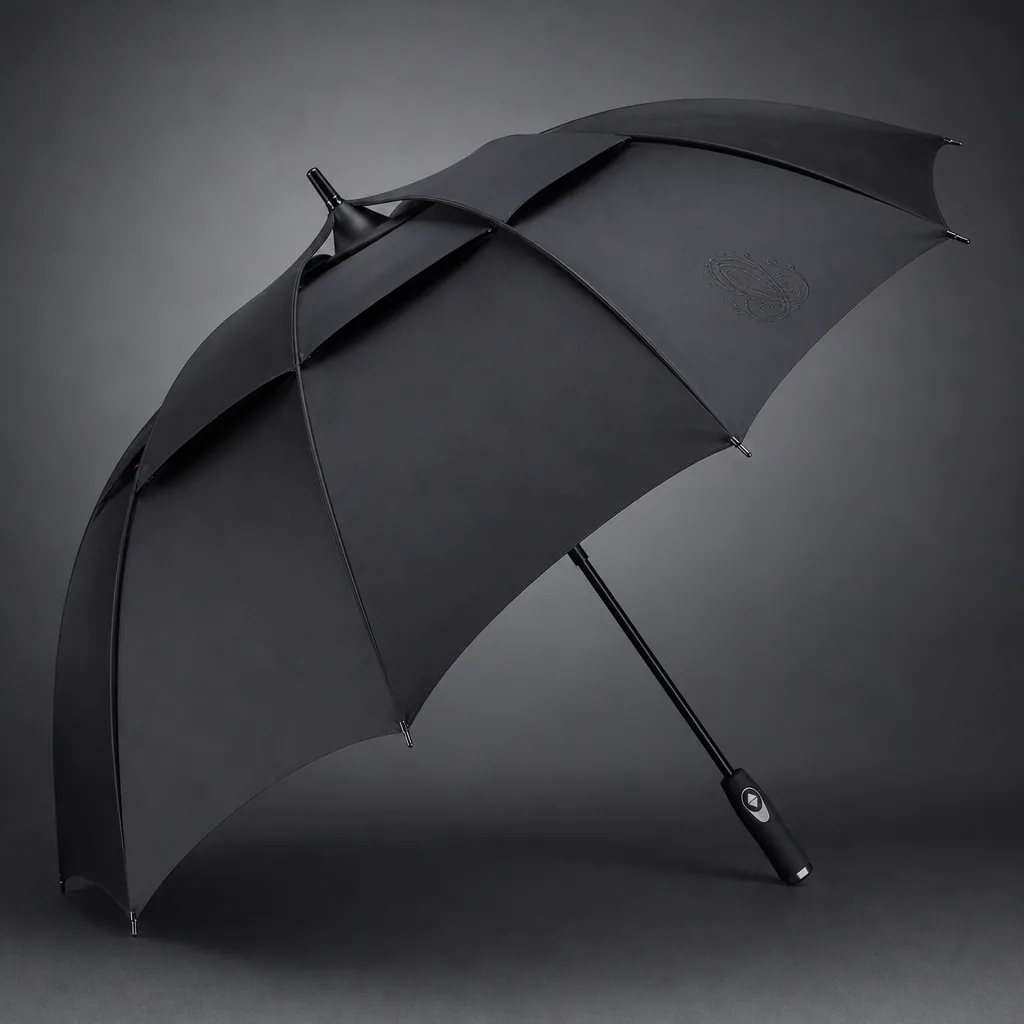
Airport buyers need compact umbrellas that look giftable on a shelf, survive repeated opening by travelers, and still fit tight luggage and carton plans. On our Songxia factory floor, the difference comes down to controlled fold length, rib material, runner smoothness, pouch branding accuracy, and packing that protects the canopy without wasting CBM. Specifying travel retail umbrellas early around these details helps keep samples, approvals, and bulk lead times realistic.
What Makes an Umbrella Suitable for Travel Retail
For travel retail umbrellas, the first pass/fail point is folded length, not canopy size. Airport buyers usually want a 21" or 23" three-fold umbrella that closes to roughly 9–11 inches, stays under 300–380 g, and still opens to a practical 38–42 inch arc for one adult with a carry-on. A slim ABS handle, aluminum center shaft, and fiberglass end ribs help keep weight down without making the frame feel disposable. I would avoid all-steel 8K frames for airport shelves unless the target is ultra-low price; they pass a basic rain test but bend too easily when a traveler steps into a terminal wind tunnel. For dependable performance, 190T pongee with a water-repellent coating is the normal baseline, while 210T pongee with Teflon treatment gives better hand feel and faster shake-off. Auto-open is useful for commuters moving between taxi, train, and gate, but auto-open-close must be tested carefully because weak springs cause returns.
Packaging matters more in airport retail than many factories admit. A good compact umbrella manufacturer should design the sleeve, hangtag, barcode position, and carton packing around retail handling, not just production convenience. Airport retail umbrellas often sit in narrow fixture space near travel adapters, neck pillows, and rain ponchos, so a 4-color gift sleeve or clear PET box can increase perceived value, but oversized packaging kills shelf density and freight efficiency. For branded travel umbrellas, buyers should confirm logo placement before sampling: screen printing works well on 190T/210T pongee for simple one- or two-color marks, heat transfer suits gradients, and sublimation is better for full-panel graphics. Our standard practice at ZheBrella is to run opening-cycle checks, canopy seam pull tests, and carton drop checks before final AQL 2.5 inspection, because the airport customer is usually buying under time pressure and has no patience for a rib popping loose on day one.
Travel retail is not the same as airline gifting, hotel shops, or convenience retail, and the specification should change with the channel. Airline gifts usually prioritize low weight and flat packing, sometimes using a 6K or light 8K manual frame to fit amenity budgets; durability expectations are modest because the item is promotional. Hotel shops can carry a slightly larger 23" or 27" model with a J-handle or wood-look grip because guests buy for immediate rain protection, not luggage efficiency. Convenience retail is the most price-sensitive channel and often accepts PVC or lower-density polyester, especially for emergency purchase points. A folding umbrella supplier serving airports should instead balance retail appearance, repeatable mechanism quality, and a mid-premium feel. Typical MOQs are 500–1,200 pieces per color for stock-frame customization and 3,000+ pieces for custom molding or private packaging, with common lead times around 25–35 days after artwork approval for FOB Ningbo or Shanghai shipments.
Folding Formats and Frame Choices
For travel retail umbrellas, the folding format should be selected by shelf depth and traveler behavior, not by catalog photos. A normal 3-fold umbrella is the safest airport SKU: folded length usually runs 9.5–11.5 inches, with a 21–23 inch arc size giving about 37–41 inches of open diameter. It fits a backpack side pocket, opens quickly at the taxi stand, and has enough rib geometry to stay stable. A 5-fold model can shrink to 6.5–7.5 inches folded, which looks excellent near checkout counters and duty-free impulse racks, but the extra joints make it less tolerant of hard shaking and side wind. Slim capsule-style umbrellas are more about packaging discipline than weather performance; they often use a 6K or light 8K frame, a 19–21 inch canopy, and a plastic capsule case that protects nearby cosmetics or electronics from wet fabric. I would not position capsule units as storm umbrellas.
Frame material is where many airport retail umbrellas succeed or fail after the first trip. Low-cost 3-fold models often use steel ribs and a steel shaft because they feel solid in the hand and keep the price controlled, but they add weight, typically 280–360 g for a basic 21 inch manual unit. Aluminum shafts and aluminum rib sections reduce weight, useful for branded travel umbrellas sold to airline passengers with luggage limits, but aluminum alone can deform when the umbrella is inverted. The better compromise is a steel or aluminum shaft with fiberglass end ribs, especially on 8K layouts, because the outer rib is the part that flexes first in gusts. For premium folding umbrella supplier programs, we often specify 8K or 10K frames with fiberglass tips, 190T or 210T pongee canopy, and a compact auto-open mechanism rather than chasing the lowest FOB cost.
Full fiberglass costs more because the raw material, molding consistency, and assembly control are all less forgiving than stamped steel rib sets. On a 3-fold frame, every extra fiberglass section needs accurate rivet alignment; if the joint is tight, the umbrella opens poorly, and if it is loose, the canopy chatters in wind. The benefit is real: a well-built fiberglass or fiberglass-dominant frame can survive repeated inversion better and may pass 40–50+ mph wind-tunnel testing when paired with a double-canopy vented design. For travel retail umbrellas, I reserve full fiberglass for higher-ticket 23 inch auto-open or auto-open-close models, not the thinnest 5-fold pocket styles. As a compact umbrella manufacturer, ZheBrella’s standard practice is to match frame stiffness to canopy size: slim 5-fold for light rain convenience, mixed-rib 3-fold for daily airport sales, and reinforced fiberglass 8K/10K frames for premium retail or airline-branded programs.
Fabric, Coatings, and Weather Performance
For travel retail umbrellas, 190T pongee is the workhorse fabric because it balances cost, hand feel, and packability better than heavier woven polyester. On the factory floor, I prefer 190T for mainstream airport retail umbrellas: it folds cleanly in a 21" or 23" frame, dries faster than cheap coated polyester, and holds print detail well for branded travel umbrellas. A compact umbrella manufacturer should specify a DWR finish on top of the weave, not just a basic surface spray, because DWR improves beading and reduces the damp smell buyers complain about after one rain cycle. Expect quick-dry performance in roughly 10–20 minutes under normal indoor airflow if the panel count and coating are right. For premium programs, 210T pongee is worth the extra cost because it gives a denser hand, better tear resistance at the seam line, and a more upscale drape under logo printing. A folding umbrella supplier should treat 210T as the higher-margin spec for gift sets, airline shops, and hotel channels.
If the destination mix includes sun-heavy markets like Dubai, Singapore, or Florida, UPF 50+ coating matters more than most buyers think, because a rain umbrella is also a shade product in travel retail. On a practical spec sheet, I would pair 190T or 210T pongee with a UV silver or black-undercoating layer, then verify that the coating does not crack at the fold points after repeated opening cycles. For windy cities such as Chicago, Wellington, or coastal stations, double-canopy vented construction is the right answer, not a thicker shaft alone. A vented top panel relieves pressure and helps a 8K or 10K compact frame survive gusts better than a flat single canopy, especially on auto-open-close mechanisms. For airport retail umbrellas, the best spec is usually a balanced package: 210T for premium, 190T for volume, DWR for rain performance, UPF 50+ for mixed-weather destinations, and a double-canopy option where wind is part of the selling story.
Branding and Packaging for Shelf Conversion
For travel retail umbrellas, the logo has to read clearly in three seconds under bright airport store lighting, not only when the canopy is fully open. I usually recommend one clean print on a single outer canopy panel for 21" or 23" folding models, sized around 120–180 mm wide depending on the mark, with a second smaller logo on the sleeve or pouch. Full-panel repeats look attractive in a design file, but on 190T or 210T pongee they add registration risk across seams and can slow production by 2–4 days if screen printing is used. Heat transfer works well for sharp airline, hotel, and destination logos, while sublimation is better for all-over artwork on white polyester. Handles should carry subtle branding only: a debossed logo on a matte ABS or rubberized grip is more durable than a surface print that rubs off in a traveler’s bag.
Airport retail umbrellas need packaging that sells without staff explanation. A compact sleeve is good for protection, but a hanging pouch with a reinforced eyelet or Euro slot gives better shelf visibility for convenience-style airport stores. For branded travel umbrellas, we normally pair the sleeve with a compact 300–350 gsm paper box for premium programs, leaving one window or product photo area so the buyer can identify color, size, and mechanism quickly: manual, auto-open, or auto-open-close. Hangtags should list canopy material, rib structure, and weather claims in plain language, such as 8K fiberglass ribs, Teflon water-repellent finish, or UPF 50+ coating if tested. Avoid vague claims like “stormproof” unless the frame has a real wind-tunnel result, for example surviving 50+ mph on a double-canopy vented model.
Barcode and carton planning are where many travel programs fail. Each retail unit should carry an EAN/UPC label with SKU, color, country of origin, and any airport concession requirement, placed on the box bottom or sleeve back so it scans without opening the item. Multilingual care instructions should cover drying open after rain, not forcing the runner, safe use of auto-open-close buttons, and fabric warnings for POE/PVC/EVA transparent canopies, which can crease under heat. A compact umbrella manufacturer or folding umbrella supplier should also plan display-ready cartons before mass production: 12, 24, or 36 pieces per inner display, tear-away front panel, consistent facing direction, and master cartons strong enough for FOB or DDP handling. Our standard practice at ZheBrella is to confirm barcode position, carton drop strength, and AQL 2.5 packaging checks before bulk packing, because airport buyers reject messy shelf presentation as fast as they reject broken frames.
Order Planning, Inspection, and Delivery Windows
For travel retail umbrellas, MOQ should be planned by both frame model and packaging format, not just by canopy color. A 21" or 23" manual 3-fold with steel shaft and fiberglass ribs can usually start around 1,000–1,500 pcs per design if packed in a standard sleeve; auto-open or auto-open-close frames often need 2,000 pcs because the spring mechanism, runner, and button housing are purchased as matched components. Gift-box, hang-card, barcode sticker, and airport-security-friendly display tray packaging can change the MOQ because printing plates, carton dividers, and retail labels are ordered separately. For branded travel umbrellas, I advise buyers to lock the packaging dieline before approving the canopy artwork, because a 190T pongee sleeve, EVA window box, or kraft tube affects carton size, unit cost, and shelf presentation at airport shops.
Sample approval should move in a fixed sequence: blank frame sample, printed canopy strike-off, pre-production sample with final pouch and barcode, then sealed approval sample for QC reference. A serious folding umbrella supplier will not start bulk cutting until logo position, Pantone color, canopy seam direction, and folding length are confirmed. For airport retail umbrellas, the packed length usually needs to stay under 28–32 cm for compact racks, while finished weight should be controlled if the buyer targets duty-free multi-buy bundles. Normal production lead time is 25–35 days after sample approval for plain-color pongee, 35–45 days for heat-transfer logos, and 45–55 days for sublimation or custom molded handles. Our standard practice at ZheBrella is to keep one approved sample in the sewing line and one in final inspection so workers and QC check against the same reference.
Final inspection should be based on AQL 2.5 for major defects, with special attention to the failure points that matter in travel retail umbrellas: auto-open firing strength, auto-open-close reset, runner smoothness, rib alignment, tip stitching, shaft wobble, and pouch fit after the umbrella has been folded by hand, not only by the best packing worker. I normally require open-close cycle testing on sampled units, water-spray checks on coated 190T/210T pongee, and carton drop checks when retail boxes are used. For delivery, FOB Ningbo or Shanghai works best when a distributor consolidates umbrellas with luggage tags, bottles, or travel pillows. DDP is cleaner for direct retail delivery to airport warehouse networks, but the compact umbrella manufacturer must calculate duties, VAT, labeling rules, and appointment delivery fees upfront, or the landed cost will look better on paper than it is in practice.
Frequently Asked Questions
Are auto-open umbrellas practical for travel retail?
Yes, but they need stronger mechanism testing than manual models. Buyers should inspect spring strength, button function, shaft stability, and repeated open-close performance before shipment.
What folded size works best for airport shops?
A 3-fold umbrella around 25 to 30 cm folded length is a common balance of canopy coverage and durability. A 5-fold model is smaller for handbags, but it usually has more joints and needs tighter QC.
What closed length works best for airport and travel retail umbrellas?
For most airport shops, a closed length of 18-22 cm is the safest range because it fits backpacks, tote bags, and carry-on displays without looking oversized. The most common travel retail spec is a 21-inch canopy in a 3-fold frame.
How should compact umbrellas be packed for airport retail replenishment?
Buyers usually ask for inner packs of 12 pieces and master cartons of 36-48 pieces to balance shelf replenishment with manageable carton weight. If the program includes multiple prints or destinations, barcode labels by SKU and carton assortment maps help reduce receiving errors.
What is a realistic lead time for branded pouch umbrellas for travel retail launch dates?
For OEM orders with custom canopy print and matching pouch branding, standard production is usually 35-45 days after sample approval. If a new frame, handle mold, or specialized packaging is involved, buyers should allow 45-60 days plus sample time.
Looking to Launch Your Custom Umbrella Line?
ZheBrella is a Zhejiang-based OEM/ODM umbrella manufacturer with 17 years of export experience. Free design, low MOQ from 100 pieces, windproof construction, full-color print.
Get Free Quote Now »People Also Search For
Related Articles
Travel Umbrella Specs for Airline and Airport Retail
Build airport-ready travel umbrellas with compact frames, durable fabrics, retail packaging, MOQ planning, and QC specs ...
Read More »
Travel Retail Umbrellas: Compact Specs Buyers Should Control
Build travel retail umbrellas around compact size, fast opening, stronger ribs, retail packaging, and realistic producti...
Read More »Airport Gift Shop Umbrellas: Compact Specs That Sell
Choose compact umbrella specs for airport retail: durable frames, fast-dry fabrics, barcode-ready packing, MOQ planning,...
Read More »