Travel Umbrella Specs for Airline and Airport Retail
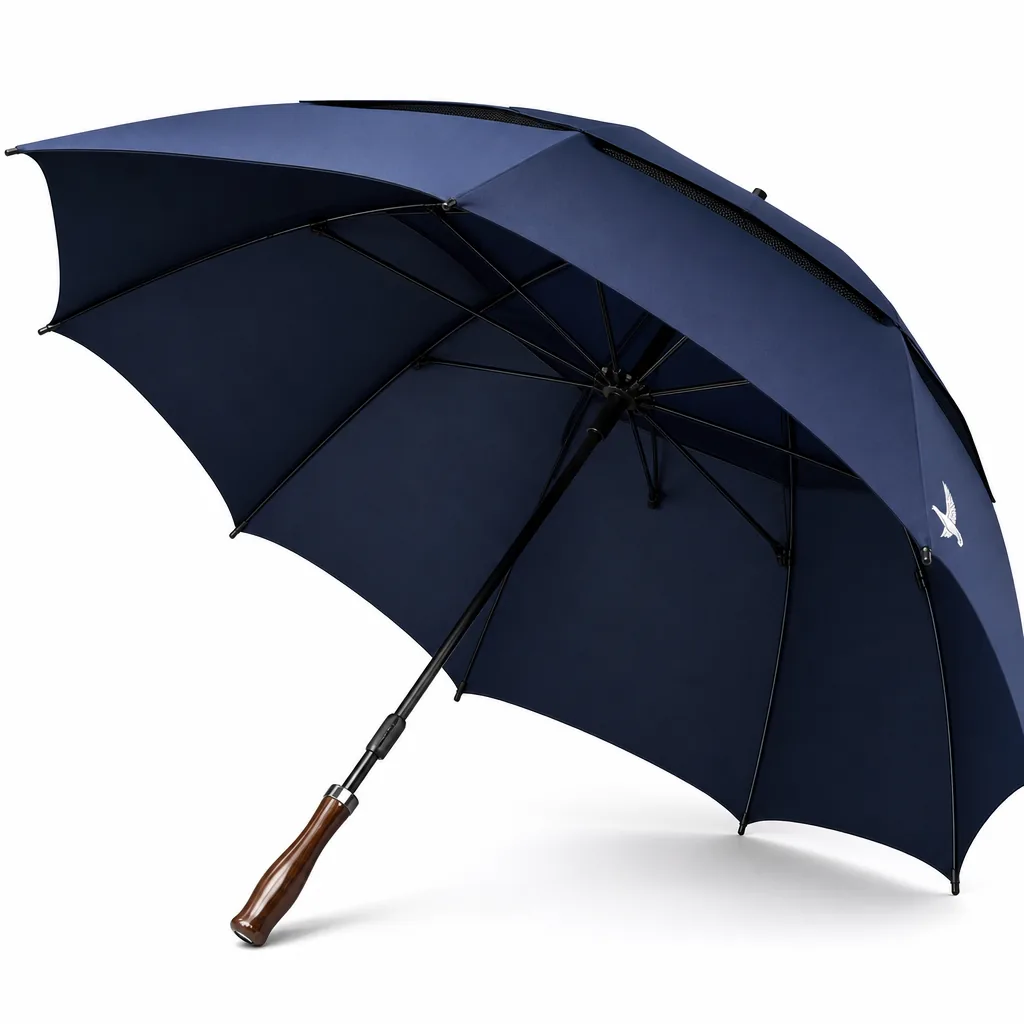
Airport and airline retail buyers need a travel umbrella that feels compact at the gate, survives repeated wet-dry cycles, and still looks premium in a crowded display. As a travel umbrella manufacturer China based in Songxia, we see the issues that usually decide a program before shipment: frame tolerance, fabric coating consistency, barcode-ready packaging, realistic MOQ planning, and QC checks that catch weak ribs, loose caps, and pouch fit before cartons leave the line.
Start With Traveler Constraints
Traveler constraints decide the umbrella before the logo does. For carry-on and airport retail umbrellas, I usually start with a folded length under 11 inches for a 21" 6-rib or 8-rib compact, because it must fit a backpack side pocket, tote, or seatback pouch without looking like a burden. Weight should stay around 220–300 g for a true travel item; once a compact pushes past 350 g, travelers feel it in the bag even if the frame is stronger. Steel shaft with fiberglass ribs is a practical middle ground, while full fiberglass improves wind recovery but raises cost and folded diameter. For compact travel umbrella specs, 190T pongee is still the workhorse, but 210T pongee with Teflon coating feels better in hand and sheds water faster after a short walk from terminal to taxi stand.
Wet-storage is where many cheap travel umbrellas fail. A traveler does not want a dripping canopy inside a laptop bag, so the sleeve matters almost as much as the umbrella. For airport impulse sales, a basic matching pongee sleeve may be enough at a $6–10 retail shelf price, but travel accessory brands should consider a zip pouch, absorbent inner lining, or EVA capsule case. POE or PVC cases look clean in retail packaging, but they trap moisture if the customer folds the umbrella wet for hours. For airline branded umbrella programs, I prefer a water-resistant sleeve with a pull tab and clear care label, because loyalty gifts get judged by usefulness more than by decoration. Our standard practice at ZheBrella is to test wet insertion and removal after 20 open-close cycles, not just dry showroom handling.
The buyer also needs to separate three channels because the same folding umbrella OEM spec will not work for all of them. Airport retail needs compact packaging, barcode placement, fast visual color choice, and a price point that supports impulse buying near checkout; a manual-open 21" 8K steel/fiberglass frame often wins here. Airline loyalty gifts can tolerate a slightly higher landed cost if the umbrella feels premium, so auto-open-close, 210T pongee, UV coating, and a rubberized handle make sense. Travel accessory brands usually care most about return rates and reviews, so they should specify wind resistance, such as surviving 40–50 mph gust testing with a vented or flexible rib design, plus AQL 2.5 inspection. A travel umbrella manufacturer China should quote these as different products, not one generic compact with three logos.
Specify Compact Frames Without Overbuilding
For airport retail umbrellas, the safest compact frame is usually a 3-fold 21" or 23" 8K structure, not the shortest umbrella you can engineer. A standard 3-fold frame packs to roughly 10.5–12 inches closed, fits side pockets on carry-ons, and still gives enough rib length to keep the canopy stable under gusts outside terminals. Ultra-compact 5-fold or capsule frames can close under 8 inches, but they need more hinges, thinner rib sections, and tighter sewing tolerance at the canopy tips. That saves shelf space, yet it raises failure risk when a traveler snaps it open in heavy rain with one hand on luggage. For compact travel umbrella specs, I would start with 8K fiberglass ribs, a steel center shaft for value programs, and 190T or 210T pongee with a Teflon-style water-repellent finish. A travel umbrella manufacturer China can build both structures, but the buyer should decide whether pocket size or return-rate control matters more.
Steel and aluminum shafts should not be treated as simple “cheap versus premium” choices. Steel shafts add stiffness and better dent resistance in a crowded retail environment, especially when umbrellas are handled daily on airport racks; the tradeoff is weight, often 30–60 g more than aluminum in a 21" 3-fold model. Aluminum reduces carry weight and gives a cleaner feel for an airline branded umbrella, but thin-wall aluminum tubes can ovalize after side impact if the frame is over-lightened. Fiberglass ribs are where I would spend the money before upgrading the shaft: 8K fiberglass or fiberglass-reinforced ribs flex and recover better than painted steel ribs when wind reverses the canopy. For most folding umbrella OEM orders, a mixed frame—steel shaft, fiberglass ribs, and reinforced plastic runners—hits the practical balance for 50+ mph wind-tunnel claims without pushing the umbrella into a bulky golf-style build.
Auto-open sounds attractive for travel retail, but it is not automatically the right mechanism. A 3-fold auto-open umbrella is convenient when passengers are exiting a taxi or jet bridge, yet the spring, button, and runner add weight and create another inspection point under AQL 2.5. Auto-open-close mechanisms are even more sensitive: if the shaft tolerance or spring force is wrong, users feel a hard recoil during closing, which causes complaints even when the frame is technically functional. Manual open frames are lighter, cheaper, and easier to pack into slim sleeves, making them better for high-volume promotional airline kits or economy airport retail umbrellas. Our standard practice at ZheBrella is to match mechanism to channel: manual for lowest return risk and MOQ-driven price programs, auto-open for mid-tier branded retail, and auto-open-close only when the buyer accepts a thicker handle, higher unit cost, and stricter pre-shipment cycling tests of 300–500 opens per sample set.
Choose Canopy Fabric and Weather Features
190T pongee is the default fabric for airport retail umbrellas because it gives the best balance of hand feel, print stability, water shedding, and packed size. On a 21" or 23" 3-fold frame, 190T polyester pongee keeps the canopy tight enough that panels do not sag after sewing, but it still folds neatly into a 24–28 cm sleeve for carry-on pockets and seat-back retail packs. For a travel umbrella manufacturer China buyers should specify yarn density, not just “pongee,” because some low-cost mills label soft 170T fabric as 190T. In our incoming inspection, I check color fastness, coating evenness, and panel shrinkage before cutting; a canopy that twists 3 mm across a gores set will look cheap after assembly even if the frame is acceptable.
210T pongee is worth paying for when the product sits in a premium airline branded umbrella program, hotel duty-free set, or business-class amenity shop where touch matters. The denser weave feels smoother, holds dark navy or black more evenly, and supports sharper heat-transfer logos compared with basic 190T. For compact travel umbrella specs, I usually recommend 210T only when the target retail price can absorb the extra fabric cost and the sleeve is not ultra-slim. Add a quick-dry DWR or Teflon-type water-repellent finish when customers will collapse the umbrella indoors at gates, trains, and taxis; droplets bead off faster, and the sleeve does not become wet immediately. The coating should be tested after rub and fold cycles, not only on fresh fabric, because poor DWR can look fine in a sample room and fail after 200 open-close operations.
UPF 50+ coating is a strong upgrade for destinations with sun exposure, especially resort airports, cruise terminals, and airline summer campaigns, but it changes the fabric feel and sometimes the print method. Silver or black UV backing blocks light better, while clear UV treatments preserve the outside color for brand matching. For folding umbrella OEM projects, I prefer UPF 50+ on 23" auto-open or auto-open-close models rather than the lightest 21" manual units, because travelers buying sun protection expect a sturdier handle and ribs. A small vented double canopy can also lift perceived quality without making the umbrella bulky: it reduces inversion risk in gusts around terminals and hotel entrances, especially with 8K fiberglass ribs and a wind rating around 45–50 mph. Keep the vent shallow and well-tensioned; oversized vents on compact frames add sewing cost, leak paths, and awkward folding.
Design Branding and Retail Packaging
Branding on a travel umbrella has to survive hand sweat, security-bin abrasion, and being stuffed into a carry-on, so I prefer molded or laser-etched handle logos over cheap pad print when the handle is ABS, rubberized PP, or EVA-coated. For an airline branded umbrella, the cleanest spec is a 21" or 23" 3-fold auto-open-close frame with an 8K fiberglass-and-steel hybrid rib set, 190T or 210T pongee canopy, and a single-panel screen print positioned opposite the closure strap. Full-canopy artwork looks strong in renderings, but on compact umbrellas it creates registration problems across seams unless the buyer accepts sublimation on white fabric and a higher defect allowance. Our standard practice at ZheBrella is to approve a physical strike-off for handle logo depth, canopy ink opacity, and strap label placement before bulk cutting begins.
Airport retail umbrellas need packaging that sells fast without wasting shelf depth. A zipper pouch with a woven logo label feels more premium than a loose sleeve, and it also reduces returns because customers can repack the umbrella after opening it at the gate. Hangcards should carry the essential compact travel umbrella specs: folded length, open arc or diameter, weight in grams, manual or auto-open-close mechanism, canopy fabric, UV UPF 50+ or Teflon coating if used, and windproof claim only if the frame has passed a real wind-tunnel or repeated inversion test, such as 50+ mph. For folding umbrella OEM programs, I recommend adding an EAN-13 or UPC-A barcode on both hangcard and color box, because airport concession systems often scan from different sides depending on how the product is displayed.
Multilingual care labels are not decoration; they prevent disputes after a wet umbrella is folded into a pouch and stains the canopy. At minimum, include English plus destination-market languages for drying instructions, safe opening distance, fiber content, importer details, and country of origin. A travel umbrella manufacturer China supplier should size compact color boxes around the real folded product, not a catalog guess: a 21" 3-fold auto-open-close umbrella often needs about 31–33 cm length allowance, while slim manual models can fit shorter boxes for denser airport shelf packing. For airport retail umbrellas, we usually specify 350–400 gsm paperboard, matte lamination to resist scuffing, a die-cut hang tab only if the frame weight is under control, and master cartons tested so barcodes remain readable after FOB or DDP transit.
Plan Orders, Lead Times, and QC
Order planning for airport retail umbrellas should start with the shelf date, not the factory start date. For a normal folding umbrella OEM program, I work backward from the in-store launch: 7–10 days for artwork approval and strike-off sampling, 3–5 days for material booking after deposit, 35–55 days for bulk production, then freight time. A simple 21" or 23" auto-open compact model in 190T pongee with one-color logo can stay near the 35-day side if the frame is stock and packaging is standard. Add custom rubber handles, airline branded umbrella sleeve printing, PMS-dyed canopy panels, or retail hang cards with barcodes, and 45–55 days is more realistic. As a travel umbrella manufacturer China buyers use for seasonal drops, we usually warn that Golden Week, Chinese New Year, and May–June rain-season demand can add 10–20 days if PO approval is late.
MOQ should be set by color, not only by total order quantity, because canopy cutting, rib assembly, and printing setup all lose efficiency when colors are fragmented. For compact travel umbrella specs using stock black, navy, red, or gray 190T/210T pongee, 500 pieces per color is workable; PMS custom canopy dyeing usually needs 1,000–3,000 pieces per color depending on fabric mill availability. If the buyer wants a mixed airport retail display, I prefer fewer colors with stronger packaging instead of eight weak SKUs that each miss MOQ. FOB Ningbo or Shanghai makes sense when the buyer already consolidates travel goods or has a forwarder checking cartons. DDP is often better for small retail drops under 2,000–3,000 units going to one airport warehouse or promotional distributor, because duty, last-mile delivery, and customs paperwork can cost more management time than the umbrellas themselves.
QC has to test the umbrella as a moving product, not just a printed surface. Under AQL 2.5 for major defects, inspection should include 20–30 open-close cycles per sampled unit for manual, auto-open, or auto-open-close mechanisms; smooth shaft lock engagement; no rib twisting; no sharp burrs on steel tips; and no fiberglass rib delamination. Canopy tension is checked fully opened: panels should sit even without loose valleys, stitch holes should not tear under light pull, and the runner should not rattle. For airport retail umbrellas, packaging is part of the product, so the inspector should scan barcodes, confirm warning labels, count sleeves and hang tags, rub-test logo printing, and perform carton drop checks when DDP delivery is booked. A good inspection report includes photos of defects by category, not only a pass/fail line, because airline buyers often need evidence for internal brand approval.
Frequently Asked Questions
What size travel umbrella is best for airport retail?
Most buyers choose compact 21"-23" folding umbrellas because they fit bags and shelf displays. A lighter manual frame can suit budget retail, while auto-open improves perceived convenience.
Can airline-branded travel umbrellas ship in mixed colors?
Yes, but each color may carry its own MOQ because fabric cutting, printing, and packing are separated by color. Buyers should confirm whether mixed-color cartons affect labeling and DDP freight quotes.
What compact size is best for airport retail travel umbrellas?
For airport retail, many buyers target a folded length of 23 to 27 cm so the umbrella fits in handbags and carry-on pockets. Common open diameters are 95 to 105 cm, which gives enough coverage without making the product feel bulky.
What MOQ should a distributor expect for branded travel umbrellas?
For OEM travel umbrellas, MOQ is often 1,000 to 3,000 pieces per color or design, depending on the canopy print, handle mold, and packaging. If you need fully custom packaging or a special frame, the MOQ may be higher.
What retail packaging details matter most for airport programs?
Airport retail usually needs hang-ready packaging, a barcode, clear size and material specs, and a compact box or sleeve that protects the umbrella in transit. Many buyers also request multilingual carton labels and ship-ready master cartons for faster store replenishment.
Looking to Launch Your Custom Umbrella Line?
ZheBrella is a Zhejiang-based OEM/ODM umbrella manufacturer with 17 years of export experience. Free design, low MOQ from 100 pieces, windproof construction, full-color print.
Get Free Quote Now »People Also Search For
Related Articles
Travel Retail Umbrellas: Compact Specs for Airport Buyers
Specify compact umbrellas for airport and travel retail with smart fold sizes, durable ribs, pouch branding, carton pack...
Read More »
Top 5 Folding Umbrella Specs for Airline and Hotel Gifts
Use five sourcing criteria to specify compact folding umbrellas for airline kits, hotel amenities, travel retail, and gu...
Read More »
Travel Retail Umbrellas: Compact Specs Buyers Should Control
Build travel retail umbrellas around compact size, fast opening, stronger ribs, retail packaging, and realistic producti...
Read More »