Travel Retail Umbrellas: Compact Specs Buyers Should Control
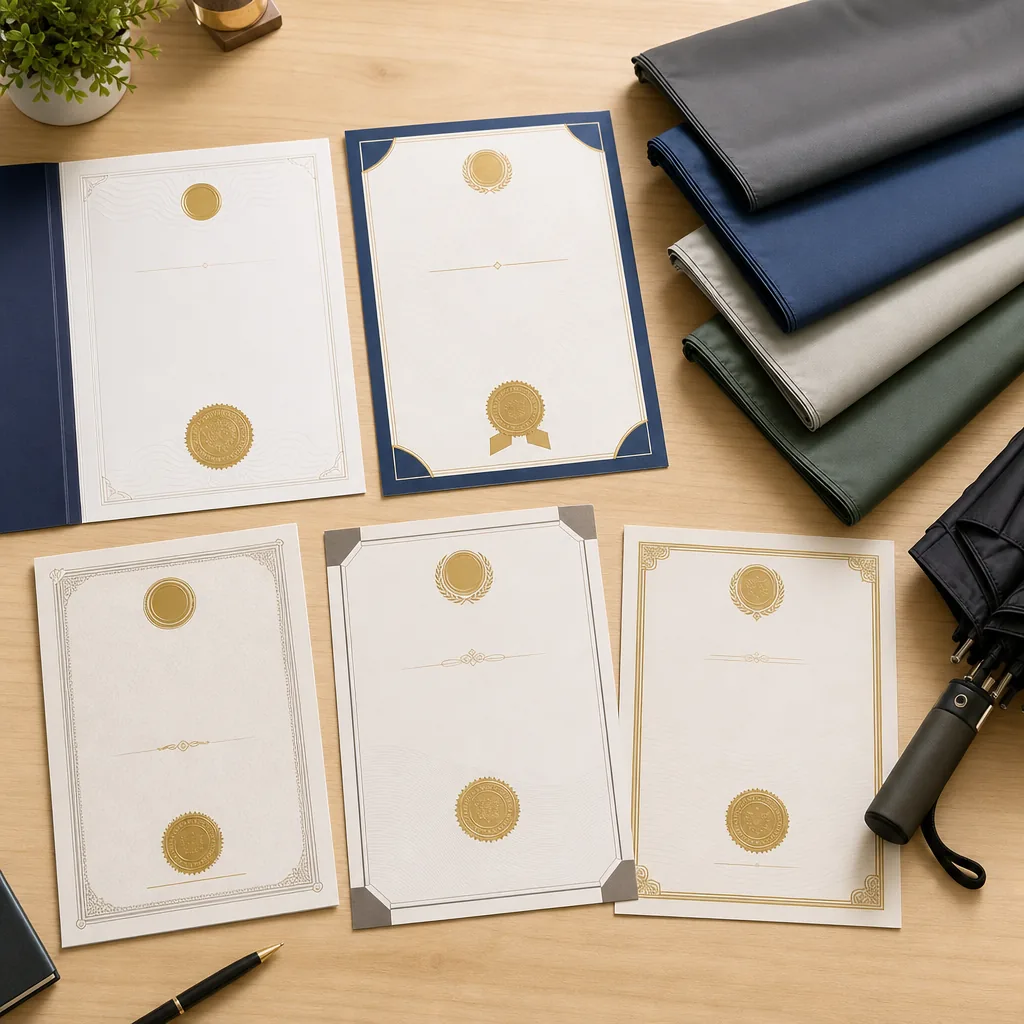
Buyers sourcing travel retail umbrellas usually get squeezed between shelf-size limits, opening performance, and damage rates that only show up after cartons land. On our Songxia production floor, the failures are predictable: short folded length with oversized canopies, weak rib geometry, slow auto-open action, and retail packs that waste cube. The right spec control starts before sampling, with compact dimensions, frame load, packing method, and lead time aligned to how the umbrella will actually sell.
Prioritize Pack Size, Weight, and Shelf Fit
For travel retail umbrellas, the first buying filter is fixture depth, not styling. Airport shops, hotel boutiques, museum stores, and other travel accounts usually need a 3-fold 21 in. or 23 in. frame that folds to 11-13 in. (28-33 cm); once closed length moves past about 13.5 in., units start to overhang shallow gondolas, counter trays, and narrow peg displays. Weight matters for the same reason. A manual 3-fold in 190T pongee with an aluminum shaft and fiberglass ribs typically lands around 280-330 g, while an auto-open-close frame with a heavier spring assembly and more steel in the runner commonly reaches 360-430 g. That extra 70-100 g reduces bin capacity, increases carton load in transit, and makes a grab-and-go item feel less portable. Buyers should therefore sign off on folded length, open canopy diameter or arc, and net-weight tolerance as one spec package. A larger 42 in. canopy can look better in a line sheet, but it is the wrong spec when it pushes the packed unit beyond shelf depth or target carry weight for airport retail umbrellas.
Shelf fit usually breaks at the packed stage, not the sample-stage render. Sleeve dimensions have to match the closed umbrella with handle cap and wrist strap included. If the packed unit is 30 x 6 x 6 cm, a sleeve cut at 31 x 7 cm is usually too tight; specify 1.5-2 cm insertion clearance in length and at least 0.8 cm in width, then adjust for handle bulk. Barcode placement is just as operational. Put the EAN or UPC on a flat sleeve panel or hangtag face, not across a side seam or under a strap, and confirm whether the retailer scans each unit or scans the display carton at receiving. For branded travel umbrellas, fix logo orientation to the actual shelf position, especially for horizontal tray display. Display-carton planning should use final packed dimensions after polybag, sleeve, and desiccant are added. Shelf-ready inner packs of 12, 18, or 24 units can work well for replenishment, but only after footprint, barcode visibility, and carton squareness are checked on packed samples. A compact umbrella manufacturer should freeze artwork and carton dielines 7-10 days before production, inspect packed goods to AQL 2.5, and quote lead times plainly: about 35-50 days for DDP airport programs, depending on MOQ, mechanism, and whether the frame stays with a standard 8K build or moves to a custom lightweight version.
Specify a Frame That Survives Frequent Use
For travel retail umbrellas, frame choice drives return rates more than canopy color or pack-out, so buyers should lock the fold structure first. A 3-fold frame is usually the lower-risk commercial spec than a 5-fold for airport retail umbrellas because it uses longer rib sections and fewer hinge points, which improves fatigue life through repeated open-close cycles. In practice, a 21 inch or 23 inch 8K 3-fold still fits carry-on use while opening wide enough for daily reuse. A 5-fold wins on closed length and pocketability, but the tradeoff is higher stress at the joints, runner, and spring set. That is why ultra-compact folding umbrella specs need tighter QC at incoming and assembly stages, especially for rivet play, notch alignment, spring consistency, and joint straightness. If the buying decision is based only on the shortest closed length, field failures show up fast in terminals, taxis, and hotel commutes, where these umbrellas are opened several times a day. Smaller frames can sell well, but only when the frame tolerances are controlled from the start.
Material and mechanism should match both price point and expected abuse. Steel shafts add weight, but on compact frames they usually resist denting and side-load better than thin-wall aluminum, especially on entry-level and mid-range auto-open programs. Aluminum suits branded travel umbrellas sold as lighter premium items, but only when shaft wall thickness and tube tolerances are tightly controlled; low-cost aluminum deforms faster under commuter use. For ribs, fiberglass end ribs or fiberglass rib tips are a stronger durability spec than all-steel ribs because they flex and recover after inversion instead of taking a permanent set. An 8K steel-fiberglass hybrid frame will usually outlast a pure steel compact frame in daily use. Manual open is still the longest-life mechanism on small folding frames because it removes one spring system. Auto-open is workable on a 3-fold if spring force and latch engagement stay consistent by lot. Auto-open-close on a short 5-fold is the highest-risk combination because the mechanism stack is cramped; weak temper or loose assembly shows up quickly as bounce-back, incomplete closing, or handle wobble. Any competent compact umbrella manufacturer should state cycle-test practice, track spring-force drift by lot, and inspect finished goods to AQL 2.5 before packing.
Match Fabric to Price Point and Climate
Fabric choice drives both margin and packability in travel retail umbrellas, especially in the 21 in. to 23 in. folding range. For standard airport retail umbrellas, 190T pongee is the practical baseline: it keeps FOB cost under control, folds to roughly an 11 in. closed length on most 3-fold frames, and still delivers clean logo print for branded travel umbrellas. It is the lower-risk spec when shelf price, case-pack density, and fast stock turns matter more than a heavier fabric hand. Use 210T pongee for premium lines only when the retail price point can absorb the increase in fabric cost and canopy bulk. Buyers get a denser drape and better perceived quality on shelf, but they also give up some sleeve fit and packing efficiency. A competent compact umbrella manufacturer should flag that tradeoff at quoting stage, because premium fabric on an entry-level packing target usually creates cost pressure or a bulkier finished SKU. For mixed-climate programs, align fabric with the retail brief: 190T works well for humid, high-volume travel assortments, while 210T suits premium travel retail umbrellas where touch, appearance, and unboxing matter more.
Quick-dry performance is mainly a finishing issue, so folding umbrella specs should define the water-repellent treatment as clearly as the base cloth. Set a practical expectation: the canopy should bead and shed water after the first open-close cycle, without immediate wet-out or obvious darkening across the panels. For ongoing performance, buyers should ask about repeat-use repellency and colorfastness, not just a one-time lab result. Navy, red, and black canopies need particular control because repeated wet-dry cycles, airport lighting, and luggage abrasion expose weak dyeing or finishing quickly. Printed panels should stay consistent panel to panel, with no visible crocking, edge fade, or post-coating color shift, and inspection standards should be agreed before production. When the product must sell for both rain and sun, specify a black UV coating with a defined UPF 50+ target. That upgrade makes sense for commuter and warm-climate programs, but it changes canopy hand, interior appearance, and drying speed. In humid markets, 190T pongee with a reliable quick-dry finish is often the safer commercial choice; for premium dual-use lines, 210T plus UPF 50+ black coating works if the closed umbrella still meets the compact size target.
Design Branding for Small Surfaces
For travel retail umbrellas, keep canopy branding to one or two panels unless the buyer accepts more setup waste and a higher reject rate at final inspection. Most 21-inch or 23-inch 3-fold frames use narrow 8K or 10K canopy panels, and those panels are repeatedly compressed along fixed crease lines during packing. That geometry works against large artwork: seam lines split the image, rib tips interrupt edges, and fold memory reduces legibility after repeated open-close cycles. A 1-color or 2-color logo on alternating panels, or a mark centered across two adjacent panels, is usually the most controllable option for compact umbrella manufacturer production and for long-run consistency. On dark 190T or 210T pongee, screen printing gives the sharpest edges for simple logos and lower unit cost. Heat-transfer suits gradients or photo detail, but registration tolerance is tighter on small panel cuts. Full-panel artwork remains possible for branded travel umbrellas, but buyers should budget for more sampling rounds, more visible seam misalignment, and more inspection fallout on tight folding umbrella specs where usable print area is limited by every fold.
Closed-state branding usually does more selling than the open canopy, especially for airport retail umbrellas displayed in bins or racks. A woven label sewn into the canopy seam, typically 15 to 20 mm wide, is low-cost, durable, and easier to hold within appearance tolerance than small canopy text. Sleeve printing is the standard next step because the sleeve is the first surface the shopper sees: a one-side silk print works for basic logos, while a full-wrap heat-transfer sleeve gives stronger shelf impact if MOQ justifies the added setup cost. Zipper pouches look more premium than plain sleeves, but they add sewing operations, trimming points, and usually extend a standard 35-45 day lead time by 5-8 days. Confirm whether pouch fabric must match the canopy exactly, because pongee lot variation can make black-to-black matching visibly off. Use the hangtag for claims and compliance details instead of crowding the canopy: auto-open or auto-open-close, fiberglass vs. steel ribs, wind testing such as 50+ mph, and coatings like Teflon or UPF 50+. Before approval, review both folded and open samples and lock AQL 2.5 appearance standards, barcode position, carton assortment, swing-string strength, and FOB or DDP packing details.
Plan Production, Inspection, and Reorders
Lock the first PO for travel retail umbrellas against a sealed sample and a written spec sheet, not artwork alone. The document should fix canopy arc, closed length, target unit weight, 3-fold frame construction, rib count, fabric, finish, handle, strap, sleeve, and carton pack-out so repeat orders do not drift. For a typical 21-inch or 23-inch airport retail umbrellas program, that means stating whether the frame is 8K steel with fiberglass end ribs or full fiberglass, whether the canopy is 190T or 210T pongee, and whether the mechanism is manual, auto-open, or auto-open-close. Put sample timing into the sourcing calendar as well: 3 to 5 days for stock materials without print, 5 to 7 days with logo screen print, and 7 to 10 days for custom Pantone handle matching, woven labels, or sleeve artwork on branded travel umbrellas. If any of those points stay open to interpretation, reorders usually shift in packed length, opening force, and unit weight even when the canopy print remains correct.
MOQ depends more on shared materials than on the style name. A compact umbrella manufacturer can usually run 500 to 1,000 pieces per color on stock black or navy pongee with a proven 3-fold frame, while custom-dyed 190T or 210T pongee commonly needs 1,500 to 3,000 pieces per color to satisfy mill dye lots. Frame selection changes reorder risk too: a standard 8K manual or auto-open steel/fiberglass frame is easier to replenish than an auto-open-close frame with tighter spring tolerance and dedicated handle tooling, where 1,000 pieces may be possible but color mixing is less flexible. Control sleeve dimensions before approval; a sleeve that fits a salesman sample can fail in bulk production if folded diameter grows by 5 to 8 mm after a UV coating, Teflon finish, or thicker strap tab is added.
Set final inspection at AQL 2.5 and require functional checks, because folding umbrella specs usually fail in use before they fail cosmetically. The QC checklist should include loose top caps, ferrules or handle caps pulling free, misaligned folds that slow repacking, weak auto-open action, incomplete lock-up on auto-open-close shafts, crooked tips, missed sleeve side-seam stitches, and sleeve fit that is either too tight for easy reinsertion or too loose for hook or gift-box presentation. For replenishment planning, confirm Incoterms early: FOB Ningbo works for buyers consolidating multiple SKUs, while DDP is often more practical for fast repeats into fixed retail programs. Under normal conditions, repeat production is typically 25 to 35 days ex-factory on stock materials and 35 to 45 days when custom fabric or packaging must be remade.
Frequently Asked Questions
Are 5-fold umbrellas better for travel retail than 3-fold umbrellas?
5-fold umbrellas pack smaller, which helps in luggage and compact shelves, but they use more joints and can feel less rigid. For premium travel retail, a strong 3-fold auto-open model often gives a better balance of durability and convenience.
What lead time should buyers plan for travel retail umbrella reorders?
If the frame, fabric, and packaging are already approved, production may take about 25 to 40 days depending on quantity and season. New artwork, Pantone fabric dyeing, or custom mechanisms can add sampling and material lead time.
What closed length is usually acceptable for travel retail and airport stores?
Most buyers target a closed length of 18-23 cm so the umbrella fits backpacks, tote bags, and carry-on displays without looking oversized on shelf. A 5-fold design is usually the most compact, while a 3-fold design often gives better canopy tension and rib durability.
How should buyers balance compact size with frame strength on folding umbrellas?
Below about 90 cm arc size, a lightweight 5-fold frame is common, but stronger travel retail programs often move to aluminum shaft plus fiberglass ribs to reduce breakage claims. For better store sell-through, many importers accept 20-40 grams more unit weight in exchange for fewer damaged returns.
What lead time should importers plan for branded travel umbrellas with retail packaging?
For custom color matching, logo printing, and retail boxes, a practical production window is usually 35-50 days after sample approval and deposit. If the order includes new molds, special handles, or barcode-specific assortment packing, buyers should add another 7-15 days.
Looking to Launch Your Custom Umbrella Line?
ZheBrella is a Zhejiang-based OEM/ODM umbrella manufacturer with 17 years of export experience. Free design, low MOQ from 100 pieces, windproof construction, full-color print.
Get Free Quote Now »People Also Search For
Related Articles
Travel Retail Umbrellas: Compact Specs for Airport Buyers
Specify compact umbrellas for airport and travel retail with smart fold sizes, durable ribs, pouch branding, carton pack...
Read More »
Travel Umbrella Specs for Airline and Airport Retail
Build airport-ready travel umbrellas with compact frames, durable fabrics, retail packaging, MOQ planning, and QC specs ...
Read More »
Umbrella Sourcing for Airlines, Lounges, and VIP Travel
Learn how travel brands source compact, premium umbrellas for lounges, VIP services, and premium passenger kits with rel...
Read More »