Umbrella Size Specifications: Arc, Diameter, and Fit
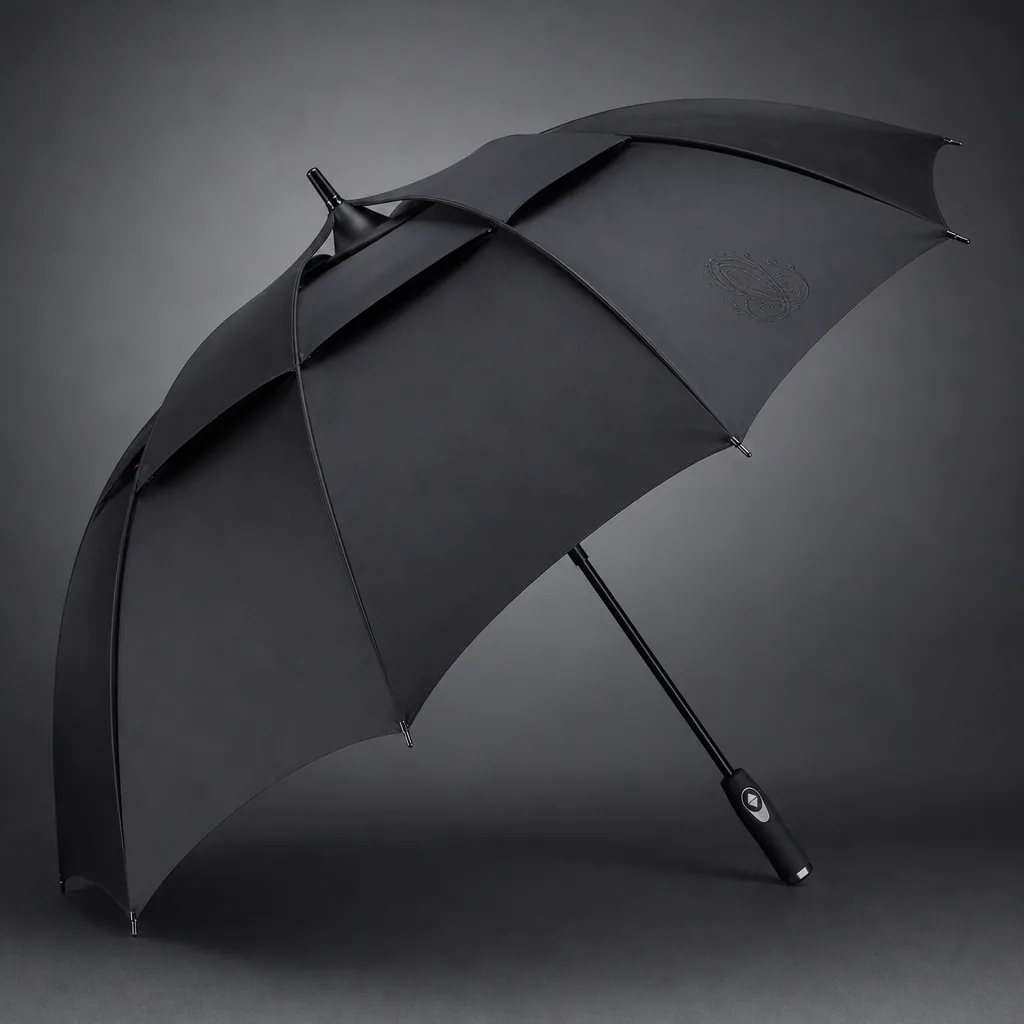
When buyers compare umbrella quotes, size is often where mistakes hide: one supplier lists arc, another lists open diameter, and rib length gets treated like finished coverage. On the factory floor, those numbers drive frame selection, canopy cutting, packing size, and whether the finished umbrella actually fits the target user or retail shelf. Clear umbrella size specifications help prevent samples that look acceptable but fail once production tolerances, fabric tension, and folded dimensions are checked.
Why Umbrella Size Terms Are Often Misquoted
Umbrella size specifications break down when a quote gives one number without naming the measurement method. Arc size follows the curved canopy from one tip, over the crown, to the opposite tip. Open diameter is the straight-line width across the opened umbrella when viewed from above. Rib length measures one frame rib, commonly 21", 23", 27", or 30", and does not equal finished diameter. Panel width is the fabric cut width before sewing; seam allowance, canopy depth, and tension can reduce the visible print area after assembly. Folded length is the closed product length, especially important for 2-fold, 3-fold, and 5-fold models. A quote stating only “23 inch” may mean rib length, while “42 inch” may mean open diameter. Buyers should put the measurement type, tolerance, and measurement position on the purchase order before approving samples, cartons, or retail artwork.
A 23-inch straight umbrella and a 21-inch folding umbrella should not be compared by one number alone. A 23" stick umbrella usually refers to 23" rib length and typically finishes at about 39" to 41" open diameter, depending on frame angle and canopy depth. A 21" 3-fold umbrella may open to about 37" to 38" diameter, but fold down to only 11" to 12", making it a different choice for travel, retail cartons, and promotional distribution. Folding umbrella dimensions depend on shaft section length, rib joint design, and handle size. Straight umbrellas have fewer joint constraints, so they usually provide a cleaner rib arc and better shoulder coverage. For compact retail packs or airline-friendly campaigns, folded length may matter more than umbrella arc diameter.
Size ambiguity creates avoidable cost in printing, sampling, and inspection. If artwork is approved from panel width but production is controlled only by open diameter, the logo can move too close to a seam or appear smaller after pongee 190T or 210T is tensioned over the frame. For custom umbrella sizing, ZheBrella confirms rib length, open diameter tolerance, folded length, panel count, and measurement position before tooling or bulk cutting. The same rule applies to any golf umbrella size guide: a “62 inch golf umbrella” usually refers to arc, while usable open diameter may be closer to 52" to 54". Clear umbrella size specifications reduce disputes because AQL 2.5 inspection checks finished goods against the purchase order, not a sales image, catalog label, or shorthand quote.
How Arc and Diameter Affect Real Coverage
Arc is the tape-over-canopy measurement; diameter is the straight open width that covers the user. That gap is central to umbrella size specifications: a 46 inch arc straight umbrella typically gives only 39 to 41 inches of usable diameter. Use diameter for fit, shoulder coverage, and rain protection; use arc for fabric yield, freight cube, and catalog comparison. Practical ranges are consistent by product type. A compact 21 inch folding umbrella usually measures 37 to 39 inches arc and 33 to 35 inches diameter, enough for one adult in light rain but tight with a backpack. A 23 inch straight umbrella commonly reaches 46 to 48 inches arc and 40 to 42 inches diameter, which suits retail, hotel, school, and corporate programs. Golf and event umbrellas move to 27 inch or 30 inch ribs, often 54 to 62 inches arc and 47 to 54 inches diameter, covering two people or one golfer plus a bag.
Frame geometry changes both the canopy profile and the force path. An 8K frame uses eight wider panels, so the canopy looks round but can flatten slightly between ribs; it keeps weight and unit cost controlled on 190T or 210T pongee. A 16K frame supports the fabric at shorter intervals, making the edge more circular, improving shape retention, and helping large-logo print registration. The tradeoff is wind load. More ribs and tighter canopy tension can transfer higher force into the runner, stretchers, and shaft. On a 30 inch golf umbrella, fiberglass ribs with a steel or fiberglass shaft usually recover from gusts better than all-steel ribs, which may bend permanently. For ZheBrella standard vented double-canopy golf models, we test around 50+ mph before quoting them as windproof, then match the rib count and shaft to the buyer’s cost target and failure-risk tolerance.
Custom umbrella sizing should start with the use case, not the largest number in a golf umbrella size guide. Commuters usually need folding umbrella dimensions around 21 inch ribs, 6K to 8K frames, and a 10 to 12 inch closed length; the cost is limited shoulder coverage in angled rain. Hotel, school, and retail straight umbrellas usually fit 23 inch 8K or 10K frames because they balance coverage, unit cost, and AQL 2.5 inspection stability without overstressing sewn panels. Outdoor staff, event giveaways, and branded golf programs justify 27 inch 8K or 30 inch 8K/16K frames, especially with fiberglass ribs, 210T pongee, and a vented canopy. Put umbrella arc diameter values side by side on every spec sheet: a buyer approving a 60 inch arc sample may expect 60 inches of ground coverage, but the real open diameter can be closer to 52 inches.
Sizing Tradeoffs for Folding, Straight, and Golf Models
Portability starts with closed length, but coverage depends on rib length, canopy depth, and umbrella arc diameter. A 3-fold frame typically packs to 11 to 13 inches with 21-inch or 23-inch ribs, giving one adult practical shoulder coverage without taking over a work bag. A 5-fold frame can close to 7 to 9 inches, but the extra hinges reduce torsional stiffness; it fits a coat pocket, yet it is the wrong choice for exposed, windy commutes. When reviewing folding umbrella dimensions, do not compare arc alone: a 42-inch arc often opens to only about 37 to 39 inches in straight-line diameter. For commuter programs, a 23-inch 3-fold with 8K ribs usually gives the best balance of dry coverage, packed length, and frame reliability.
Straight umbrellas trade bag fit for comfort and stability. A 23-inch straight model usually uses a 33 to 36 inch shaft, which lifts the canopy higher off the shoulder and gives taller users better clearance. The longer shaft also allows a larger curved, straight, or EVA handle, improving grip during daily retail use. Steel shafts and steel ribs reduce unit cost and give a solid hand feel, but they increase weight. Fiberglass ribs cost more and are better at recovering after gusts, especially in 8K and 10K frames. Auto-open systems add springs, runners, and reinforced notches, so two umbrellas with the same canopy size can feel different in balance; manual straight models often feel lighter at the handle.
Golf models sit at the high-coverage end of umbrella size specifications. The common commercial range is 27-inch to 30-inch ribs, with open diameters around 54 to 62 inches, enough for one golfer and a bag or two adults walking side by side. That canopy spread requires a stronger frame: fiberglass ribs, a thick steel or fiberglass shaft, and a longer handle are core design choices, not cosmetic upgrades. A 30-inch double-canopy vented model with 8K or 16K ribs may pass 50+ mph wind-tunnel testing, but the larger canopy, auto-open hardware, and rubberized handle all add weight and carton volume. For custom umbrella sizing, ZheBrella confirms arc, straight diameter, closed length, shaft material, and sample weight before quoting MOQ, FOB, or DDP terms because a larger canopy changes freight cost and hand balance.
Fabric and Frame Choices That Change the Final Fit
Fabric choice can change the finished diameter even when the frame drawing and rib length stay the same. 190T pongee packs flatter and usually tensions cleanly on 21-inch and 23-inch folding frames, so the canopy reaches the rib tips with less resistance. 210T pongee gives a denser hand feel, but the added thickness at hems, radial seams, and tip pockets can pull fabric inward unless the pattern compensates. Double-canopy windproof construction adds more tolerance stack-up: vent overlap, top-panel seam allowance, and lower-canopy attachment points all limit how far the fabric travels under rib tension. For reliable umbrella size specifications, approve the opened, tensioned pre-production sample, not only the CAD frame drawing or nominal rib length. Record open arc, straight diameter, closed length, and panel photos after normal tensioning so production has a measurable target.
Seam allowance and tip placement create visible size loss before the umbrella leaves the sewing line. If the pattern allows 7 mm seams but operators sew at 9 mm, eight panels can remove 16 mm or more from the canopy circumference before tensioning. Tip cups, sewn pockets, metal ferrules, and plastic end tips also set the real stop point of the fabric; moving the stitch point inward by 3 mm on each rib can shrink the finished canopy and shift the umbrella arc diameter outside the approved spec. This matters most in custom umbrella sizing and folding umbrella dimensions, where compact frames leave little room for 210T bulk or double-layer vent construction. The same rule applies to any golf umbrella size guide: confirm the finished 27-inch or 30-inch canopy after fabric tensioning, not just the frame size listed on the quote sheet.
How to Write Size Specs on a Purchase Order
Write umbrella size specifications in the same format QC will use on finished goods, not as retail labels like “compact” or “golf.” Use one PO line per model and list: size class, arc, open diameter tolerance, folded length tolerance, rib count, shaft material, rib material, canopy fabric, coating, frame color, handle type, packing quantity, carton dimensions, and carton gross weight when available. Example: “23 in x 8K straight umbrella; arc 58 in; open diameter 102 cm +/- 1.5 cm; folded length 85 cm +/- 1 cm; 14 mm black steel shaft; fiberglass ribs; 190T pongee canopy with Teflon coating; EVA straight handle; 50 pcs/carton; carton 88 x 28 x 22 cm.” Keep umbrella arc diameter separate from open diameter: arc follows the canopy curve, while open diameter is measured straight across the mouth. Mixing the two creates undersized canopies, carton disputes, and failed retail fit checks.
Define the product family before approving custom umbrella sizing. A 21 in x 8K folding umbrella may close at about 28-31 cm, while a 23 in x 8K auto-open straight umbrella usually closes at 82-86 cm. A 27 in or 30 in golf umbrella needs a separate line because shaft diameter, runner strength, carton length, rib load, and windproof construction change with size. A practical golf umbrella size guide separates 8K, 10K, and 16K frames; 16K fiberglass adds rib weight and may require a stronger runner and thicker center shaft than an 8K steel or fiberglass frame. For POE, PVC, or EVA canopies, replace pongee language with film thickness and transparency requirements. For UV umbrellas, state UPF 50+ coating and whether the black layer faces inside or outside.
Check size under AQL 2.5 during pre-shipment inspection after printing, sewing, and final assembly, not from pre-production samples. Inspectors should pull finished umbrellas from packed cartons, open each unit fully, measure open diameter at two crossing points, confirm folded length from tip to handle end, count ribs, and compare carton dimensions and gross weight against the PO. Folding umbrella dimensions need close review because handle shape, cap length, and auto-open-close mechanisms can add 1-2 cm even when canopy cutting is correct. For double-canopy windproof styles, add vent overlap and rib length to the checklist; a frame that passes a 50+ mph wind-tunnel test can still fail retail fit if the finished diameter is short. Put every tolerance on the PO so buyer, factory, and inspector judge the shipment against the same standard.
Frequently Asked Questions
Should buyers specify umbrella arc or open diameter?
Specify both. Arc size helps define the frame, while open diameter confirms real rain coverage after fabric, seams, and tension are applied.
What size tolerance is realistic for custom umbrellas?
For most rain umbrellas, a diameter tolerance of about plus or minus 1 cm is practical. Tighter tolerances may require extra sample approval and inspection time.
Which measurement should be used on a purchase order: arc or open diameter?
Use both when possible, because factories may quote by arc while buyers often compare by open diameter. For example, a 48 inch arc umbrella may have an open diameter around 41-43 inches depending on canopy depth and rib curve.
Why can two umbrellas with the same arc size fit differently?
Fit changes with rib length, canopy curvature, number of panels, and shaft angle. A deeper dome canopy can have the same arc as a flatter canopy but provide a smaller open diameter and different shoulder coverage.
What folded size details should buyers confirm before production?
Confirm folded length, handle length, sleeve size, and carton packing dimensions. For 3-fold umbrellas, a common folded length is about 9-12 inches, while larger automatic or windproof frames may require longer sleeves and larger export cartons.
Looking to Launch Your Custom Umbrella Line?
ZheBrella is a Zhejiang-based OEM/ODM umbrella manufacturer with 17 years of export experience. Free design, low MOQ from 100 pieces, windproof construction, full-color print.
Get Free Quote Now »People Also Search For
Related Articles
Choosing the Right Umbrella Canopy Size for Each Buyer Segment
Compare canopy sizes by buyer segment so you can match coverage, portability, branding space, and shipping efficiency to...
Read More »
Umbrella Canopy Size Guide: Arc, Diameter, and Coverage
Compare arc, open diameter, and rib length so you can specify folding, straight, or golf umbrellas with the right covera...
Read More »
How to Specify Umbrella Canopy Sizes for B2B Orders
Learn how canopy diameter, arc, and open coverage affect use cases, freight, and branding when specifying umbrellas for ...
Read More »