UPF 50+ Sun Umbrella Materials for Retail and Promo Buyers
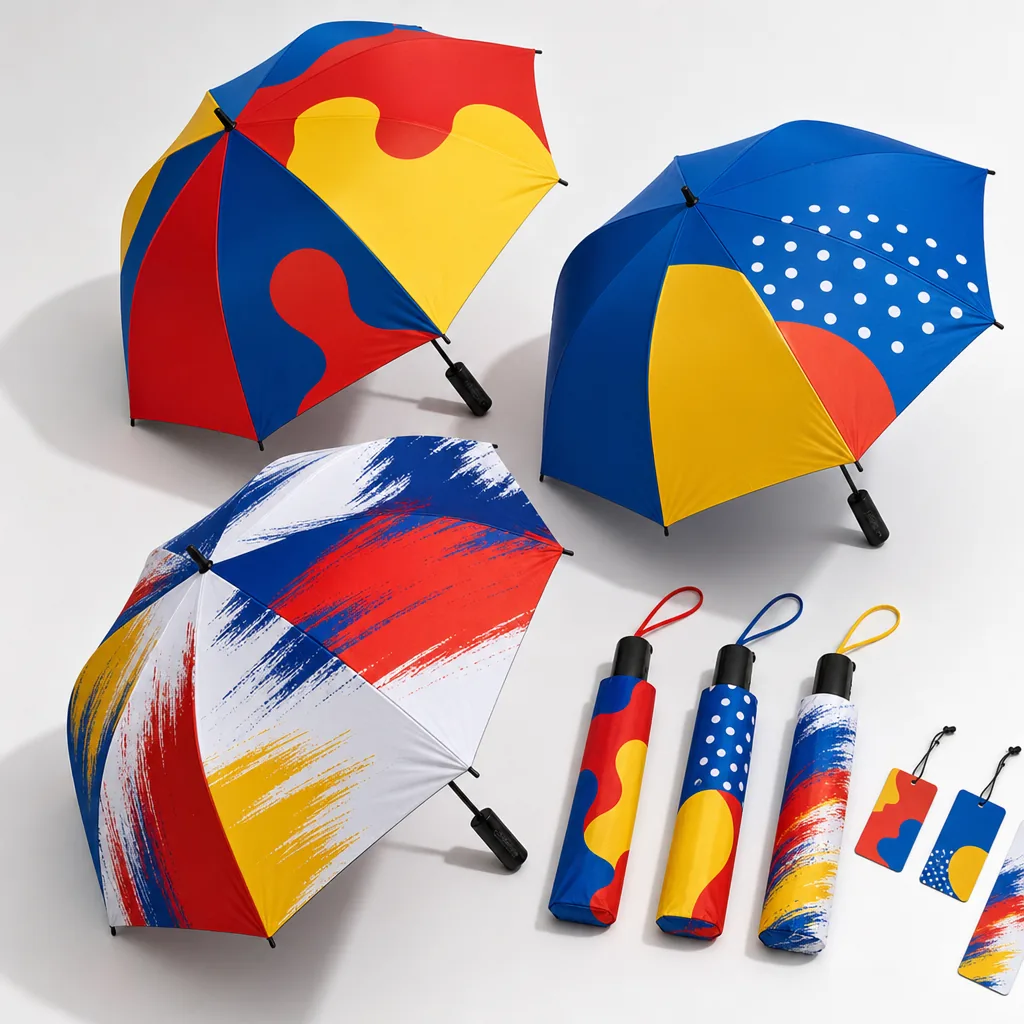
Buying a UPF 50+ umbrella sounds straightforward until fabric density, coating stability, frame weight, and production yield start affecting real performance and landed cost. On the factory floor, small differences in weave, silver coating, and rib construction can change UV protection, opening tension, and failure rates across a retail run or promo order. The right sourcing decision comes down to matching sun-safe specs with MOQ, lead time, and the durability your market actually needs.
What makes a sun umbrella different from a rain model
A sun umbrella is built around UV rejection, not just water shedding, so the canopy spec has to start with fabric density. A standard rain model can get away with a looser weave and a basic waterproof finish, but a UPF 50+ umbrella needs a tighter base cloth, usually pongee 190T or 210T, because the weave itself is part of the defense. On a real UV umbrella canopy, the thread count, yarn fill, and coating all work together; if the fabric is too open, the coating has to do too much and the rating becomes less stable after flexing and abrasion. In practice, 210T gives more margin than 190T when the buyer wants consistent lab results, especially on lighter colors that are easier for UV to penetrate.
The coating layer is where many retail and promo programs are won or lost. A black coating or black underlayer blocks transmitted light more aggressively than clear or silver finishes, so it matters when the canopy is light-colored, when the umbrella will be used in strong sun, or when the buyer needs dependable UPF 50+ claims across multiple production lots. It does not matter as much when the outer fabric is already very dark, opaque, or printed with heavy pigment coverage, because the fabric itself is doing more of the work. The important point is that the coating must stay flexible enough to survive opening and closing without cracking, because a brittle UV film will reduce performance long before the umbrella looks worn.
Seam control is the other place where sun models need more discipline than rain umbrellas. Needle holes are weak points for UV leakage, so panel alignment, stitch density, and seam tension have to be tighter, especially on larger frames with 8K, 10K, or 16K layouts. Fiberglass ribs help here because they flex without transferring as much shock into the canopy as steel ribs, which reduces seam tearing in wind and daily handling. Our standard practice is to check not just the fabric certificate but also how the seams behave after repeated cycling, because a canopy that tests well on day one can still fail early if the seam line puckers, the edge tape is inconsistent, or the coating pools unevenly at stitch intersections.
Canopy fabric and UV-blocking layers
For a UPF 50+ umbrella, the canopy fabric matters as much as the coating. Pongee 190T is the common baseline because it gives decent handfeel, stable sewing, and acceptable opacity at a lower cost, but it is easier to see daylight through if the weave and coating are uneven. Pongee 210T has a tighter construction, so the fabric itself blocks more light before the finish is even applied. In practice, that usually gives better UV consistency across the canopy panels, which matters when a buyer needs a repeatable claim instead of a one-off lab sample. It also holds print edges cleaner because the yarn grid is tighter, so logos do not sink into the texture as badly. For retail programs, I would pick 210T when the price gap is justified by a stronger UV story and better presentation.
Silver coatings are useful, but they are not magic. A good UV umbrella canopy needs a coating that is applied evenly, with controlled pickup and no thin spots at seams, vents, or panel edges. The silver layer reflects part of the radiation, but the real performance depends on coverage uniformity, coating weight, and how well it bonds to the base fabric after heat setting. Weak coating consistency is where UV claims get risky: one panel tests well, another leaks more light, and the finished product becomes inconsistent from batch to batch. For promo buyers, silver also changes print behavior. It can flatten color saturation, especially on light logos, and it may require a heavier ink deposit or a different print method to keep brand colors from looking washed out.
Black backing is usually the more reliable choice when the brief is performance first. A black coating absorbs transmitted UV instead of letting it bounce around inside the canopy, so it gives a more stable result on both 190T and 210T fabrics, especially when the weave density varies slightly by roll. It also hides minor transparency problems that show up on thin panels, which is why black-backed canopies tend to look more consistent in the hand and in photos. The tradeoff is heat buildup and a darker interior, so buyers need to decide whether the priority is absolute UV blocking, cooler feel, or print aesthetics. In factory terms, the best results come from tight fabric specs, controlled coating thickness, and verification against AQL 2.5 before production is approved, not from assuming every UPF 50+ umbrella will perform the same just because the label says so.
Frame and rib choices for hot-climate use
For a UPF 50+ umbrella intended for hot climates, the rib material matters more than buyers usually expect. Fiberglass ribs are the better default because they flex instead of bending permanently, which helps a UV umbrella canopy keep its shape in gusty weather. Steel ribs feel stiffer on a spec sheet, but they add weight, transfer more shock into the stretch points, and will eventually show corrosion if the finish gets scratched or the umbrella lives near salt air or sweaty event use. On retail and promo programs, that extra weight also hurts the hand feel; an 8K fiberglass build is usually easier to carry than a steel equivalent, especially in 21" and 23" formats. If the canopy fabric is pongee 190T or pongee 210T with a black coating on the underside, you are already spending money on UV performance, so the frame should not undo that by being heavy or rust-prone.
The rib count changes how the canopy sits under load. An 8K frame is simpler, lighter, and usually fine for compact umbrellas and lower-cost promo pieces, but it gives the panel more span between support points, so the cover can flutter more in crosswind. A 16K structure distributes tension more evenly, keeps the profile rounder, and is the better choice when the buyer wants a cleaner look and less deformation at the hem. In practical terms, 16K with fiberglass ribs gives better shape stability than 8K steel in many hot-climate use cases, even before you account for corrosion resistance. For a UPF 50+ umbrella, that matters because a loose canopy is more likely to twist, expose gaps, and wear at the seams. If the brief includes a black coating plus UV umbrella canopy fabric, the frame should be chosen to hold that surface flat, not just survive a few opens and closes.
Auto-open can be worth it, but only when the customer actually needs speed and one-handed operation. On retail umbrellas, auto-open feels premium and improves convenience in parking lots, school pickup, and event entry lines. On promo programs, it can add cost without improving the end use if the umbrella is mostly kept in a car or handed out as a branded item. Mechanically, auto-open puts more load on the shaft and runner, so it is smarter to pair it with fiberglass ribs than with thin steel parts, especially on 8K frames. For hot-climate sourcing, I would treat auto-open as optional rather than default: it adds value on 23" and 27" products, but the real durability comes from the rib geometry, the canopy fabric, and the coating package, not the button. ZheBrella standard practice is to match the mechanism to the target price and weather exposure instead of forcing the same build across every UPF 50+ umbrella order.
Specs to lock before quoting
Price on a UPF 50+ umbrella is mostly locked by the geometry and the build spec, not by the logo. The first numbers I need are arc size and canopy diameter, because a 21-inch compact, a 23-inch stick, and a 27-inch golf frame all use different fabric yield, shaft lengths, and packing dimensions. After that, define the UV umbrella canopy construction: pongee 190T for a cost-sensitive retail program, pongee 210T when you want a denser hand feel and better print sharpness, and whether you want a black coating for added UV blocking on the underside. Fiberglass ribs change the cost again, especially if you want a windproof frame instead of basic steel. Handle style matters too, because EVA, rubberized straight, J-handle, and auto-open close mechanisms each create different tooling and assembly time.
The quote is not complete until I know the branding and logistics inputs. Logo method changes both cost and lead time: screen print is cheap for one or two colors, heat transfer works better for complex art, and sublimation only makes sense on full-panel graphics. Carton count affects master carton sizing, freight density, and breakage risk, so I need the pack pattern before I can calculate FOB or DDP properly. MOQ and sample time also need to be explicit; a factory may accept a lower MOQ on a standard UPF 50+ umbrella build, but custom fabric, custom handle molds, or special black coating usually pushes the minimum up and adds days to sampling. In practice, our standard quote is only reliable once those inputs are fixed, because a missing carton spec or destination term can move the landed cost more than the canopy material itself.
Quality checks for UV and retail orders
For a UV umbrella canopy, the first thing I check is coating coverage, not the logo or the box. A black coating or silver underlayer has to be continuous across every panel, especially along the seams, hem, and tip corners where thin spots show up first. With pongee 190T, you can sometimes hide uneven coating in normal light, but a proper inspection under backlight will expose pinholes, streaks, and panel-to-panel variation. Pongee 210T usually gives you a cleaner hand feel and better fabric stability, but it still fails if the coating is sprayed unevenly or if the print process damages the barrier. For an UPF 50+ umbrella, I also verify that coating does not crack after repeated opening and closing, because a coating that looks fine on day one can start shedding after a few retail returns.
Stitching and geometry matter just as much as the fabric spec. Panel symmetry should be checked with the canopy fully opened and viewed from above, because uneven rib length, bad panel cutting, or poor sewing tension will cause waviness, puckering, and exposed edge tape. Fiberglass ribs are usually the safer choice for wind performance, but they still need consistent rivet placement and clean ferrule fit, or the canopy will sit off-center and rub through at the tips. Opening force should be measured on sample units from each lot, especially for auto-open and auto-open-close models, because a spring that is too stiff creates retail complaints and one that is too soft gives a loose, cheap feel. ZheBrella’s standard practice is to check canopy symmetry, run-through force, and fit at the tip pockets before packing.
Packaging is the last chance to catch handling damage, so I treat it as part of the quality check, not an afterthought. Retail orders need folded-canopy alignment, clean sleeve insertion, barcode placement, carton drop resistance, and enough polybag or tissue protection to keep the black coating from scuffing during transit. For promo buyers, I still insist on print position checks and carton counts, because mixed lots and crooked sleeves create avoidable chargebacks. If the order makes a UV claim, ask for lab confirmation or third-party testing before mass production, not after shipment. That means a clear test method, the fabric construction being tested, and the exact claim wording tied to the result. If the buyer wants a UPF 50+ umbrella for retail shelf use, I recommend confirming the test on the final UV umbrella canopy build, not just on fabric swatches, because construction, seams, and coating process can change the result.
Frequently Asked Questions
Is 190T pongee enough for a UPF 50+ umbrella?
It can be, but the final result depends on weave density, coating, and color. A 210T canopy with a consistent black underlayer usually gives buyers more margin for stable UV performance.
Should a sun umbrella use fiberglass or steel ribs?
Fiberglass is usually preferred when weight and flex under wind matter. Steel can lower cost, but it adds weight and is less forgiving in repeated gusts or frequent transport.
What canopy fabric should I choose for a retail UPF 50+ umbrella?
For value-oriented programs, 190T pongee with a verified UV coating is usually the lowest-cost option that still supports sun-protection claims. For premium retail lines, 210T pongee typically gives better opacity and a more substantial handfeel. Many factories start at 500-1,000 pcs per style, with sample lead times around 7-10 days and bulk production around 25-35 days after approval.
Does a black coating by itself guarantee UPF 50+ performance?
No. A black coating helps reduce UV transmission, but the final rating depends on the base fabric density, coating thickness, seam coverage, and the finished umbrella construction. Ask for test results on the completed umbrella, not only the fabric swatch.
Are fiberglass ribs better than steel for sun umbrellas?
Fiberglass ribs are usually preferred for sun umbrellas because they flex better in wind and do not rust, which helps with beach and outdoor retail programs. Steel can be cheaper, but it adds weight and is more prone to corrosion in humid or coastal markets.
Looking to Launch Your Custom Umbrella Line?
ZheBrella is a Zhejiang-based OEM/ODM umbrella manufacturer with 17 years of export experience. Free design, low MOQ from 100 pieces, windproof construction, full-color print.
Get Free Quote Now »People Also Search For
Related Articles
UPF 50+ Sun Umbrella Materials for Outdoor Retail Buyers
Compare fabrics, coatings, and frame specs for UPF 50+ sun umbrellas so buyers can source durable products for retail an...
Read More »
Sun Protection Umbrella Guide for Retail and Promo Buyers
Learn how to specify UPF 50+ umbrellas, from UV fabrics and coatings to frame choices, MOQ, and packaging for retail or ...
Read More »
UPF 50+ Umbrella Fabric and Frame Guide for Sun Protection
Specify fabrics, coatings, canopy coverage, and frames that deliver UPF 50+ performance for retail and promotional sun u...
Read More »