UPF 50+ Umbrella Fabric and Frame Guide for Sun Protection
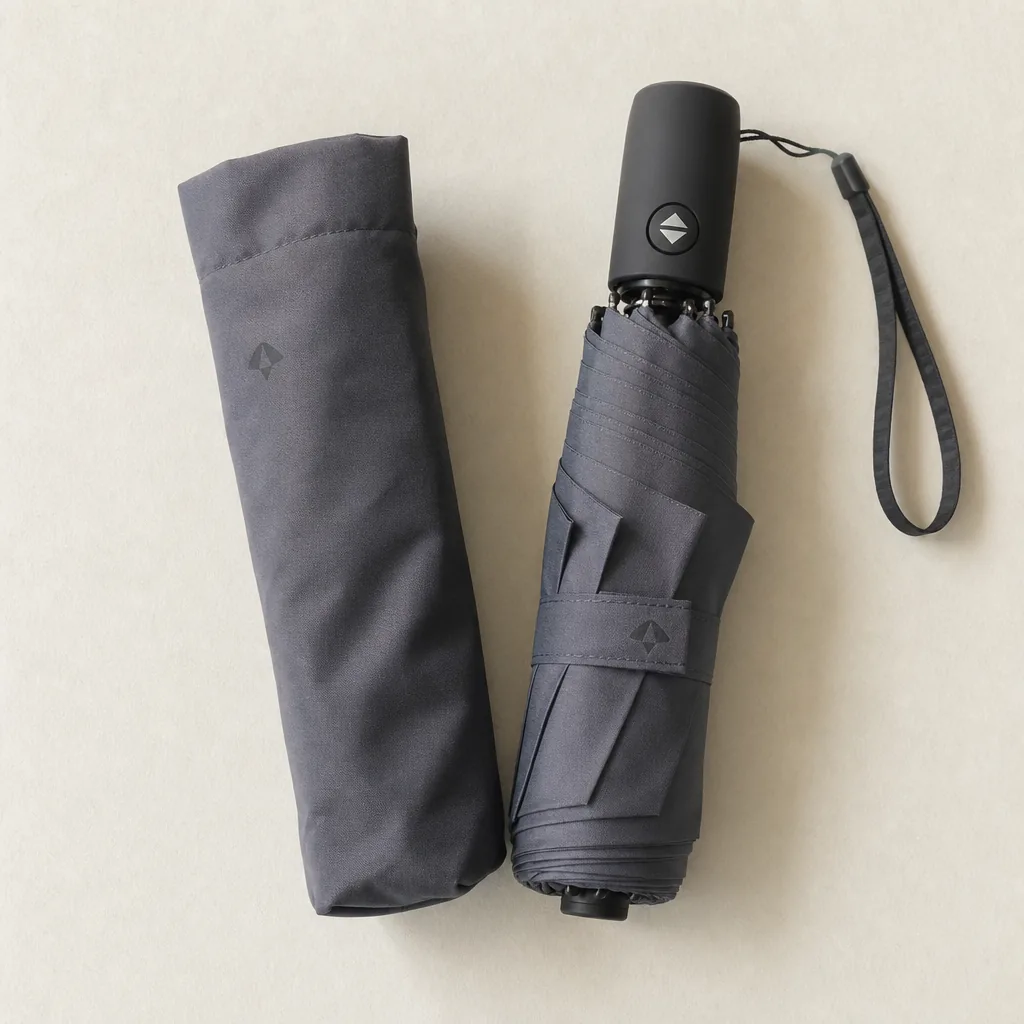
Buyers sourcing sun umbrellas often find that lab claims on fabric don’t match field performance once canopy size, coating consistency, and frame geometry are put into production. On our factory floor in Songxia, we see that reliable UPF 50+ umbrella fabric depends not just on the textile, but on how the coating is applied, how much coverage the canopy actually provides, and whether the frame holds stable tension under daily use.
What UPF 50+ means in an umbrella specification
UPF 50+ means the tested canopy transmits no more than 1/50 of measured ultraviolet radiation, blocking at least 98% under the stated lab method. For sourcing, that rating belongs to one fabric system only: base cloth, yarn density, dye color, UV coating or backing, finish, and material code. A black 210T pongee canopy with a UV back coating may pass, while the same cloth in white, lemon, or pale pastel without the same finish may not. Do not accept “sun protection umbrella” as a catalog label. Ask for a lab report linked to the fabric code, color family, GSM or density, and coating specification. For an OEM sun umbrella, confirm whether the test used AS/NZS 4399, AATCC 183, or another recognized method, and whether the result was checked after wetting, heat exposure, or abrasion. That documentation matters when UPF claims appear on packaging, hangtags, retailer pages, or compliance files.
Fabric density and color determine how much work the coating must do. Tight 190T or 210T pongee usually blocks more UV than a looser weave because there are fewer open paths between yarns. Dark shades often start with better UV resistance than white, light yellow, or pastel colors; silver, black, or color-matched inner coatings can help reach UPF 50+. The sourcing risk is silent drift after sampling. If the purchase order approves only handfeel, color, and print quality, the mill may change GSM, yarn count, or coating add-on weight without making the umbrella look different. Lock the material code, density, color family, coating type, and finish in the specification, then require pre-production confirmation before cutting bulk panels. A UV coating umbrella can still miss the promised rating if the base cloth is thin, the coating is uneven, or the approved color changes after sample approval.
UPF measures transmission through the fabric, but real shade depends on the finished umbrella. A 30 inch golf canopy covers shoulders and forearms better than a 21 inch compact, even when both use identical UPF 50+ umbrella fabric. Canopy arc, straight diameter, panel depth, and user position affect how much direct and reflected light reaches the body. Frame construction also matters because the shade area must stay stable outdoors. For resort, event, and outdoor retail programs, a 27 inch or 30 inch fiberglass frame umbrella usually gives a better balance of coverage, weight, and wind resistance than a small compact. Vented double-canopy designs can improve gust handling, but oversized vent openings may allow more side light. Specify certified fabric performance and finished canopy geometry together, including size, arc, frame type, and vent design, so the umbrella delivers both tested material protection and practical coverage in use.
Best canopy fabrics and coatings for UV blocking
Start with weave density, then validate the coating. For UPF 50+ umbrella fabric, 190T pongee is the practical OEM baseline: it has fewer pinholes than low-grade flat polyester, folds cleanly on 21", 23", and 27" umbrellas, and supports screen print, heat transfer, and most retail logo work without a bulky canopy. 210T pongee gives a denser face, better shade opacity, and a smoother hand feel, but it costs more and creates a slightly stiffer fold package. Plain polyester fits budget sun protection umbrella programs and high-volume promotional orders, but loose weave or inconsistent yarn can leak visible light at seams and between threads. Treat polyester as a cost option, not a performance upgrade, unless the supplier verifies the fabric and finished canopy against the UV target before bulk production.
Color and backing change both UV performance and buyer risk. Black, dark navy, and deep forest panels usually reduce glare better than white or pastel panels because they absorb more light, but dark color alone does not prove UPF 50+ performance. A reliable UV coating umbrella normally depends on a tested UV finish, silver coating, or laminated underside. Silver-coated canopies reflect heat and create cooler shade for beach, outdoor retail, and promotional parasols; the tradeoff is a crisper hand feel, slight coating noise, and weaker color accuracy for tight Pantone logo work. Laminated black backing blocks light strongly and hides rib shadows, but it adds weight and can make opening and closing less fluid. Approve hand feel, odor, fold marks, and print adhesion on a pre-production sample before panel cutting.
Lock print requirements before choosing the final canopy stack. A 190T or 210T pongee canopy is the safest base for Pantone-sensitive logos, sublimation, heat transfer, and edge-to-edge graphics because ink behavior is more predictable on the fabric face. Heavy UV back-coats, silver layers, and laminated undersides can reduce adhesion, shift color between the top face and underside, or show panel distortion after sewing. When the canopy is coated or laminated, pair it with a fiberglass frame umbrella instead of basic steel ribs; the heavier, stiffer fabric loads ribs and stretchers harder in gusts. For an OEM sun umbrella, a 23" street model or 27" double-canopy vented model with fiberglass ribs gives a balanced spec: durable enough for daily use, printable enough for branding, and easier to control under routine AQL 2.5 inspection for coating flake, seam light leakage, and uneven panel tension.
Frame choices that support frequent outdoor use
For frequent outdoor use, the frame matters almost as much as the canopy. A UPF 50+ umbrella fabric only delivers consistent coverage if the ribs hold their arc and the shaft stays straight after repeated opening, closing, and wind loading. In practice, fiberglass ribs outperform plated steel for most sun protection umbrella programs because they flex instead of taking a permanent set. A 23-inch or 27-inch frame with full fiberglass ribs and a fiberglass or aluminum shaft usually lands in the 320 to 480 gram range, which is light enough for daily carry but still stable on a promenade, golf path, or school pickup line. Steel is cheaper and can feel more rigid at first, but once a thin steel rib kinks, the canopy profile goes uneven and UV shade coverage suffers at the edges.
Corrosion is the second issue buyers underestimate. A UV coating umbrella used around pools, beaches, sports fields, or resort properties sees sweat, salt air, sunscreen residue, and wet-dry cycling. Epoxy-coated steel ribs can last acceptably in inland climates, but on coastal orders I usually push fiberglass ribs with stainless or black-coated hardware because rust starts first at joints, rivets, and runner contact points, not on the obvious flat surfaces. Our standard practice at ZheBrella is to pair a pongee canopy in 190T or 210T with fiberglass ribs when the target is 2,000 to 5,000 open-close cycles and better shape retention after side gusts around 30 to 40 mph. For promo-grade OEM sun umbrella orders on a tight budget, steel main shafts are still workable if the rib set is fiberglass and the ferrule hardware is upgraded.
Rib count changes how well the canopy keeps its tension over time. An 8K layout is the standard sweet spot for a 21-inch to 27-inch daily-use umbrella because replacement parts are straightforward, the opening force stays reasonable, and the panel geometry works well with darker UPF 50+ umbrella fabric and printed graphics. A 16K frame is useful when appearance and edge stability matter more, especially on fashion parasols, hospitality umbrellas, or compact models where you want a rounder silhouette with less scalloping between ribs. The tradeoff is more joints, more sewing points, and more assembly time, so weight and cost both rise. If the user is outdoors often and wind is part of the job, I would still choose an 8K fiberglass frame umbrella with slightly thicker rib walls over a cheap 16K steel frame every time.
Coverage, size, and user experience considerations
Specify coverage by arc, rib length, and open canopy diameter before discussing folded size. A 21 inch 8K compact normally opens to a 37 to 39 inch canopy, adequate for one commuter only if the shoulder bag or backpack strap stays inside the shade line. A 23 inch straight umbrella reaches about 40 to 42 inches and gives better shoulder coverage when the sun is overhead. For golf, beach, resort, school pickup, and outdoor staff programs, 27 inch and 30 inch frames open to roughly 48 to 54 inches, where UPF 50+ umbrella fabric can shade the upper body instead of just the head. Use 8K or 10K vented canopies when airflow and wind behavior matter. A decorative 16K frame can look more refined for promotional gifting, but the narrower panels increase logo-registration risk and may block airflow compared with a vented 8K or 10K construction.
Match the sun protection umbrella specification to use case and failure risk. For daily carry, 21 inch or 23 inch models with 190T or 210T pongee canopy fabric pack tightly, resist wrinkling, and tolerate repeated open-close cycles better than stiff novelty fabrics. For golf, beach, event staff, and resort use, move to a 27 inch double-canopy vented design with fiberglass ribs; a fiberglass frame umbrella flexes in gusts that can permanently bend cheaper steel stretchers. For an OEM sun umbrella with verified UV performance, specify a UV coating umbrella with silver or black-out inner coating, then confirm UPF 50+ after printing. Sublimation, dark all-over artwork, and coating changes can affect the lab result, so testing the approved print sample reduces compliance risk before bulk production.
Handle style and opening mechanism drive daily convenience as much as canopy size. Auto-open is usually the practical choice for commuters and office workers because it allows one-hand deployment at a car door, building entrance, or subway exit, while using fewer spring components than auto-open-close. Auto-open-close fits premium gifting, but the stronger recoil spring, thicker shaft, and stiff reset action can increase complaints during a 12 to 18 month heavy-use cycle. Crook handles carry cleanly on the forearm for 23 inch and 27 inch straight umbrellas. EVA or rubberized J-handles grip better with sunscreen or sweat. Compact telescopic models generally need ABS or soft-touch straight handles to keep closed length near 11 to 13 inches. For large orders, inspect open-close force, runner movement, handle bonding, stitching alignment, and logo placement under AQL 2.5 before shipment.
How to brief a factory for sun umbrella sourcing
Brief a factory with production specs, not style notes. Start with the UV target, umbrella size, and end use: retail, gift, beach, golf, or daily commute. If you require UPF 50+ umbrella fabric, state whether the rating must apply to the base cloth or the finished canopy after UV coating, printing, and curing; those routes affect cloth selection, coating weight, colorfastness, and price. Specify the canopy exactly: 190T or 210T pongee canopy, polyester with silver or black UV backing, or POE/PVC/EVA for a transparent sun protection umbrella. Give finished size in trade terms, such as 21 inch folding, 23 inch straight, 27 inch golf, or 30 inch oversize, plus open diameter and closed stick length if carton fit matters. Add the requested quote basis, MOQ by colorway, target order quantity, FOB Ningbo/Shanghai or DDP destination, and required lead time so the supplier can price materials and shipping risk correctly.
Lock the frame and operating details before discussing artwork. State steel shaft with fiberglass ribs, full fiberglass frame umbrella, or aluminum shaft for lower carry weight; then list rib count, such as 8K, 10K, or 16K, because rib geometry changes panel cutting, seam placement, and print registration. Confirm manual open, auto-open, or auto-open-close, plus handle material, tips, runner, vented double canopy, and sleeve requirement. For branding, specify screen print for solid spot colors, heat transfer for small logos, or sublimation for full-panel artwork. A UV coating umbrella with silver or black backing can shift logo color, so approve print strike-offs on the actual coated fabric, not on generic white polyester. For an OEM sun umbrella order, define the sample path: blank prototype for structure, printed pre-production sample for color and coating, then sealed golden sample before bulk production.
Put testing, inspection, and packing requirements into the purchase brief before the PI. Request the UV transmission or UPF test method used by the factory or third-party lab, plus colorfastness after coating and open-close cycle checks for promotional or retail programs. Define inline checks for canopy shade, coating adhesion, rib assembly, opening force, and print position, then require AQL 2.5 final inspection covering appearance, carton count, barcode labels, and random function testing. If wind resistance is a selling point, write a target such as fiberglass ribs passing 50+ mph internal wind testing, with sample size and pass criteria. Packaging specs should include polybag, self-fabric sleeve, color card, PDQ display if needed, outer carton dimensions, maximum gross weight, shipping marks, pallet rules, and over/under quantity tolerance. FOB quotes usually focus on carton cube; DDP quotes need stronger labeling and carton durability because destination rework is costly.
Frequently Asked Questions
Can a printed umbrella still achieve UPF 50+?
Yes, if the base fabric and coating meet the required UV blocking level. Buyers should confirm that the print process does not weaken the fabric or create uncoated gaps.
What is the most practical build for a retail sun umbrella?
A common choice is pongee or polyester with UV coating, fiberglass ribs, and an auto-open mechanism. This balances protection, weight, and user convenience while keeping costs manageable.
Which canopy fabrics are most practical for achieving UPF 50+ in mass production?
190T or 210T pongee with a black UV undercoating is the most common OEM option because it balances printability, cost, and consistent UPF performance. Polyester can also work, but buyers should request lab test data on the finished fabric plus coating, not just the base cloth.
Does full-panel printing reduce UV performance on a coated sun umbrella?
It can, depending on the print method and whether the coating remains continuous on the sun-facing or underside layer. For promotional orders, factories usually recommend testing the final printed canopy construction, especially for light colors and all-over sublimation designs.
What frame specification is typically used for a durable OEM sun umbrella with large coverage?
For 27 to 30 inch straight umbrellas, many importers choose a fiberglass shaft with 8 fiberglass ribs to reduce rust risk and improve wind flex. Typical MOQ for custom color and logo programs starts around 500 to 1,000 pieces, with lead times of about 35 to 50 days after sample approval.
Looking to Launch Your Custom Umbrella Line?
ZheBrella is a Zhejiang-based OEM/ODM umbrella manufacturer with 17 years of export experience. Free design, low MOQ from 100 pieces, windproof construction, full-color print.
Get Free Quote Now »People Also Search For
Related Articles
Buyer Guide to Sun and Rain Umbrella Specs for Dual Use
Specify one umbrella for sun and rain with the right fabric, frame, coating, and testing so retail and promo programs me...
Read More »
Sun Protection Umbrella Guide for Retail and Promo Buyers
Learn how to specify UPF 50+ umbrellas, from UV fabrics and coatings to frame choices, MOQ, and packaging for retail or ...
Read More »UPF 50+ Umbrellas: Choosing Fabrics, Coatings, and Frames
Learn how to specify UPF 50+ umbrellas with the right fabric, coating, frame, and venting for outdoor retail, events, an...
Read More »