Sun Protection Umbrella Guide for Retail and Promo Buyers
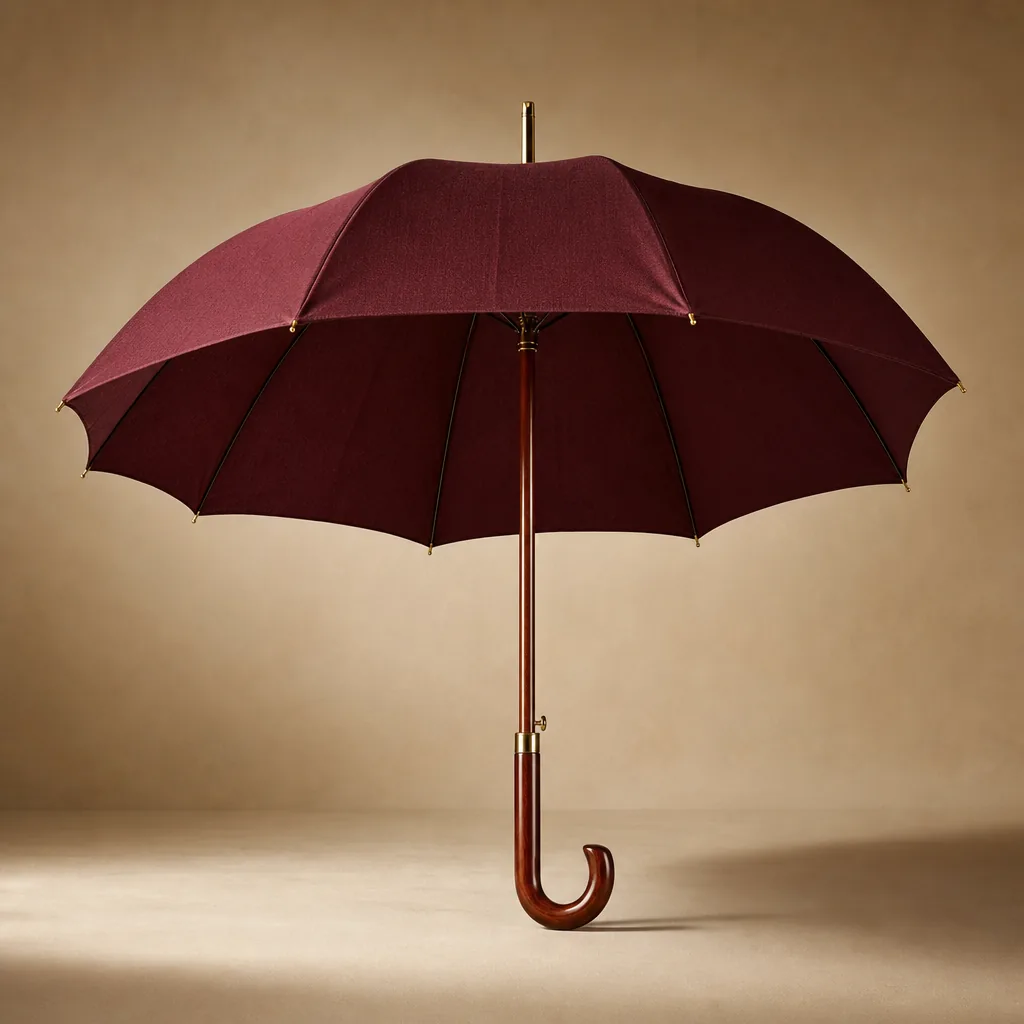
Retail and promotional buyers often treat umbrellas as a simple seasonal item, then run into problems with UV claims, fabric performance, and product durability once orders are already in motion. A practical sun protection umbrella guide starts on the factory floor: the right canopy weave, coating, frame, and packaging all affect whether a UPF 50+ umbrella actually meets the program’s cost, branding, and compliance targets.
What UPF 50+ means for umbrella buyers
In a sun protection umbrella guide, UPF 50+ is the number buyers should care about, not vague “UV protection” copy. UPF 50+ means the tested fabric blocks at least 98% of UV radiation, but that only holds for the exact material tested: the canopy cloth, its color, weave, coating, and thickness all affect the result. A loose 190T pongee canopy and a tightly woven 210T UV umbrella fabric do not perform the same, even if the hangtag says the same thing.
Coverage matters just as much as fabric chemistry. A canopy with pinholes at the stitch lines, exposed vent gaps, or a shallow profile lets UV through at the edges, so a UPF 50+ umbrella should be specified as a full system: fabric panel, seam construction, and edge finish. In sourcing terms, I treat a certified UPF claim as valid only when the tested material matches production fabric, not a sample lab cloth that never goes into mass production.
For OEM sun umbrellas, ask for the lab report on the actual canopy construction, not just the finished umbrella model. If the supplier changes from a coated pongee canopy to a different base cloth, or switches coating thickness, the UV performance can shift enough to invalidate the original claim. The practical rule is simple: certification should follow the real production fabric, and the buying spec should name the exact UV umbrella fabric, coating type, and panel construction that will ship.
Best canopy materials for UV blocking
For a sun protection umbrella guide, the first decision is the canopy substrate, because that determines both UV performance and how the umbrella prints in production. Pongee 190T is the workhorse: it is lighter, easier to fold, and gives a softer hand feel, but the weave is a little more open, so it usually needs a proper UV treatment or a coating system to reach a credible UPF 50+ umbrella claim. Pongee 210T is denser and more stable, with better opacity and slightly better resistance to pinholing at the seams; it costs more and adds a bit of weight, but it is the safer choice when the buyer wants a cleaner shadow line and fewer complaints about light bleed through the canopy.
Silver-coated linings block more radiation than plain dyed fabric, but they are not a free upgrade. The metallic layer improves reflectivity and lowers heat transfer, which is why many OEM sun umbrellas use it for retail programs, yet it can make the canopy stiffer, noisier in the hand, and less pleasant in a compact travel format. It also changes print behavior: direct screen printing on the coated side is usually a bad idea, and heat transfer or external printing has to be tested for adhesion and wash/rub resistance. If the brief values premium shade performance over a soft textile feel, silver-coated construction makes sense; if the umbrella needs a fabric-like finish and clean branding, a UV umbrella fabric with a stable topcoat is usually the better compromise.
UV-treated fabrics are the most balanced option when the buyer wants both function and decoration. A properly finished pongee canopy can keep good color consistency, accept logo printing on the outer face, and still meet retail expectations for opacity and hand feel, as long as the UV additive or coating is specified early in sampling. In practice, 190T is easier for promotional runs where price and weight matter, while 210T is the better pick for higher-end merchandise or larger canopies that need more structure. For most OEM sun umbrellas, I would rank the options this way: 210T UV-treated pongee for the best all-around result, 190T for cost-sensitive programs, and silver-coated lining only when the buyer specifically wants maximum solar reflection and can accept a firmer, less print-friendly build.
Frame builds that support sun-use products
For a sun protection umbrella guide that is actually useful to buyers, start with the frame, not the canopy. Fiberglass ribs are the better default for a UPF 50+ umbrella because they flex under gusts instead of bending permanently, and they don’t rust after a season of beach or golf use. Steel ribs are stiffer and cheaper on paper, but once you move into UV umbrella fabric with larger panels, the extra weight and corrosion risk usually become the problem; I only like steel when the program is short-life, low-cost, and the umbrella stays in dry conditions.
Shaft stiffness matters just as much as rib material. A loose shaft turns a pongee canopy into a wobbling sail, especially on 23" and 27" formats, so for retail and promo buyers I prefer a reinforced steel shaft or fiberglass shaft matched to the opening mechanism. For larger OEM sun umbrellas, 16K structures are the safer choice than 8K because the load spreads across more ribs and the canopy keeps a cleaner crown shape; 8K is fine for compact travel pieces, but on bigger UV umbrellas it tends to show more panel distortion and stress at the stretch points.
Lighter frames are worth it when the umbrella is sold as part of a retail set or carried all day at outdoor events. A lighter fiberglass frame reduces bag weight, lowers shipping cost, and makes a pongee canopy feel more premium in hand because the whole product opens smoothly instead of fighting the user. The tradeoff is that you still need enough stiffness in the runner and tips; if the frame feels flimsy, the UV umbrella fabric will read as fragile even when the coating is fine, and that hurts conversion more than a slightly higher unit cost ever will.
Design specs for retail and promotional channels
For retail and promo programs, start with the canopy, not the logo. A practical sun protection umbrella guide usually lands on 21" to 23" for compact carry, 27" for general consumer retail, and 30" only when you want true coverage and don’t mind the weight. For actual sun performance, I would specify a pongee canopy in 190T or 210T with a real UPF 50+ umbrella treatment, because thin polyester looks fine in photos but fails fast in the field. Auto-open is the right default for mass channels; auto-open-close makes sense only when the spring quality is controlled, or you get complaints about rebound force and broken sliders after a few thousand cycles.
Handle shape matters more than most buyers expect because it drives grip comfort and display value. Straight EVA or foam handles ship well in e-commerce and feel practical for commuter use; hooked handles still work for retail because they hang neatly on fixtures and in closets, but they add volume in cartons. If the program is brand-led, keep the frame honest: fiberglass ribs for wind flexibility, steel only when cost is the deciding factor, and a UV umbrella fabric or topcoat that is specified by test method, not just by color name. For OEM sun umbrellas, I usually recommend one base structure and two colorways rather than too many SKUs, because inventory gets messy fast and the benefit of extra shade tones is usually smaller than the cost of split production.
Color and packaging should be designed together, not handed off separately. Dark canopy colors give stronger perceived UV protection and hide dust, while lighter colors photograph better on shelf and reduce heat buildup; the best retail compromise is often a clean neutral exterior with a vivid contrast edge or lining for brand recognition. Hangtags need to carry the actual selling points—UPF rating, open size, mechanism, and care notes—because a hanger card with only a logo wastes shelf space. Carton sizing affects freight more than people admit: one or two centimeters of dead air across a master carton can reduce pallet density enough to change ocean freight cost. On larger retail runs, I treat packaging engineering as part of the sun protection umbrella guide itself, because shelf appeal and cube efficiency should be built into the spec before sampling starts.
Factory controls, MOQ, and lead-time planning
For a sun protection umbrella guide that is actually useful to buyers, the factory controls matter more than the catalog photos. The clean process is sample approval first, then a locked specification sheet covering frame gauge, canopy cloth, coating, printing position, and handle finish; after that, production only moves when the golden sample matches the PO. During mass production, I expect in-line checks at panel cutting, seam alignment, runner assembly, and final opening force, because a UPF 50+ umbrella can still fail if the UV umbrella fabric is damaged by bad needle tension or inconsistent coating handling. On the floor, the big mistakes are usually color drift, weak stitch density, and canopy size variance, not dramatic breakage.
For mass production, AQL 2.5 is the normal acceptance target for retail and promo programs, especially when the order is split across multiple SKUs or print artworks. That means the buyer should define which defects count as critical, major, and minor before inspection, because a loose tip cap and a torn panel do not carry the same risk. With a pongee canopy, I also insist on checking fabric weight, coating uniformity, and panel symmetry by lot, since promo orders often mix manual-open and auto-open mechanisms in the same shipment. ZheBrella’s standard practice is to hold packed goods until final inspection clears, because fixing defects after carton sealing is slow and expensive.
MOQ depends on construction, print method, and color count more than on umbrella size alone. A simple OEM sun umbrellas program with one color canopy and one logo location can usually start lower than a fully custom frame, special handle, or multi-color UV umbrella fabric order; once you add sublimation, mixed sizes, or individual retail packaging, the MOQ climbs fast because cutting, printing, and boxing all get less efficient. For importers, FOB is better when you already control freight, customs, and destination delivery, while DDP makes more sense when you want a landed price and do not want to manage brokerage or last-mile risk. Lead time should be planned around sample approval plus production days, not just factory sewing time, because delayed art signoff can move a 25- to 35-day order into the next sailing window.
Frequently Asked Questions
Can a dark umbrella still meet UPF 50+ requirements?
Yes, if the fabric construction and coating test at UPF 50+ levels. Dark colors can help block UV, but the buyer should verify the tested material rather than assume based on color alone.
What is the most practical spec for a retail sun umbrella?
A common starting point is a pongee canopy with UV coating, fiberglass ribs, and an auto-open mechanism for convenience. Buyers should also request a pack-out spec that fits their target price and freight budget.
What documentation should buyers request for UPF 50+ umbrellas?
Ask for a recent UPF test report from a recognized lab such as SGS, Intertek, or TÜV. The report should match the exact fabric, coating, and color used in your production order, since darker colors and coated fabrics can test differently.
Which canopy fabric is best for retail UPF umbrellas?
190T or 210T pongee with black coating or silver coating is commonly used for retail UV umbrellas because it balances sun protection, water resistance, print quality, and cost. For premium programs, buyers may specify higher-density pongee or recycled polyester with verified UPF 50+ performance.
What MOQ and lead time are typical for OEM sun umbrellas?
For custom logo sun umbrellas, typical MOQ is 500 to 1,000 pieces per style depending on fabric, frame, and packaging. Standard production lead time is usually 30 to 45 days after artwork approval and sample confirmation.
Looking to Launch Your Custom Umbrella Line?
ZheBrella is a Zhejiang-based OEM/ODM umbrella manufacturer with 17 years of export experience. Free design, low MOQ from 100 pieces, windproof construction, full-color print.
Get Free Quote Now »People Also Search For
Related Articles
UPF 50+ Umbrella Fabric and Frame Guide for Sun Protection
Specify fabrics, coatings, canopy coverage, and frames that deliver UPF 50+ performance for retail and promotional sun u...
Read More »UPF 50+ Umbrellas: Choosing Fabrics, Coatings, and Frames
Learn how to specify UPF 50+ umbrellas with the right fabric, coating, frame, and venting for outdoor retail, events, an...
Read More »
UPF 50+ Sun Umbrella Materials for Retail and Promo Buyers
Compare canopy fabrics, coatings, and frame specs for UPF 50+ umbrellas so you can source sun-safe models with clear MOQ...
Read More »