Travel Umbrella Specs for Airlines, Hotels, and Commuters
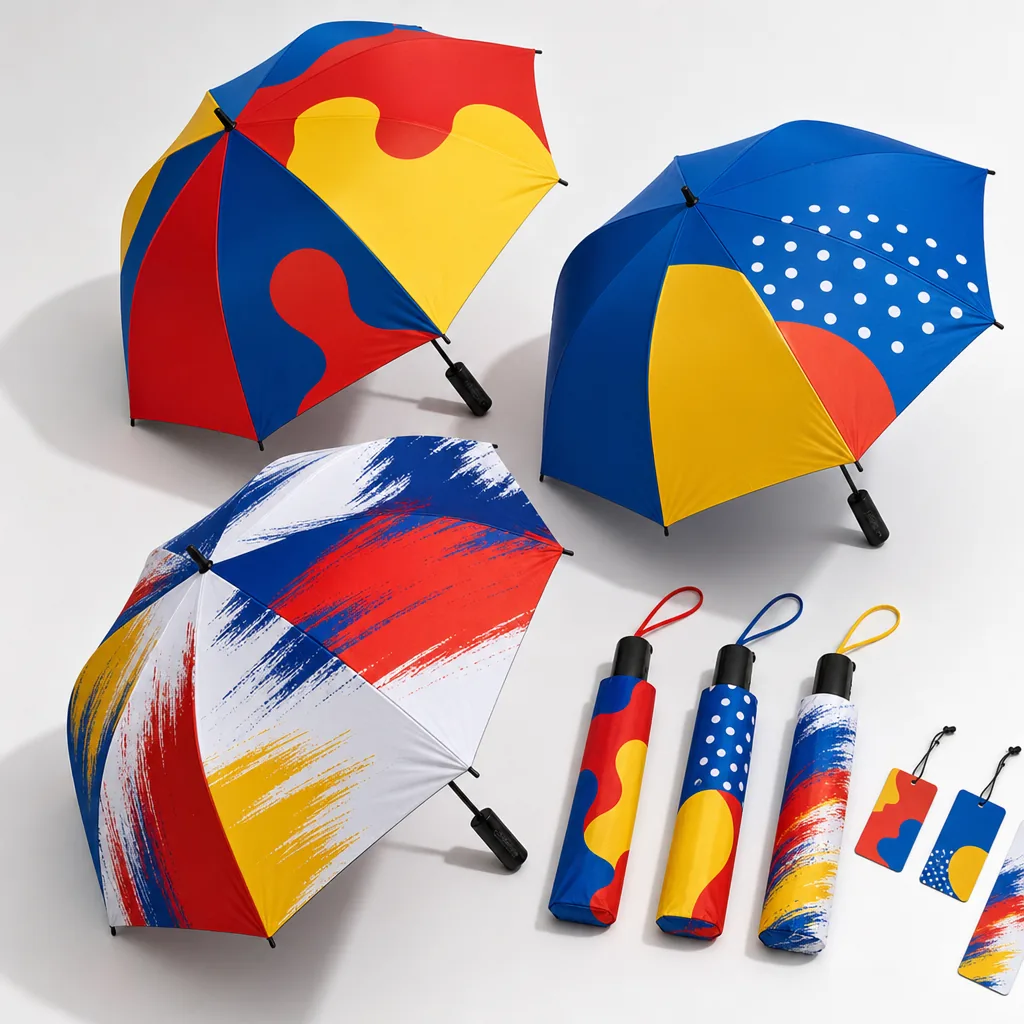
Choosing a compact umbrella sounds simple until airline amenity limits, hotel room standards, and daily commuter abuse pull the spec in different directions. On our Songxia production lines, the real decisions come down to 3-fold versus 5-fold structure, canopy denier, rib material, and closed length tolerances—exactly the travel umbrella supplier specs that determine whether a model packs small without failing after repeated open-close cycles.
Define the Use Case Before You Choose the Fold
Define the use case by packed size first, then choose the fold. Airline amenity programs usually screen travel umbrella supplier specs by closed length, unit weight, and carton efficiency before they review handle details or decoration. That is why a 5-fold umbrella design is common in this channel: typical closed length is 6-8 inches, weight is about 180-260 grams, and canopy size stays in the compact 19-21 inch range. Those dimensions fit seat-back pockets, crew carts, and premium gift packs far better than a longer frame. The compromise is mechanical complexity. A 5-fold frame has more shaft joints, shorter ribs, and tighter sewing tolerances, so it is generally less forgiving under rough handling than a 3-fold. If your program has a hard storage envelope or a strict weight cap, lock those numbers first; that decision will narrow frame construction, opening method, and unit cost much faster than cosmetic options.
Hotels and daily commuters need a different spec balance. For hotel guest umbrellas, a 3-fold frame is usually the safer choice because the umbrella is issued at the door, returned wet, and expected to open smoothly for guests carrying luggage or wearing business attire. A closed length of 19-22 inches gives a stronger shaft, fewer articulation points, and more reliable opening than a 5-fold while keeping the canopy in the familiar 19-21 inch compact range. Auto-open often justifies its added cost at concierge and valet stations because one-hand use matters more than saving 120 grams. Commuter umbrella bulk programs sit between those needs: choose a 5-fold when true pocketability under 8 inches is the priority, or a 3-fold when daily wind exposure and repeated use matter more. Ask any compact umbrella OEM to quote both lanes side by side: an ultra-compact 5-fold for giveaways and travel retail, and a tougher 3-fold with fiberglass ribs and 190T or 210T pongee for repeat use and wind resistance above 50 mph.
Frame Materials That Balance Portability and Breakage Risk
For compact travel umbrellas, the lowest-risk frame is usually a hybrid: aluminum shaft sections to keep carry weight down, fiberglass end ribs to recover after inversion, and steel reserved for wear points such as springs, pins, and the runner. That matters most in a 5-fold umbrella design, where each added joint increases fatigue exposure compared with a 3-fold frame. In the 21-inch to 23-inch range used for backpacks, airline seat pockets, and hotel drawers, thin aluminum alone is prone to permanent bends when users step from a terminal or taxi into a crosswind. Fiberglass outer ribs reduce that failure mode because they flex back instead of staying bowed or snapping at the notch. When buyers compare travel umbrella supplier specs, frame weight, joint count, and rib recovery under inversion are better decision points than metal gauge by itself, especially for hotel guest umbrellas and airline amenity programs where repeat handling drives complaint rates.
All-steel compact frames trade portability for rigidity, and that trade usually fails in this segment. On a 5-fold frame, full steel ribs and shaft sections commonly push total weight to about 380 to 450 grams, which makes daily carry less acceptable and leaves more bulk in the sleeve after repeated folding. Steel also raises corrosion risk if plating is uneven around rivets, hinges, and slider channels. For most compact umbrella OEM programs, a mixed frame gives the better durability-to-weight ratio: steel only where spring load is concentrated, fiberglass where inversion is most likely, and aluminum where every gram matters. Rib count should stay practical as well. 8K is the standard for most travel umbrellas because it holds a balanced canopy shape without adding extra hinges, rivets, and assembly steps. In this size class, 10K or 16K frames are usually cosmetic or niche, not a meaningful upgrade in wind performance, so commuter umbrella bulk buyers should qualify a well-built 8K frame first when reviewing travel umbrella supplier specs.
Canopy Fabric and Finishing Choices for Premium Perception
For premium perception, canopy fabric drives the difference buyers notice first: hand feel, print definition, and how a 21 to 23 inch umbrella packs after daily use. In most travel umbrella supplier specs, 190T pongee is the baseline for a 5-fold umbrella design because it keeps weight and folded bulk down while drying quickly after rain. It is fully suitable for 1-color screen printing and routine commuter programs. Move to 210T pongee when the brief is airline amenity kits, executive gifting, or higher-end hotel guest umbrellas. The tighter weave gives a smoother surface, fuller drape, and more substantial hand, which helps the product feel less promotional. It also improves print presentation: cleaner logo edges, better color uniformity on solid panels, and more reliable results on heat-transfer or sublimation artwork. If packed size and cost are the first constraints, 190T remains the practical choice; if retail presentation or brand perception matters more, 210T pongee is usually the safer spec.
For cost-down programs, standard polyester is still common in compact umbrella OEM development, especially commuter umbrella bulk orders managed to strict FOB targets and MOQ limits. The savings are real, but so are the tradeoffs: polyester typically has a flatter appearance, holds crease memory more visibly after repeated packing, and is less forgiving on fine-line print registration than a good 190T or 210T pongee. That makes it better suited to utility replacements, short promotional runs, and lower-cost 21 to 23 inch umbrellas where function outranks presentation. For sun-and-rain positioning, backside coating matters more than front-face claims. A black UV coating or silver coating can support UPF 50+ positioning when fabric density, coating coverage, and seam penetration are controlled well; poor control can leave light leakage at stitch lines and panel tips. Black UV coating usually looks more premium from the underside, while silver coating reflects heat effectively but can look more promotional if the finish is too glossy.
Mechanisms, Packability, and In-Use Convenience
Mechanism choice drives both user convenience and warranty exposure on a compact umbrella. Manual open/close is usually the safest spec for a true pocket model, especially in a 5-fold umbrella design, because it eliminates one or two spring systems, reduces load on the runner, and cuts stress at riveted joints. That matters more as folded length drops into the 21 to 23 inch class and frame tolerances tighten. Auto-open is the practical middle tier: one spring for deployment, manual push-back to close, easier one-handed use at a curb or station, and typically lower failure risk than full auto-open-close. In travel umbrella supplier specs, the cost difference is usually straightforward: manual is the baseline, auto-open adds about 10 to 18 percent, and auto-open-close adds about 25 to 40 percent, depending on shaft grade, spring quality, and whether the frame uses aluminum-fiberglass hybrid ribs or all-steel ribs.
The repeat failure points are consistent across compact umbrella OEM programs: notch-to-runner connections, telescopic shaft locks, and stretcher-end rivets. Full auto-open-close units on low-cost 6-rib or 8-rib frames under 320 g often clear incoming inspection, then develop closure rebound or reset issues after roughly 300 to 500 cycles. For commuter umbrella bulk orders, that matters because one-handed operation only has value if the mechanism resets reliably in real use, not just in sample testing. For hotel guest umbrellas, where misuse and replacement rates are already high, manual or simple auto-open usually delivers a better cost-to-return ratio than full auto. Portability details also change complaint rates: flat ABS handles pack neatly but slip when wet; short rubberized oval handles improve grip; a 12 to 15 cm soft polyester wrist strap reduces leave-behind incidents better than thin elastic; and a wider-mouth sleeve with extra seam allowance or zipper entry is easier to repack when wet. When reviewing travel umbrella supplier specs, ask for folded length, packed diameter, sleeve opening width, handle profile, and cycle-test method, not just canopy size and weight.
MOQ, QC, and Shipping for Compact Umbrella Programs
MOQ on compact programs is driven by setup efficiency, not by canopy size. A stock 21-inch 3-fold or 5-fold umbrella design in black 190T pongee, with an existing handle, standard sleeve, and either a woven label or 1-color screen print, usually starts at 500-1,000 pieces per color. Once the build adds a custom-molded handle, matching sleeve fabric, all-over sublimation, or a nonstandard frame such as an aluminum shaft with fiberglass ribs, the practical MOQ typically rises to 2,000-3,000 pieces because fabric yield, print setup, and component buying are inefficient below that level. For hotel guest umbrellas, the simplest cost-control method is to lock one canopy color and one logo position across properties, then allocate volume internally instead of paying for several low-volume setups. When buyers review travel umbrella supplier specs against compact umbrella OEM quotes, frame complexity matters as much as decoration: a 5-fold packs shorter than a 3-fold, but the extra hinges and tighter tolerances increase reject risk, service issues, and ex-factory cost. For commuter umbrella bulk, proven 8K frames in 190T or 210T pongee, manual-open or auto-open, are usually a lower-risk choice than very short, complex folding mechanisms.
AQL 2.5 inspection should prioritize function over surface cosmetics. On compact umbrellas, inspectors need to check folding action, top-notch travel, runner lock engagement, spring-force consistency, rib alignment, joint-pin security, ferrule straightness, strap placement, and whether the canopy refolds into the sleeve without excessive force. Auto-open-close models should be cycled multiple times per sampled unit, since weak springs often pass the first opening but fail on the third or fourth close. For printed orders, QC should also confirm logo registration after repeated opening, especially on coated pongee or dark canopies using heat-transfer artwork. If the frame is sold as windproof, sampling should include inversion recovery and basic gust simulation; a fiberglass-rib travel model should recover from normal commuter use without permanent rib set, even if it will not match a 27-inch double-canopy umbrella. Freight terms can change the real program cost more than the quoted unit price. FOB Ningbo or Shanghai gives experienced importers more control on high-carton-count compact orders, while DDP is simpler for hotel chains or first-time buyers only when duty, brokerage, VAT or GST, palletization, and last-mile delivery are clearly included. Typical timing is 3-7 days for a stock-frame pre-production sample, 7-14 days for custom handles, sleeves, or Pantone matching, and 25-35 days for production after approval and deposit, extending to 35-45 days for complex auto-open-close or multi-decoration orders.
Frequently Asked Questions
Are 5-fold umbrellas always the best choice for travel programs?
No. A 5-fold model packs smaller, but it usually has a shorter shaft and more joints, which can reduce perceived sturdiness versus a 3-fold umbrella. For hotel and premium gift use, many buyers still choose 3-fold models for better balance and canopy tension.
What fabric grade is most common for a travel umbrella with branded printing?
190T pongee is a common baseline because it prints cleanly and feels better than basic polyester. 210T pongee is often selected for a more premium hand feel and slightly denser appearance.
What packed length is practical for airline, hotel, and commuter travel umbrellas?
For airline amenity or duty-free programs, buyers usually target a closed length of 17-20 cm for 5-fold models. Hotels often prefer 22-28 cm 3-fold umbrellas for better canopy stability, while commuter ranges commonly sit between 18-24 cm to balance portability and wind resistance.
Which frame setup works better for frequent-use commuter umbrellas versus occasional hotel guest use?
Commuter programs typically specify aluminum shaft with fiberglass ribs or reinforced steel/fiberglass hybrids to improve flex and reduce breakage in repeated use. For hotel guest umbrellas used occasionally indoors and outdoors, a standard steel frame can lower unit cost if the target canopy is around 21-23 inches.
How do fabric grade choices affect sourcing cost and performance in compact umbrellas?
190T pongee is a common mid-range choice for smoother appearance and better water shedding, while polyester is often chosen for entry-level cost control. If you need stronger UV or blackout performance, adding a silver coating or using higher-density pongee typically increases unit cost and may add 3-7 days to sample approval depending on color matching.
Looking to Launch Your Custom Umbrella Line?
ZheBrella is a Zhejiang-based OEM/ODM umbrella manufacturer with 17 years of export experience. Free design, low MOQ from 100 pieces, windproof construction, full-color print.
Get Free Quote Now »People Also Search For
Related Articles
Travel Umbrella Specs for Airlines, Hotels, and Retail Kits
Compare 3-fold and 5-fold travel umbrella specs, materials, and packing details to source compact models for hotels, air...
Read More »
Hotel Guest Umbrellas: Product Specs for Bulk Sourcing
Compare 23-25 inch hotel guest umbrellas by frame, canopy, handle, packaging, MOQ, and inspection points before placing ...
Read More »
Hotel Guest Umbrellas: Bulk Product Specs for Buyers
Specify hotel guest umbrellas with the right size, ribs, fabric, handle, logo method, MOQ, AQL checks, and delivery term...
Read More »