Travel Umbrella Specs for Airlines, Hotels, and Retail Kits
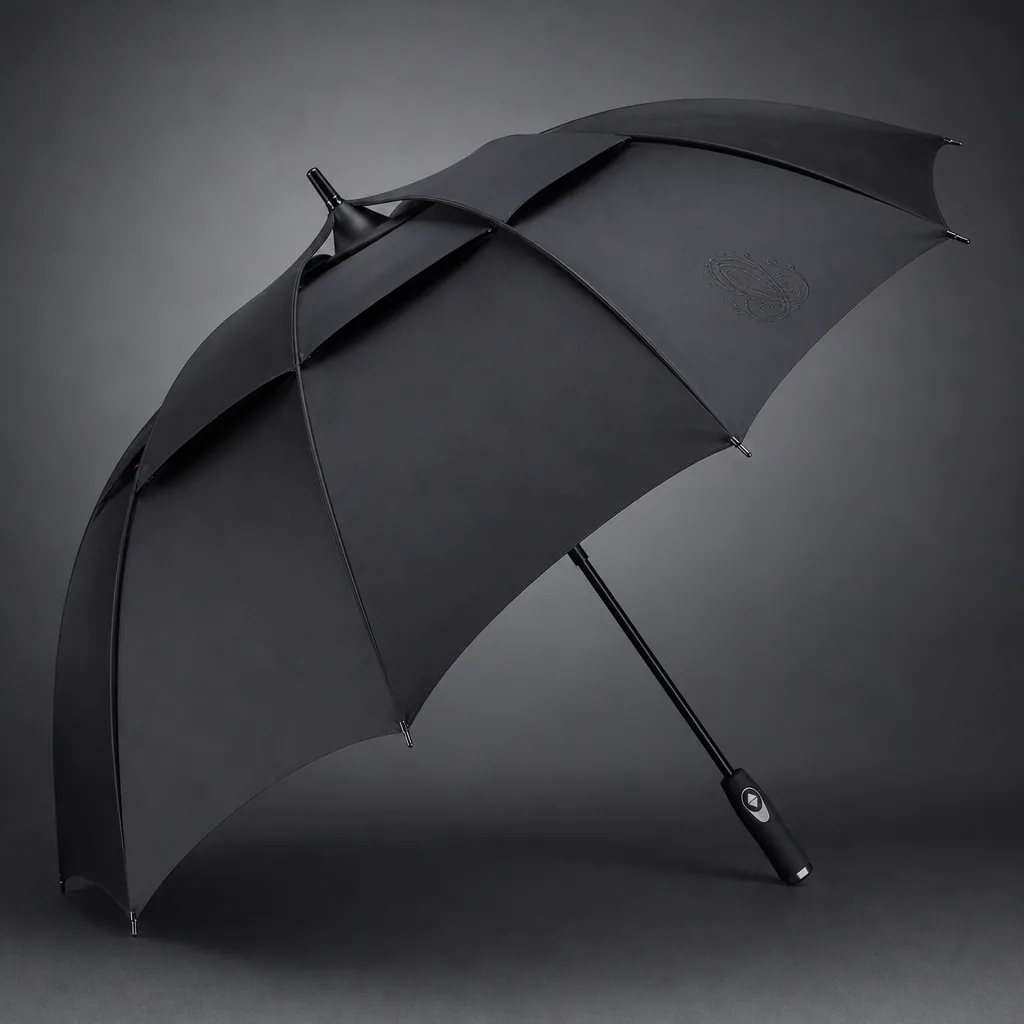
Buyers sourcing compact umbrellas for airline amenity kits, hotel guest rooms, or retail travel sets usually run into the same problem: a sample may look right, but the packed length, frame weight, rib strength, and carton efficiency often miss the operational target. On our Songxia production lines, the difference between a workable SKU and a costly one comes down to travel umbrella specifications that hold up in folding tests, fabric cutting, and bulk packing, not just on a sales sheet.
Which Travel Umbrella Format Fits the Use Case
Choose the frame by packed length first. A standard 3-fold compact fold umbrella in a 21 in. or 22 in. size typically closes to 11 to 13 in. and weighs about 320 to 420 g, depending on whether the frame uses steel, aluminum, or fiberglass-reinforced ribs. A true 5-fold umbrella usually closes to 6.5 to 8.5 in., which makes it the better fit for airline amenity kits, seatback programs, carry-on sets, and retail bundles sized around a cosmetic pouch. The trade-off is structural: a 5-fold umbrella uses a narrower shaft, shorter ribs, and more hinge points, so wind and impact stress concentrate at each joint. When buyers compare travel umbrella specifications, the shortest packed model is usually the right choice only for one-trip convenience or space-constrained packaging, not for programs that need repeat use and lower replacement rates.
For hotel guest rooms, a 3-fold frame is usually the better hotel amenity umbrella unless drawer space is extremely limited or the property wants a premium takeaway item. An 8K 3-fold with fiberglass ribs, steel shaft sections, auto-open, and a 190T or 210T pongee canopy delivers a stronger durability-to-cost ratio than an ultra-compact 5-fold. At about 12 in. closed, it still fits wardrobe drawers and luggage benches, re-bands faster for housekeeping, and tolerates being returned wet or loosely strapped. For a retail gift set umbrella, perceived value drives the decision. A sub-8 in. 5-fold reads as engineered and travel-ready in a boxed bundle with a bottle, notebook, or tech accessory, but buyers should expect a smaller handle, shallower canopy, and less stable feel in wind. A 3-fold supports heavier-duty builds, including vented double-canopy options and fiberglass rib upgrades, with some models tested above 50 mph. Use a 5-fold when compactness is the selling point; use a 3-fold when durability and service life matter more.
Frame and Rib Choices That Balance Size and Strength
For travel umbrella specifications, the frame determines carry weight, breakage rate, and replacement cost more than handle trim or canopy edge details. In a compact fold umbrella or 5-fold umbrella, the most efficient build is usually an aluminum shaft paired with fiberglass spreaders and outer ribs. That combination typically keeps a 21 in. to 23 in. unit around 320-380 g while giving the frame enough flex to recover under gusts instead of taking a permanent bend. An all-steel frame is usually the lower-cost option and performs well in static compression, but in a small travel format it adds noticeable hand weight and raises corrosion risk at rivets and joints if plating is inconsistent. For a hotel amenity umbrella or airline kit that will be opened by many users, a hybrid frame is the safer buy: steel where lock strength matters, black electrophoretic coating to slow rust, and fiberglass in the outer rib sections where flex matters most.
Rib count should stay functional. Eight ribs, or 8K, is the mainstream spec because it balances canopy tension, folded diameter, and assembly consistency on small folding frames. An 8K frame supports 190T or 210T pongee cleanly without making the closed umbrella too bulky for a backpack pocket or a retail gift set umbrella box. A 16K frame can look rounder and more premium, but in this size range the gain is largely aesthetic; it adds more joints, ferrules, tips, and sewing points, which increases labor, QC exposure, and reject risk without a matching gain in wind performance. Mechanism choice follows the same rule. Manual open is usually the lightest and lowest-risk option below 23 in.; simple auto-open adds spring weight and more wear points; full auto open-close carries the highest jam and tube-bend risk when users force the shaft shut off-axis. For most airline, hotel, and retail programs, an 8K manual or simple auto-open frame offers the best service-life-to-size ratio.
Canopy Fabric, UV, and Water-Repellency Options
For most travel umbrella specifications, 190T and 210T pongee are the two practical canopy fabrics for a compact fold umbrella, especially on 5-fold umbrella frames where canopy bulk directly affects closed diameter and packing ease. A 190T pongee canopy uses less yarn mass, so it folds slimmer, adds less weight to a carry-on or hotel welcome kit, and usually works more smoothly on tight 5-fold closing geometry after long storage. It also keeps unit cost lower. The tradeoff is finish quality: 190T has a softer hand, shows slightly more seam shadow under backlight, and can look less uniform at close retail inspection. A 210T pongee feels denser and more substantial, gives a cleaner surface, and is typically more dimensionally stable in cutting and sewing, which helps panel alignment and overall production consistency. For buyers, the decision is straightforward: choose 190T when pack size, lower FOB cost, and lighter carry weight matter most; choose 210T when shelf presentation, perceived quality, and tighter branding tolerance matter more than saving a few grams.
Print performance and finishing usually settle the choice faster than hand feel. On 190T pongee, screen print and heat-transfer logos work well for simple spot-color artwork, one- or two-position branding, and standard hotel amenity umbrella programs, but large solid fills can reveal more surface texture. A 210T canopy produces crisper logo edges, more even color laydown, and better legibility for small text near panel tips, making it the safer option for a retail gift set umbrella or any branded hospitality run with stricter visual standards. Dry-off performance depends more on the finish than the base cloth: both 190T and 210T can take a standard water-repellent coating, while 210T tends to shed droplets more cleanly after a shake and 190T often air-dries faster because there is less canopy mass. Use UPF 50+ coatings or a black UV undercoat when the umbrella is intended for sunny resort, beach, or tropical destinations, where sun blocking matters as much as rain cover. For rain-first airline, commuter, and urban programs, a standard water-repellent 190T or 210T canopy is usually the better cost-to-use balance.
Packing, Carton Efficiency, and Branding Constraints
Freight on mini umbrellas is driven more by carton cube than by the FOB unit price, so travel umbrella specifications should freeze folded length, folded diameter, and handle shape before approving a mold. On a 21-inch, 6-rib 5-fold umbrella, folded length is typically 17-19 cm, but folded diameter usually determines carton yield: 4.5 cm versus 6.0 cm changes how many units fit in a 58 x 32 x 28 cm export carton and can shift a master carton by roughly 10-20 pieces. A straight ABS handle packs tighter than a bulb handle because units nest instead of trapping void space. The writer should specify dimensions for every pack state: bare umbrella, umbrella with 190T pongee cover sleeve, with drawstring pouch, and in any gift box. Sleeve-packed units usually load more densely than pouch-packed units, especially when a padded pouch adds bulk at the canopy end. That pack-state detail gives buyers a usable basis for carton planning, freight comparison, and replenishment cost modeling before PO approval.
Packaging choice changes both presentation and shipping economics. The lowest-cost standard is a matching polyester or 190T pongee sleeve; a drawstring pouch adds perceived value but increases packed diameter; a rigid gift box fits a retail gift set umbrella but can cut carton efficiency fast if box depth exceeds the rib stack by even 8-10 mm. If the program adds an insert card, EVA zip pouch, or drawer box, require a sample carton load before sign-off, because accessories often add more freight cost than the compact fold umbrella itself. Branding space is also tighter on a 5-fold umbrella: on mini canopies, a clean single-panel logo is often limited to about 14-18 cm wide depending on seam allowance, panel curvature, and fabric such as 190T pongee, coated polyester, or RPET, while short plastic handles may only take a 25-35 mm pad print. The writer should call out maximum printable area for canopy, sleeve, pouch, hangtag, gift box, and handle separately. For hotel amenity umbrella and distributor programs, DDP shipments simplify replenishment because orders arrive landed, duty-cleared, and labeled for local receipt, reducing admin work on repeat room-kit and store-set orders.
MOQ, Sampling, and QC for Compact Umbrella Programs
MOQ on a compact umbrella program is usually set by the frame platform, not the canopy color. For a stock 5-fold umbrella or other compact fold umbrella built on an existing frame, a realistic starting point is 500-1,000 pieces per color for a plain canopy. Printed OEM orders more often begin at 1,000 pieces because print setup, fabric yield loss, and color control need more volume to price correctly. Once the brief moves to a custom handle mold, a new runner, or nonstandard mini-shaft geometry, the threshold typically rises to 3,000-5,000 pieces and adds tooling cost, approval time, and higher reject-rate risk. For airline kits, hotel amenity umbrella programs, and many retail gift set umbrella orders, the most stable build is still a 21 in. or 22 in. 8K frame with steel plus fiberglass ribs. It is easier to source at consistent quality, easier to repair, and packs more predictably than less common geometries. That matters because travel umbrella specifications that look minor on a tech pack, such as rib nesting clearance, shaft tolerance, or handle fit, can change assembly yield, carton density, and in-use durability on a short folded umbrella.
Sampling and QC need the same discipline. A stock-frame counter sample usually takes 5-7 days; a pre-production sample with logo printing is more often 7-12 days; custom tooling or tight Pantone matching on 190T or 210T pongee can extend sampling to 15-20 days. Bulk production is commonly 25-35 days after sample approval and deposit, but 35-45 days is the safer planning window before holiday shutdowns or during peak rain-season demand. Packaging often becomes the bottleneck: a retail gift set umbrella with a box, pouch, belly band, or barcode label can take longer to approve than the umbrella, so master-carton dimensions should be fixed early, especially on DDP shipments where a small handle change can reduce loading efficiency. Final inspection is typically run at AQL 2.5, but buyers should spend their attention on opening and closing cycles, shaft wobble after cycling, runner and top-notch alignment, stitching consistency, and water leakage at seams and tip pockets. Also verify strap placement, sleeve fit, coating transfer, closed-state odor, and whether a normal user can repack the umbrella in under 20 seconds; on travel umbrella specifications, those small defects generate more claims than obvious frame failures.
Frequently Asked Questions
Are 5-fold umbrellas too fragile for corporate gifting programs?
Not necessarily, but they require tighter engineering and better QC than 3-fold models. For repeat-use gifting, buyers often prefer aluminum-and-fiberglass 3-fold frames because they balance compact size with lower return rates.
What is a practical MOQ for a branded travel umbrella?
For a stock travel umbrella frame with custom canopy printing, MOQ often starts in the low hundreds to 1,000 pieces depending on fabric color and packaging. Fully custom handles, molds, or gift sets usually push MOQ higher and extend lead time.
What packed size usually fits best in airline amenity kits or retail travel sets?
For tight kits, buyers usually target a closed length of about 6.5 to 8.5 inches for 5-fold models. A 3-fold umbrella is often closer to 9.5 to 11 inches closed, which fits better in larger gift boxes or premium travel sets.
Which frame and canopy specs balance compact size with acceptable durability?
A common B2B spec is aluminum or steel plus fiberglass ribs with a 190T pongee canopy. For 5-fold umbrellas, importers often accept a smaller arc and lighter frame to keep weight around 220 to 320 grams, while 3-fold models can offer stronger wind performance at roughly 280 to 420 grams.
How should buyers confirm carton packing before approving a travel umbrella program?
Ask for closed length, unit weight, sleeve dimensions, inner pack quantity, and master carton size before sampling is finalized. For hotel and retail kit projects, even a 1 to 2 inch difference in folded length can change whether the umbrella fits the box insert, amenity tray, or shipping carton efficiently.
Looking to Launch Your Custom Umbrella Line?
ZheBrella is a Zhejiang-based OEM/ODM umbrella manufacturer with 17 years of export experience. Free design, low MOQ from 100 pieces, windproof construction, full-color print.
Get Free Quote Now »People Also Search For
Related Articles
Travel Umbrella Specs for Airline, Hotel, and Retail Buyers
Compare travel umbrella specs that affect resale and guest use, from folded length and weight to frame materials, canopy...
Read More »Travel Umbrella Specs for Airlines, Hotels, and Commuters
Compare 3-fold and 5-fold travel umbrella specs, fabric grades, frame materials, and pack sizes to source compact models...
Read More »Travel Umbrella Specs for Airline Amenity and Retail Programs
Compare 3-fold vs 5-fold travel umbrella specs, weight, fabric, mechanisms, and packaging to source compact models for a...
Read More »