Travel Umbrella Specs Buyers Should Lock Before Sampling
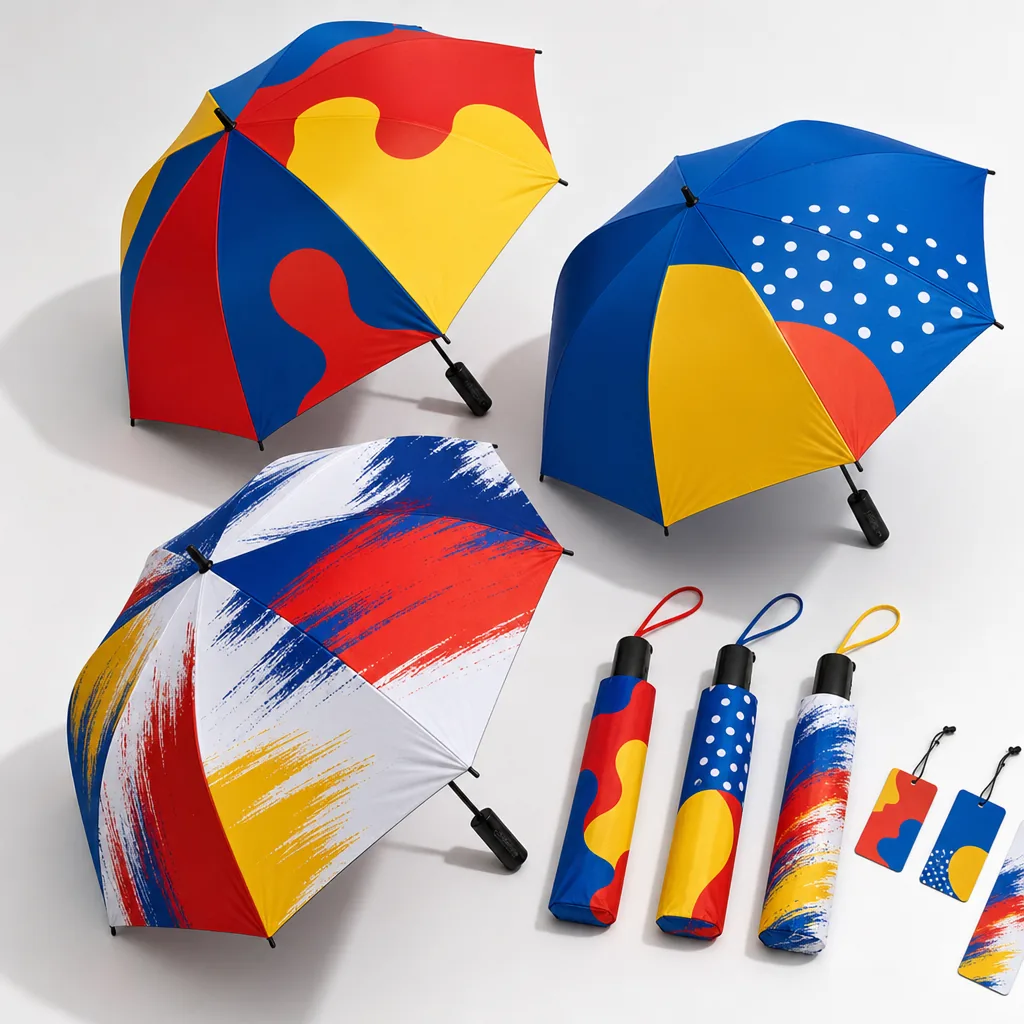
Sampling usually goes off track when a buyer asks for a "travel umbrella" without locking the exact travel umbrella specifications that drive tooling, material choice, and carton count. On our Songxia production lines, the biggest quote gaps come from small spec misses such as folded length, target weight, rib count, pongee grade, opening mechanism, and retail packaging, because each one changes sourcing, assembly time, and final inspection standards.
Start With the Carry Size and Weight Target
Lock the carry target before you request samples because it determines the whole build. For most travel umbrella specifications, the first decision is 3-fold versus 5-fold umbrella construction. A standard 3-fold compact usually closes to about 24-28 cm and uses fewer shaft sections and rib joints, which generally improves shaft alignment, opening stability, and service life. A 5-fold frame typically closes to about 18-21 cm, making it a better fit for handbag, commuter, gift, and airline-retail programs where packed size is the selling point. That shorter carry length comes with more hinge points, shorter ribs, and tighter telescopic shaft tolerances, so the sample brief should name three fixed numbers: maximum closed length, target open arc such as 21 in or 23 in, and the actual carry location, whether coat pocket, handbag, backpack side pocket, or glove box. That removes guesswork when comparing offers from each mini umbrella OEM.
Set weight as a material-based range, not a vague request for a "lightweight" sample. A steel-frame mini umbrella commonly weighs about 280-350 g, with manual styles at the lower end and auto-open compact umbrella construction, larger handles, and bigger canopies pushing higher. An aluminum shaft with fiberglass ribs usually brings a 21 in or 22 in model into the 220-300 g range while improving flex recovery versus all-steel ribs. Once you push below about 200 g, the factory usually has to thin the ribs, reduce canopy tension, or trim handle mass, which lowers wind durability and increases damage risk in daily use. Fabric also affects packability: 190T pongee is a common travel choice because it prints cleanly, dries fast enough for commuter use, and folds flatter than heavier 210T on very short frames. Buyers should expect smaller packed size to cost more; on a 5-fold frame, every 2-3 cm reduction in closed length adds moving parts, tighter assembly tolerances at shaft locks and rib joints, and more failure risk. For daily-use programs, require open-close cycle testing on samples and hold final inspection to AQL 2.5.
Choose a Frame That Balances Portability and Breakage Risk
Lock the frame before approving fabric or print. In travel umbrella specifications, failure usually starts at the skeleton, not the canopy. For a portable but durable build, use aluminum shaft sections to keep weight down, steel at the notch, runner, and other high-stress joints, and fiberglass ribs or at least fiberglass end ribs for flex recovery. Fiberglass ribs can deflect under gust load and spring back; thin stamped steel ribs are cheaper, but once they crease, they tend to stay bent. That matters most on low-cost 5-fold umbrella programs where factories try to push total weight below about 220 g by thinning rib walls and reducing rivet size. In a mini umbrella OEM review, treat any unusually light sample with visible play at the notch, runner, or rib joints as a risk signal. In bulk production, that looseness usually turns into bent ribs, loose rivets, broken tips, and more rejects at AQL 2.5.
Rib count should match the folded size, canopy span, and expected abuse. A 6-rib travel frame works when packed size is the priority and the canopy stays conservative, usually around a 19-21 inch arc; it trims some weight and folds smaller, but each rib carries more load and the canopy will pump more in crosswinds. For most retail, gift, and promotional orders, an 8-rib frame is the safer default because it distributes load better and gives a rounder canopy with less edge flutter. If the brief calls for an auto-open compact umbrella, avoid the lightest 6-rib construction: the spring and added moving parts accelerate fatigue in ultra-light frames. A mainstream spec such as 190T pongee on an aluminum shaft with fiberglass ribs is usually the better trade-off for repeated commuter use, especially in 5-fold umbrella designs under 20 inches closed, where overly light construction is more likely to deform or jam than a slightly heavier frame.
Match the Canopy Fabric and Coverage to the Use Case
Set canopy geometry before you approve fabric swatches. In travel umbrella specifications, list arc size, open diameter, and closed length as one set, because a pocket-friendly sample can still miss the coverage target in actual rain. A typical 5-fold umbrella is usually in the 42 in. to 46 in. arc range with a 37 in. to 39 in. open diameter, enough for one commuter plus a backpack, but still below the coverage of a standard 21 in. compact frame. For airline amenities, hotel gifts, and event giveaways, reducing open diameter by 1 in. to 2 in. can lower unit weight and improve carton efficiency. For daily retail carry, that same reduction often leads to more shoulder exposure and splashback in crosswind. If you are buying an auto-open compact umbrella or another short closed-length model, require the factory to confirm the finished open diameter from the assembled production frame, not just the panel pattern, before sampling.
Fabric spec changes performance as much as frame spec. For most mini umbrella OEM programs, 190T pongee is the baseline because it folds cleaner into a short sleeve, keeps canopy weight down, and prints standard spot-color or heat-transfer logos reliably when panel tension is controlled during cutting and sewing. Moving to 210T pongee gives a denser hand feel, slightly better drape, and cleaner solid coverage on dark artwork, but it adds bulk at every fold point on a true travel model. If the frame already uses fiberglass ribs, 190T usually gives the better balance of resilience and carry comfort. UV coating also needs to be locked early: black or silver undercoating can move the canopy toward UPF 50+ for sun-use retail, resort, and outdoor promotion programs, but it raises material cost, can mute color saturation, and may flatten gradients or photo-style artwork on lighter canopy colors. Change that coating after sampling and you will usually add several days and shift FOB pricing.
Define the Opening Mechanism and Safety Expectations
Lock the opening mechanism before you approve canopy print, handle tooling, or packaging because it determines frame geometry, handle size, spring load, and defect risk. In travel umbrella specifications, manual open remains the lowest-risk option for a 5-fold umbrella: fewer moving parts, lower stress on the runner and latch, and simpler rework if the slider drags during assembly or use. Auto-open adds a spring-loaded shaft and push-button release, which improves one-hand use but introduces two recurring failure points in compact frames: the coil spring seat and the button linkage inside the handle. Auto-open-close is harder to stabilize on a mini frame because the spring must open the canopy and then reset under compression for closing. That increases tolerance pressure at the runner, notch, and latch hook, especially on short 8K frames where tight geometry already raises friction. Material choice still matters: 190T pongee is a standard canopy fabric for this class, and fiberglass ribs absorb shock better than all-steel ribs, but neither will offset a weak spring pack, brittle runner resin, or shaft misalignment.
Small auto frames fail in predictable ways, so buyers should write those checks into pre-production QC instead of relying on a single sample demo. The main spring can lose force after repeated compression, the plastic runner can crack on impact, and the safety latch can miss engagement after closure, leaving the umbrella half-locked. On an auto-open compact umbrella, also check for thin aluminum shaft deformation and runner travel issues where the upper runner passes rib joints. Auto-open-close usually comes with a higher MOQ in mini umbrella OEM programs because the mechanism costs more, assembly takes longer, and validation requires repeated open-close testing before material purchasing. Set the standards up front: cycle-test requirements, button-force range, latch engagement criteria, smooth reset after closing, runner play limits, and canopy symmetry after repeated use. Then hold bulk inspection to AQL 2.5 and define critical defects at the PP stage. Clear travel umbrella specifications at sampling reduce return risk far more effectively than a clean first visual pass.
Put the Critical Purchase Terms Into the RFQ
Buyers get the most usable pricing when the RFQ fixes commercial terms before sampling. Tell the writer to separate the request into two blocks: product build and purchase terms. For the build block, specify the travel umbrella specifications in one line so every supplier prices the same item: 5-fold umbrella, 21 inch, 8K, auto-open compact umbrella, fiberglass ribs, aluminum shaft, 190T pongee canopy. Then lock the purchase terms in the next line: MOQ 1,000 to 3,000 pieces per color, pre-production sample in 5 to 7 days, mass-production lead time 25 to 35 days after deposit and artwork approval, plus the sample charge policy. That format removes the usual guesswork around minimums, timing, and cost recovery. Without it, one factory may quote on a 1,000-piece MOQ, another on 3,000 pieces, and a third may bury sample tooling or courier cost elsewhere, creating quote variance that looks like a factory price gap but is really an RFQ problem.
The RFQ should lock quality, packing, and freight terms with the same precision. Set AQL 2.5 as the inspection baseline, then define carton requirements instead of writing "export carton." If the master carton must pass a drop test, state that up front, such as a 1A carton with edge and corner drop sequence or the retailer's own protocol. That matters on mini umbrella OEM programs because tighter packout can cut freight cost while raising the risk of handle scuffing, runner scratches, and canopy creasing if the inner bag, bubble protection, or carton strength is left open. End with the shipment term: FOB Ningbo or DDP to the final U.S. or EU warehouse, and state whether duties, customs clearance, palletization, labeling, and appointment delivery are included. Complete travel umbrella specifications reduce quote variance across suppliers because they force alignment on product cost, QC standard, packout, and logistics model before sampling starts.
Frequently Asked Questions
What folded size is realistic for a branded travel umbrella without making it too fragile?
For many OEM projects, a 5-fold umbrella in the 18-22 cm closed range is marketable, but pushing smaller than that usually requires thinner components and tighter tolerances. Buyers should confirm frame cycle testing before approving very small formats.
Is 210T pongee always better than 190T for travel umbrellas?
Not always. 210T pongee can feel denser and print well, but it also adds some weight and cost versus 190T. For ultra-compact programs, 190T may be the better balance if the brand does not need a heavier fabric hand.
What folded length should buyers specify for a 5-fold travel umbrella before sampling?
Most buyers should lock a folded length range such as 17-19 cm or 20-22 cm before requesting samples. A 1-2 cm difference can change pocketability, shaft design, carton size, and final unit cost.
How should buyers define fabric specs beyond just asking for 190T pongee?
Specify the weave and finish together, such as 190T pongee with standard water-repellent coating or black UV coating on the inside. If color matching matters, confirm whether the supplier will match to Pantone and whether the sample uses production fabric or nearest in-stock fabric.
Why should packaging details be confirmed before mini umbrella sampling?
Packaging affects quote accuracy and export packing from the start, especially for mini umbrellas with tight carton dimensions. Buyers should confirm sleeve type, inner box requirement, master carton count, and whether retail packaging is included, since these details can add 7-15 days if decided after sample approval.
Looking to Launch Your Custom Umbrella Line?
ZheBrella is a Zhejiang-based OEM/ODM umbrella manufacturer with 17 years of export experience. Free design, low MOQ from 100 pieces, windproof construction, full-color print.
Get Free Quote Now »People Also Search For
Related Articles
Travel Umbrella Specs for Airline, Hotel, and Retail Buyers
Compare travel umbrella specs that affect resale and guest use, from folded length and weight to frame materials, canopy...
Read More »
How to Choose a Windproof Folding Umbrella for Buyers
Compare folding umbrella builds for windy markets, including double-canopy vents, fiberglass ribs, auto-open systems, an...
Read More »
How to Choose a Compact Umbrella for Retail Programs
Compare compact umbrella sizes, frame builds, and order terms to pick a retail-ready model with reliable quality and fas...
Read More »