J-Handle vs EVA Grip Umbrellas for Hotels and Promo Use
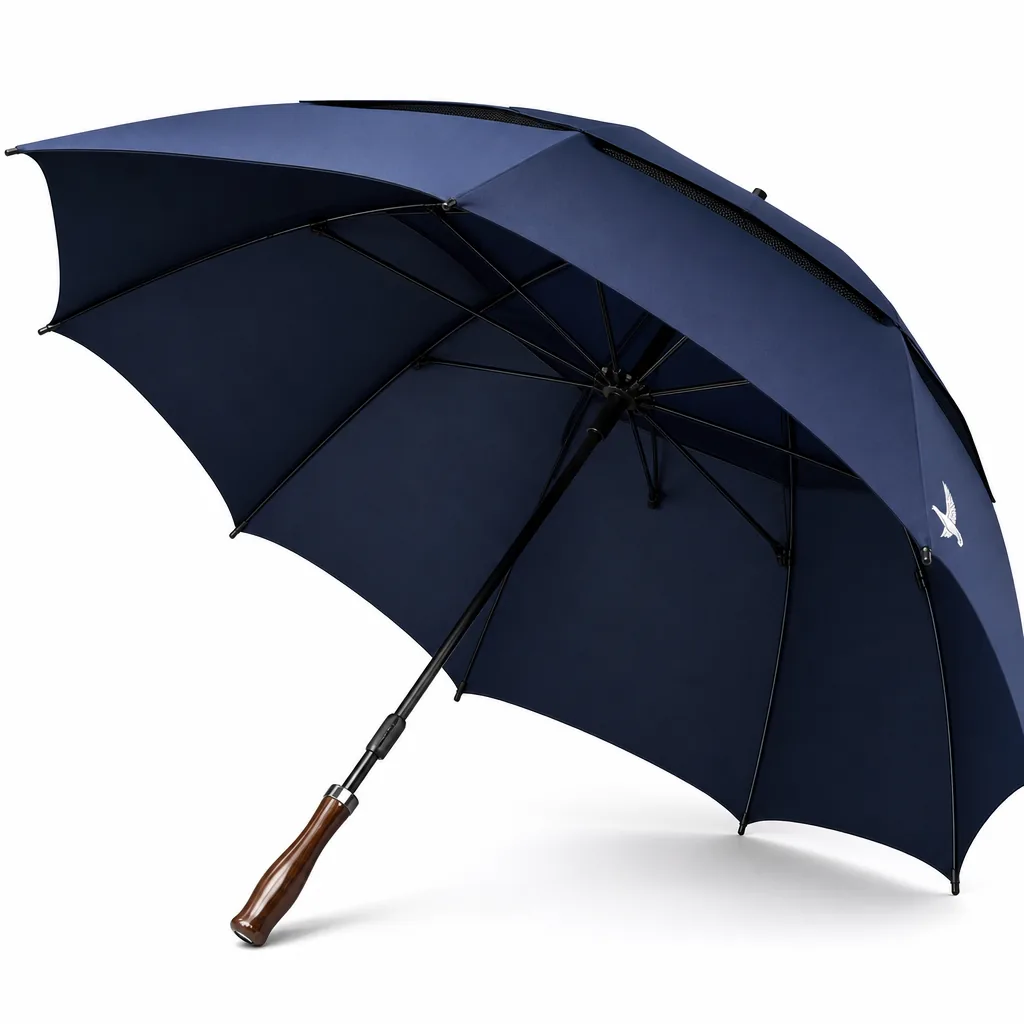
For hotel buyers and promo sourcing teams, the handle choice on a custom umbrella affects more than appearance: it changes carry comfort, logo application, unit cost, and even how efficiently cartons pack on outbound shipments. On our Songxia production lines, we see J-handle umbrella options work well for concierge, retail, and gift use, while EVA grips often make more sense when high-volume programs need lower cost, lighter weight, and consistent printing across mixed orders.
Where J-Handle and EVA Grip Umbrellas Fit Best
J-handle umbrella options fit best for full-size straight umbrellas, not pocket giveaways. Hotels use them for lobby stock, room-drop service, and valet stands because the curved handle can hang on an arm, cart, or hook instead of sitting on a wet counter. That improves storage and lowers the chance of lost umbrellas. In practice, buyers usually pair J handles with 21", 23", 27", or 30" straight umbrellas, built with fiberglass or steel ribs, manual-open or auto-open frames, and pongee 190T or 210T canopies. Buyers choose this format when guest presentation, durability, and easier handling matter more than folded length. Compared with EVA grip handles, the J shape reads as more premium, which is why it shows up often in hotel guest umbrellas and higher-end retail programs.
EVA grip handles are the better fit for corporate gifting, retail promotions, and event programs where unit cost and packing efficiency matter more than presentation. In the J-handle umbrella options vs EVA grip comparison, EVA usually wins on molding cost, color matching, MOQ flexibility, and carton density, especially for large promotional umbrella handles orders. EVA grips are most common on straight promotional umbrellas and compact models that need a clean hand feel, low landed cost, and simple branding. Compact 21" or 23" foldable umbrellas almost always use EVA, PP, or rubberized grips instead of J handles because the shorter folded profile has to stay lightweight and easy to distribute in conference kits, mailers, and checkout programs.
For umbrella OEM specs, the handle should match the channel and the expected wear cycle. Hotels and premium retail buyers typically want straight umbrellas with J handles, fiberglass ribs, and optional UPF 50+ or Teflon coating for better weather resistance and longer service life. Corporate gifting and event buyers usually accept simpler 8K, 10K, or 16K builds with EVA grips when cost control and fast branding matter more than wind performance. The practical difference between J handle vs EVA grip is how the umbrella will be stored, carried, and handed out: J handles favor long-term guest use and visual value, while EVA grips favor fast turnover, lower risk, and efficient bulk shipping. The final decision usually comes down to landed cost, expected wear, and distribution method.
Material, Comfort, and Durability Differences
For buyers comparing J-handle umbrella options, handle material affects replacement rate more than appearance. A standard molded plastic J-handle, usually polypropylene or entry-grade ABS, is the lowest-cost choice and the easiest to Pantone-match for promotional umbrella handles, but it also shows wear first in high-turnover use: stress whitening at the curve, hairline cracks at the shaft insert, and a slick surface when hands are wet. EVA foam grips solve a different problem. The foam compresses slightly in the hand, feels warmer than hard plastic at cold hotel entrances, and holds better in rain. ABS with a soft-touch finish sits between those two on cost and feel, but only when the coating bond is stable; weak finishes can peel, polish smooth at contact points, or turn tacky after repeated exposure to hand sanitizer, sunscreen, and UV. For hotel guest umbrellas used daily, moved on carts, and shared across dozens of users, those failure modes appear far sooner than they do on occasional event giveaways.
A useful J handle vs EVA grip comparison has to tie comfort to frame weight and abuse level. For hotel guest umbrellas in 23-inch or 27-inch sizes, EVA or soft-touch ABS usually gives better control because guests are often carrying bags, opening doors, and holding the umbrella for 10-20 minutes at a time; a more secure grip reduces drops and complaints. A plastic J-handle still makes sense for price-driven promo orders where printability and low landed cost matter more than tactile feel. Buyers should also match the handle to the frame: a steel shaft with steel ribs adds noticeable weight and can make larger umbrellas feel bottom-heavy, while fiberglass ribs or a fiberglass shaft reduce hand fatigue and pair better with lighter grip materials. In umbrella OEM specs, confirm shaft diameter, ferrule fit, and handle attachment method before sample approval, then enforce incoming checks and AQL 2.5 at final QC. A loose hook, poor adhesive bond, or misfit insert will fail well before the canopy and drive avoidable returns.
Branding Surface and Design Constraints
On `J-handle umbrella options`, the handle gives you a narrow but usable branding zone: pad print on the straight stem, a small laser mark on metal trim, or a molded logo on certain plastic hooks if you accept shallow detail. In practice, the visible area is often only 25-40 mm long before the curve starts, so one-line logos, short hotel names, or room-number style identifiers work better than full lockups. For `J handle vs EVA grip`, the EVA side is softer and more forgiving in the hand, but it is worse for crisp decoration; you can deboss, heat-stamp, or sometimes insert a tag, yet fine text gets mushy and dark colors hide detail. If your artwork needs more than a simple wordmark, move it off the grip and onto the canopy or sleeve.
Color matching is where buyers get burned on `promotional umbrella handles`. EVA foam varies by density and batch, and molded plastic hooks can shift a half-step in tone between production runs, especially on black, navy, gray, and bright corporate colors. If you need a specific Pantone on a handle, ask for a master sample and expect a tolerance, not a perfect retail finish; soft-touch coatings and foam wrapping also make exact color reproduction less reliable than printed fabric. Our standard practice is to treat the handle as a secondary branding surface and keep the main identity on canopy panels, tie straps, or the carry sleeve, where print area and registration are much safer under `umbrella OEM specs`.
For `hotel guest umbrellas`, the cleanest result is usually a small handle mark plus a larger canopy print or sleeve label, because guests notice the umbrella as a whole, not just the grip. If the hotel wants discreet branding, a one-color logo on the handle stem and a woven tag near the ferrule or tie is enough; if the design needs to read from a distance, switch to a canopy panel, the interior vent edge, or a sleeve with a longer horizontal mark. The handle should carry only what the tooling can reproduce repeatably: short text, one symbol, or a simple icon. Anything with fine gradients, thin serifs, or multiple colors belongs on fabric, not on a J-hook or EVA grip.
Cost, Packing Efficiency, and MOQ Considerations
Cost turns first on tooling and assembly steps, not just handle material. Stock J-handle umbrella options usually come in lower than EVA builds because the factory can pull a standard plastic handle from existing inventory and fit it to a standard shaft without new tooling. EVA grips add material and labor through foam fitting, gluing, or overmolding, and that extra work shows up immediately in the FOB unit price. For hotel guest umbrellas, a stock J handle is usually the practical choice when the brief is low MOQ, fast sourcing, and a familiar carry profile. EVA is easier to justify when wet-hand grip, guest comfort, or a more premium feel matters more than shaving a few cents off each unit. Under DDP, the gap widens because you pay for both the higher ex-factory cost and the shipping effect of the handle shape. When comparing J handle vs EVA grip quotes, lock the spec first: same canopy size such as 23 inch or 27 inch, same frame material and rib count, same 190T or 210T pongee, and the same packed length and carton dimensions. Otherwise the quote comparison is not clean.
Handle geometry affects landed cost more than many buyers expect. A curved J handle generally nests less efficiently than a straight or compact EVA grip, so master cartons often hold fewer units and pallet loading is less dense. That means higher CBM, more cartons to move, and a greater chance that dimensional weight offsets any unit-price savings on DDP shipments. For hotel programs shipping to multiple properties, ask for the full packing data set in one line: pieces per master carton, carton size, gross weight, CBM, and pallet load. MOQ follows the same stock-versus-custom split. Standard J handles and stock EVA grips can often run at 300 to 500 pieces per color or style when the frame and canopy are also standard. Custom-molded promotional umbrella handles usually start around 1,000 to 3,000 pieces, and the threshold can rise if a new mold or multi-color overmolding is required. Sample approval also expands with customization: stock handles may need only a pre-production sample or color confirmation, while custom programs usually require a mold sample, a decorated sample, and a final PPS approved against umbrella OEM specs before bulk production.
Specification Checklist Before Mass Production
Freeze the handle spec only after it matches the frame on the approved sample. For J-handle umbrella options, list the exact handle material—ABS, PP, or EVA foam—and tie it to the shaft outside diameter, ferrule stack-up, and insertion depth used on the actual umbrella. A loose bore on a 14 mm or 16 mm shaft will show up fast as handle rotation, glue-line cracking, and noise in hotel guest umbrellas. The checklist should also name the retention method at assembly: hidden screw, heat stake, or adhesive lock. If the umbrella is auto-open, approve the handle only after testing on the production shaft, not a lab mock-up. Button alignment, button travel, and spring force should still pass after repeated open-close cycles, since some EVA profiles can interfere with release on narrower shafts. In a J handle vs EVA grip review, comfort is only one input; ABS and painted shells are usually easier to wipe clean and stack in lobby stands, while EVA can improve wet-hand grip but may complicate auto-open geometry.
Write anti-slip and durability as pass-fail OEM requirements, not general claims. For hotel guest umbrellas and promotional umbrella handles, define a wet-hand anti-slip standard and a drop-test requirement of 1.0-1.2 m onto concrete with no handle split, no ferrule separation, and no auto-open failure after impact. Inspection should run to AQL 2.5 with clear defect points: handle rotation, visible sink marks, insert or logo-area color variation, shaft engagement depth, and button alignment on auto-open units. Require a pre-production sample and first-article approval whenever umbrella OEM specs include a custom handle mold or a custom insert color. State the lead-time effect in the copy so buyers can plan production risk: a tinted insert typically adds 5-10 days, while a new handle mold adds 15-25 days depending on steel work and cavity count. If mixed handle colors are planned, specify whether the insert must match a Pantone target or only meet visual tolerance, because that decision affects MOQ, rework exposure, and delivery timing.
Frequently Asked Questions
Can EVA grips be used on auto-open umbrellas?
Yes, EVA grips are commonly paired with auto-open straight umbrellas if the handle inner diameter matches the shaft and runner system. Buyers should confirm assembly stability and button access during pre-production sampling.
Do J-handles increase shipping volume compared with straight grips?
Usually yes. The curved profile can reduce packing efficiency in export cartons, which may raise freight cost under DDP programs even when unit price is similar.
How does handle choice affect master carton quantity and freight cost?
J-handle umbrellas usually pack less efficiently because the curved handles create more void space in the carton. In many 23-inch to 27-inch styles, EVA straight-grip umbrellas can fit 5% to 15% more units per master carton, which can reduce sea freight cost per unit on larger orders.
Which handle type gives better logo visibility for hotel and promotional programs?
J-handles usually offer stronger visual recognition when umbrellas are hung on lobby racks or carried by guests, while EVA grips shift branding to the canopy, strap, or sleeve. If handle branding is required, buyers typically confirm whether the spec supports pad printing, molded badges, or handle-end decals before sampling.
Do J-handle and EVA grip umbrellas usually have different OEM minimums or lead times?
In most OEM programs, the MOQ is driven more by canopy fabric color, frame spec, and custom printing than by the handle shape itself. A common range is 500 to 1,000 units per style, with sample lead times around 7 to 12 days and bulk production around 35 to 50 days after artwork and deposit approval.
Looking to Launch Your Custom Umbrella Line?
ZheBrella is a Zhejiang-based OEM/ODM umbrella manufacturer with 17 years of export experience. Free design, low MOQ from 100 pieces, windproof construction, full-color print.
Get Free Quote Now »People Also Search For
Related Articles
J Handle vs EVA Grip Umbrellas for Hotels and Promotions
Compare J handles and EVA grips for hotel, retail, and promo umbrellas, including comfort, durability, print area, MOQ i...
Read More »J Hook vs EVA Umbrella Handles for OEM Buyer Programs
Compare J hook and EVA handle options by grip, durability, branding, carton impact, and target market fit for OEM umbrel...
Read More »
J Handle vs EVA Grip Umbrellas for Promo and Retail Use
Compare J handles and EVA grips by comfort, cost, branding area, and durability so buyers can match umbrella handle spec...
Read More »