J Hook vs EVA Umbrella Handles for OEM Buyer Programs
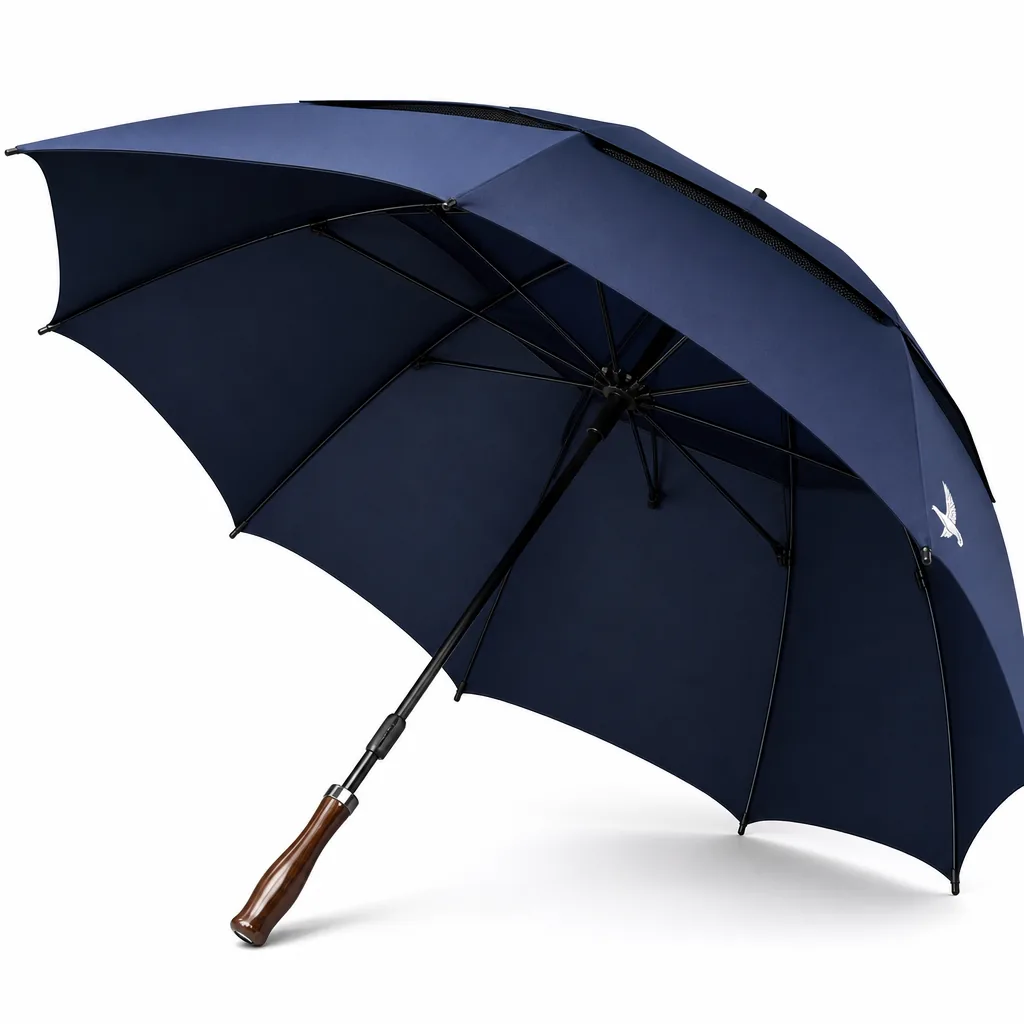
When you are locking an OEM umbrella program, the handle choice affects more than appearance: it changes grip comfort, mold cost, logo execution, and even how many pieces fit a master carton. On our Songxia production floor, J hook and EVA handles behave very differently in assembly, drop testing, and packing efficiency, so buyers who compare umbrella handle material options early usually avoid preventable cost and quality issues later.
Where Handle Choice Changes the Product Brief
Handle choice should be locked early because it changes four parts of the brief at once: hand feel, retail position, carton efficiency, and final landed cost. For buyers reviewing umbrella handle material options, the real comparison is shape and substrate together. A J hook umbrella handle in molded PP or ABS is a natural fit for 23 in. and 27 in. walking umbrellas because users can hang it on a forearm, desk edge, or hotel coat rack; that matters for hotel programs, lobby umbrellas, and corporate gifts that need a more giftable silhouette. A straight umbrella handle works better on 21 in. and 23 in. folding frames, especially auto-open-close commuter models where one-hand carry and bag storage matter more than display. Material also shifts perceived quality. An EVA umbrella grip feels warmer and less slippery than hard PP when wet, and it can be die-cut or overmolded onto a straight core for a softer, more athletic profile. By contrast, molded hook handles usually deliver cleaner parting lines, crisper edges, and a larger flat area for logo printing, which makes retail umbrella customization easier on presentation-focused SKUs.
The cost impact is usually driven less by the handle piece price than by packing density. A basic plastic hook on a steel-frame 8K manual umbrella generally stays cheaper to source and faster to assemble than an EVA grip, so it remains common on entry-level retail SKUs. But J hooks also waste space in export cartons: they do not nest as tightly, which raises carton count and CBM per 1,000 pcs compared with straight handles. That directly affects FOB freight planning and becomes more painful under DDP when dimensional weight is billed. Straight handles keep polybags, hangtags, and inner-carton layouts more standardized, which lowers packing risk on high-volume promotional umbrella specs. That is why commuter umbrellas and price-sensitive promotional runs usually stay with straight PP or straight EVA. For hotel programs and 23 in.-27 in. full-length umbrellas in 190T or 210T pongee with fiberglass ribs and auto-open shafts, the higher shipping cost of a hook handle can still be justified by better storage convenience, stronger presentation, and a more premium retail profile.
J Hook Handles: Best Uses, Materials, and Trade-Offs
For OEM buyer programs, the J hook umbrella handle remains the default on 23-inch and 27-inch straight umbrellas because it solves two practical use cases at once: easier hand carry and easier hanging in offices, hotels, schools, and commuter settings. The main umbrella handle material options here are injection-molded PP, ABS with a rubber-coated finish, and wood-look plastic decorated by paint or transfer grain. PP is typically the lowest-cost choice, color-matches cleanly to PMS references, and suits high-volume retail umbrella customization, but it has a harder hand feel during longer walks. Rubber-coated ABS gives a softer, less slippery grip when wet and hides minor mold parting lines better than gloss plastic, which helps on dark promotional umbrella specs where cosmetic defects show quickly under store lighting. Wood-look plastic offers the visual cue of timber at a lower unit cost than solid wood, but grain tone can shift slightly between production lots and the surface usually scratches faster than molded black PP in routine handling.
A J hook umbrella handle fits straight umbrellas better than compact frames because the hook adds daily-use convenience without fighting the product format. On 23-inch and 27-inch straight umbrellas—especially auto-open steel-shaft frames or windproof fiberglass-rib constructions—the curve hangs securely over a forearm, chair back, stroller handle, or coat rack, often removing the need for a wrist strap. Compared with an EVA umbrella grip or another straight umbrella handle, the J hook reads more traditional and stores more neatly between uses, although it feels less sporty. The main trade-off is logistics: the curved profile nests less tightly than a straight handle, so export cartons usually pack fewer pieces at the same carton size, which pushes FOB cost per unit up sooner as order volume rises and carries the same penalty into DDP. That is why J hooks stay common on straight umbrellas but are rarely the best choice for compacts, where handle bulk works against small-pack targets and makes carton-efficiency harder to achieve even at the sampling stage.
EVA Grips: Comfort, Weight, and Branding Limits
For OEM programs comparing umbrella handle material options, EVA is the comfort-first choice on 27 inch and 30 inch golf umbrellas, team umbrellas, and casual retail SKUs built around all-day carry. A molded or sleeve-wrapped EVA umbrella grip feels warmer and less slick than ABS or PP, and the lower handle mass is noticeable when the umbrella uses a fiberglass shaft, fiberglass ribs, and a vented double canopy. Versus a solid plastic J hook umbrella handle, an EVA-covered straight umbrella handle reduces end weight, so the open umbrella feels less top-heavy during longer walks across golf courses, sports fields, campuses, or parking lots. That matters more on performance-driven styles than on formal city umbrellas, where buyers often favor a polished hard-handle look. If the brief prioritizes wet-grip security, lighter swing feel, and user comfort, EVA is usually the better fit.
The tradeoff is durability and logo flexibility. EVA foam scuffs, compresses, and picks up dirt faster than lacquered wood, ABS, PP, or rubber-coated hard handles; the first wear points are usually the thumb contact area and the lower edge that rubs against bag openings, car doors, and metal umbrella stands. Light colors such as white, gray, and pastels show sunscreen, hand oil, and dust quickly because soil settles into the foam texture and is harder to wipe back to retail condition, while black and navy hide wear better. For higher-use school, resort, or event programs, specify higher-density EVA and ask the factory to check sleeve bonding after carton heat exposure during QC. Branding is also narrower than on hard surfaces: EVA umbrella grip designs hold debossed logos, molded-in marks, and simple one-color screen prints on flat zones, but fine text and detailed artwork lose edge sharpness. If your retail umbrella customization needs crisp pad printing, metal badges, domed labels, or laser engraving, a hard straight handle or hook gives more reliable promotional umbrella specs.
What Buyers Should Pair With Each Handle Build
Pair the handle with the channel first, then lock the frame. A J hook umbrella handle fits 23-inch and 27-inch straight umbrellas for retail, hospitality, and office programs because it hangs cleanly on display pegs, coat hooks, and rack systems. For retail umbrella customization, the standard commercial build is 8K. Keep a full steel shaft and steel ribs only for cost-led orders where FOB has no room for upgrades. For better service life, move to fiberglass ribs with a black electroplated steel shaft; that combination rebounds better after repeated flex and reduces bent-rib complaints in gusty conditions. Manual-open works for entry-level school, restaurant, and giveaway programs, but auto-open is usually the smarter upgrade on straight umbrellas because it lifts perceived value without the higher defect risk of auto-open-close systems. Use 190T pongee for volume promotions and mid-tier runs. Upgrade to 210T pongee when print definition matters, especially for fine logo lines, dark solid panels, and cleaner shelf presentation.
An EVA umbrella grip is the more practical choice when comfort, lower carry fatigue, and cold-weather handling matter more than a traditional hooked profile. In umbrella handle material options, EVA usually pairs best with a straight umbrella handle on either a compact telescopic frame or a 21-inch or 23-inch full-length promotional model. For balance, specify fiberglass middle and end ribs instead of a full-steel frame; otherwise the umbrella can feel nose-heavy and undermine the comfort brief. A common OEM spec is 21-inch or 23-inch, 8K, auto-open, with 190T pongee, with 210T pongee reserved for tighter Pantone control and repeat reorders. Add a double-canopy windproof build only when the sales channel can absorb the higher unit cost: coastal retail, golf events, university stores, and corporate gifting are the usual cases. There, a 27-inch or 30-inch straight frame with fiberglass ribs, auto-open, and a vented double canopy is a sound build, ideally with supplier testing in the 45 to 55 mph equivalent range. For commuter, café, and price-sensitive giveaway programs, double canopy usually adds unnecessary cost through extra fabric, sewing time, and weight; a single-canopy 190T or 210T build is the better buy.
Sampling, MOQ, and QC Points Before Mass Production
For umbrella handle material options, MOQ depends on mold availability first, not canopy color. If the factory can use a stock J hook umbrella handle or a standard straight umbrella handle from an existing mold library, most OEM runs can start at 500-1,000 pieces per colorway. If the buyer needs a custom EVA umbrella grip with a new surface texture, Pantone-matched foam, or a branded end cap, MOQ usually rises to 2,000-3,000 pieces so tooling cost can be spread across the order. Quote these programs in three buckets: stock mold with logo print, stock mold with color change, and fully new mold. That format lets the buyer compare retail umbrella customization against tighter promotional umbrella specs, where simpler packaging and lower unit cost usually matter more than handle exclusivity. Standard sample timing is 7-10 days for stock-handle programs; if a new mold is required, add roughly 12-20 days for tooling and first-off confirmation before bulk production approval.
Sample approval should use four checkpoints: material swatches, a blank structure sample, a printed pre-production sample, and a sealed golden sample held against mass production. On the handle, confirm grip diameter, hook curvature, EVA hardness, color delta, logo position, and fit at the shaft ferrule before sign-off. A J hook umbrella handle balanced on a 23-inch auto-open frame can feel top-heavy on a 30-inch golf frame, and EVA density variation can change hand feel from batch to batch if process control is weak. For shipment release, set AQL 2.5 inspection points around the defects most likely to trigger claims: handle adhesion or looseness at the shaft, canopy seam gaps, logo alignment across adjacent panels, EVA dents, plating scratches, and scratch resistance on painted or rubber-coated surfaces. Add open-close cycling on auto-open-close units to catch weak glue joints or poor fit early. After sample approval and deposit, bulk production typically runs 30-45 days. FOB Ningbo fits buyers who book their own freight and consolidate cargo; DDP suits smaller branded programs that want landed cost visibility, customs handling, and fewer procurement steps.
Frequently Asked Questions
Does an EVA handle reduce shipping cost compared with a J hook handle?
Usually yes, especially when comparing EVA grips on compact or golf styles against bulky J hooks. The weight savings are modest, but carton efficiency often improves more than the per-piece weight reduction.
Can buyers add a custom-molded handle at low MOQ?
In most cases, no. Custom handle molds usually require a higher MOQ and added tooling cost, while existing stock molds support lower trial orders and faster lead times.
How much can handle style change carton loading for a bulk order?
J hook handles usually reduce packing efficiency versus straight or EVA grips because the curved profile creates more dead space in the carton. In OEM programs, that can mean roughly 5% to 15% fewer units per master carton depending on canopy size, shaft length, and nesting method.
Which handle option is easier for logo execution in promotional umbrella specs?
EVA and straight molded handles are usually easier for simple one-color pad printing or small badge applications on high-volume promotional runs. J hook styles can still be branded, but curved surfaces often limit print area and may require a hang tag, dome sticker, or handle end cap treatment instead.
Does MOQ differ between J hook and EVA umbrella grip programs?
Yes, MOQ can change if the handle requires a custom mold, color match, or special plating. For many OEM factories, standard stock handles can start around 500 to 1,000 pieces, while custom handle tooling programs may begin at 3,000 to 5,000 pieces with added sampling lead time.
Looking to Launch Your Custom Umbrella Line?
ZheBrella is a Zhejiang-based OEM/ODM umbrella manufacturer with 17 years of export experience. Free design, low MOQ from 100 pieces, windproof construction, full-color print.
Get Free Quote Now »People Also Search For
Related Articles
J-Handle vs EVA Grip Umbrellas for Hotels and Promo Use
Compare J-handle and EVA grip umbrella builds for hotel, retail, and promo programs, including comfort, cost, print opti...
Read More »Wood vs EVA Umbrella Handles for Branded OEM Programs
Compare wood and EVA umbrella handles for OEM orders, including grip feel, branding methods, durability, MOQ impact, and...
Read More »
Wooden Handle vs EVA Grip Umbrellas for Retail and Promo
Choose between wooden handles and EVA grips by comparing feel, durability, branding options, cost, and buyer specs for r...
Read More »