Private Label Umbrellas for Fashion and Lifestyle Brands
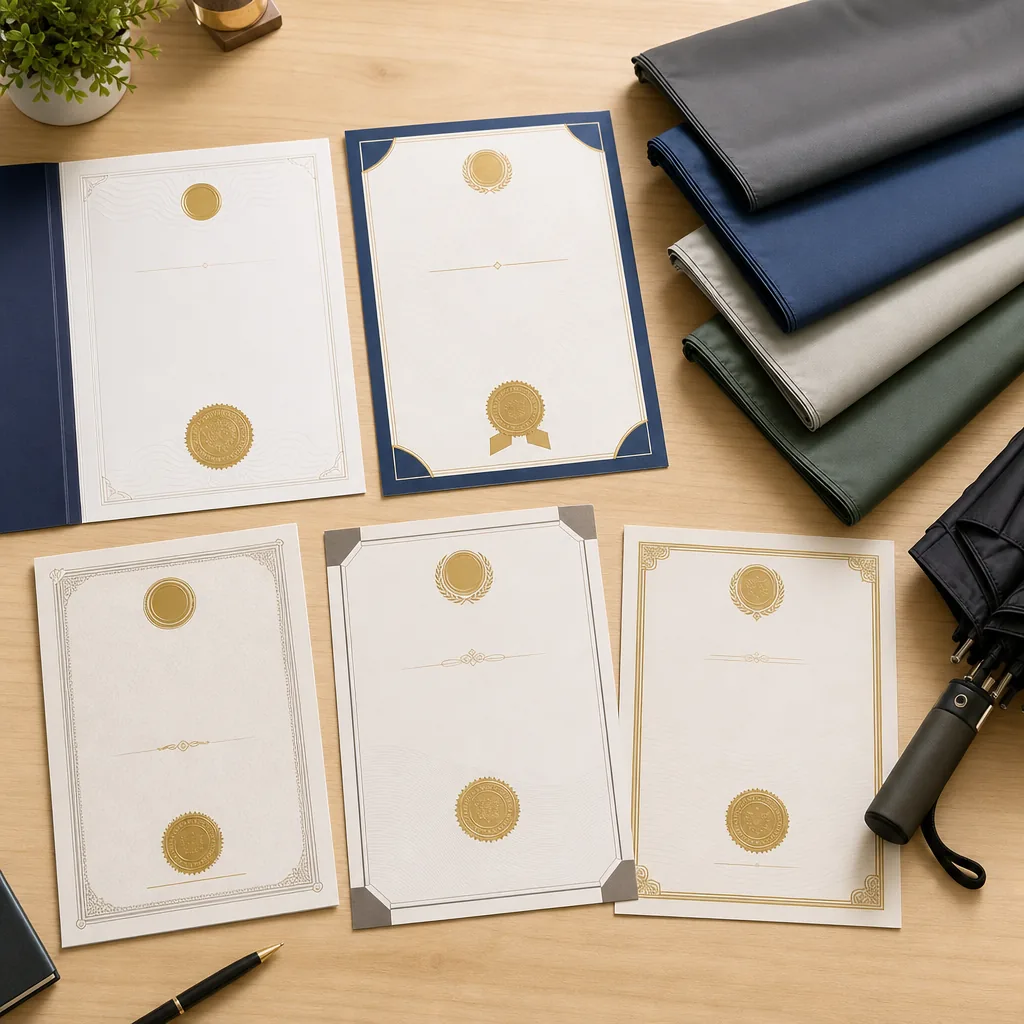
For fashion and lifestyle buyers, an umbrella is not just a rainy-day accessory; it has to carry the same color discipline, hand feel, durability, and packaging standard as the rest of the collection. When we build private label umbrellas for brands on the factory floor in Songxia, the hard decisions come early: fabric coating, rib count, handle material, logo method, carton strength, AQL level, MOQ, and a lead time that still protects launch dates.
Why Fashion Brands Add Umbrellas to Their Product Range
Umbrellas fit fashion ranges because they behave like seasonal accessories, not hardware. A 21" compact auto-open-close umbrella can sit next to handbags, scarves, rain boots, and travel pouches without changing the buyer’s merchandising logic, while a 23" stick umbrella works well with trench coats, wool overcoats, and city outerwear. For private label umbrellas for brands, the key is matching the umbrella specification to the collection tier: 190T pongee for entry retail, 210T pongee with Teflon coating for better water shedding, or POE/PVC/EVA canopy materials when the design language calls for transparent, jelly, or futuristic looks. A fashion umbrella manufacturer should also control details buyers notice in-store: rib count, handle finish, wrist strap material, ferrule color, sleeve construction, and how cleanly the logo sits on a curved canopy panel after printing.
The umbrella is also a strong logo extension because it creates a much larger moving surface than a cap or tote bag. A typical 23" canopy gives eight panels for placement, so brands can use one-panel screen printing for restrained identity, full-panel sublimation for seasonal artwork, or heat-transfer logos when color accuracy matters on dark fabric. For capsule collections, we usually see 8K steel-frame umbrellas for cost-driven promotions, 8K or 10K fiberglass ribs for better wind resistance, and double-canopy vented windproof structures when the brand wants a technical story, often rated around 50+ mph in controlled wind-tunnel checks. Lifestyle brand umbrella sourcing becomes especially effective when the umbrella repeats a print already used on lining, shoe trim, bag fabric, or rainwear taping, creating a coordinated retail wall instead of a one-off accessory.
Umbrellas also work as gift-with-purchase upgrades because they feel more substantial than a pouch or keychain, yet still ship efficiently when specified correctly. A 21" three-fold compact model can be packed 48 or 60 pieces per carton, while 27" and 30" golf umbrellas are better suited for VIP gifts, hotel programs, resort retail, and travel collections where coverage matters more than shelf footprint. In OEM umbrella production, the main decision is whether the item must pass normal retail inspection or a short-term event deadline; for retail, I would not skip AQL 2.5 inspection on opening force, seam strength, print registration, rib alignment, and water leakage. For a custom retail umbrella line, typical development takes 7–10 days for artwork and counter samples, with bulk production often 25–40 days after approval depending on MOQ, print method, and FOB or DDP delivery requirements.
Product Architecture: Compact, Stick, and Premium Styles
Product architecture should start with the selling channel, not the catalog photo. A 3-fold compact umbrella is the safest entry point for private label umbrellas for brands because it fits handbags, commuter backpacks, and gift boxes without pushing freight volume too high. The common retail build is 21" or 23" arc, 8K steel ribs, black electroplated shaft, manual or auto-open-close mechanism, and 190T pongee canopy. That structure keeps the FOB cost controlled, but it is not the right place to overpromise wind performance. For a better compact line, I usually move buyers to fiberglass ribs, a reinforced runner, and 210T pongee with a Teflon water-repellent finish. The umbrella feels lighter in hand and survives everyday gusts better, especially when the ribs flex instead of permanently bending. For fashion colors, compact models also take screen printing, heat transfer logos, woven labels, and matched sleeve construction well, but full-panel sublimation needs tighter cutting control to avoid pattern mismatch at the seams.
Straight stick umbrellas are better when the brand wants presence: retail wall display, hotel concierge use, golf-event gifting, or a more classic fashion look. A 23" or 27" stick with a J-handle, crook wooden handle, or soft-touch EVA grip gives more design area than a folding model, and the opening action feels more stable. Entry-price sticks often use steel ribs and a steel shaft because the weight communicates durability to some buyers, but for a premium custom retail umbrella line, fiberglass ribs and a fiberglass or aluminum shaft are the cleaner choice. On the production floor, the difference shows up during rib assembly and wind testing: steel can deform after a hard inversion, while fiberglass returns better if the tip cups and stretchers are properly riveted. For OEM umbrella production, I also recommend double-checking handle finishing early. A good canopy cannot save a cheap handle with mold lines, weak plating, or poor logo engraving.
Clear dome and 16K fashion umbrellas serve different design intentions. Clear dome umbrellas, usually 23" or 25" with POE or PVC canopy, are popular for rainwear collections, bridal use, and lifestyle brand umbrella sourcing because the silhouette photographs well and the user can see through the canopy while walking. POE is softer and more cold-resistant than cheap PVC, but it needs careful packing to reduce creases and sticking. A 16K fashion style is more structural: 16 ribs create a rounder canopy, stronger visual rhythm, and a higher perceived value, especially with 190T or 210T pongee, UPF 50+ coating, contrast binding, or a vented double canopy. The trade-off is weight and labor time. More ribs mean more sewing points, more tips, more inspection, and more chances for uneven tension. For private label umbrellas for brands, our standard practice at ZheBrella is to confirm rib count, canopy fabric, logo position, and AQL 2.5 test points before sampling, not after the buyer has approved lifestyle images.
Material, Color, and Finish Decisions for Brand Consistency
Material choice is where private label umbrellas for brands either feel retail-ready or look like a giveaway item. For most fashion and lifestyle programs, 190T pongee is the practical baseline: smooth hand feel, good water repellency after coating, and stable enough for screen print, heat transfer, and digital patterns. 210T pongee has a tighter weave and slightly denser hand, so it drapes cleaner on 23" and 27" stick umbrellas and gives dark colors a richer surface, but it adds cost and weight. If the line is sustainability-led, recycled polyester pongee is now workable, including rPET fabrics with GRS documentation when the mill and dye lot are controlled early. I would avoid mixing regular pongee and recycled pongee inside one SKU family unless the buyer accepts slight differences in sheen, because customers will notice under store lighting.
Color consistency needs to be engineered before sampling, not corrected after production. PMS color matching should be specified for canopy fabric, binding tape, sleeve fabric, handle color, tips, and logo print because each substrate absorbs color differently. A beige PMS on 190T pongee will not look identical on a matte plastic handle or rubberized coating without separate lab dips. For all-over print repeats, the artwork must account for panel cutting, seam allowance, and the eight-panel umbrella geometry; a repeat that looks perfect on a flat CAD file can become visibly broken at the canopy crown. In OEM umbrella production, our standard practice is to approve strike-offs on actual pongee before bulk cutting, then check random finished umbrellas against the approved color standard under D65 light, especially for black, ivory, olive, and pastel fashion colors.
Finish details carry the brand language as much as the canopy. Matte ABS handles work well for minimalist lifestyle lines, while rubberized handles feel more premium but need abrasion and tackiness testing, especially for humid markets. Wood-look handles can fit a resort or heritage story, but cheap hydro-dip finishes chip quickly around the shaft joint. Woven labels, jacquard tabs, debossed handle logos, and custom sleeves are better for a custom retail umbrella line than oversized canopy branding when the buyer wants daily-use appeal. For sun-oriented capsules, specify UPF 50+ coating at the start, not after the print is approved, because silver, black, and transparent UV coatings change the fabric hand and sometimes the reverse-side color. Good lifestyle brand umbrella sourcing treats the sleeve, hangtag, care label, barcode sticker, and carton mark as part of the same design system.
Sampling and Production Workflow for Private Label Orders
For private label umbrellas for brands, the workflow should start with artwork confirmation, not fabric cutting. We first lock the umbrella type, usually 21" folding, 23" straight, 27" golf, or compact auto-open-close, then confirm rib count such as 8K, 10K, or 16K, frame material, canopy fabric, handle, logo placement, and retail packaging. Artwork files should be vector format, with Pantone colors called out separately for canopy, print, sleeve, hangtag, and carton marks. For a fashion umbrella manufacturer, this stage is where many mistakes are prevented: a 1 mm logo line may print cleanly by heat transfer but break in screen printing, and a full-panel sublimation design needs seam allowance built into the layout. Typical sampling takes 7 to 12 days for an existing frame with custom canopy printing, or 15 to 25 days if a custom handle, molded cap, special POE/PVC/EVA panel, or unique packaging insert is required.
The pre-production sample is the contract between the buyer and the factory floor. It should show the real 190T or 210T pongee, Teflon or UV UPF 50+ coating if specified, frame finish, opening mechanism, sleeve, barcode label, inner box, and master carton. Our standard practice at ZheBrella is not to release bulk cutting until the sample, packaging, and carton markings are approved together, because retail claims often come from packaging mismatches rather than the umbrella itself. For lifestyle brand umbrella sourcing, MOQ depends heavily on construction: 300 to 500 pieces per color is realistic for ODM styles using stocked frames and standard fabrics, while fully customized OEM umbrella production usually starts around 1,000 to 3,000 pieces per design. If the brand needs several colorways, it is better to keep the same frame and divide canopy colors than to open multiple mechanisms, because testing and line setup become slower and more expensive.
Bulk production normally runs 25 to 45 days after deposit and approved pre-production sample, depending on print complexity, order quantity, and peak-season capacity before spring and Q4 retail shipments. ODM styles can shorten development by 10 to 20 days because the frame tooling, runner balance, shaft length, runner lock, and fabric consumption are already proven; the work is mostly canopy cutting, printing, sewing, assembly, and packaging. A custom retail umbrella line with new handles, special metal tips, branded push buttons, or double-canopy vented windproof construction needs more control points, especially if the buyer requires 50+ mph wind-tunnel performance. Final inspection should follow AQL 2.5 for major defects, checking open-close function, rib alignment, stitching, print registration, water repellency, color consistency, barcode scanning, and carton drop condition. For private label umbrellas for brands shipping FOB Ningbo or DDP to U.S. warehouses, inspection timing must leave at least 2 to 4 days for rework before vessel cutoff.
Retail-Ready Quality Control and Packaging Requirements
Retail-ready QC for private label umbrellas for brands has to start before final inspection, because most failures are built in during cutting, sewing, printing, or handle assembly. For export orders, I recommend AQL 2.5 for major defects and AQL 4.0 for minor defects, with critical defects at zero tolerance. On a 5,000-piece custom retail umbrella line, inspectors should pull cartons across the full production run, not only from the top pallet. Functional checks must include manual open, auto-open, and auto-open-close cycling, with at least 20 to 30 operations on sampled units to catch weak springs, loose runners, bent shafts, and button sticking. For windproof models, the ribs should be checked for correct fiberglass or steel specification, 8K/10K/16K count, rivet tightness, and smooth runner travel. Canopy inspection should include seam waterproofing, stitch density, skipped stitches, tip alignment, cap fit, and water-shedding performance on 190T or 210T pongee after coating and printing.
Packaging is where many lifestyle brand umbrella sourcing projects lose retail compliance. Barcode placement should be fixed on the hangtag or retail sleeve, not randomly applied to the polybag, because warehouse scanners need a flat, visible surface. UPC/EAN labels must match SKU, color, size, and case pack; a black 23-inch auto-open umbrella and a navy 21-inch folding umbrella cannot share a barcode just because the artwork is similar. Hangtags should list brand name, model, canopy material, opening type, country of origin, and any claims such as UPF 50+ or Teflon-coated fabric only if the test report supports them. Care labels should be sewn into the canopy seam or attached to the strap, with clear instructions such as air dry before closing and do not store wet. Polybags need suffocation warnings in the correct font size when required by the buyer’s market, especially for U.S. retail and promotional distribution.
For a fashion umbrella manufacturer, visual consistency is just as important as mechanical pass rate. Print alignment should be measured panel by panel, especially on logo repeats, border prints, and sublimation artwork that crosses seams; a 3 mm shift may be acceptable on a promo giveaway but not on a department-store private label program. Handle color consistency needs a signed master sample and tolerance range, because ABS, rubberized coating, wood-effect paint, and PU-wrapped handles all behave differently under lighting. Our standard practice at ZheBrella is to check handles against approved samples under neutral light, then confirm strap color, snap button finish, ferrule color, and sleeve fabric as one set. Master cartons should specify item number, PO number, color, quantity, gross/net weight, carton dimensions, and shipping marks. For OEM umbrella production, carton strength should match the logistics route: 5-ply export cartons are safer for FOB and DDP shipments, with inner carton or divider protection for premium private label umbrellas for brands.
Frequently Asked Questions
What is the best starting MOQ for a fashion umbrella capsule line?
Many brands start with 500–1,000 units per style or color, depending on fabric, print, and frame type. Existing ODM frames usually support lower risk than a fully custom mold or handle.
Should a fashion brand choose 190T or 210T pongee?
190T pongee is common for mid-range retail umbrellas, while 210T feels denser and more premium. For higher-priced lifestyle lines, 210T with clean print registration and a branded sleeve is often worth the added cost.
What MOQ should a fashion brand expect for a private label umbrella program?
For a new private label line, MOQ often starts around 300-500 pieces per style for shared frame molds and standard fabrics. If you need custom handles, woven labels, or exclusive packaging, MOQ can increase to 1,000 pieces or more depending on tooling and material sourcing.
How should apparel brands balance fabric aesthetics with umbrella performance?
Fashion-driven prints and matte finishes can affect water repellency and colorfastness, so buyers should confirm coating type, UV resistance, and wet-rub test standards before approval. A pre-production sample and lab dip sign-off usually help avoid print mismatch across bulk runs.
What lead time is typical for a custom retail umbrella line with packaging?
A standard OEM order with private label packaging usually runs about 35-50 days after sample approval and deposit, while new material development or custom molds can push timing to 50-70 days. Buyers should also allow 7-14 days for sample revisions and AQL inspection scheduling before shipment.
Looking to Launch Your Custom Umbrella Line?
ZheBrella is a Zhejiang-based OEM/ODM umbrella manufacturer with 17 years of export experience. Free design, low MOQ from 100 pieces, windproof construction, full-color print.
Get Free Quote Now »People Also Search For
Related Articles
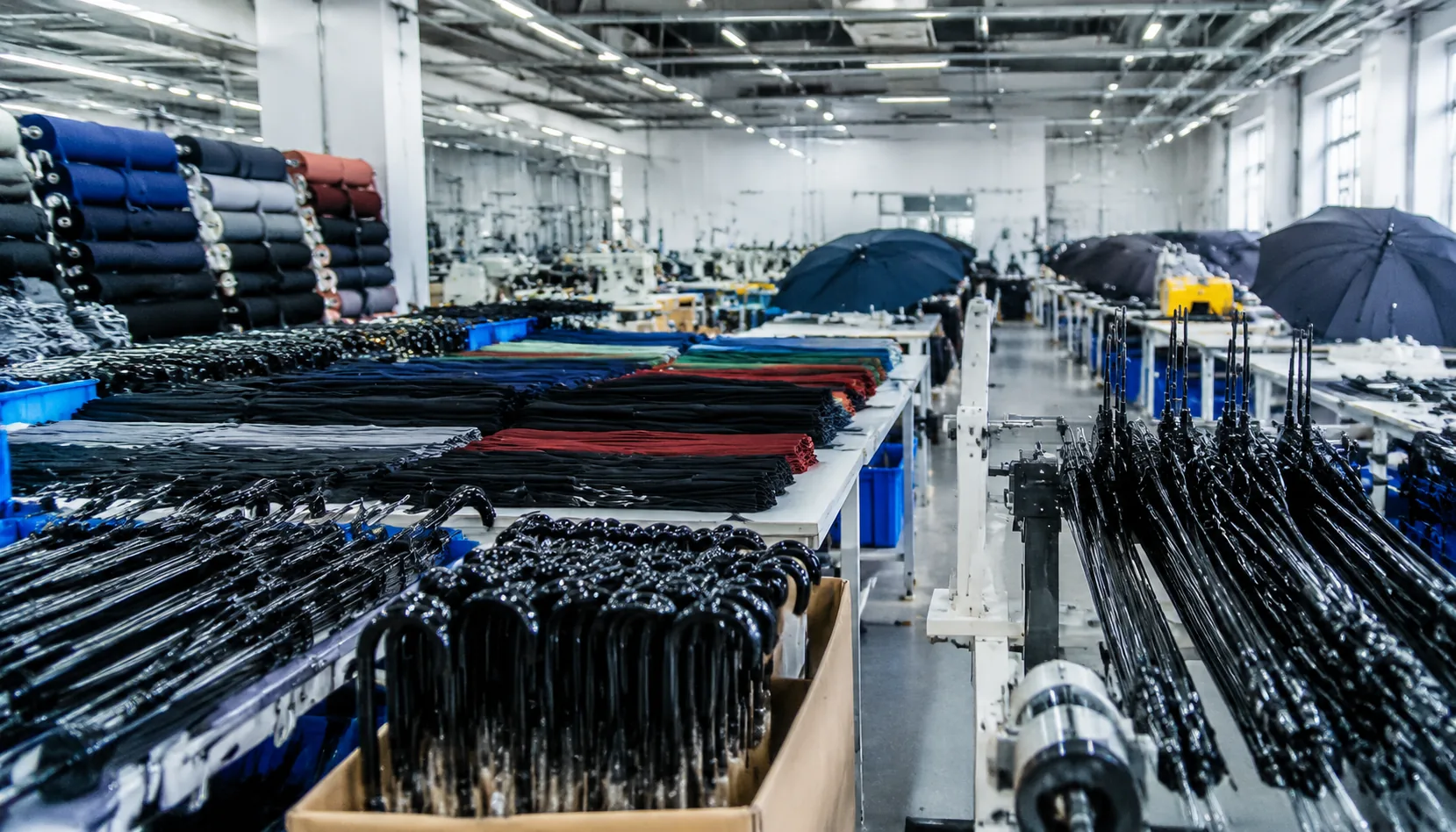
Umbrella Sourcing for Outdoor Retail and Gear Brands
Build outdoor retail umbrella ranges with UPF 50+ fabric, fiberglass frames, 210T pongee, tested packaging, and order te...
Read More »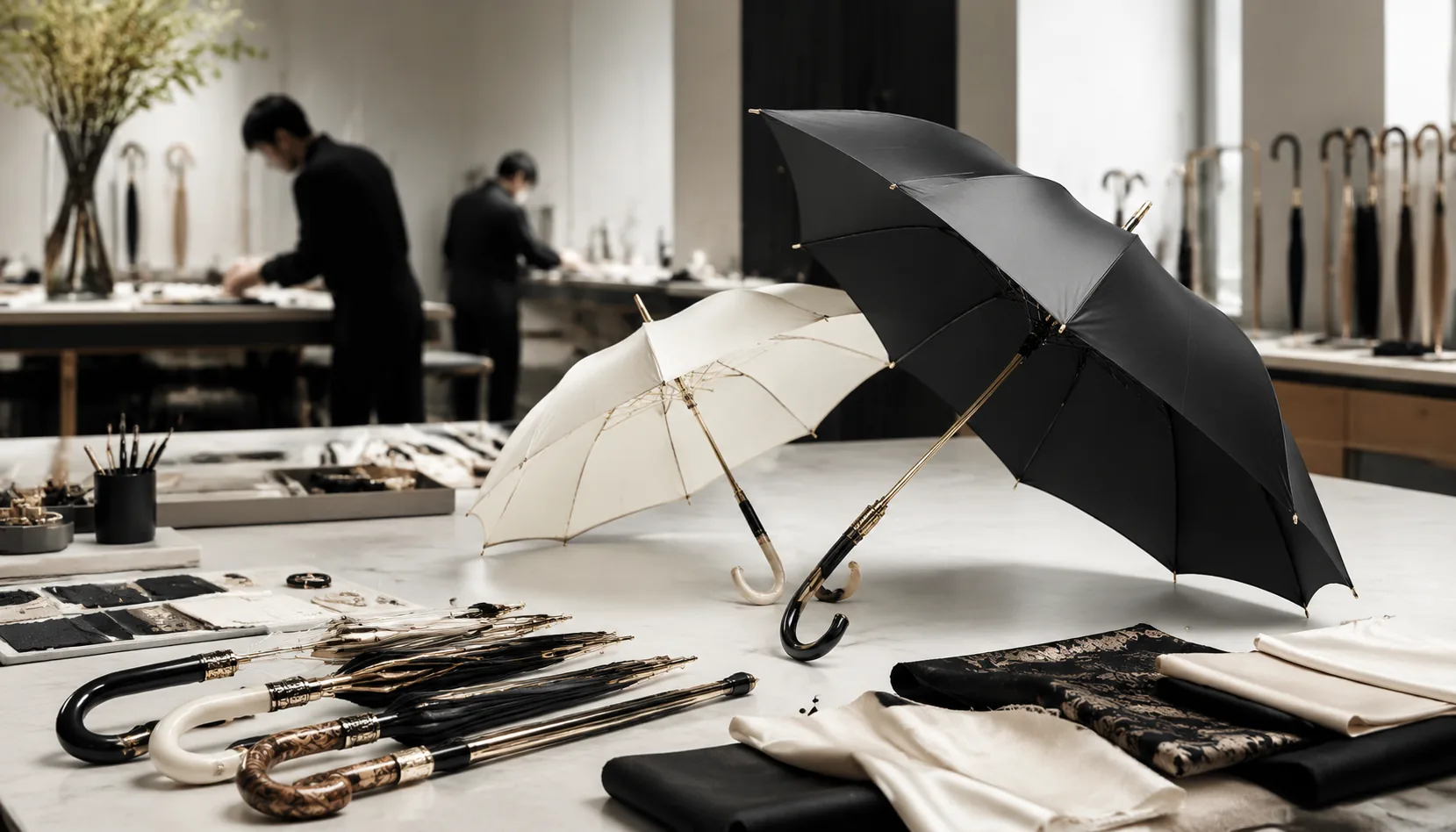
Custom Umbrellas for Luxury Retail and Fashion Brands
Build premium umbrella lines for fashion retail with fabric, frame, packaging, and QC specs that support brand perceptio...
Read More »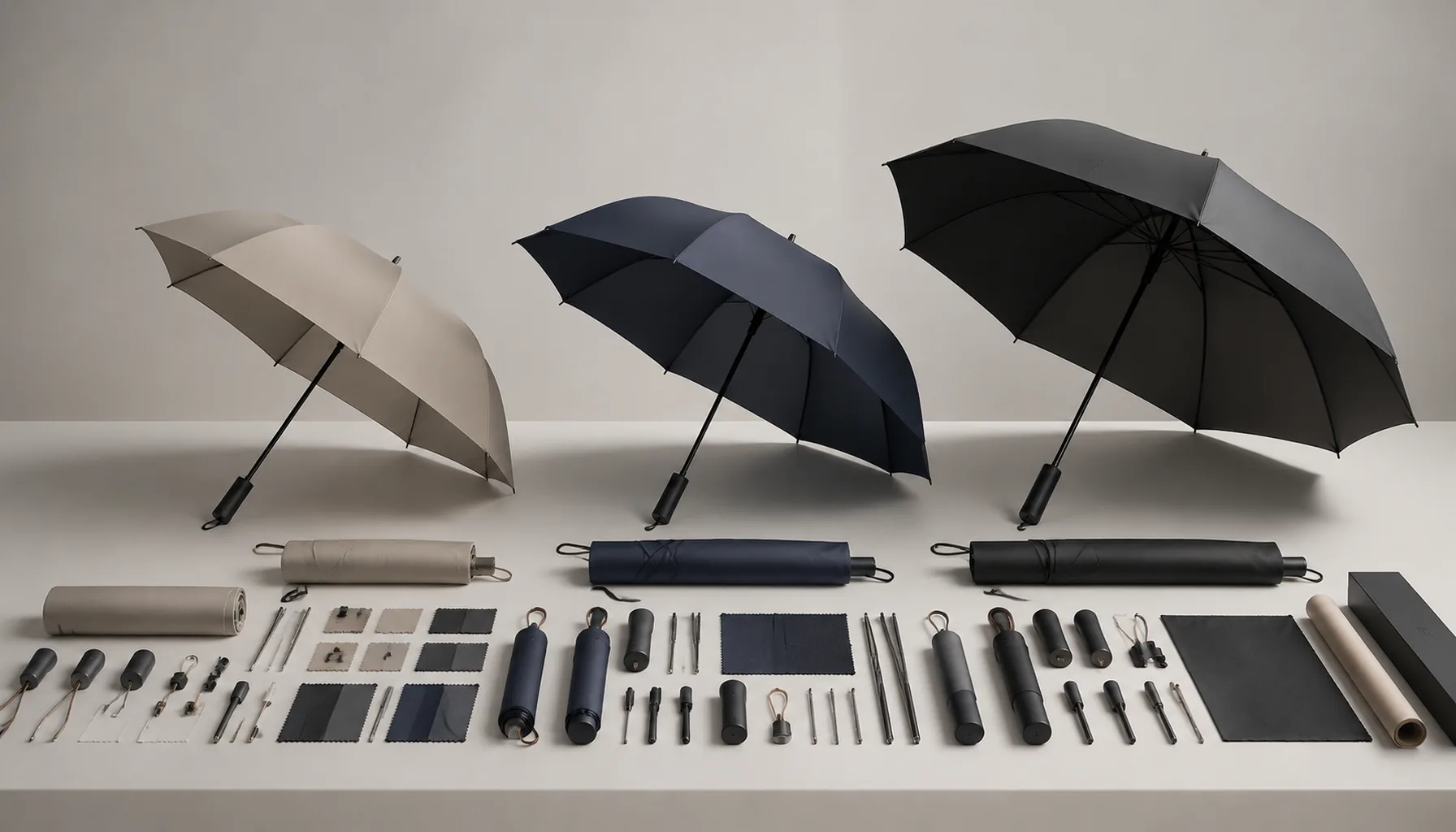
Retail Umbrella Line Planning: Good-Better-Best Specs
Build a retail umbrella range with clear good-better-best specs, target costs, MOQs, AQL checks, and packaging choices f...
Read More »