Retail Fashion Umbrellas: OEM Specs for Brand Owners
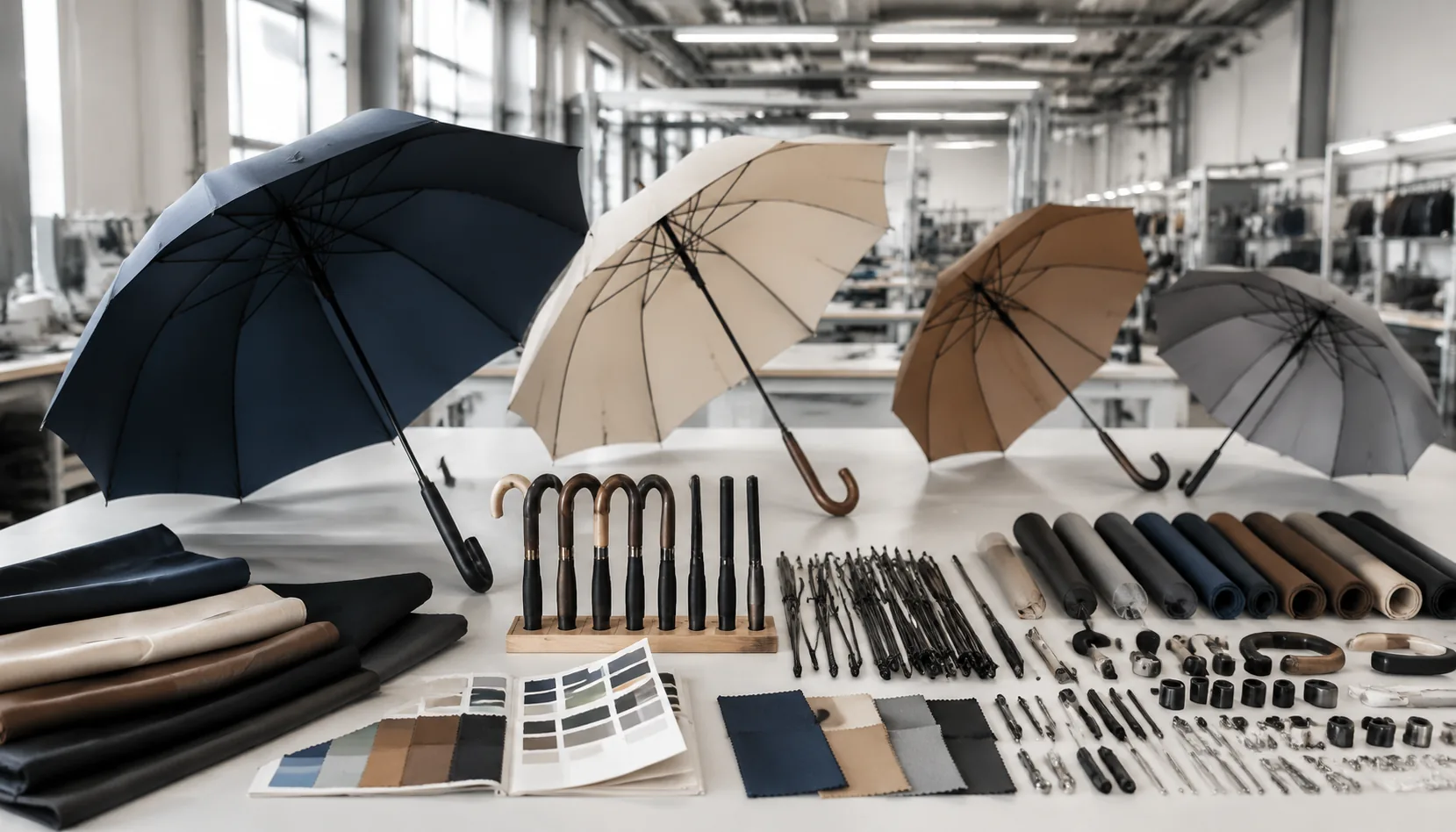
For brand owners, retail fashion umbrellas fail or sell through long before they reach the shelf: the outcome is set in fabric choice, rib tolerance, handle feel, print alignment, and carton planning. On our Songxia factory floor, the problems we see most often are not big design ideas but loose specs that leave sampling, production, and QC to guesswork. Clear OEM requirements turn a style concept into an umbrella line buyers can approve, reorder, and trust.
Define the Target Retail Price Point First
Retail price must be fixed before artwork, not after sampling, because every visible choice pushes the landed cost up or down. For budget retail fashion umbrellas selling around $8–$12, I would normally start with a 21" or 23" manual-open frame, steel shaft, steel ribs, 8K construction, 190T pongee, straight plastic handle, and a simple sleeve. That is not a bad umbrella if the sewing tension, rib riveting, and AQL 2.5 inspection are controlled, but it leaves little room for heavy coatings, complex panels, or gift packaging. If the buyer asks for a soft-touch curved handle, color-matched runner, full-panel custom printing, and a printed hang tag after setting a discount-store price, the numbers will not survive FOB quotation, especially once carton cube and DDP freight are included.
Mid-market OEM fashion umbrellas usually sit in the $15–$25 retail band, where the spec can justify better hand feel and fewer returns. This is where 190T can move to 210T pongee, manual open can become auto-open, and steel ribs can be mixed with fiberglass tips for better recovery in wind. A 23" stick umbrella or compact 21" 3-fold with 8K or 10K ribs works well for branded retail umbrellas because the shelf price can absorb cleaner printing, woven labels, rubberized handles, barcode stickers, and a stronger sleeve. For custom printed umbrellas in this tier, screen printing is still cost-efficient for 1–3 spot colors, while heat transfer is better for photographic logos or fashion graphics that cross panel seams. Lead time is typically 25–35 days after sample approval if fabric is in stock.
Premium private label umbrellas need to be engineered from the target margin backward, not copied from a showroom sample. A $35–$60 retail umbrella can carry 210T pongee with Teflon water-repellent coating, UPF 50+ treatment, fiberglass shaft and ribs, 10K or 16K layouts, double-canopy vented windproof construction, and auto-open-close mechanisms on compact models. Handles also change the cost sharply: lacquered wood, leatherette wrap, metallic plating, or molded ergonomic grips all require tighter cosmetic inspection than standard ABS plastic. Packaging becomes part of the product, so a printed sleeve, belly band, color box, care card, and retail-ready master carton should be costed before tooling. Our standard practice at ZheBrella is to quote these as separate cost blocks so brand owners can protect margin without quietly weakening the frame or canopy.
Choose Frame and Mechanism for Consumer Experience
For retail fashion umbrellas, the opening mechanism is not just a user feature; it controls perceived value, package thickness, and warranty exposure. Manual open is the safest choice for low-return private label umbrellas because there are fewer moving parts, less spring load, and fewer failures after rough store handling. It also keeps FOB cost down and works well for slim 21" or 23" compact styles sold near checkout counters. Auto-open gives stronger shelf appeal because shoppers can test the button instantly, but the runner, spring, and shaft lock must be controlled tightly or you will see complaints about sticking and half-opening. Auto-open/auto-close is best for premium branded retail umbrellas, especially commuter compact models, but it has the highest return risk if the frame is under-specified. Our standard practice at ZheBrella is to cycle-test moving mechanisms 300 to 500 times before bulk approval, then recheck production under AQL 2.5 inspection.
Rib material matters more than many brand owners expect. Steel ribs make the umbrella feel solid in hand and are still common for price-driven OEM fashion umbrellas, but they bend permanently after inversion and add weight that shoppers notice. Fiberglass ribs cost more, yet they flex back better in wind and reduce returns caused by bent ribs after the first storm. For a 23" stick umbrella or 27" golf-style fashion umbrella, fiberglass ribs with a steel shaft are a practical balance. Full fiberglass frames are better for premium retail fashion umbrellas claiming wind resistance, especially if the canopy uses 190T or 210T pongee with Teflon coating. If the retail story includes “windproof,” I would avoid thin steel 8K frames unless the umbrella is clearly positioned as light-duty fashion rather than commuter protection.
An 8K frame is usually enough for compact custom printed umbrellas where decoration, handle shape, and color matching drive the purchase. It folds cleaner, costs less, and keeps the silhouette slim for retail packaging. A 16K structure gives a rounder canopy, better fabric tension, and a richer look on the shelf, but it adds labor, rib weight, and more inspection points. For branded retail umbrellas with all-over printing, 16K also means more panel matching work, especially with stripes, logos, or border artwork. I prefer 8K fiberglass for mainstream fashion programs and 16K fiberglass only when the buyer needs a premium dome shape or stronger wind story. Before confirming bulk production, request a pre-production sample tested for open-close smoothness, runner locking, rib symmetry, and button force; a beautiful canopy cannot save a mechanism that feels cheap in the customer’s hand.
Turn Prints and Colors Into Production Specs
The fastest way to lose money on retail fashion umbrellas is to treat artwork as decoration instead of a production spec. For OEM fashion umbrellas, we convert every seasonal print into PMS references, fabric base color, panel-by-panel placement, and print method before sampling. A 23" straight umbrella normally has 8 panels, while a 27" golf-style fashion item may use 8K or 16K frame geometry, so the artwork file must match the actual canopy cutting die, not a flat marketing mockup. Vector logos should be supplied in AI or PDF, repeat prints in layered PSD or TIFF at 300 dpi, and each color should be called out with coated PMS plus an acceptable Delta E tolerance. For branded retail umbrellas, I prefer approving the fabric ground first, because PMS 186 C on white 190T pongee does not read the same on black or navy 210T pongee.
Panel layout is where good-looking retail fashion umbrellas separate from cheap promotional pieces. A repeat print must be engineered around the umbrella apex, rib lines, seam allowance, and closure strap position. If the pattern crosses seams, we need a registration target, usually within 2-3 mm after sewing; tighter than that is risky because pongee stretches during cutting and operators trim panels in stacks. Border prints need even more discipline: a 15 mm misalignment at the panel edge is obvious when the umbrella is open. For custom printed umbrellas, we usually make a paper layout first, then a fabric strike-off, then one full canopy sample before bulk cutting. Screen printing works well for solid PMS blocks, heat transfer is cleaner for logos and gradients, and sublimation is better for all-over artwork on light polyester, but it will not give a rich result on dark fabric.
Darker 210T pongee often gives private label umbrellas a more premium handfeel and stronger shelf presence than thin 190T white-base fabric, especially with matte black, deep burgundy, forest green, or navy canopies. The tradeoff is color control: metallic inks, pale pastels, and small low-contrast logos can sink into the fabric visually, so the strike-off must be reviewed under daylight and store lighting, not only on a desk. Our standard practice at ZheBrella is to approve one fabric swatch, one print strike-off, and one finished pre-production sample before bulk fabric is released. For retail programs, I also recommend keeping approved strike-offs in the QC room for AQL 2.5 inspection, so inspectors can compare bulk panels against the real sample instead of a digital file. That prevents the common dispute where the factory says the PMS is correct, but the buyer sees a darker, duller umbrella on the sales floor.
Design Retail Packaging and Labeling Details
Packaging is where many retail fashion umbrellas lose margin, not in the canopy sewing. For brand programs, I want every trim item locked before PP sample approval: hang tag size and paper weight, barcode label position, woven label artwork, sleeve fabric, gift box structure, and care card language. A typical branded retail umbrella uses a 300–350 gsm hang tag with matte lamination, EAN-13 or UPC-A barcode sticker, and a 2 cm woven label sewn into the closure strap or canopy seam. Sleeves should match the product tier: 190T pongee sleeves for basic 21" compacts, self-fabric sleeves with snap closure for 23" auto-open sticks, and printed polyester sleeves for gift sets. Gift boxes need drop-test reality, not only nice renderings; 350 gsm folding carton is fine for store shelves, but e-commerce channels usually need E-flute or stronger mailer packaging to survive DDP parcel handling.
Care cards should say exactly what the umbrella can tolerate: air dry open after rain, do not force the auto-open-close runner, rinse saltwater from fiberglass ribs, and avoid high-heat drying that can damage PU, Teflon, or UV UPF 50+ coatings. For OEM fashion umbrellas, the care card is also the right place for country of origin, fabric composition such as 100% polyester 210T pongee, safety warnings for manual and auto mechanisms, and warranty QR codes. Private label umbrellas going into department stores often require hang tags tied with cotton cord, while promotional-product distributors usually prefer adhesive SKU labels on the sleeve polybag for faster warehouse scanning. Our standard practice at ZheBrella is to verify barcode readability after lamination and again after final packing, because glossy tags and curved sleeves can create scan failures that buyers only discover at inbound inspection.
Carton packing must be engineered around retailer compliance before mass production, especially for mixed-color branded retail umbrellas. A common setup is 12 pieces per inner carton and 48 pieces per export carton for 21" folding umbrellas, or 24 pieces per export carton for 27" golf umbrellas with 8K or 10K frames. Mixed SKU ratios must be written into the packing instruction, not left to the line leader: for example, black/navy/red at 2:2:1 per inner carton, with carton marks showing style, color, quantity, PO number, and barcode. Retailers may require GS1-128 carton labels, polybag suffocation warnings, no metal staples, max carton weight under 15 kg, and AQL 2.5 inspection on packaging defects as well as umbrella function. Approve a sealed pre-production packing sample before cutting bulk cartons; changing box size after production can delay FOB shipment by 5–7 days.
Control Quality Before Retail Release
Quality control for retail fashion umbrellas has to start before the cartons are sealed, not after a buyer finds dirty canopies on a store shelf. For branded retail umbrellas, I separate inspection into cosmetic, structural, print, and function checkpoints. Cosmetic checks cover canopy stains, oil marks from sewing tables, color shading between panels, loose threads at panel seams, crooked labels, handle scratches, ferrule dents, and sleeve mismatch. Structural checks confirm rib symmetry, straight shaft alignment, runner smoothness, tip attachment, cap tightness, and whether an 8K, 10K, or 16K frame opens with even canopy tension. A 23" auto-open umbrella with one weak steel rib may still pass a casual open-close test, but it will look twisted under retail lighting and trigger returns.
Print inspection needs its own discipline because custom printed umbrellas fail differently from plain goods. Screen printing should be checked for pinholes, ink bleeding, off-position logos, poor opacity on dark 190T or 210T pongee, and cracking after a simple fold-and-rub test. Heat-transfer and sublimation work need checks for ghosting, edge lift, panel-to-panel alignment, and color accuracy against the approved Pantone or digital proof. For OEM fashion umbrellas, I also recommend checking barcode readability, hangtag placement, retail polybag clarity, and carton marks against the purchase order. Our standard practice at ZheBrella is to inspect opened samples under bright white light and again in natural light, because small oil stains and print haze often disappear under yellow warehouse bulbs.
For private label umbrellas, use AQL 2.5 for major defects and define critical failures separately: mechanism jam, sharp exposed wire, detached handle, broken rib, unsafe tip, or severe print contamination should not be averaged away. A normal pre-shipment inspection should pull cartons across sizes and colorways, then cycle manual, auto-open, and auto-open-close mechanisms at least 10 times per sampled unit. Keep sealed pre-shipment samples for each colorway, including canopy, sleeve, hangtag, and packaging, so claims can be compared against the approved lot. This is especially important for retail fashion umbrellas where a champagne beige, navy, or seasonal floral print may be produced across multiple sewing lines. Sample retention gives brand owners evidence when disputing shade drift, incorrect coatings like missing UPF 50+, or packaging substitutions after FOB or DDP shipment.
Frequently Asked Questions
Is 190T or 210T pongee better for retail fashion umbrellas?
190T pongee is common for value and mid-range lines, while 210T feels denser and supports a more premium retail story. Buyers should confirm print sharpness and hand feel with a strike-off before bulk production.
What MOQ should a private-label fashion umbrella brand expect?
MOQ depends on frame type, fabric color, and print complexity, but custom OEM retail programs often start around several hundred to 1,000 pieces per SKU. Mixed colors may require higher total order quantities.
What specifications should a brand owner confirm before sampling retail fashion umbrellas?
Confirm canopy size, fabric type such as 190T pongee or polyester, frame material, rib count, handle style, print placement, logo colors, packaging format, and carton requirements. A complete spec sheet reduces sampling revisions and helps the factory quote accurately.
What MOQ is typical for private label fashion umbrellas?
For most OEM fashion umbrella orders, MOQ is commonly 500–1,000 pieces per style depending on fabric color, print method, and handle customization. Fully custom molds or special packaging may require higher quantities.
How long does OEM production usually take after sample approval?
Sampling usually takes 7–15 days, and bulk production is commonly 30–45 days after sample approval and deposit. Complex all-over prints, custom handles, or retail gift boxes can add extra lead time.
Looking to Launch Your Custom Umbrella Line?
ZheBrella is a Zhejiang-based OEM/ODM umbrella manufacturer with 17 years of export experience. Free design, low MOQ from 100 pieces, windproof construction, full-color print.
Get Free Quote Now »People Also Search For
Related Articles
Retail Umbrella Assortment Planning: Specs by Price Tier
Plan a private-label umbrella range with 3-fold, stick, and golf models, clear good-better-best specs, realistic MOQs, F...
Read More »
Private Label Umbrella Line Planning for Retail Buyers
Plan a retail-ready umbrella line with good-better-best specs, MOQ tiers, fabrics, rib counts, packaging, and lead-time ...
Read More »
Private Label Rain Umbrellas: Good-Better-Best Specs
Build a good-better-best umbrella line with fabric, rib, mechanism, QC, MOQ, and packaging specs that fit retail price t...
Read More »