Wood vs EVA Umbrella Handles for Branded OEM Programs
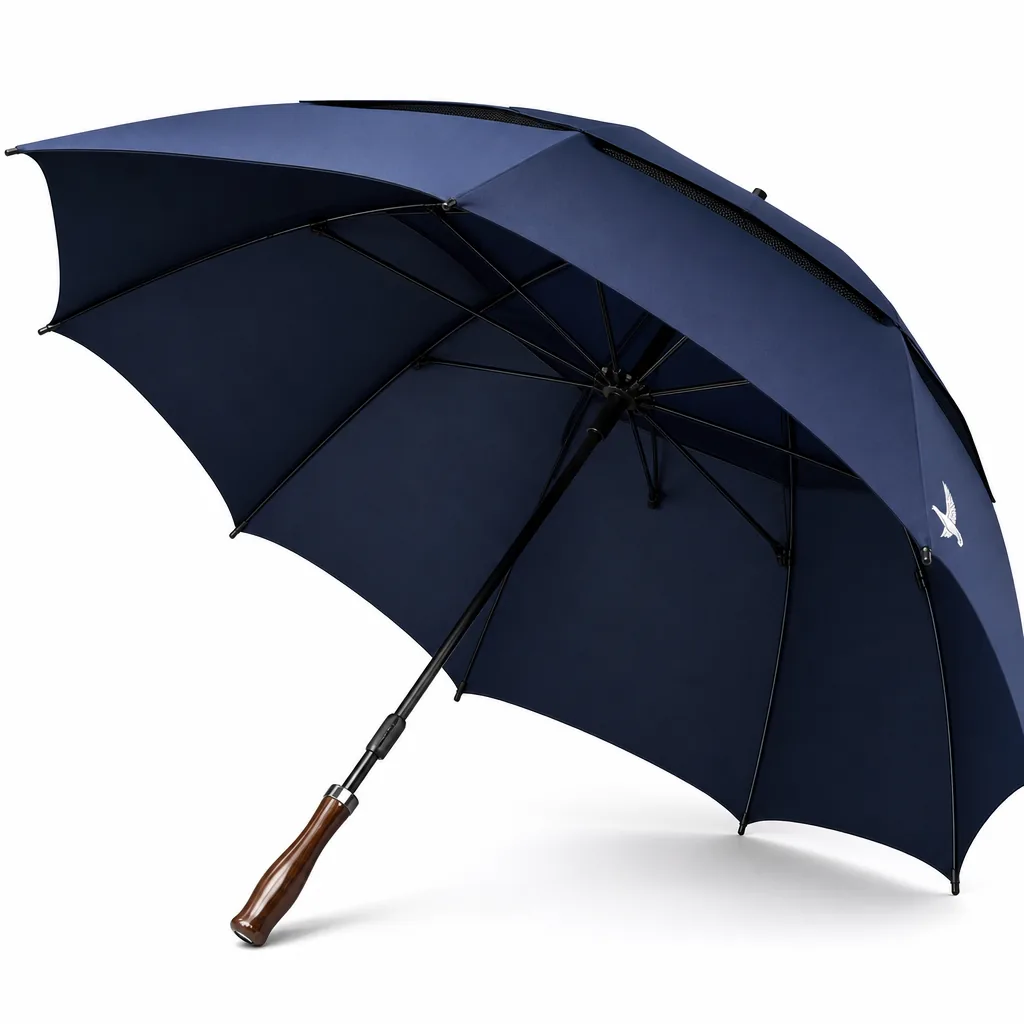
Choosing between wood and EVA for a branded umbrella program affects more than appearance; it changes grip feel, logo process, carton performance, and even complaint rates after delivery. On our Songxia lines, handle selection often decides whether an OEM order runs cleanly at scale or gets slowed by imprint limits, finish variation, or assembly yield, so buyers need a practical view of umbrella handle material options before locking the spec.
- 1. Why Handle Material Changes the Buyer's End Product
- 2. Wood Handles: Premium Look, Heavier Feel, More Natural Variation
- 3. EVA Handles: Lightweight Grip for Volume and Everyday Use
- 4. How Handle Choice Affects Cost, MOQ, and Production Planning
- 5. Specification Checklist Before You Approve the Handle
Why Handle Material Changes the Buyer's End Product
Handle choice changes the commercial position of an umbrella before the canopy opens. On the same 23-inch auto-open stick umbrella in 190T pongee with black steel ribs, an injection-molded plastic hook reads as entry-level promo; a stained maple or beech crook handle moves the product toward executive gift, hotel room, or hospitality use. That shift affects perceived value, expected retail ticket, and where the product belongs: a boardroom gift set, hotel closet, commuter shelf, or supermarket promo bin. Among common umbrella handle material options, wood umbrella handles signal permanence and a more traditional retail posture, while EVA umbrella grips signal utility, wet-hand control, and tighter cost discipline at volume. In branded umbrella OEM programs, buyers often spend on canopy print but undercut the final impression with the wrong handle, especially on 21-inch folding umbrellas and 27-inch golf umbrellas where the grip is a primary touchpoint.
Wood umbrella handles fit programs where tactile impression must support a higher selling price or a more formal brand image. Executive gifts, hotel programs, and premium golf umbrellas typically pair wood with 210T pongee, fiberglass ribs, and either a straight shaft or classic crook so the build reads deliberate and durable. The tradeoff is practical: wood adds weight, can show varnish inconsistency if QC is loose, and needs tighter moisture control during production and container loading. EVA umbrella grips solve a different buying problem. They are warmer in cold weather, less slippery with wet hands, and better suited to high-frequency commuter use on auto-open-close 21-inch and 23-inch folding umbrellas used on trains, sidewalks, and parking lots. On windproof frames rated around 50 mph with double-canopy venting, EVA also gives users a more secure hold when gusts load the canopy.
For promotional umbrella design, the use case should decide the handle. Event giveaways and mass-distribution campaigns usually perform better with EVA umbrella grips because they are comfortable across a broad user base, easier to standardize at MOQ levels of 1,000 to 3,000 pieces, and more tolerant of rough fulfillment handling. They also keep budget focused on canopy visibility and logo placement instead of handle finishing. Wood umbrella handles justify their higher unit cost when the umbrella is expected to stay in a resort room, reception area, or corporate gifting channel where perceived value matters as much as rain performance. In branded umbrella OEM sampling, buyers should lock handle choice early with canopy fabric, opening mechanism, and AQL 2.5 inspection standards, because a late switch from EVA to wood can change packing weight, FOB cost, and carton-drop performance during export handling.
Wood Handles: Premium Look, Heavier Feel, More Natural Variation
Wood handles give a branded umbrella OEM program a more premium look than EVA umbrella grips, but buyers should plan for higher unit weight and more piece-to-piece variation. Straight wood umbrella handles are the practical choice for 23", 27", and 30" straight umbrellas and golf models because they provide a larger, more stable logo panel and better balance on longer shafts. Curved wood crook handles fit classic city umbrellas and usually make more sense on manual-open frames than on compact or lightweight designs. Common export species include maple, birch, and bent hardwood, with clear lacquer, matte PU, or walnut-tone stain as the standard finishes. In most builds, wood adds about 35 to 80 grams versus a comparable EVA grip, depending on handle diameter and moisture content. That extra mass changes the hand feel, increases carton weight, and shifts the balance point more noticeably when the frame uses a steel shaft rather than fiberglass.
The main control issue with wood is consistency, not function. Grain pattern, pore structure, stain uptake, and final color tone will vary across both 1,000-piece and 10,000-piece runs; that is normal for this umbrella handle material option and should be managed against an approved sealed sample, not against plastic-like uniformity. If your promotional umbrella design needs tighter visual control, specify an acceptable shade range during sample approval and sort handles before assembly so obvious outliers are removed at incoming inspection. For branding, laser engraving is the most durable option and works best on straight handles with a broad flat or oval face. Pad printing can reproduce one-color or two-color artwork, but adhesion depends on the lacquer system, and curved handles usually hold small marks or simple logos better than large graphics with sharp edges. Among umbrella handle material options, wood works best when the buyer values a natural finish and can accept controlled variation.
EVA Handles: Lightweight Grip for Volume and Everyday Use
EVA is usually the better choice when comfort and finished weight matter more than a premium natural look. A molded EVA grip is softer than bare PP plastic, stays less cold in low temperatures, and gives better traction with wet hands from rain or sweat. That matters most on 21 inch and 23 inch 3-fold umbrellas, where buyers often pair EVA umbrella grips with fiberglass shafts to keep carry weight down, and on 27 inch to 30 inch golf umbrellas, where a secure grip helps reduce hand fatigue during longer outdoor use. For teams comparing umbrella handle material options, EVA typically gives the strongest weight-to-comfort tradeoff for everyday-use models without a meaningful cost increase versus standard plastic handles.
For branded umbrella OEM programs, EVA scales cleanly across straight and crook handle profiles and is easier to keep visually consistent than wood umbrella handles on large runs. Black is the default because it masks scuffs and simplifies repeat-order matching, but navy, red, gray, and Pantone-adjacent custom colors are common when volume is high enough to support a dedicated material run. EVA also fits standard commercial specs buyers already source: 190T or 210T pongee canopies, auto-open frames, and 27 inch to 30 inch vented double-canopy golf umbrellas tested around 50 mph. On promotional umbrella design orders from 5,000 to 50,000 pieces with AQL 2.5 inspection, EVA reduces cosmetic sorting risk because it avoids wood grain variation and lacquer inconsistency, making replenishment faster and quality more consistent across mixed-climate distribution.
How Handle Choice Affects Cost, MOQ, and Production Planning
Handle choice changes cost before canopy print or retail packaging because the real split is standard supplier hardware versus a custom mold, not just wood versus EVA. For branded umbrella OEM programs, standard wood umbrella handles in straight or crook profiles usually run on existing tooling, so MOQ can stay close to the umbrella body MOQ, typically 500-1,000 pcs per colorway. Standard EVA umbrella grips over a PP or ABS core work the same way, especially on common 21-inch and 23-inch folding frames where stock profiles are already in regular production. Costs rise when the buyer asks for a custom silhouette, finger grooves, a nonstandard grip diameter, or an embossed logo end cap. New EVA tooling is usually cheaper than custom carved wood tooling, but either route adds development cost, extra sampling, and a higher MOQ that often moves to 2,000-3,000 pcs per handle shape. Among umbrella handle material options, this is the decision that most directly shifts program economics because it affects tooling spend, available sourcing options, and whether the order can stay inside a standard 35-45 day production window.
Sample approval should cover assembly risk and consistency, not just appearance. For wood umbrella handles, buyers should sign off on lacquer color match, grain selection, moisture control, drill-hole alignment, and ferrule or shaft-insert retention after pull testing; small warpage can make the finished umbrella sit visibly off-axis. For EVA umbrella grips, approval points should include Shore hardness, rebound, seam-line cleanliness, surface skin quality, odor, and whether the grip rotates on the shaft after heat exposure. Logo execution also needs inspection: laser engraving on wood umbrella handles can darken unevenly across mixed grain density, while molded or debossed EVA logos can lose edge definition when the foam is too soft. Handle selection also changes freight math. Crook wood handles reduce packing density and lower pcs per carton, especially on 27-inch and 30-inch golf umbrellas, while dense hardwood increases carton weight; EVA is lighter, but oversized ergonomic grips can still waste cube space. Standard handles can usually ship in 35-45 days after deposit and artwork approval, while custom handles often add 7-15 days for mold making, stain or color matching, pre-production samples, and assembly checks. For promotional umbrella design, ask for carton dimensions, pcs per carton, FOB or DDP impact, and AQL 2.5 inspection points at quotation stage.
Specification Checklist Before You Approve the Handle
Start with mechanical fit. A handle that passes visual approval but loosens after a few open-close cycles is already a reject. For any branded umbrella OEM order, lock the shaft outside diameter, handle bore, insert depth, adhesive type, and fastening method before mass production; in practice that means pinned, riveted, or glue-fixed construction confirmed against the production drawing. A straight wood umbrella handle on a 14 mm steel shaft does not carry load the same way as an EVA hook on a 12 mm fiberglass shaft, and the difference is more obvious on auto-open and auto-open-close frames where impact stress is higher. The basic approval test should include hand-twist checks on each approved sample plus repeated carry-load and open-close cycling on finished umbrellas, looking for rotation before pull-out. Among umbrella handle material options, poor bore-to-shaft fit is one of the most common hidden failures, and it is far cheaper to catch before shipment than after cartons reach a distributor warehouse. Even a small tolerance mismatch can turn a cosmetic approval into a return issue.
Surface finish also needs a measurable standard. For wood umbrella handles, check color tone, grain consistency, lacquer coverage, edge smoothness, and whether the clear coat chips at the neck after carton vibration. For EVA umbrella grips, review foam density, rebound, cut symmetry, seam cleanliness on wrapped styles, and crush marks after packing pressure. Logo durability must be approved against the actual decoration method used in production: pad print, laser engraving, screen print, foil stamp, or metal badge insert. Run dry-rub and alcohol-rub tests on production samples, especially where soft-touch or glossy coatings can reduce ink adhesion. Comfort should be judged on the finished umbrella, not on a loose part, because grip diameter, hook radius, and balance change between a 23 inch 8K promotional umbrella design and a 27 inch golf model carried for 20 to 30 minutes. Review every point alongside AQL 2.5 pre-shipment inspection by random sampling from packed cartons, confirming attachment security, finish consistency, logo adhesion, user comfort, and fit to the specified shaft diameter across the lot.
Frequently Asked Questions
Are wood handles practical for high-volume promotional umbrella orders?
They can be, but standard shapes are easier to scale than custom carved designs. Buyers should confirm finish consistency, moisture resistance, and whether wood variation is acceptable for the program.
Does EVA handle color have to match the canopy exactly?
Not always, because foam and fabric absorb color differently. Buyers should approve a physical sample or Pantone tolerance standard before bulk production.
Does choosing a wood handle usually increase the MOQ for an OEM umbrella program?
Often yes. Wood handles are commonly tied to fewer standard molds and more finishing steps, so factories may set MOQs around 1,000-3,000 pcs per style, while standard EVA grip options can sometimes run from 500-1,000 pcs depending on frame and canopy specs.
Which branding method holds up better over long production runs: engraving on wood or printing on EVA?
Laser engraving on wood is usually more consistent for large runs because the mark is cut into the surface and will not rub off like surface printing can. EVA normally supports screen or pad printing, which works well for logos but needs abrasion testing if the umbrellas are for frequent daily use.
For mixed retail and corporate gift channels, which handle material is easier to standardize across multiple umbrella models?
EVA is usually easier to standardize because the same grip family can be used across folding and straight umbrellas with lower unit cost impact. Wood is better when the program needs a more premium look, but color, grain, and varnish can vary slightly between batches.
Looking to Launch Your Custom Umbrella Line?
ZheBrella is a Zhejiang-based OEM/ODM umbrella manufacturer with 17 years of export experience. Free design, low MOQ from 100 pieces, windproof construction, full-color print.
Get Free Quote Now »People Also Search For
Related Articles
J Hook vs EVA Umbrella Handles for OEM Buyer Programs
Compare J hook and EVA handle options by grip, durability, branding, carton impact, and target market fit for OEM umbrel...
Read More »J-Handle vs EVA Grip Umbrellas for Hotels and Promo Use
Compare J-handle and EVA grip umbrella builds for hotel, retail, and promo programs, including comfort, cost, print opti...
Read More »
J Handle vs EVA Grip Umbrellas for Promo and Retail Use
Compare J handles and EVA grips by comfort, cost, branding area, and durability so buyers can match umbrella handle spec...
Read More »