Metallic Ink and Foil Logos for Premium Umbrella Branding
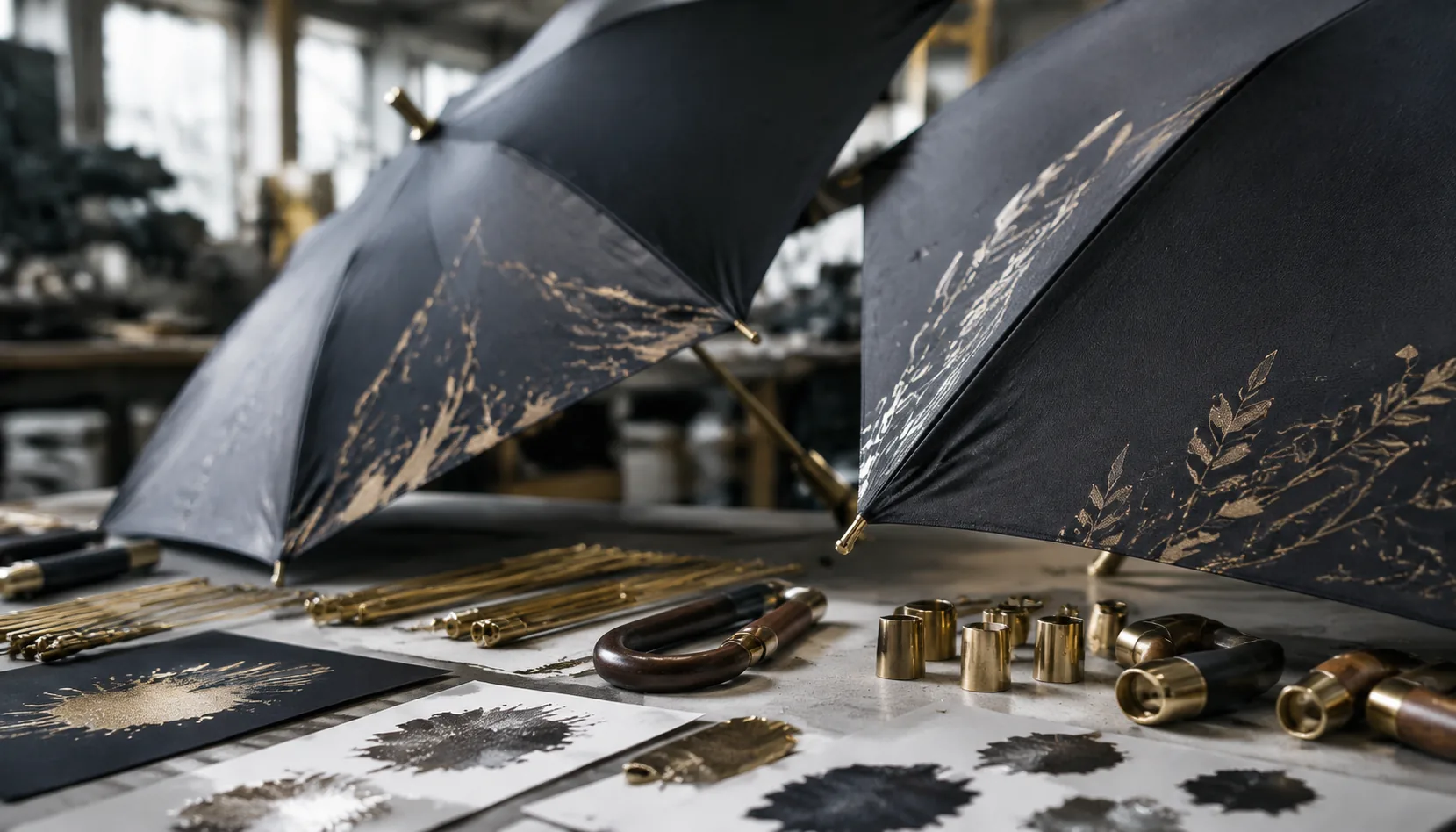
Premium umbrella buyers often ask for a bright metal logo, but the right process depends on the canopy fabric, artwork size, folding points, and how the umbrella will be packed and used. On our Songxia production floor, metallic logo umbrella printing is checked not just for shine, but for adhesion after drying, rubbing on coated polyester or pongee, panel tension, and consistency from sample to bulk. Foil can look sharper, while metallic ink is often more practical for repeat orders.
Where Metallic Branding Adds Value
Premium umbrella branding should still respect the product construction. A 23" auto-open stick umbrella with fiberglass ribs and a straight EVA or wood handle gives hotel and finance programs a more substantial feel than a cheap 21" compact, while a 27" golf umbrella with a double-canopy vent can carry a metallic crest cleanly at event entrances without turning inside out in 40–50 mph gusts. For executive gifts, 8K or 10K frames are usually enough; 16K ribs look impressive but add weight and are not always necessary unless the buyer wants a very formal silhouette. Our standard practice at ZheBrella is to test metallic samples through dry rub, wet rub, folding abrasion, and an AQL 2.5 final inspection before bulk packing. Metallic work also needs earlier approval than standard screen printing: allow 7–10 days for strike-off samples and 25–35 days for bulk production after artwork and material confirmation.
Metallic Ink vs Foil Transfer: Practical Differences
Metallic ink is the safer production choice when the logo sits on 190T or 210T pongee and the umbrella will be opened, closed, and packed every day. We print it through a screen using aluminum or bronze-effect pigment mixed into a flexible binder, then cure it so the film bends with the canopy instead of sitting like a hard sticker. The finish is a satin metal, not a mirror shine, but it handles panel tension better on 21" and 23" folding umbrellas where the fabric wraps tightly around 8K or 10K ribs. Metallic ink on pongee also gives better registration for fine text under 1.5 mm than foil, especially on curved gores. For metallic logo umbrella printing on retail or corporate programs, I normally ask the buyer whether they want a durable metallic impression or a bright reflective effect, because those are not the same manufacturing target.
Foil transfer gives the brighter look buyers associate with premium umbrella branding: gold, silver, rose gold, holographic, and brushed-metal effects that pop under event lighting. The process uses adhesive printed in the logo shape, then heat and pressure bond a foil carrier to the adhesive layer. It looks more like packaging foil than ink, which is why foil umbrella logos work well for VIP gifts, hotel umbrellas, and luxury promotional umbrellas where the logo area is not overworked. The weakness is flex memory. If the foil is placed near a fold line, rib contact point, or strap compression area, it can crack, wrinkle, or lose edge adhesion after repeated packing. Straight umbrellas in 27" or 30" sizes usually tolerate foil better than compact auto-open-close models because the canopy folds fewer times and the logo panel is less aggressively creased.
Cost and inspection should be decided before sampling, not after the buyer falls in love with a shiny pre-production piece. Metallic screen ink usually has a lower unit cost, faster setup, and better wash-rub performance; foil has higher material cost, tighter heat-press control, and more rejects if pressure is uneven across seams. Our standard practice at ZheBrella is to test both options through at least 300 open-close cycles for folding umbrellas and auto-open mechanisms, then check adhesion with tape pull, dry rub, wet rub, and visual cracking at the main fold points. For AQL 2.5 inspection, I would treat foil lifting, missing foil, scorched pongee, and misregistration over 1 mm as defects. If the order is DDP with a fixed event date, metallic ink is usually the lower-risk choice; if the buyer accepts a longer approval cycle and wants a jewelry-like logo, foil can be worth the extra sampling time.
Choosing the Right Canopy and Frame Combination
For premium umbrella branding, start with the canopy before you argue about the logo process. 190T pongee is acceptable for event-grade umbrellas, but 210T pongee gives a tighter weave, smoother hand feel, and cleaner edge definition when applying metallic ink on pongee. I prefer 210T for metallic logo umbrella printing because the fabric absorbs less unevenly, so the silver, gold, or champagne tone does not look dusty after curing. Matte waterproof coatings also matter: a high-gloss canopy can fight with foil umbrella logos and make the logo look cheap under retail lighting. If the buyer wants UPF 50+ sun protection, specify whether the UV layer is silver, black, or colorless, because heavy backing can slightly stiffen the panel and change how heat-transfer foil bonds near the seam allowance.
Frame choice changes the perceived value as much as the fabric. A 23" auto-open with steel ribs can look solid in photos, but steel bends permanently after a bad gust and adds weight that customers notice. For luxury promotional umbrellas, I usually push fiberglass ribs, especially 8K or 10K construction, because fiberglass flexes back and supports a cleaner canopy arc. A double-canopy vented windproof umbrella is the better platform for a large metallic mark, since the vent reduces inversion pressure and keeps the printed panel flatter in wind. For a golf size, 27" or 30" with fiberglass shaft and ribs is more credible than a heavy steel frame. Our standard practice at ZheBrella is to test logo placement after canopy sewing, not only on loose panels, because vent overlap and rib tension can distort reflective graphics.
Color matching is where many premium jobs are won or ruined. Black canopies are the safest base for gold, antique gold, rose gold, and bright silver; the contrast is strong and the logo reads from 10 to 15 feet. Navy works best with champagne gold or muted silver, not yellow gold, which can look promotional rather than refined. Charcoal gray pairs well with brushed silver and gunmetal foil, while deep green benefits from warm gold or copper tones for a heritage look. Avoid placing metallic ink across rib peaks on 16K fashion umbrellas unless the artwork is broken into smaller elements, because the reflection changes panel by panel. For metallic logo umbrella printing, request a strike-off on the actual coated pongee and inspect it under daylight, office LED, and flash photography before approving bulk production.
Sampling and Testing Before Bulk Production
The strike-off is where metallic logo umbrella printing either proves itself or wastes a production slot. For metallic ink on pongee, I do not trust a PDF color reference; 190T and 210T pongee absorb binder differently, and a champagne gold that looks clean on coated paper can turn dull once cured on canopy fabric. For foil umbrella logos, the first check is edge sharpness after heat press: small serif type, QR codes, and thin crest lines are the first places foil breaks or bridges. A buyer should approve a physical strike-off, then a full golden sample umbrella, not just a loose fabric panel. Our standard practice at ZheBrella is to review the golden sample under D65-style indoor light and direct outdoor daylight, because metallic reflection changes heavily with angle, cloud cover, and canopy color.
Adhesion testing must happen before bulk cutting, especially for premium umbrella branding where the logo is the product. We run tape pull tests using firm pressure and a fast 180-degree peel to check whether foil flakes from the pongee or whether metallic ink releases from the coating layer. Wet rub testing is just as important: a damp white cotton cloth rubbed 20 to 50 cycles across the logo will expose weak curing, excess release agent, or poor foil transfer temperature. For umbrellas that use Teflon-coated pongee or UPF 50+ coatings, decoration compatibility must be confirmed early because water-repellent chemistry can fight ink anchoring. If the logo loses shine, smears, or leaves visible particles, do not approve the sample.
Fold-flex testing is the part many buyers skip, and it is where luxury promotional umbrellas often fail after a few uses. A canopy does not stay flat; it folds along rib lines, rubs against neighboring panels, and sits compressed inside a sleeve during ocean freight for 25 to 35 days. I like to fold the printed panel along and across the logo at least 30 cycles, then inspect cracking, whitening, and foil lifting at the crease. Water exposure should include both spray and short soak checks, followed by open-close cycling after drying. For bulk approval, document the accepted golden sample with photos, Pantone or foil code, logo position tolerance, curing temperature, dwell time, and AQL 2.5 inspection criteria so the production line has measurable limits.
MOQ, Lead Time, and Inspection Points
For metallic logo umbrella printing, realistic MOQ starts higher than normal screen print because the ink system, foil film, release paper, and heat-press settings all need controlled trials before bulk. For a straight one-position metallic ink logo on 190T or 210T pongee, I would quote 500–1,000 pcs as a workable MOQ if the umbrella body is a standard 21", 23", or 27" model. Foil umbrella logos usually need 1,000–3,000 pcs because foil waste is higher and the press operator must hold temperature, dwell time, and pressure inside a narrow window. If the buyer wants 8 panels printed, mixed foil colors, or a curved logo crossing seam allowance, the MOQ should be discussed before artwork approval, not after sampling. Metallic ink on pongee behaves better than foil on deeply textured fabric, but it still needs adhesion testing after water exposure, folding, and rubbing against ribs.
Lead time is not just sewing time; premium umbrella branding adds setup days at the front end. A normal printed umbrella order may move quickly once fabric is cut, but metallic materials require extra sampling, color matching, and wash/rub checks before we release canopy panels to production. Our standard practice at ZheBrella is to reserve 5–7 days for artwork confirmation, film or screen preparation, and first-article testing, then 35–50 days for bulk depending on frame type, logo coverage, and packaging. A 23" auto-open straight umbrella with one metallic logo is closer to 35–40 days after deposit and approved sample. A double-canopy vented windproof umbrella with fiberglass ribs, 8-panel foil placement, custom sleeve, and retail carton can run 45–50 days. DDP delivery planning should add transit and customs time separately; FOB Ningbo or Shanghai is cleaner for buyers who already control freight.
Inspection has to focus on failure points that ordinary print QC may miss. For luxury promotional umbrellas, we use AQL 2.5 for major defects and check foil breaks, edge lift, misregistration, scratches, pinholes, cloudy transfer, and color consistency across panels. Misregistration over 1.5–2.0 mm is visible on sharp logos, especially gold foil on black pongee, so the inspection table needs approved samples under consistent lighting, not just a PDF color reference. Edge lift is checked by folding the canopy, opening and closing the umbrella several times, then rubbing the logo area with a dry white cloth. Scratches often come from stacking printed panels too early or letting metal rib tips contact the logo during packing, so inspectors should look inside the folds, not only at the open canopy. Good metallic logo umbrella printing is judged after handling, because the buyer’s customer will notice defects when the umbrella is opened at an event, not in a flat production photo.
Frequently Asked Questions
Are foil logos suitable for windproof double-canopy umbrellas?
Yes, if the foil area is placed away from heavy flex zones and tested on the actual canopy fabric. Large foil blocks can lift or crease more easily than small premium marks.
Does metallic ink cost more than standard screen printing?
Usually yes, because metallic pigments and setup controls add cost. The increase is manageable when the logo is small and the order meets the factory MOQ.
Is metallic ink or foil better for a premium umbrella logo?
Metallic ink is usually better for flexible canopy panels because it handles folding and wet use better than foil. Foil gives a brighter mirror effect but is more suitable for small logos, limited-use gift umbrellas, or areas with less repeated creasing.
What MOQ should buyers expect for metallic or foil umbrella branding?
For OEM umbrella orders, metallic ink printing typically starts around 500–1,000 pieces per design, while foil logos may require 1,000 pieces or more due to tooling, setup, and higher rejection risk during production.
What tests should be requested before approving metallic logo umbrellas?
Buyers should request a printed pre-production sample and check wet rubbing, dry rubbing, folding, adhesion, and color consistency after opening and closing the umbrella 20–30 times. For retail programs, include AQL inspection for logo position, cracking, transfer loss, and panel contamination.
Looking to Launch Your Custom Umbrella Line?
ZheBrella is a Zhejiang-based OEM/ODM umbrella manufacturer with 17 years of export experience. Free design, low MOQ from 100 pieces, windproof construction, full-color print.
Get Free Quote Now »People Also Search For
Related Articles
Metallic Ink and Foil Effects for Premium Umbrella Logos
Compare metallic ink, foil transfer, and subtle shine effects for premium umbrellas, including fabric limits, durability...
Read More »
Metallic Logo Effects on Premium Branded Umbrellas
Compare metallic ink, foil transfer, and subtle premium logo effects for umbrellas, including fabric limits, durability ...
Read More »
Metallic Gold and Silver Logos on Branded Umbrellas
Specify metallic gold or silver umbrella logos with realistic shine, fabric limits, sample checks, MOQ, cost factors, an...
Read More »