Metallic Ink and Foil Effects for Premium Umbrella Logos
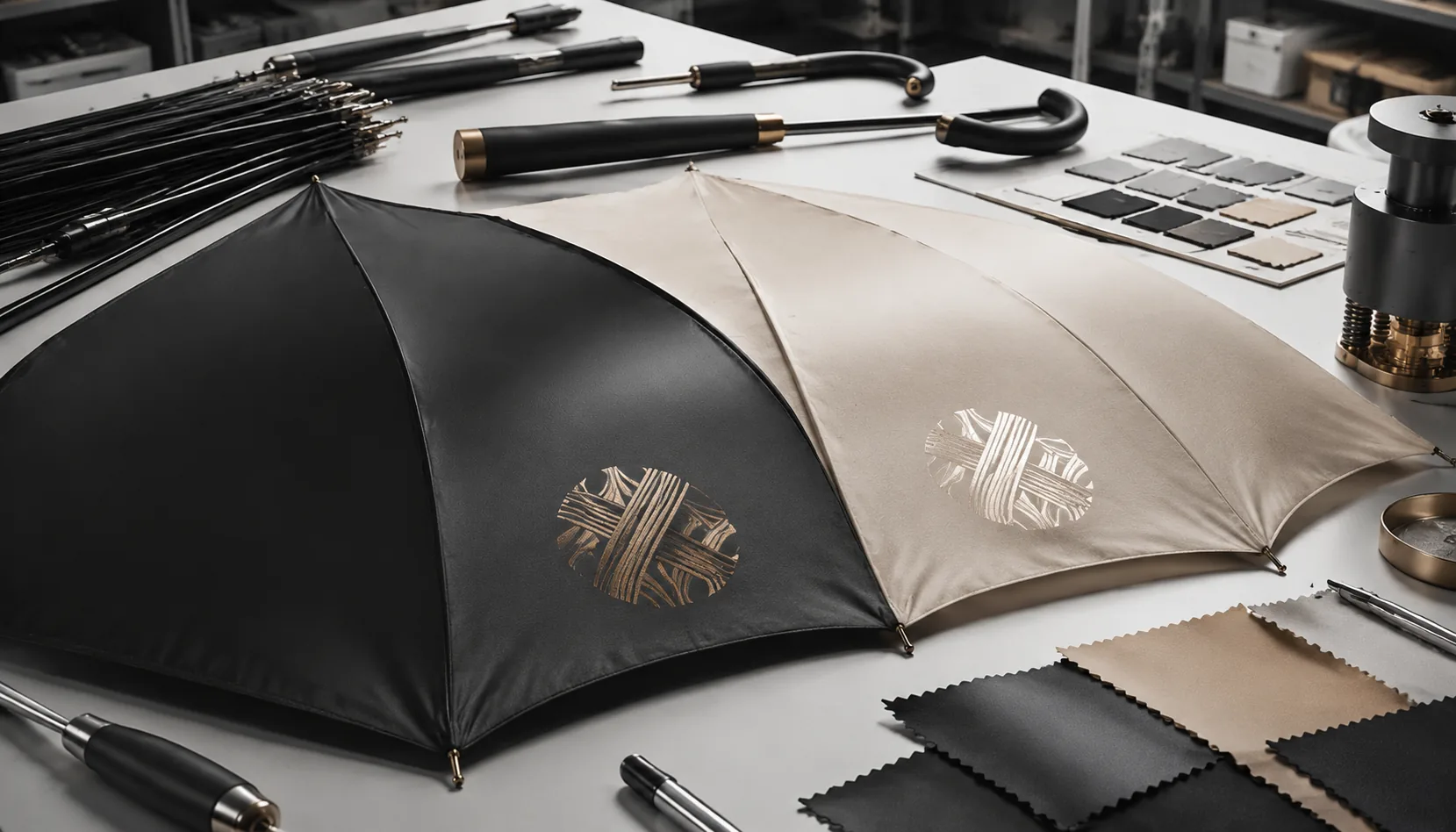
Premium umbrella logos often look sharper on a buyer’s mockup than they do on wet polyester or pongee after curing, folding, and carton compression. On our Songxia factory floor, metallic umbrella logo printing usually comes down to choosing the right shine level—metallic ink, foil transfer, or a restrained gloss effect—against fabric coating, order size, and real durability checks before mass production.
When Metallic Branding Makes Sense
Metallic effects make sense when the umbrella is being treated as a retained item, not a throwaway rain cover. For luxury retail lines, VIP gifts, five-star hotel concierge umbrellas, executive conferences, and private-client events, metallic umbrella logo printing can signal value before the user even opens the canopy. I like it most on 23" and 27" stick umbrellas with 190T or 210T pongee, fiberglass ribs, and a clean black, navy, wine, or charcoal canopy. The frame and fabric still need to be right: a shaky steel rib frame with a shiny logo looks cheap, while an 8K fiberglass shaft umbrella with a matte handle can carry premium umbrella logos without looking forced.
Small metallic details almost always beat large metallic panels. A 35–70 mm chest-style logo on one canopy panel, a monogram near the lower edge, or a narrow metallic trim accent on a sleeve gives enough reflection without turning the umbrella into a billboard. Large metallic ink printing areas are harder to control because umbrella panels are cut on bias, sewn into curved tension, and flex during opening. On a 30" golf umbrella, a full-width metallic fill may crack, crease, or show uneven density after repeated folding, especially if the buyer also wants windproof double-canopy construction rated around 50+ mph.
Foil umbrella branding is best reserved for logos with simple geometry: initials, hotel crests, wordmarks with moderate stroke width, or anniversary marks. Very fine serif type, gradients, and tiny registration details are risky because foil transfer needs heat, pressure, dwell time, and stable fabric behavior. For luxury promotional umbrellas, we normally confirm the effect with a strike-off before bulk cutting, then check adhesion, rub resistance, folding marks, and color shift under indoor and outdoor light. If the order requires AQL 2.5 inspection, I would define acceptable foil pinholes and edge breaks in the approval sample, not after production is packed for FOB or DDP shipment.
Metallic Ink Versus Foil Transfer
Metallic ink is the practical starting point for metallic umbrella logo printing because it runs on standard screen-printing tables, controls cost, and keeps the canopy flexible. We normally use silver, gold, rose gold, or gunmetal pigment in a PU-compatible ink system, then adjust mesh count and squeegee pressure so the metallic particles sit evenly without flooding the weave. On 190T pongee, the face is slightly more open, so heavy metallic ink can spread at fine edges under 1.0 mm; 210T gives cleaner line definition but may need slower curing to avoid surface-only drying. Metallic ink printing gives a satin-metal shine, not a mirror finish, but it survives folding better than thick films and is easier to pass rub, tape, and wet-flex tests before bulk production.
Heat-transfer metallic film gives a brighter, more solid effect for premium umbrella logos, especially when the buyer wants a chrome-like gold or silver block on black, navy, or bottle-green canopy panels. The tradeoff is hand feel and flex resistance: film sits on top of the fabric, so large logo areas over 80–100 cm² can feel stiff and may crease along fold lines after repeated opening and closing. For luxury promotional umbrellas, I prefer transfer film on compact logos, badges, monograms, or panel-tip marks rather than wide slogan graphics. Press temperature, dwell time, and pressure must be tuned by fabric and coating; a Teflon-treated 210T pongee panel often needs a different adhesive layer than untreated 190T because water-repellent chemistry can reject the glue.
Foil umbrella branding is often requested as if it were the same as metallic film, but true foil transfer behaves differently: it uses an adhesive print or transfer base, then foil is applied to create a sharper reflective surface. It looks premium in photos and on event umbrellas, but it is less forgiving on curved canopy tension and rib contact points than screen-printed metallic ink. For rain umbrellas that will be folded wet, packed tight, and opened hundreds of times, we require adhesion testing on the actual canopy lot, not just a sample swatch. Our standard practice at ZheBrella is cross-hatch tape testing, dry and wet rub testing, 24-hour water exposure, and open-close cycling before approving metallic umbrella logo printing for production, especially when the order combines 8K or 10K frames with 190T/210T pongee panels under tight AQL 2.5 inspection.
Design Rules for Clean Premium Results
Clean metallic umbrella logo printing starts with artwork restraint, not ink choice. For metallic ink printing on 190T or 210T pongee, I do not approve positive lines under 0.35 mm or reversed gaps under 0.45 mm; foil needs more breathing room, usually 0.5 mm minimum, because heat and pressure can bridge fine details. A chest-width brand mark that works on a T-shirt often looks cheap on a curved canopy panel. For a 23" straight umbrella, keep one-panel logos around 120–160 mm wide; on a 27" golf umbrella, 180–240 mm is workable if the mark has open shapes. Tiny registration symbols, thin serif taglines, and dense QR-style patterns should be printed in standard pigment, not metallic or foil. Premium umbrella logos look best when the reflective area is simple enough to catch light as one controlled surface.
Placement decides whether foil umbrella branding looks premium after the umbrella is opened and closed 500 times. Keep artwork at least 35–50 mm away from seam lines and avoid the lower third where canopy folding creates repeated hard creases. I also avoid the zones directly over rib tips and stretcher pressure points, because steel ribs can emboss the fabric from below during packing, while fiberglass ribs flex more but still create pressure during wind loading. On auto-open and auto-open-close models, the canopy snaps open harder than a manual frame, so heavy foil sitting across a fold line is more likely to crack or wrinkle. Our standard practice at ZheBrella is to review the logo against the rib map before making the screen or foil die, not after strike-off, because moving artwork 20 mm can prevent a visible crease through the metallic face.
Panel count changes logo scale more than many buyers expect. An 8K umbrella has wider panels, so a single large logo can sit with fewer interruptions and more consistent reflection; that is why luxury promotional umbrellas often use one or two 8K panels for metallic marks. A 16K frame has narrower panels and more seams, giving a rounder canopy shape but less uninterrupted print space. If the same 200 mm logo is forced onto a 16K panel, the design may crowd the seam allowance or bend sharply near the ribs, making the metallic reflection look broken. For 16K layouts, reduce the logo width by 15–25%, use centered icon-only artwork, or repeat smaller marks across alternate panels. Metallic umbrella logo printing can look excellent on both 8K and 16K frames, but the die size, panel curvature, and viewing angle must be designed together before sampling.
Durability, Folding, and Weather Testing
Durability testing for metallic umbrella logo printing must start before bulk packing, because metallic ink and foil fail differently from normal plastisol or water-based prints. For metallic ink printing on 190T or 210T pongee, I want a dry rub test and wet rub test on the printed panel after curing, not just a visual check under factory lights. A practical standard is 50 dry rub cycles and 20 wet rub cycles using white cotton cloth; heavy pigment transfer means the binder ratio, curing temperature, or surface pretreatment is wrong. For foil umbrella branding, tape adhesion is more important: apply 3M 600 or equivalent tape over the foil edge, press firmly, peel at 180 degrees, and check whether flakes lift from fine logo strokes. Foil looks excellent on premium umbrella logos, but sharp serif fonts, thin lines under 0.5 mm, and large solid blocks are where adhesion problems show first.
Folding cycles are the real factory-floor test for luxury promotional umbrellas, especially compact 21 inch auto-open-close models where the canopy folds tightly around the ribs. A logo placed across a fold line will crack faster than one positioned between rib valleys, so the writer should explain why artwork placement matters as much as ink choice. Our standard practice at ZheBrella is to open and close sample umbrellas at least 100 cycles for compact models and 50 cycles for 23 inch stick umbrellas, then inspect the metallic surface under angled light. Look for hairline cracking, dull streaks, foil edge lifting, and scratches caused by contact with rib tips, runner parts, or Velcro straps. Double-canopy vented windproof umbrellas also need checking around the vent seam because repeated flexing at that seam can distort registration or make metallic films wrinkle.
Weather testing should combine water exposure with mechanical movement, not only a quick spray test. After a 30 minute water spray or simulated rain exposure, leave the umbrella open until surface-dry, then fold it while slightly damp and reopen it several times to check whether the metallic layer sticks, clouds, or cracks. For AQL 2.5 inspection, define major defects clearly: missing foil, poor registration over 1.0 mm on multi-color logos, visible scratches on the logo face, pinholes, smearing, oxidation marks, and cracking after repeated opening. Minor defects can include tiny edge roughness or small metallic specks outside the print area if they are not visible at normal viewing distance, usually 60 to 80 cm. Metallic umbrella logo printing can pass showroom approval and still fail in use if the QC checklist ignores folding stress, so inspection should include both flat-panel appearance and full assembled umbrella performance.
Cost Drivers, MOQ, and Production Timing
The biggest cost driver in metallic umbrella logo printing is not the ink by itself; it is the control work around it. Metallic ink printing needs higher pigment load, slower screen speed, and tighter viscosity control than standard plastisol or water-based logo work, especially on 190T/210T pongee with Teflon or UV UPF 50+ coating. Foil umbrella branding adds another layer: release film, heat-transfer adhesive, dwell-time testing, and pressure setup for each panel position. A normal one-color screen logo may use a standard mesh and one pull; metallic often needs a dedicated screen, heavier deposit, flash curing, and rub testing after drying. On dark navy, black, or burgundy canopies, we usually test opacity twice because a thin metallic layer looks cheap under retail lighting. Expect a 15–40% logo-cost increase over standard printing, depending on logo size, number of panels, and whether the umbrella is 21 inch folding, 23 inch stick, 27 inch golf, or 30 inch vented golf size.
MOQ is mainly driven by setup loss and material purchasing, not by factory stubbornness. For premium umbrella logos using metallic ink, a practical MOQ is often 300–500 pieces per design, while foil transfers can start around 500–1,000 pieces because film cutting, registration trials, and heat-press setup waste more units before stable output. If the same logo repeats across black, gray, and white canopies, keep the print position and size identical to avoid separate setup charges. Sample approval should include a digital mockup, strike-off on actual canopy fabric, adhesion test, fold-abrasion check, and a finished pre-production sample on the real frame—8K steel, 10K fiberglass, or double-canopy windproof construction all handle panel tension differently. Our standard practice at ZheBrella is to approve metallic artwork under both daylight and indoor LED because gold and silver shift color more than buyers expect.
Timing needs to be planned backward from the launch date, especially for luxury promotional umbrellas tied to retail drops, VIP events, or hotel openings. Artwork review usually takes 1–2 days, metallic or foil strike-off takes 5–7 days, and a full pre-production sample takes another 7–10 days if the frame, handle, sleeve, and packaging are customized. Bulk production is typically 25–35 days after approval for simple 23 inch auto-open umbrellas, and 35–50 days for fiberglass golf umbrellas, auto-open-close folding models, or vented windproof builds rated around 50+ mph. Add AQL 2.5 inspection time because metallic defects are visible: pinholes, edge sawtooth, dull foil patches, and misregistration cannot be hidden. FOB Ningbo or Shanghai is cleaner when the buyer controls freight; DDP should be quoted earlier because carton size, duty code, and final-mile delivery can change landed cost more than the logo itself.
Frequently Asked Questions
Can metallic foil be printed across the full umbrella canopy?
It is not recommended for large canopy coverage because folding stress and panel curvature can cause cracking or uneven shine. Foil or metallic transfer works best on compact logos or accent graphics.
Will metallic ink look the same on black and navy pongee?
No. Dark canopy colors increase contrast but can change the perceived tone of gold, silver, or bronze. Buyers should approve a strike-off on the actual fabric color before bulk production.
What umbrella fabrics work best for metallic ink or foil logo effects?
Metallic ink usually works best on polyester pongee, high-density polyester, and some coated fabrics after adhesion testing. Foil transfer is more sensitive to fabric texture and coating, so buyers should approve a physical sample before bulk production.
What MOQ should importers expect for premium metallic or foil umbrella logos?
For OEM orders, metallic ink printing is commonly available from about 500–1,000 pieces per design, while foil transfer may require 1,000 pieces or more because of setup, film, and heat-transfer testing. MOQ can rise when multiple logo positions or mixed canopy colors are requested.
How should a buyer approve metallic logo quality before mass production?
Request a strike-off or pre-production sample showing the exact logo size, placement, fabric color, and shine level. Common checks include tape adhesion, wet rub, folding abrasion, and visual approval under indoor and outdoor light.
Looking to Launch Your Custom Umbrella Line?
ZheBrella is a Zhejiang-based OEM/ODM umbrella manufacturer with 17 years of export experience. Free design, low MOQ from 100 pieces, windproof construction, full-color print.
Get Free Quote Now »People Also Search For
Related Articles
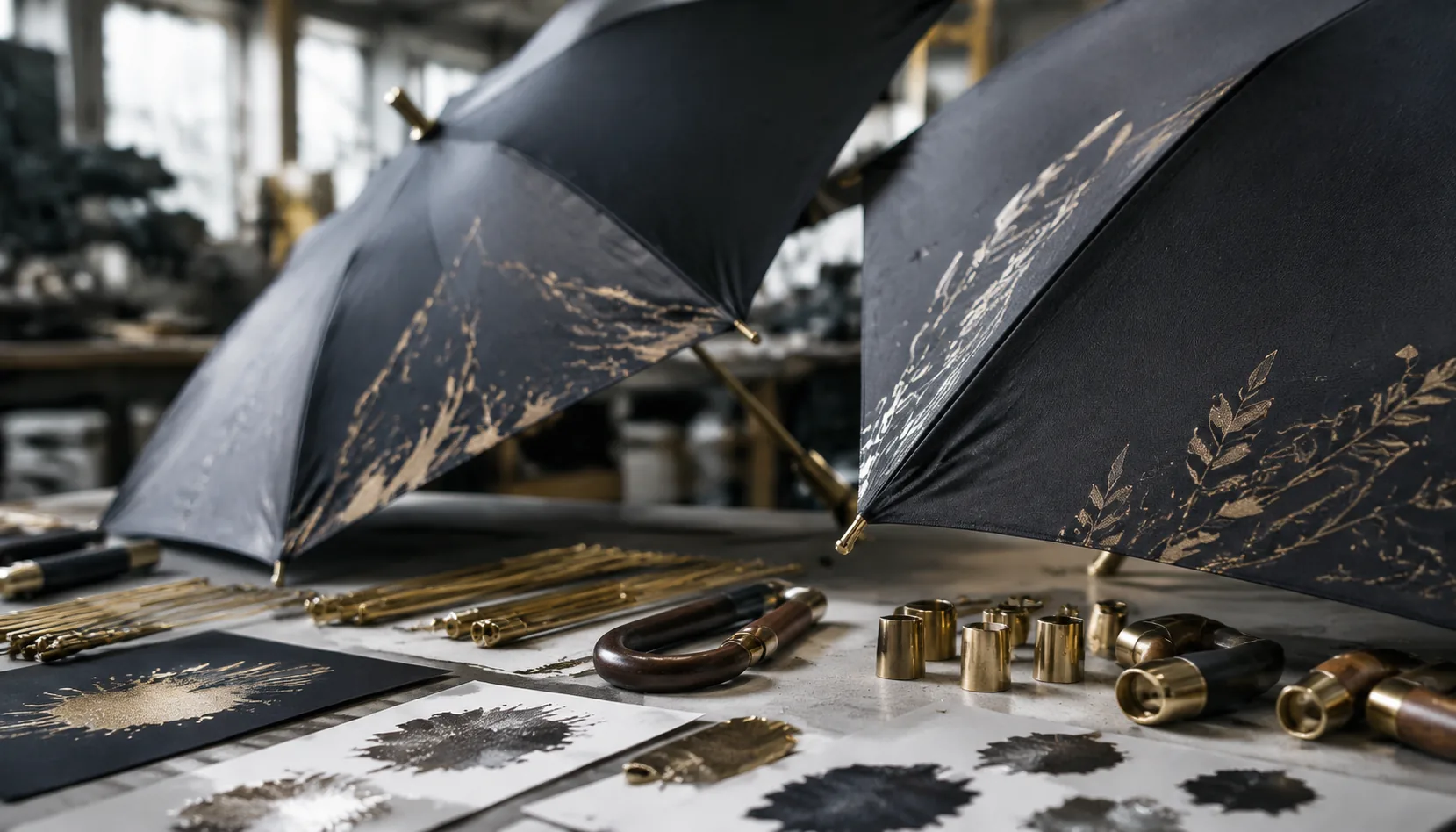
Metallic Ink and Foil Logos for Premium Umbrella Branding
Compare metallic ink and foil logo options for premium umbrellas, including fabric limits, durability tests, MOQ, sampli...
Read More »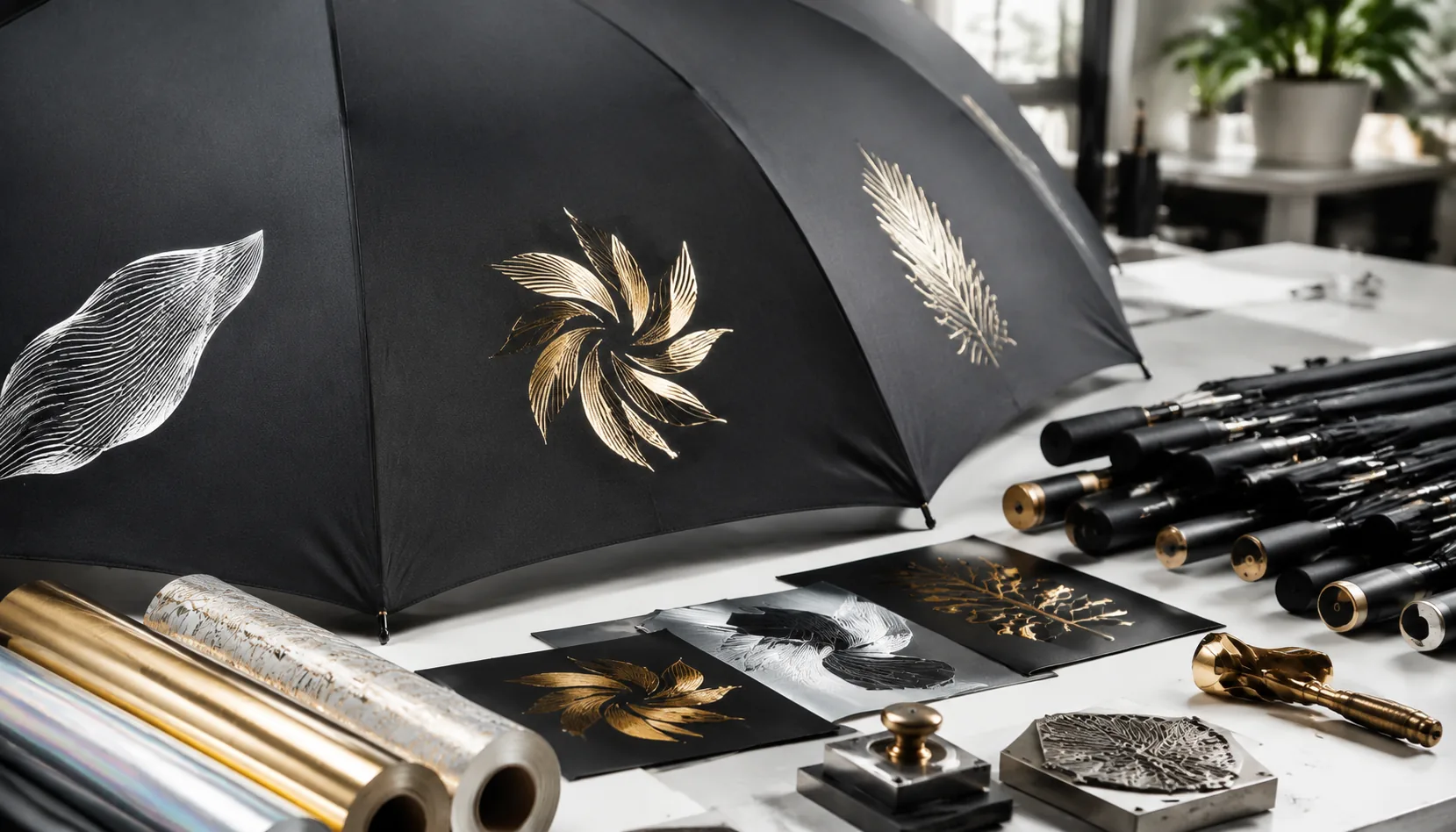
Metallic Logo Effects on Premium Branded Umbrellas
Compare metallic ink, foil transfer, and subtle premium logo effects for umbrellas, including fabric limits, durability ...
Read More »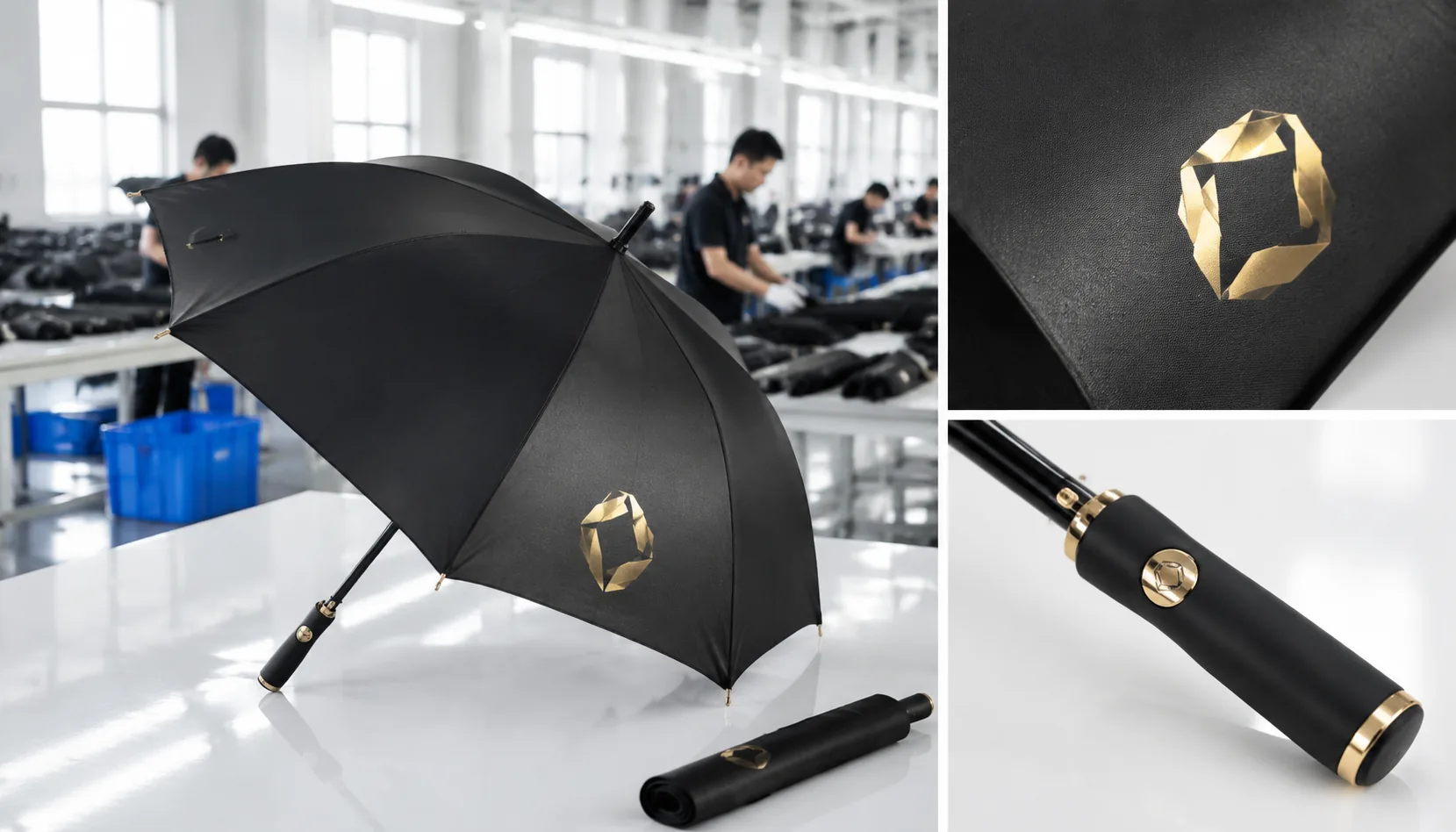
Metallic Logo Printing on Premium Branded Umbrellas
Compare metallic inks, foil transfers, and shimmer logos for premium umbrellas, with durability, MOQ, lead time, and ins...
Read More »