Nearshoring Umbrella Production: Mexico and Eastern Europe Realities
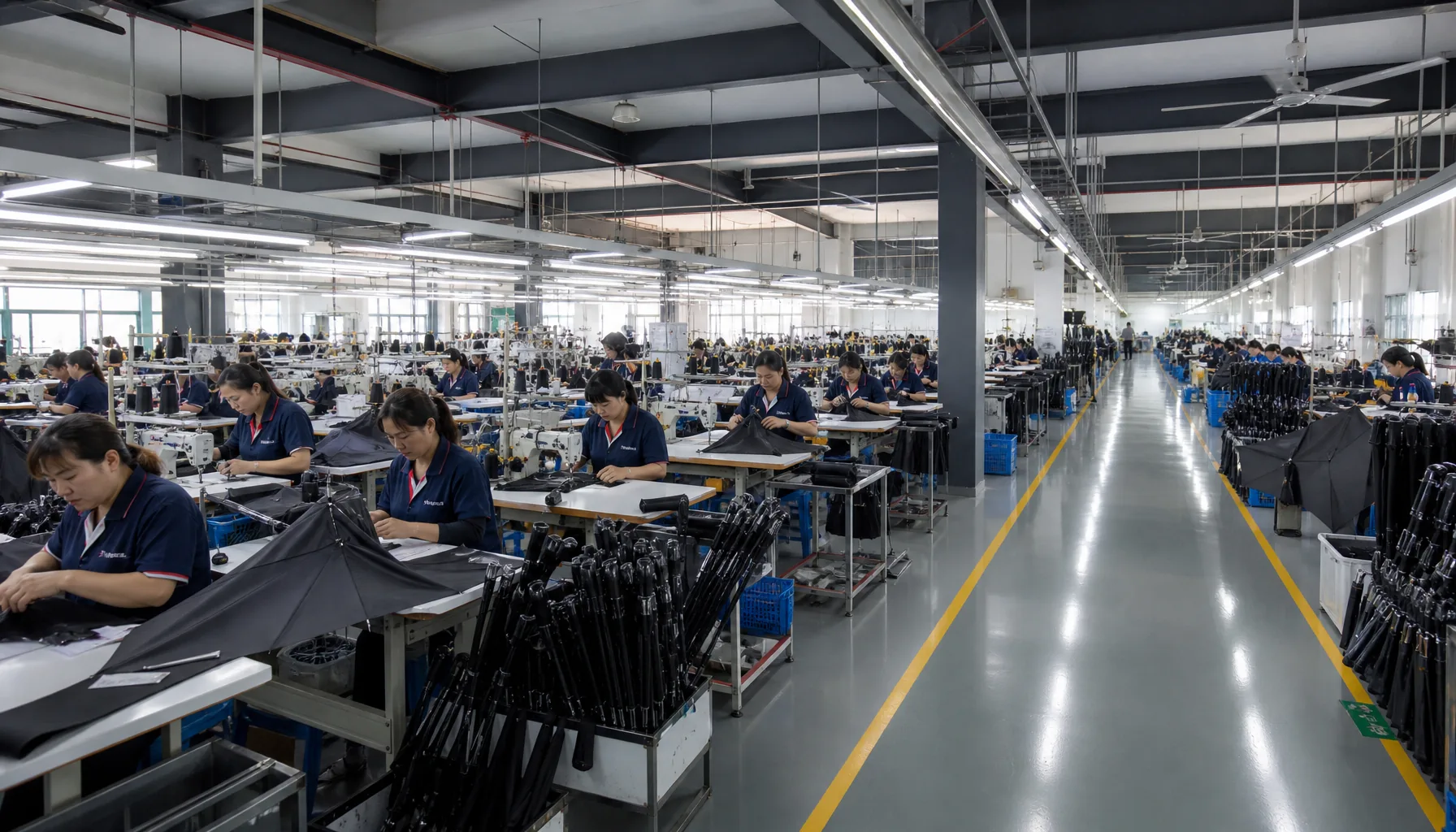
For buyers comparing nearshoring umbrellas to Mexico or Eastern Europe, the first question is not labor rate but what can actually be built locally without breaking cost, quality, or lead time. On the factory floor, the catch is usually the same: frames, ribs, fabrics, shafts, and fittings still depend on imported components, and the real savings only appear when logistics, duty, labor, and yield are modeled together.
The nearshoring appeal
The main appeal of nearshoring umbrellas is simple: you cut time out of the chain before you try to cut cost. For buyers moving volume into the U.S. or EU, umbrella production Mexico can remove weeks of ocean transit, port congestion, and the scramble around peak-season bookings. That matters more than people admit, because umbrellas are not a product you want to chase by airfreight unless the margin is already broken. When lead times drop from 60-90 days after production to something closer to 20-35 days landed, planning gets easier, replenishment gets cleaner, and retail turns stop depending on one risky import window. The same logic applies to umbrella manufacturing Eastern Europe for EU distribution: shorter inland transit, fewer border variables, and better control over in-season restocks.
Freight is the obvious line item, but the tariff position is usually the real reason sourcing teams start talking about nearshoring umbrellas. If the product classification, origin rules, and component content are structured correctly, a buyer can protect margin better than they can by shaving a few cents off a ferrule or runner. That is especially true for promotional programs and private-label retail, where the landed cost is what matters, not the factory quote alone. Reshoring umbrella production also gives procurement a cleaner story when customs scrutiny rises or when a brand wants to reduce exposure to Asia-heavy supply chains. I have seen companies overpay for a cheaper FOB number because they ignored duty, drayage, warehousing, and the cost of missing a ship date. Local umbrella assembly can look expensive on paper and still win on total landed cost.
The marketing benefit is real, but it only works when the operation is disciplined. ‘Made closer to market’ sells because it sounds responsive, lower risk, and easier to supervise, especially for brands that want faster color changes, smaller MOQs, or region-specific packaging. That said, nearshoring is not automatically a quality upgrade. If a plant cannot hold AQL 2.5, manage fiberglass rib consistency, or keep canopy cutting tolerance tight, the badge on the hangtag will not save the program. The strongest use case is usually a hybrid model: local umbrella assembly for fast turns and compliance-sensitive orders, with core components sourced intelligently and final QC done near the customer. That is where nearshoring umbrellas actually make business sense, not as a slogan, but as a way to shorten the control loop between forecast, production, and shelf.
The component dependency catch
The hard truth about nearshoring umbrellas is that the expensive, failure-prone parts still usually come from China. A plant doing umbrella production Mexico or umbrella manufacturing Eastern Europe may cut and sew the canopy locally, crimp ferrules, and do final packaging, but the ribs, stretchers, runners, shafts, fiberglass tips, and even pongee 190T or 210T fabric are often imported in bulk. That matters because the frame is where windproof performance lives. If the factory is only doing local umbrella assembly, the origin story can stay messy, and the cost base still tracks freight, duties, MOQ pressure, and exchange rates from the upstream component supplier. The result is not a clean reshoring umbrella; it is a hybrid supply chain with a local labor label and a Chinese bill of materials underneath.
That hybrid setup changes both landed cost and compliance. In practice, a buyer may see a low labor rate in Mexico or Poland, but the savings get eaten by container splits, customs brokerage, and inventory tied up in imported components waiting for assembly. If the frame, canopy cloth, and automatic open-close mechanism are sourced abroad, the finished product may not qualify as locally made under the buyer’s target rules of origin, so the marketing claim and the tariff treatment can diverge. For nearshoring umbrellas, the real question is not where the last stitch happens; it is whether the rib set, shaft, canopy, and hardware are sourced and transformed enough to satisfy origin and margin targets. Without that, nearshore assembly is just a shorter final-mile operation, not a full reset of umbrella economics.
Mexico for the US market
Mexico makes sense for nearshoring umbrellas only when the supply chain is built around the rule set, not around wishful thinking. USMCA can reduce friction, but it does not automatically turn every imported umbrella into a compliant North American product. In practice, the origin question depends on the bill of materials, where the canopy fabric, fiberglass or steel ribs, shaft, runner, handle, and final assembly are handled, and whether the tariff shift and value-content rules are actually met. If you are importing most components from Asia and doing only bagging and label insertion in Mexico, that is not a serious reshoring umbrella strategy; it is just cosmetic localization. For US buyers, the real attraction is shorter transit, faster replenishment, and less exposure to ocean delays, but only if the sourcing plan is written correctly from day one. Otherwise, umbrella production Mexico becomes a paperwork exercise with weak cost control and no customs advantage.
Local umbrella assembly in Mexico is realistic, but the factory capability is narrower than many procurement teams assume. I have seen enough production lines to say that cut-and-sew canopy work, simple rib assembly, final packing, and light customization are feasible in industrial zones near the US border and major logistics corridors. What is less common is a full vertical setup with resin injection, precision metal stamping, tube drawing, fabric coating, and reliable QC on every component. That matters because umbrellas are sensitive to small defects: a bad rivet, inconsistent stitching on pongee 190T or 210T, or weak ferrule fit will show up fast in wind testing and returns. If your program is basic manual or auto-open promotional umbrellas, local umbrella assembly can work well. If you need 8K or 10K vented, double-canopy, UV-coated models with tighter cosmetic tolerances, Mexico usually still depends on imported parts, which limits how far you can push cost down.
The best use cases for nearshoring umbrellas in Mexico are high-urgency, lower-to-mid complexity programs for the US market: event giveaways, retailer replenishment, short-run branded campaigns, and seasonal drops that cannot wait 35 to 45 days on ocean freight from Asia. In those cases, umbrella manufacturing Eastern Europe is not the right comparator; Mexico wins because it sits inside the US distribution lane and can cut lead time, not because it is the lowest manufacturing-cost option. If a buyer wants premium construction, windproof fiberglass frames, Teflon or UPF 50+ coatings, and stable AQL 2.5 inspection across large volumes, Asia still usually has the deeper component ecosystem and better per-unit economics. ZheBrella’s standard view is simple: use Mexico for speed, tariff management, and regional responsiveness, not as a substitute for a mature umbrella supply chain. For the right SKU mix, nearshoring umbrellas can be a smart operational hedge; for commodity volume, it is usually not a full replacement.
Eastern Europe for the EU market
Eastern Europe is useful when the buyer cares more about EU-border speed than about lowest unit cost. For nearshoring umbrellas, the realistic setup is local umbrella assembly, trimming, QC, packaging, and sometimes final printing, while frames, fabric panels, and major components still come from Asia. That model works for retail replenishment, seasonal promotions, and smaller branded runs where a 7 to 14 day EU trucking lane is worth more than shaving a few cents off labor. The catch is that umbrella manufacturing Eastern Europe is still not a deep industrial cluster the way garment or automotive work is, so you need to be specific about what is being assembled locally and what is being imported. If the factory cannot source fiberglass ribs, 190T pongee, and plated steel components consistently, the project becomes a logistics exercise, not true manufacturing.
Cost and capacity are the hard limits. Local labor in Poland, Czechia, Hungary, Romania, or the Baltics is generally more expensive than in coastal China, and small lines rarely have the tooling discipline to handle 8K or 10K frames at scale without yield loss. In practice, Eastern Europe is best for lower-complexity models, manual or auto-open sticks, and light customization, not for high-volume double-canopy vented windproof programs or tight-tolerance promotional schedules. Buyers comparing umbrella production Mexico with Eastern Europe often find the same pattern: faster access to end markets, but weaker capacity, higher overhead, and fewer factories that can hold AQL 2.5 across mixed SKUs. Reshoring umbrella work can reduce transit risk, but it does not eliminate component dependence, and those imported parts still set the floor on lead time and cost.
Running the real cost math
The first mistake in nearshoring umbrellas is pricing only the factory unit and calling it a decision. For a proper comparison, build the full landed cost: canopy, frame, labor, packaging, inland freight, export docs, customs brokerage, duty, and the cost of capital tied up in transit time. A $4.20 FOB quote from Asia can still beat a $5.10 quote from umbrella production Mexico if the Mexican option has better carton utilization, lower ocean or air exposure, and fewer days sitting in inventory before sale. The real question is not which factory is cheaper on paper, but which route gets a sellable umbrella into your warehouse faster with fewer surprises on quality, claim rate, and replenishment timing.
Speed is where nearshoring umbrellas starts to matter operationally. A 30 to 45 day ocean lane plus 20 days of production is a very different business than a 7 to 12 day truck or rail move from umbrella manufacturing Eastern Europe into EU distribution, or a 3 to 6 day cross-border flow into the US from Mexico. That time difference changes how much safety stock you carry, how often you can react to artwork changes, and whether you can recover from a missed forecast without air freight. If your program depends on seasonal drops, retail planogram resets, or event dates that cannot move, local umbrella assembly can be worth more than the raw unit savings from a distant factory because it compresses the lead time and lowers the penalty for late revisions.
The clean way to compare reshoring umbrella options is to model three numbers together: delivered unit cost, replenishment lead time, and failure cost. Failure cost includes rework, replacement freight, customs delays, and the hidden margin loss from missing a promotion window. In practice, a slightly higher-cost factory can be the cheaper choice if it holds AQL 2.5, turns revisions in one week instead of three, and can ship mixed cartons without forcing a huge MOQ. Our standard practice is to quote both FOB and DDP so buyers can see where the money goes, then test the scenario against realistic sales velocity rather than optimistic factory math. That is the only way nearshoring umbrellas becomes a sourcing decision instead of a slogan.
Frequently Asked Questions
Does nearshoring umbrella assembly avoid Chinese tariffs?
Only if true origin actually changes, which requires substantial transformation — not just final assembly from Chinese components. Many nearshore umbrellas still rely on imported Chinese ribs, frames, and fabric, so verify the origin rules with a customs expert before assuming tariff relief.
Is nearshoring umbrellas cheaper than importing from China?
Usually not on unit cost, because the component ecosystem remains in China and nearshore labor and scale differ. The benefits are speed-to-market, lower freight, reduced concentration risk, and marketing — so weigh total landed cost and lead time, not the per-unit price alone.
Which umbrella components are usually still imported in a nearshoring setup?
In most Mexico or Eastern Europe programs, frames, ribs, shafts, runners, and spring hardware still come from Asia. Local work usually covers cutting, sewing, printing, sub-assembly, and final packing. For a standard stick umbrella, 60% to 85% of the bill of materials can still be imported.
What order volume usually makes nearshoring worth considering?
Nearshoring starts to make more sense when a style runs at roughly 20,000 to 50,000 units per year and freight or duty savings can offset higher labor. Below about 10,000 units per style, the landed cost often stays higher than direct import unless the buyer needs faster replenishment.
How long does a nearshore umbrella program take to launch?
If you are using an existing component set, expect about 8 to 12 weeks from sample approval to first shipment. If new printing, tooling, or compliance testing is needed, plan for 12 to 16 weeks, plus extra time if imported parts must clear customs separately.
Looking to Launch Your Custom Umbrella Line?
ZheBrella is a Zhejiang-based OEM/ODM umbrella manufacturer with 17 years of export experience. Free design, low MOQ from 100 pieces, windproof construction, full-color print.
Get Free Quote Now »People Also Search For
Related Articles
Custom Umbrella Lead Times: Planning Your Production Schedule
Realistic lead times for custom umbrellas from deposit to delivery, what drives delays, and how to plan around peak seas...
Read More »
Umbrella Frame Assembly QC for OEM Production Runs
Plan frame assembly checks for OEM umbrellas, from rib alignment and runner fit to cycle tests, AQL sampling, lead-time ...
Read More »
Umbrella Assembly Line Process for Consistent OEM Quality
See how umbrella factories control frame fit, canopy tension, and packing accuracy with in-line checks that reduce defec...
Read More »