Premium Umbrella Insert Cards for Gifting and Retail
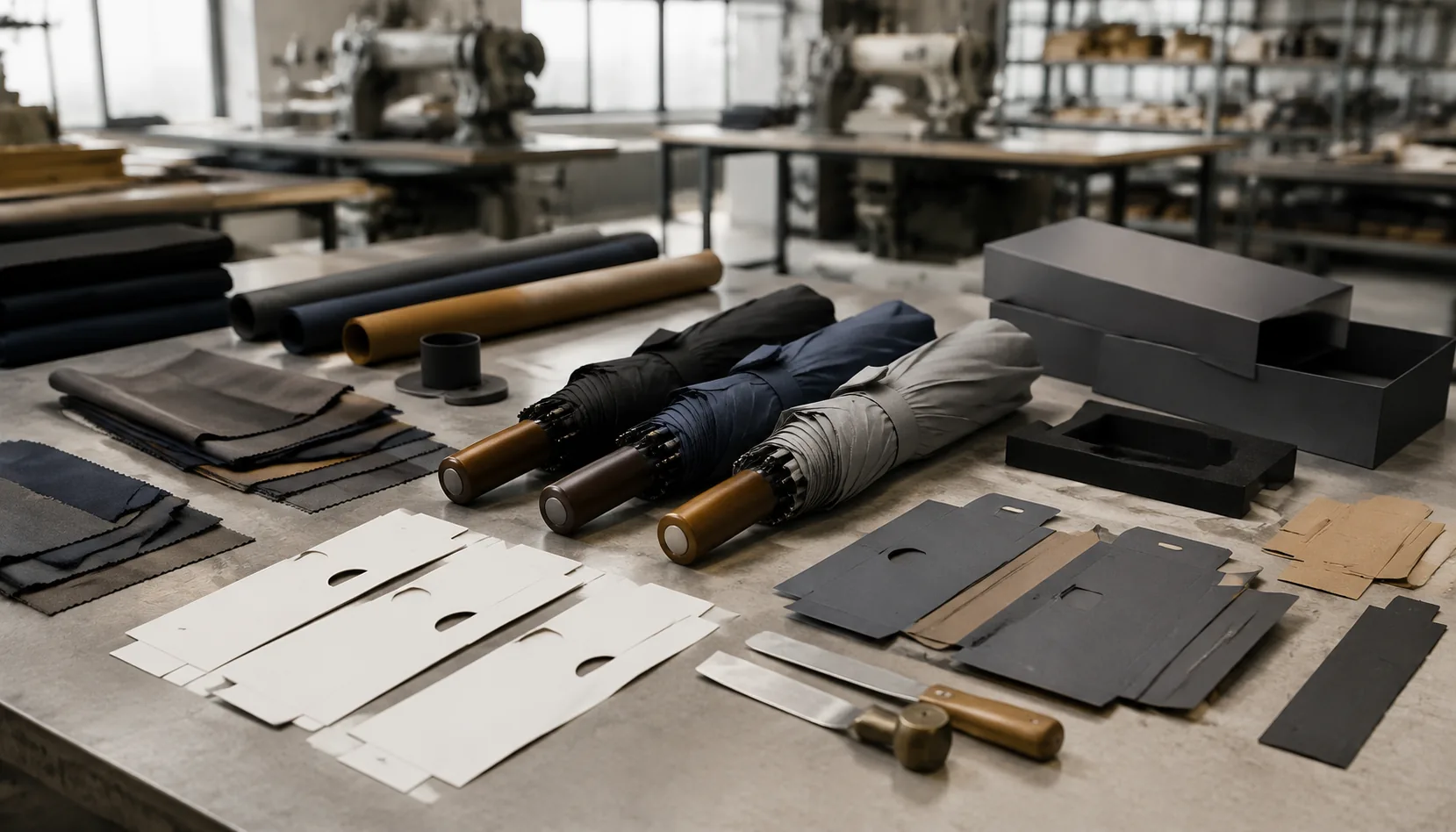
A premium umbrella can lose perceived value in seconds if the customer opens the package and finds a generic tag, unclear care note, or no brand story at all. On our packing line in Songxia, we see how umbrella insert cards help buyers connect handle materials, canopy coating, windproof ribs, warranty terms, and gifting message into one clean presentation that retail teams and end users actually understand.
How Insert Cards Support Brand Perception
A good insert card changes the umbrella from a loose commodity into a handled product without adding carton bulk. For most 21", 23", or 27" umbrellas, a 250–350 gsm card folded to A6 or long-strip format fits under the tie wrap, inside the sleeve, or against the canopy roll without affecting master-carton count. That matters when you are shipping 500–5,000 pieces by FOB Ningbo or DDP air-plus-truck and every cubic centimeter is paid for. Umbrella insert cards can carry the origin story, fabric specification like 190T pongee with Teflon coating, windproof construction such as fiberglass ribs and double-canopy venting, plus simple care notes: dry open, do not store wet, rinse salt after coastal use. These details are small, but buyers read them as proof that the product was engineered, not just decorated.
For corporate umbrella gifting, the branded umbrella insert is often more useful than a louder logo on the canopy. Procurement teams may choose a black 23" auto-open umbrella with 8K fiberglass ribs because it looks safe across departments, but the card can explain the campaign message, QR-code a landing page, show warranty terms, and give the recipient a reason to keep it. We usually recommend matte lamination or uncoated textured stock for premium programs because glossy cards can feel cheap beside a soft-touch handle or 210T pongee canopy. For hotels, the card can state room-use policy, replacement charge, and drying instructions in two languages. For event merchandise, it can identify sponsor hierarchy, date, venue, and care guidance without crowding the umbrella panels.
Retail umbrella presentation depends on fast signals: what size, what mechanism, what protection, and why the price is justified. A card can call out auto-open-close, UPF 50+ coating, POE clear canopy, storm-tested 50+ mph frame, or 16K reinforced ribs more cleanly than a hangtag swinging from the runner. It also reduces returns when it explains that a vented double canopy is supposed to lift slightly in gusts, or that EVA and PVC clear umbrellas may show temporary creasing after tight packing. For gift boxes and sleeves, umbrella gift packaging feels more complete when warranty, care, and brand tone are inside the first touchpoint. Used this way, umbrella insert cards support corporate umbrella gifting, retail shelves, hotel-room placement, and event sales with almost no added weight or assembly time.
Card Content Buyers Should Include
The most useful umbrella insert cards start with what the buyer needs to recognize in three seconds: logo, product name, size, and the reason this umbrella costs more than a giveaway item. Put the brand mark at the top, then a plain product name such as “23-inch Auto-Open Golf Umbrella” or “21-inch Compact UV Umbrella.” If the canopy is tested or specified for sun protection, write “UPF 50+” only when the fabric and coating support it, usually black glue, silver coating, or verified UV-treated pongee. For rain models, name the fabric honestly: 190T pongee for standard retail, 210T pongee for a smoother hand, or POE/EVA/PVC for transparent domes. Good umbrella insert cards do not overload the front panel; they make the product easier to sell at shelf, in a gift box, or during corporate umbrella gifting.
Feature claims should match the frame construction, because this is where many retail complaints begin. Mention fiberglass ribs when the selling point is flexibility and wind resistance; mention steel ribs or a steel shaft when the message is strength, lower cost, or classic durability. If the umbrella uses 8K construction, call it a standard daily frame; if it uses 10K or 16K, position it as reinforced coverage with more support points under the canopy. For double-canopy vented windproof models, the card should say “vented double canopy helps release wind pressure,” not just “stormproof.” Auto-open and auto-open-close mechanisms deserve a line because users notice them immediately, especially on 21-inch and 23-inch folding models. For golf sizes like 27-inch and 30-inch, note coverage diameter, fiberglass shaft options, and whether the model has passed a practical wind-tunnel target such as 50+ mph.
The back of the branded umbrella insert should carry care and service details, not more slogans. Include simple instructions: shake off water before closing, dry open after use, avoid storing wet in the sleeve, and do not force the runner if ribs are caught. For coated fabrics, add “do not machine wash” and avoid aggressive solvents that can damage Teflon, UV, or heat-transfer prints. Reorder details are also worth the space: SKU, color code, PO number if needed, website, QR code, distributor contact, or warranty email. In umbrella gift packaging, this back panel often becomes the only document the recipient keeps, so it should help support teams identify the exact model later. Our standard practice at ZheBrella is to align the insert-card copy with the approved pre-production sample, because AQL 2.5 inspection can catch sewing defects, but it will not fix an exaggerated feature claim printed on 5,000 cards.
Format, Paper Stock, and Finish Choices
The format should match how the umbrella is handled at packing, not just how the card looks on a desk. For compact 21" and 23" auto-open or auto-open-close umbrellas, a postcard insert around 90 x 140 mm slides cleanly into most 190T/210T pongee sleeves without bulging the zipper seam. It is the lowest-risk choice for e-commerce sets because the card stays flat during carton compression. Folded cards, usually 100 x 150 mm or A6, give more space for care instructions, warranty text, QR codes, and brand storytelling, but they need a sleeve with at least 3-5 mm extra width. For 27" and 30" stick umbrellas, a hang-insert tied near the J-handle or straight EVA handle reads better at retail, especially when the canopy is displayed in a bucket. Envelope formats feel more formal for corporate umbrella gifting, but I avoid thick envelopes inside tight sleeves because they create pressure marks on coated pongee.
Paper stock is where many branded umbrella insert projects go wrong. A 250-300 gsm art card is enough for postcard inserts; 350 gsm feels premium but can be too stiff for compact umbrella sleeves, especially when paired with a folded manual or silica gel pouch. For folded cards, 200-250 gsm is usually safer because the crease stays neat and the packer can insert it without fighting spring-back. Recycled kraft or FSC recycled white stock works well for eco programs, but buyers should expect less color brightness than coated C2S art paper. If the card sits against black or navy 210T pongee, I prefer matte-coated stock rather than raw uncoated paper because lint transfer is lower. Our standard practice at ZheBrella is to test the card inside the actual sleeve after sewing, not from a paper mockup, because seam allowance and zipper tape change the usable space.
Finish should support the retail umbrella presentation without making packing slower. Matte lamination protects ink from sleeve friction and humidity during FOB ocean shipments, but it adds stiffness, so keep laminated folded cards below 250 gsm unless the sleeve is roomy. Soft-touch lamination looks expensive but shows fingerprints on dark artwork; for event gifting, standard matte is more reliable. Foil stamping works best on logos, monograms, and small holiday messages, while full-coverage metallic areas tend to crack on folded spines. Embossing or debossing needs 300 gsm or heavier paper to show clean depth, so it suits postcards, hang-inserts, and envelope cards better than tight compact inserts. A premium branded umbrella insert can combine matte lamination with one foil color and a blind emboss, but keep the total card thickness under control if it must fit beside a 190T/210T pongee sleeve, wrist strap, and instruction leaflet in one polybag.
Packing Method and Retail Handling
The safest position for umbrella insert cards depends on the packing format, not on what looks best in a photo sample. For a basic 21" or 23" folding umbrella in a pongee sleeve, the card should sit inside the sleeve on the flat panel side, never forced against the folded canopy edge where ribs and tips create pressure points. For stick umbrellas, especially 27" and 30" golf models, I prefer a card under a belly band or clipped to the handle strap because the long canopy roll can shift during carton vibration. In umbrella gift packaging, such as kraft window boxes or rigid magnetic boxes, the branded umbrella insert can be placed above the folded umbrella with a thin tissue separator, or in a die-cut pocket if the buyer wants a cleaner retail umbrella presentation. The key is to keep the card visible at opening while avoiding extra compression on the canopy folds.
Ink transfer is the problem buyers notice too late, usually after cartons have spent 25 to 35 days in ocean freight with humidity changes. Fresh offset printing, heavy black backgrounds, metallic ink, and soft-touch lamination can mark light 190T or 210T pongee if the insert touches the fabric directly. For white, beige, or pastel canopies, we specify full drying time before packing, matte or gloss lamination with stable curing, and a PE or tissue barrier when the card is inside the sleeve or gift box. PVC, POE, and EVA transparent umbrellas need even more caution because plastic can pick up ink, coating residue, or pressure shine. Our standard practice at ZheBrella is to run a simple rub test and a 24-hour compression check before mass packing, especially for corporate umbrella gifting orders where the logo canopy and insert card are both printed.
Consistent presentation is built at the packing table, then protected by the carton layout. Workers need a sample photo showing exact card orientation: logo facing front, QR code readable, handle strap aligned, belly band seam hidden at the back. If one line packs cards inside sleeves and another clips them to straps, the retail set will look mixed when distributors open inner cartons. We normally pack 12 or 24 pieces per inner carton depending on size, then into 48 or 60-piece master cartons for compact models; golf umbrellas may run 12 to 24 pieces per master carton because handle and rib length limit stacking. Dividers or alternating handle direction help reduce pressure marks. For AQL 2.5 inspection, umbrella insert cards should be checked together with sleeve cleanliness, belly band tightness, barcode position, and carton drop resistance, because presentation failures often come from handling, not printing.
Sampling, Inspection, and Commercial Planning
Put the insert card into the pre-production sample, not just the final shipment. I have seen too many nice 23" auto-open umbrellas delayed because the buyer approved the canopy print but never checked how the branded umbrella insert sat inside the sleeve or gift box. For umbrella insert cards, the sample should show the real paper stock, coating, trimming tolerance, barcode area, warning text, QR code, and exact placement method: loose in sleeve, tucked under strap, inserted in a kraft box, or banded with ribbon for umbrella gift packaging. If the card carries Pantone colors, ask for a drawdown or digital proof plus one physical printed sample under normal factory light, because matte art paper and glossy coated paper shift color differently. Our standard practice at ZheBrella is to lock the insert card together with the canopy, handle, sleeve, and carton mark before mass production starts.
Commercially, insert cards are cheap per piece but expensive to fix after packing. For most custom umbrella programs, MOQ follows the umbrella MOQ: often 500–1,000 pieces for promotional 21" or 23" models, and 1,000–3,000 pieces for retail programs with custom boxes, hangtags, and full retail umbrella presentation. Lead time normally adds 3–5 days for artwork confirmation and card printing, while total production may run 25–35 days after sample approval, depending on frame type, fabric, and printing method. Packing lists should spell out whether cards are counted as individual accessories or included inside each unit pack. For FOB Ningbo or Shanghai, carton counts must match the buyer’s warehouse receiving format; for DDP, we also check outer carton dimensions, gross weight, HS code consistency, and Amazon or retailer carton-label rules if applicable.
Inspection should treat the card as part of the sellable product, not as decoration. Under AQL 2.5, we check print color deviation, blurred logos, dirty coating, wrong language version, trimming burrs, bent corners, missing cards, duplicate cards, and placement errors. A corporate umbrella gifting order may pass the rain test, rib opening test, and canopy stitching check but still fail the buyer’s presentation standard if 3% of sleeves have no card or the card faces backward. For carton audits, I like sampling across beginning, middle, and end-of-line cartons because insert mistakes often happen when packing staff switch from manual umbrellas to auto-open-close models or from 8K steel ribs to 10K fiberglass frames. The approved golden sample should stay at the packing table, and the QC checklist should include one line for card presence and one line for card position.
Frequently Asked Questions
Should insert cards list technical umbrella specifications?
Yes, when the specs support the brand promise. For example, note fiberglass ribs for wind resistance, UPF 50+ coating for sun protection, or 210T pongee for a more premium canopy handfeel.
Can insert cards be packed with every umbrella in a bulk promotional order?
Yes, but the packing method should be confirmed during sampling. Cards placed inside sleeves or gift boxes are easier to control than loose cards added during event kitting.
What information should be printed on an umbrella insert card for retail sales?
Most buyers include the brand logo, umbrella model name, key features, open/close instructions, and care notes. For retail compliance, many also add barcode space, country of origin, and recycled material or warranty details if applicable.
Can umbrella insert cards be customized for different sales channels?
Yes. Retail versions often focus on product features and shelf appeal, while corporate gift versions usually emphasize brand message and presentation. A common print size is 85 x 55 mm or A6, but the layout can be adjusted to the box size and folding style.
What is a typical MOQ and lead time for printed umbrella insert cards?
For custom printed cards, MOQ is often 500 to 1,000 pieces per design, depending on paper stock and finishing. Lead time is usually 7 to 15 days after artwork approval, with faster turnaround possible for simple one-color printing.
Looking to Launch Your Custom Umbrella Line?
ZheBrella is a Zhejiang-based OEM/ODM umbrella manufacturer with 17 years of export experience. Free design, low MOQ from 100 pieces, windproof construction, full-color print.
Get Free Quote Now »People Also Search For
Related Articles
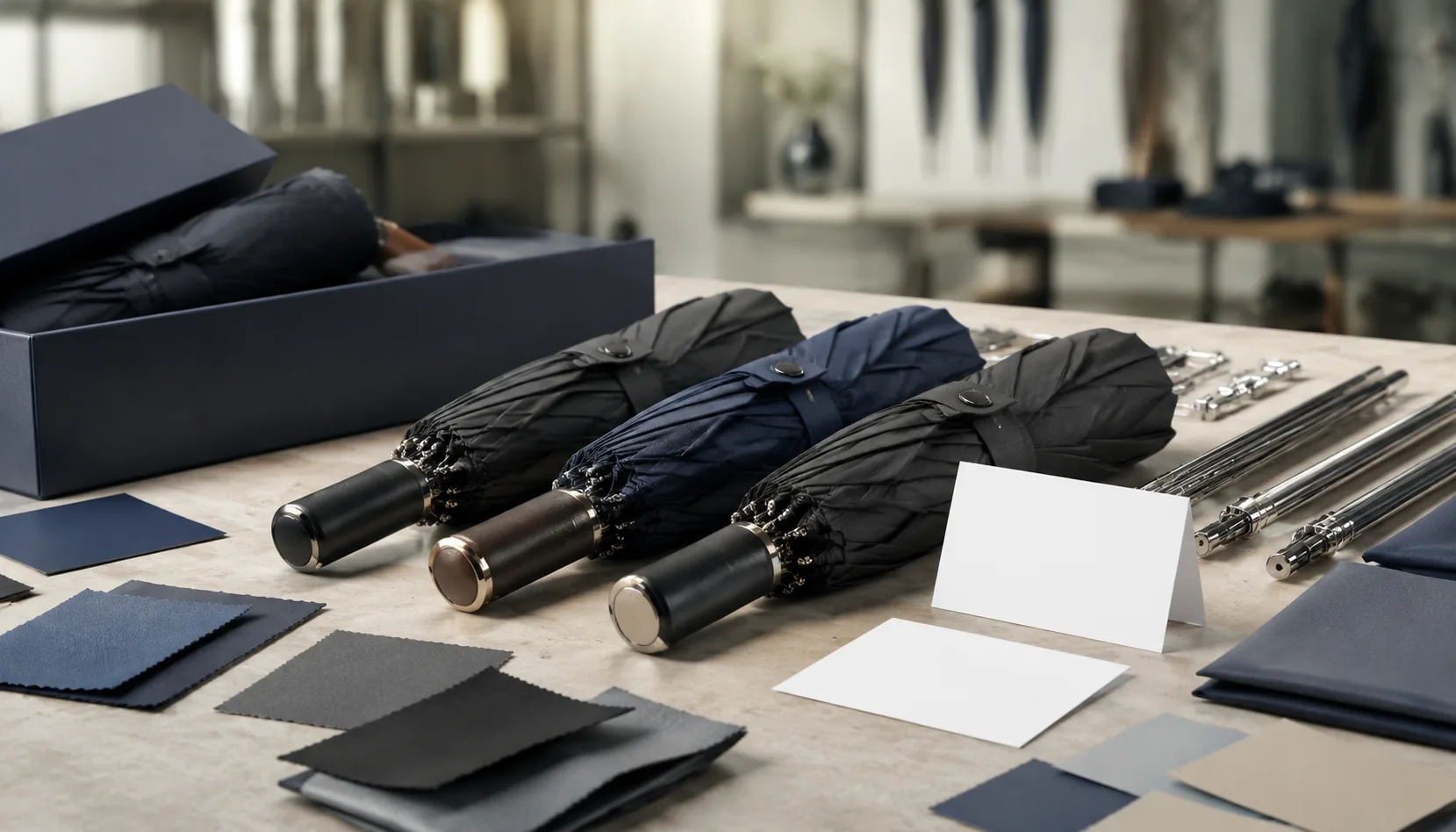
Branded Umbrella Insert Cards for Premium Gift Programs
Plan branded insert cards that explain features, reinforce gift value, and reduce after-sales questions for corporate an...
Read More »
Branded Umbrella Ribbon Wraps for Premium Gift Programs
Design ribbon wraps for premium umbrella gifts with correct materials, logo placement, packing method, and QC checks for...
Read More »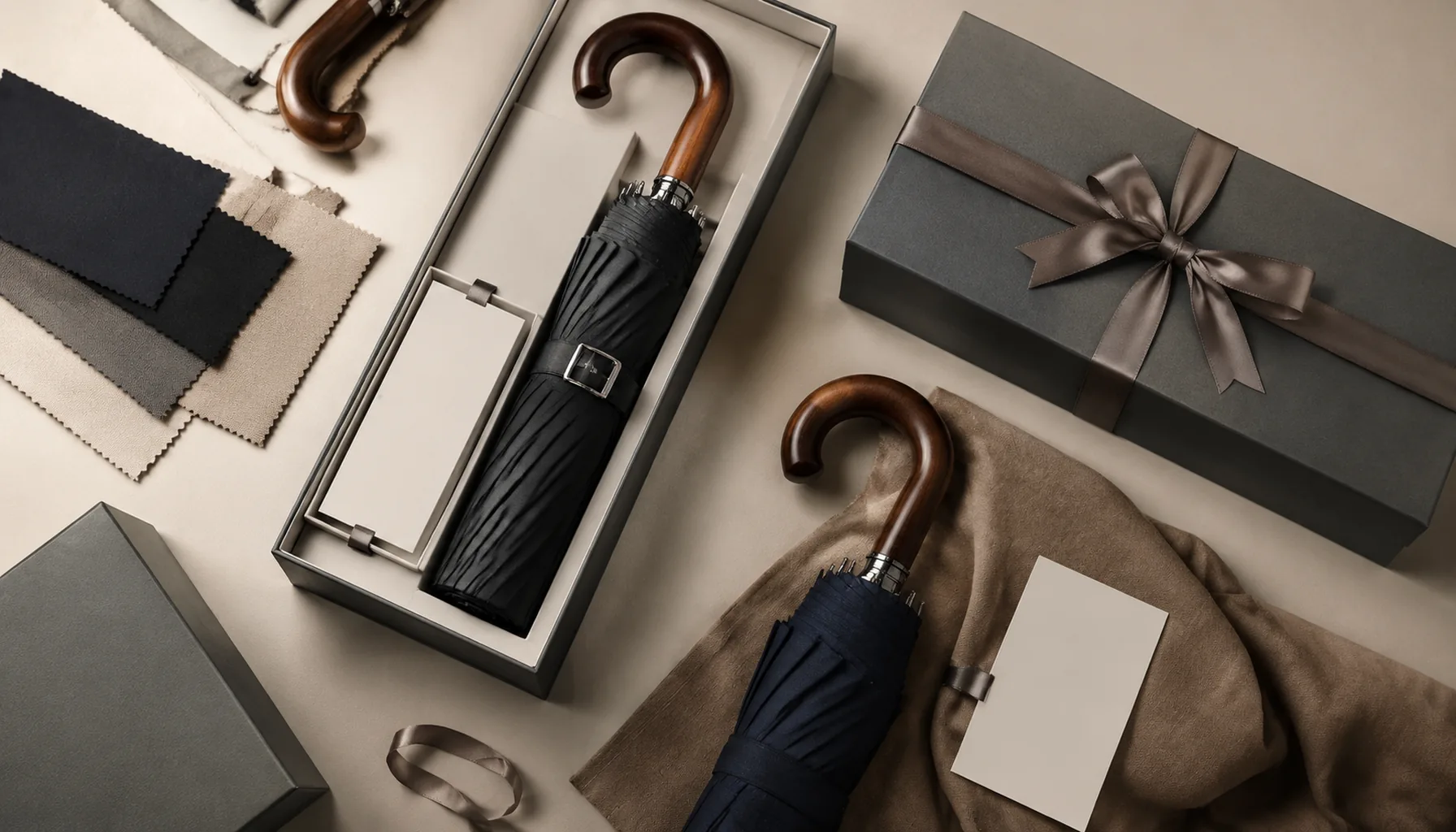
Branded Care Cards for Premium Umbrella Gift Programs
Use branded care cards to raise perceived gift value, explain umbrella features, reduce misuse, and keep corporate gifti...
Read More »