REACH and Prop 65 Compliance for Umbrella Imports
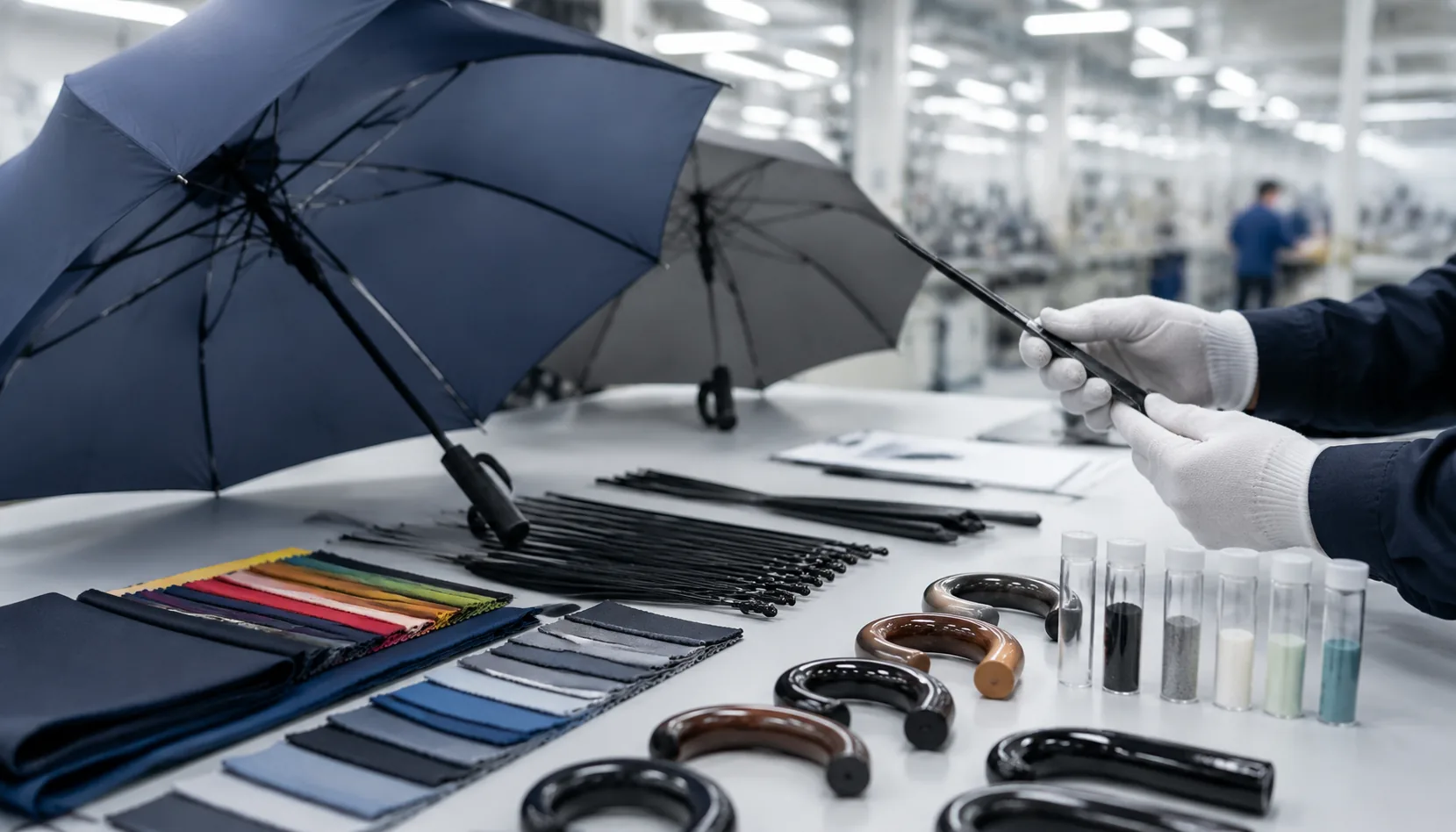
For umbrella buyers, chemical compliance problems rarely start with the finished product—they start in the fabric roll, coating batch, plated rib, plastic handle, or logo ink chosen weeks before shipment. On our Songxia factory floor, umbrella import compliance means checking REACH and Prop 65 exposure points early, especially dyes, PU/PVC coatings, nickel-plated parts, tips, handles, and printed panels, before a supplier’s low-cost material choice becomes a customs delay, relabeling issue, or rejected order.
Identify Which Umbrella Parts Carry Compliance Risk
The highest compliance risk is usually not the umbrella frame; it is the soft and coated materials that buyers treat as decoration. Polyester pongee 190T/210T can carry azo dye, disperse dye, formaldehyde, or heavy-metal concerns depending on dye house control. PU, black rubberized, and silver UV coatings need separate review because solvents, PAHs, organotins, and restricted phthalates can appear in coating chemistry even when the base fabric passes. For REACH umbrella testing, I prefer cutting the canopy into real material groups: printed area, unprinted dyed fabric, coating layer if separable, and any contrasting binding tape. A UPF 50+ silver-coated golf umbrella may look simple, but the silver coating and edge trim are different chemical systems. That is why umbrella import compliance should start at BOM level, not finished-product appearance.
PVC details deserve special attention because they are common on clear POE/PVC dome umbrellas, logo patches, zipper bags, hang tags with soft loops, and decorative sleeves. PVC often triggers phthalate screening under REACH SVHC expectations and Prop 65 umbrella requirements, especially for DEHP, DBP, BBP, DINP, DIDP, and DNHP. Plastic handles are another risk point: ABS, PP, EVA foam, rubberized TPR, soft-touch coatings, and painted finishes should not be grouped as one “plastic” line item. I have seen otherwise clean 23-inch auto-open umbrellas fail chemical testing umbrellas programs because the soft grip contained restricted phthalates while the 190T pongee canopy was clean. Ferrules, tips, end caps, runner buttons, wrist straps, and storage sleeves must be listed by material and color, because black masterbatch, recycled plastic, and soft PVC trims carry different risk profiles.
Metal shafts, ribs, springs, and plated parts are lower risk than PVC or coatings, but they are not zero-risk. Nickel release, lead in low-grade alloy decorations, cadmium in pigments on painted metal tips, and chromium issues on plating can matter for retail programs and California distribution. Printed logo inks also need their own line in the test plan: screen-print plastisol, heat-transfer film, reflective ink, sublimation dye, and silicone ink have different restricted-substance profiles. For compliant promotional umbrellas, our standard practice at ZheBrella is to freeze the approved component list before mass production, then test representative worst-case colors and materials rather than one finished sample chosen at random. Mixed-material products need component-level review because a single umbrella combines textile, coating, plastic, metal, adhesive, ink, and packaging. If one small PVC logo patch fails Prop 65 limits, the entire shipment can become commercially blocked even when the canopy, ribs, and handle pass.
Know the Main REACH and Prop 65 Concerns
The biggest mistake in umbrella import compliance is treating an umbrella as one material. A 23" auto-open promotional umbrella can include 190T pongee with a PU or Teflon-type water-repellent finish, PVC print ink, a coated steel shaft, fiberglass or steel ribs, plastic runner, rubberized handle, nickel-plated snap, sewn label, and polybag. Each part has a different chemical risk. For EU shipments, REACH umbrella testing usually focuses on SVHC screening plus restricted phthalates in soft PVC/TPU grips, printed logos, coated tips, and clear POE/PVC canopies. For U.S. California distribution, Prop 65 umbrella requirements often point buyers toward lead, cadmium, phthalates, and sometimes PAHs in black rubber or soft-touch coatings. I tell buyers to map every material before quoting, because a low-risk 210T pongee canopy can still fail because the wrist strap bead, handle coating, or heat-transfer logo was changed after sampling.
Lead and cadmium are most often found in pigments, cheap metal plating, zipper pulls on umbrella sleeves, printed labels, and decorative charms, not in the frame itself when normal steel or fiberglass is used. PAHs are a concern in black EVA, rubberized handles, soft-touch sprays, and recycled plastics; the smell test is not a lab method, but a strong oily odor from a handle is enough reason to quarantine that lot. Azo dyes matter for dyed fabric, seam binding, and printed panels, especially dark red, navy, and black. Nickel release can apply to exposed metal parts that contact skin, such as snaps, ferrules, and decorative handle rings. Formaldehyde is less common on basic pongee umbrellas than on some treated textiles, but it can appear in resin finishes, labels, and packaging components, so chemical testing umbrellas by component is safer than testing a fully assembled sample only.
For sourcing preparation, lock the bill of materials before mass production and tell the factory which market the goods will enter: EU, California, or both. Our standard practice at ZheBrella is to keep approved material swatches, ink formulas, handle resin codes, and plating samples tied to the order number, then submit worst-case parts for screening before the 300-piece pre-production run. If the order is for compliant promotional umbrellas with a printed logo, test the exact logo method—screen print, heat transfer, or sublimation—because ink and adhesive layers can change the result. Ask labs for a practical package covering phthalates, heavy metals, PAHs, azo dyes, nickel release, formaldehyde, and REACH SVHC where relevant; do not rely on an old supplier certificate from a different color or handle. This is not legal advice, but it is solid production control: define risk parts, test early, keep traceable records, and do not approve bulk materials by appearance alone.
Match Test Plans to Markets and Buyers
The test plan should follow the sales market, not the factory’s convenience. For EU shipments, buyers often ask for REACH umbrella testing focused on SVHC screening in the parts people actually touch: plastic handles, soft-touch coatings, printed logos, PVC or POE panels, dyed 190T/210T pongee, sleeve fabric, labels, and sometimes metal plating on tips or shaft hardware. A basic umbrella import compliance file normally includes a bill of materials, material supplier declarations, color/print recipes, and third-party lab reports tied to the exact production lot. If a buyer changes from black pongee to a bright sublimation print, or from EVA to transparent PVC, the old report may not protect the new order because pigments, plasticizers, and coating chemistry change.
California is a different problem because Prop 65 umbrella requirements are warning-risk driven, not a simple pass/fail like many buyers expect. For umbrellas, the usual review points are phthalates in PVC/soft plastic parts, lead or cadmium in coatings and metal finishes, nickel release on exposed metal parts, and certain solvents or flame-retardant residues if special treatments are used. Chemical testing umbrellas for California retail should be planned before mass production, especially for promotional orders using heat-transfer logos, rubberized handles, colored tips, or low-cost PVC canopies. A warning label may solve one commercial issue, but it can damage a retail brand’s shelf appeal, so serious importers test early instead of arguing after cartons arrive in Los Angeles.
Large retailers and promotional-product distributors often go beyond legal minimums with their own restricted substance lists, barcode-level traceability, and pre-shipment document checks. We see protocols that require AQL 2.5 inspection plus chemical reports less than 12 months old, factory material declarations, CPSIA-style tracking labels for youth umbrellas, and separate approval for every 8K/10K frame, 23-inch auto-open model, or 30-inch golf umbrella SKU. For compliant promotional umbrellas, our standard practice at ZheBrella is to lock the approved BOM before printing, keep retained samples from bulk production, and match lab testing to the destination: REACH/SVHC for EU, Prop 65 review for California, and retailer RSL testing when the purchase order demands it. That discipline prevents a $2 umbrella from becoming a container-level compliance dispute.
Control Materials Before Bulk Production
The safest way to manage umbrella import compliance is to freeze every contact material before bulk cutting starts, not after the goods are packed. For a standard promotional umbrella, I want the approved 190T or 210T pongee roll number locked in the BOM, including color, PU/Teflon/UV coating type, WR finish, and any backing treatment. The same control applies to POE/PVC/EVA panels on clear umbrellas, ABS or rubberized handle resin, plated steel shafts, aluminum tips, nickel-colored rivets, fiberglass ribs, and all screen, heat-transfer, or sublimation inks. A supplier declaration is useful only when it names the exact material grade and chemical limits; a vague “eco-friendly” statement is not a compliance document.
REACH umbrella testing and Prop 65 umbrella requirements both fail most often because someone substitutes a cheaper component midstream. I have seen black handle resin changed from virgin ABS to recycled mixed resin, which can trigger PAHs or lead concerns, and low-cost metal plating can introduce nickel release or cadmium risk. For California-bound orders, chemical testing umbrellas should cover likely exposure points: handle, runner, sleeve coating, canopy print area, tips, and any soft PVC label or strap. For EU orders, we normally screen for SVHCs under REACH, restricted phthalates where plasticized parts are used, AZO dyes for dyed fabric, and heavy metals in coatings or plated accessories.
Our standard practice at ZheBrella is to keep a signed material approval sheet, supplier declarations, and retained reference samples before issuing the cutting ticket. The reference set should include a 20 x 20 cm canopy swatch from the approved pongee lot, printed color strike-off, handle, shaft finish, rib sample, strap, label, and coated fabric if UPF 50+ or water-repellent performance is claimed. These samples stay with QC so incoming materials can be checked visually and, when needed, sent for chemical testing before mass assembly. This is how compliant promotional umbrellas stay compliant: the factory does not rely on final AQL 2.5 inspection to catch a chemical issue that should have been controlled at purchase order and material receipt stage.
Combine Compliance Testing With Final Inspection
Lab reports and final inspection solve two different problems, and mixing them up is where umbrella import compliance usually fails. REACH umbrella testing or Prop 65 umbrella requirements are about the chemistry of specific materials: 190T/210T pongee canopy fabric, PU or Teflon water-repellent coatings, PVC/POE/EVA panels, rubberized handles, plastic tips, ink layers, heat-transfer logos, and metal plating on shafts or caps. A clean lab report can show restricted phthalates, lead, cadmium, PAHs, azo dyes, nickel release, or SCCPs are within limits, but it does not prove the umbrella opens smoothly, the logo is centered, or the carton count is correct. For promotional orders, we normally lock the tested material batch before mass production, especially when the canopy is printed or coated after approval. If a supplier changes ink, handle resin, coating mill, or PVC supplier after testing, the report no longer protects the buyer in a practical sense.
AQL 2.5 inspection is the physical gate at the end of production, not a substitute for chemical testing umbrellas. During final inspection, the inspector checks workmanship, function, labeling, packing, and quantity against the approved sample and purchase order. For a 23 inch auto-open straight umbrella, that means opening and closing cycles, spring response, shaft alignment, rib rivets, runner lock, tip stitching, seam tension, ferrule fit, handle scratches, canopy stains, and print registration. For double-canopy vented windproof models, inspection also checks vent overlap, tie-down points, fiberglass rib bonding, and whether the canopy flips back cleanly after inversion. Carton checks matter too: inner polybag warnings, Prop 65 label placement when required, UPC/FNSKU accuracy, master carton marks, gross weight, carton dimensions, and packed quantity. A lab will not catch a mixed carton with 47 units instead of 48, or a retail hangtag printed with the wrong importer address.
The best workflow is to combine both controls before shipment: test the risk materials early, then inspect finished goods when at least 80% are packed and 100% are completed. For compliant promotional umbrellas, we suggest chemical testing on the actual production components, not just a generic fabric swatch from a supplier’s archive. High-risk areas are soft PVC handles, clear POE domes, EVA trims, black rubber coatings, metallic inks, and low-cost plated parts; low-risk does not mean no-risk, but it helps decide whether to run a full REACH SVHC screen, California Proposition 65 heavy metals/phthalates panel, or a narrower confirmation test. Our standard practice at ZheBrella is to keep the lab report, approved pre-production sample, bulk material records, and AQL 2.5 inspection report in one shipment file. That file gives buyers a defensible umbrella import compliance trail covering chemistry, construction, labeling, cartons, and quantity before FOB Ningbo/Shanghai or DDP delivery is released.
Frequently Asked Questions
Can one umbrella test report cover every color?
Not always. Different fabric dyes, coatings, handle plastics, or print inks can change the risk profile, so buyers should confirm color and material coverage with the lab.
Is compliance testing needed for promotional umbrellas?
Yes, especially if umbrellas are distributed in the EU, California, or through major retailers. Promotional use does not remove chemical safety obligations.
Which umbrella components usually need chemical testing for REACH and Prop 65?
Common test points include polyester or pongee fabric dyes, PU/PVC coatings, plastic handles, rubberized grips, metal shafts, tips, runners, snaps, and printed logo inks. For mixed-material umbrellas, buyers typically test both fabric and high-contact components such as handles and metal parts.
Can one test report cover both REACH and Prop 65 requirements?
A single lab submission can often include both REACH SVHC screening and Prop 65 substance checks, but the report must list the applicable regulations and test methods separately. Importers should confirm the destination market, material list, and risk substances before sampling.
When should importers request chemical compliance documents from an umbrella factory?
Request compliance requirements before sampling or mass production so the factory can select compliant fabric, coatings, plastics, and inks. For OEM orders, allow about 7–10 business days for third-party chemical testing after final materials are confirmed.
Looking to Launch Your Custom Umbrella Line?
ZheBrella is a Zhejiang-based OEM/ODM umbrella manufacturer with 17 years of export experience. Free design, low MOQ from 100 pieces, windproof construction, full-color print.
Get Free Quote Now »People Also Search For
Related Articles

Umbrella Compliance Testing for US and EU Import Programs
A practical compliance checklist for umbrellas sold in the US and EU, covering materials, labeling, safety tests, and im...
Read More »
Umbrella Import Compliance for U.S. and EU Buyers Checklist
Know which fabric, plastic, and coating tests matter for U.S. and EU imports so you can clear customs, avoid holds, and ...
Read More »
Branded Umbrellas for Luxury Beauty and Fashion Launches
Source premium umbrellas for beauty and fashion launches with fabric, color, logo, packaging, AQL, and lead-time choices...
Read More »