Repeat Pattern Umbrella Branding for Retail and Event Programs
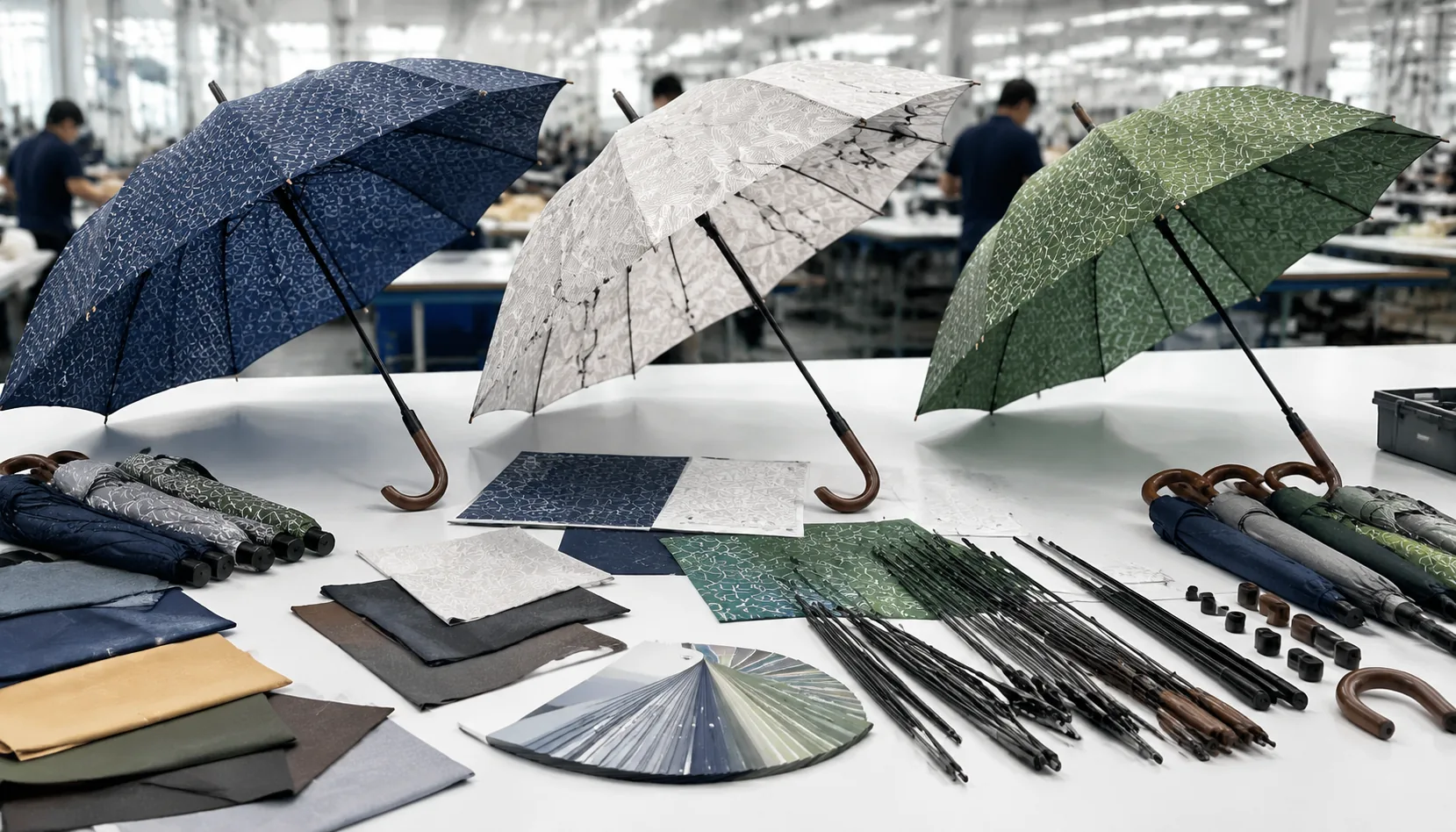
Retail and event buyers often approve a neat repeat logo on screen, then discover the real challenge starts when that pattern has to cross eight or more cut panels without drifting at the seams. On our Songxia factory floor, branded umbrella pattern printing is controlled through rib-count planning, fabric shrinkage checks, panel cutting marks, and first-piece registration before bulk sewing. Getting those steps right protects the visual rhythm, MOQ cost, and final QC pass rate.
When Repeat Patterns Beat a Single Logo
Repeat patterns work best when the umbrella is part of the product story, not just a logo carrier. For retail fashion drops, museum shops, and design-led gift programs, one oversized mark on a single panel often looks like cheap promotional stock. An all over umbrella pattern can turn a 23" stick umbrella or 21" folding umbrella into a shelf-ready accessory, especially on 190T or 210T pongee where fine line work prints cleanly by heat transfer or digital sublimation. I usually recommend keeping the repeat scale between 35 mm and 90 mm depending on rib count; on 8K frames, large motifs can land awkwardly across seams, while 16K umbrellas can carry smaller repeats with a more premium look. This is where branded umbrella pattern printing earns its cost: the customer sees a designed object first, and the brand second.
For sports events, music festivals, and sponsor merchandise, repeat logo umbrellas solve a common problem: sponsors want visibility, but fans do not want to carry a billboard after the event. A tiled team crest, festival icon set, sponsor monogram, or venue map detail gives better distance recognition than a single chest-size logo, because every panel contributes to the visual hit. On a crowded concourse or rainy outdoor queue, a 27" golf umbrella with alternating logos across 8 panels reads from multiple angles, while a single-panel print disappears as soon as the umbrella turns. For event umbrella merchandise, we also avoid placing critical artwork too close to the rib seam allowance; 8 to 12 mm can vanish during sewing and top-stitching. Good prepress means the repeat still looks intentional after cutting, not broken by the frame.
Retail umbrella branding also benefits from pattern because it creates a stronger merchandising block in cartons, fixtures, and online thumbnails. A museum shop can repeat a textile fragment or architectural line drawing; a fashion label can run seasonal icons; a stadium store can use team colors without making every item look identical. For branded umbrella pattern printing, our standard practice at ZheBrella is to confirm one strike-off before bulk cutting, then inspect print registration, color tolerance, canopy centering, and seam alignment under AQL 2.5. If the order uses sublimation on white pongee, MOQ is usually easier than screen printing multiple spot colors, but dark canopies may need heat transfer or screen printing for opacity. The right pattern makes the umbrella feel collectible, which is exactly what retail and event buyers need when unit price, shelf impact, and post-event use all matter.
Pattern Scale, Spacing, and Panel Geometry
Rib count changes the artwork more than most buyers expect. An 8K umbrella has eight wider triangular panels, so a logo repeat has more open fabric to breathe and fewer seam interruptions; it is usually the better choice for bold retail umbrella branding where the mark must read from 10–15 feet away. A 16K umbrella uses sixteen narrower panels, which creates a rounder canopy and a premium look, but each panel is slimmer at the top and every motif crosses more stitched edges. On 190T or 210T pongee, I like repeat logo umbrellas to use motifs around 35–70 mm wide on 8K canopies and 20–45 mm on 16K canopies, depending on logo complexity. If the motif has thin text, outlines, or registration-critical borders, keep it larger and reduce the repeat density. Branded umbrella pattern printing fails fastest when the artwork is scaled like stationery instead of a curved, segmented product.
Panel geometry also decides where you need safe zones. The rib seam is not just a printed line; it includes fabric folding, stitching tolerance, and slight tension differences after the canopy is tied to the frame. Our standard practice at ZheBrella is to keep critical logo elements at least 8–12 mm away from rib seams on 8K umbrellas and 5–8 mm on 16K umbrellas, with more allowance for PVC, POE, or EVA because transparent films can stretch and show seam distortion more clearly. At the center cap and ferrule area, avoid tiny icons or text within roughly 25–35 mm because the fabric is compressed, punched, and covered by hardware. Near the outer hem, leave 15–20 mm for cutting, rolling, and sewing. This matters for an all over umbrella pattern because even a 2 mm panel shift can make diagonal stripes or checker repeats look crooked.
Seam alignment should be a design decision, not an accidental promise from the factory. If the artwork uses small dots, scattered icons, florals, camouflage, or tone-on-tone branding, I usually recommend intentionally breaking the repeat at seams; it hides normal cutting tolerance and keeps AQL 2.5 inspection focused on real defects, not impossible perfect matching. If the design needs continuous stripes, radial bursts, large monograms, or a centered hero logo, then the CAD pattern must be built panel by panel with numbered panels, grain direction, bleed, and a printed strike-off approved before bulk cutting. For event umbrella merchandise, broken repeats are often safer because deadlines are tight and the umbrellas are viewed in crowds, not under a lightbox. For premium retail programs, aligned seams can work, but buyers should budget extra sampling time, tighter cutting control, and higher rejection risk, especially on 16K double-canopy vented windproof styles where two fabric layers must sit cleanly over more ribs.
Selecting Fabric and Print Process
For repeat logo umbrellas, fabric choice shows up first in edge definition. A 190T pongee canopy is the normal promotional baseline: light, cost-controlled, and good enough for 1-color or 2-color repeats where the logo is not too small. But when the pattern uses thin outlines, small type, or tight spacing across eight panels, 210T pongee holds the print cleaner because the weave is denser and the face is smoother. On the cutting table, 210T also moves less under the knife, so panel-to-panel registration is easier to control before sewing. For retail umbrella branding, I normally push buyers toward 210T if the umbrella will sit in a store fixture or be photographed for e-commerce; 190T is acceptable for event umbrella merchandise where budget and volume matter more than close-up pattern sharpness.
Screen printing is still the most reliable process for simple all over umbrella pattern work: one logo, one or two spot colors, repeated at fixed spacing. It gives strong opacity on navy, black, red, and other dark 190T/210T pongee, and the setup cost spreads well when the order is 1,000 pieces or more. The limitation is color count and registration. Each screen adds cost, and very fine multi-color repeats can drift slightly across seams, especially on 8K and 10K umbrellas where every panel is printed separately before assembly. Digital printing is better for gradients, illustrated artwork, photographic textures, and complex branded umbrella pattern printing, but buyers should expect a different hand feel and should approve strike-offs under daylight and indoor lighting before bulk production.
Coatings need to be decided before artwork approval, not after. A standard water-repellent finish is compatible with most screen and digital processes, but heavy Teflon-style treatments can reduce ink adhesion if the factory prints after coating instead of before it. UPF 50+ canopies are more sensitive because the UV layer, backing color, and fabric density all affect both protection and print appearance. Silver or black UV backing improves shade performance, but it can make the canopy stiffer and may slightly dull color on the outside face. Our standard practice at ZheBrella is to test branded umbrella pattern printing with the exact coating stack, then run a wet rub, tape pull, and rain-spray check before confirming bulk. That avoids the common mistake: approving a beautiful pattern on uncoated fabric, then discovering the production canopy looks flatter or fails adhesion after finishing.
Prototype Checks Before Bulk Production
Prototype approval should start on screen, but it cannot finish there. For repeat logo umbrellas, we first build a CAD canopy map with each panel shown at actual cut size, including seam allowance, rib positions, top notch, and the center cap area. On an 8K 23" umbrella, the artwork crosses eight triangular panels, so a pattern that looks balanced on a flat square repeat can crowd badly near the tips or disappear under the ferrule. I check the all over umbrella pattern at 100% scale, then again as a reduced top-view mockup, because buyers usually judge the open umbrella from 6 to 10 feet away. This is where branded umbrella pattern printing mistakes are cheapest to catch: logo spacing, rotation, panel-to-panel continuity, and whether a large mark bends awkwardly across a seam. For retail umbrella branding, I also confirm barcode labels, hangtag position, and whether the handle logo competes with the canopy print.
The strike-off fabric is the first real color test, and I do not trust PDF color alone. A 190T pongee strike-off, a 210T pongee strike-off, and a POE or EVA clear canopy sample can all shift the same Pantone target differently after sublimation, heat transfer, or screen printing. Dark navy, warm gray, and corporate red are the colors that most often move after waterproof coating, especially if a Teflon finish or UPF 50+ coating is added. Registration must be checked with a ruler, not just by eye: for tight repeat patterns, I want logo placement within about 2 mm across the printed panel and no visible ghosting at the repeat join. On event umbrella merchandise, where photos are shared under bright venue lighting, we also inspect for ink strike-through, pinholes, moiré in fine patterns, and whether white logos stay clean after heat pressing.
One full umbrella sample is mandatory before bulk production, because the sewing line changes what the print shop approved. After cutting and stitching, the canopy tension can stretch logos along the rib line, flatten circles into ovals, or pull a diagonal repeat off balance. Our standard practice at ZheBrella is to review one finished sample open and closed, with photos from the top, four side angles, underside, handle, sleeve, and carton mark before releasing the PO to bulk. For branded umbrella pattern printing, the key question is not only “is the logo sharp,” but whether the pattern looks centered when the umbrella is open and held normally. I also check rib count and frame type at this stage: a 10K fiberglass windproof frame with a double-canopy vent will break up artwork differently than a basic 8K steel manual frame. Once the sample is signed off, the inspection checklist should lock AQL 2.5 criteria for color shift, registration, logo distortion, seam alignment, and pattern balance.
Production Controls, MOQ, and Delivery Terms
Production control for repeat graphics has to start before the canopy panels reach sewing, because an all over umbrella pattern exposes small mistakes that a single-panel logo can hide. For branded umbrella pattern printing, we lock the approved strike-off, Pantone reference, fabric lot, and panel nesting direction before bulk cutting. During in-process QC, inspectors check seam alignment at every rib line, especially on 8K and 10K frames where logo spacing can drift if the cutter saves fabric too aggressively. For repeat logo umbrellas, I prefer a 3–5 mm tolerance at panel joins for promotional work and tighter control for retail umbrella branding where the umbrella sits on shelf next to identical units. Final inspection follows AQL 2.5 for major defects, with critical checks covering broken tips, loose ferrules, sharp burrs, misprinted panels, oil stains, and frame imbalance. We also run open-close cycle checks, usually 20 cycles for manual and auto-open styles, and added spot checks for auto-open-close mechanisms because spring force changes after packing compression.
Color consistency must be controlled by lot, not by memory or a screen photo. Pongee 190T and 210T absorb ink differently, and coated fabrics such as Teflon-finished polyester or UPF 50+ silver-backed panels can shift color under heat-transfer or sublimation. Screen printing is stable for one- or two-color repeats, but each mesh setup and ink mix needs a retained sample, wet-rub check, dry-rub check, and visual review under D65 light. Digital printing is better for gradients, full-color event umbrella merchandise, and small seasonal programs, but the buyer should approve a production file with repeat spacing, logo scale, and panel orientation marked clearly. At ZheBrella, our standard practice is to separate first-article approval from bulk inspection so a nice pre-production sample does not become an excuse for weak line control. If retail packaging is involved, carton drop resistance, barcode readability, hangtag position, and polybag warning text should be inspected together with the umbrella, not after the goods are sealed.
MOQ depends heavily on the print method and the fabric purchase, not just the factory’s willingness to take an order. Screen-printed repeat logo umbrellas usually make sense from about 500–1,000 pieces per design because screens, ink matching, and setup loss are real costs; digital printing can start lower, often around 100–300 pieces, but unit price stays higher and large solid colors need careful banding control. For a 23 inch straight umbrella or 21 inch folding umbrella, normal production lead time is 30–50 days after artwork approval and deposit, with the shorter end possible for stock frames and 190T pongee and the longer end more realistic for custom handles, 16K ribs, vented double-canopy windproof builds, or retail cartons. FOB Ningbo or Shanghai works well when the buyer controls freight, while DDP is useful for event deadlines because duty, customs clearance, and final truck delivery are planned together. For dated launches, shipment planning should include inspection booking, carton marks, pallet height, vessel cutoff, and a buffer for rework if AQL 2.5 fails.
Frequently Asked Questions
Do repeat logo patterns need to match perfectly across every umbrella seam?
Not always. Perfect seam matching raises cost and rejection risk, so many retail programs use a planned broken repeat that still looks balanced when open.
Is digital printing better for repeat pattern umbrellas?
Digital printing is better for gradients, photos, and many colors. Screen printing can be more cost-effective for simple one- to three-color repeats at higher MOQs.
What rib count works best for repeat logo umbrella patterns?
Most retail and event programs use 8 ribs because it balances cost, stability, and clean artwork placement. For premium all-over patterns, 16 ribs can make the canopy look rounder but requires tighter registration control and usually increases unit cost.
What MOQ should buyers expect for all-over umbrella pattern printing?
For repeat logo printing, a typical MOQ is 500 to 1,000 pieces per design depending on fabric, print method, and color count. Digital printing may support lower test runs, while screen printing is more cost-effective for larger quantities.
How is print alignment checked before bulk umbrella production?
A pre-production sample is made using the final panel template, then checked for logo continuity, panel orientation, color accuracy, and seam/rib alignment. Bulk QC usually includes inline panel checks plus finished canopy inspection after assembly.
Looking to Launch Your Custom Umbrella Line?
ZheBrella is a Zhejiang-based OEM/ODM umbrella manufacturer with 17 years of export experience. Free design, low MOQ from 100 pieces, windproof construction, full-color print.
Get Free Quote Now »People Also Search For
Related Articles
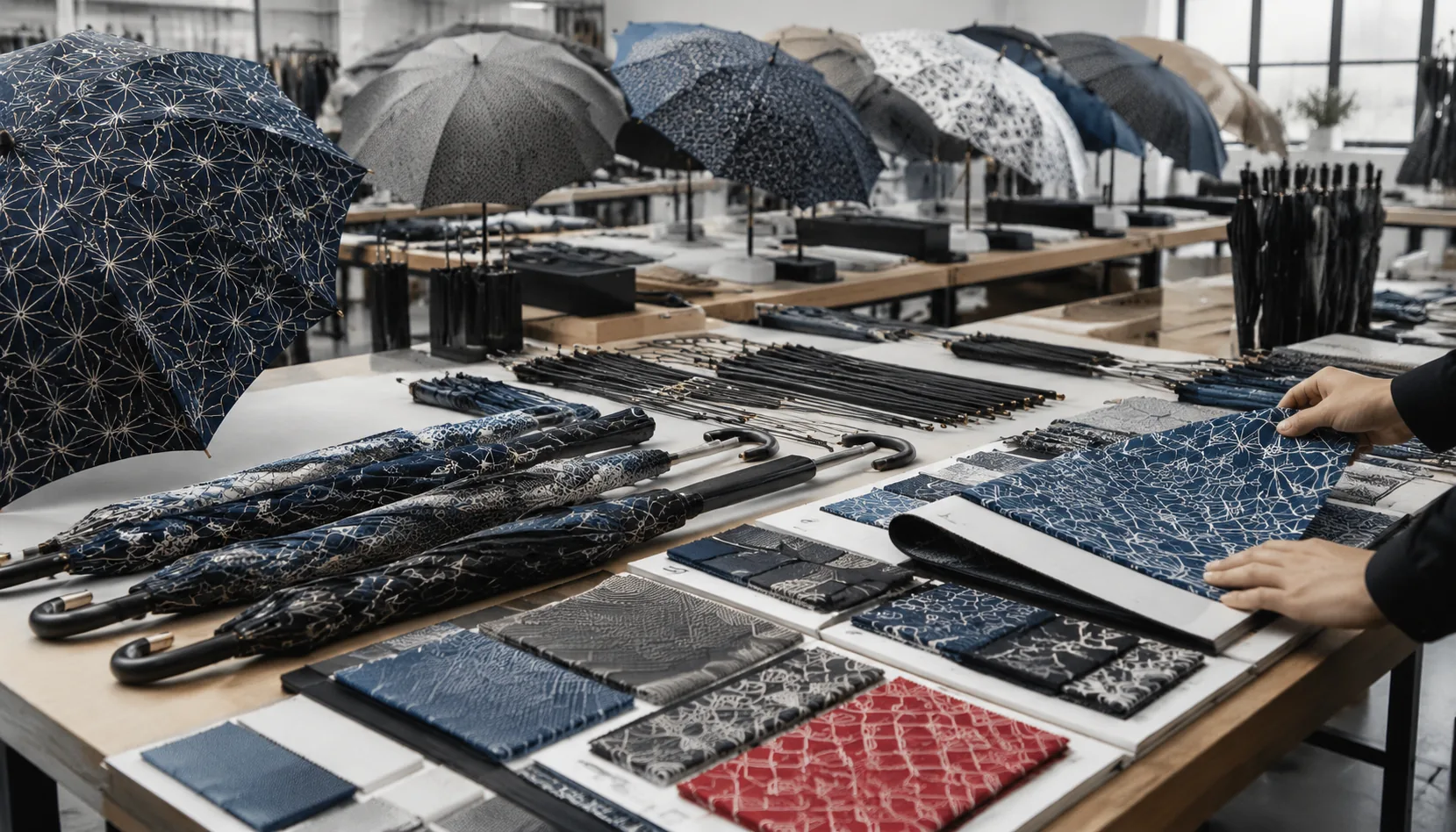
Repeat Pattern Umbrellas for Retail and Event Branding
Specify repeat-pattern umbrellas with the right artwork scale, panel layout, fabric, and QC checks for consistent retail...
Read More »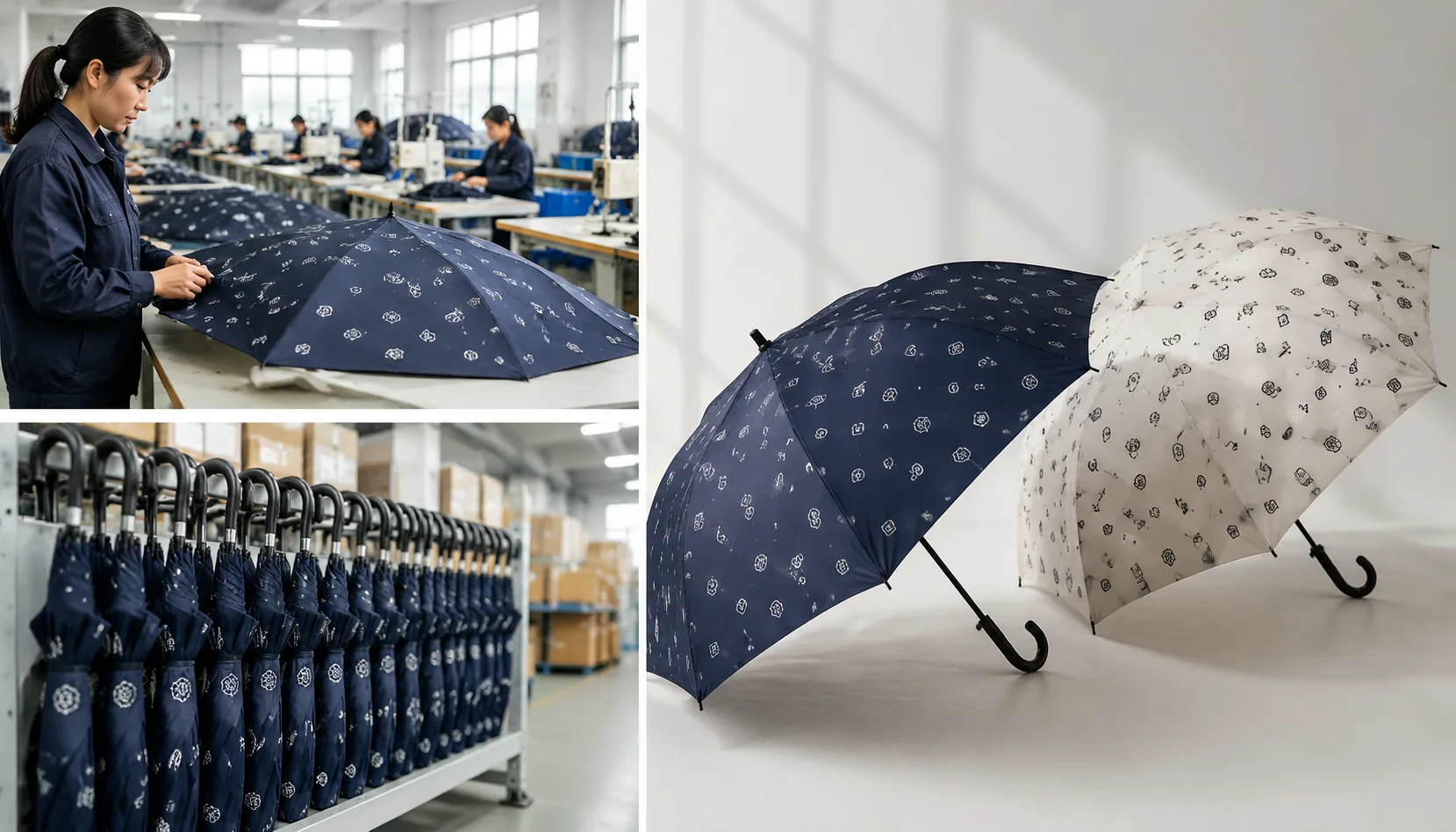
Repeat Logo Pattern Printing for Branded Umbrella Lines
Plan repeat logo umbrella prints with panel layout, fabric choice, sampling, and QC controls for retail, promo, and priv...
Read More »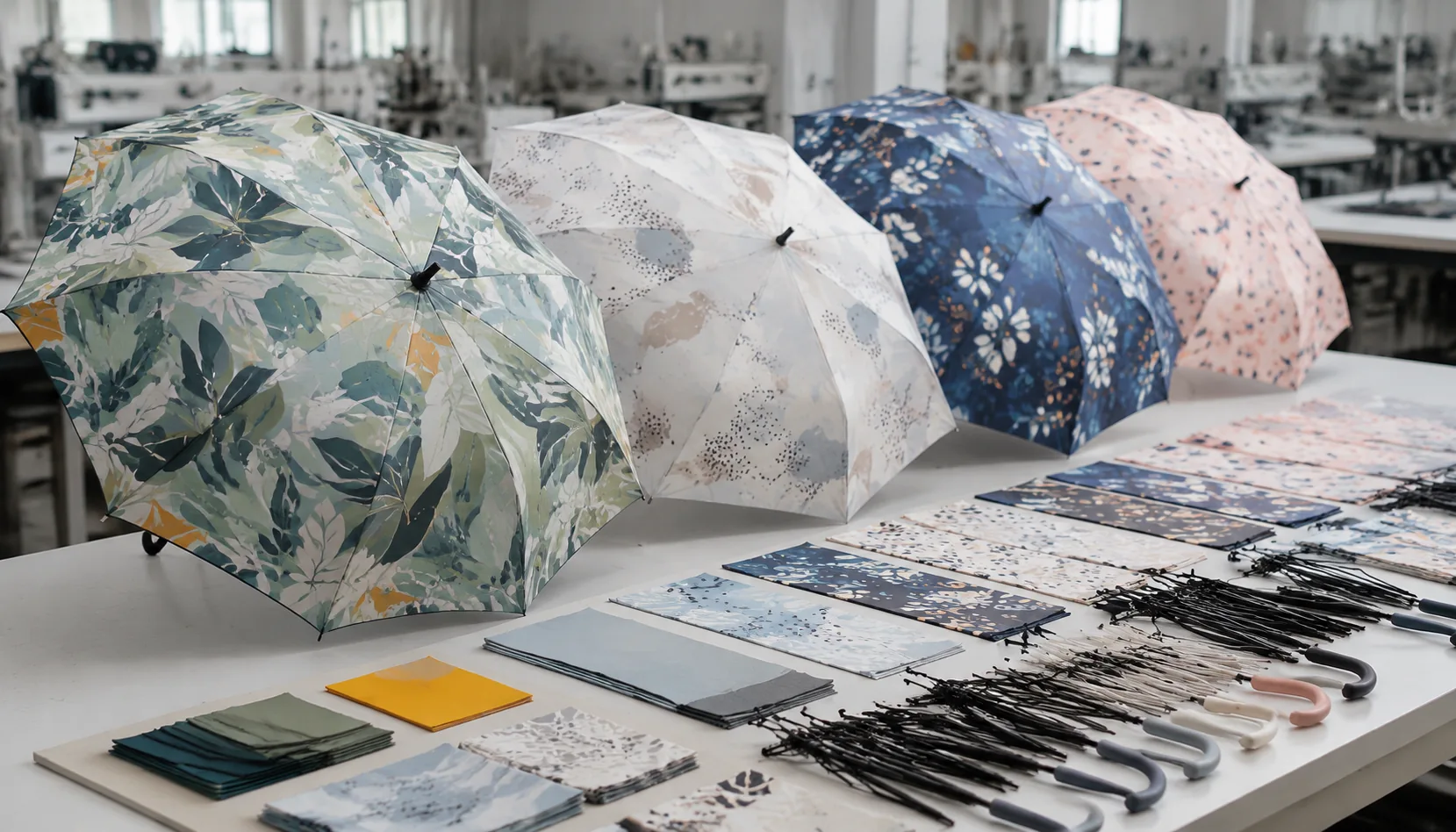
All-Over Pattern Printing for Retail Umbrella Collections
Build retail umbrella patterns with clean repeats, controlled panel alignment, and fabric choices that keep logos sharp ...
Read More »