Repeat Pattern Umbrellas for Retail and Event Branding
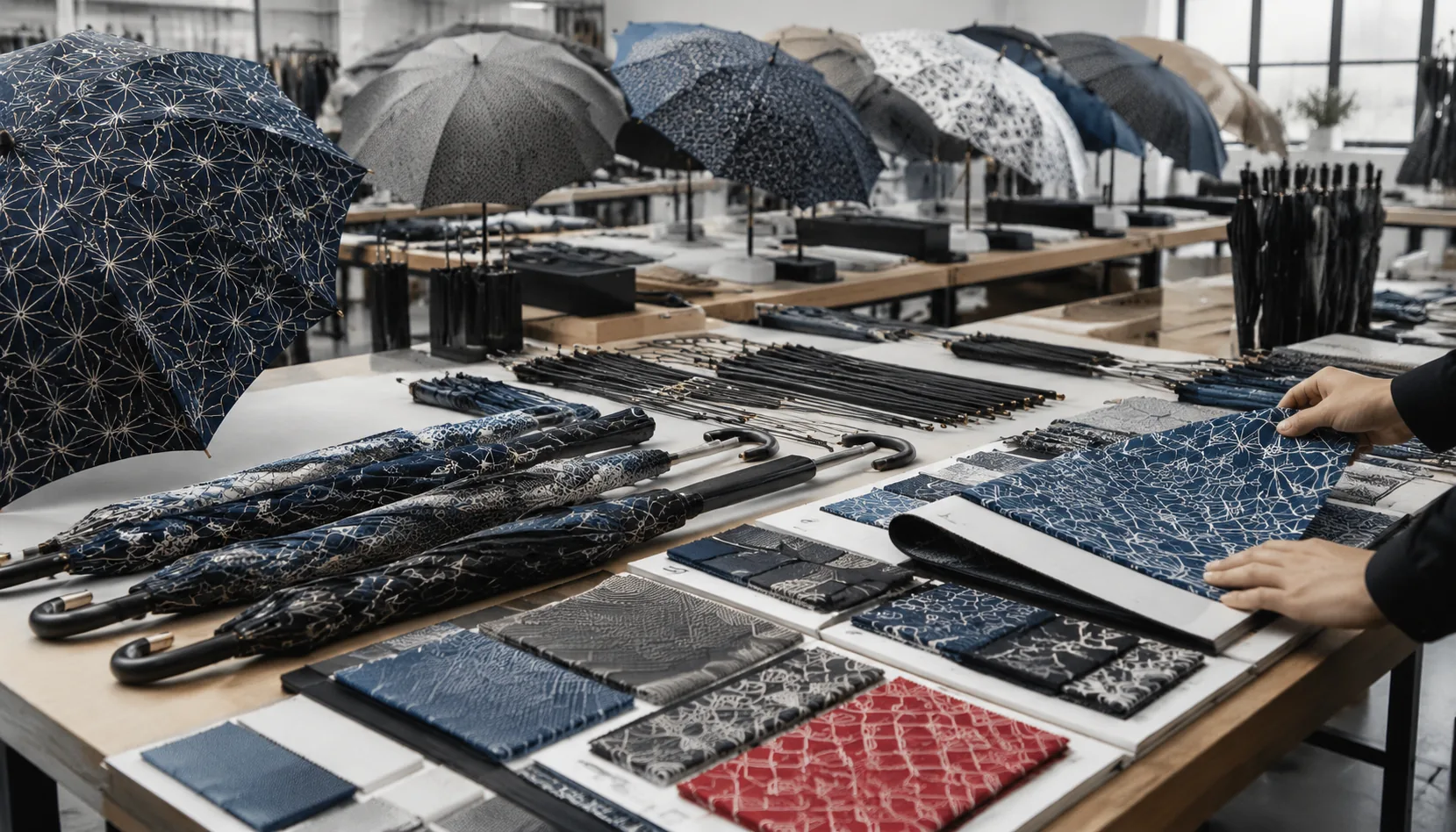
Buyers often approve a clean digital mockup, then lose consistency when the pattern crosses eight cut panels, stretches on pongee, or shifts during sewing. For repeat pattern umbrellas, the real work is controlling artwork scale, panel orientation, fabric shrinkage, and inspection tolerances before bulk cutting starts. On our Songxia factory floor, small layout decisions at sampling usually decide whether a retail wall or event giveaway looks premium or mismatched.
Why Repeat Patterns Work for Brand Programs
Repeat pattern umbrellas usually outperform a single chest-style logo because the buyer sees the brand from every angle: folded in a store bin, opened on a sidewalk, photographed at an event, and carried through a hotel lobby. A tight repeat of monograms, icons, mascots, product silhouettes, or seasonal graphics turns the canopy into recognizable brand language instead of a one-point imprint. On a standard 23" stick umbrella with 8K fiberglass ribs and 190T pongee, we normally build the artwork panel by panel so the repeat does not break badly at the seams. For retail umbrella branding, that matters more than many buyers expect; a crooked mascot or chopped product shape near the rib line makes the whole item look like cheap promotional stock. A balanced all over umbrella print gives the same brand cue whether the umbrella is half-open, fully open, or hanging with only two panels visible.
Retail drops and resort shops benefit from pattern work because the umbrella becomes part of a collection, not just a rain item. A cosmetics brand can repeat lipstick shapes and a small wordmark; a coffee chain can use cup icons, beans, and seasonal colors; a resort can run palm leaves, room-key motifs, or local landmarks across a 21" compact auto-open-close frame. Branded pattern umbrellas also photograph better for e-commerce because the canopy surface tells the story without needing a close-up of one logo panel. For higher-end retail, I prefer 210T pongee with Teflon water repellent coating, a color-matched sleeve, and either 8K or 10K fiberglass ribs depending on the target price. If the pattern has fine lines or gradients, sublimation is cleaner than screen printing, while bold two- or three-color repeats can be screen printed economically at higher MOQ.
Conferences and promotional merchandise use repeat patterns differently: they create crowd visibility without making attendees feel like walking billboards. Event umbrella printing often works best with small sponsor icons, mascot heads, abstract brand shapes, or agenda-themed graphics repeated across alternating panels. For outdoor festivals or sports hospitality, a 27" or 30" golf umbrella with a double-canopy vented windproof structure gives both visibility and practical value, especially if it can survive 50+ mph wind-tunnel testing with fiberglass ribs. Procurement teams should still ask for a strike-off before bulk production because repeat alignment, PMS matching, and seam tolerance decide whether the umbrella looks intentional or messy. Our standard practice at ZheBrella is to check printed panels before sewing, then run final inspection under AQL 2.5 so pattern placement, canopy tension, and open-close performance are judged together.
Choosing Pattern Scale for Umbrella Panels
Pattern scale should start with the open diameter, not the artwork file. On a 21" compact umbrella, each 8K panel is narrow, so a small repeat around 1.0–1.8" works best for dots, mini icons, florals, or retail umbrella branding that needs to look dense but not noisy. Move that same file to a 23" stick umbrella and it breathes better; on a 27" or 30" golf umbrella it may become too busy unless the repeat is enlarged to 2.5–4.0". For branded pattern umbrellas sold at retail, I usually avoid repeats smaller than 0.8" because sewing tolerance, panel stretch, and 190T/210T pongee texture can make fine details look muddy after screen or heat-transfer printing. Compact umbrellas also fold hard along the ribs, so small logos placed too close together can break visually at crease lines.
Medium repeats are the safest choice when the buyer wants both pattern coverage and readable logos. A 2–3" repeat on a 23" stick umbrella or a 3–5" repeat on a 27" golf umbrella gives enough white space around a logo, monogram, mascot, or event mark so it can still be recognized from 10–15 feet away. This is where repeat pattern umbrellas usually perform best for event umbrella printing: the canopy photographs as branded, but the print does not turn into wallpaper. On 8K frames, each panel acts like a larger visual slice, so the repeat must be checked panel by panel before cutting. If a logo lands half on one panel and half across a seam, the eye reads the seam first and the brand second. For 16K frames, the narrower panels create more seam interruptions, so I recommend simpler icons, more spacing, and less diagonal movement.
Oversized repeats need more discipline because one misplaced motif can dominate the whole canopy. A 6–10" repeat can look premium on a 30" golf umbrella, especially with a double-canopy vented construction, but it often fails on 21" auto-open-close compacts because only fragments of the design appear after panel cutting. For an all over umbrella print, we normally build a full canopy mockup with actual 8K or 16K panel templates, seam allowance, top notch, and rib line marked before printing bulk fabric. The 16K version may look richer because the design wraps in smaller facets, but it also doubles the number of seam breaks compared with 8K, which reduces logo readability unless the artwork is centered inside each panel. Oversized layouts work best when the logo is treated as a repeated badge or medallion, not a continuous stripe that must align perfectly across stitched seams.
Print Method and Fabric Selection
For repeat pattern umbrellas, the print method should be chosen before the artwork is finalized, not after. Screen printing is still the cleanest and most economical route for simple one- or two-color repeats: dots, logos, stripes, monograms, checker patterns, and step-and-repeat brand marks. On a 23" or 27" canopy with 8K steel or fiberglass ribs, we normally print panel by panel before sewing, using registration marks so the pattern does not jump badly across seams. Screen print has strong ink density on 190T pongee and good wash/rub resistance when properly cured, but every color needs a separate screen, so a five-color retail umbrella branding layout can become slow and expensive. For promotional events, this method makes sense when MOQ is 500–1,000 pcs, color tolerance is controlled by Pantone, and the buyer wants a crisp branded pattern umbrellas look without paying for photographic detail.
Digital print is better for complex all over umbrella print designs: gradients, watercolor effects, camouflage, small florals, city maps, character graphics, or seasonal retail collections with 6–12 colors. Heat-transfer digital printing works well on polyester pongee when the design needs high saturation, while sublimation is usually selected for white polyester fabric because the dye bonds into the fiber instead of sitting as a heavier ink layer. In our factory checks, fine lines under 0.5 mm can look sharp on flat fabric but lose clarity after cutting, sewing, and stretching over a 16K frame, so we ask buyers to avoid tiny legal text or hairline logos near rib seams. Digital print also gives more flexibility for event umbrella printing because different artwork can run in smaller batches, but the cost per piece stays higher than screen print on simple repeats.
Fabric choice changes the final print more than many buyers expect. 190T pongee is the standard for mid-market retail and promotional umbrellas because it balances price, hand feel, and decent ink holdout; 210T pongee has a tighter weave, smoother surface, and usually gives cleaner edges on repeat pattern umbrellas, especially for small logos or geometric repeats. UPF 50+ fabric adds another variable: silver, black, or UV-blocking coatings improve sun protection but can stiffen the hand feel and affect how heat-transfer film bonds, so coating side, print side, and curing temperature must be confirmed before bulk production. Teflon-style water-repellent finishing can also reduce ink adhesion if applied before printing, so our standard practice at ZheBrella is print first, cure or press, sew the canopy, then apply final water-repellent inspection under AQL 2.5 before packing for FOB or DDP shipment.
Artwork Approval Before Bulk Production
Artwork approval for repeat pattern umbrellas has to start with the repeat tile, not the pretty lifestyle mockup. We ask buyers to send the original vector or high-resolution raster tile, the repeat size in inches or millimeters, and clear Pantone Solid Coated references for every brand color. A 300 dpi file is fine for sublimation or heat transfer, but screen printing needs separated spot colors and clean trapping. For a standard 23" 8K umbrella, each triangular panel is not a flat rectangle; the artwork must be dropped into the actual panel template with 10–15 mm bleed beyond the cut line and at least 20 mm safe clearance near rib seams, ferrule points, and top notch areas. If the logo or motif crosses from one panel to another, we need a full-canopy mockup showing the intended direction from the front panel to the back panel, not just one isolated wedge.
The biggest mistake in branded pattern umbrellas is approving a digital all over umbrella print without checking how the pattern behaves after cutting and sewing. Pongee 190T and 210T stretch slightly differently under sewing tension, and POE/PVC/EVA transparent canopies distort artwork near curved edges more visibly than woven fabric. On 8K frames, panel-to-panel alignment is easier; on 10K or 16K canopies, the seam count increases and small registration errors become more noticeable. For retail umbrella branding, I do not recommend placing small text closer than 25 mm to a rib seam, because stitch allowance and panel curvature can eat the letterforms. Our standard practice at ZheBrella is to issue a production layout with panel numbering, print direction arrows, Pantone callouts, bleed marks, and a closed-umbrella wrap view so buyers can see whether the repeated motif still looks balanced when the umbrella is strapped.
A pre-production sample is not optional when event umbrella printing uses a repeat tile, especially for fashion, museum, hotel, or sponsorship work where color and scale carry the brand. One sample should be made using the intended bulk process: screen print for solid spot colors, heat transfer for medium-detail graphics, or sublimation for photographic and gradient-heavy patterns. The sample verifies three things that a PDF cannot: pattern scale at true 21", 23", 27", or 30" canopy size, seam alignment after the panels are sewn, and color consistency under indoor light and daylight. For Pantone-sensitive orders, we compare the canopy to a physical Pantone book and allow normal fabric variance, usually about Delta E 2–3 depending on coating and base color. Only after the buyer signs the sample do we release bulk cutting, printing, and AQL 2.5 inspection planning; changing artwork after that point usually means wasted fabric and a 3–7 day schedule slip.
Commercial Specs: MOQ, Lead Time, and QC
QC on repeat patterns must happen before sewing, not only at final inspection, because a bad panel match cannot be repaired after the canopy is assembled. Our standard practice at ZheBrella is AQL 2.5 for major defects, with inline checks at printed roll inspection, cut-panel bundling, first-article sewing, and final open-close inspection. For misregistration, we measure the shift between colors or repeat elements; more than 2–3 mm is usually visible on stripes, logos, and checker layouts. Skipped prints, pinholes, ink drag, ghosting, and heat-transfer edge marks are sorted before panels reach the sewing line. Color variation is checked against the approved strike-off under D65 light, and we keep shade bands separate so one umbrella does not mix panels from different print lots. Panel mismatch is the big issue in all-over designs: every 8K or 10K canopy should be opened and viewed from the top, because a repeat that looks acceptable flat can look crooked once tensioned over the ribs.
Frequently Asked Questions
Can a repeat pattern align perfectly across every umbrella seam?
Perfect seam-to-seam alignment is difficult because umbrella panels are curved and sewn under tension. A factory should optimize the layout and show a full-canopy sample before bulk production.
Are repeat patterns more expensive than a single logo print?
Usually yes, because they require more artwork setup, larger print coverage, and stricter inspection. The cost difference depends on color count, print method, MOQ, and fabric choice.
What artwork file should we provide for repeat-pattern umbrella production?
Provide vector artwork in AI, EPS, or PDF format with Pantone references, repeat size, logo spacing, and panel orientation clearly marked. For all-over prints, the factory should confirm a digital panel layout before sampling.
Can the pattern line up across umbrella panel seams?
Exact seam matching is difficult because each canopy is made from separate cut panels, but a controlled repeat and panel-by-panel artwork placement can keep the design visually consistent. Allow a small tolerance of 3–5 mm at seams during QC.
What is the typical MOQ and lead time for branded pattern umbrellas?
For OEM repeat-pattern umbrellas, MOQ is commonly 500–1,000 pieces per design, depending on fabric and print method. Sampling usually takes 7–10 days, with bulk production around 25–40 days after artwork and sample approval.
Looking to Launch Your Custom Umbrella Line?
ZheBrella is a Zhejiang-based OEM/ODM umbrella manufacturer with 17 years of export experience. Free design, low MOQ from 100 pieces, windproof construction, full-color print.
Get Free Quote Now »People Also Search For
Related Articles
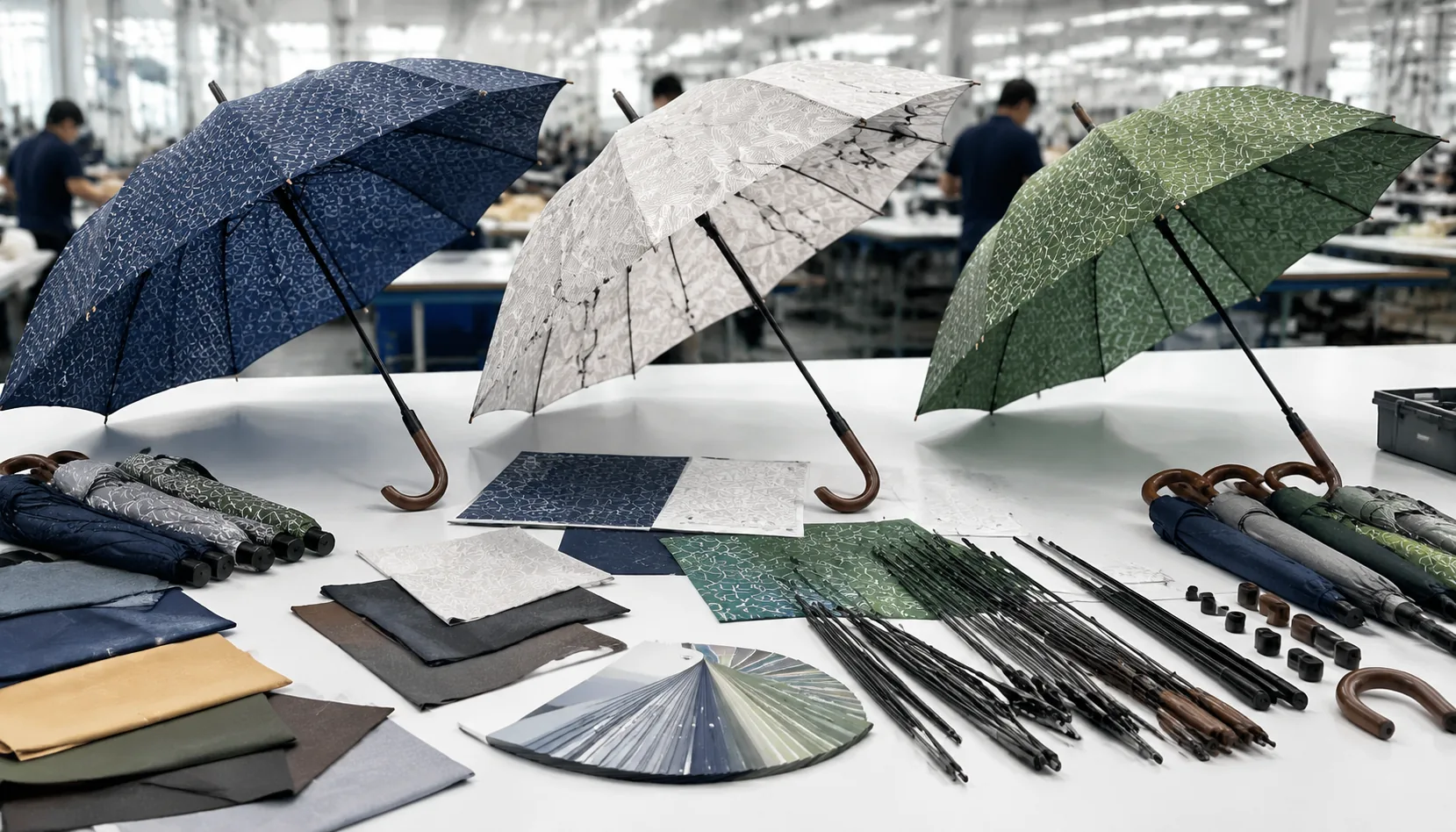
Repeat Pattern Umbrella Branding for Retail and Event Programs
Design repeat logo umbrella patterns that print cleanly across panels with the right rib count, fabric, registration che...
Read More »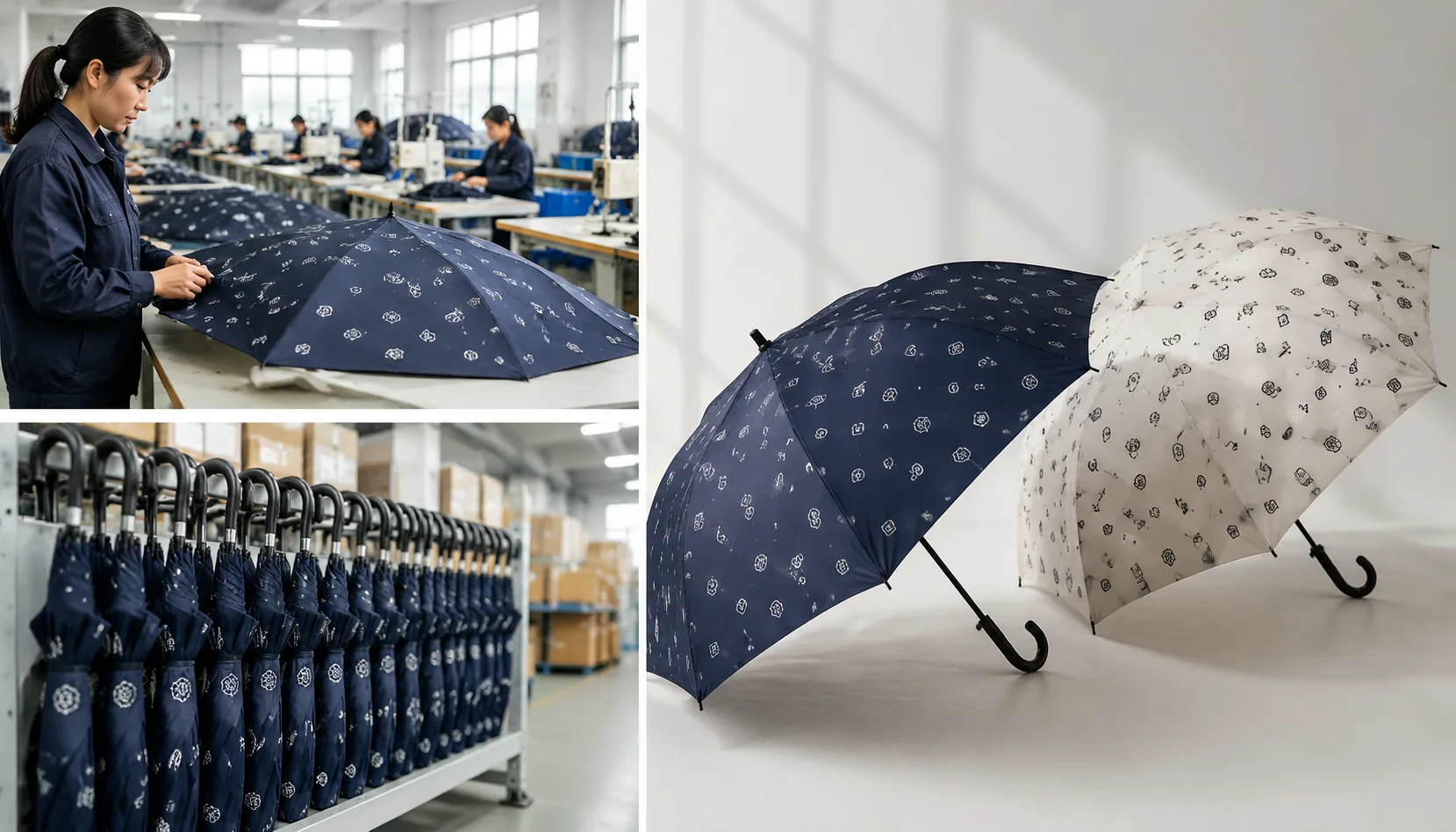
Repeat Logo Pattern Printing for Branded Umbrella Lines
Plan repeat logo umbrella prints with panel layout, fabric choice, sampling, and QC controls for retail, promo, and priv...
Read More »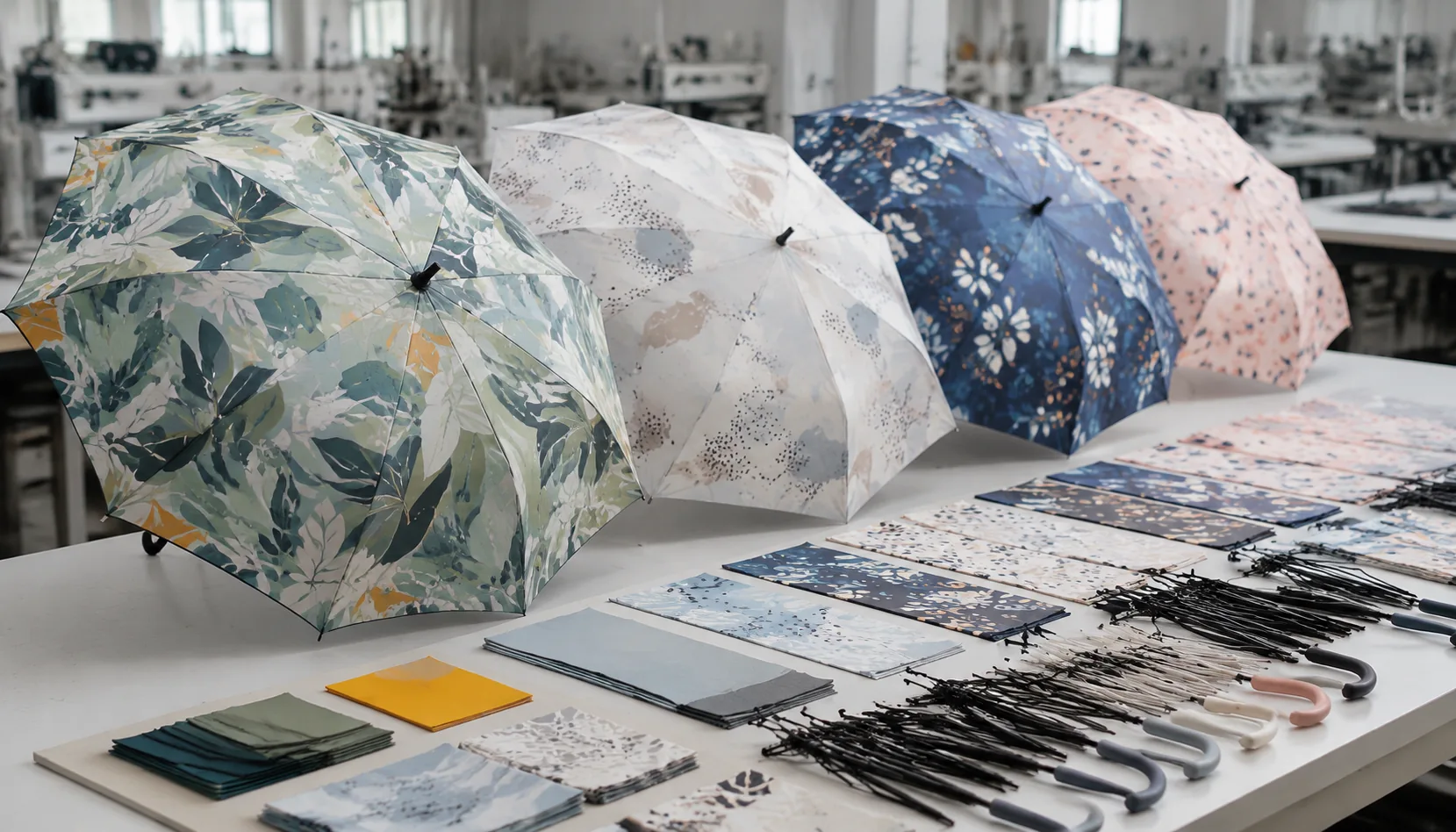
All-Over Pattern Printing for Retail Umbrella Collections
Build retail umbrella patterns with clean repeats, controlled panel alignment, and fabric choices that keep logos sharp ...
Read More »