Restaurant Chain Umbrellas for Patios, Pickup, and Guests
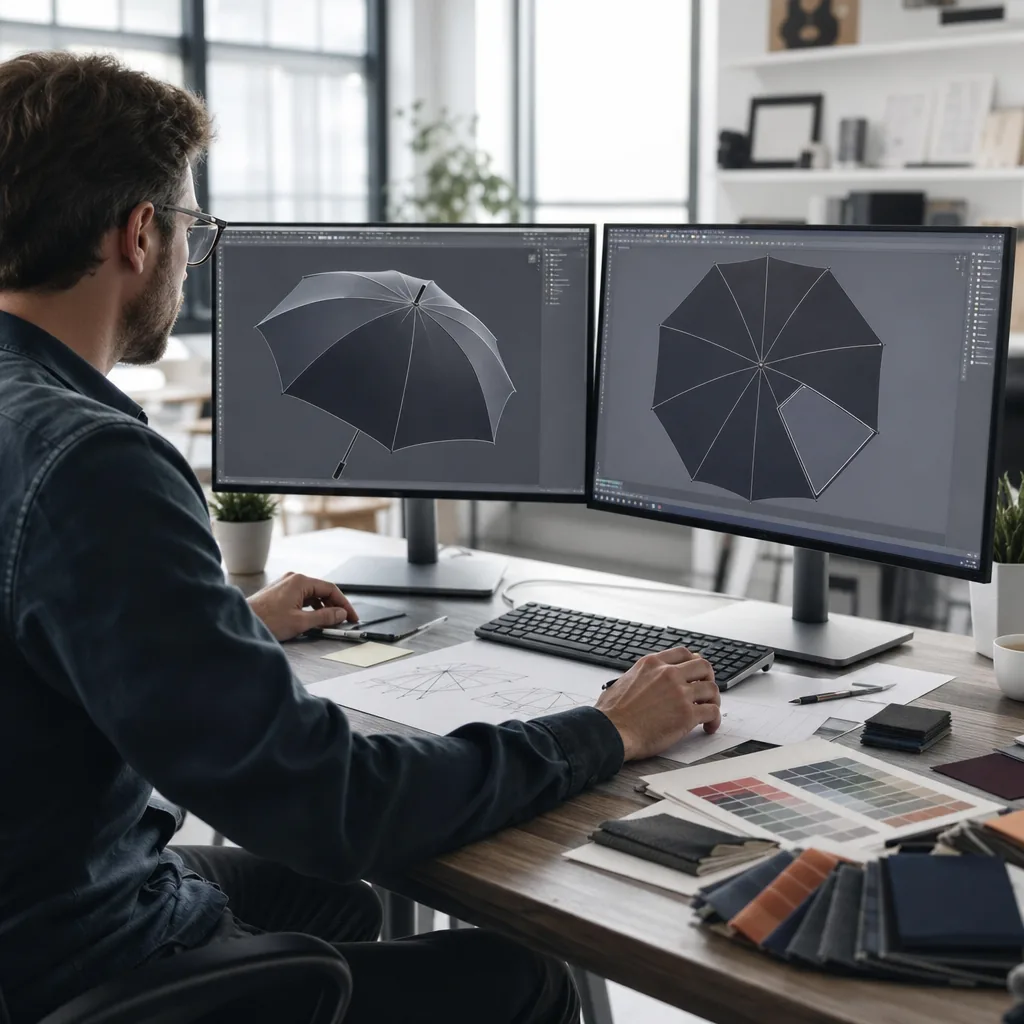
Restaurant chain umbrellas have to solve three different jobs at once: keep patio guests comfortable, give pickup lanes reliable weather cover, and hold up as resale items that still look good after repeated handling across multiple sites. On the factory floor, that means balancing frame strength, canopy fabric, color consistency, and packing efficiency without inflating landed cost. The buyers who get this right usually start with the details that fail in the field, not the catalog photos.
Use cases across patios, pickup lanes, and guest handoff
In restaurant chain umbrellas, the first job is usually not the patio photo op, it is keeping the pickup lane moving when weather turns ugly. For curbside service, a compact carry umbrella is often the right tool because staff need one hand free for tablets, bags, and keys; a 21" or 23" manual-open model with 190T pongee umbrellas fabric is easier to stage in a host drawer than a full golf size. Golf umbrellas make sense only when you need maximum canopy coverage for two guests, a line at the door, or a manager standing outside during a rush. For those applications, a 30" vented frame with fiberglass ribs and a windproof double canopy holds up better than cheap steel that bends after a few gusts. Our standard practice is to match frame size to the actual service point, because over-sizing adds cost, storage trouble, and breakage in back-of-house handling.
Patio coverage is a different calculation. Cafe rain umbrellas used over tables need enough span for seated guests and servers, but they also have to survive constant opening, closing, and left-in-the-rain abuse. A branded pickup umbrella for guests leaving with hot food does not need the same size as a fixed patio canopy, but it does need reliable print quality and a coating that does not soak through on the first heavy shower. For chain-wide programs, I normally separate pool A for guest-facing handoff and pool B for storage at the host stand or service desk. That matters because some stores will lose 10-15% of units in a quarter just from misplacement, not weather damage. If the chain has drive-thru plus dine-in, order sizing should reflect store count, average rainy-day ticket volume, and whether umbrellas are treated as reusable assets or one-time loyalty gifts.
For loyalty-gift programs, the right answer is rarely the biggest umbrella. A compact auto-open-close model is easier to mail, easier to store at the restaurant, and more likely to be carried by the guest every day, which is the whole point of branded pickup umbrellas. Golf size can still work for premium tiers, but it raises freight, carton size, and breakage risk, especially in DDP umbrella sourcing where landed cost matters more than unit price alone. If the buyer wants consistency across 20, 50, or 200 locations, I would spec by use case: 8K or 10K frame for giveaways, 16K for wind-exposed patios, and separate print layouts for host stand versus loyalty redemption. MOQ usually drops when the same canopy, handle, and panel count are reused across multiple SKUs, so it is worth standardizing early rather than ordering each store format as a one-off.
Frames that survive daily open-close cycles
For restaurant chain umbrellas that get opened and closed all day, fiberglass ribs are the safer default because they flex instead of staying bent after a bad gust or a rushed drop onto the curb. Steel ribs look stronger on paper, but in multi-shift service they usually fail by denting, then binding at the joints. An 8K frame is lighter and cheaper, but a 16K layout spreads load better across the canopy, which matters for larger 23" and 27" patio models and for branded pickup umbrellas carried in and out of kitchens, host stands, and valet points. For cafe rain umbrellas used by staff, an auto-open button saves time when someone is juggling trays or receipts, and it reduces the half-open shake that cracks cheap ferrules. If the canopy is 190T pongee, the frame still needs to be built for repeated cycling; fabric choice alone does not stop frame fatigue.
The real durability difference comes from the shaft, venting, and overall weight target. A reinforced fiberglass or thick-walled steel shaft keeps the umbrella from twisting at the collar, especially when a guest grabs it by the top and not the handle. Wind vents matter because they bleed pressure before the ribs invert, which is why double-canopy vented windproof builds hold up better on exposed sidewalks and loading zones. Low-weight constructions are not just about comfort; they cut wrist strain for staff and reduce the impact load when someone snaps the umbrella open against a doorway stop twenty times a shift. For DDP umbrella sourcing, that translates into fewer returns and less spare-part handling, which is why ZheBrella standardizes rib tolerances and cycle testing before shipment. On restaurant chain umbrellas, I would rather see a slightly heavier shaft and clean hardware than an ultra-light build that saves grams and loses weeks of service life.
Fabric, branding, and safety details for food service brands
For restaurant chain umbrellas, the canopy fabric should be 190T pongee for standard patio use and 210T pongee when the buyer wants a tighter weave, better ink hold, and less light bleed on branded pickup umbrellas. On the factory floor, 190T is usually the cost-efficient choice for cafe rain umbrellas, but 210T gives you cleaner print edges and slightly better hand feel, which matters when the umbrella sits next to guest seating and outdoor queue lines. Anti-drip coating is not optional in food service. A simple water-repellent finish works for light rain, but a proper anti-drip treatment reduces post-rain shedding so staff are not shaking water onto walkways, menu boards, or pickup counters.
For sunny markets, specify UPF 50+ and ask for a fabric sample test, not just a claim on the spec sheet. If the umbrella will sit over patios or curbside pickup zones, reflective trim is worth adding because it improves edge visibility for guests and delivery drivers after dark without changing the brand face of the canopy. Logo sizing should stay controlled: on a 21-inch to 27-inch umbrella, a typical panel logo is around 10 to 18 inches wide depending on panel count, and the artwork should be built with a PMS color tolerance of about Delta E 2 to 3 if you want repeatable brand consistency across reorders. ZheBrella’s standard practice on chain programs is to approve strike-offs before mass production, because once the ink is on coated pongee, color drift is harder to correct.
Screen print is better for simple logos, solid spot colors, and larger runs because it is cheaper per unit and holds up well on 190T pongee umbrellas. Heat transfer is the better answer for small runs, multi-color artwork, gradients, or a detailed mark that would break down on a mesh screen, but it needs tighter process control on temperature and pressure so the edge does not lift after repeated wet-dry cycles. For DDP umbrella sourcing, the practical way to spec it is to lock fabric, logo method, PMS references, and packaging before quoting, then confirm AQL 2.5 on final inspection. That avoids surprises when the chain reorders the same restaurant chain umbrellas for multiple locations with different delivery windows.
Quality checks and pack configuration for chain rollouts
For restaurant chain umbrellas, I would lock the quality gate before you talk about freight. Our standard practice at ZheBrella is AQL 2.5 on incoming and finished goods, with separate checks for shaft straightness, rib rivets, canopy stitching, and print placement on branded pickup umbrellas. For 190T pongee umbrellas, I also require a wet-open test on random samples because the fabric can pass visually and still leak at the seams if the sewing tension is off. Mechanical testing matters more than a pretty sample board: specify a minimum open/close cycle count, then verify every lot against that number instead of accepting a vendor claim on paper. For chain rollouts, I usually see 300 to 500 cycles as a basic threshold for manual frames, higher for auto-open-close units, especially when stores will handle them at the host stand all day.
Carton planning should follow store clusters, not a flat national number. If a district has heavy lunch pickup traffic, its stores should get more units per case and a higher share of backstock; patio-heavy locations need the opposite. For cafe rain umbrellas, I prefer carton quantities that map cleanly to store demand, such as 12, 24, or 48 pieces per master carton, so receiving teams can split inventory without repacking. Master carton labels need store code, SKU, canopy size, color, PO number, and carton sequence like 1 of 8, 2 of 8, which avoids uneven inventory across regions when one pallet gets diverted in transit. With DDP umbrella sourcing, this labeling is not optional because the last-mile warehouse needs to allocate stock quickly without opening every carton.
Spare parts should be written into the PO, not handled as a favor after shipment. For restaurant chain umbrellas, I recommend one percent spare ribs, tips, ferrules, and handle inserts, plus a few complete replacement frames for every large rollout, because a single bent rib can take a patio station out of service during a storm. If the program uses steel shafts with fiberglass ribs, the spare policy should reflect the failure pattern: tips and stretchers fail more often than the shaft, so do not overbuy the wrong parts. Keep the carton mix balanced by region, then stage replenishment by sell-through instead of by ship date, otherwise coastal stores and inland stores will drift apart in inventory. That is the simplest way to keep branded pickup umbrellas available where guests actually need them, without overstocking slow stores or starving the high-volume locations.
FOB, DDP, and replenishment planning for multi-site buyers
For restaurant chain umbrellas, landed cost is rarely just the unit price. A real FOB quote needs to be built from canopy spec, frame spec, packing, and loading efficiency, then you add ocean freight, destination port charges, customs clearance, duty, inland drayage, and last-mile store delivery. On a 21" or 23" auto-open model with fiberglass ribs and 190T pongee umbrellas fabric, the freight delta can be bigger than the factory price delta if the carton count is inefficient. FOB gives your team control over carrier selection and consolidation, while DDP umbrella sourcing simplifies the buyer side by folding freight, duty, and delivery into one price. Our standard practice at ZheBrella is to separate the factory invoice from true landed cost so procurement can compare apples to apples across cafe rain umbrellas and branded pickup umbrellas.
The paperwork matters because customs delays usually come from bad data, not bad umbrellas. You need the commercial invoice, packing list, bill of lading or air waybill, certificate of origin if your market asks for it, and clean product descriptions with size, material, and HS code aligned before cargo leaves port. If you are buying restaurant chain umbrellas for multiple sites, FOB is better when your logistics team already books freight and wants control over routing, vessel cutoff, and carton mix. DDP is better when the buyer wants one invoice and no surprises at destination, especially for smaller rollouts or test programs. The tradeoff is simple: FOB is more work but usually lower cost at scale; DDP is faster to execute but needs tighter spec control so the supplier does not hide margin in freight or clearance charges.
Lead times should be planned around season, not optimism. For a standard 8K or 10K fiberglass frame with printed canopy, production is usually 25 to 35 days after art approval and deposit; custom handles, vented double-canopy builds, or 16K windproof frames can push that to 40 days. Ocean freight is the right move for store-wide replenishment, but air is justified for emergency top-ups when a storm forecast or promotion date is fixed and stock is thin. For multi-site buyers, reorder before storm season when on-hand inventory falls to 8 to 10 weeks of demand, because a second production run plus ocean transit can easily exceed 45 days. The practical trigger is simple: if the next inbound lot is already committed to opening-week placements, reorder the moment sell-through reaches 65 to 70 percent, not when you are out of stock.
Frequently Asked Questions
Is auto-open worth it for restaurant chain programs?
Yes when the umbrella is used by staff or guests during pickup and curbside handoff, because one-handed opening speeds service. The small cost premium is usually offset by better adoption and fewer complaints.
Should a restaurant chain buy FOB or DDP?
FOB works when the buyer already has freight and customs coverage in place and wants tighter control over shipping. DDP is simpler for multi-store rollouts because duties and final delivery are bundled into one landed price.
What specs matter most for umbrellas used across restaurant patios and pickup lanes?
For multi-site restaurant use, buyers usually ask for a 23-25 inch canopy, 190T or higher-density pongee, fiberglass ribs, and a steel or aluminum shaft. If the umbrella will stay outdoors, ask for a wind test target and a reinforced runner and tips.
What MOQ is typical for a chain restaurant umbrella program?
For custom OEM/ODM orders, MOQ is often 500-1,000 pieces per design, depending on canopy size, printing method, and frame type. If you need multiple SKUs for patios, pickup lanes, and resale, factories may combine sizes under one project to meet volume.
How should a buyer compare landed cost for umbrella sourcing?
Compare unit price, printing, packaging, inland freight, ocean freight, duty, and final delivery under the same Incoterm. DDP quotes are useful for chain rollouts because they show the delivered cost per site, which makes store-level budgeting much easier.
Looking to Launch Your Custom Umbrella Line?
ZheBrella is a Zhejiang-based OEM/ODM umbrella manufacturer with 17 years of export experience. Free design, low MOQ from 100 pieces, windproof construction, full-color print.
Get Free Quote Now »People Also Search For
Related Articles
Branded Umbrellas for Cruise Lines and Port Excursions
Specify umbrellas for cruise operators and port programs with windproof frames, compact storage, logo durability, and le...
Read More »
Custom Umbrellas for Corporate Events and VIP Hospitality
See how custom umbrellas support executive events, VIP arrivals, and hospitality programs with durable specs, logo place...
Read More »Custom Umbrellas for University Bookstores and Campus Shops
Plan umbrella assortments for campus shops with durable specs, license-ready branding, realistic MOQ, and import terms t...
Read More »