Branded Umbrellas for Cruise Lines and Port Excursions
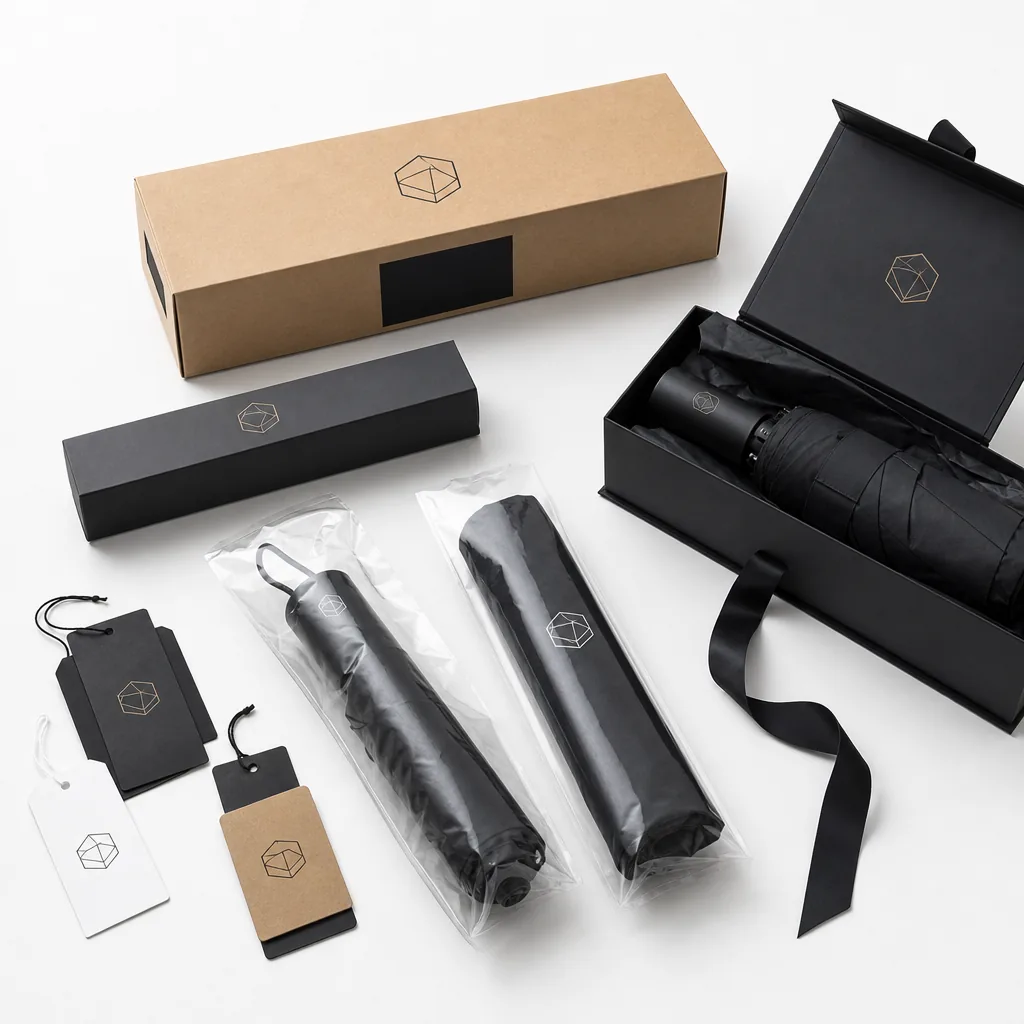
Buying branded umbrellas for cruise lines is rarely about color and logo alone; the real failures show up later, when salt air dulls print, gangway wind inverts weak frames, and excursion teams have to store too many units in too little space. From our factory floor in Songxia, we see the same spec gaps repeatedly, especially around rib strength, canopy coating, packing density, and production timing that has to line up with sailing schedules.
Cruise and Excursion Use Cases Define the Spec
Start with the use case, because it sets the frame, size, and failure risk before you choose handle color or logo placement. For gangway greeting, VIP escort, and open-deck guest service, full-size stick models usually outperform compacts. A 27" or 30" straight umbrella with an 8K fiberglass frame, double-canopy venting, and a pongee 190T canopy gives better two-person coverage, a cleaner look in arrival photos, and a larger print area for branded umbrellas for cruise lines. If crew only escort passengers from shuttle drop-off to the terminal entrance, a 23" auto-open stick umbrella is often the better operational choice because it opens faster and has fewer spring failures than most auto-open-close 3-fold units. That difference matters in salt air. Steel ribs, low-grade runners, and weak joints loosen and corrode quickly in port service, especially on exposed gangways and terminal approaches where wind comes off the water. Specify around three variables first: who carries the umbrella, how long they carry it, and how exposed the route is to portside gusts.
Shore excursions and gift-shop resale change the spec because storage efficiency starts competing with coverage, durability, and branding area. A 3-fold compact in 21" or 23" size fits tour-desk cabinets, motorcoach seat pockets, and day bags, so it works well for shore excursion umbrellas used on rainy walking tours or tender-port transfers. The tradeoff is higher mechanical risk unless the compact uses fiberglass ribs, a black metal shaft, and reinforced rib joints; if durability matters more than convenience, manual or auto-open usually holds up better than auto-open-close. In exposed ports, windproof travel umbrellas should be treated as consumable gear unless the frame has been tested for high-gust conditions, because low-cost 3-fold units fail fast when portside winds spike. For retail resale, passengers usually buy on packability, canopy hand feel, and closing action, so pongee 190T or 210T typically sells better than POE or EVA, while Teflon or UPF 50+ coatings add a visible feature without forcing the item into a premium price band. Many cruise programs split the buy: stick umbrellas for operations, compacts for resale or excursion kits. Lock in FOB DDP shipping early, since carton counts, customs paperwork, and delivery to cruise consolidators can move lead time and receiving risk as much as unit cost.
Frame, Canopy, and Windproof Choices for Marine Conditions
For marine service, frame material matters more than appearance. Salt air attacks exposed metal quickly, so branded umbrellas for cruise lines should use fiberglass ribs on open decks, gangways, and windy embarkation points. On 23-inch and 27-inch styles, a fiberglass rib set with a black electroplated or powder-coated steel shaft usually lasts longer than an all-steel frame because fiberglass flexes and recovers after gusts, while steel ribs often take a permanent bend at the rib joint or middle notch once overloaded. For most cruise and port programs, an 8K fiberglass frame with a vented double-canopy is the best working spec: it gives reliable coverage, keeps carton weight under control, and limits replacement cost. A factory wind benchmark around 50 mph is realistic for this construction. Full steel frames still fit lower-cost programs, including crew issue or high-volume shore excursion umbrellas, but buyers should treat that as a deliberate cost tradeoff: lower first cost, with higher risk of corrosion, deformation, and earlier replacement in salt-heavy use.
Rib count changes cost, packing, and presentation more than raw wind performance. An 8K frame remains the practical standard for excursion and travel use because canopy cutting, spare-part matching, and carton loading are simpler, which helps control FOB DDP shipping cost. A 16K frame creates a rounder canopy and a more premium silhouette for VIP arrival gifts or tender service, but extra ribs alone do not make a model more windproof; vent design, fiberglass versus steel rib choice, and stretcher geometry matter more. For passenger handling, auto-open is usually the right mechanism because guests are often carrying phones, lanyards, or boarding documents, while manual open is still the lowest-cost option with the fewest internal failure points. On fabric, pongee 190T is the standard for windproof travel umbrellas because it prints cleanly, dries fast, and works well for 1-color or 2-color logos. Pongee 210T justifies the upcharge for dense solid artwork or onboard resale programs because the tighter weave improves hand feel and abrasion resistance at fold lines. For risk control, specify AQL 2.5 inspection, seam-slippage and water-repellency checks, logo-crack testing after repeated opening cycles, and lead times of 35 to 45 days on repeat frames or 45 to 60 days for new tooling, special coatings, or mixed-size programs.
Branding, Color Control, and Retail Merchandising Needs
Color control is a procurement issue because cruise brands usually enforce fixed Pantone standards across ship signage, uniforms, and onboard retail. On umbrellas, the usable print area changes materially by frame: a 30 inch golf umbrella gives far more panel width than a 21 inch 3-fold compact, so the logo plan has to be set by format before sampling. For branded umbrellas for cruise lines, the most reliable layouts are 1-panel, 2-panel opposite, or 4-panel repeat on 8K or 10K canopies. On a 21 inch compact canopy, 55 to 70 mm is the practical minimum logo width for fine serif marks; below that, thin outlines and small taglines often fill in, especially when white screen print is applied on dark pongee 190T. Where cruise brands need destination co-branding or excursion operator marks, keep the master brand on two primary panels and move the secondary logo to the closing strap, woven sleeve label, or handle hangtag. Putting two logos on one compact panel usually reduces legibility and degrades faster after repeated folding.
Choose the umbrella format by channel first, because onboard retail and operational use fail in different ways. For gift shops, 21 inch or 23 inch auto-open-close compacts and clear POE dome umbrellas are the stronger retail options: they fit luggage, merchandise cleanly in cabin or boutique displays, photograph well in wet port destinations, and support sleeve printing, belly bands, and barcode-ready packing. For shore excursion umbrellas, 27 inch straight umbrellas or 30 inch vented golf frames are the better operational choice, especially with fiberglass ribs and shafts instead of lower-cost steel; those builds typically manage 45 to 55 mph gusts with less permanent deformation. Because staff and guests may open and close them dozens of times per day, manual open or simple auto-open mechanisms usually carry less risk than auto-open-close on high-cycle use.
Closed-position branding determines whether the program still looks controlled in a retail bin, tray, or cabin display, because canopy graphics disappear once the umbrella is folded. Pantone matching on polyester depends on base cloth, coating, and print method, so approvals should be issued from one strike-off set covering canopy print, woven sleeve label, handle tag, and any silicone strap badge together. AQL 2.5 inspection should check logo registration, color consistency, strap sewing, and retail pack accuracy before shipment. In planning terms, compact retail programs often start at 500 pieces per design, while mixed shore excursion umbrellas programs usually consolidate at 1,000 to 3,000 pieces per colorway. Standard production lead time is about 35 to 45 days, and FOB DDP shipping terms should be fixed early around carton dimensions and destination-port routing to avoid cost creep and missed vessel schedules.
Order Planning, MOQ, and Global Delivery Windows
Set MOQ first, because the umbrella model and decoration method determine unit cost and production risk before freight enters the picture. For branded umbrellas for cruise lines, a stock 21 inch or 23 inch folding style in pongee 190T with a one-color screen print usually starts at 300 to 500 units. A straight auto-open model is typically closer to 500 units. Programs move to 1,000 units or more when the spec shifts to double-canopy windproof travel umbrellas, custom-mold handles, woven labels, alternating panel colors, 16K frames, or clear POE/EVA domes. The driver is not arbitrary MOQ policy; it is setup time, print registration, and material waste. A standard 8K frame with a single-panel logo batches cleanly, while full-canopy sublimation or multi-version artwork does not. For shore excursion umbrellas, buyers should calculate MOQ by SKU and artwork version, not by combined total, because each logo file or excursion brand usually carries its own print minimum, approval cycle, and carton count.
Control samples tightly, because approvals usually decide whether delivery stays on schedule. A digital mockup normally takes 1 to 2 days. A physical pre-production sample with the correct frame, Pantone-matched print, fabric, and retail packing usually takes 5 to 7 days for a stock manual or auto-open umbrella, and 7 to 12 days for auto-open-close frames, special handle sourcing, or carton drop-test review. Approve three items in sequence: logo orientation on the open canopy, closure appearance with strap position, and print durability after wet-rub and opening-cycle checks. Do not release bulk production without signed sample approval or photo confirmation on file. After approval, bulk lead time is typically 25 to 35 days for stock windproof travel umbrellas and 35 to 45 days for mixed programs such as 21 inch folding plus 27 inch golf sizes or multiple packing formats. FOB suits buyers who already control customs entry, ISF filing, port fees, and drayage into gateways such as Los Angeles, Rotterdam, or Sydney. DDP is usually lower-risk for smaller shipments to provisioning hubs or inland warehouses where customs simplicity matters more than headline freight savings. As a planning baseline, courier samples take 3 to 7 days, air freight 7 to 12 days door to door, and ocean transit 25 to 40 days depending on lane; add buffer for East China typhoon season, holiday congestion, and destination customs exams.
Quality Assurance for Multi-Port Passenger Programs
AQL 2.5 is the practical final-inspection baseline for branded umbrellas for cruise lines because any defect discovered after stock is split across Miami, Barcelona, and Cozumel becomes a replacement, freight, and reconciliation problem. Inspection should follow the frame type. Manual umbrellas need clean lock-up, smooth runner travel, and no notch hang-up. Auto-open frames need consistent spring release. Auto-open-close models need repeated cycle testing, especially on compact 21 inch or 23 inch 8K travel frames where weak rivets, poor runner fit, and misaligned notches often appear after 20 to 30 open-close cycles, not at first snap-open. For windproof travel umbrellas, verify that fiberglass ribs reset cleanly after inversion; basic steel ribs are more prone to permanent deformation. If a supplier claims 50+ mph performance, ask for wind-tunnel data or a documented fixture test tied to that exact frame, rib count, and canopy size. These checkpoints reduce chargebacks, prevent split-lot failures across ports, and show whether the quoted frame spec fits actual excursion use.
Salt exposure is the QA failure point many shore excursion umbrellas miss. Stock stored near gangways, beach transfer counters, or humid port rooms needs a corrosion review on shafts, springs, rivets, and tips before approval. Plated steel hardware can bloom quickly if moisture remains trapped under a wet canopy, so fiberglass ribs with a black electroplated or powder-coated shaft usually carry less marine-adjacent risk than bright-finish low-grade steel. Print inspection also needs to be tighter than for office giveaways. On pongee 190T canopies, logo registration should stay sharp across seams, and screen-print or heat-transfer graphics should pass tape-pull and rub testing after full cure. If the canopy is POE, PVC, or EVA instead of woven polyester, confirm the ink system matches the substrate so folding does not cause cracking or ink lift. Carton testing matters as much as unit inspection: check burst strength, edge crush, and drop resistance at actual packed weight, since a 30 inch golf umbrella master carton behaves very differently from a 21 inch compact case pack under FOB DDP shipping. A 1% to 3% overrun from the same production lot is a low-cost safeguard for vessel replenishment, transit damage, and itinerary changes, while keeping color, fabric lot, and handle finish consistent without paying a second MOQ.
Frequently Asked Questions
What umbrella style is most practical for shore excursion programs?
A full-size auto-open stick umbrella is usually best for guided shore tours because it offers stronger coverage and easier group handling. For cabin gifting or retail, a 3-fold model saves storage space but gives a smaller print area.
Should cruise buyers prefer fiberglass frames over steel?
Yes, for most marine-facing programs fiberglass ribs are the safer choice because they resist wind inversion better and are less vulnerable to corrosion issues than plain steel ribs. A mixed frame can work for budget tiers if the umbrella is not exposed long in port conditions.
What umbrella specs work best for cruise shore programs where storage space is limited?
Most buyers choose a 21 to 23 inch, 3-fold umbrella with an 8-panel canopy and closed length around 11 to 13 inches. That format fits tour desk storage, shuttle bins, and cabin retail displays without giving up usable rain coverage.
How should cruise buyers test logo durability before approving mass production?
Ask for a pre-production sample with the exact print method, then check rub resistance, color transfer after 24-hour moisture exposure, and visual wear after 50 to 100 open-close cycles. For repeated port use, buyers often prefer screen printing or heat transfer on 190T pongee because the logo edge definition holds better than low-grade polyester.
What lead time should importers plan if umbrellas need to arrive before a seasonal sailing schedule?
For OEM orders, production usually runs 25 to 35 days after sample approval and deposit. Ocean freight under FOB terms can add 20 to 40 days depending on destination, while DDP air or express programs are faster but materially increase landed cost.
Looking to Launch Your Custom Umbrella Line?
ZheBrella is a Zhejiang-based OEM/ODM umbrella manufacturer with 17 years of export experience. Free design, low MOQ from 100 pieces, windproof construction, full-color print.
Get Free Quote Now »People Also Search For
Related Articles
Custom Umbrellas for Cruise Lines and Shore Excursions
Source cruise-ready umbrellas with compact frames, UPF 50+ canopies, corrosion-resistant ribs, and carton plans for cabi...
Read More »
Custom Umbrellas for Cruise Lines, Marinas, and Excursions
Source umbrellas for cruise retail, marina guests, and shore excursions with marine-ready specs, branding choices, MOQ p...
Read More »
Custom Umbrellas for Cruise Lines and Port Excursions
Source cruise and excursion umbrellas with compact frames, 190T or 210T pongee, UPF 50+ options, port delivery planning,...
Read More »