Custom Commuter Umbrellas for Transit and Mobility Brands
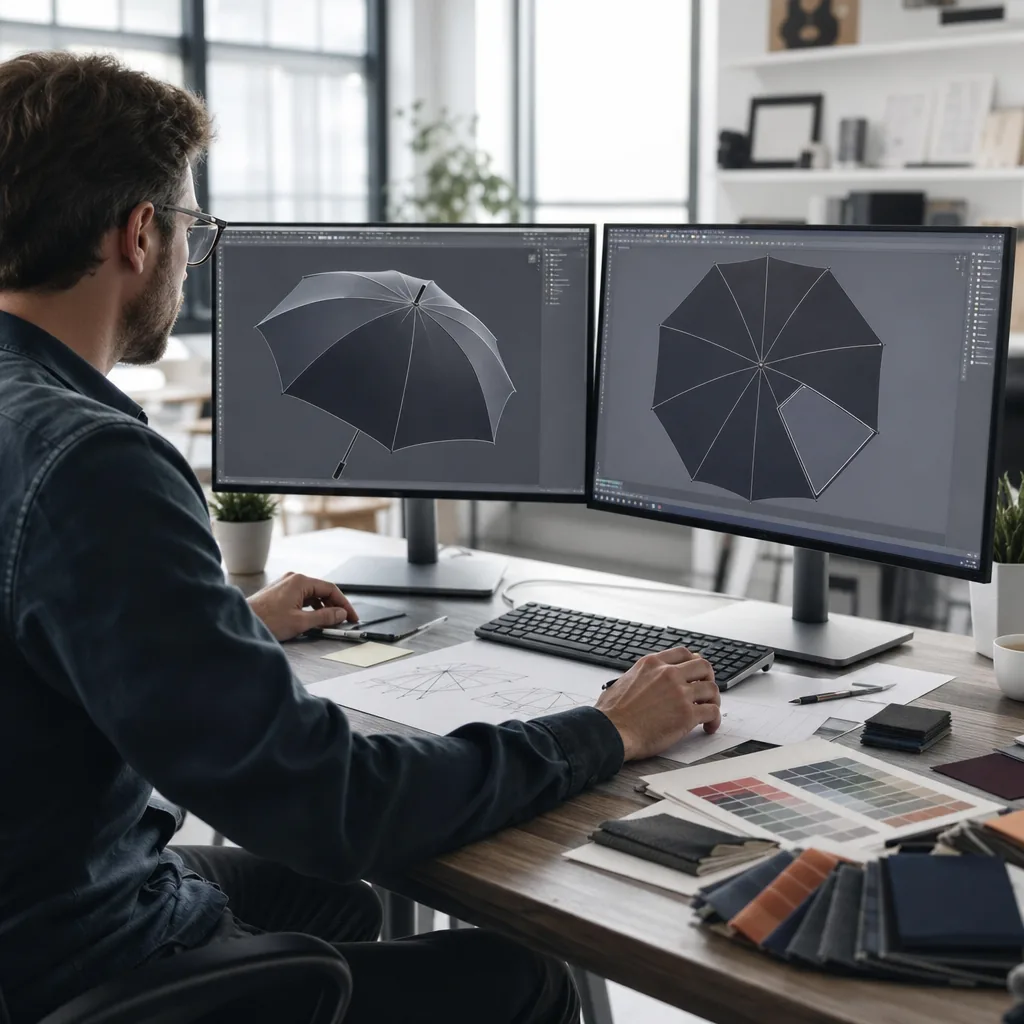
Transit and mobility brands need umbrellas that disappear into a rider’s bag but still survive platform gusts, wet handoffs, and daily open-close abuse. When we build custom commuter umbrellas bulk orders on the Songxia factory floor, the real decisions are compact shaft tolerance, auto-open spring life, rib material, canopy tension, and how reflective logos hold after folding and rain testing.
Define the Commuter Use Case First
The commuter umbrella should be specified around the 30 seconds after a subway exit, not around a studio photo. A rider is usually holding a phone, badge, coffee, or laptop bag, and the umbrella has to open cleanly without a two-hand struggle. For custom commuter umbrellas bulk programs, I normally start with 21" or 23" 3-fold compact auto open umbrellas using 190T or 210T pongee, fiberglass ribs, and a steel or aluminum shaft depending on budget. Auto-open is enough for most transit users; auto-open-close is convenient but adds mechanism cost and a higher failure point if the spring and runner are cheap. A 23" canopy gives real shoulder coverage while still fitting into a backpack side pocket or tote. If the brief includes windy station exits, I would rather upgrade to 8K fiberglass ribs and a vented double canopy than add a bigger logo panel that turns the umbrella into a sail.
Three formats solve three different commuter problems. The 3-fold compact is best for subway, bus, ride-share pickup, and office commutes because closed length is usually 11" to 12", easy to store under a desk or in a bike locker. Slim straight umbrellas, often 23" or 27", feel more premium and open smoother, but they are awkward in crowded train cars and often get left in restaurants or conference rooms. Reverse umbrellas are useful when entering cars because the wet canopy folds inward, but their closed diameter is bulkier and they need more space at turnstiles or elevator doors. For branded transit umbrellas, I would avoid oversized 30" golf frames unless the campaign is for parking lots, shuttle drivers, or outdoor staff; they create better rain coverage but poor daily carry behavior.
Mobility brand umbrellas should be tested for the real abuse pattern: repeated wet packing, edge knocks against gates, and sudden gusts between buildings. A good commuter promotional umbrella can survive 50+ mph wind-tunnel testing when built with fiberglass ribs, flexible tips, and a proper runner, but a cheap 8K steel frame may invert and stay bent after one storm. Canopy choice matters too: 210T pongee with water-repellent or Teflon coating dries faster than basic polyester, while UPF 50+ coating is worth considering for bike-share, scooter, and campus mobility brands in sunny cities. For custom commuter umbrellas bulk orders, set AQL 2.5 inspection on opening force, rib alignment, print registration, and sleeve fit; those defects are what users notice first. Typical MOQ is 500 to 1,000 pieces per color, with 25 to 35 days production after artwork approval, plus FOB Ningbo or Shanghai or DDP delivery if the distributor needs landed pricing.
Select Frame Specs for Fast Urban Use
For transit giveaways and retail programs, the opening mechanism is not a small detail; it decides whether the umbrella gets used at a bus stop or left in a drawer. Compact auto open umbrellas are the safest default for fast urban use because one thumb press lets the rider open a 21" or 23" canopy while holding a phone, ticket, or coffee. For custom commuter umbrellas bulk orders, I usually specify a tested auto-open spring cassette with a metal runner, not a cheap plastic runner that starts sticking after a few hundred cycles. Auto-open-close is convenient on 3-fold models, but it adds spring load and requires tighter QC on shaft locking, so I only recommend it when the buyer accepts a higher unit cost and a slightly heavier handle. Manual open still has a place for budget commuter promotional umbrellas: fewer moving parts, lower failure rate, and easier repair, but it feels slower in rain-heavy city use.
Frame material should match the abuse pattern: crowded subway exits, backpacks, bike baskets, and repeated snapping shut before boarding. Steel ribs give good strength and low cost, but they bend permanently after side gusts or when a user forces the canopy against traffic flow. Fiberglass ribs recover better, especially in mixed wind and rain, and are the better choice for branded transit umbrellas expected to survive 50+ mph wind-tunnel claims. A practical commuter build is a steel center shaft with fiberglass outer ribs, or an aluminum shaft when weight matters more than maximum rigidity. Aluminum keeps a folded 21" umbrella comfortable in a tote or jacket pocket, but thin-wall aluminum tubes must be checked for ovalization at the joints after cycling. Our standard practice at ZheBrella is to cycle-test open-close action before shipment, then inspect runner engagement and rib tip alignment under AQL 2.5.
An 8K frame is usually enough for compact mobility brand umbrellas when the canopy is 190T or 210T pongee and the target is daily carry rather than storm chasing. The 8-rib layout folds smaller, costs less, and keeps the silhouette clean for logo printing on one or two panels. A 10K frame adds more rib support and improves canopy tension, which helps with premium transit merchandise and windy station exits, but it increases weight and creates more parts that can fail if the riveting is loose. I avoid 16K frames for most commuter projects unless the buyer wants a fashion or executive look; they are stronger on paper but too bulky for true mobility use. For custom commuter umbrellas bulk programs, durability is mainly about repeat cycles: springs fatigue, rivets loosen, plastic notches wear, and shafts start rattling after thousands of openings. Ask the factory for cycle-test data, not just a “windproof” label.
Choose Canopy Fabric, Size, and Safety Details
For transit programs, the canopy fabric should start with 190T or 210T pongee, not cheap polyester that turns limp after a few wet commutes. 190T pongee is the practical baseline for custom commuter umbrellas bulk orders because it folds cleanly, prints well by screen or heat transfer, and accepts a durable water-repellent coating without making the umbrella feel stiff. 210T pongee is better when the brand wants a tighter hand feel, deeper color, and improved resistance to misting through during long waits at bus stops or rail platforms. I usually avoid PVC for daily commuter models unless the design brief specifically asks for transparent visibility; PVC and POE look clever in samples but scratch, crease, and show dirt faster in subway and shuttle use. If the umbrella will be used by bike-share staff, airport parking teams, or campus mobility crews, specify black or navy pongee with Teflon-style water repellency and confirm the print method before approving PMS colors.
Size should match the commuting behavior, not just the catalog photo. A 21-inch or 23-inch compact auto-open umbrella fits backpacks, tote bags, glove boxes, and station kiosks, which is why compact auto open umbrellas are common for commuter promotional umbrellas. For outdoor ambassadors, parking attendants, ferry staff, and rail-platform teams, a 27-inch stick umbrella gives better shoulder and bag coverage, while a 30-inch model starts to feel too large in crowded turnstiles unless it is staff-only. For exposed platforms and windy corridors between buildings, use a double-canopy vented windproof structure with fiberglass ribs rather than all-steel ribs. An 8K frame is acceptable for basic giveaway programs, but 10K fiberglass ribs give a more stable canopy under gusts; 16K looks premium but adds weight and cost. A properly built vented 23-inch model can survive 50+ mph wind-tunnel testing when the runner, rib tips, and stretchers are matched correctly.
Safety details matter more for branded transit umbrellas than most buyers expect, because commuters use them in low-light rain, near curbs, buses, scooters, and station entrances. Reflective piping around the canopy edge is the cleanest upgrade because it adds visibility without turning the product into a safety vest. For mobility brand umbrellas used by shuttle companies, micromobility operators, or railway campaigns, I prefer one reflective panel facing outward plus reflective sleeve piping so the logo remains readable in daylight and the umbrella still catches headlights at night. Reflective ink can work, but it must be tested after folding abrasion; cheap reflective prints crack at the panel seam. UPF 50+ coating is worth specifying only when the campaign includes sun exposure, such as tram stops, outdoor charging hubs, campus walks, or airport curbside staff. Our standard practice at ZheBrella is to confirm fabric GSM, coating, rib material, opening mechanism, and AQL 2.5 inspection points before quoting FOB or DDP lead times, usually 25–35 days after artwork approval.
Place Branding Where Commuters Actually See It
The best branding position on a commuter umbrella is not always the biggest panel logo; it is the part visible while someone waits at a bus stop, folds the umbrella on a train platform, or carries it through an office lobby. For branded transit umbrellas, I usually recommend one clean logo on an outer canopy panel, 120–180 mm wide on a 21" or 23" compact frame, placed opposite the strap so it faces outward when carried. On 27" stick umbrellas, a larger 220–280 mm screen print can work, but oversized ink blocks on 190T pongee may stiffen the fabric and affect folding. For custom commuter umbrellas bulk orders, keep the panel artwork simple: one or two spot colors, vector edges, and enough clearance from rib seams so the print does not crack when the canopy is tensioned over 8K or 10K ribs.
Sleeve branding is underrated because commuters see the sleeve longer than the open canopy during storage, retail handout, or corporate gifting. A heat-transfer logo on the sleeve gives sharper detail than screen printing, especially for small station icons, route maps, or app names, but it costs more per unit and needs careful temperature control to avoid scorching 190T/210T pongee. Woven labels sewn into the sleeve seam or canopy edge look more retail-grade and survive abrasion better than low-cost ink, though they add sewing time and a small MOQ for label production. Handle badges work well on compact auto open umbrellas: a metal or epoxy dome logo on a rubberized handle gives daily visibility without turning the umbrella into a billboard. For mobility brand umbrellas, subtle corporate color blocking on alternate panels often looks better than repeating the logo eight times.
QR codes can be useful on commuter promotional umbrellas, but only if they are large enough and printed on a stable surface. I do not like QR codes smaller than 25–30 mm on curved canopy panels because wrinkles, raindrops, and fabric texture reduce scan rates; the sleeve or hangtag is safer. Reflective marks are another good transit detail: a 5–10 mm reflective strip near the panel edge or sleeve seam improves night visibility and supports the mobility message, but reflective heat transfer costs more than standard ink and can peel if the umbrella is repeatedly stuffed wet into a backpack. Screen print is still the most economical choice for custom commuter umbrellas bulk programs, especially 1-color logos over 1,000 pcs, while heat transfer suits gradients, app graphics, and small runs. For long-term durability, match the decoration method to the frame quality: fiberglass ribs and a stable auto-open mechanism deserve better branding than cheap PVC transfer film.
Plan Bulk Delivery for Campaign Rollouts
Bulk rollout planning should start with the umbrella model, because MOQ changes fast once you add mechanisms, rib counts, and print processes. For a standard 21" or 23" compact auto-open umbrella with 190T pongee canopy, our practical MOQ is usually 500 pieces per color for screen print and 1,000 pieces when PMS-dyed fabric or custom handle molding is required. Heat-transfer logos can work at 300-500 pieces if the artwork is small, but full-panel sublimation on commuter promotional umbrellas normally needs 1,000 pieces because cutting alignment and color matching take longer. For stronger mobility brand umbrellas, such as 8K fiberglass shaft-and-rib models or 10K windproof folding frames rated around 50+ mph in tunnel testing, buyers should allow higher MOQ if they want custom canopy colors, reflective piping, or matching sleeves with barcode labels.
Do not skip the pre-production sample, especially for branded transit umbrellas tied to rail openings, bike-share launches, airport promotions, or city events. A proper PP sample should confirm canopy fabric weight, logo size, print position, handle finish, sleeve construction, open-close function, and packaging before mass production starts. For custom commuter umbrellas bulk orders, I like to freeze artwork at least 35-45 days before the in-hand date for screen print, and 45-60 days for sublimation, custom color pongee, or EVA/POE transparent panels. Our standard practice at ZheBrella is to run AQL 2.5 final inspection on function and appearance, checking frame tension, rib tips, seam leakage, color migration, logo registration, carton drop damage, and random open-close cycles before release.
Multi-city delivery needs carton discipline, not just a good umbrella. Each master carton should be labeled by destination, campaign name, PO number, SKU, color, quantity, gross weight, carton dimensions, and sequence number, such as Chicago 1/38 or Dallas 7/22. If the same order splits to transit agencies, campuses, retail pop-ups, and event warehouses, confirm carton marks before production packing begins; relabeling after sealing wastes time and creates shortage disputes. FOB Ningbo or Shanghai is cleaner when the buyer controls freight consolidation, while DDP is better for mobility teams without import staff because duty, customs clearance, and final-mile delivery are bundled. For launches with fixed dates, add a 7-10 day buffer for domestic China trucking, vessel rollover, customs exam, weather delays, or courier congestion, and never schedule giveaway distribution the same day the umbrellas arrive.
Frequently Asked Questions
What umbrella size works best for commuter giveaways?
A 21-inch or 23-inch 3-fold umbrella is usually the best balance of coverage, bag fit, and shipping cost. For premium campaigns, a stronger auto-open compact with fiberglass ribs is easier to justify.
Can commuter umbrellas include reflective branding?
Yes, reflective piping, small panel marks, or sleeve details can be added, but they should be tested for adhesion and folding wear. Reflective elements may increase unit cost and sampling time.
What umbrella specs work best for commuter and transit promotions?
Most transit programs choose 21" to 23" compact umbrellas because they fit bags and backpacks easily. Auto-open models and fiberglass frames are common for faster use and better wind resistance.
Can reflective branding be added without affecting the umbrella’s appearance in daylight?
Yes. Reflective logos or edge accents are usually printed as a separate layer on the canopy or strap. In daylight they look like a standard one-color or low-gloss print, then become visible under headlights or streetlights.
What is a typical MOQ for custom commuter umbrellas in bulk?
For OEM/ODM orders, MOQ is often 500 to 1,000 pieces per design, depending on canopy size, print method, and handle style. Larger orders can lower unit cost, especially for single-color logo printing.
Looking to Launch Your Custom Umbrella Line?
ZheBrella is a Zhejiang-based OEM/ODM umbrella manufacturer with 17 years of export experience. Free design, low MOQ from 100 pieces, windproof construction, full-color print.
Get Free Quote Now »People Also Search For
Related Articles
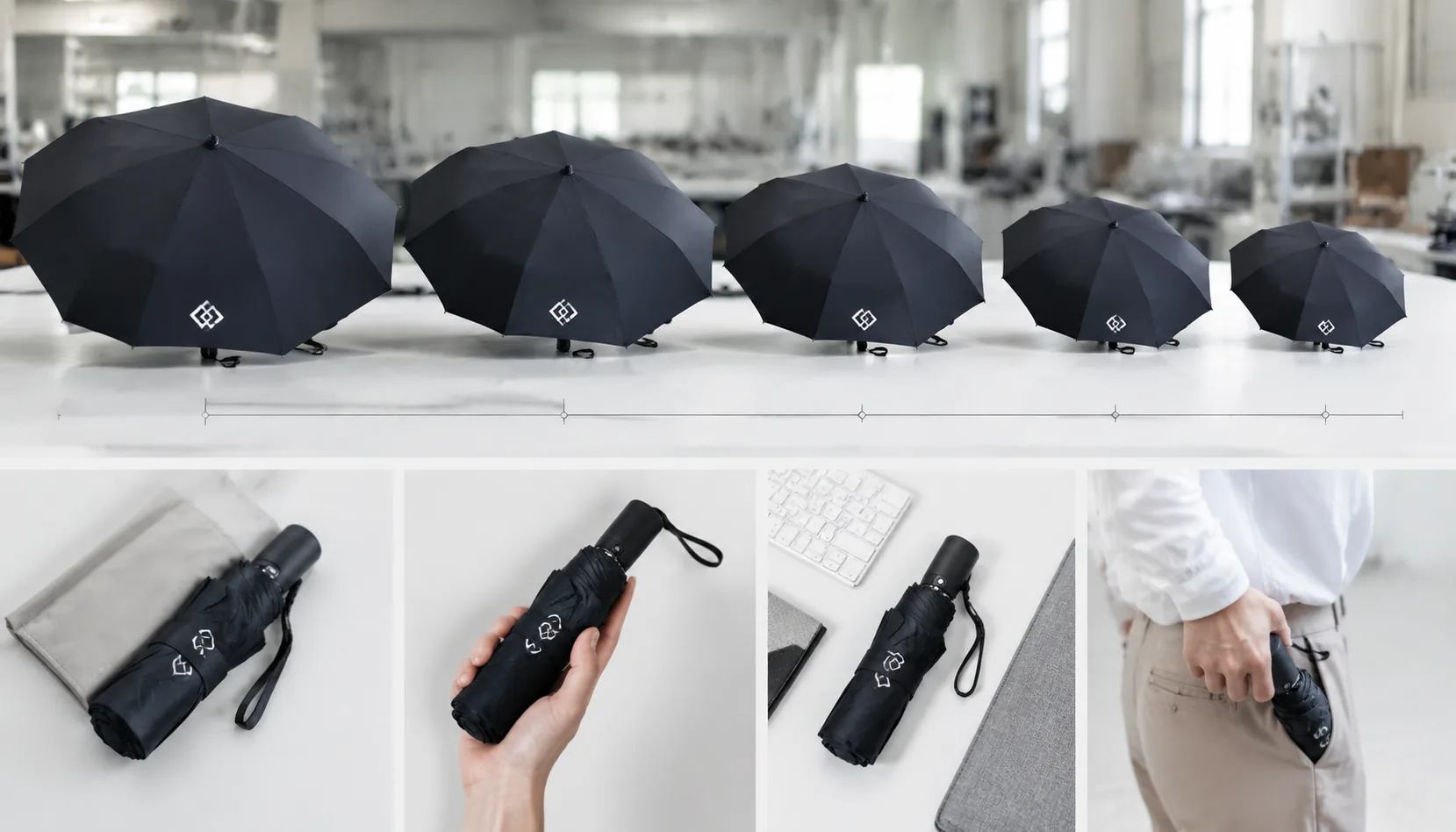
Logo Scale Rules for Compact Folding Promotional Umbrellas
Set practical logo sizes for 3-fold and 5-fold umbrellas, balancing panel width, auto-open frames, rib layout, MOQ, and ...
Read More »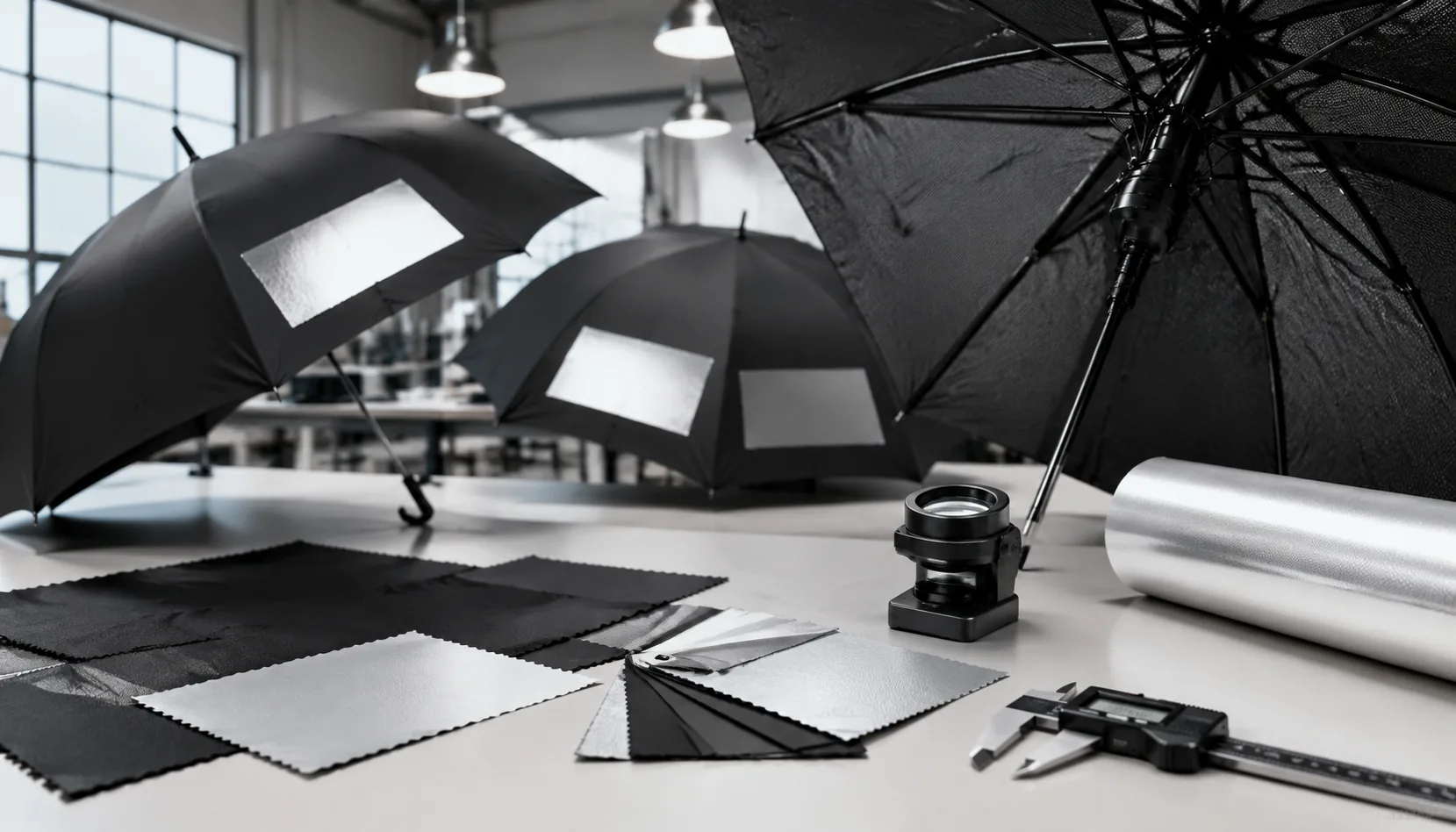
Reflective Umbrella Logos for Safety Brand Campaigns
Specify reflective logo films, panel locations, and AQL checks for promotional umbrellas used in night events, campuses,...
Read More »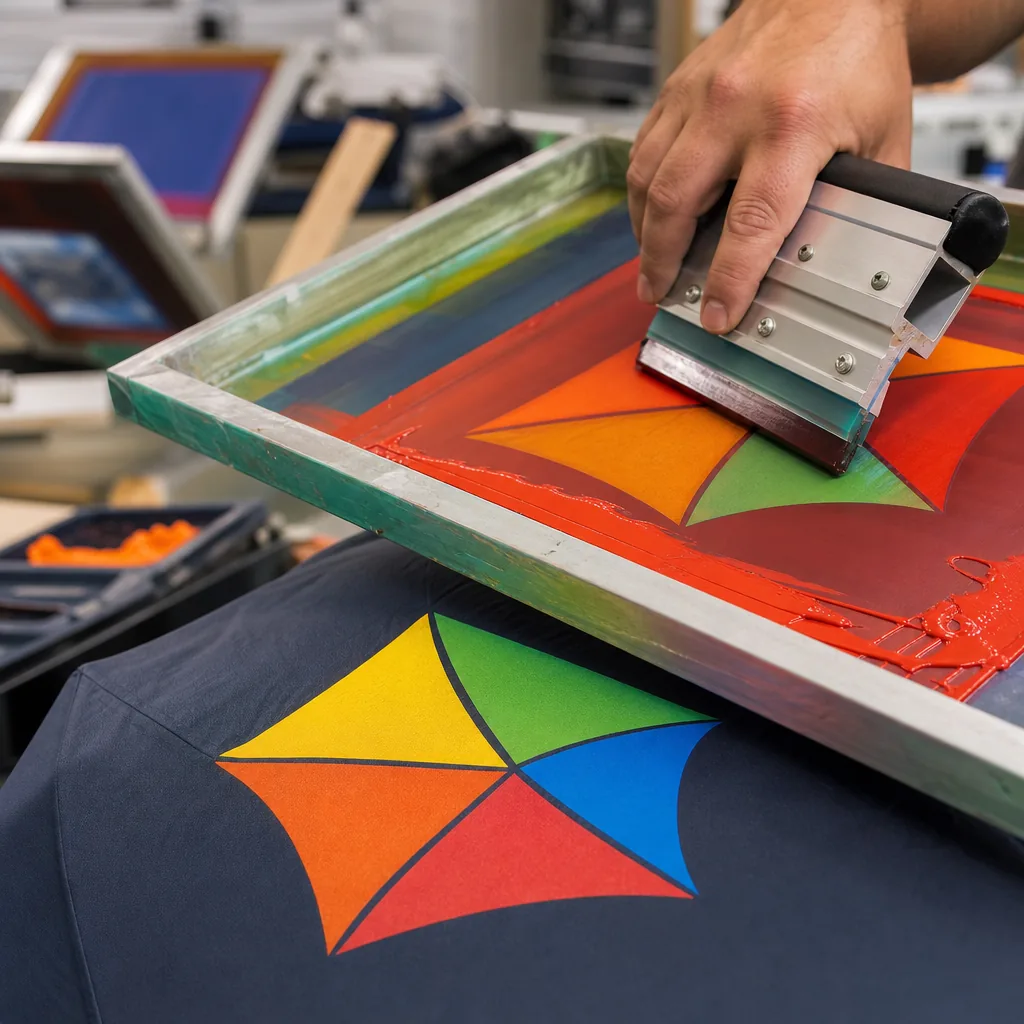
Best Umbrella Panel Layouts for Event Brand Campaigns
Compare umbrella panel layouts for event campaigns, from repeat logos to alternating colors, with practical print and QC...
Read More »