Reflective Umbrellas for Commuter Safety: OEM Spec Guide
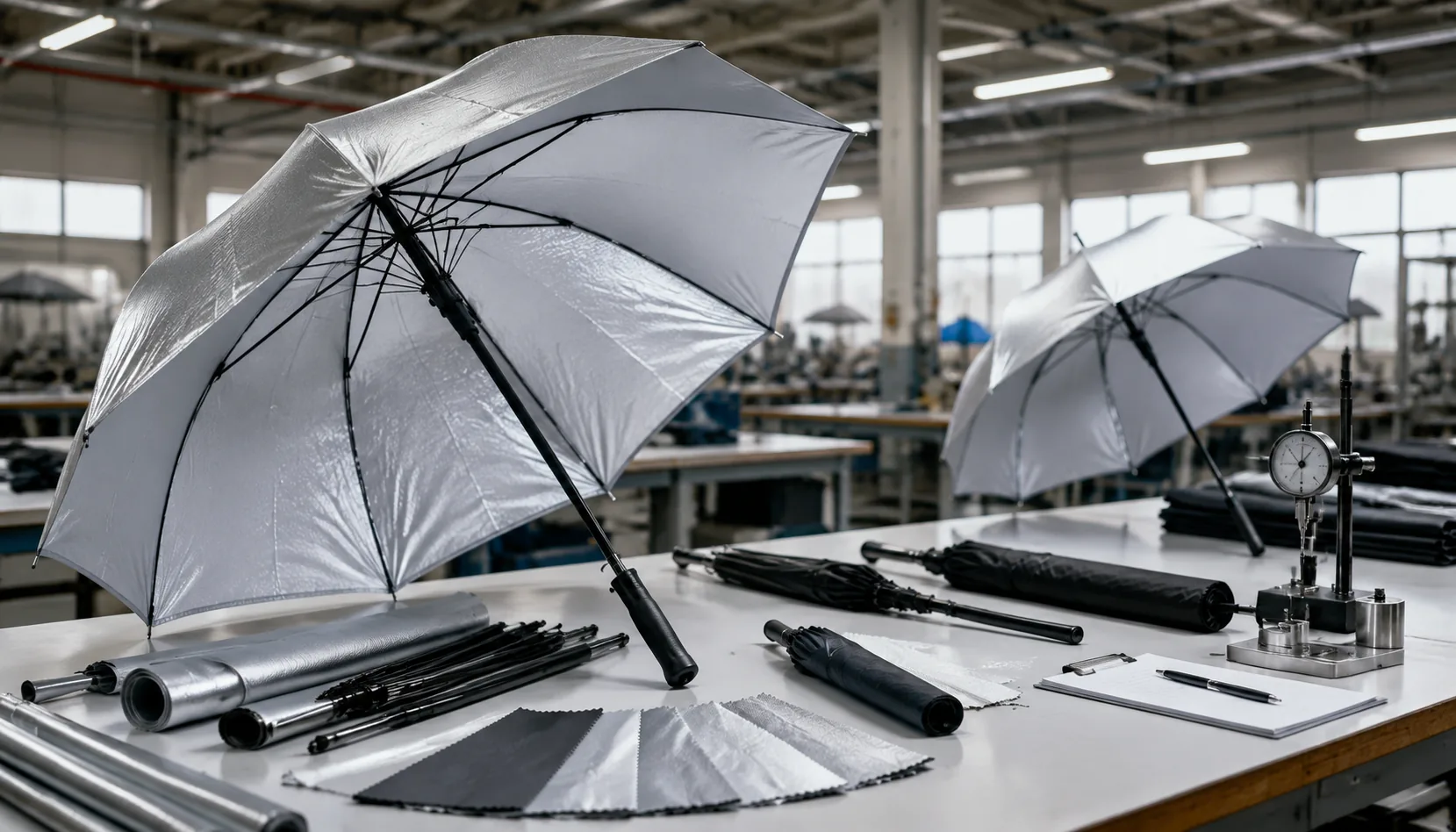
Commuter umbrella orders fail when visibility is treated as a logo option instead of a safety specification. On our Songxia production floor, reflective safety umbrellas are built around tape grade, panel placement, 190T or 210T pongee behavior under coating, rib flexibility, and inspection points that catch weak adhesion or misaligned strips before packing. For OEM buyers, those details decide whether a bulk order looks good in a sample room or performs on wet, dark streets.
Safety Use Cases and Target Buyers
Reflective umbrellas fit best where the user is already exposed to traffic, rain glare, and poor side visibility: subway-to-office commuters, school walking routes, factory shuttle stops, airport parking teams, and event staff working after dark. For commuter retail, I usually recommend 21" or 23" auto-open folding models with 190T or 210T pongee, a black or navy canopy, and reflective edge piping or segmented reflective panels. Full silver canopies look dramatic but are harder to keep clean and can feel too promotional for daily carry. For school programs, a 23" straight umbrella with fiberglass ribs is safer than sharp steel tips, and a manual runner reduces pinch complaints from children. These are practical reflective safety umbrellas, not novelty items, so the reflective layout must be visible from the front, rear, and side when the canopy is tilted.
Corporate safety gifts and transit promotions have different priorities. A construction company or logistics group wants windproof safety umbrellas that survive repeated use in open parking lots, so we specify 8K or 10K fiberglass ribs, a steel shaft for cost control, and a vented double canopy if the buyer accepts the added weight. A metro operator, insurance brand, or city road-safety campaign often cares more about logo clarity and visual consistency across 2,000 to 10,000 units. Reflective umbrella printing can be done with reflective ink, reflective heat-transfer film, or sewn reflective tape; tape gives the strongest night visibility, while heat transfer gives cleaner logos but needs controlled temperature and pressure to avoid edge lift after folding. Our standard practice at ZheBrella is to test reflective areas after opening-closing cycles, not just on flat fabric before assembly.
Target buyers should lock the commercial limits early: MOQ, unit cost, inspection level, and delivery terms. A basic 21" folding model with reflective piping may start around 1,000 pcs per color, while custom panel printing, molded handles, or branded sleeves usually pushes MOQ to 3,000 pcs. Procurement teams should ask the OEM umbrella factory for AQL 2.5 inspection on critical defects such as broken ribs, failed auto-open mechanisms, loose tips, stained reflective tape, and off-position logos. For FOB Ningbo or Shanghai, standard lead time is often 25–35 days after artwork and deposit; DDP programs need extra buffer for carton size, HS code review, and destination duties. The cheapest reflective safety umbrellas often fail at the sewing line, where reflective tape curls or puckers the canopy, so durability and visibility should be costed together, not treated as separate options.
Reflective Materials and Placement Options
Reflective piping is the cleanest option when the buyer wants visibility without changing the artwork layout. We sew 5–8 mm reflective cord into the panel seams or outer canopy edge, usually on 23" and 27" commuter umbrellas with 190T or 210T pongee. It gives a continuous outline under headlights and survives folding better than wide tape because the stress sits in the seam, not on the coating face. Panel tape is brighter at distance, especially 10–20 mm silver tape on alternating panels, but it must be placed away from high-crease zones near the rib tips or it will crack after repeated wet folding. For reflective safety umbrellas, I prefer piping plus selective tape rather than covering every panel like a traffic vest.
Reflective umbrella printing uses glass-bead ink screen printed onto the canopy, and it is useful for thin lines, icons, and city-safety graphics that need to sit around a brand logo. The tradeoff is wear resistance: reflective ink depends on bead exposure, so heavy hand-rubbing, PU overcoats, or aggressive heat pressing can dull the return brightness. Logo heat transfer with reflective film gives sharper edges than ink and works well on dark pongee, POE, PVC, or EVA panels, but the film must be tested for adhesion after wet flexing and 24-hour humidity conditioning. Our standard practice at ZheBrella is to run a small strike-off and fold-cycle check before bulk production, especially on auto-open-close frames where canopy movement is harsher.
Placement should make the umbrella visible from a driver’s side angle while keeping the brand readable from the front. Common OEM layouts include reflective piping around all panel edges, 2 or 4 alternating panels with vertical reflective strips, a reflective logo on one lower panel, and small reflective hits on the sleeve and closure strap for visibility when carried closed. On windproof safety umbrellas with double-canopy vents, avoid placing tape across the vent gap or near the stitched overlap because water entry and peeling risk increase. For AQL 2.5 inspection, specify tape width tolerance, print position tolerance within ±3 mm, adhesion after wet folding, and whether the sleeve or strap reflection is part of the approved sample.
Frame, Rib Count, and Windproof Build
For commuter umbrellas, the frame decision should start with the route, not the catalog photo. Steel ribs are cheaper and hold shape well in a basic 23" or 27" straight umbrella, but they bend permanently when a rider steps out of a subway exit into a side gust. Fiberglass ribs cost more, usually adding about 8–15% to the frame price depending on diameter and joint hardware, but they flex back after inversion and reduce warranty complaints. For reflective safety umbrellas used on wet, windy streets, I usually specify fiberglass ribs with a steel center shaft for balance: enough stiffness for daily opening, enough elasticity for gust recovery. Full fiberglass shafts are lighter and corrosion-proof, but on larger 30" golf-style commuter umbrellas they can feel too flexible unless the wall thickness is increased, which raises cost again.
An 8K build is the practical baseline: eight ribs, reasonable canopy tension, lower weight, and faster assembly. A 23" 8K auto-open umbrella with 190T or 210T pongee can stay around 430–520 g depending on handle and shaft material, which is acceptable for daily bags. A 16K frame spreads load across more ribs and gives a rounder canopy, but buyers should not assume it is automatically stronger. If the rib gauge is thin, 16 weak ribs only create more sewing points and higher labor cost. A properly tooled 16K fiberglass frame improves wind stability and premium feel, but it may add 80–150 g and 20–35% frame cost versus 8K. For retail safety programs, I prefer 8K for mass transit giveaways and 16K for branded windproof safety umbrellas sold as durable work-commute gear.
For exposed bridges, waterfront paths, and open bus stops, double-canopy vented construction matters more than rib count alone. The upper canopy lets pressure escape instead of turning the umbrella inside out, and with fiberglass ribs we can target 50+ mph wind-tunnel survival on a 27" model when the shaft, runner, springs, and rib tips are matched correctly. Reflective umbrella printing also needs placement discipline: reflective tape or ink on the lower canopy panels must not block vent overlap or stiffen the fabric so much that the canopy folds badly. Our standard practice at ZheBrella is to pair auto-open mechanisms with straight commuter models because one-hand use is real; riders often carry a phone, coffee, or bag. Auto-open-close is better for compact 21" units, but it adds spring load, failure points, and AQL 2.5 inspection attention at the button, runner lock, and closing compression cycle.
Canopy Fabric, Coating, and Color Selection
For commuter umbrellas, I usually push buyers toward 190T pongee when the product is a daily rain item with a tight promotional budget, and 210T pongee when the umbrella must feel retail-grade in hand. 190T pongee is light, dries faster than polyester, and takes screen printing cleanly if the factory controls tension during panel cutting. 210T pongee has a denser yarn count, better drape, and a smoother face for reflective umbrella printing, especially when logos or reflective bands need sharp edges. On a 23 inch auto-open straight umbrella or a 21 inch folding auto-open-close model, the fabric difference is easy to feel after sewing: 210T sits flatter along the rib line and puckers less at the tips. For reflective safety umbrellas, I would not use cheap 170T polyester unless the order is purely disposable event stock, because coating adhesion and seam strength become weak points after repeated folding.
Color selection matters as much as the reflective material. Black and navy sell well because office commuters will actually carry them, but the reflective tape or printed reflective ink must be wide enough to work against those dark canopies; we normally spec 10 mm to 25 mm reflective trim around the edge or on alternating panels. Neon yellow, lime, and orange improve daytime visibility, but they show dirt quickly and can look too aggressive for corporate gifts. A practical OEM umbrella factory approach is high-contrast blocking: black canopy with silver reflective piping, navy with white logo plus reflective arc, or neon panels mixed with charcoal panels. These combinations help procurement teams balance safety, brand control, and user acceptance. If the umbrella is positioned for railway staff, campus security, or event marshals, brighter panels make sense; for bank, insurance, or tech commuters, dark pongee with controlled reflectivity is usually the better repeat-order choice.
If buyers want sun protection as well as nighttime visibility, coating choice needs to be locked before sampling. PU coating gives a softer hand and helps water resistance, while silver coating improves UV blocking and can support UPF 50+ claims when tested properly, but it also changes the inner appearance of the umbrella and may stiffen the canopy slightly. On windproof safety umbrellas with fiberglass ribs and a double-canopy vent, too-heavy coating can reduce vent movement, so we check opening tension and panel recovery after wet testing. Reflective printing should also be tested on the coated fabric, not just on raw pongee, because some inks sit differently over PU or silver backing after heat curing. Our standard practice at ZheBrella is to run a pre-production sample with the final pongee weight, coating, canopy color, and reflective process, then inspect adhesion, folding marks, water beading, and color contrast before approving bulk cutting.
Sampling, QC, MOQ, and Shipping Terms
For reflective safety umbrellas, sampling should start with the exact build you plan to buy, not a generic showroom piece. On the first pre-production sample, we check reflective adhesion by rubbing and tape-pull against the canopy film or printed strip, then verify print registration on the panel seams so logos, safety bands, and edge lines do not drift after sewing. If the order includes commuter umbrellas with fiberglass ribs, we also inspect ferrule fit, runner smoothness, stretchers, and tip reinforcements before approving bulk. Our standard practice at ZheBrella is to lock the sample against a written spec sheet covering canopy fabric, reflective ink or film type, panel count, and mechanism so later substitutions do not quietly change the product.
QC on windproof safety umbrellas needs more than a visual glance because failures usually show up at the hinge and stretcher junctions first. We run opening-cycle tests to catch weak springs, bent shafts, and runners that bind after repeated use, then do frame inspection for rib symmetry, rivet setting, and spoke alignment under full open tension. For reflective umbrella printing, we also check that artwork stays centered after heat pressing or screen transfer and that the reflective area still reads clearly from an oblique angle. Final inspection is normally AQL 2.5, with separate checks for appearance, function, and carton count; if the defect mix is mostly mechanical, I would rather reject early than sort it at the end.
MOQ and lead time depend on whether the order is a stock-color repeat or a new OEM run, but most OEM umbrella factory programs sit in the 300 to 1,000 piece range per color or print. Typical sampling adds a few days up front, and bulk production usually lands in 30 to 45 days after artwork, material approval, and deposit confirmation. For shipping, FOB pricing covers export-ready goods at the port and works best when the buyer has a forwarder, while DDP is a landed quote that includes freight, duty, and local delivery, which is easier for smaller distributors but less transparent on cost structure. The key is to match the quote terms to the buyer’s import setup before confirming the PO.
Frequently Asked Questions
Can reflective umbrellas still carry full-color brand logos?
Yes. Most buyers place the logo on one or two standard pongee panels and reserve reflective tape or piping for edges. This keeps the artwork readable while improving low-light visibility.
Is reflective ink as durable as reflective tape?
Reflective tape usually performs better for long-term abrasion and edge visibility. Reflective ink can work for logos or graphic areas, but it should be checked during sampling for wash, rub, and folding resistance.
What reflective materials should be specified for commuter safety umbrellas?
For bulk commuter umbrellas, buyers usually specify reflective tape, reflective piping, or reflective screen printing on 2 to 8 panels. Tape width is commonly 1 cm to 2.5 cm, and placement around the canopy edge provides the most consistent visibility from multiple angles.
Is 190T or 210T pongee better for reflective commuter umbrellas?
190T pongee is cost-effective for promotional safety umbrellas, while 210T pongee has a denser hand feel and better durability for retail or employee-use programs. For windproof safety umbrellas, 210T pongee with fiberglass ribs is often the stronger OEM specification.
What QC checks are important before shipping reflective umbrella orders?
QC should verify reflective brightness, tape adhesion, print alignment, canopy stitching, frame opening strength, and wind-resistance performance. For OEM bulk orders, importers often request pre-production samples and final AQL inspection before shipment.
Looking to Launch Your Custom Umbrella Line?
ZheBrella is a Zhejiang-based OEM/ODM umbrella manufacturer with 17 years of export experience. Free design, low MOQ from 100 pieces, windproof construction, full-color print.
Get Free Quote Now »People Also Search For
Related Articles
Reflective Safety Umbrellas: OEM Buyer Spec Guide
Source reflective safety umbrellas with the right tape, print layout, pongee fabric, ribs, and QC specs for commuter, sc...
Read More »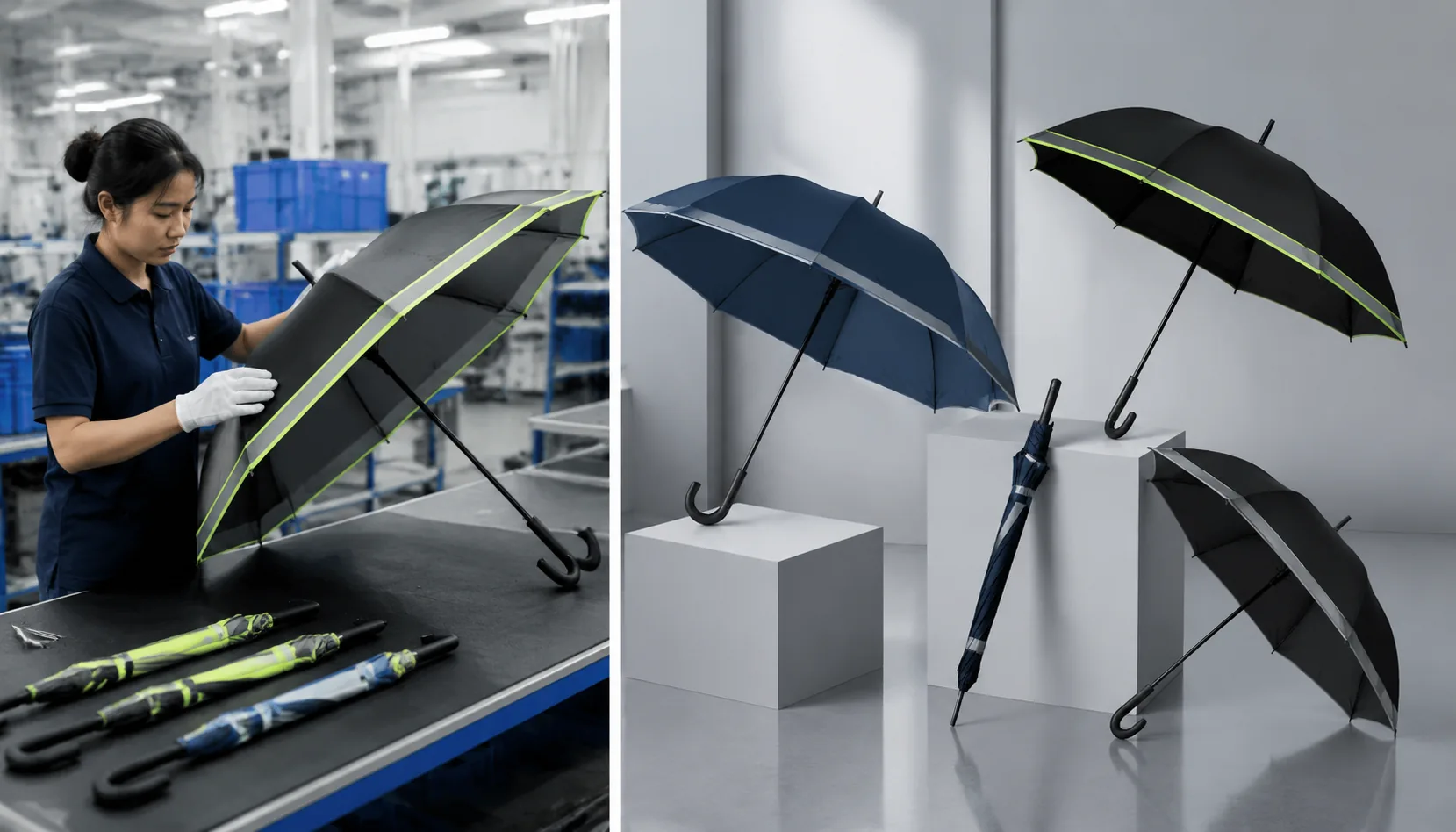
Reflective Commuter Umbrellas: OEM Safety Spec Guide
Specify reflective commuter umbrellas with 190T pongee, fiberglass ribs, safety trim, and QC points for retail or corpor...
Read More »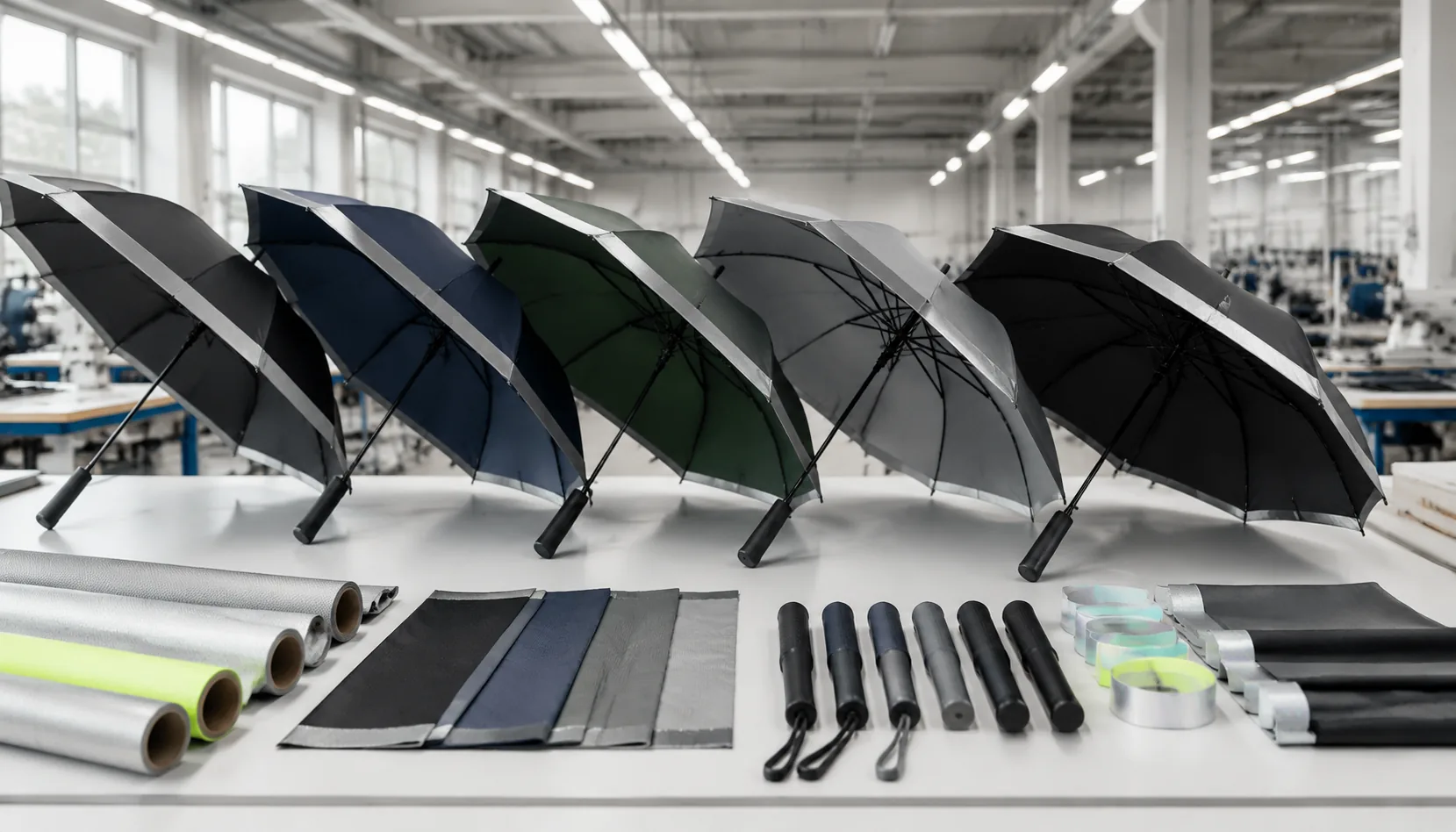
Reflective Safety Umbrellas: Spec Guide for Commuter Lines
Source reflective commuter umbrellas with the right tape, print layout, windproof frame, pongee canopy, AQL checks, MOQ,...
Read More »