Reflective Umbrella Logos for Safety Brand Campaigns
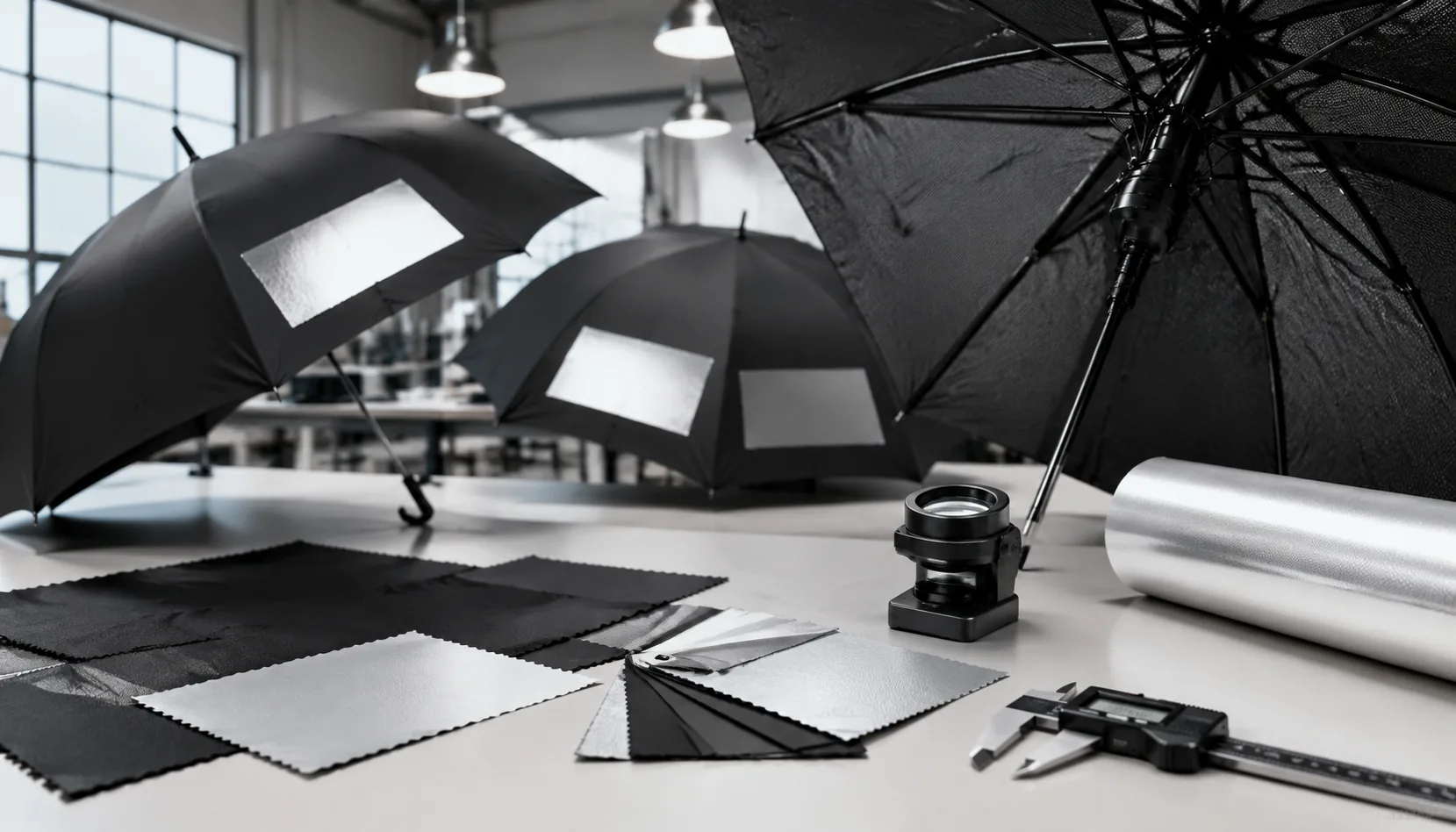
For night events, campus giveaways, and commuter campaigns, a logo that looks fine in daylight can disappear the moment headlights hit wet fabric at the wrong angle. On our Songxia production floor, reflective umbrella logo printing starts with film selection, panel placement, heat and pressure control, then AQL checks for adhesion, brightness, and alignment after folding. Buyers need those details locked before sampling, not discovered when cartons are already packed.
Where Reflective Branding Adds Practical Value
Reflective logos earn their cost when the umbrella is used near traffic, not when it sits in a gift bag. For commuter programs, insurance renewals, school walking groups, factory shuttle stops, and security patrol teams, the logo becomes a visibility marker during rain, fog, and early winter darkness. A 23" auto-open stick umbrella with 190T pongee and a reflective panel logo on two opposite canopy gores is usually more practical than printing all eight panels, because pedestrians are seen from front and rear without making the umbrella look like emergency gear. For rainy-season campaigns, I prefer reflective branded umbrellas over ordinary silver logos when the buyer’s message is tied to prevention, road safety, or duty-of-care. Night event umbrellas also benefit, especially for parking teams, outdoor concerts, marathons, and campus escorts where staff need to be spotted quickly under streetlights or vehicle headlights.
The key technical point: decorative silver ink is not the same as true reflective umbrella logo printing. Silver screen ink or metallic heat-transfer film gives a shiny daytime effect, but it does not return light strongly toward the source. True reflective transfer film uses glass beads or microprismatic structure, similar in principle to safety garment trim, and it flashes back when hit by headlights. On umbrellas, we normally apply it by heat transfer onto 190T or 210T pongee after checking adhesion, temperature tolerance, and folding behavior. A careless supplier may quote “reflective” but ship only gray-silver ink; the easy factory-floor test is to shine a phone flashlight near your eyes in a dim room. Real reflective film lights up sharply, while decorative silver merely glints.
There are tradeoffs. Reflective film is heavier and less elastic than ink, so oversized logos across seam lines can crack after repeated folding, especially on compact 21" auto-open-close umbrellas where the canopy packs tightly. I like reflective marks in 80–180 mm widths, positioned away from rib tips and high-tension seam intersections; for 27" or 30" golf umbrellas, larger reflective safety bands are possible if the artwork is broken by panel. Safety promotional umbrellas should still pass normal checks: frame opening cycle, rib alignment, water repellency, print adhesion after wet rubbing, and AQL 2.5 final inspection. For commuter umbrella branding, the best build is not necessarily expensive: fiberglass ribs, steel shaft, 8K or 10K frame, black or navy 210T pongee, and a white reflective transfer logo usually gives better real-world visibility than a full-color decorative print.
Choosing Canopy Colors and Logo Placement
Straps, sleeves, and edge bands are underrated for night event umbrellas because they stay visible when the umbrella is closed, stacked at a venue entrance, or carried through a parking lot. A 10-15 mm reflective strip on the closure strap gives constant side visibility, while a printed sleeve can carry sponsor artwork without forcing a large, stiff transfer onto the canopy. Edge-band reflection is useful on 8K and 10K umbrellas because it traces the moving outline of the umbrella, but it must be sewn evenly; a wavy band makes even a premium auto-open frame look cheap. Our standard practice at ZheBrella is to test reflective placement after canopy assembly, not only on flat fabric, because rib tension, panel curvature, and seam allowance all change how the logo catches light. For AQL 2.5 inspection, I would add checks for transfer adhesion, edge cracking after open-close cycling, and visibility from at least 30 meters under a direct beam.
Transfer Film, Heat Settings, and Fabric Compatibility
Reflective umbrella logo printing is not the same as ordinary heat-transfer decoration; the film stack is thicker, the glass-bead or micro-prismatic layer is pressure-sensitive, and poor bonding shows up after the first wet flex cycle. On 190T pongee, our normal starting window is 145–155°C, 12–16 seconds, medium pressure around 0.3–0.4 MPa, using a flat silicone lower pad so the panel seam allowance does not create a weak edge. 210T pongee can usually accept the same temperature, but because the weave is denser and often has a smoother WR finish, I prefer a slightly longer dwell, 15–18 seconds, before raising heat. For safety promotional umbrellas, the film supplier’s data sheet is only the starting point; we still run cross-hatch tape pull, 24-hour rest peel, and a wet rub test because canopy fabric is folded, flexed, and rubbed against ribs far more than a jacket panel.
Peel behavior matters more than the first press appearance. A good reflective transfer should release cleanly after hot or warm peel, depending on the carrier, without silver cracking, edge lift, or adhesive shadow outside the logo. For reflective branded umbrellas, we test one panel from each fabric lot after conditioning because pongee finishing varies by mill, especially between standard 190T, high-density 210T, and Teflon-treated cloth. I want to see the logo survive 20–30 open-close cycles, a 30-minute water spray, and thumb-scratch pressure at the corners before approving bulk production. If the logo sits near a rib channel, handle the panel carefully during assembly; excessive stretching during stitching can create hairline fractures in reflective film. For commuter umbrella branding, simple block logos and 2–3 mm minimum line widths hold up better than fine QR codes or tiny legal text.
UPF 50+ coatings are the main trap. Silver or black UV back coatings can soften, discolor, or gas out under heat, especially above 155°C, and the reflective adhesive may bond to the coating instead of the polyester yarn. That looks acceptable on day one but fails as a skin peel after folding. For night event umbrellas, I recommend testing on the exact coated fabric, not a showroom swatch, and using lower-temperature reflective PU film when the canopy has UV, acrylic, or heavy water-repellent treatment. Double-canopy vented windproof umbrellas add another risk: the upper and lower layers are not always flat under the press, and trapped seam bulk causes uneven pressure. In ZheBrella production, we usually decorate panels before canopy sewing, then inspect under both daylight and flashlight angle so weak reflectivity, scorch marks, and edge lift are caught before frame assembly.
Frame Choices for Safety-Focused Umbrellas
For safety promotional umbrellas, the frame is not a hidden component; it decides whether the logo stays visible when the weather turns ugly. A 23-inch stick umbrella with 8K fiberglass ribs and a steel shaft is usually the best balance for commuter umbrella branding: flexible enough to absorb gusts, stiff enough to keep the canopy shape flat so reflective umbrella logo printing does not distort. If the campaign targets road crews, campus security, or late-shift employees, I would move to 10K or 16K ribs only when the budget supports the extra assembly time and weight. More ribs make the umbrella look premium, but they also add sewing points, more tip alignment checks, and higher freight weight. For general giveaway use, an 8K fiberglass frame beats a cheap 8K all-steel frame because steel ribs bend permanently after side gusts, while fiberglass returns closer to shape.
Auto-open mechanisms matter because a safety umbrella often gets used with one hand while stepping out of a car, bus, or venue entrance. On folding models, a 21-inch or 23-inch auto-open-close frame is practical for commuters, but the reflective area is smaller and broken by panel curvature, so logos should stay bold, usually under 120 mm wide per panel. On straight stick umbrellas, reflective branded umbrellas can carry larger logos across one or two panels without looking cramped. Golf umbrellas, especially 27-inch and 30-inch sizes, give the best nighttime visibility because the canopy sits higher and flatter; reflective ink, heat-transfer film, or silver reflective piping can be seen from wider angles. For night event umbrellas, I prefer one reflective logo panel plus alternating reflective edge trims, instead of filling every panel with graphics that compete with the safety message.
Double-canopy windproof designs are worth specifying when the umbrella will be used in open parking lots, school crossings, ports, stadium exits, or roadside events. A vented 27-inch golf umbrella with fiberglass ribs and a steel or fiberglass shaft can survive 50+ mph wind-tunnel testing when the rib joints, runners, and tips are properly matched; a basic folding umbrella usually cannot make that claim honestly. The vent also reduces inversion, which protects both the frame and the printed logo surface. Reflective umbrella logo printing performs best on 190T or 210T pongee because the fabric surface is stable and accepts transfer films cleanly, while PVC or POE clear canopies need different adhesion testing and lower heat settings. For production control, I would inspect reflective placement under both normal light and a flashlight beam, then include AQL 2.5 checks for frame opening force, runner lock strength, rib symmetry, and logo alignment.
Quality Control and Compliance Checks
For reflective umbrella logo printing, the first control point is registration, not brightness. A reflective mark that sits 8 mm off-center on one panel looks cheap in daylight and becomes very obvious under headlights. We set an alignment tolerance of ±3 mm from the approved strike-off, with panel-to-panel position checked before bulk sewing because a cut canopy cannot be corrected after rib assembly. On 190T or 210T pongee, reflective heat-transfer film needs the right dwell time, pressure, and peel temperature; too cold and the edge lifts, too hot and the coating gets a glossy burn mark. For reflective branded umbrellas using POE or PVC panels, adhesion is trickier because the surface is less forgiving than woven fabric, so we require a separate material test before confirming mass production.
Folding endurance matters more than a flat-table appearance sample. We open and close production samples 25 to 50 cycles, then inspect the logo across rib contact points for cracking, whitening, and edge curl, especially on 21 inch and 23 inch commuter umbrella branding styles where the folded canopy is tight. Wet rub resistance is checked with a damp white cotton cloth, normally 10 back-and-forth strokes under consistent hand pressure; any silver transfer, black smearing, or adhesive residue is treated as a failure for safety promotional umbrellas. For night event umbrellas, we also recommend checking reflectivity from 10 to 20 meters under vehicle-style light, because some low-cost films pass visual inspection but lose contrast once water beads on the canopy.
Bulk inspection should be written into the purchase order, not negotiated after cartons are packed. Our standard practice at ZheBrella is AQL 2.5 for major defects, with logo misalignment, film lifting, cracking after folding, poor wet rub, wrong handle color, and mixed carton markings listed as rejectable points. MOQ for reflective umbrella logo printing is usually higher than standard screen printing because film cutting and heat-press setup create more waste; practical starting quantities are often 500 to 1,000 pieces per design, depending on size and rib count. Normal lead time is 20 to 35 days after artwork approval, but deadline-based campaigns should add 7 to 10 days for sampling and transit buffer. FOB Ningbo or Shanghai works when the buyer controls freight; DDP is safer for fixed event dates, but only if carton dimensions, HS code, and delivery address are confirmed before production starts.
Frequently Asked Questions
Is reflective umbrella branding washable or rain resistant?
Quality reflective transfer film is rain resistant, but it should be tested for edge lifting after wet folding. Bulk orders should include adhesion and folding checks under AQL 2.5 inspection.
Can reflective logos be printed on double-canopy windproof umbrellas?
Yes, usually on the outer canopy panels or straps. The factory should confirm heat-transfer pressure does not affect vent stitching, fiberglass ribs, or the double-canopy airflow structure.
Which reflective logo materials work best on umbrella panels?
For B2B orders, heat-transfer reflective film is the most common choice because it gives stronger night visibility than standard silver ink. Buyers should confirm adhesion on pongee, polyester, or coated fabrics before mass production.
Where should reflective logos be placed for commuter and night event umbrellas?
The most visible placements are one or two outer canopy panels facing traffic, plus an optional sleeve print. For safety campaigns, many buyers use 2-panel reflective branding so the logo remains visible from multiple walking angles.
What quality checks should be included for reflective branded umbrellas?
AQL inspection should check logo position tolerance, film adhesion, reflectivity under light, canopy stitching, frame function, and packing accuracy. For promotional orders, common inspection levels are AQL 2.5 for major defects and AQL 4.0 for minor defects.
Looking to Launch Your Custom Umbrella Line?
ZheBrella is a Zhejiang-based OEM/ODM umbrella manufacturer with 17 years of export experience. Free design, low MOQ from 100 pieces, windproof construction, full-color print.
Get Free Quote Now »People Also Search For
Related Articles
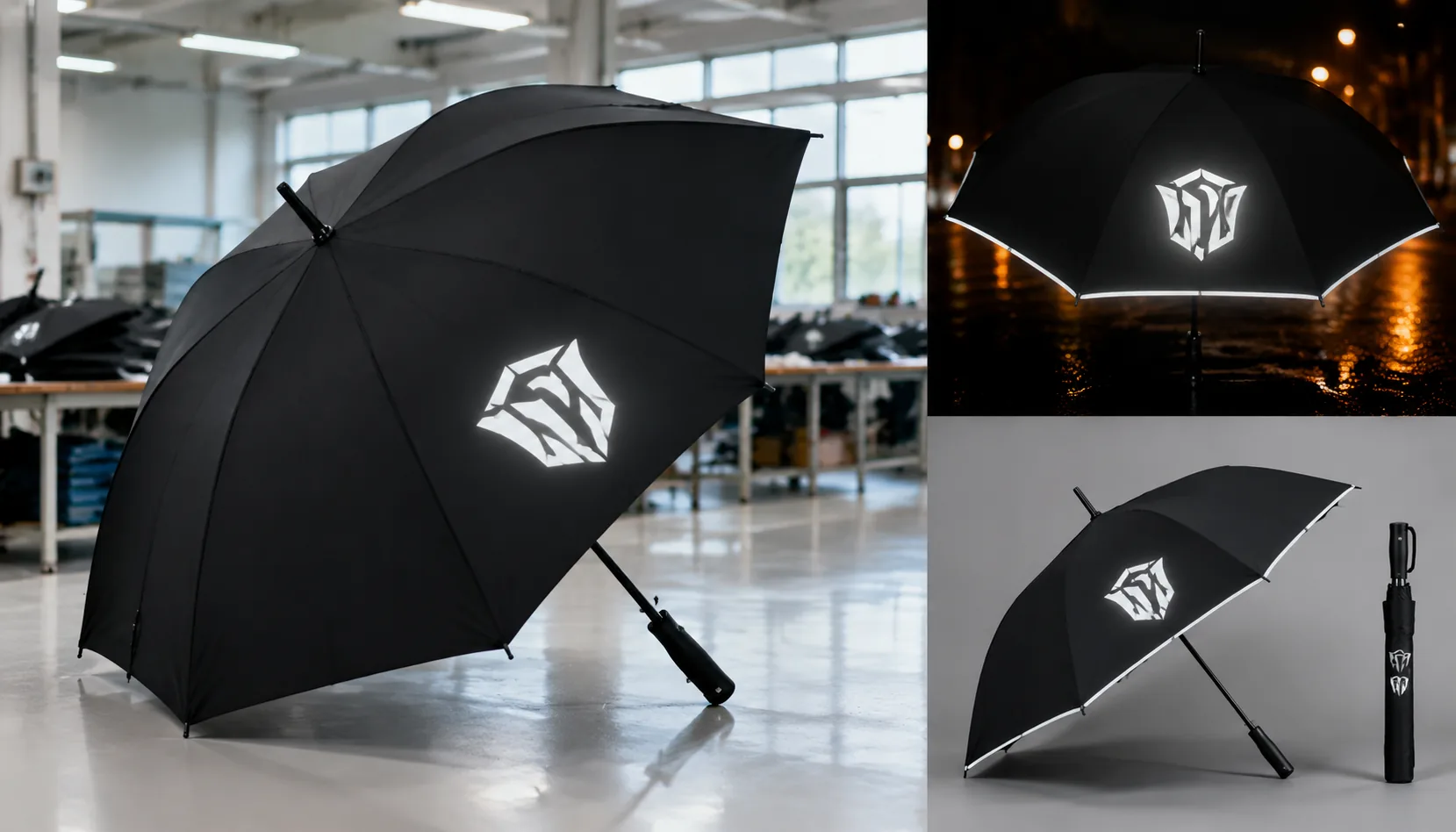
Reflective Umbrella Logos for Night Events and Safety Brands
Use reflective umbrella logos for night events, campuses, and safety brands while balancing visibility, durability, fram...
Read More »
Reflective Umbrella Printing for Nighttime Brand Visibility
Plan reflective logos or trims that improve night visibility, with fabric, ink, MOQ, testing, and lead-time notes for B2...
Read More »
Reflective Logo Printing on Umbrellas for Safety Campaigns
Compare reflective logo placements, ink options, and AQL checks for umbrellas used in safety campaigns, outdoor events, ...
Read More »