Reflective Safety Umbrellas for Corporate and Event Buyers
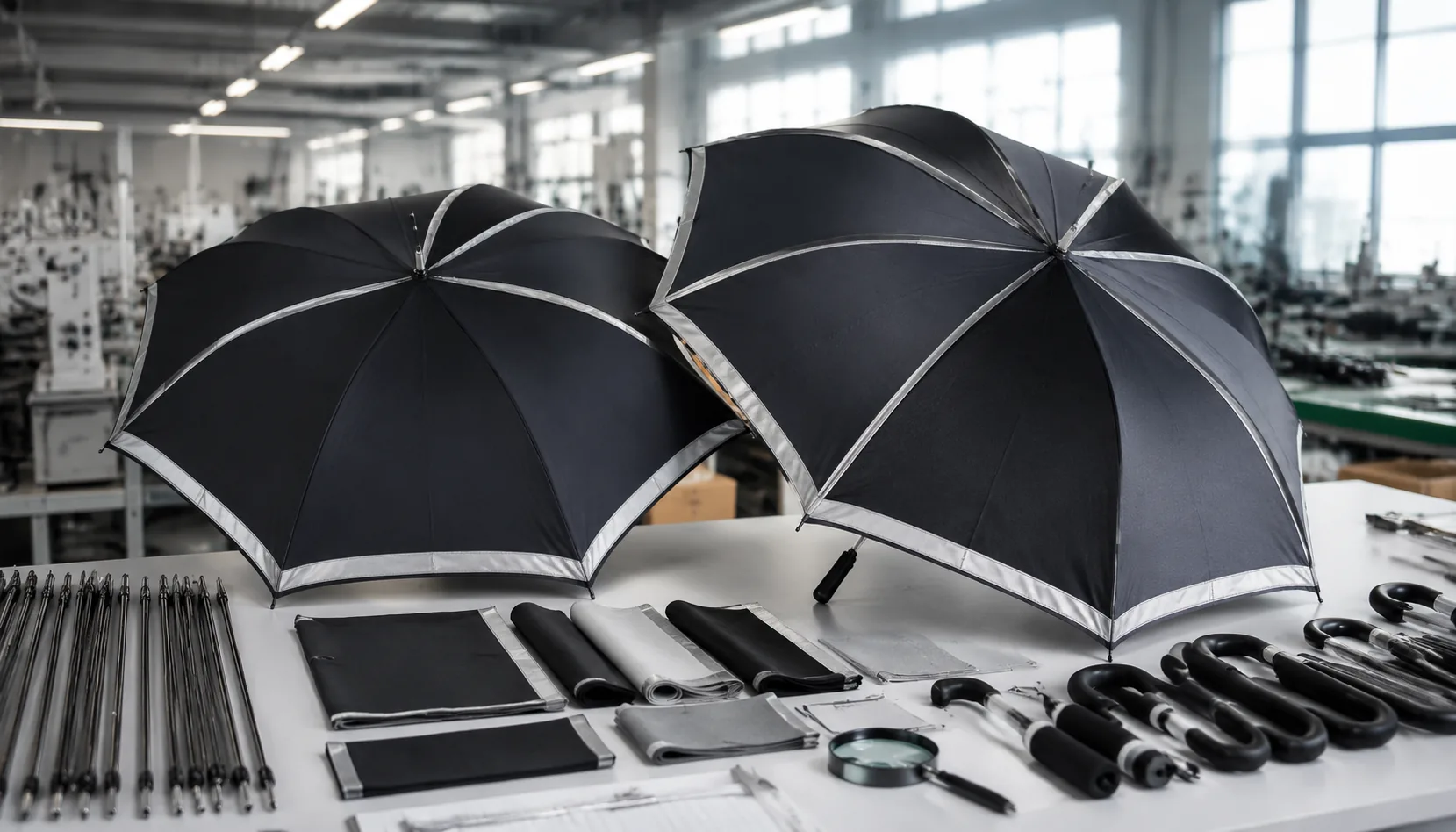
When a night event, utility crew, or campus safety program needs umbrellas, the risk is not just rain coverage—it is visibility, durability, and whether the branding still passes inspection after production. On our Songxia factory floor, reflective safety umbrellas are specified around fabric density, rib strength, seam alignment, and logo placement before the first bulk panel is cut. A practical spec starts with 190T pongee, fiberglass ribs, and reflective tape positioned to stay compliant without fighting the buyer’s artwork.
Visibility Materials and Placement
Reflective safety umbrellas work best when the reflective material sits on moving edges, not buried under a logo in the center panel. The highest-return placement is 360-degree reflective piping along the canopy perimeter because car headlights catch the rim from low angles while the user is walking. On a 23" or 27" umbrella, we usually specify 5 mm to 10 mm reflective piping sewn into the edge seam; wider looks stronger but can make the hem stiff if the canopy is 190T pongee rather than heavier 210T. For golf sizes like 30" or 32", reflective binding on every panel edge gives better side visibility than one reflective arc printed across two panels. It also survives folding better because the reflective yarn or film is protected by stitching instead of sitting exposed on the canopy surface.
Reflective tape is brighter than piping when headlights hit it directly, but it needs careful placement. A 15 mm to 25 mm heat-applied or stitched reflective tape band near the lower canopy edge gives strong night visibility, especially on black, navy, or dark gray pongee. Sleeves and closing straps are underrated: a reflective sleeve strip is visible while the umbrella is carried closed, and a reflective hook-and-loop strap flashes when the umbrella swings at arm level. For custom reflective umbrellas used in employee safety programs, I prefer combining perimeter piping with one sleeve strip and one strap strip; that covers open, closed, and walking positions without making the product look like roadwork gear. POE clear umbrellas can also take reflective edge binding, but heat-transfer tape needs lower temperature control to avoid canopy distortion.
Large logos should not be placed on reflective tape if visibility is the reason for buying. Screen ink, heat-transfer film, and sublimation layers reduce retroreflective performance because they cover the glass-bead or microprismatic surface that sends light back to headlights. For safety program umbrellas or branded night visibility umbrellas, put the corporate mark on one or two main canopy panels and keep reflective zones clean. If a buyer insists on branding the reflective band, use small repeat logos in negative space or print beside the tape, not over it. For event umbrellas bulk orders, this matters in inspection too: our AQL 2.5 checks include tape adhesion, seam alignment, reflective continuity around the edge, and logo registration, because a crooked reflective band is obvious at night and a cracked transfer after folding will fail quickly in real use.
Frame Specs for Outdoor Safety Use
For reflective safety umbrellas, the frame matters as much as the reflective tape or printed logo because most failures happen at the rib joint, runner, or shaft under side wind. A steel shaft gives good vertical stiffness and keeps cost controlled for safety program umbrellas, especially in 23" and 27" straight umbrellas, but steel ribs bend permanently when a gust flips the canopy. Fiberglass ribs cost more, yet they flex and recover better, which is why I prefer fiberglass ribs with a steel or aluminum shaft for outdoor crews, parking attendants, school crossings, and night event staff. For a practical corporate order, 190T or 210T pongee with reflective edging on an 8K fiberglass rib frame is usually stronger than a cheaper 16K steel-rib frame that only looks premium on paper.
Rib count should follow the use case, not the catalog photo. An 8K frame is the standard workhorse for event umbrellas bulk orders because it balances weight, packing size, and replacement cost; it is suitable for manual or auto-open 23" umbrellas where wind exposure is moderate. A 10K structure adds canopy support and feels noticeably steadier in a 27" golf umbrella, especially when paired with a double-canopy vented windproof design. In our factory checks at ZheBrella, I look closely at rib-tip stitching, stretcher rivets, spring tension, and runner travel because a frame that passes fabric inspection can still fail after 200 open-close cycles if those parts are loose.
Use 16K only when the buyer is paying for premium wind resistance, not just a heavier-looking umbrella. Sixteen ribs distribute load more evenly and keep the canopy rounder for custom reflective umbrellas with wide reflective panels or branded night visibility umbrellas using silver tape on every other gore, but the extra ribs add weight, labor, and more inspection points. For 27" and 30" outdoor safety umbrellas, a 16K fiberglass rib set with a vented double canopy can be specified for 50+ mph wind-tunnel survival, though I would still set AQL 2.5 inspection around frame symmetry, rivet pull, and inversion recovery. If the program is a giveaway, choose 8K; if staff will use it weekly in exposed lots or roadside work, move to 10K or 16K fiberglass.
Canopy Fabric, Coatings, and Color Choices
For reflective safety umbrellas, I usually steer corporate and event buyers toward 190T pongee when the umbrella is for giveaways, parking-lot staff, school programs, or one-day outdoor events. It is lighter, prints cleanly by screen print or heat transfer, and keeps the FOB cost under control when ordering event umbrellas bulk in 1,000 to 10,000 pieces. For longer service life, 210T pongee is the better fabric: tighter weave, smoother hand feel, better tear resistance around the rib tips, and less sagging after repeated wet-dry cycles. The difference is easy to feel on a 23 inch or 27 inch umbrella, especially with 8K or 10K fiberglass ribs, because the canopy stays flatter under wind load and sheds water more evenly.
Color choice is not only branding; it affects visibility and print contrast. Black panels with silver reflective tape look executive and hide dirt, so they fit utilities, security teams, hotels, and corporate safety program umbrellas. Neon yellow, orange, or lime panels are better for roadside crews, race volunteers, night-market staff, and branded night visibility umbrellas where recognition matters from 50 to 100 feet away under headlights. A practical layout is alternating black and neon panels, with 10 mm to 20 mm reflective piping on panel seams or a reflective border near the canopy edge. Custom reflective umbrellas should avoid placing dark logos over reflective zones, because ink reduces retroreflective return and can fail rubbing tests after folding.
A proper DWR finish is still necessary even when the umbrella carries reflective material. We normally specify a fluorine-free durable water repellent on 190T or 210T pongee, then test spray rating and check whether water beads after the canopy is opened and closed several times. For daytime field crews, UPF 50+ coating adds real value, especially on 27 inch and 30 inch golf umbrellas used by surveyors, construction supervisors, traffic marshals, and outdoor event staff standing in sun for 4 to 8 hours. Silver or black UV backing improves shade and heat comfort, but it can make the canopy stiffer and slightly affect folding neatness. At ZheBrella, our standard practice is to confirm coating, colorfastness, and print adhesion during pre-production sampling before moving to AQL 2.5 final inspection.
Branding, Packaging, and MOQ Planning
Branding on reflective safety umbrellas has to be planned around both the print area and the reflective layout, because a logo that looks fine on a standard 190T pongee canopy can interfere with visibility if it covers reflective tape or a silver-coated panel. For corporate safety program umbrellas, we usually screen print 1–2 spot colors on 23" or 27" straight umbrellas when the logo is simple and the order is 500 pcs or more. Heat transfer is better for gradients, small text, and multi-color sponsor logos, especially on custom reflective umbrellas used for races, outdoor staff teams, or utility crews. On POE or PVC clear canopies, adhesion testing matters; cheap ink can peel after flexing, so we run tape-pull and wet-rub checks before bulk production. Woven labels are normally sewn into the sleeve seam or canopy edge, while rubber patches work better on handles or sleeve tabs when the buyer wants a more retail feel.
Packaging is where many event buyers under-budget. A basic bulk order can use one self-fabric sleeve, one polybag, and a master carton, but retail or employee-gift programs often need printed sleeves, barcode hangtags, warning labels, and carton marks by department or delivery site. For branded night visibility umbrellas, I prefer a reflective sleeve strip as well as reflective canopy trim, because the sleeve is visible when staff carry the umbrella closed near parking lots or venue gates. Hangtags should state key specs clearly: canopy fabric such as 190T or 210T pongee, fiberglass or steel ribs, manual or auto-open mechanism, reflective tape width, UPF 50+ if coated, and any windproof claim such as a double-canopy frame tested to 50+ mph. If the product ships DDP to multiple event locations, carton sorting and outer-label accuracy are as important as the umbrella itself.
MOQ depends heavily on frame availability and decoration method. For stock-frame 21" folding umbrellas, practical MOQ is often 300–500 pcs per logo, but auto-open-close models with reflective trim usually start at 500–1,000 pcs because the canopy panels and sleeves must be cut together. Straight 23" and 27" event umbrellas bulk orders are easier to control at 500 pcs per color, while 30" golf umbrellas with 8K or 10K fiberglass frames commonly start at 1,000 pcs if the buyer wants custom canopy colors. Mixed-color orders sound simple, but they raise cost when each color requires separate fabric sourcing, print setup, sleeve matching, and AQL 2.5 inspection sorting. Our standard practice at ZheBrella is to price mixed colors by color band, not just total quantity: 1,000 pcs in one color is cheaper than 250 pcs each in four colors, even with the same logo.
Inspection Points Before Shipment
Reflective adhesion is the first shipment gate because a safety umbrella that looks bright in the sample room can fail after folding, rubbing, or rain exposure. For reflective safety umbrellas, we check the tape or printed reflective ink after full curing, not right off the heat press. A good inspector bends the canopy along the rib line, rubs the reflective area with a dry white cloth, then repeats with a damp cloth to catch edge lifting, silver transfer, or cloudy patches. On custom reflective umbrellas, reflective strips should sit straight across panels with no more than 2-3 mm wander at the seam, because crooked tape becomes very obvious under headlights. If the design uses segmented reflective piping, we also check continuity at every tip and ferrule position. Any Teflon, PU, or UV coating on 190T or 210T pongee must be compatible with the adhesive system, otherwise the strip may pass visual inspection but peel after two weeks in warehouse humidity.
Frame and mechanism checks come next, especially on event umbrellas bulk buyers plan to distribute without user training. Rib alignment should be inspected open and closed: 8K and 10K frames should sit evenly with no twisted stretcher, short rib, loose rivet, or canopy panel pulling off-center. For safety program umbrellas with fiberglass ribs, we flex-test several units because fiberglass hides defects better than painted steel; a cracked rib may only show when the canopy is loaded in wind. If the order uses auto-open or auto-open-close, every sampled unit should be cycled at least 3-5 times to confirm smooth release, full lock at the runner, button rebound, and no delayed spring action. On 23 inch and 27 inch models, we pay close attention to runner clearance and shaft straightness, because a tight reflective canopy can add resistance and make the auto-open feel weak even when the spring itself is correct.
Seam strength is not just a sewing issue; it decides whether branded night visibility umbrellas survive real outdoor use. We inspect the top notch stitching, tip pockets, tie strap, panel seams, and any reflective tape sewn into the seam allowance. A practical pull check is 20-25 N at stress points, with no skipped stitches, broken thread, or needle holes tearing into coated fabric. For bulk corporate or municipal orders, our standard practice at ZheBrella is AQL 2.5 for major defects and tighter internal screening on reflective placement, because one visibly peeling strip can damage the whole safety-program rollout. Carton checks should include model count, logo position, warning labels if requested, polybag ventilation holes, and barcode match. Before FOB Ningbo or Shanghai release, the buyer should receive an inspection report with defect photos, sample size, pass/fail result, and confirmation that reflective visibility was checked under directed light, not only under factory fluorescent lamps.
Frequently Asked Questions
Can reflective umbrellas be printed with a full-color logo?
Yes, but full-color artwork is usually printed on the pongee panels, not directly over reflective tape. Reflective piping should remain unobstructed for better nighttime visibility.
What lead time should buyers plan for reflective umbrella orders?
Plan about 7–10 days for sampling and 25–40 days for bulk production after approval. Orders with custom reflective trim or special packaging may need extra material-prep time.
What reflective materials can be used on bulk safety umbrellas?
Most B2B orders use reflective piping, reflective edge tape, or panel strips. For stronger night visibility, buyers typically specify 360-degree reflective trim around the canopy plus a logo placed away from the reflective band.
Can reflective umbrellas include a corporate logo without reducing visibility?
Yes. Logos are usually printed on 1-2 canopy panels, while reflective tape is kept on the outer edge or ribs. This layout preserves visibility and avoids covering functional reflective areas.
What specifications are common for event or utility safety umbrellas?
A common specification is 190T pongee fabric, fiberglass ribs, a metal or fiberglass shaft, reflective trim, and screen-printed logos. Typical OEM production lead time is about 25-45 days after sample approval, depending on order size and customization.
Looking to Launch Your Custom Umbrella Line?
ZheBrella is a Zhejiang-based OEM/ODM umbrella manufacturer with 17 years of export experience. Free design, low MOQ from 100 pieces, windproof construction, full-color print.
Get Free Quote Now »People Also Search For
Related Articles
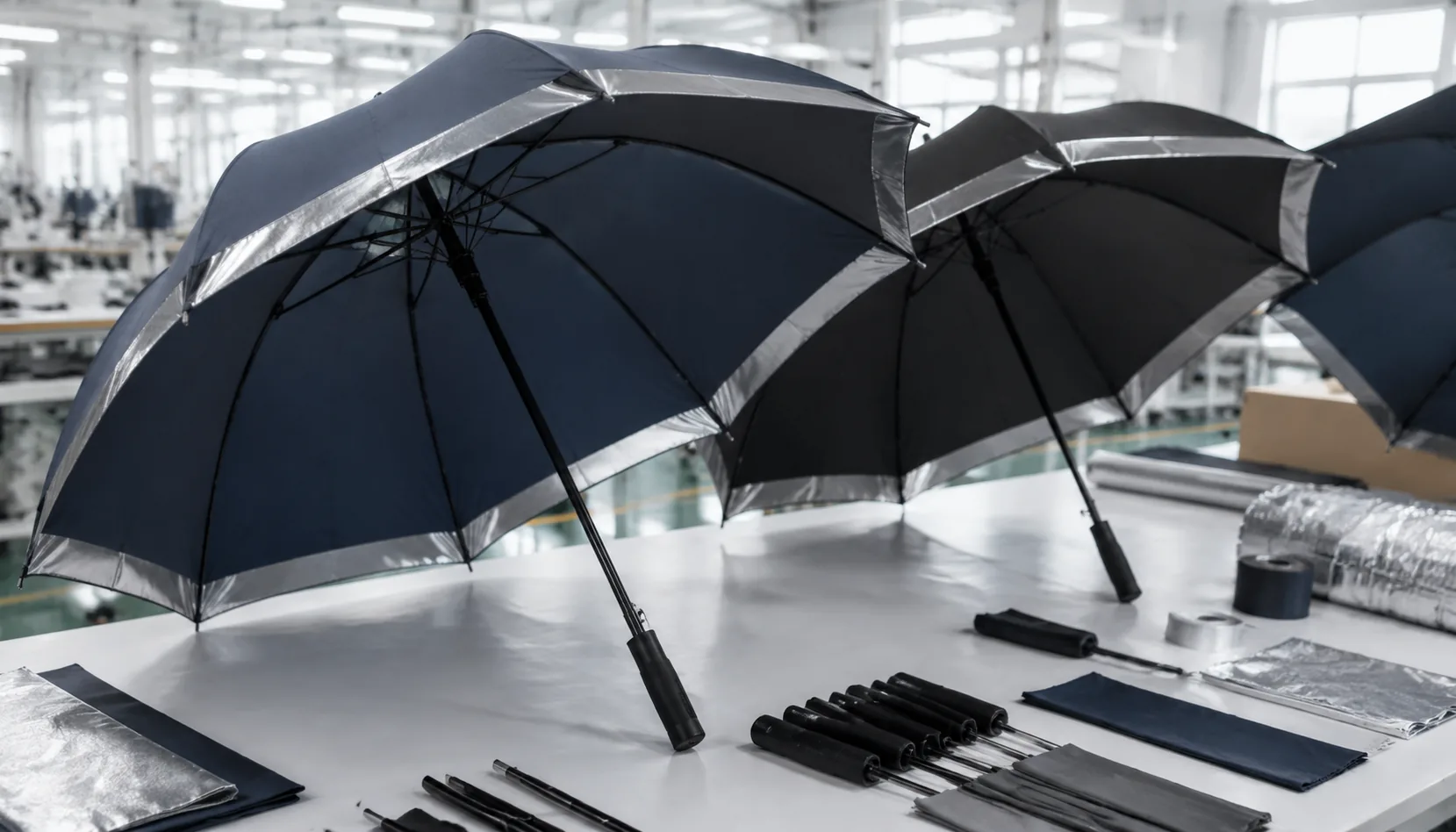
Reflective Safety Umbrellas for Corporate and Event Programs
Specify reflective umbrellas for safety campaigns with the right fabric, rib strength, print areas, visibility details, ...
Read More »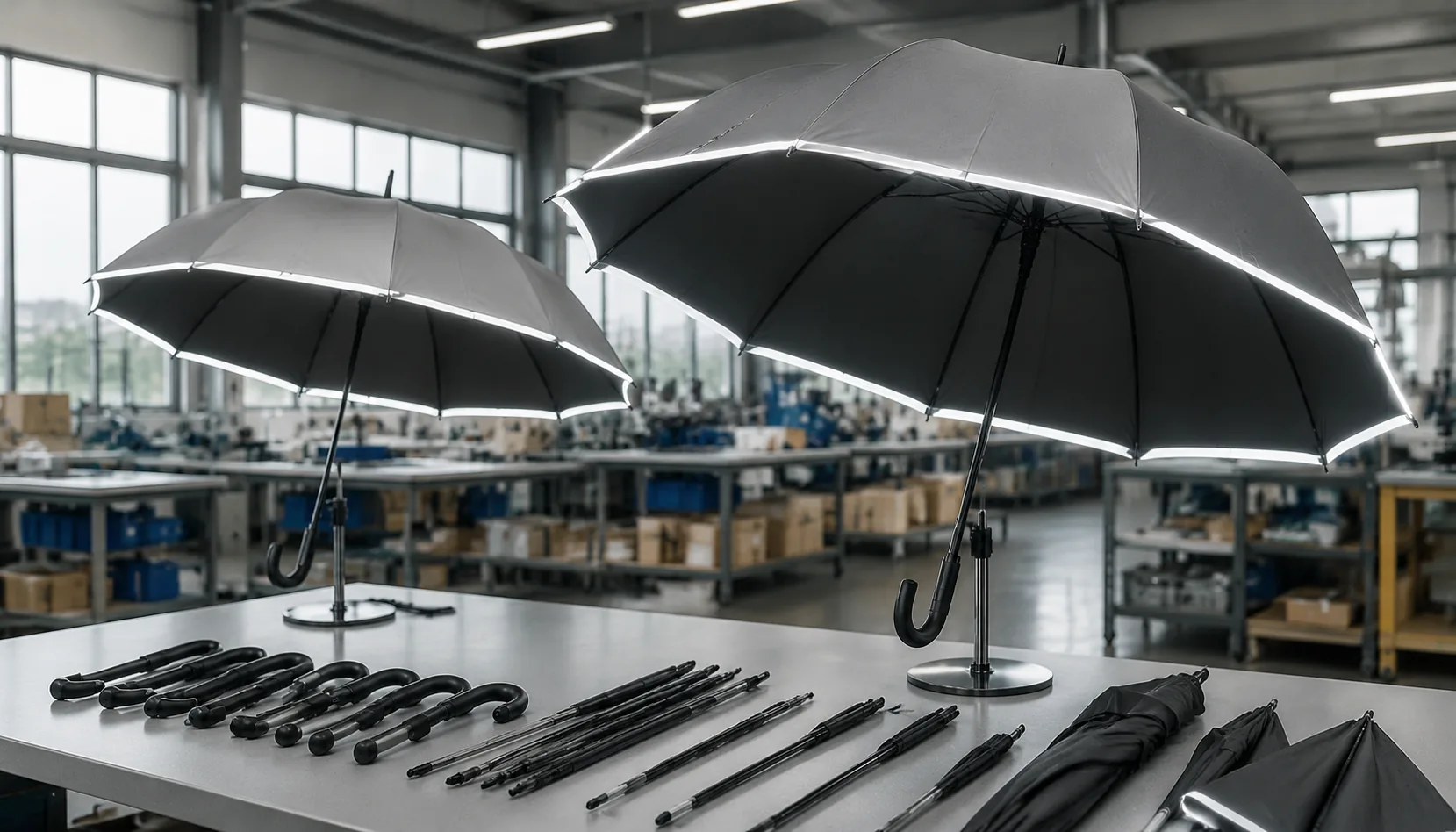
Reflective Safety Umbrellas for Corporate and Campus Programs
Specify reflective safety umbrellas with strip placement, canopy fabric, rib materials, print methods, and inspection ch...
Read More »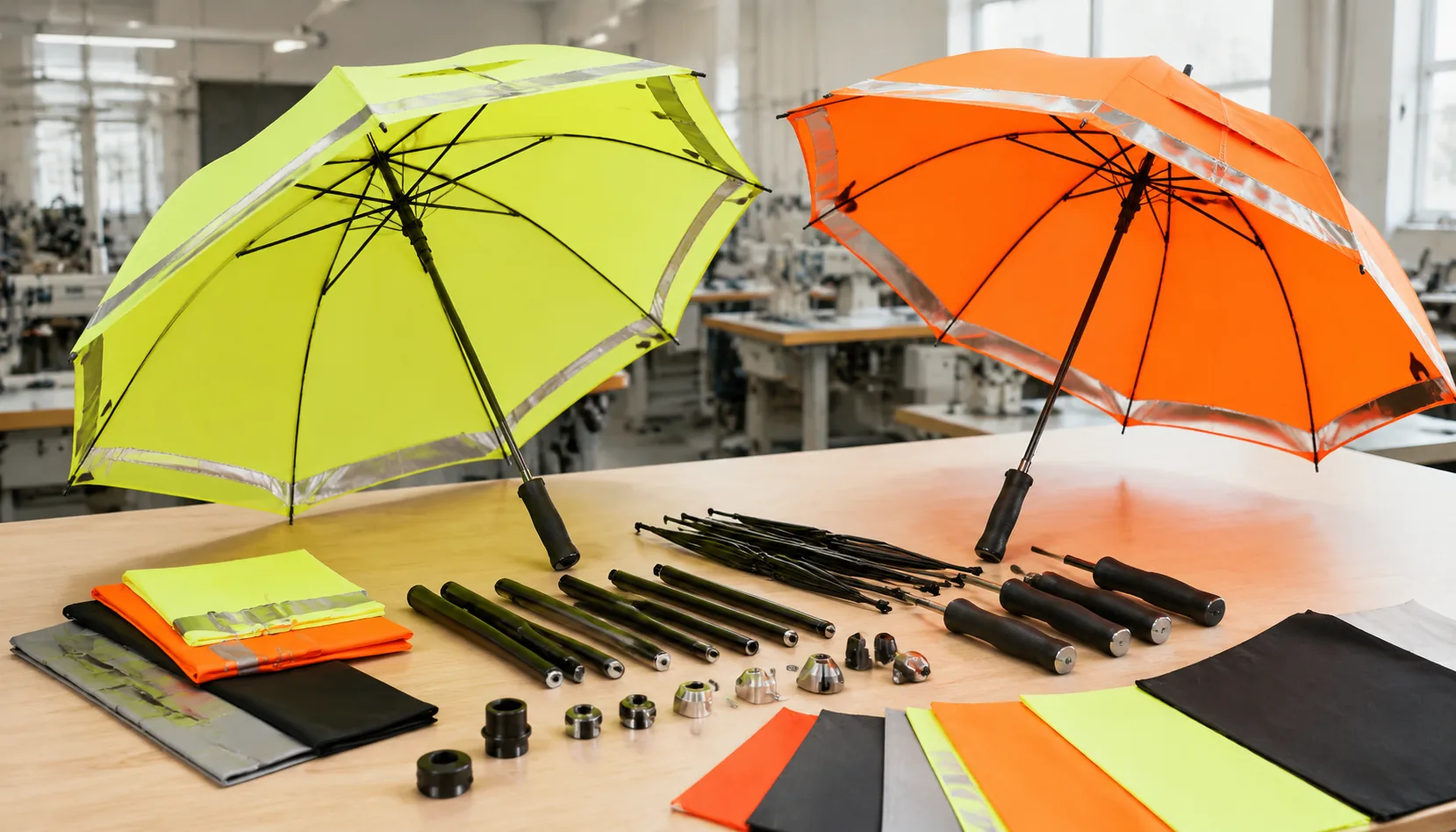
Reflective Safety Umbrellas: Spec Guide for Event Buyers
Learn how to specify reflective safety umbrellas with durable frames, visible trims, print zones, AQL checks, and realis...
Read More »