Reflective Umbrella Printing for Nighttime Brand Visibility
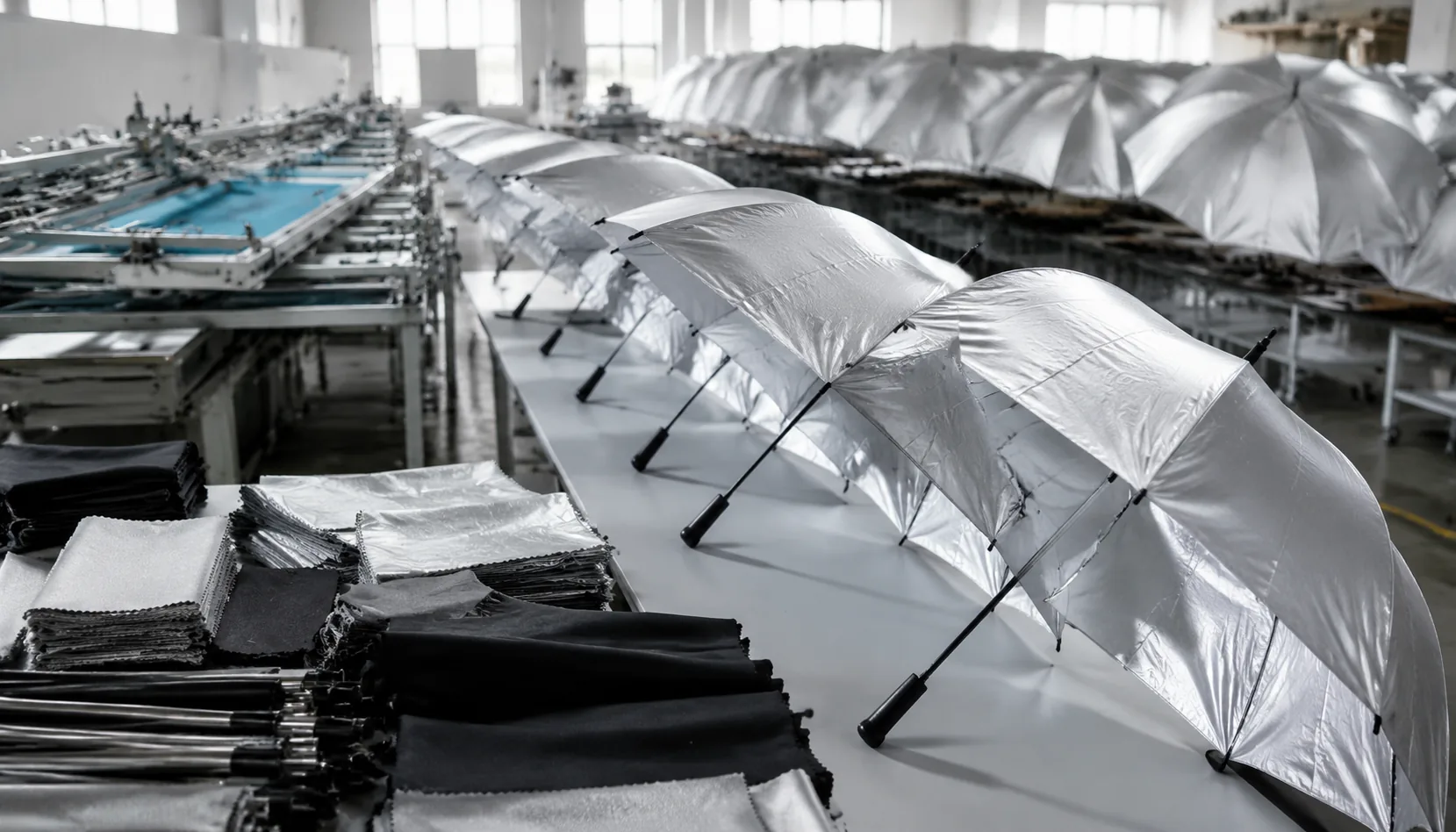
When a customer needs branded umbrellas that stay visible after dark, the challenge is not just printing a logo but matching reflective effect, fabric behavior, and production limits without creating washout, cracking, or delayed delivery. At the factory floor, reflective printed umbrellas require the right film, ink stack, seam placement, MOQ planning, and testing routine so the decoration works at night and still survives real use, packing, and transit.
Where Reflective Branding Works Best
Reflective branding works best when the umbrella is carried in low-light traffic, not just photographed on a desk for a catalog. For commuter gifts, I like a 23" auto-open stick umbrella or a 21" auto-open-close compact with 190T or 210T pongee, because office workers actually keep those sizes in a backpack, car door, or subway tote. A reflective logo print on one or two panels is enough for brand recall without turning the canopy into a warning sign. For banks, telecoms, and corporate HR programs, reflective printed umbrellas make sense when the recipient walks from parking lots, bus stops, or train stations after 5 p.m.; the added value is visible, practical, and easier to justify than another ordinary giveaway.
Outdoor events need a different layout because the umbrella may be opened in crowds, rain lines, and parking exits. Instead of full-canopy branding, which can look heavy and may crack if the reflective ink layer is overbuilt, we usually place reflective canopy strips near the lower third of alternating panels, or add edge piping that catches headlights from the side. Sleeve prints are useful for marathons, festivals, campus events, and trade shows because the logo is seen before the umbrella is opened, but sleeve-only visibility disappears once rain starts. For branded rain umbrellas used by event staff, 27" or 30" golf sizes with fiberglass ribs, 8K or 10K frames, and vented double-canopy construction are better than cheap steel frames when wind reaches 40–50 mph.
Insurance campaigns and municipal safety programs are where promotional safety umbrellas earn their cost. Property insurers, auto clubs, schools, utility companies, and road-safety sponsors can connect the message directly to risk reduction, especially when the design uses reflective edge piping plus a modest reflective logo print on two facing panels. Night safety umbrellas should still pass normal umbrella checks: smooth manual or auto-open action, no sharp rib tips, clean seam tension, and AQL 2.5 inspection for print alignment, adhesion, and fabric defects. At ZheBrella, our standard practice is to test reflective transfers and inks on the actual PO fabric or pongee lot before bulk cutting, because coating chemistry, Teflon water repellency, and heat-transfer temperature can change both reflectivity and wash-rub durability.
Choosing Fabric, Frame, and Reflective Materials
Fabric choice decides whether the reflective area looks sharp or turns muddy after coating and rain testing. For reflective printed umbrellas, 190T pongee is the normal promotional baseline: it is light, folds cleanly on 21" and 23" models, and takes screen print or heat-transfer logos without adding much bulk. The drawback is that reflective ink can sit slightly raised on the weave, so thin text and small QR-style marks lose edge definition. 210T pongee has a tighter hand and gives better registration for a reflective logo print, especially on 27" golf umbrellas where panels move more during sewing. I avoid cheap polyester taffeta for night safety umbrellas because it wrinkles around the seam allowance and makes reflective strips look broken under headlights. If the buyer needs UPF 50+ or Teflon water repellency, confirm coating compatibility before approving artwork; some post-coatings reduce reflective brightness or cause transfer-film lifting after wet flex tests.
Reflective ink and heat-transfer film solve different problems. Reflective ink is better for curved logos, small brand marks, and designs that must stay soft when the canopy folds into a sleeve. It works well on branded rain umbrellas when the print area is moderate, but the factory must control mesh count, curing temperature, and silver pigment loading; under-cured ink cracks, over-cured ink dulls. Heat-transfer reflective film gives stronger nighttime return and cleaner strip edges, so I prefer it for promotional safety umbrellas with perimeter bands, rib-following lines, or large warning panels. The tradeoff is hand feel: film adds stiffness, and on compact auto-open-close umbrellas it can create fold memory if placed across tight crease lines. Our standard practice at ZheBrella is to test transfers through wet opening cycles and a low-temperature fold check before bulk cutting, not after 5,000 panels are already printed.
Higher-value safety umbrellas should not be built on weak frames. Steel ribs keep cost down, but they bend permanently when a user fights a gust near a subway exit. Fiberglass ribs recover better, reduce tip breakage, and pair well with double-canopy vented windproof construction rated around 50+ mph in practical wind-tunnel checks. For reflective printed umbrellas, this matters because a twisted frame makes reflective bands misalign and destroys the safety function. Panel layout also affects continuity: an 8K umbrella gives wider panels and fewer seam interruptions, which is best for bold circumferential strips or one large reflective logo print. A 16K layout looks premium on 27" or 30" golf models and gives a rounder canopy, but every seam is a break point, so artwork must be split with 3–5 mm tolerance. I tell buyers to approve a sewn pre-production sample under car headlights, not just a flat digital mockup.
Artwork Rules for Readable Night Logos
Readable night artwork starts with line weight, not logo ambition. For reflective printed umbrellas, I reject vector strokes under 1.2 mm after scaling because reflective ink and heat-transfer film both lose sharpness when the canopy flexes over 190T or 210T pongee. Small reversed text is worse; keep letters at least 8 mm high, with 10–12 mm safer for event or roadside use. A practical logo range on a 23 inch 8K umbrella is 90–140 mm wide per panel; on 27 inch golf umbrellas, 130–190 mm works without looking cramped. Reflective logo print needs breathing room around every element, so leave at least 3 mm clear space between fine details and avoid hairline outlines that look clean on a PDF but disappear once wet fabric wrinkles under street light.
Black and navy canopies give the best night contrast, but they also punish weak artwork. Silver-gray reflective film reads strongly against dark pongee, PVC, or POE, while charcoal-on-black “premium subtle” designs usually fail the real test: a buyer seeing the umbrella from 20–30 meters under headlights. For night safety umbrellas, I prefer a reflective border, icon, or simplified logo paired with a standard white, red, yellow, or brand-color screen print underneath or beside it. Do not stack full reflective coverage over a large transfer unless the factory has tested adhesion, because thick layered decoration can crack near fold lines after repeated opening, especially on auto-open-close compact models.
Placement matters as much as ink choice. Keep reflective logos at least 20–25 mm away from rib seams, panel joins, and the lower hem binding; those areas stretch, pucker, and scrape during sewing and final folding. On 8K and 10K branded rain umbrellas, the cleanest position is centered in the lower third of one or two panels, not crossing the rib channel. For promotional safety umbrellas, a hybrid layout often performs best: reflective strips or small safety icons on alternating panels, with the main brand logo printed by standard screen print or heat transfer on a front-facing panel. Our standard practice at ZheBrella is to check reflective artwork on a closed sample and an opened sample, because a logo that looks balanced on a flat panel can distort once the canopy is tensioned over fiberglass or steel ribs.
Sampling, Testing, and Quality Control
Pre-production samples matter more on reflective printed umbrellas than on normal branded rain umbrellas because the print has to perform in two conditions: daylight brand recognition and low-light return visibility. I would not approve from a PDF mockup or a bright office table. For a serious order, we make 1–2 canopy panels or one full umbrella sample using the actual fabric, usually 190T or 210T pongee with the selected coating, then check the reflective logo print at 10–20 feet under dim corridor lighting, phone flashlight angle, and vehicle headlamp-style side lighting. Silver reflective ink, heat-transfer reflective film, and segmented reflective tape all behave differently on curved canopy panels, especially near seams and rib tips.
Adhesion testing should simulate real rain use before bulk cutting starts. Our standard practice at ZheBrella is to run wet/dry cycles: soak or spray the printed panel, dry it fully, then repeat before checking lifting, edge curl, cracking, or dulling. Rub testing is just as important because reflective surfaces can lose brightness from abrasion before the base logo looks damaged. We test dry rub and wet rub with a white cotton cloth, then inspect whether reflective particles transfer, smear, or become patchy. On promotional safety umbrellas, I prefer slightly lower gloss but better adhesion over a mirror-bright print that fails after three rainy commutes.
For final QC, AQL 2.5 inspection should include normal umbrella points plus reflective-specific checks. Inspectors should open and close the umbrella 5–10 times, check rib alignment on 8K or 10K frames, confirm no print distortion across seams, and verify that the reflective area is clean, centered, and consistent from panel to panel. Night safety umbrellas also need low-light approval during inspection, not only measurement under warehouse fluorescent lamps. For export orders, keep one approved sample sealed as the production standard, with photos of low-light brightness, rub results, and wet/dry adhesion notes attached to the QC file before FOB or DDP shipment release.
MOQ, Lead Time, and Shipping Considerations
MOQ usually depends on how the decoration is built, not just the umbrella style. For reflective printed umbrellas, reflective film or cut vinyl normally needs a higher MOQ because the material is bought in specific roll widths and the die-cutting setup is less flexible; 300–500 pcs per design is common if you want one clean reflective logo print on a standard canopy. Reflective ink can sometimes start lower, especially for simpler one-color layouts on 190T or 210T pongee, but the tradeoff is less brightness and more sensitivity to artwork detail. For branded rain umbrellas, sample timing is usually 5–7 days for stock frames and canopy colors, or 7–10 days if the print needs a new reflective screen or film cut. If the event date is fixed, the real risk is not the frame—it is artwork approval, color matching, and whether the reflective layer has to be heat pressed or stitched before final assembly.
Bulk lead time is usually 25–35 days after sample approval and deposit for standard night safety umbrellas, with longer timing if the order uses a vented double canopy, fiberglass ribs, or special handle packaging. Reflective printed umbrellas cost more when the design has multiple print positions, large logo coverage, darker canopy colors that need stronger contrast, or a combination of reflective film and normal ink. Material choice matters too: POE and PVC are cheaper but less premium than pongee with Teflon or UV coating, while 16K fiberglass frames and auto-open-close mechanisms raise the unit cost fast. Promotional safety umbrellas also need tighter inspection because reflective edges, seams, and heat-bonded areas can crack if the factory rushes curing or skips proper cooling after pressing.
For promotional distributors working to fixed event dates, FOB and DDP solve different problems. FOB is better when you already have a freight forwarder, can accept port-side delivery, and want tighter control over ocean or air bookings; it is also the cleaner option when you are combining several umbrella SKUs in one container. DDP is better when the shipment must land by a conference, retail launch, or sponsor handout date and you want the factory to manage export clearance, freight, customs duty, and last-mile delivery. The cost driver on DDP is not just freight—it is destination tax, address complexity, and whether the order ships by air instead of sea. For reflective printed umbrellas, I tell buyers to lock artwork early, confirm incoterm, and build at least 10–15 extra days of buffer if the shipment must clear multiple handoffs before the event.
Frequently Asked Questions
Can reflective printing be added to any umbrella canopy color?
It works best on dark 190T or 210T pongee such as black, navy, or charcoal. Light canopy colors reduce contrast and can make the reflective effect less obvious in daytime branding photos.
Does reflective film affect umbrella folding?
Small logos and narrow strips usually fold well when placed away from heavy rib creases. Large reflective transfers need sample testing to check cracking, lifting, and bulk when the umbrella is strapped closed.
What umbrella canopy fabrics work best for reflective logo printing?
Polyester pongee and recycled polyester are the most common choices because they accept screen printing and heat-transfer films well. For reflective effects, a smoother weave usually gives sharper logo edges and better light return than coarse fabric.
What MOQ is typical for reflective printed umbrella orders?
For custom reflective printing, many factories set MOQ around 500 to 1,000 pieces per design because the reflective ink or film setup is more specialized than standard printing. If you need multiple sizes or colors, the MOQ may be split by style.
How long does sampling and mass production usually take?
A sample for reflective logo print typically takes 7 to 10 days, depending on artwork approval and material availability. Bulk production is often 25 to 40 days after sample confirmation, with longer lead times during peak rain season.
Looking to Launch Your Custom Umbrella Line?
ZheBrella is a Zhejiang-based OEM/ODM umbrella manufacturer with 17 years of export experience. Free design, low MOQ from 100 pieces, windproof construction, full-color print.
Get Free Quote Now »People Also Search For
Related Articles
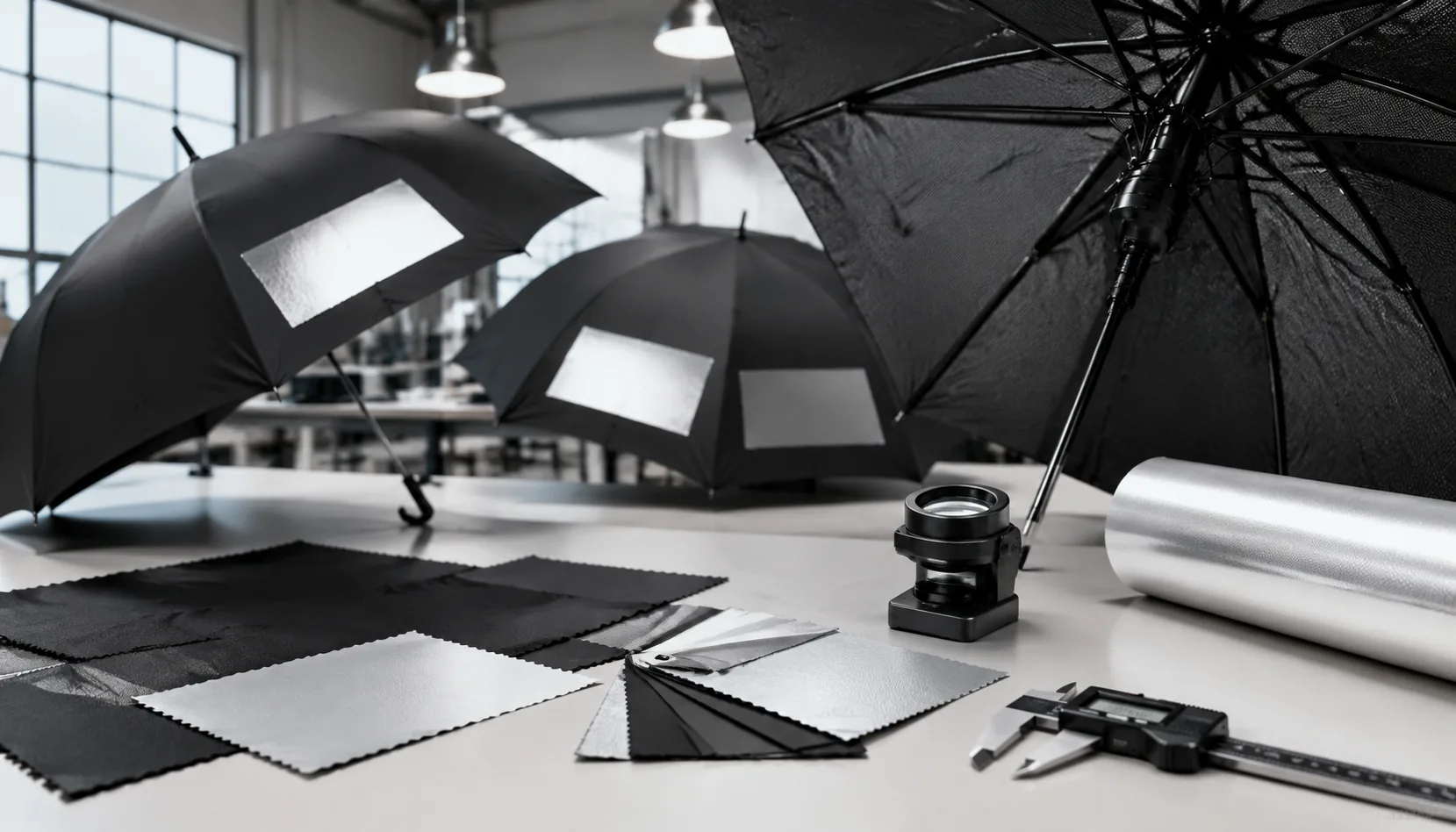
Reflective Umbrella Logos for Safety Brand Campaigns
Specify reflective logo films, panel locations, and AQL checks for promotional umbrellas used in night events, campuses,...
Read More »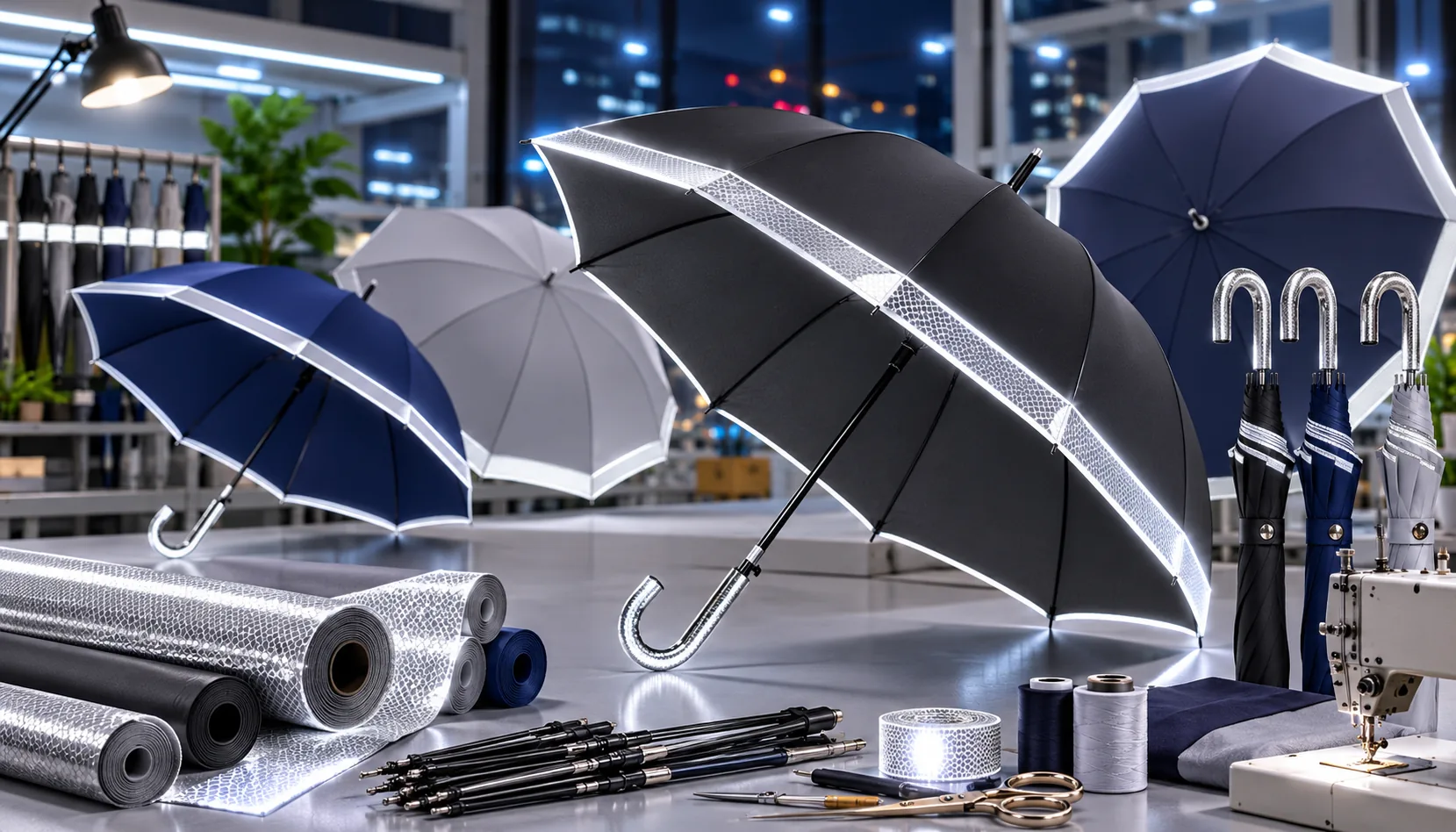
Custom Reflective Umbrellas for Night Safety Campaigns
Specify reflective umbrellas for commuter, school, and safety campaigns with fabric, print, rib, and inspection details ...
Read More »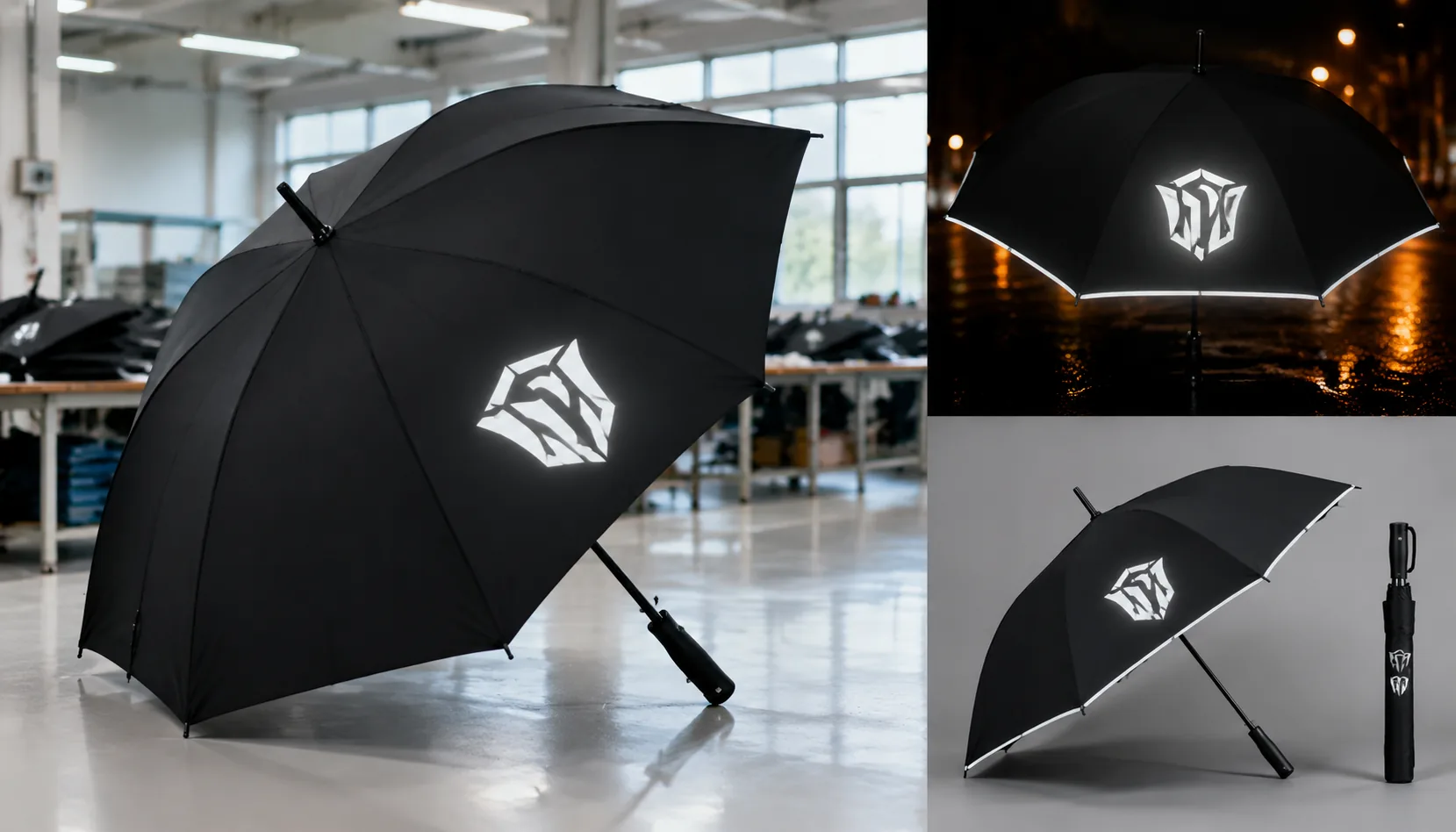
Reflective Umbrella Logos for Night Events and Safety Brands
Use reflective umbrella logos for night events, campuses, and safety brands while balancing visibility, durability, fram...
Read More »