Reflective Safety Umbrellas for Commuter and Event Programs
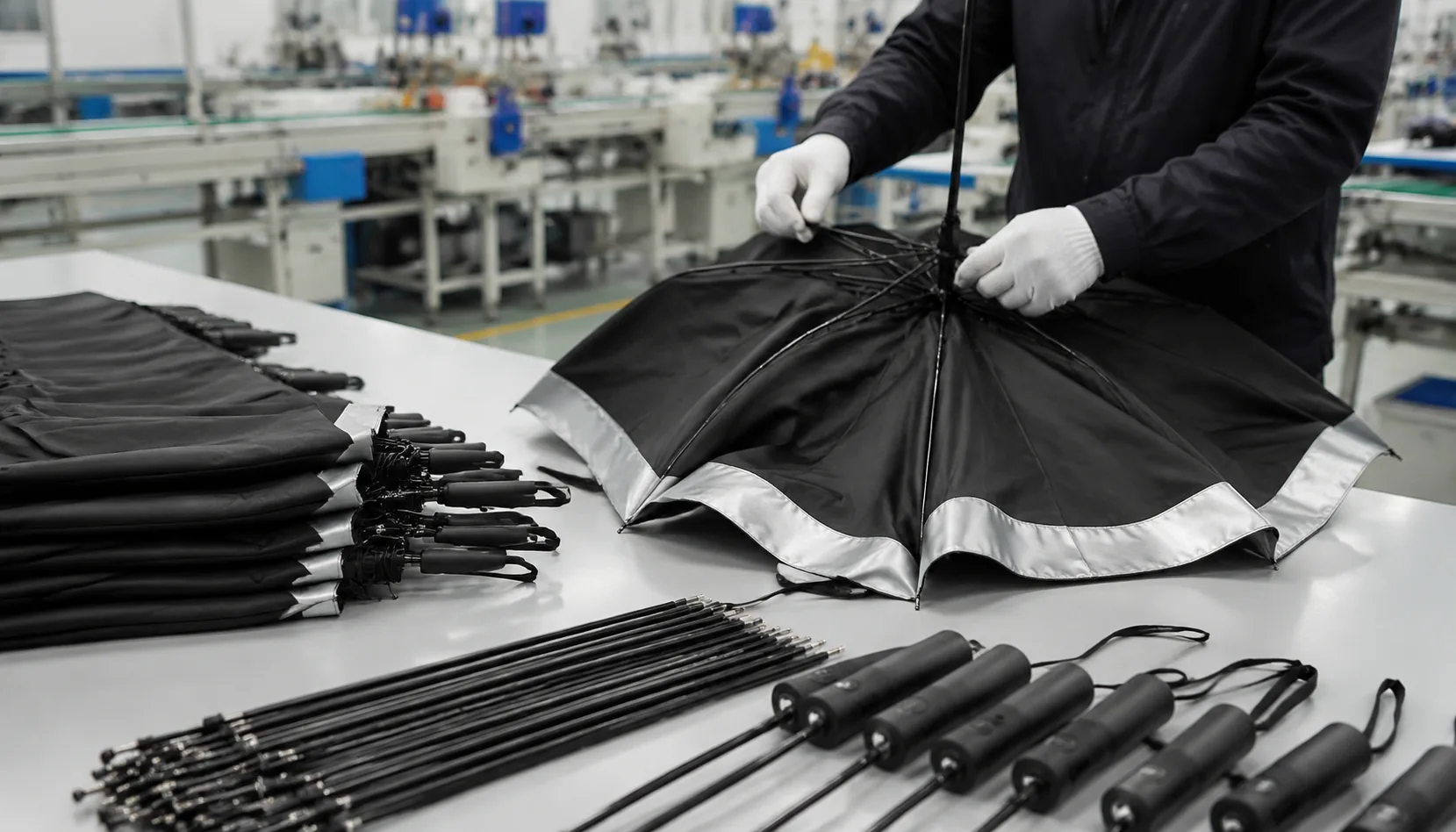
For commuter giveaways and event safety programs, the risk is ordering umbrellas that look reflective in a sample room but fail in rain, wind, or low-light traffic. On our Songxia production floor, we specify reflective safety umbrellas bulk orders by checking 190T or 210T pongee density, fiberglass rib recovery, trim placement, seam tension, and packed-piece inspection before cartons leave the line.
Match Reflective Umbrellas to the Use Case
The right specification starts with who is carrying the umbrella and how close they are to traffic. For commuter giveaways, I usually recommend a 23" auto-open straight umbrella or 21" compact auto-open-close with 190T or 210T pongee, fiberglass ribs, and reflective piping around the canopy edge. Reflective piping umbrellas give a clean retail look, pack well for distribution, and add 360-degree outline visibility when people cross parking lots or walk from bus stops after dark. If the program is for reflective safety umbrellas bulk orders, do not overbuild the frame unless the audience really needs it; an 8K fiberglass or steel-shaft hybrid frame is often enough for daily commuting, while a double-canopy vented windproof structure is better when the buyer expects 40–50+ mph gust exposure.
School events and road races need more visual impact than a normal commuter umbrella because the crowd is moving, distracted, and often managed by volunteers. For these programs, reflective panels on alternating canopy sections work better than only a narrow edge trim, especially on 27" or 30" golf umbrellas used by crossing guards, race marshals, or first-aid points. Event safety umbrellas should also avoid cheap silver coating that cracks after folding; proper reflective tape or reflective fabric inserts must be sewn with controlled tension so the canopy does not pucker. For custom logo safety umbrellas, keep the logo on non-reflective pongee panels and reserve the reflective zones for visibility, because heavy screen ink over reflective material reduces performance and usually fails rub testing faster.
Security teams, parking attendants, resort staff, and outdoor service crews need umbrellas that identify the person, not just protect them from rain. Strap accents are useful here because the umbrella remains visible when closed and carried through checkpoints, while reflective piping keeps visibility when open. For larger reflective safety umbrellas bulk programs, I would separate SKUs by role: 21" compact units for employee kits, 23" straight umbrellas for commuter or campus handouts, and 27" vented golf umbrellas with fiberglass ribs for supervisors working curbside. As a commuter umbrella supplier, ZheBrella’s standard practice is to confirm the use case before quoting, then match canopy fabric, rib count, reflective layout, logo method, MOQ, and AQL 2.5 inspection points so the buyer is not paying for visibility features that do not help in the field.
Select Canopy Fabric and Reflective Materials
For commuter programs, 190T pongee is the practical baseline: light in the hand, fast to dry, and stable enough for screen printing a one- or two-color logo without heavy ink buildup. A 23" auto-open umbrella with 190T canopy, steel shaft, and fiberglass ribs usually stays in the 380-450 g range, which matters when it rides in a backpack every day. 210T pongee feels denser and smoother, sheds water a little better after Teflon treatment, and gives cleaner print edges on fine text or QR-code-style event marks. If the order is for retail resale or executive transit kits, I would move to 210T; if it is for reflective safety umbrellas bulk distribution at schools, rail stations, or corporate campuses, 190T often gives the better cost-to-performance ratio.
Reflective material needs to be specified, not left as a vague “silver edge.” Standard reflective piping is sewn into the canopy seam or outer perimeter and is usually 5-8 mm visible width after sewing; reflective tape panels are wider, commonly 10 mm, 15 mm, or 20 mm, and show better from side angles under headlights. Reflective piping umbrellas are cleaner-looking because the reflective line follows the rib structure, while tape near the canopy edge gives stronger night visibility but adds labor and must be checked for puckering after closing. Our standard practice at ZheBrella is to confirm tape placement on a pre-production sample, then flex-test the canopy through repeated open-close cycles before approving mass sewing.
Logo method should be chosen around the reflective layout. Screen printing works well on 190T or 210T pongee when logos sit between ribs and away from stitched reflective tape; heat transfer gives sharper gradients but can feel stiff on compact 21" canopies. For custom logo safety umbrellas, I avoid printing across reflective tape because adhesion and brightness both suffer, especially after rain testing. Event safety umbrellas used for daytime marathons, road crews, or campus security can add UPF 50+ coating on the reverse side, but buyers should approve the hand feel because UV coating makes the canopy slightly firmer. A commuter umbrella supplier should also quote the full build: 8K fiberglass or steel ribs, manual or auto-open frame, AQL 2.5 inspection, and realistic lead time of 25-35 days after artwork approval.
Specify the Frame for Wind and Daily Use
Auto-open is worth the extra cost for commuter umbrella supplier programs because people are stepping out of buses, cars, and train stations with one hand already occupied. A reliable auto-open 23" umbrella with 190T or 210T pongee, reflective edge tape, and a printed handle logo feels practical, not gimmicky. Auto-open-close is convenient for compact models, but it raises the failure risk if the spring and shaft wall thickness are under-specified, so I avoid bargain versions for safety campaigns. Manual open is the smarter option for high-volume event giveaways where the umbrella may be used once or twice and budget is tight. For custom logo safety umbrellas, manual open also simplifies AQL 2.5 inspection because there are fewer mechanism defects to classify, and it helps keep MOQ and FOB pricing controlled on reflective safety umbrellas bulk programs.
Plan Branding Without Blocking Visibility
Logo position matters more on reflective products than on normal rain umbrellas because every printed area competes with visibility. For reflective safety umbrellas bulk orders, I usually recommend branding only one or two canopy panels, not all eight. On a 23" or 27" commuter umbrella, a 120–180 mm logo centered in the lower third of a 190T or 210T black pongee panel stays readable while leaving the reflective piping uninterrupted around the edge. If the umbrella uses a double-canopy vented windproof structure, keep artwork off the vent overlap and away from rib tips, because ink buildup and panel tension can distort the print after opening cycles.
Reflective border continuity is a factory-floor detail buyers should specify in the tech pack, not leave to sampling luck. Reflective piping umbrellas work best when the silver border runs cleanly across all 8K or 10K panel seams, with no logo, label, or bartack cutting through the reflective line. For dark pongee, screen print is reliable for simple white or single-color logos, while heat transfer handles gradients, small text, and multi-color sponsor marks better. Our standard practice at ZheBrella is to test adhesion after wet rubbing and repeated folding, because cheap transfer film can crack where the canopy folds along the ribs.
Strap and sleeve branding give you extra logo space without weakening the safety function. A woven or printed closure strap can carry a 50–80 mm logo, and the sleeve can take larger artwork, QR codes, event dates, or sponsor blocks for event safety umbrellas and custom logo safety umbrellas. For a commuter umbrella supplier program, I would keep the canopy clean, use the strap for daily brand recall, and print the sleeve with distribution or campaign details. This approach works especially well for reflective safety umbrellas bulk projects where procurement wants visibility, sponsor exposure, and AQL 2.5 consistency across several thousand units.
Inspect Reflective Details Before Shipment
Reflective trim should be inspected as a safety component, not decoration, because a 3 mm shift in piping can decide whether the umbrella catches headlights cleanly. For reflective piping umbrellas, our AQL 2.5 checklist pulls samples after final packing and checks trim alignment along all 8K or 10K rib seams, especially at the tip pockets and the crown where sewing tension often twists the canopy. On silver reflective tape, we check for broken stitches, skipped stitches over 15 mm, puckering, and heat-transfer lifting at folded edges. For printed custom logo safety umbrellas, the logo is also rubbed dry and wet to confirm it does not contaminate the reflective band or reduce brightness.
Adhesion and function testing matter just as much as appearance. A reflective safety umbrellas bulk order should include peel checks on heat-applied reflective strips, stitch pull checks on sewn piping, and repeated open-close cycling: 20 cycles for manual and auto-open units, 30 cycles for auto-open-close compact frames because the runner and shaft take more shock. We also test water repellency on 190T or 210T pongee with a spray rating target of 80+ before packing, then confirm no water pools along the reflective seam. Fiberglass ribs are preferred for commuter and event safety umbrellas because they handle gusts better than thin black steel ribs; for vented double-canopy designs, we also confirm the lower canopy does not hide reflective panels when the umbrella flexes.
Carton labeling is where many event deadlines get lost, so shipment inspection must verify SKU, PO number, logo version, color, quantity, gross weight, carton size, and destination marks before release. A commuter umbrella supplier should plan normal production at 25–35 days after artwork approval for standard 23 inch or 27 inch models, and 35–45 days if reflective tape, UPF 50+ coating, or multiple logo positions are involved. For FOB Ningbo or Shanghai, buyers still need to reserve vessel space early; for DDP event deliveries, I prefer locking the final ship date at least 18–25 days before the event for air-plus-truck, or 45–60 days for ocean freight. Reflective safety umbrellas bulk programs should always keep a pre-shipment inspection window of one full working day, not a same-morning formality.
Frequently Asked Questions
Does reflective piping make an umbrella compliant PPE?
Not by itself. Reflective umbrellas can improve visibility, but they are usually promotional or commuter safety items unless tested and certified to a specific PPE standard requested by the buyer.
Can reflective umbrellas still use full-color logos?
Yes. Logos can be printed on non-reflective canopy panels or sleeves while reflective tape remains clear. Buyers should avoid placing large artwork over reflective trim because it reduces visibility.
What reflective options can be specified for commuter safety umbrellas?
Common options include reflective piping around the canopy edge, reflective panels, reflective sleeve printing, or reflective logo accents. For commuter programs, 360-degree edge piping is usually the most practical because it improves visibility from multiple angles without changing the umbrella structure.
What fabric and frame specs are recommended for event safety umbrellas?
Most bulk programs use 190T or 210T pongee with a fiberglass rib frame for better wind resistance than basic steel ribs. A typical specification is 8 ribs, black metal shaft, fiberglass ribs, reflective trim, and a straight or automatic open handle depending on budget.
What QC checks should buyers request for reflective safety umbrellas?
Ask for fabric density verification, reflective trim placement checks, open-close cycle testing, rib alignment inspection, water repellency testing, and logo color matching. For bulk OEM orders, pre-shipment AQL inspection is commonly set at AQL 2.5 for major defects and AQL 4.0 for minor defects.
Looking to Launch Your Custom Umbrella Line?
ZheBrella is a Zhejiang-based OEM/ODM umbrella manufacturer with 17 years of export experience. Free design, low MOQ from 100 pieces, windproof construction, full-color print.
Get Free Quote Now »People Also Search For
Related Articles
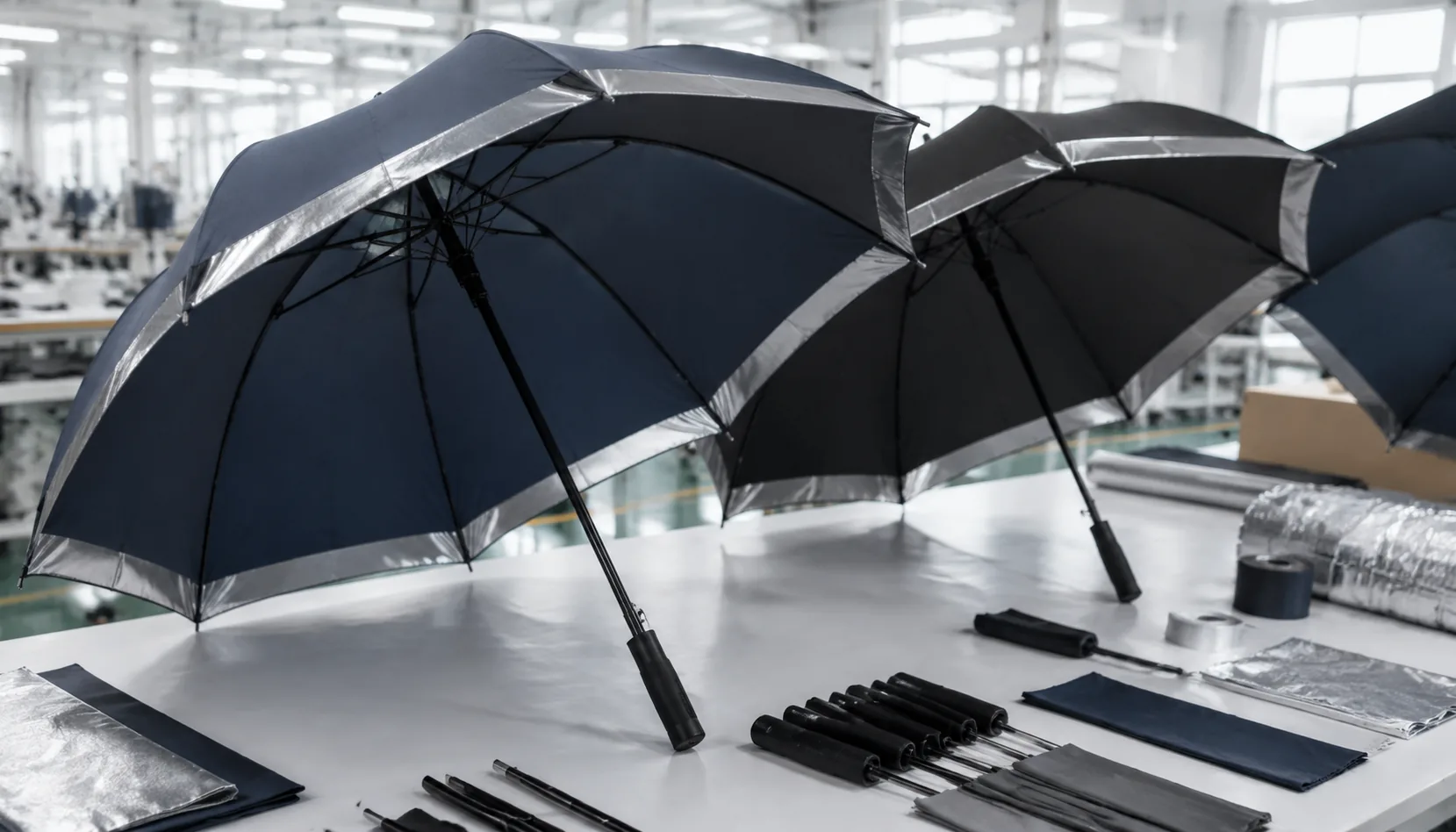
Reflective Safety Umbrellas for Corporate and Event Programs
Specify reflective umbrellas for safety campaigns with the right fabric, rib strength, print areas, visibility details, ...
Read More »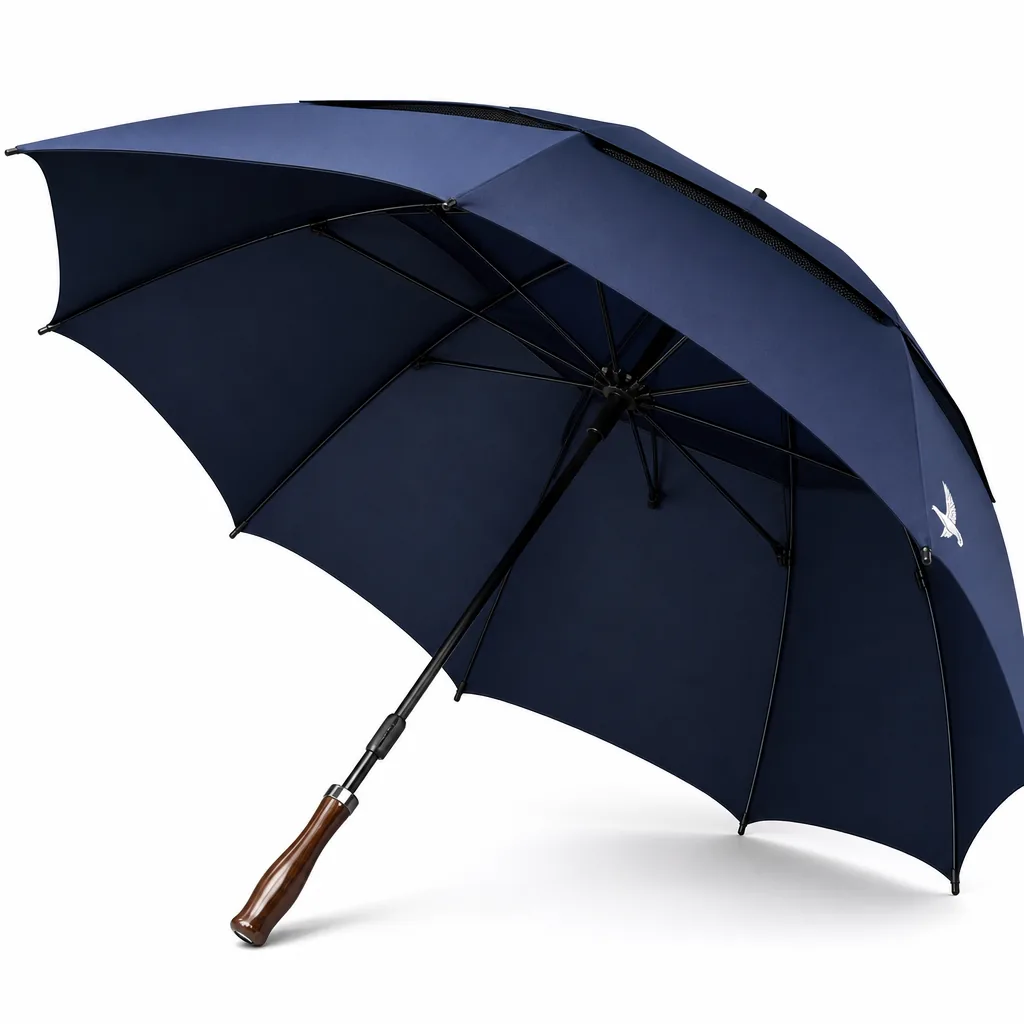
Reflective Safety Umbrellas for Commuter Promo Programs
Source reflective umbrellas with 190T/210T pongee, fiberglass ribs, print zones, MOQ, lead time, and AQL checks for comm...
Read More »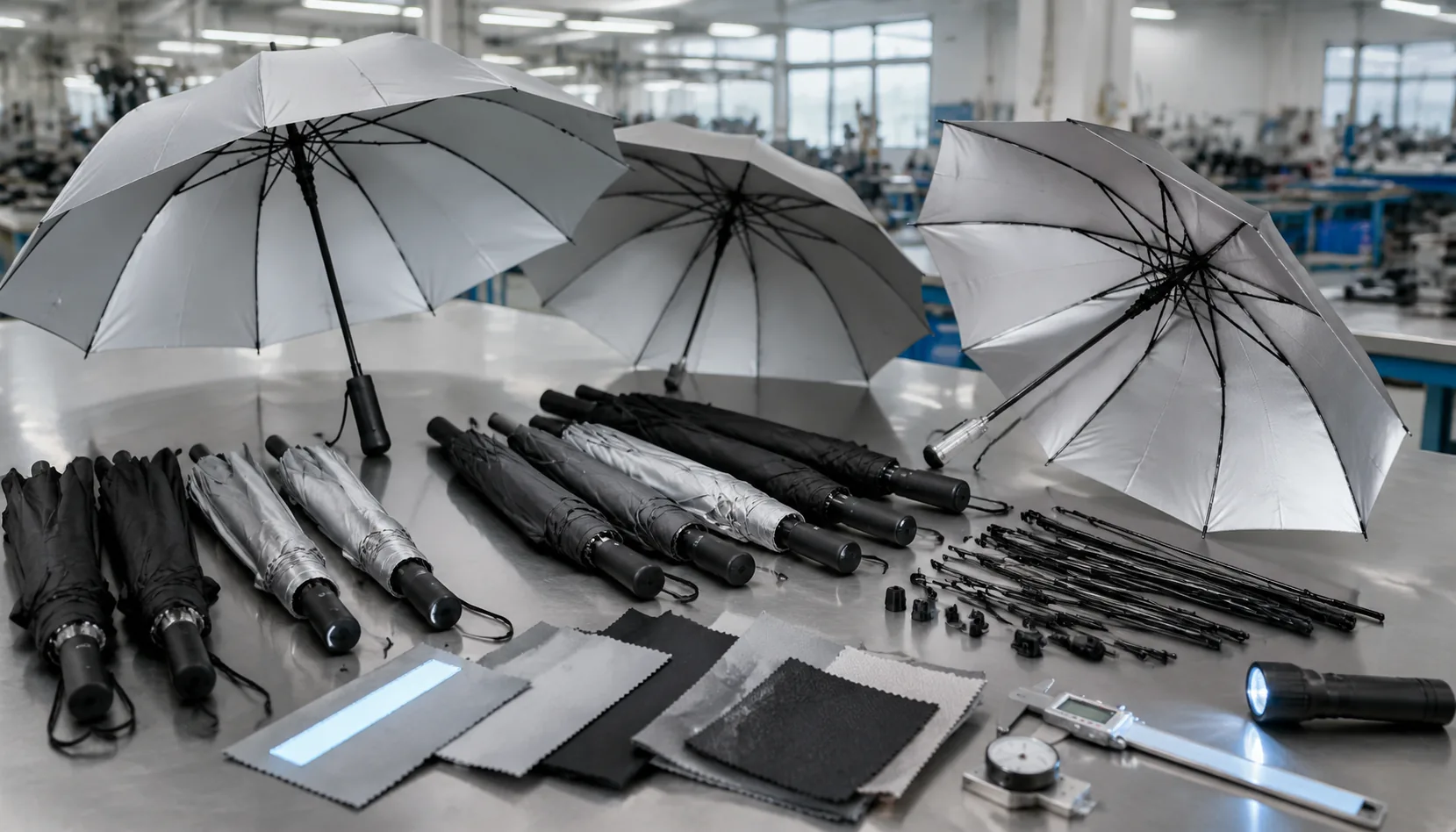
Reflective Umbrellas for Commuters: Buyer Spec Guide
Specify reflective commuter umbrellas with the right fabric, rib count, print placement, and QC checks for safer retail ...
Read More »