Reflective Safety Umbrellas for Commuter Promo Programs
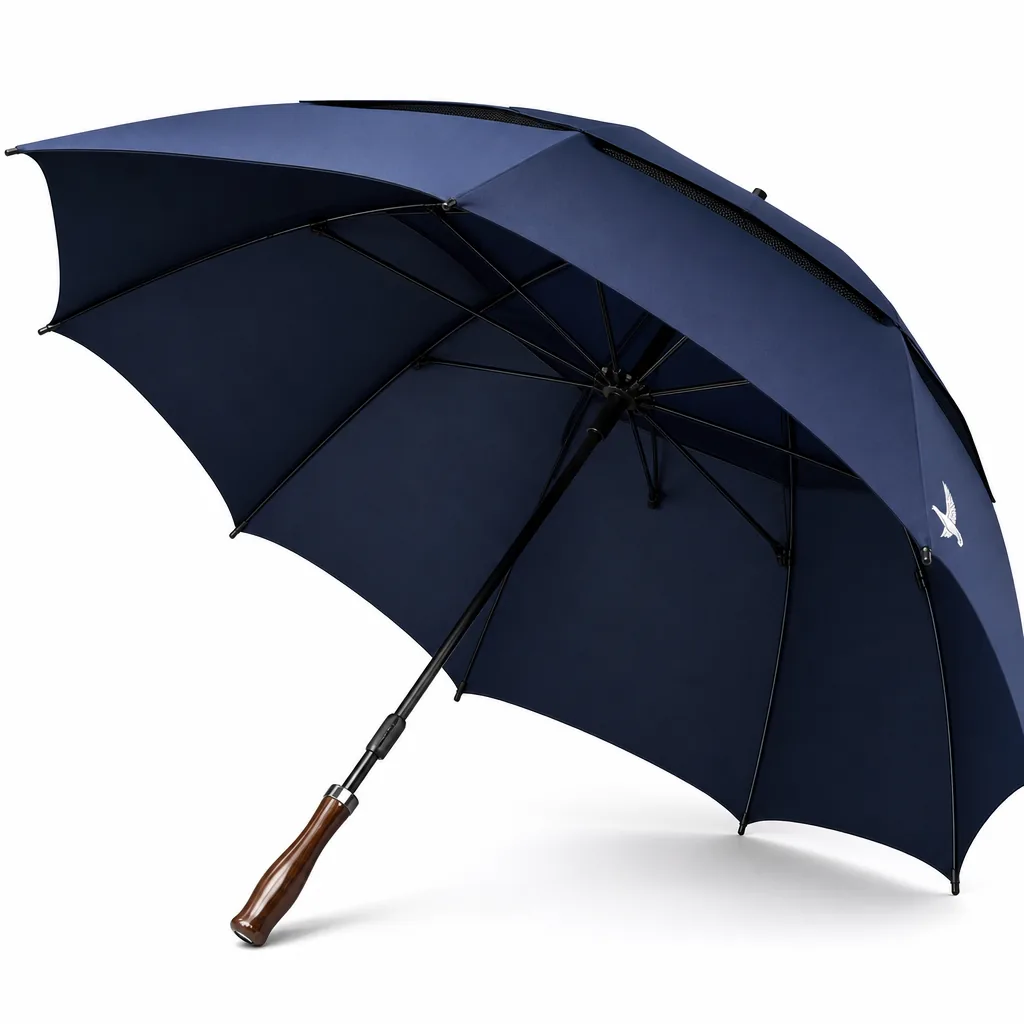
For commuter promo programs, the umbrella has to do more than carry a logo—it must stay visible in rain, open smoothly after thousands of cycles, and pass inspection without delaying a campaign launch. When buyers source reflective safety umbrellas, the real decisions happen in the details: 190T or 210T pongee, reflective tape placement, fiberglass rib strength, print-zone limits, MOQ planning, lead time control, and AQL checks before cartons leave the factory.
Visibility Features Buyers Should Specify
Reflective piping is the first visibility feature I would specify on commuter umbrellas because it works even when the canopy color is dark navy, black, or charcoal. On a 23" auto-open straight umbrella, we usually run 360-degree reflective tape along the canopy edge, stitched into the seam so it does not peel after folding. For compact 21" auto-open-close models, piping on all 8K panels is better than a single reflective logo because the umbrella rotates as the user walks. Buyers should ask for tape width, not just “reflective trim”; 5 mm looks subtle, while 10 mm reads clearly under headlights. If the program targets train-station exits, school parking lots, or evening trade-show traffic, reflective piping umbrellas give the safest visual return per unit cost without turning the item into a construction-zone product.
Reflective panel print is useful when the logo or message needs to be seen from 10–30 meters, but it must be treated as a decoration system, not magic safety certification. Screen-printed reflective ink on 190T or 210T pongee can work on one or two panels, while heat-transfer reflective film gives sharper edges for small icons, arrows, or sponsor marks. I do not recommend covering large canopy areas with reflective film on windproof rain umbrellas, because heavy transfer layers can stiffen the fabric and affect closing, especially on auto-open-close frames. For promotional safety umbrellas, the cleanest layout is reflective piping around the perimeter plus one reflective panel print facing traffic. Unless the umbrella has been tested to a PPE or road-safety standard, sales copy should say “improves low-light visibility” rather than “certified safety gear.”
Sleeve labels and handle-end accents are small details, but they matter in real commuter use because the umbrella spends half its life closed. A reflective woven label on the sleeve, a reflective pull tab, or a printed warning stripe keeps the item visible when clipped to a backpack or carried at knee height. On straight commuter umbrellas, a reflective cap or ring at the handle end helps drivers notice movement when the canopy is angled downward in rain. Our standard practice at ZheBrella is to confirm these trims during pre-production sampling under flashlight and vehicle-headlight checks, then lock the tape, ink, and transfer material in the BOM before bulk cutting. For AQL 2.5 inspection, buyers should define acceptable defects: no cracked reflective print, no loose piping stitches, no misaligned sleeve label, and no glue bleed around handle accents.
Frame Builds for Daily Commuter Use
For commuter umbrellas, the frame decision should start with abuse, not catalog appearance. A basic 8K steel frame is still the cheapest reliable build for subway exits, office lobbies, and giveaway programs where unit cost matters. On a 23 inch auto-open stick umbrella, painted steel ribs and shaft usually land around 430–500 g depending on handle and canopy fabric. The weakness is not instant breakage; it is corrosion after wet storage. If the paint gets scratched at the rib tip, stretcher joint, or runner contact point, red rust can appear after a few weeks of daily use. For reflective safety umbrellas used in employee or campus programs, I only recommend steel when the buyer accepts a shorter service life and specifies nickel-plated or black-coated ribs with a salt-spray expectation, plus AQL 2.5 checking for bent ribs and loose rivets before shipment.
Fiberglass ribs cost more but solve two commuter problems: rust and brittle failure. A 8K fiberglass rib set on a 21 inch or 23 inch folding umbrella flexes instead of kinking when wind hits between buildings, and it will not leave rust marks on 190T pongee after being packed wet. Full fiberglass builds are best for windproof rain umbrellas that need to survive repeated 40–50 mph gusts, but they are not automatically lighter; thick fiberglass ribs can make a compact 3-fold feel head-heavy. Mixed-frame construction is often the smarter middle ground: steel shaft and stretchers for cost control, fiberglass ribs or fiberglass end tips for flex. Our standard practice at ZheBrella is to use mixed frames for mid-range promotional safety umbrellas because breakage complaints usually come from rib tips and outer joints, not the center shaft.
Double-canopy construction is worth paying for when the umbrella will be used in exposed commuter corridors: rail stations, university campuses, parking lots, hospitals, and downtown corporate shuttles. A vented 23 inch or 27 inch canopy lets wind pressure escape instead of turning the umbrella inside out, especially when paired with fiberglass ribs and a good spring-loaded runner. The added cost is real because you are cutting and sewing two canopy layers, often with tighter alignment around reflective piping umbrellas where the silver tape must sit cleanly along each panel seam. For a simple trade-show giveaway, single-canopy 8K steel is acceptable. For branded commuter programs expected to last a rainy season, reflective safety umbrellas with mixed fiberglass frames and vented double canopies reduce returns, protect the logo impression, and justify the higher FOB cost.
Canopy Fabric, Coating, and Print Choices
For commuter promo programs, I usually specify 190T pongee when the budget is tight and 210T pongee when the umbrella needs to feel like retail merchandise. Both are polyester, but 210T has a denser hand, cleaner panel tension after sewing, and better logo appearance because the yarn gaps are smaller. On a 23" auto-open or 27" golf umbrella, 190T is acceptable for basic giveaways, especially if the frame uses 8K steel ribs. For executive commuter umbrellas or windproof rain umbrellas with fiberglass ribs, 210T pongee is the better match because the canopy does not look thin under streetlights. Reflective safety umbrellas also need panel layout planned before cutting: reflective piping on the seam edge is safer and more durable than a large reflective print across a folding line, but it leaves less space for the main logo.
A black coating is the practical choice when buyers want rain protection plus sun protection. A proper black PU coating on the underside can reach UPF 50+, but it changes the feel of the canopy and can slightly stiffen folding on 21" compact auto-open-close models. For rain performance, the face fabric should still get a water-repellent finish, commonly Teflon or a C6 fluorine-free alternative depending on the buyer’s compliance requirements. I do not recommend putting reflective tape or silver piping directly over heavy coating edges, because heat and seam pressure can cause puckering after 500 to 1,000 open-close cycles. Our standard practice at ZheBrella is to test coated pongee panels with a spray rating check, seam pull check, and visual inspection under both daylight and low-angle LED light before approving bulk cutting.
Logo placement should protect the reflective function first and the branding second. On reflective piping umbrellas, keep the logo on one or two clean fabric panels and avoid printing over seam tape, reflective binding, or vent overlap areas on double-canopy windproof designs. White logos on dark 190T or 210T pongee usually need screen printing with a high-opacity underbase; silver branding can be screen printed with metallic ink, but it is not the same as certified reflective material. Full-color branding is best handled by heat transfer for small quantities or sublimation on white polyester panels before coating, though sublimation is not suitable on black-coated finished panels. For promotional safety umbrellas, I ask buyers to approve one physical pre-production sample, not just a PDF mockup, because reflective trim, black coating, and ink opacity all look different under warehouse light, car headlights, and rain.
Mechanism and Size Selection by Use Case
Mechanism choice should follow the user’s hands, not the catalog photo. For transit giveaways, I usually steer buyers toward 21" or 23" 3-fold auto-open commuter umbrellas because a rider can deploy one while holding a phone, metro card, or coffee. Typical coverage runs about 38" to 42" arc, enough for one adult but still short enough to fit in a backpack side pocket. Manual 3-fold models cost less and pass basic promo budgets, but wet users notice the difference at a bus stop. Auto-open/close compacts add convenience when entering a train or office lobby, though the shaft spring, runner, and button assembly must be better controlled; cheap versions develop button jams after a few hundred cycles. For reflective safety umbrellas, specify reflective piping on every panel seam or at least the outer canopy edge, because a small reflective logo alone is not visible enough from a turning vehicle.
Campuses and corporate parking lots can use larger 23" straight umbrellas or 27" golf-style promotional safety umbrellas, especially when walking distances are long and users carry laptops or samples. A 23" stick umbrella typically gives a 46" to 48" arc, while 27" versions often reach 54" to 58" depending on rib curvature. Manual-open stick frames are simple and durable, but auto-open is worth the small premium for security teams, student ambassadors, and facilities staff who open umbrellas repeatedly during shift changes. For outdoor events, I prefer 27" or 30" windproof rain umbrellas with 8K or 10K fiberglass ribs, a steel or fiberglass shaft, and 190T or 210T pongee canopy. Reflective piping umbrellas used by ushers or race volunteers should combine edge piping with a high-contrast canopy color, because black fabric with gray reflection is harder to identify in heavy rain.
Compact folding always trades some frame strength for portability. A 3-fold umbrella has more joints, thinner rib sections, and a telescopic shaft, so it will not resist wind like a 23" straight frame or 27" double-canopy vented model. In factory testing, a well-built 21" 3-fold fiberglass frame may survive gusts around 35 to 45 mph, while a reinforced 27" vented golf umbrella can be rated 50+ mph when the runner, tips, and rib rivets are properly matched. For reflective safety umbrellas in commuter promo programs, do not chase the smallest 5-fold pocket style unless the brief is strictly handbag storage; the extra hinges create wobble and reduce print area. Our standard practice at ZheBrella is to match compact models with fiberglass ribs, metal tips, and AQL 2.5 inspection on opening cycles, because mechanism failure is the complaint buyers remember first.
Procurement Specs, QC, and Shipping Terms
For reflective safety umbrellas, the RFQ should lock down the commuter use case before price is discussed: size, rib count, fabric, reflective layout, and mechanism. I normally ask buyers to specify 21" or 23" folding commuter umbrellas for bags, 27" stick umbrellas for staff issue, or 30" golf size when coverage matters more than portability. Put the frame in writing: 8K steel is cheap but bends faster, while 8K or 10K fiberglass ribs with a steel or aluminum shaft give better recovery in gusts. For canopy, 190T pongee is acceptable for budget promotional safety umbrellas, but 210T pongee with water-repellent coating gives a cleaner print surface and better hand feel. Reflective piping umbrellas should state whether trim is sewn into the panel seam, heat-applied as tape, or used as a logo transfer; those three methods do not age the same after wet folding.
Commercial fields need to be boring and precise. List MOQ by color, not just total order quantity: for example, 500 pcs per canopy color for stock fabric, 1,000–3,000 pcs per custom-dyed 210T pongee color, and separate MOQs for reflective tape color if it is not standard silver. Sample time is usually 5–7 days for blank or stock-color mockups, 7–12 days for printed pre-production samples, and longer if a custom handle mold or sublimation artwork is involved. Bulk lead time for commuter umbrellas is typically 25–35 days after sample approval and deposit, while peak-season orders before summer rains can stretch to 40–50 days. Carton packing should state pcs per carton, inner polybag, master carton dimensions, gross weight, barcode labeling, and whether cartons must pass drop-test requirements for retail distribution.
QC for reflective safety umbrellas should include normal umbrella checks plus two reflective-specific tests. Use AQL 2.5 for major defects and define critical defects separately: broken auto-open parts, sharp rib tips, detached reflective trim, wrong logo position, and leaking canopy seams. Opening-cycle checks should run at least 300 cycles for manual and auto-open models, and 500 cycles for auto-open-close folding umbrellas when the campaign targets daily commuters. For reflective trim adhesion, we check edge lifting after wet folding, rub resistance on printed reflective logos, and seam security on reflective piping after repeated opening. Shipping terms should show FOB Ningbo or FOB Shanghai clearly, because both are practical from Shangyu, with DDP options quoted separately by destination ZIP/postcode, duty assumptions, Amazon or retail labeling needs, and whether freight moves by express, air, LCL, or full container.
Frequently Asked Questions
Can reflective umbrellas be sold as safety equipment?
Only if the finished umbrella is tested and certified to the relevant safety standard in the target market. Most promotional reflective umbrellas should be described as visibility-enhanced rain products, not PPE.
Does reflective piping affect umbrella lead time?
Usually it adds several days for material sourcing and sewing setup, especially on custom colors. Buyers should confirm trim availability during sampling and lock the specification before bulk production.
What canopy material is best for commuter promo umbrellas: 190T or 210T pongee?
Both work well for commuter programs, but 210T pongee is usually chosen when you want a denser hand feel and a slightly more premium finish. 190T is often selected for tighter budgets or larger-volume giveaways.
How many print zones can reflective commuter umbrellas usually support?
Most commuter promotional umbrellas support 1 to 4 print zones, depending on the frame style and panel layout. For best visibility, buyers often place logos on opposite panels plus the sleeve or tie strap.
What quality checks should I request before shipment?
For bulk safety umbrella orders, ask for in-process inspection plus final AQL checks before packing. Common checks cover canopy tension, reflective strip placement, open/close function, rib alignment, and logo print accuracy.
Looking to Launch Your Custom Umbrella Line?
ZheBrella is a Zhejiang-based OEM/ODM umbrella manufacturer with 17 years of export experience. Free design, low MOQ from 100 pieces, windproof construction, full-color print.
Get Free Quote Now »People Also Search For
Related Articles
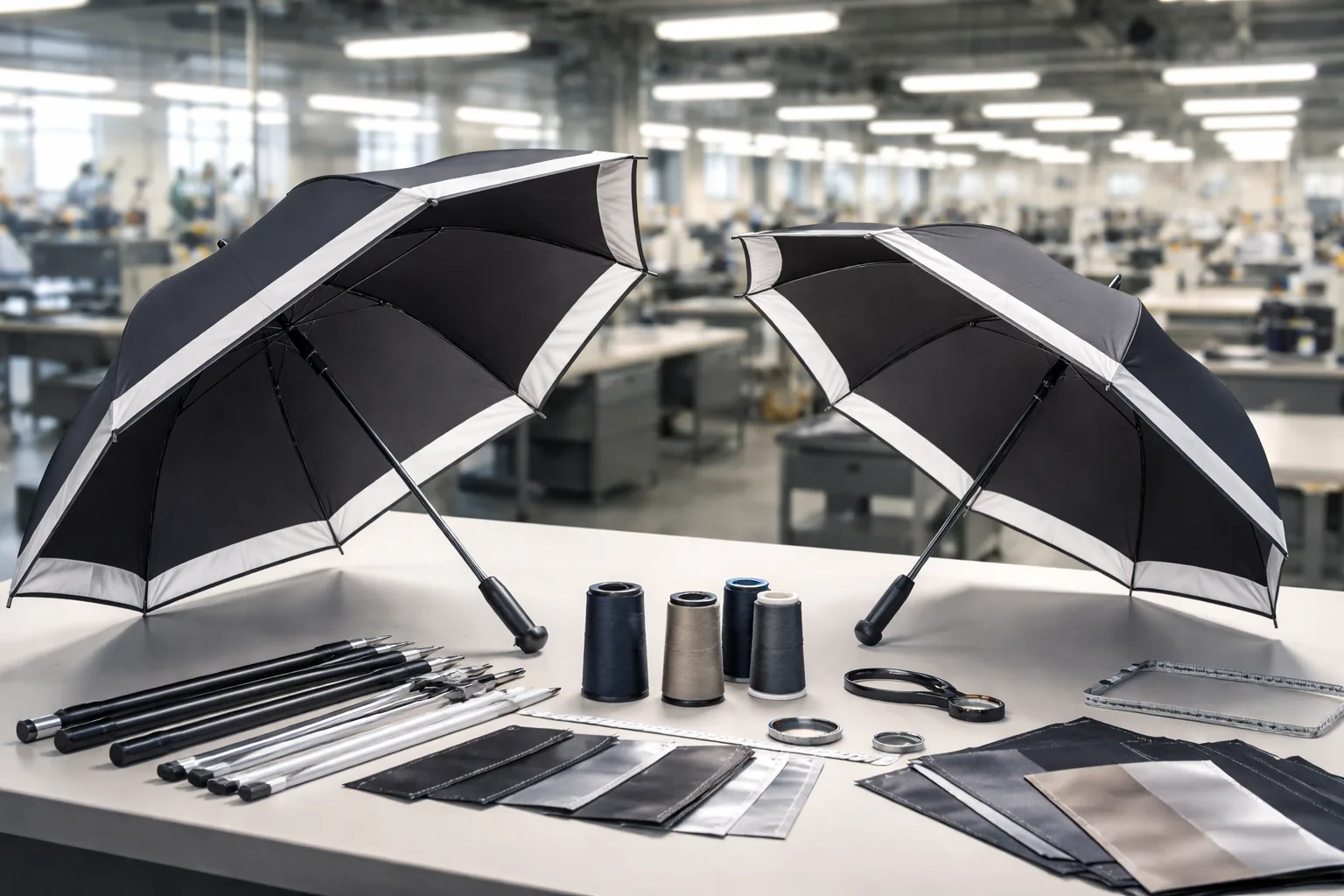
Reflective Safety Umbrellas: OEM Specs for Urban Programs
Specify reflective safety umbrellas with piping, panels, frames, and QC checks for commuter, campus, and corporate safet...
Read More »
Reflective Safety Umbrellas for Promo Buyer Spec Guide
Specify reflective safety umbrellas with 190T/210T pongee, fiberglass ribs, reflective piping, QC checks, MOQ, and shipp...
Read More »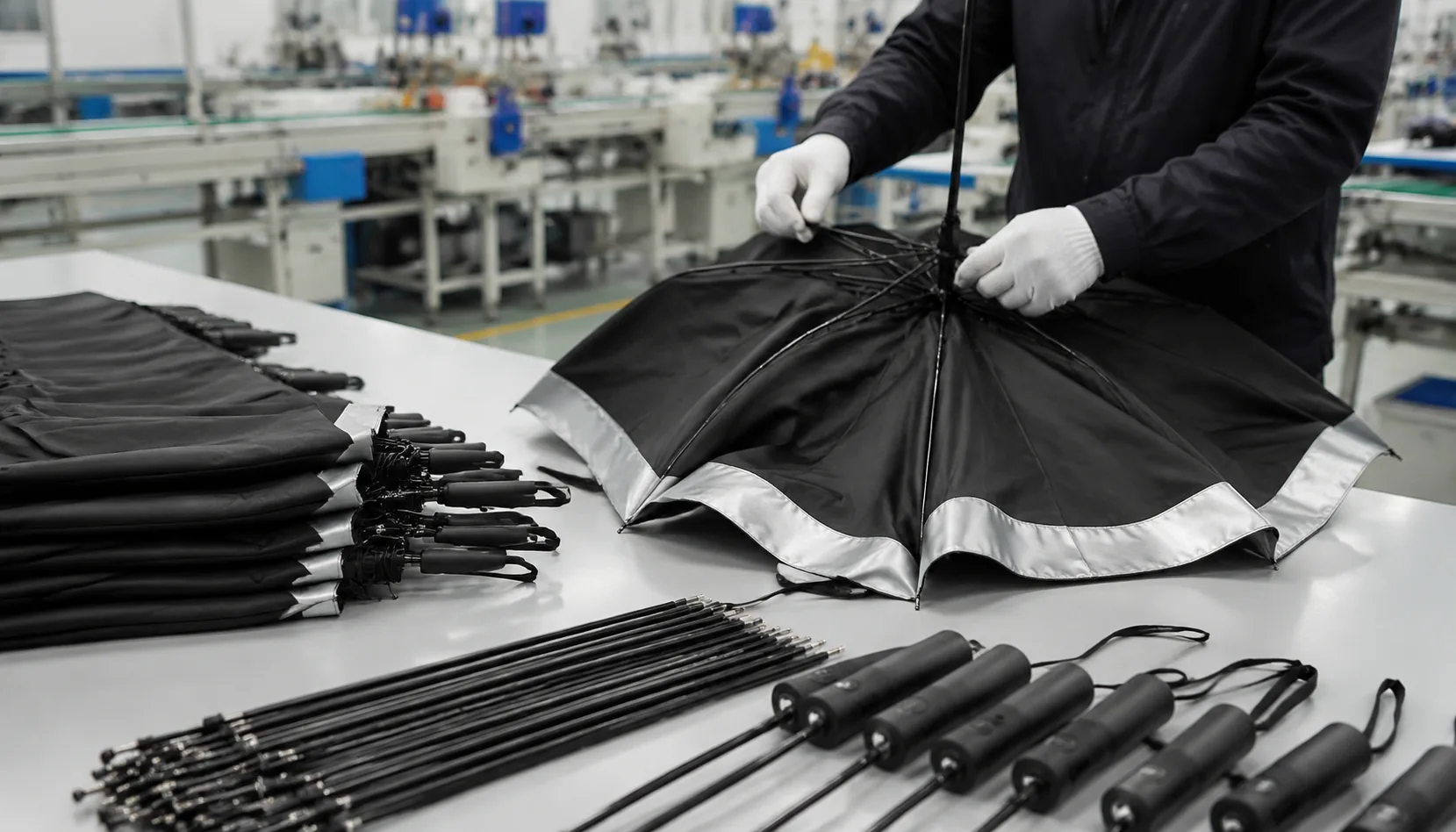
Reflective Safety Umbrellas for Commuter and Event Programs
Specify reflective safety umbrellas with 190T/210T pongee, fiberglass ribs, reflective trim, and QC checks for commuter ...
Read More »