Reflective Safety Umbrellas for Promo Buyer Spec Guide
Promo buyers often ask for visibility, durability, and a clean logo area in one umbrella, but the final sample can fail if fabric weight, rib strength, and reflective trim are not specified together. On our Songxia factory floor, reflective safety umbrellas usually start with 190T or 210T pongee, fiberglass ribs, tight reflective piping alignment, and QC checks for stitching, opening tension, and print adhesion before MOQ and shipping terms are locked.
Target Buyers and Use Cases
Reflective safety umbrellas make sense when the umbrella is part of a visibility system, not just a giveaway. I recommend them for corporate EHS programs, plant visitor kits, construction-site onboarding, warehouse shift changes, and utility or roadside teams that move between parking lots, loading bays, and public roads after dark. A 23 inch stick umbrella with 8K fiberglass ribs is usually the most stable choice for staff use because it gives better shoulder coverage over a safety vest and clipboard, while a 21–23 inch folding umbrella fits HR welcome packs and commuter bags. For serious safety programs, specify 190T or 210T pongee with reflective piping on all panels, plus a reflective logo position that stays visible when the canopy is tilted forward in rain.
Night events and school campaigns need a different balance: visibility, low weight, and fast distribution matter more than maximum storm strength. Promotional safety umbrellas for marathons, concerts, campus patrols, PTA walking-school-bus programs, and winter fundraising campaigns usually work best in 21 inch auto-open folding models or 23 inch manual stick models. POE clear canopies with reflective trim are useful where face visibility matters, such as event security or crossing guards, but pongee is easier to print and packs better for bulk cartons. If children or volunteers are the users, avoid sharp metal tips and consider fiberglass ribs, rounded plastic caps, and AQL 2.5 checks focused on rib ends, runner locking, and reflective tape adhesion.
For retail commuter lines, high visibility umbrellas should still look like daily-carry products; too much silver tape can make them feel like workwear. A reflective umbrella OEM order often uses black, navy, charcoal, or fluorescent yellow 210T pongee with discreet 10–15 mm reflective edge binding, heat-transfer logos, and either auto-open-close folding frames or 23–27 inch stick frames. Custom reflective rain umbrellas for logistics teams often need stronger specs: double-canopy venting, fiberglass shaft or ribs, 10K rib layouts, Teflon water-repellent coating, and wind-tunnel targets around 50+ mph. For FOB Ningbo or Shanghai orders, practical MOQs are often 500–1,000 pieces per color, with 25–35 days after artwork and pre-production sample approval.
Reflective Materials and Placement Options
Reflective piping is the cleanest low-risk option for promotional safety umbrellas because it follows the canopy seam line without stealing much logo area. On a 23" 8K stick umbrella, we usually run 3–5 mm reflective cord in the seam between 190T pongee panels; it gives a clear outline under headlights but adds only a small sewing cost. Reflective tape is brighter and more obvious, typically 10–25 mm wide, but it must be stitched or heat-pressed onto stable fabric. Stitching is more durable for rain umbrellas, while heat press looks flatter but can lift after repeated wet folding if the adhesive and curing temperature are wrong. Full-panel reflective prints create the strongest nighttime visibility, but they are expensive, heavier, and less breathable than normal screen or heat-transfer logo work. Edge bands are a good compromise: a 15–20 mm reflective band around the canopy perimeter is visible from all directions and keeps the center panels open for branding.
Placement tolerance matters more than buyers expect. For custom reflective rain umbrellas, we hold reflective tape position within about ±2 mm along straight panel edges and ±3 mm around curved hems; tighter than that slows production and increases reject rates. Full-panel reflective artwork needs a larger bleed, usually 8–12 mm, because canopy panels stretch slightly during sewing and rib-tip tension changes the finished shape. Logo conflict is the common factory-floor problem: a distributor asks for a large white logo, then adds silver reflective tape across the same panel, and the result looks messy in daylight and unreadable at night. Reflective umbrella OEM projects should lock the hierarchy early: safety visibility first on ribs, edges, or alternating panels; brand logo second in a clear untouched zone. On dark navy, black, or forest green pongee, silver reflective trim works well; on light gray or yellow high visibility umbrellas, contrast can drop unless the trim has certified glass-bead or micro-prismatic brightness.
Reflective trim changes the way an umbrella folds, especially on compact 21" auto-open-close models where the canopy stacks tightly around the shaft. Thick tape across multiple fold lines creates memory creases, bulky wrap diameter, and higher stress at the top notch after 500–1,000 open-close cycles. For folding umbrellas, I prefer narrow piping on the seams or short tape segments near the panel edge, not continuous heavy bands across every valley fold. On 27" or 30" golf umbrellas with fiberglass ribs and double-canopy venting, wider reflective edge bands are easier to manage because the canopy radius is larger and the fold is looser. Seam durability also changes: every extra stitch line is another water entry point and another place for 210T pongee coating to be perforated. Our standard practice at ZheBrella is to reinforce reflective band starts and stops with back-tacking, keep tape away from rib-tip pockets by at least 8–10 mm, and run rain and folding checks before AQL 2.5 inspection on reflective safety umbrellas.
Frame, Rib, and Canopy Specifications
Double-canopy windproof construction is worth paying for when the umbrella will be used in exposed areas: stadium exits, resort shuttles, construction sites, ports, school crossings, and parking lots. A vented double canopy lets pressure escape instead of turning the umbrella into a bowl, and a fiberglass 8K or 10K build can realistically survive 50+ mph wind-tunnel testing if the shaft, runner, tips, and stitching are matched correctly. It is less useful for low-cost indoor-to-car promotions where buyers mainly want logo exposure and high visibility umbrellas for occasional rain. The penalty is real: extra fabric, more cutting layers, more sewing operations, heavier packing cartons, and usually a higher FOB cost. Our standard practice at ZheBrella is to quote single-canopy and double-canopy versions side by side, then confirm with a pre-production sample before locking AQL 2.5 inspection criteria for frame flex, canopy tension, reflective alignment, and auto-open function.
Printing, Branding, and Packaging Choices
Printing on reflective safety umbrellas starts with choosing the right logo method for the canopy fabric, not with the artwork file. For 190T or 210T pongee, screen print is still the cleanest option for 1–3 solid colors, especially on 23" and 27" panels where the print area can run 180–260 mm wide without looking cramped. Heat transfer is better for gradients, small text, QR codes, or sponsor blocks, but buyers should avoid oversized transfer films on compact 21" umbrellas because they can stiffen the panel and affect closing. For custom reflective rain umbrellas using silver reflective trim, we usually keep the logo at least 15 mm away from the tape seam so the print screen, sewing needle holes, and reflective strip do not fight each other during production.
Panel registration matters more than most promo buyers expect, especially when logos must align across opposite panels or sit centered under a vented double canopy. On an 8K umbrella, each panel is cut and sewn with a small tolerance, so a logo that looks perfect in a PDF can shift 3–5 mm after stitching and frame assembly. For reflective umbrella OEM orders, our standard practice is to approve a pre-production sample under both daylight and low-light flashlight inspection, because reflective tape can visually overpower dark logos at night. Contrast should be planned early: silver trim works well on navy, black, hunter green, and red canopies, while white logos often disappear beside reflective edging. For high visibility umbrellas in yellow or orange, black, deep blue, or dark gray logos give better readability than white or metallic ink.
Branding should not stop at the canopy if the umbrella is being used for events, roadside crews, school programs, or retail safety campaigns. Sleeve printing is low-cost and practical, usually a 1-color screen print or woven label, and it keeps the brand visible after the umbrella is folded. Hang tags are useful for explaining UPF 50+, windproof fiberglass ribs, reflective safety function, and care instructions; for promotional safety umbrellas, we often recommend a 300 gsm tag with a barcode sticker area if the buyer sells through distributors. Packaging choices depend on channel: bulk OPP polybags are fine for corporate giveaways, retail polybags with suffocation warning suit chain stores, and kraft or color gift boxes protect higher-end auto-open or auto-open-close models during DDP shipping. For large programs, confirm carton marks, inner pack quantities, and AQL 2.5 inspection points before artwork approval.
QC, MOQ, Lead Time, and Shipping Terms
QC on reflective safety umbrellas has to start before final assembly, because the reflective tape or printed reflective ink is difficult to repair once the canopy is sewn to the frame. We check trim adhesion after heat pressing or stitching, then run a peel test at the tape edge and a rub test on printed reflective logos. On 190T or 210T pongee, the press temperature and dwell time must be controlled tightly; too cool and the tape lifts after rain, too hot and the fabric puckers around the panel seam. For stitched reflective binding, we inspect stitch density, skipped stitches, and whether the tape sits flat around the canopy perimeter, especially on 23 inch and 27 inch promo models where the curve is tighter. Seam strength is checked at panel joins, tips, and runner stress points, because a bright canopy is useless if the tip cap pulls loose after two storms. Our standard practice is AQL 2.5 for major defects, with reflective failure, broken ribs, weak tips, leaking seams, and wrong logo placement treated as major issues.
Mechanical testing should match the umbrella type, not just a generic checklist. Manual straight umbrellas are opened and closed repeatedly to catch runner burrs and loose spring clips, while auto-open and auto-open-close folding umbrellas should be cycled at least 20 to 30 times during inline inspection and again during final inspection. For promotional safety umbrellas, I prefer fiberglass ribs over thin steel ribs when the buyer expects wind exposure at campuses, road crews, outdoor events, or municipal giveaways; 8K is common, 10K gives better canopy support, and 16K is mostly for premium retail. Water repellency is usually checked by spray testing after the canopy has rested, because fresh Teflon-coated fabric can look better than it performs after packing pressure. For high visibility umbrellas, we also verify the visible area of reflective trim after opening, since a 10 mm strip hidden under a black binding looks good on a spec sheet but does very little on a wet roadside.
MOQ depends on whether the buyer wants stock fabric with reflective finishing or a full reflective umbrella OEM build. For custom reflective rain umbrellas using stock 190T pongee colors, normal MOQ is often 500 to 1,000 pieces per color with one-position screen or heat-transfer logo; special PMS fabric, custom molded handles, or all-over reflective patterns usually push MOQ to 2,000 to 3,000 pieces. Sampling normally takes 5 to 7 days for logo mockups and 10 to 15 days if new reflective tape placement, sublimation, or handle tooling is involved. Bulk lead time is typically 25 to 35 days after sample approval and deposit, longer before Canton Fair, Christmas, or rainy-season rush orders. FOB Ningbo or Shanghai works best for distributors who consolidate shipments, while DDP is cleaner for small promo buyers shipping to multiple U.S. or EU addresses. For DDP, confirm carton size, HS code, duty treatment, and whether the reflective material changes compliance paperwork before quoting landed cost.
Frequently Asked Questions
Can reflective umbrellas still use dark canopy colors?
Yes. Dark navy, black, and gray can improve contrast when paired with silver reflective piping or tape. Buyers should approve a night-visibility sample before bulk production.
Does reflective tape reduce umbrella durability?
Not if it is sewn into the seam or edge binding correctly. Low-grade adhesive tape can peel after rain exposure, so stitched reflective trim is usually safer for OEM orders.
What fabric is better for reflective safety umbrellas, 190T or 210T pongee?
190T pongee is typically the cost-effective option for mass promotions, while 210T offers a denser hand feel and slightly better water resistance. For buyers comparing samples, ask for fabric weight, coating, and water-repel performance testing, not just the thread count.
What MOQ is common for OEM reflective umbrellas?
Many factories quote 500-1,000 pieces per color or per design for custom reflective umbrella runs, depending on panel count, printing method, and packaging. Lower MOQs are sometimes possible for stock frames or mixed-color orders, but unit pricing usually increases.
What QC checks matter most before shipping reflective safety umbrellas?
Key checks include reflective piping adhesion, open-close function, rib alignment, canopy print accuracy, and carton drop-test readiness. Importers often request a pre-shipment inspection on AQL 2.5 or a similar standard before booking sea or air freight.
Looking to Launch Your Custom Umbrella Line?
ZheBrella is a Zhejiang-based OEM/ODM umbrella manufacturer with 17 years of export experience. Free design, low MOQ from 100 pieces, windproof construction, full-color print.
Get Free Quote Now »People Also Search For
Related Articles
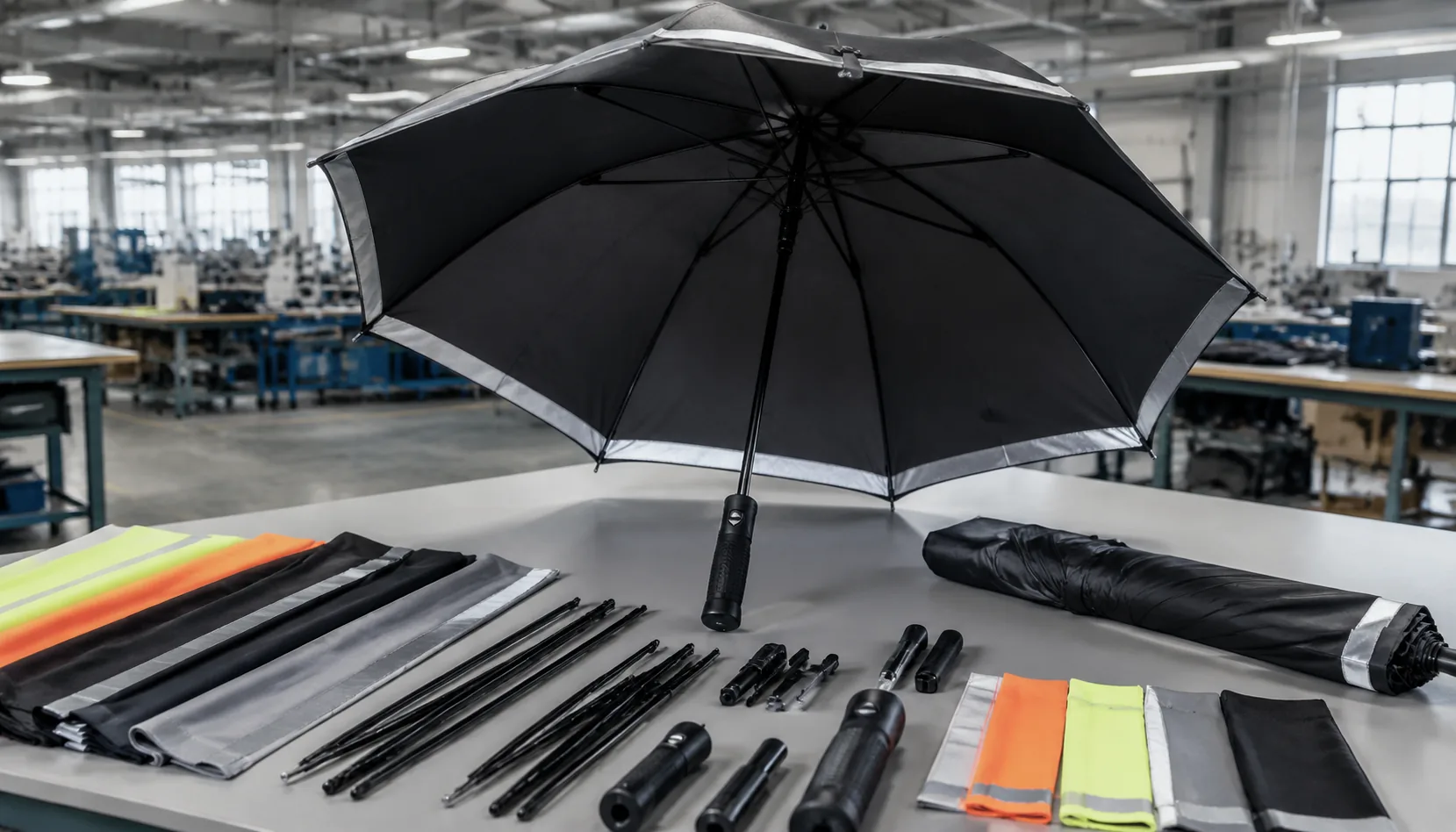
Reflective Safety Umbrellas: Buyer Spec Guide for Brands
Specify reflective safety umbrellas with proper tape, print zones, frame strength, and QC tests for commuter, school, an...
Read More »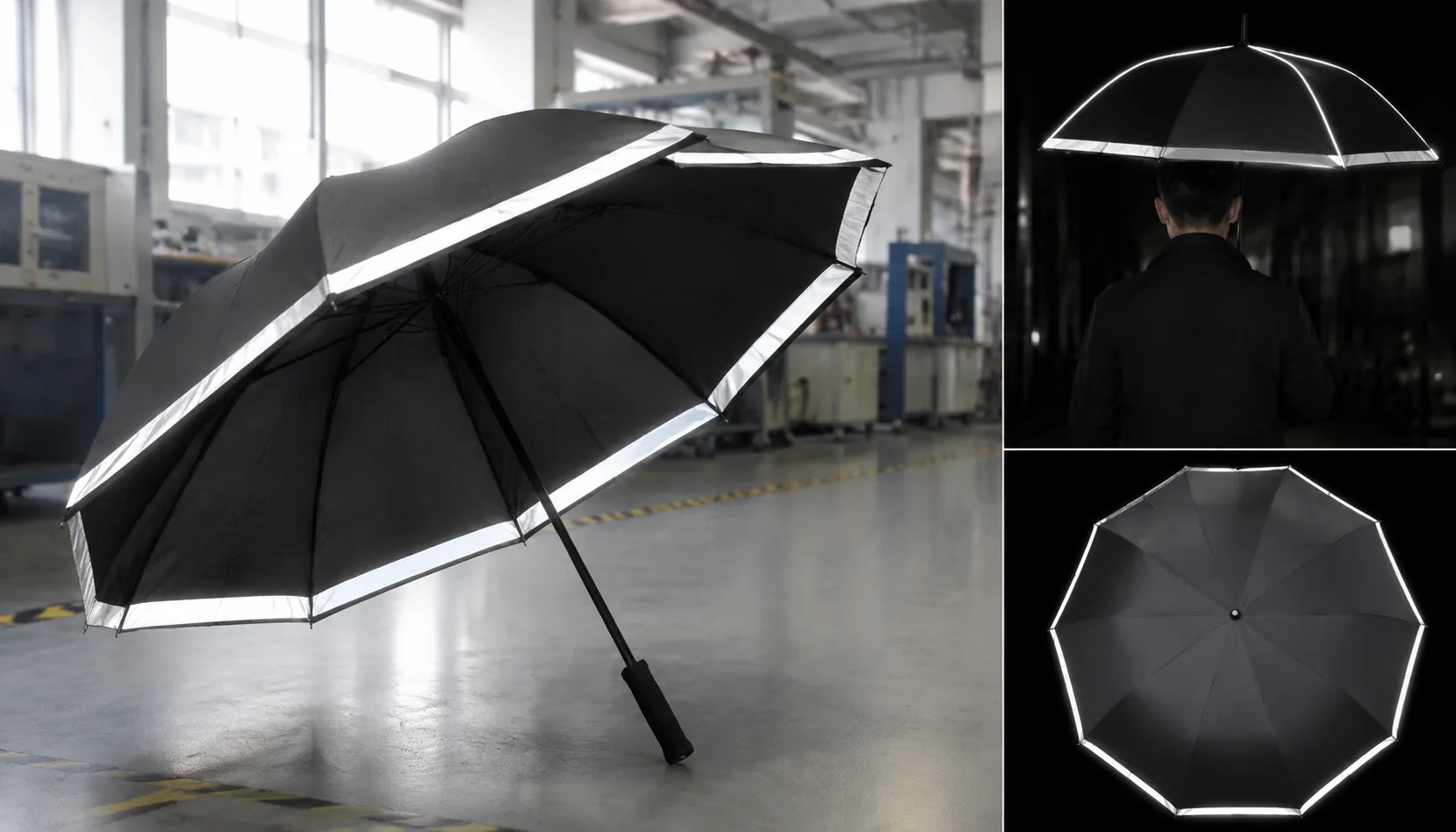
Reflective Safety Umbrellas: Specs for Night Visibility
Learn how to specify reflective safety umbrellas with visible trim, durable frames, compliant printing, MOQ planning, an...
Read More »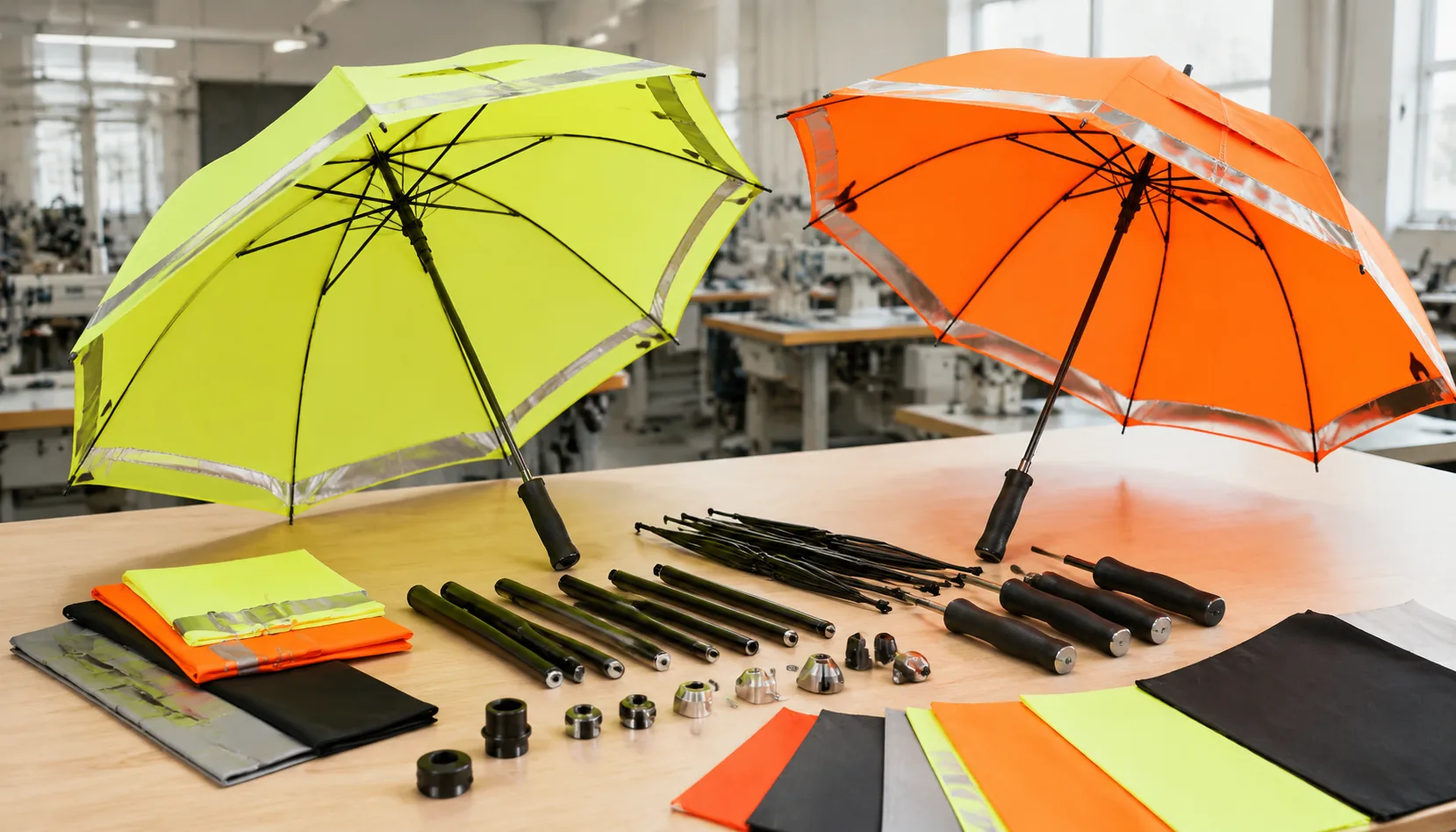
Reflective Safety Umbrellas: Spec Guide for Event Buyers
Learn how to specify reflective safety umbrellas with durable frames, visible trims, print zones, AQL checks, and realis...
Read More »