Reflective Umbrella Printing for Safety-Focused Branding
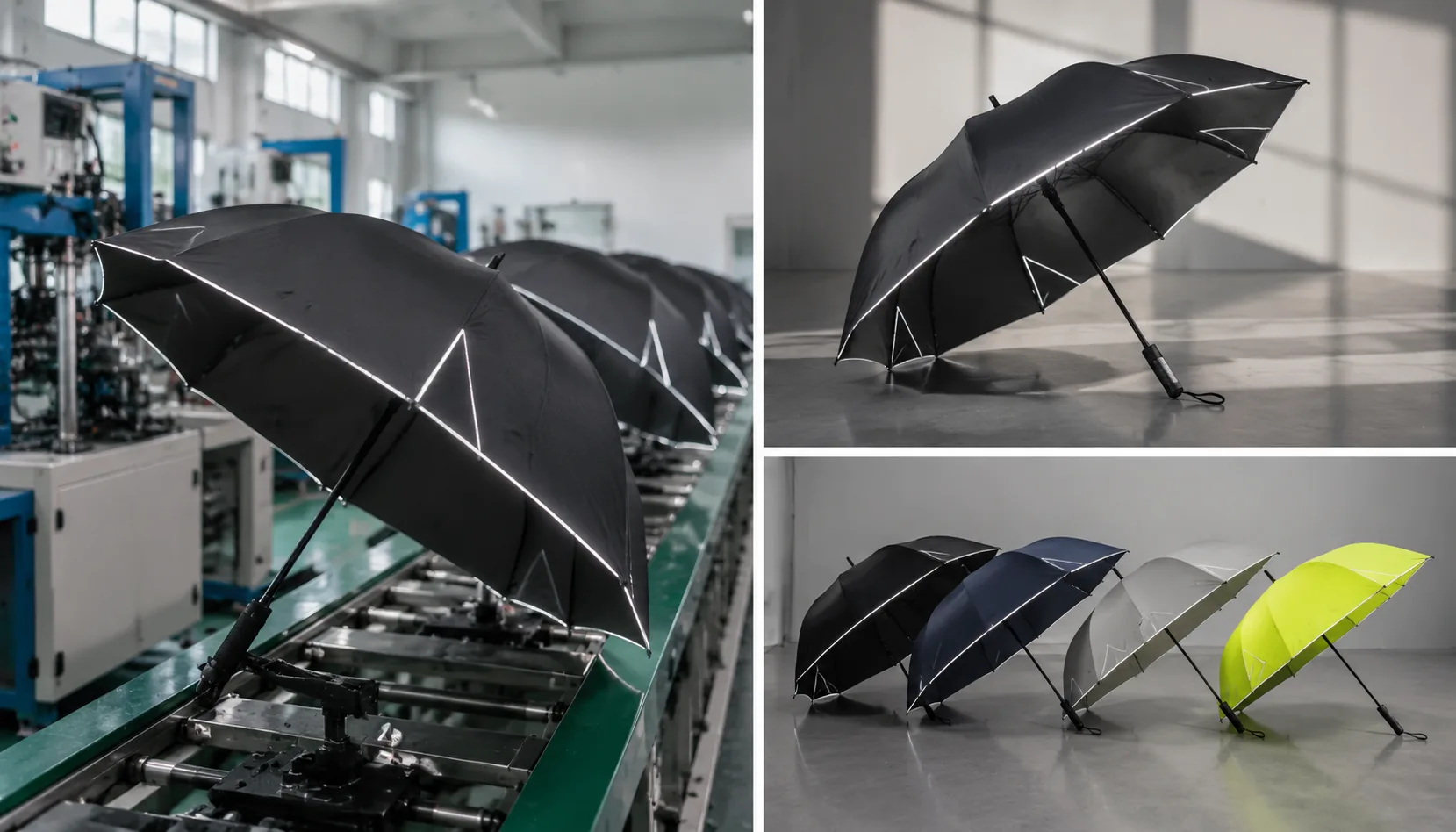
For safety campaigns, the challenge is not just making an umbrella visible at night; it is keeping the reflective area durable, aligned, and brand-consistent after rain, folding, and carton packing. On our Songxia factory floor, reflective logo umbrellas are planned around panel layout, tape width, 190T pongee colorfastness, ink adhesion, and AQL inspection points so buyers can avoid late sampling surprises and unreliable bulk results.
Where Reflective Branding Adds Buyer Value
Reflective branding earns its cost when the umbrella will be seen in low light, not just photographed on a desk. Transit campaigns are the clearest case: commuters walking from subway exits, bus stops, ferry terminals, and park-and-ride lots often carry umbrellas during dawn, dusk, and wet-night conditions when vehicle headlights hit the canopy at a shallow angle. Standard white ink looks clean in daylight, but it does not return light to the driver. Reflective umbrella printing uses glass-bead or micro-prismatic transfer film, usually applied as a logo, edge piping, or 20–30 mm panel strip, so the mark flashes back under headlights. For municipal agencies, insurance brands, logistics firms, and mobility apps, that visibility turns branded rain umbrellas into a safety message rather than just another giveaway.
Construction teams, road crews, utility inspectors, and campus security buyers usually get more value from reflective piping or alternating panel strips than from a large reflective logo alone. A logo may face the wrong direction when the user rotates the umbrella, but perimeter piping stays visible from multiple angles. On 23 inch and 27 inch straight umbrellas, reflective tape along every other panel seam gives a stronger 360-degree outline without making the umbrella look like PPE. For jobsite programs, I would pair a high-contrast 190T or 210T pongee canopy with fiberglass ribs, a manual or auto-open shaft, and an AQL 2.5 inspection focus on tape adhesion, seam alignment, and print registration. These safety promotional umbrellas are especially useful for contractors who want practical custom safety giveaways that workers will actually keep in trucks and lockers.
Schools, evening sports events, parking-lot attendants, outdoor concerts, and night markets are where reflective logo umbrellas can outperform normal screen-printed umbrellas even if the unit cost is higher. Children crossing near school gates, volunteers directing traffic, and event staff moving between tents benefit from visible outlines under headlights and security lighting. For these projects, reflective logos work best when they are not oversized; a 120–180 mm chest-height equivalent mark on two panels, combined with reflective piping around the canopy edge, keeps the brand readable without stiffening too much fabric. Heat-transfer reflective film is usually sharper than screen printing for small text, but it must be tested for folding marks after 500–1,000 open-close cycles. If the umbrella is mainly for daytime retail display, standard white or silver ink is enough; if the buyer’s story is duty of care after dark, reflective decoration justifies itself.
Reflective Print, Tape, and Piping Options
Sewn reflective tape and reflective edge piping are the most durable safety choices, but they change the umbrella construction rather than just the decoration. Tape, usually 10–25 mm wide, is stitched onto selected panel seams or around the lower canopy perimeter; it survives rain and folding better than ink because the reflective layer is not stretched directly across the pongee. The downside is sewing control: curved panels can pucker if tape tension is wrong, and needle holes must stay inside seam allowances to avoid leakage. Reflective piping is cleaner for retail-looking branded rain umbrellas because it follows the edge profile and flashes under headlights without covering the brand artwork. At ZheBrella, our standard practice is to inspect these styles under both normal light and angled LED light, then include tape alignment and stitch density in AQL 2.5 checks. For police events, road crews, schools, and night-run campaigns, I usually recommend piping plus a small reflective logo print rather than one oversized reflective mark.
Frame and Canopy Specs That Support Safety Use
For safety promotional umbrellas, I would start with an 8K fiberglass frame for normal commuter use and move to 16K fiberglass when the buyer expects field crews, parking staff, campus security, or roadside event teams to use the umbrella daily. Fiberglass ribs recover better after inversion than steel, especially on 23" and 27" straight umbrellas where wind load is higher. A good 8K fiberglass frame with a vented double canopy can survive repeated gusts around 50+ mph in practical wind-tunnel checks; a 16K build spreads stress across more ribs and feels steadier, but it adds cost and sewing time. Steel ribs are acceptable for lower-cost branded rain umbrellas, but they are heavier, less flexible, and more likely to stay bent after a hard flip. For reflective logo umbrellas, the frame should support the visibility function, not fight it: stable rib geometry keeps reflective panels facing traffic instead of twisting under wind.
Canopy fabric matters because reflective umbrella printing performs best on a tight, smooth surface. For most corporate and municipal orders, 190T pongee is the baseline; 210T pongee gives a denser hand feel and cleaner edge definition for reflective ink, heat-transfer reflective logos, or segmented reflective tape. A double-canopy windproof construction is worth the extra panels when the umbrella will be used near roads, transit stops, construction entrances, or outdoor events. The upper vent lets wind pass through instead of forcing the shaft backward, while the lower canopy carries the main branding area. If the customer wants maximum nighttime visibility, I would place reflective elements on alternating panels, panel edges, or a perimeter band rather than only one small logo. Reflective umbrella printing should be inspected under both normal light and directional light, because a print that looks fine on the sewing table can lose impact at 30 meters.
For commuter and field use, auto-open is usually the safest mechanism because one-hand deployment matters when someone is carrying tools, samples, a radio, or a bag. On 23" and 27" models, a steel shaft with fiberglass ribs is a sensible balance; on larger 30" golf umbrellas, I prefer a reinforced fiberglass shaft or thicker metal shaft depending on the wind target and handle weight. Manual open saves cost, but it is slower in sudden rain and less convenient for staff who need fast coverage at entrances or job sites. Auto-open-close is better suited to compact 21" umbrellas, but compact frames have less canopy area for high-visibility artwork. Our standard practice at ZheBrella is to check opening force, runner lock strength, rib symmetry, and canopy tension before AQL 2.5 final inspection, because custom safety giveaways fail in the field when the frame, not the logo, is under-specified.
Artwork Placement and Visibility Testing
Artwork placement decides whether reflective logo umbrellas work as safety tools or just look good in a catalog mockup. On a standard 23" stick umbrella with 8K ribs, a practical logo zone is usually 180–220 mm wide on one panel; on a 27" golf umbrella, 240–300 mm is safer without crossing seam tension. I do not recommend tiny reflective marks under 120 mm wide because the glass-bead or prismatic ink needs surface area to return light. For event crews or roadside teams, print on 2 opposite panels at minimum; 4 alternating panels gives better 360-degree recognition when the user is walking, turning, or holding the umbrella low. Full 8-panel coverage looks strong, but it raises cost and increases registration risk at the rib seams, especially on 190T pongee with PU or Teflon coating.
Reflective umbrella printing must be tested like a visibility product, not like normal branded rain umbrellas. Our standard practice at ZheBrella is to check samples at 10 m, 25 m, and 50 m using car headlights at low beam, then repeat with phone flash photography from waist height and driver-eye height. The buyer should approve both daylight artwork and night reflection photos before bulk production. AQL 2.5 inspection should include reflective continuity, cracking after opening/closing cycles, and ink adhesion after wet rubbing. For auto-open or auto-open-close frames, test reflection after 20–30 mechanical cycles because canopy flex can expose weak curing. If the order is for safety promotional umbrellas, ask the factory to photograph the umbrella at front, side, and rear angles instead of only one straight-on hero shot.
Contrast rules matter more than most artwork files admit. On black and navy 190T/210T pongee, silver reflective logos read best because the dark canopy creates a clean edge under headlights; white non-reflective ink beside it can reduce the perceived glow, so keep a 3–5 mm gap. Orange canopies need either silver reflective ink with a black keyline or a dark navy logo plus reflective outline, otherwise daytime legibility gets muddy. Fluorescent yellow or fluorescent orange canopies are already visually loud, so use reflective strips, borders, or compact logos instead of oversized reflective blocks. For custom safety giveaways, I prefer one large brand panel plus two narrow reflective arcs near the lower canopy edge; that layout keeps the brand visible at 25 m while giving moving pedestrians a wider light-return profile.
MOQ, Sampling, Inspection, and Shipping Planning
Inspection should be written into the purchase order, not negotiated after cartons are packed. For branded rain umbrellas with safety claims, I recommend AQL 2.5 for major visual defects: broken stitches on reflective tape, misaligned logo panels, dirty reflective film, weak print adhesion, scratched handles, loose tips, and frame opening failures. Functional checks should include 3–5 open-close cycles per sampled unit, rib symmetry, runner lock strength, sleeve fit, carton drop condition, and random water-spray testing if the order uses Teflon coating or UPF 50+ fabric. Shipping choice then comes down to deadline and margin. FOB Ningbo or Shanghai gives importers control when they already have a forwarder; DDP is cleaner for event planners and distributors shipping direct to a U.S. warehouse. Custom safety giveaways with fixed launch dates should leave a 10–14 day buffer beyond quoted transit, because reflective materials, battery-free but safety-related, still attract closer documentation checks from some carriers.
Frequently Asked Questions
Can reflective printing be combined with a standard logo print?
Yes. Many buyers use a standard brand logo on one or two panels and add reflective piping or a smaller reflective safety mark around the canopy edge.
Does reflective material change umbrella lead time?
It can add several days if the design uses sewn reflective tape or custom piping. Simple reflective heat-transfer logos usually fit within normal sample and bulk schedules.
What reflective options can be added to branded safety umbrellas?
Common options include reflective piping on panel edges, reflective tape around the canopy, reflective logo ink, or reflective sleeve details. For safety campaigns, reflective edge tape is usually the most visible option in low-light rain conditions.
What MOQ and lead time should buyers expect for reflective umbrella printing?
For OEM reflective umbrellas, a typical MOQ is 500–1,000 pieces depending on frame, fabric, and reflective tape type. Standard production usually takes 30–45 days after artwork approval and deposit, with sampling around 7–10 days.
Can reflective umbrellas pass retail or corporate quality checks?
Yes, buyers can specify AQL inspection such as AQL 2.5 for major defects and AQL 4.0 for minor defects. Checks usually cover print alignment, reflective tape adhesion, canopy stitching, frame opening, and water repellency on 190T pongee fabric.
Looking to Launch Your Custom Umbrella Line?
ZheBrella is a Zhejiang-based OEM/ODM umbrella manufacturer with 17 years of export experience. Free design, low MOQ from 100 pieces, windproof construction, full-color print.
Get Free Quote Now »People Also Search For
Related Articles
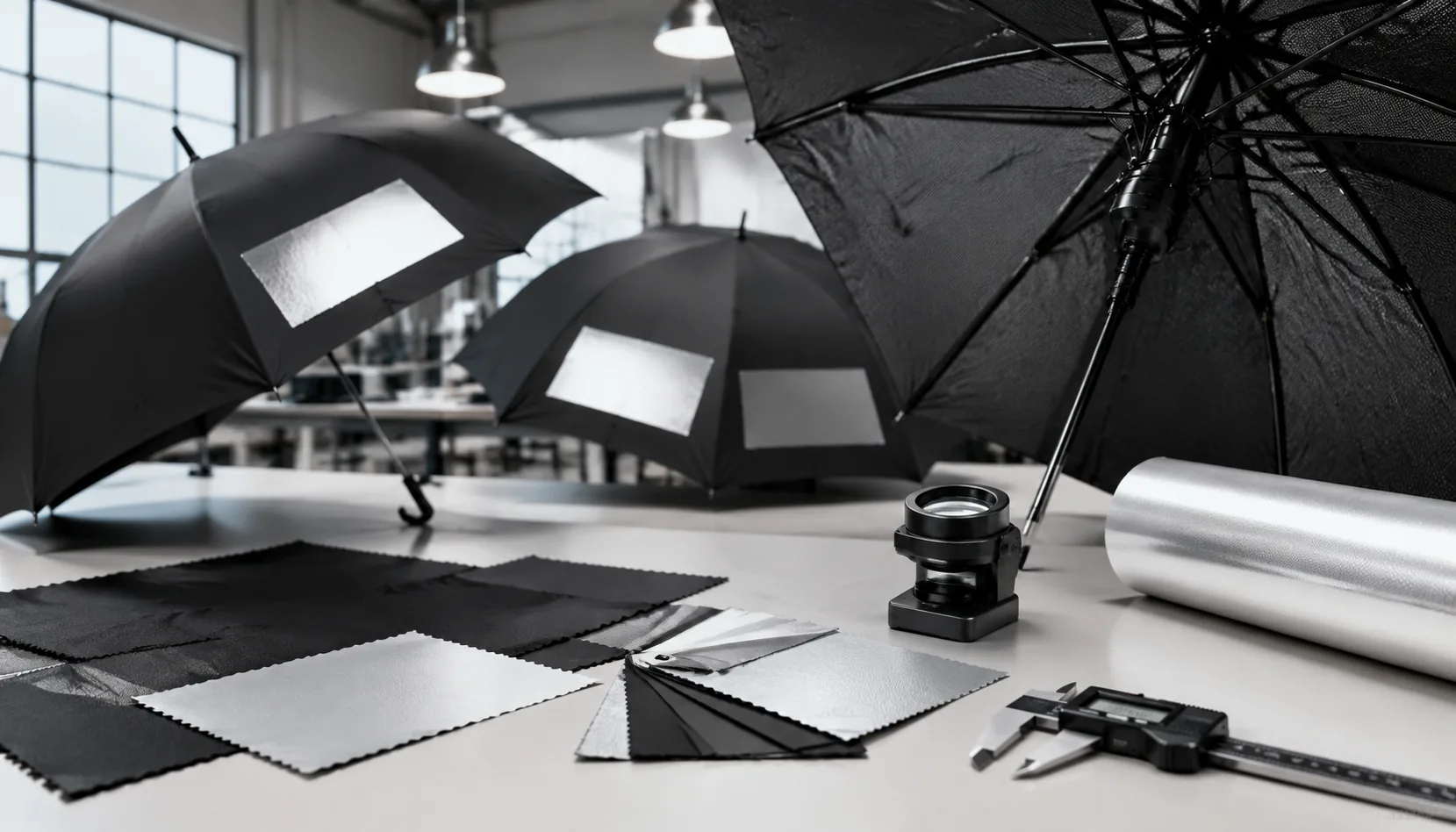
Reflective Umbrella Logos for Safety Brand Campaigns
Specify reflective logo films, panel locations, and AQL checks for promotional umbrellas used in night events, campuses,...
Read More »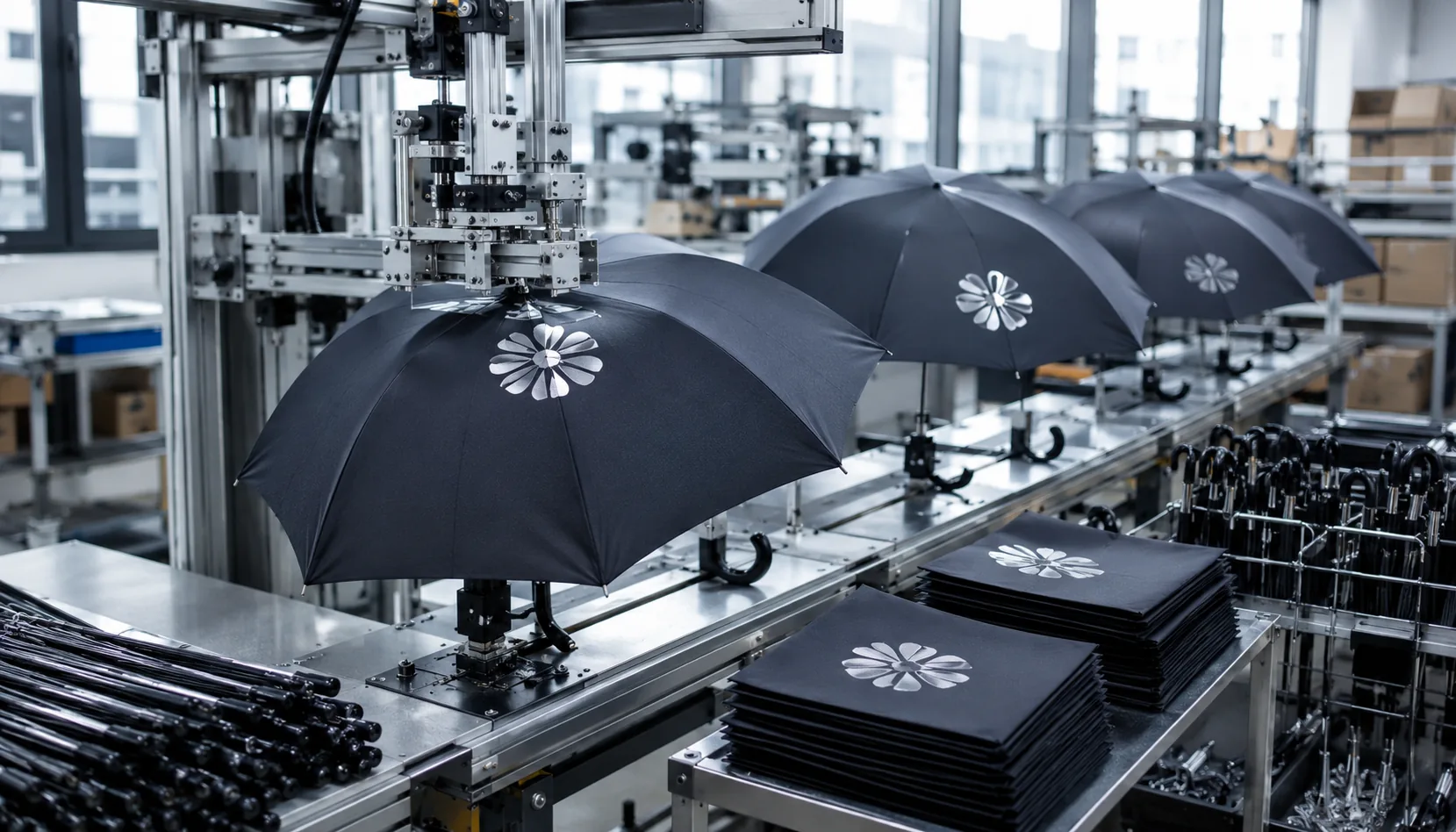
Reflective Logo Printing for Branded Rain Umbrella Programs
Plan reflective logo umbrellas with the right ink, trim, fabric, and QA checks so safety-focused promotions stay visible...
Read More »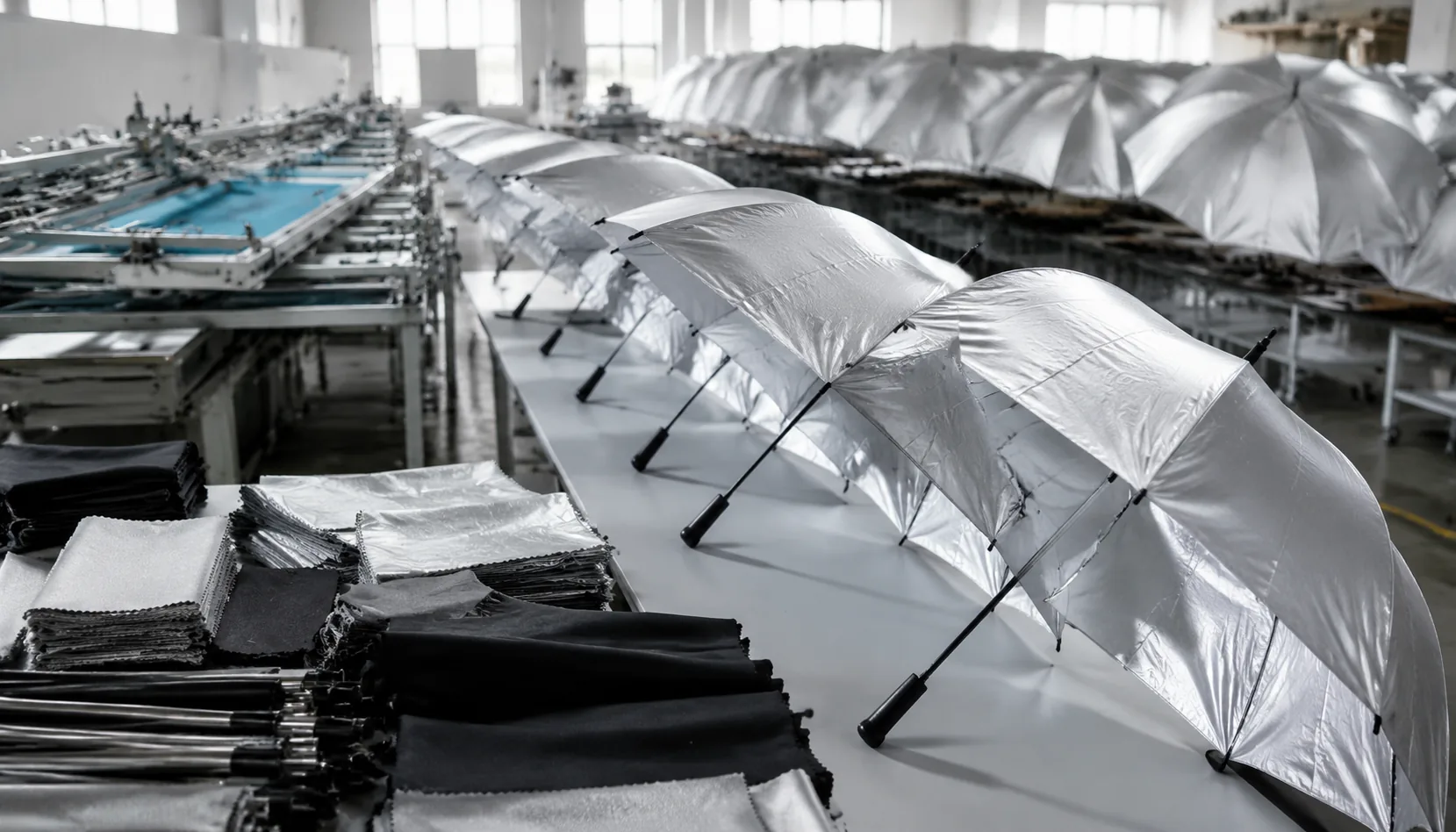
Reflective Umbrella Printing for Nighttime Brand Visibility
Plan reflective logos or trims that improve night visibility, with fabric, ink, MOQ, testing, and lead-time notes for B2...
Read More »