Reflective Logo Printing for Branded Rain Umbrella Programs
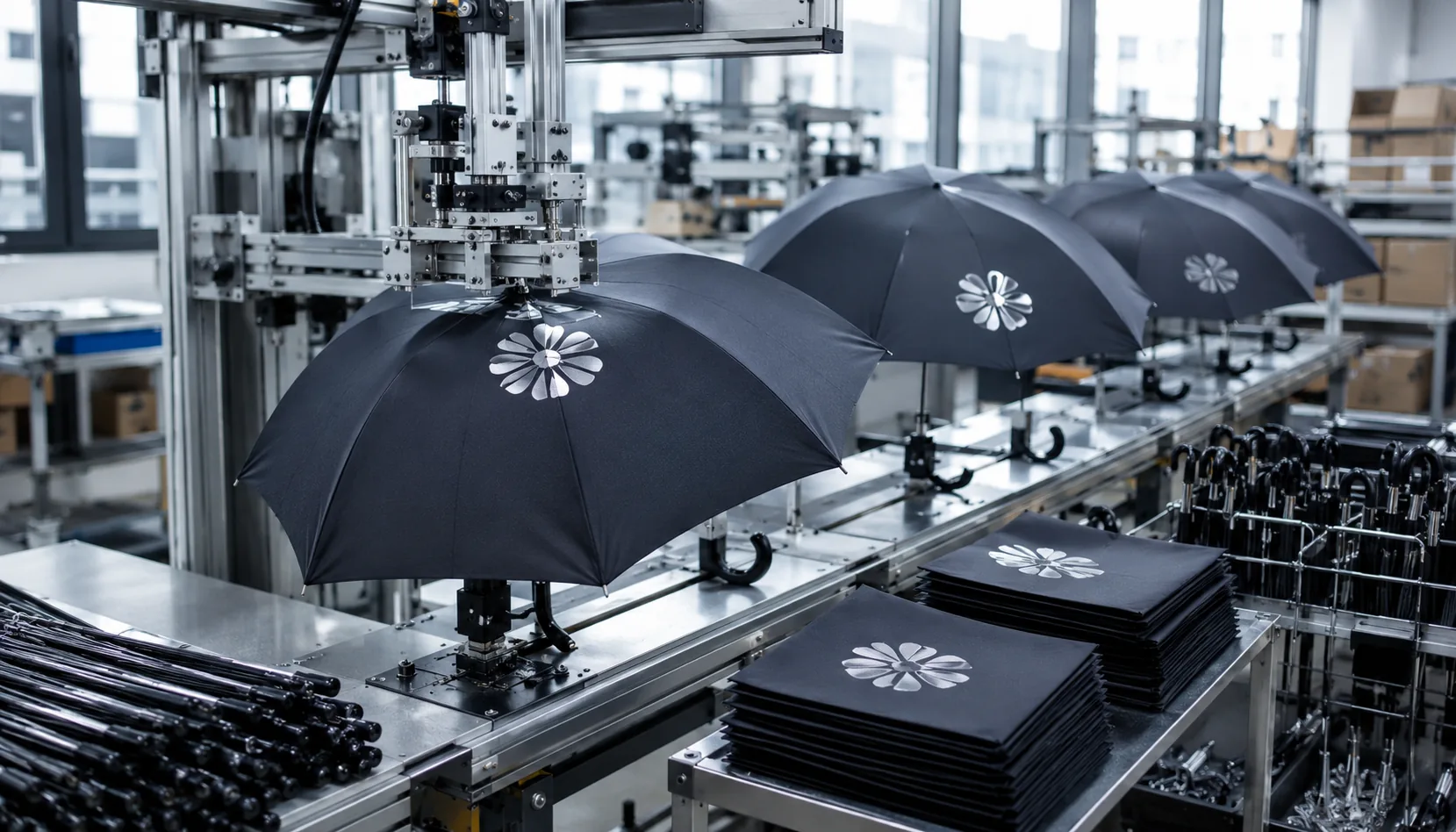
For safety-focused umbrella programs, the logo has to do more than look clean in a catalog; it must flash under headlights, survive folding abrasion, and pass buyer inspection after bulk packing. On our Songxia production floor, reflective logo umbrellas start with matching the reflective ink or transfer film to pongee or polyester fabric, then controlling curing, panel tension, seam placement, and final dark-room visibility checks before shipment.
Where Reflective Branding Adds B2B Value
Reflective branding earns its budget when the umbrella is used near traffic, not just photographed on a desk. For road safety campaigns, school crossing programs, police community events, and municipal pedestrian giveaways, a standard white logo on 190T pongee is visible in daylight but weak under headlights and rain glare. A reflective logo, 360-degree piping, or two panel accents can catch low-beam headlights from 80–150 meters depending on angle, rain intensity, and print area. I prefer reflective umbrella printing on 23 inch auto-open stick umbrellas or 27 inch golf umbrellas because the larger canopy gives enough surface for both brand identity and safety function. For promotional safety umbrellas, fiberglass ribs and a vented double canopy matter too; if the frame flips in 35 mph wind, the reflective trim is useless. A practical spec is 190T or 210T pongee, black or navy panels, silver-gray reflective transfer, 8K fiberglass frame, and AQL 2.5 inspection focused on adhesion, alignment, and nighttime visibility checks.
Insurance companies and roadside-assistance brands get more value from reflective logo umbrellas than from ordinary branded rain umbrellas because the product connects directly to risk reduction. A claim-prevention kit with a 21 inch auto-open-close folding umbrella can sit in a car door pocket; a 23 inch stick model works better for agents, adjusters, and emergency-response teams walking parking lots or damaged-property sites. In these programs, I would not cover all panels with reflective ink because cost rises quickly and the canopy starts to look like safety gear instead of a brand item. One clean logo on opposite panels plus reflective edge piping is usually the best balance. Heat-transfer reflective film gives sharper logos than screen printing when the artwork has small text, but it needs controlled temperature, pressure, and peel timing or it will crack after flex testing. During umbrella QA inspection, we check 3M-style reflectivity appearance, rubbing resistance, panel puckering, and whether the transfer bridges seam ridges, which is where failures often start.
Campus events and commuter retail lines need a different judgment: reflective accents should look intentional in daylight and functional at night. For universities, reflective panel corners on a school-color canopy work well for late classes, rainy football exits, and bike-path crossings without making the umbrella look like a construction vest. For retail commuter programs, especially 21 inch compact umbrellas and 23 inch city stick umbrellas, reflective piping around the canopy edge is often more valuable than a large silver logo because it is visible from multiple directions while walking through intersections. Standard white or silver printing is enough for indoor events, trade shows, and low-cost giveaways where the umbrella’s job is simple brand recall. Reflective treatment becomes worth the added unit cost when the buyer can tie it to safety, night commuting, parking-lot use, or employee duty-of-care. Our standard practice at ZheBrella is to prototype both daylight brand appearance and dark-room headlight response before locking MOQ, FOB/DDP pricing, and 25–40 day production timing.
Choosing Reflective Ink, Tape, or Piping
Reflective screen ink is the cleanest choice when the logo needs to stay flat on 190T or 210T pongee and still look like normal branding in daylight. We usually print it through a higher mesh count than standard white ink because the glass-bead load is heavier and can clog if the paste is too dry. Visibility is good under headlights from 30 to 80 meters, but it is not as bright as certified reflective tape. Hand feel is slightly sandy, not rubbery, and cost is moderate because it runs on the same screen-printing tables used for branded rain umbrellas. The weak point is abrasion: if the print sits where folded panels rub against steel or fiberglass ribs, the beads polish down after repeated open-close cycles. For reflective logo umbrellas, I avoid placing ink within 15 mm of stitched seams, 20 mm of panel edges, and the main rib contact line on 8K or 10K frames.
Heat-transfer reflective film gives sharper edges and stronger night return than ink, especially for small text, QR-style marks, or thin sponsor lines. It works well on pongee and some polyester canopies, but the adhesive must be matched to the coating; heavy Teflon water-repellent finish or silicone-based treatment can cause lifting unless the fabric is pre-tested. The hand feel is thicker and more plastic, so a 150 mm chest-style logo on one umbrella panel is acceptable, while a large 300 mm arc graphic can make the canopy fold poorly. Reflective umbrella printing by heat press also has a placement problem: too close to rib tips, ferrules, or the crown seam, pressure becomes uneven and edges peel first. Cost is higher than screen ink because film waste is real, especially on curved panel layouts, but it is still practical for promotional safety umbrellas when the order needs bright reflectivity without changing the sewing line.
Sewn reflective tape or piping is the most durable option because the reflective material is mechanically locked into the umbrella, not just bonded to the canopy surface. It is the right choice for edge bands, alternating panel borders, or a full perimeter safety outline on 23 inch, 27 inch, or 30 inch umbrellas. Piping gives a premium, integrated look, but it changes the sewing operation: the operator must control feed tension so the canopy does not pucker, and the frame must still close cleanly without thick trim stacking at the tips. Tape is brighter than ink and usually survives more wet-fold cycles, but needle holes and seam alignment become part of umbrella QA inspection. Our standard practice at ZheBrella is to check reflective trim after 24-hour wet storage, 300 open-close cycles, and AQL 2.5 final inspection for skipped stitches, delamination, edge fray, and rib abrasion marks. It costs the most, but for long-term safety visibility it is the least risky construction.
Fabric and Frame Specs That Support Durability
For reflective logo umbrellas, the fabric decision matters before the artwork decision. I recommend 190T pongee for most branded rain umbrellas because it holds a clean print edge, dries faster than cheap polyester, and does not stretch badly during panel sewing. If the buyer wants a heavier hand feel for retail or executive gifts, 210T pongee is the better upgrade; it gives stronger color depth and a smoother surface for reflective umbrella printing, especially when the logo sits across one or two panels. Avoid loose 170T fabric for reflective ink or heat-transfer film because the coating can look broken after folding. For safety-led programs, a dark navy, black, or charcoal canopy with silver reflective branding gives the highest contrast under headlights, while UPF 50+ or Teflon coating can be added without disturbing the reflective layer if curing temperature is controlled.
The frame should match the promise of the logo. An 8K frame with fiberglass ribs and a steel shaft is the practical baseline for a 23-inch city umbrella: flexible enough in gusts, rigid enough for daily commuting, and still cost-controlled for promotional safety umbrellas. A 16K structure looks more premium and supports the canopy better, but it adds labor, rib cost, and weight, so I use it when the buyer wants a stronger retail feel or a larger 27-inch arc. Steel ribs are cheaper but bend permanently after inversion; fiberglass ribs recover better and are worth the upgrade for wind claims. For windy markets, a double-canopy vented windproof build reduces pressure under the canopy and can survive 50+ mph wind-tunnel testing when the runner, notch, and rib tips are properly matched.
Auto-open mechanisms push the product into a more premium bracket, but they are not just a button on the handle. The spring, runner, shaft wall thickness, and safety cap all need to be specified together; otherwise the umbrella opens hard in the sample room and fails after 300 to 500 cycles in real use. Manual open is still best for low-MOQ event giveaways, while auto-open suits corporate branded rain umbrellas and retail packs where the user expects one-hand operation. Auto-open-close is usually reserved for 21-inch folding models, not full stick umbrellas, because the mechanism adds more failure points and cost. Our standard umbrella QA inspection checks logo placement, reflective adhesion after wet rub, frame symmetry, opening force, and AQL 2.5 workmanship defects before FOB or DDP shipment.
Sampling, MOQ, and Production Controls
MOQ is usually higher for reflective materials than for standard logo printing because reflective film, glass-bead ink, and special transfer sheets are bought in minimum rolls, not by single umbrella. A simple one-position reflective logo may start around 500–1,000 pieces if the base umbrella is a regular 23-inch 8K auto-open model in stock fabric. Custom canopy color, multiple print panels, double-canopy vented construction, or 27-inch golf umbrellas can push realistic MOQ to 1,000–3,000 pieces. Bulk lead time is normally 30–45 days after sample approval, depending on frame availability, fabric dyeing, printing queue, and AQL 2.5 inspection scheduling. For umbrella QA inspection, buyers should require checks on logo placement tolerance, reflective brightness consistency, adhesion, open-close function, rib alignment, canopy tension, and carton marking before FOB or DDP shipment is released. Reflective logo umbrellas are safety-visible products, so weak reflection should be treated as a functional defect, not a cosmetic issue.
Inspection and Shipping Points for Buyers
AQL 2.5 inspection is where reflective logo umbrellas either prove they are event-ready or expose shortcuts that looked fine in a photo sample. For branded rain umbrellas, I separate visual defects from functional defects: logo cracking, pinholes in reflective ink, weak heat-transfer edges, and color contamination go into print defects; off-center placement over 5 mm, tilted panel positioning, or inconsistent logo height around the canopy are alignment defects. Seam puckering matters because a reflective logo often sits near stitched panel joins, and poor tension on 190T or 210T pongee makes the print look wavy even when the artwork file was correct. I also check opening force on manual, auto-open, and auto-open-close frames, because a stiff runner or mis-set spring creates field complaints faster than a small cosmetic issue. Reflective trim attachment should be tug-tested at the rib tips, canopy edge, and strap loop; loose piping or tape is a safety failure, not a minor sewing flaw.
For reflective umbrella printing, buyers should require inspection under both normal warehouse light and a direct flashlight or low-angle beam, because reflective ink can pass a daylight check but show dead spots at night. On a 23 inch 8K umbrella, I like to inspect every printed panel directionally: top, side, and partial fold, since reflective films can crease during packing if the carton compression is too aggressive. For promotional safety umbrellas, the QA sheet should list canopy fabric, rib material, rib count, print method, logo size tolerance, trim width tolerance, and frame operation cycles. Our standard practice at ZheBrella is to include umbrella QA inspection photos for open canopy, closed strap, handle logo if any, carton mark, and random packed units before release. If the order uses fiberglass ribs, double-canopy venting, UPF 50+ coating, or Teflon finish, those specs should be confirmed during inspection rather than assumed from the sales sample.
FOB Ningbo or Shanghai is usually better when the buyer has a strong forwarder, mixed shipments, or wants control over sailing schedules and insurance; DDP delivery is better when the umbrellas must arrive at a conference, campus campaign, road-safety program, or retail launch by a fixed date. The decision is not only price. FOB may look cheaper, but the buyer carries booking delays, customs clearance, duty, local trucking, and last-mile coordination. DDP gives one landed cost and one responsible party, but it must be planned earlier, especially for reflective logo umbrellas with custom trim, because failed inspection can push the shipment by 3 to 7 days. For normal production, I would budget 25 to 35 days after sample approval for common 21 inch to 27 inch models, longer for 30 inch golf umbrellas, 16K frames, or custom POE/PVC/EVA canopies. For event deadlines, set the final inspection at least 10 days before vessel cutoff or 5 days before air pickup.
Frequently Asked Questions
Can reflective logos be printed on every umbrella fabric color?
They work best on dark 190T or 210T pongee where contrast is strong. Very light canopies may need reflective trim or a darker logo base layer to keep the effect visible.
Does reflective printing change the MOQ?
Often yes, because reflective ink or film requires separate setup and testing. A factory may keep the umbrella MOQ standard but add a minimum for reflective material usage.
What print method works best for reflective logos on rain umbrellas?
For most procurement programs, screen printing with reflective or specialty ink is used on polyester canopy panels, while heat transfer is better for small runs or multicolor artwork. The factory should confirm wash/rub resistance and adhesion before bulk approval.
How do I verify the logo stays visible at night?
Request a lab sample and check it under low-light conditions with a flashlight or car-headlight simulation. Buyers typically approve by comparing reflectivity on dark canopy colors and confirming the print does not crack after repeated opening and closing.
What QA checks matter for branded safety umbrella orders?
Key checks include logo placement tolerance, color match, reflective effect, canopy seam strength, and water repellency. A common bulk inspection plan is 100% visual check on printing, plus AQL sampling for frame function and fabric defects.
Looking to Launch Your Custom Umbrella Line?
ZheBrella is a Zhejiang-based OEM/ODM umbrella manufacturer with 17 years of export experience. Free design, low MOQ from 100 pieces, windproof construction, full-color print.
Get Free Quote Now »People Also Search For
Related Articles
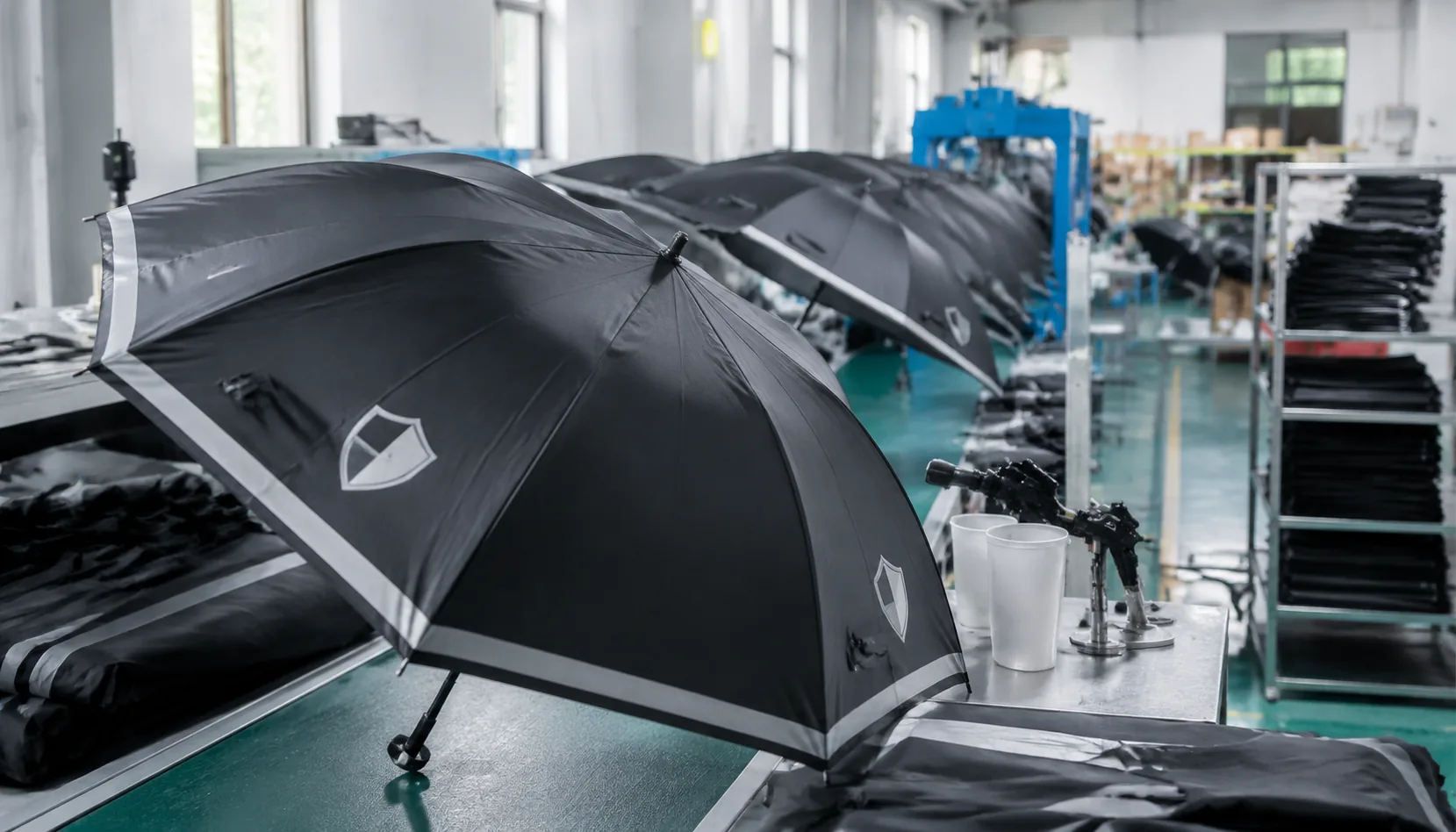
Reflective Logo Printing on Umbrellas for Safety Programs
Plan reflective umbrella logos for safety campaigns with print placement, fabric choices, MOQ, lead time, and QC checks ...
Read More »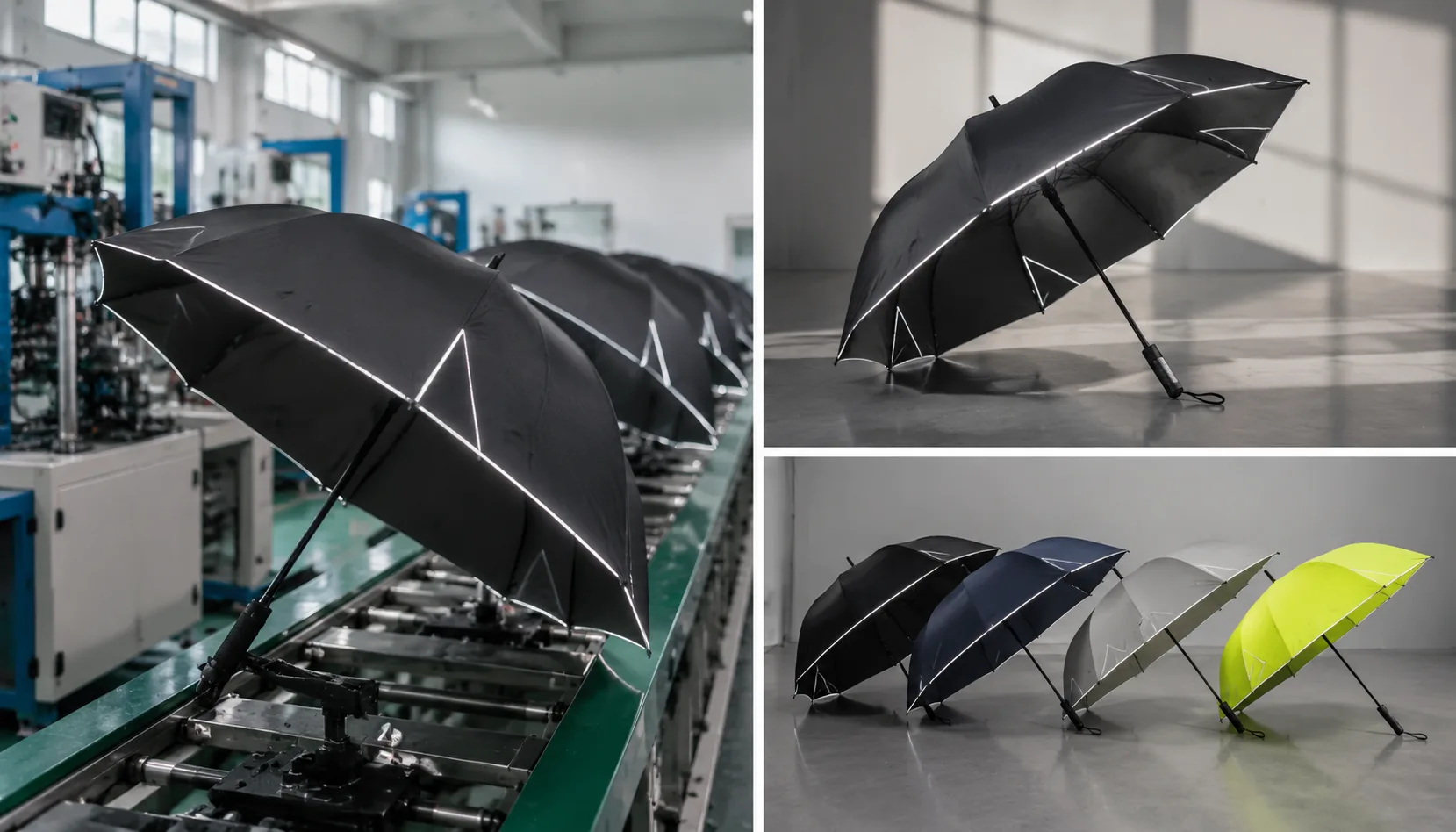
Reflective Umbrella Printing for Safety-Focused Branding
Plan reflective branded umbrellas with print placement, tape options, 190T pongee choices, AQL checks, MOQs, and lead ti...
Read More »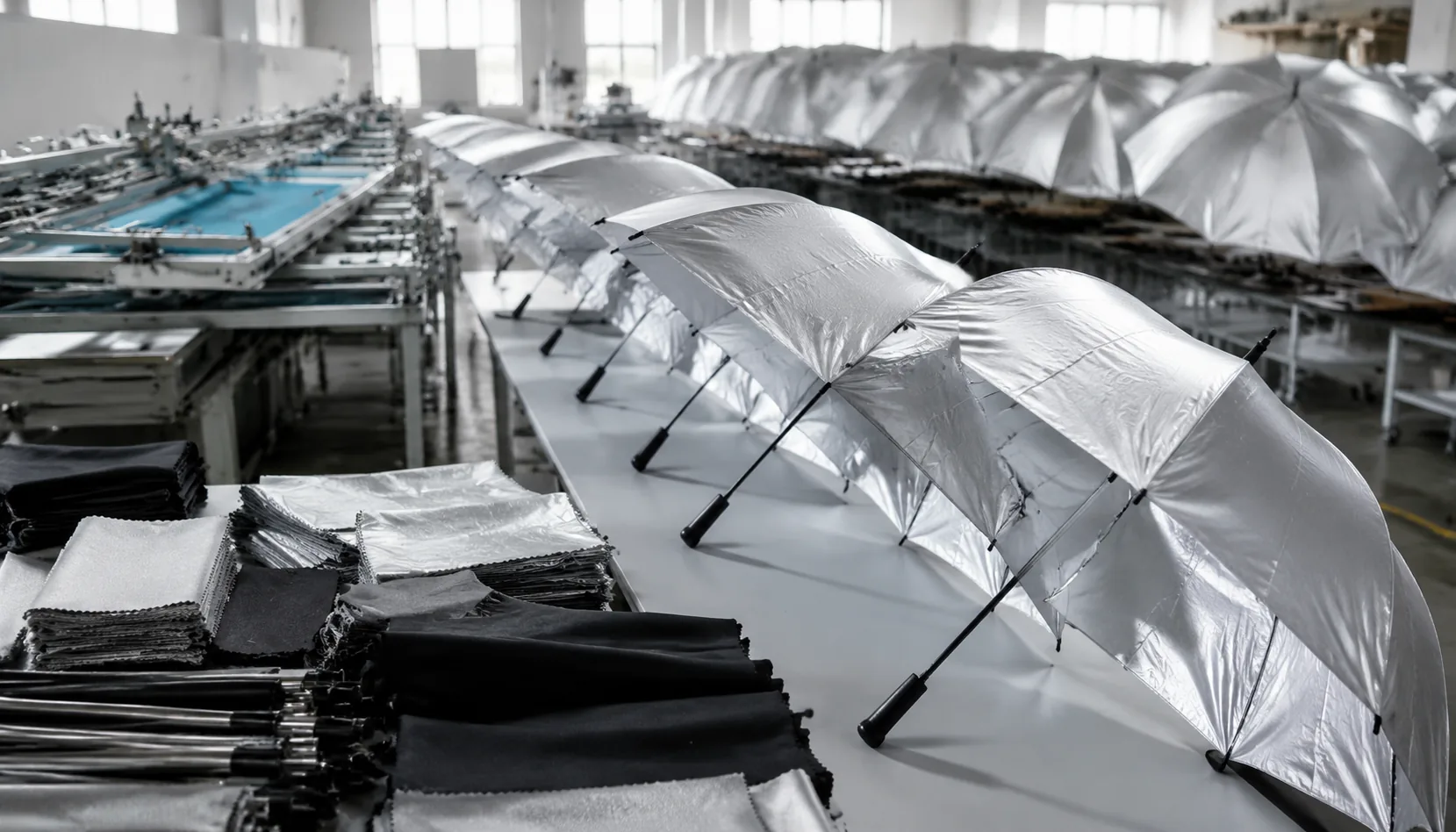
Reflective Umbrella Printing for Nighttime Brand Visibility
Plan reflective logos or trims that improve night visibility, with fabric, ink, MOQ, testing, and lead-time notes for B2...
Read More »