Reflective Safety Umbrellas: Specs for Night Visibility
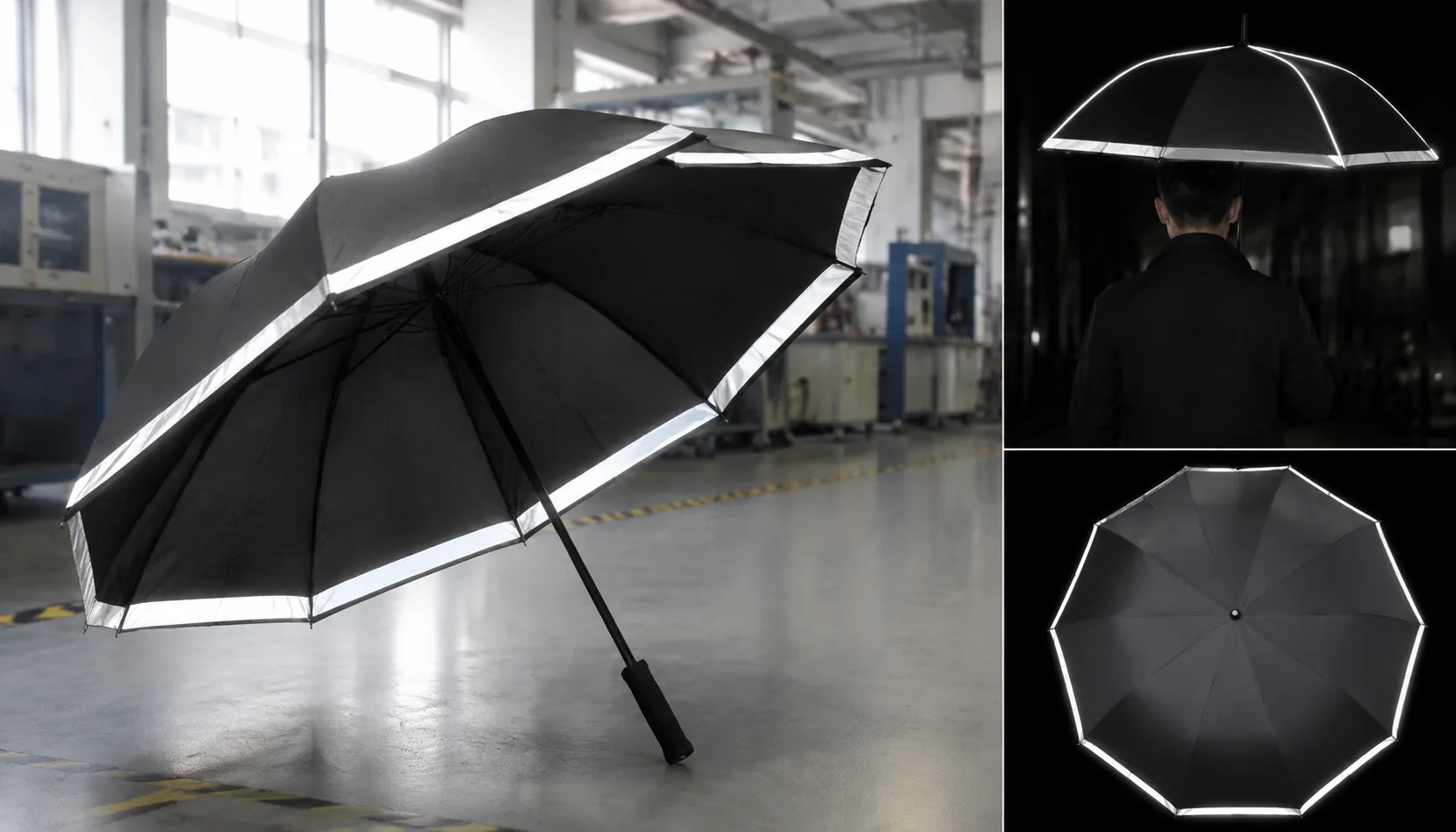
Night visibility on an umbrella is not just a strip of shiny tape; it depends on trim width, placement, stitching, fabric color, and how the reflective material survives rain, folding, and packing. When buyers specify reflective safety umbrellas, the factory has to balance visibility with frame strength, print compliance, MOQ realities, and inspection points that catch peeling tape or misaligned panels before shipment.
Identify the Buyer and Visibility Requirement
The first question is not “Can you add reflective tape?” but who must be seen, from what angle, and at what distance. Schools usually need child-size 21" or 23" manual umbrellas with rounded tips, bright yellow or orange 190T pongee, and reflective trim visible to drivers at pickup gates. Insurance firms and road safety campaigns often buy safety promotional umbrellas for giveaways, so logo placement, carton count, and unit cost matter as much as EN-style visibility logic. Security teams need tougher 27" or 30" golf umbrellas with fiberglass ribs, EVA handles, and reflective zones that show while standing near parking lots, warehouses, or event entrances. Commuter retail buyers care about compact auto-open-close models, typically 21" arc, where reflective print must survive folding abrasion and wet storage.
Decorative reflective piping is not the same as a high-visibility umbrella design. Piping on the canopy edge helps outline the umbrella, but it gives only a thin 360-degree line, and it can disappear when the canopy tilts forward. Broader high visibility umbrellas use reflective panels, alternating fluorescent canopy colors, or segmented reflective heat-transfer film on 8K or 10K layouts so headlights catch more surface area. For a road safety program, I would specify at least four reflective canopy segments or 20-25 mm reflective bands on every other panel, not just a silver welt at the hem. If the buyer wants OEM reflective umbrellas for brand work, the logo should not interrupt the reflective path; put branding on non-reflective panels or use dark ink over fluorescent pongee with reflective borders.
A serious reflective umbrella supplier should ask for the operating environment before quoting. Night rain in a school zone, security patrol in a dark industrial park, and subway-to-office commuting do not need the same construction. For windy streets, fiberglass ribs and a vented double canopy are worth the extra cost over steel ribs because a flipped umbrella stops being a visibility aid. Our standard practice at ZheBrella is to confirm canopy fabric, reflective material width, rib count, opening mechanism, logo method, and inspection level before sampling; AQL 2.5 should include checks for reflective film adhesion, print registration, opening force, and water repellency after packing. Typical OEM lead time is 7-10 days for a sample and 25-35 days for bulk after approval, depending on MOQ, printing, and whether shipment is FOB Ningbo/Shanghai or DDP to the buyer’s warehouse.
Specify Reflective Materials and Placement
For reflective safety umbrellas, the material choice matters more than the artwork. The most durable setup is silver glass-bead reflective tape or microprismatic piping stitched along the panel edges, because those lines catch headlights before the canopy face does. On high visibility umbrellas, I prefer 5 to 10 mm tape on every other rib seam, with full perimeter binding only if the customer accepts a slightly stiffer edge. Heat-transfer reflective strips work well on polyester pongee 190T and 210T canopies when you need clean branding without thick thread buildup, but they should be tested for wash and flex resistance. As a reflective umbrella supplier, we usually reserve screen-printed reflective logos for flat central panels, where the graphic is readable in daylight and still returns light at night. That combination gives better function than dumping reflectivity only in the center, which disappears when the umbrella is tilted.
Placement decides whether the umbrella is actually visible from traffic, pedestrians, and cyclists. The panel edges should carry the first reflective line, because those lines move with the ribs and create a rotating outline; canopy tips can add small reflective dots or caps so the silhouette is visible when the umbrella is partially open. Sleeves and straps are often ignored, but they are useful for identification at curbside pickup, especially for safety promotional umbrellas handed out at events. On OEM reflective umbrellas, I would also add a short reflective strip on the closure band or wrist strap, since that part is exposed when the canopy is folded and people carry it at night. A balanced layout uses front-facing logo reflectivity, edge piping, and at least one secondary reflective element on the strap or sleeve so the product reads from multiple angles instead of only head-on.
Choose the Frame and Canopy for Daily Commuting
For daily commuting, the frame decision should start with rib material, not the logo area. Steel ribs keep cost down and feel rigid in the hand, but they bend after repeated side-gusts at subway exits or between tall buildings. Fiberglass ribs recover better because they flex and return, so we normally specify fiberglass for reflective safety umbrellas intended for rainy urban use. An 8K frame is enough for a 23 inch straight umbrella when the buyer needs a practical promotional unit, while 16K gives a rounder canopy profile and more load-sharing in wind, especially on 27 inch golf-style models. The tradeoff is weight: a steel 16K build can feel tiring on a 40-minute commute, while fiberglass keeps the umbrella easier to carry without making it flimsy.
A double-canopy vented windproof construction is worth paying for when the umbrella will be used around offices, campuses, transport hubs, or parking lots. The upper vent lets pressure escape instead of turning the canopy inside out, and with fiberglass ribs we usually target real-world wind resistance around 45–50 mph rather than quoting inflated lab numbers. For high visibility umbrellas, the canopy color should do part of the safety work before any reflective tape is added. Fluorescent yellow, orange, and lime are better for dusk and rain glare; black works for corporate programs but needs wider reflective piping, reflective panels, or a repeated reflective logo layout to stay visible from multiple angles.
For canopy fabric, 190T pongee is the common economical choice for safety promotional umbrellas, but 210T pongee has a denser hand, cleaner print surface, and better water beading after coating. A black 210T pongee canopy with silver reflective border looks premium for retail, while fluorescent 190T pongee is usually the practical route for municipal, construction, school, or event giveaways. Optional UPF 50+ coating makes sense if the same umbrella is used for sun exposure, but buyers should confirm whether the coating changes the fabric shade before approving bulk production. As an OEM reflective umbrellas program, our standard practice at ZheBrella is to confirm rib count, fabric GSM, reflective material width, and open-diameter tolerance in the pre-production sample before quoting FOB or DDP lead times.
Confirm Mechanism, Handle, and User Safety Details
Handle specification is often treated as decoration, but it affects field use more than buyers expect. Straight EVA foam handles work well for high visibility umbrellas used by traffic wardens or parking staff because they stay grippy when wet and are easy to hold with gloves. Rubberized J handles are better for retail commuters, while plastic crook handles are cheaper but can feel slippery unless textured. A wrist strap is worth adding on compact OEM reflective umbrellas, especially 3-fold auto-open-close models, because users tend to drop them when exiting cars or trains. Our standard practice at ZheBrella is to check handle pull strength, strap stitching, tip attachment, and runner pinch points during AQL 2.5 inspection, not only canopy printing. For public tenders, I would document these details in the spec sheet along with rib count, canopy fabric, reflective area, mechanism type, and any child-safe ferrule requirement before sample approval.
Build the RFQ Around Testing and Delivery
Put the RFQ around measurable approvals, not catalog photos. For reflective safety umbrellas, I want the buyer to specify MOQ by size and construction: for example 500–1,000 pcs for a stock 23" auto-open 8K steel frame with reflective edge tape, and 3,000 pcs+ for OEM reflective umbrellas using custom 190T or 210T pongee, full-panel printing, or molded handle colors. Ask for a pre-production sample lead time of 5–7 days if using stock reflective tape, or 10–14 days when the reflective material, logo print, or heat-transfer film needs separate approval. Production lead time should be quoted in calendar days after sample sign-off and deposit, typically 25–35 days for 1,000–5,000 pcs and 40–50 days when custom packaging, carton marks, or multiple SKUs are involved.
Reflective material approval needs its own line item because this is where many high visibility umbrellas fail in real use. The RFQ should require tape width, placement, color, and test method: 10 mm or 20 mm reflective tape on canopy seams, reflective piping around the edge, or segmented reflective panels on alternate gores. For safety promotional umbrellas, the supplier should submit daytime photos, dark-room flash photos, and a wash/rub check after light abrasion. If the order uses screen print over reflective tape, reject it unless the factory confirms the ink will not reduce reflectivity or peel during folding. Our standard practice at ZheBrella is to approve reflective tape, logo placement, and canopy fabric together before cutting bulk fabric, because changing tape after sewing usually means rebuilding the canopy.
Inspection terms should be written into the PO before price negotiation, not added at shipment. Use AQL 2.5 for major defects and define the checkpoints: reflective tape adhesion after repeated folding, logo alignment within agreed tolerance, rib strength under hand-inversion or wind simulation, and open-close cycling for manual, auto-open, or auto-open-close mechanisms. For a 23" 8K umbrella, I would cycle at least 20–30 pcs from the inspection lot for smooth runner action, spring response, and shaft locking; for 27" or 30" golf umbrellas, add fiberglass rib flex and double-canopy vent checks if specified. The RFQ should also ask the reflective umbrella supplier to quote FOB Ningbo/Shanghai and DDP destination separately, with carton dimensions, gross weight, HS code, and estimated transit time, so delivery cost is compared on the same basis as unit price.
Frequently Asked Questions
Can reflective umbrellas replace certified safety vests?
No. Reflective umbrellas improve visibility in rain but should be treated as promotional or commuter safety products, not PPE unless the buyer specifies and verifies the required standard.
Where should reflective trim be placed on an umbrella?
Panel edges and canopy perimeter are the most visible areas when the umbrella is open. Sleeves and closure straps add visibility when the umbrella is carried closed.
What reflective placement works best for umbrellas used at night?
For practical roadside or urban visibility, buyers usually specify a continuous reflective band around the canopy edge or 6 to 8 reflective panel strips. A trim width of about 1 to 2 cm is common because it stays visible when the umbrella is open without adding too much weight or sewing complexity.
Does reflective trim affect logo printing layout on the canopy?
Yes. Reflective piping or edge tape reduces clean printable area near the panel perimeter, so artwork normally needs a safety margin of at least 15 to 25 mm from seams and trim. If you need larger logos, it is better to confirm panel print size against the open arc, such as 23-inch or 27-inch frames, before sampling.
Which inspection points matter most for OEM reflective umbrellas before shipment?
The key checks are reflective trim alignment, stitch security at panel joints, opening and closing performance, and print registration on each panel. For bulk orders, many importers use AQL 2.5 for major defects and verify at least 10 to 20 cycle open-close testing per sampled carton lot.
Looking to Launch Your Custom Umbrella Line?
ZheBrella is a Zhejiang-based OEM/ODM umbrella manufacturer with 17 years of export experience. Free design, low MOQ from 100 pieces, windproof construction, full-color print.
Get Free Quote Now »People Also Search For
Related Articles
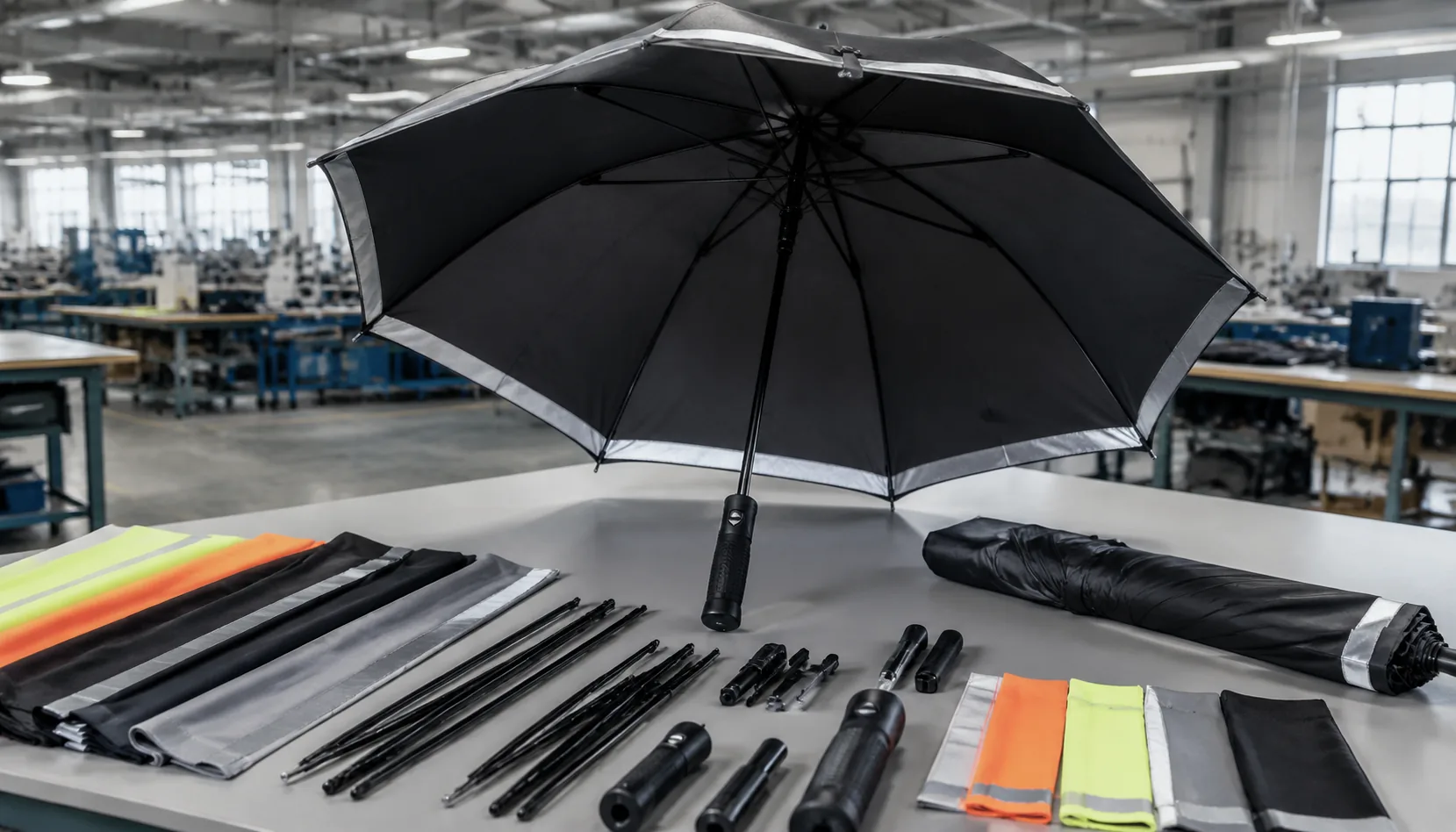
Reflective Safety Umbrellas: Buyer Spec Guide for Brands
Specify reflective safety umbrellas with proper tape, print zones, frame strength, and QC tests for commuter, school, an...
Read More »
Reflective Safety Umbrellas for Promo Buyer Spec Guide
Specify reflective safety umbrellas with 190T/210T pongee, fiberglass ribs, reflective piping, QC checks, MOQ, and shipp...
Read More »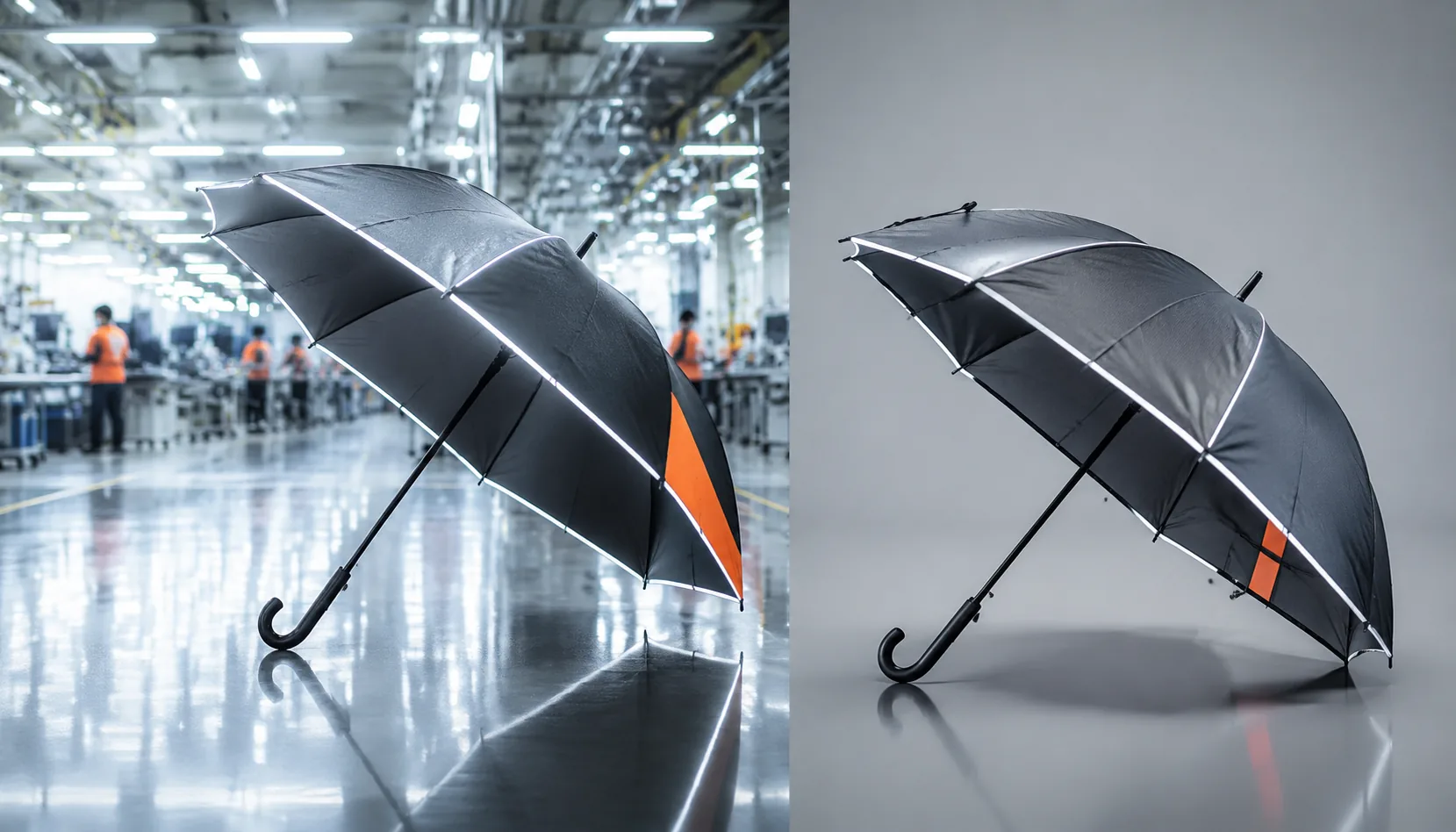
Reflective Safety Umbrellas: OEM Specs for Night Visibility
Specify reflective safety umbrellas with the right trims, canopy fabric, frames, and QC tests for commuter, school, and ...
Read More »