Custom Umbrellas for Cruise Lines and Shore Excursions
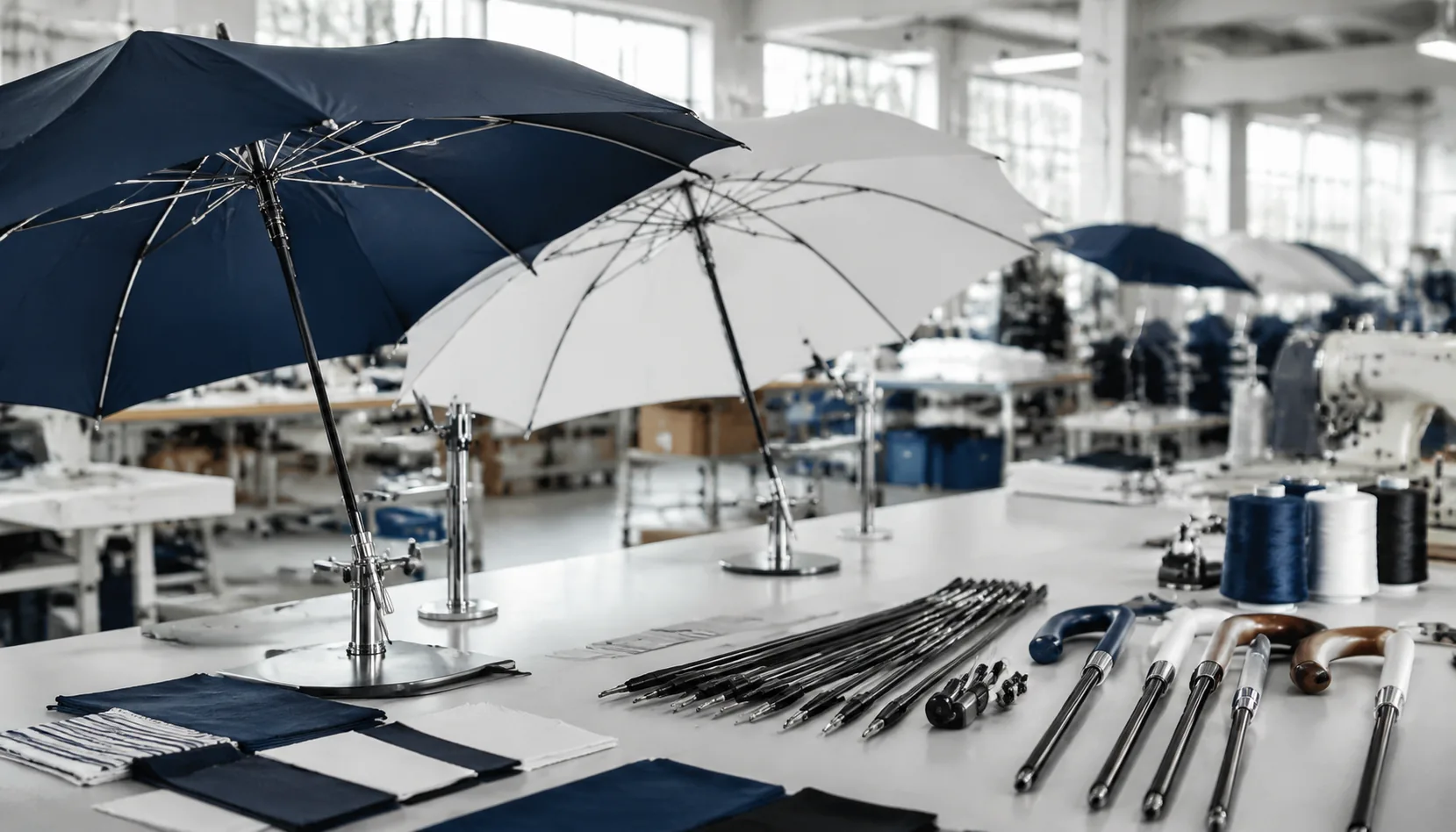
Cruise buyers need umbrellas that survive salt air, tight cabin storage, gangway handouts, and souvenir retail without creating carton headaches at loading. On our Songxia factory floor, we check compact frame tolerances, UPF 50+ canopy coating, corrosion-resistant ribs, and mixed carton plans before a PO becomes a production rush. The right cruise line umbrellas should pack neatly, open smoothly after weeks at sea, and fit the realities of excursions, onboard shops, and cabin placement.
Use Cases Across the Cruise Guest Journey
Cruise line umbrellas should be mapped by touchpoint, not ordered as one generic SKU. In cabins, the right unit is usually a 21" or 23" compact folding umbrella with auto-open-close, 8K fiberglass ribs, a black electroplated shaft, and 190T or 210T pongee with a Teflon-type water-repellent finish. It fits inside a wardrobe drawer, a beach tote, or a shore bag without becoming another bulky item for housekeeping. For balcony cabins and VIP suites, I prefer a slightly stronger 23" 10K folding frame with a rubberized handle and discreet woven label rather than loud panel printing; premium guests notice handle feel and opening smoothness more than oversized logos. If the itinerary includes Alaska, Northern Europe, or typhoon-season Asia, specify windproof folding umbrellas tested to 40-50 mph gusts, because cheap 6-rib steel folders come back bent after the first windy gangway walk.
Onboard retail has a different job: the umbrella must look giftable, scan cleanly at POS, and survive luggage abuse after purchase. Branded travel umbrellas for the ship store can use full-panel heat transfer or sublimation on 190T pongee when the artwork has gradients, but simple cruise logos are still cleaner and cheaper by screen print. Retail packaging matters more than many buyers expect: a fabric sleeve, barcode hangtag, care label, and carton markings by ship or route reduce loading mistakes before sailing. Shore excursion umbrellas, especially for walking tours, need visibility and control. Guides usually prefer 27" or 30" straight stick umbrellas with 8K or 16K ribs, a J-handle or EVA straight handle, and a bright canopy color that guests can follow in crowded ports. For tropical excursions, POE clear umbrellas also work well because the guide stays visible while guests keep sightlines open.
Crew operations are where procurement teams should stop thinking like merchandisers and start thinking like operations managers. Gangway staff, tender boat coordinators, security teams, and pier greeters need larger stick umbrellas, often 27" or 30", with fiberglass ribs, reinforced tips, and a double-canopy vented windproof structure if the port is exposed. A dark 210T pongee canopy with UPF 50+ coating is practical for long sun shifts, while reflective piping can help in rainy evening embarkation. As an OEM umbrella supplier, our standard practice is to separate guest compact folders, guide stick umbrellas, and crew-duty umbrellas into different BOMs, then inspect each under AQL 2.5 for opening force, rib alignment, print adhesion, seam leakage, and carton drop performance. Typical MOQ is 500-1,000 pieces per style, with 25-35 days production after artwork approval, plus FOB Ningbo or Shanghai and DDP options for U.S. or EU cruise warehouse delivery.
Marine Environment Specs That Matter
Salt air punishes cheap frames faster than most buyers expect, so I would not build cruise line umbrellas around bare carbon steel ribs unless the target is a short promotional giveaway. For repeat passenger use, fiberglass ribs are the safer choice because they do not rust, flex better in gusts, and reduce warranty complaints when umbrellas sit wet in cabin closets or shore-excursion bins. If the budget requires steel, specify electrophoretic coating or black zinc on ribs, stretchers, runners, and springs, not just painted shafts. On folding models, the weak points are usually the rivets and spring catches, so ask the OEM umbrella supplier to confirm whether those small parts are plated, stainless, or ordinary iron. For 8K and 10K travel frames, I prefer fiberglass ribs with a metal shaft; for larger 27" or 30" golf-style umbrellas used by guides on piers, fiberglass ribs and a fiberglass shaft are worth the added cost.
Canopy fabric matters as much as the frame because shore excursion umbrellas are exposed to rain, sun, sunscreen residue, and repeated packing while damp. 190T pongee is acceptable for a lightweight giveaway, but 210T pongee has a tighter hand, better print surface, and usually holds water-repellent treatment longer after folding abrasion. A good quick-dry finish should bead water immediately and allow the canopy to shake off without soaking the sleeve; for better retail-grade programs, add Teflon treatment rather than relying on a basic silicone coating. Cruise itineraries also mean long sun exposure on decks, beaches, and open buses, so UPF 50+ coating is not a cosmetic upgrade. Silver UV coating gives stronger blocking but changes the inside appearance; black UV coating feels more premium and hides dirt. For branded travel umbrellas, confirm the print method after coating selection because screen printing, heat transfer, and sublimation each reacts differently to treated pongee.
Coastal wind is messy: it comes in side gusts between buildings, across tender docks, and through open-air tour vehicles, so a stiff umbrella is not automatically a strong umbrella. Windproof folding umbrellas should use a double-canopy vented design if the product will be used in ports with frequent gusts, especially the Caribbean, Mediterranean, and Alaska shoulder seasons. A vent lets pressure escape instead of turning the canopy into a bowl, and fiberglass ribs recover after inversion better than steel. For compact 21" or 23" auto-open-close models, a realistic target is surviving 40–50 mph controlled wind-tunnel testing; larger 27" guide umbrellas can be built stronger, but they become harder for guests to carry. Our standard practice at ZheBrella is to test opening force, rib recovery, seam slippage, and wet-fold staining before AQL 2.5 inspection, because cruise line umbrellas fail most often from repeated damp storage rather than a single dramatic storm.
Designing for Portability and Luggage Limits
For cruise line umbrellas, the sweet spot is usually a 21" or 23" folding model, not a full-size 27" stick umbrella. A 21" 8K frame fits easily into cabin drawers, excursion backpacks, and retail shelf bins, while a 23" canopy gives better shoulder coverage for guests walking between tender boats, buses, and rainy port streets. I usually target a closed length of 11" to 12.5" for tri-fold designs, with a finished weight around 300 to 380 grams depending on whether the frame uses steel, aluminum, or fiberglass-reinforced ribs. Go much heavier and guests leave it in the cabin; go too light and the umbrella feels disposable when wind picks up near the pier.
Auto-open-close mechanisms are popular for branded travel umbrellas because guests can board a shuttle, enter a terminal, or step into a shop without fighting the runner by hand. For shore excursion umbrellas, I prefer a tested auto-open-close shaft with a controlled spring, firm safety lock, and 190T or 210T pongee canopy with water-repellent coating. A vented double-canopy is possible on compact models, but it adds bulk and cost; for most cruise retail programs, a single-canopy windproof folding umbrella with flexible fiberglass tips is the better balance. If the buyer wants a premium port-shop SKU, then UPF 50+ coating, Teflon finish, and a color-matched rubberized handle make sense.
Manual-open models still deserve serious consideration when the order is for loaner umbrellas, high-volume passenger gifts, or shore staff kits. Fewer moving parts means fewer spring failures, fewer pinched-finger complaints, and fewer warranty claims after repeated salt-air exposure. A manual 21" 8K frame with steel ribs and fiberglass ends can survive normal travel abuse better than a cheap auto-open unit, especially if the sleeve is properly designed. I recommend a sleeve with a wide mouth, reinforced seam, drain-friendly fabric, and either a wrist loop or small hook tab for cabin placement. As an OEM umbrella supplier, our standard practice is to confirm sleeve dimensions after final canopy folding, not from the drawing, because one millimeter of fabric stack-up can decide whether the guest actually uses the sleeve.
Logistics for Shipboard Retail and Multi-Port Programs
For cruise line umbrellas, the schedule has to work backward from the vessel loading window, not from the artwork approval date. A normal custom run takes 25 to 35 days after confirmed PO, deposit, approved dieline, and signed pre-production sample; add 7 to 10 days if the job needs PMS-matched 190T or 210T pongee dyeing, UPF 50+ coating, or a new molded handle. Repeat orders with existing screens and approved components can move in 18 to 25 days if fabric and frames are reserved. For shipboard retail, I push buyers to freeze assortment at least 60 days before warehouse cut-off because late changes to barcode files, hangtags, or inner-carton mixes cause more delay than sewing. A 21 inch auto-open-close folding umbrella may pack 36 pieces per master carton, while a 23 inch stick umbrella often packs 24; that carton math affects pallet count, warehouse receiving, and final stowage onboard.
Barcode labeling needs to be treated as production data, not decoration. Each SKU should have a final UPC/EAN, item description, color code, retail price ticket requirement, and carton mark before bulk packing starts. For multi-port programs, we often pack inner cartons by vessel or itinerary: for example, 12 navy, 12 black, and 12 white windproof folding umbrellas for Vessel A, while Vessel B receives a tropical-print mix for Caribbean sailings. That avoids the common mistake of sending balanced master cartons to a consolidation warehouse and expecting the cruise operator to break them down manually. Shore excursion umbrellas may need separate carton labels for tour operators, port agents, or rainy-season excursions, especially when the same branded travel umbrellas are split between onboard retail, VIP cabins, and excursion desks. Our standard practice at ZheBrella is to print carton marks with PO number, SKU, vessel name, sailing season, quantity, gross weight, and carton sequence.
MOQ planning is easier when the buyer groups demand across cruise brands, ships, or seasonal itineraries instead of treating every logo as a separate factory order. A practical MOQ might be 500 to 1,000 pieces per color for stock 190T pongee and standard steel or fiberglass ribs, but 2,000 to 3,000 pieces is more realistic for custom canopy color, special coating, or private-mold handles. An OEM umbrella supplier can usually split one production batch into several carton assortments if the frame, fabric, and print process stay the same; changing from screen print to heat transfer, or from 8K steel ribs to 10K fiberglass, creates a different costing and inspection lot. FOB Ningbo or Shanghai works when the cruise line already controls freight consolidation, while DDP to a Miami, Rotterdam, Barcelona, or Southampton warehouse is cleaner for buyers who want landed cost. For DDP, allow 30 to 45 days ocean transit plus customs and appointment delivery time.
Testing and Inspection Before Embarkation
Pre-embarkation inspection has to be stricter than normal promotional-gift checking because cruise line umbrellas are exposed to salt air, wet deck storage, crowded gangways, and repeated handout-and-return cycles. For production lots, our standard practice is AQL 2.5 for major defects and AQL 4.0 only for minor appearance issues, with the critical checklist locked before bulk cutting starts. Inspectors cycle manual, auto-open, and auto-open-close frames at least 20 times per sampled piece, watching for shaft wobble, runner jamming, weak spring release, loose tips, and rib deformation. For windproof folding umbrellas, we pay special attention to fiberglass ribs, double-canopy venting, and 8K or 10K frame balance because a compact 21" or 23" umbrella that flips too easily on a pier becomes a complaint within one sailing.
Salt-exposed metal checks are not optional for shore excursion umbrellas. We inspect plated steel shafts, rivets, screws, and spring buttons for rust marks after humidity or salt-spray reference testing, especially when buyers choose steel ribs to control cost instead of full fiberglass construction. Canopy fabric is checked for waterproofing by spray test, seam leakage, and coating consistency on 190T or 210T pongee, POE, PVC, or EVA panels. If the spec includes Teflon or UV coating, inspectors verify water beading and UPF 50+ documentation against the approved bill of materials. Fabric colorfastness matters because navy, red, and black panels can stain white uniforms, towels, or shipboard retail displays if dye fixation is poor. Logo adhesion is tested separately: screen print, heat-transfer, and sublimation each need rub, tape-pull, folding-crease, and wet-friction checks before packing.
Golden samples are the only practical way to keep reorders consistent across different ships, seasons, and fleet refresh programs. One signed sample should stay with the buyer, one with the OEM umbrella supplier, and one sealed in the factory QC room, showing exact canopy color, rib count, handle finish, logo size, Pantone target, sleeve label, carton mark, and packing method. For branded travel umbrellas, carton strength is part of product quality: export cartons should pass drop testing, compression checks, barcode scanning, and moisture review before FOB Ningbo or Shanghai delivery. Cruise buyers often reorder the same umbrella for Alaska, Caribbean, and Mediterranean itineraries, but small changes in fabric batch, coating hand-feel, or logo curing temperature can make two deliveries look mismatched at the gangway. A proper golden-sample system prevents that drift and gives procurement a clear standard when multiple departments approve cruise line umbrellas across the fleet.
Frequently Asked Questions
Are UPF 50+ umbrellas useful for cruise lines?
Yes. UPF 50+ canopies add value for tropical itineraries where guests use umbrellas for sun as much as rain, especially during shore excursions and queueing at ports.
Which umbrella type is best for cruise retail shops?
A compact 21-23 inch folding umbrella with 190T or 210T pongee is usually best because it fits luggage and shelf displays. Premium lines may add auto-open/auto-close and a branded sleeve.
What umbrella specifications work best for cruise cabins and onboard retail?
Most cruise buyers choose compact 3-fold umbrellas around 21–23 inches with fiberglass ribs, a corrosion-resistant shaft, and a sleeve for cabin storage. For retail, individual polybags, barcode labels, and display cartons can be added.
Can shore excursion umbrellas be made with UV protection and salt-air resistance?
Yes. A UPF 50+ pongee or coated polyester canopy is suitable for tropical ports, while fiberglass ribs and plated or coated metal parts help reduce rust from salt air exposure.
What MOQ and lead time should cruise procurement teams expect?
Typical OEM orders start around 500–1,000 pieces per design, depending on frame and print method. Sampling usually takes 7–10 days, and bulk production is commonly 30–45 days after artwork and sample approval.
Looking to Launch Your Custom Umbrella Line?
ZheBrella is a Zhejiang-based OEM/ODM umbrella manufacturer with 17 years of export experience. Free design, low MOQ from 100 pieces, windproof construction, full-color print.
Get Free Quote Now »People Also Search For
Related Articles

Branded Umbrellas for Cruise Lines and Shore Excursions
Plan cruise and excursion umbrella programs with the right canopy fabric, windproof frames, QC standards, MOQs, and ship...
Read More »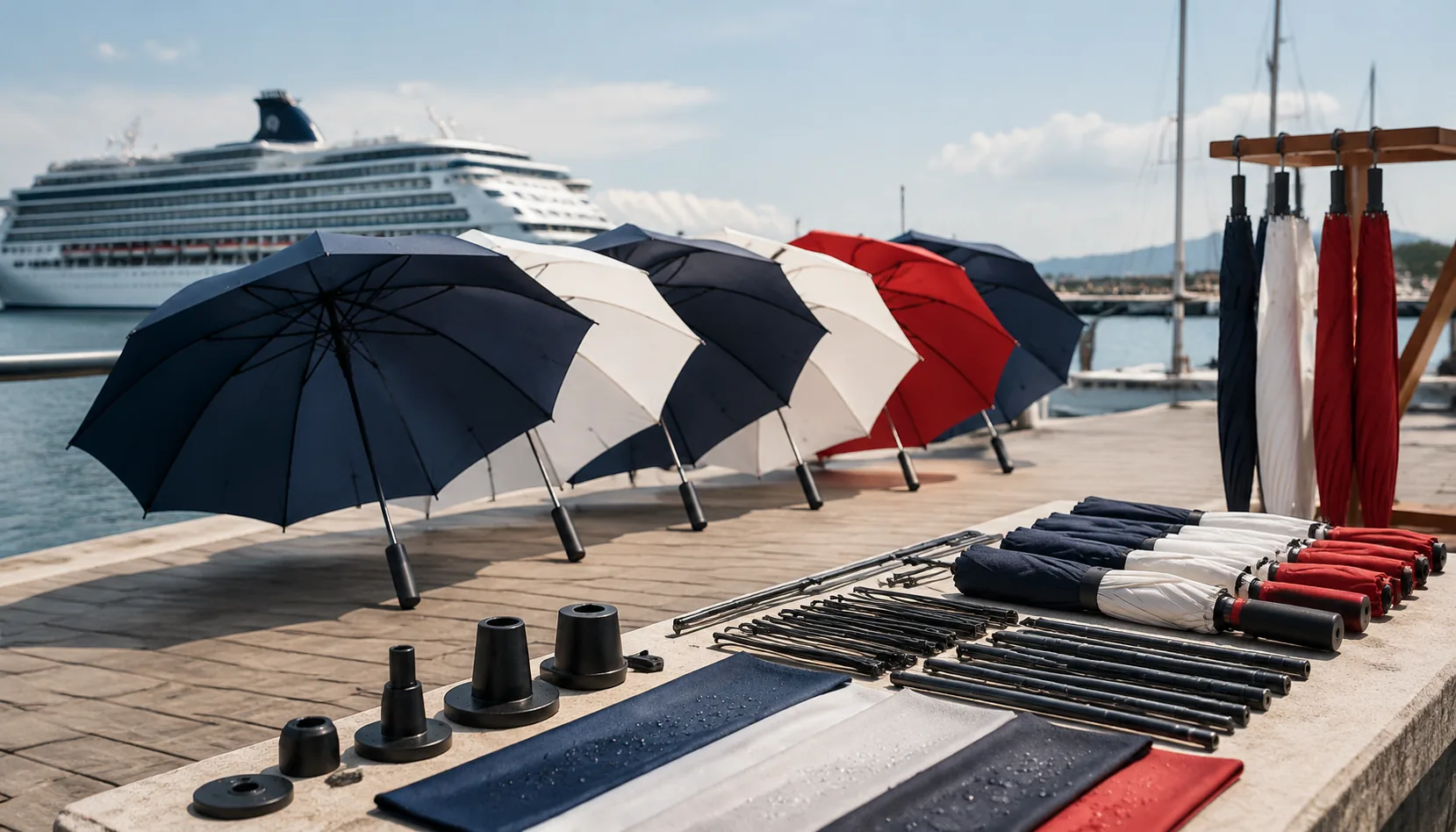
Custom Umbrellas for Cruise Lines, Marinas, and Excursions
Source umbrellas for cruise retail, marina guests, and shore excursions with marine-ready specs, branding choices, MOQ p...
Read More »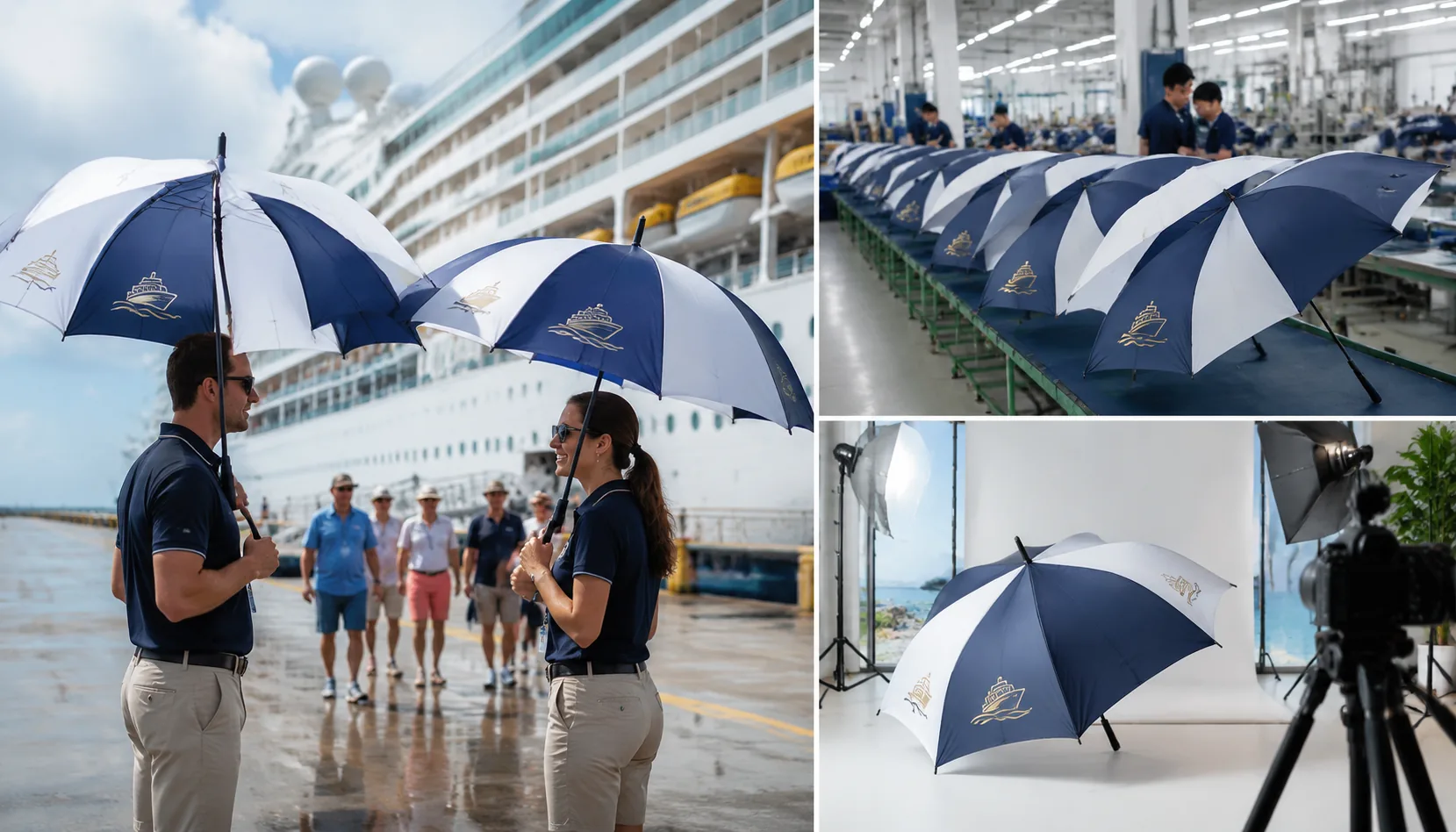
Custom Umbrellas for Cruise Lines and Shore Excursion Teams
Source cruise-ready umbrellas for shore teams, guest retail, and excursions with windproof frames, compact packing, and ...
Read More »