Cruise Line Umbrellas for Shore Excursions, Deck Use, and Retail
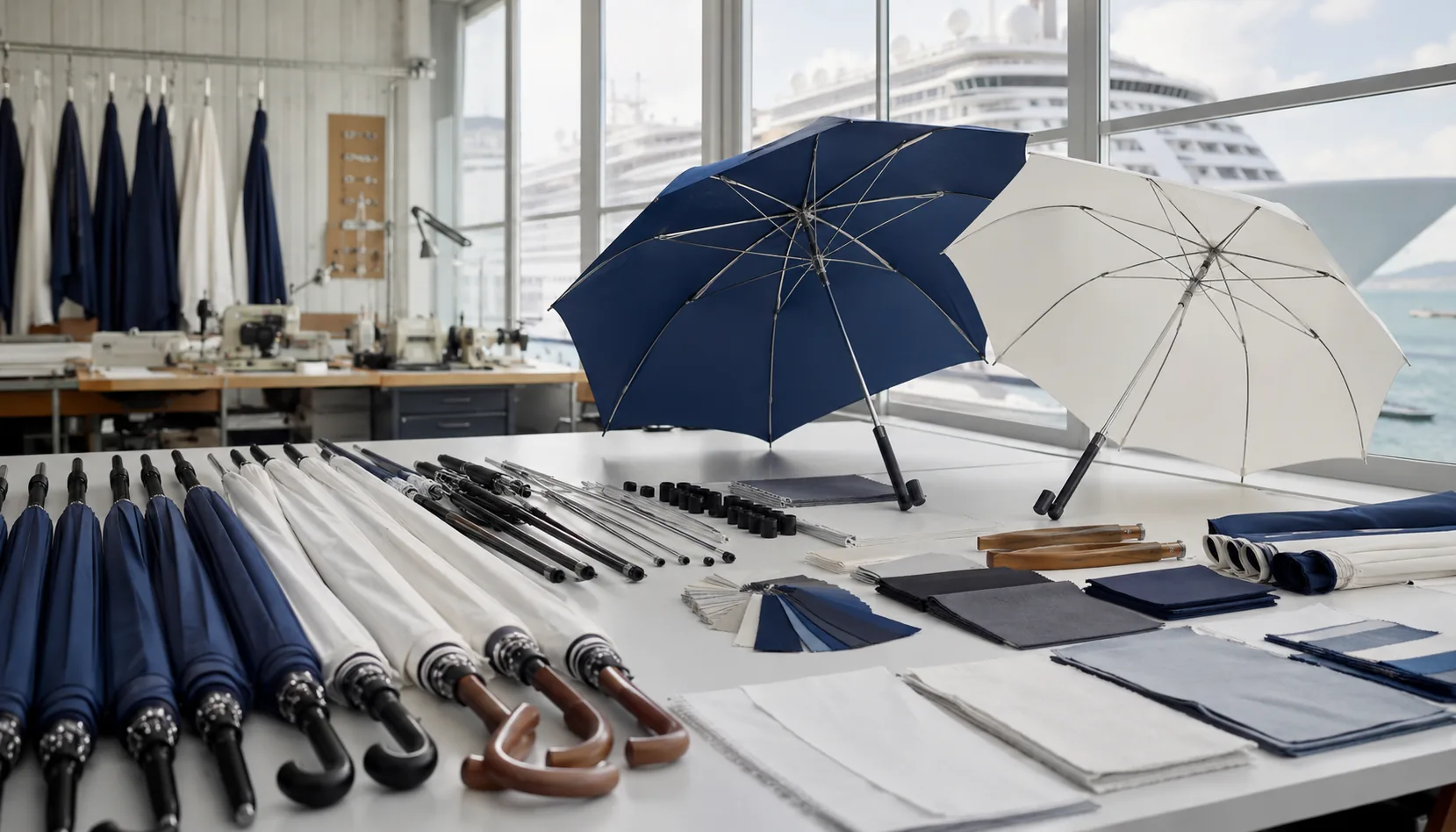
Specifying cruise line umbrellas is not the same as buying hotel promo pieces: gangways see sudden crosswinds, shore excursions punish open-close cycles, and deck inventory has to survive salt exposure without looking cheap at retail. On our line, those failures show up first at the rib joint, runner, and canopy stitching, so buyers need frame specs, fabric performance, and QC limits set before peak-season bookings lock the schedule.
Where Cruise Operators Actually Use Umbrellas
The split that matters most is operational use versus resale, because a gangway loaner and a gift-shop item should not be built to the same spec. On embarkation and port days, cruise line umbrellas are usually staged at gangways, security holding areas, and tender marshalling points where guests stand exposed in sun or sudden rain. For these stations, operators usually want simple 23" or 27" stick umbrellas with auto-open, 8K fiberglass ribs, and 190T or 210T pongee canopies that dry fast and survive repeated handoff. If the ship regularly calls on windy islands or open-pier terminals, double-canopy vented windproof guest umbrellas hold up better than steel-rib economy frames; in practice, a frame that can tolerate 45 to 50+ mph gusts saves replacement cost faster than buyers expect. Planning is rarely one blanket number. A mid-size vessel may hold 150 to 400 gangway loaners, while larger ships often break that into separate decks, port-side issue points, and crew-controlled reserves.
Tender operations and tours need a different calculation, because demand spikes by excursion wave, not by total passenger count. Shore excursion umbrellas are commonly allocated by coach load, guide count, and climate risk: for example, 1 umbrella per guide plus 8 to 20 spare units per 40 to 50 guests for tropical sun ports, or higher coverage on rain-heavy Alaska, Northern Europe, and typhoon-season Asia itineraries. When operators want hands-free practicality, 21" compact auto-open-close units work for tour backpacks, but for serious sun and rain exposure, 23" full-size UPF 50+ umbrellas with UV coating outperform smaller telescopic frames. Pool-deck use is its own category again. These are not patio parasols; they are mobile guest umbrellas for queue lines at bars, open-deck events, and short-distance movement between covered zones, where lighter fiberglass shafts and EVA or rubberized handles reduce slip complaints on wet decks.
Retail should be planned as a separate SKU family with better presentation, packaging, and margin logic. Onboard retail umbrellas sell best when the product looks intentional rather than like surplus loaner stock: clear POE or EVA dome umbrellas for rainy ports, branded 21" folding units for cabin carry, and premium 27" UV-coated styles for warm-weather sailings. Cruise line umbrellas for retail usually justify cleaner print execution, individual sleeves, barcode labeling, and lower carton counts so ship stores can replenish without opening master packs in cramped back rooms. A practical opening buy might be 120 to 300 units per vessel for onboard retail umbrellas, then replenished by itinerary and season, while loaner pools are planned separately under operational budgets. At ZheBrella, standard practice is to quote these programs as distinct use-case batches with separate MOQ, AQL 2.5 inspection points, and lead times—often 35 to 50 days FOB depending on frame complexity and print method.
Frame and Canopy Specs for Wind, Salt Air, and Sun
For salt-air service, fiberglass ribs are the safer default. Steel ribs still have a place in low-cost hotel loaners, but on a ship they pick up corrosion fast at the hinge, runner, and rib notch unless you are specifying good plating and tight storage discipline. Once that plating gets scratched by gangway baskets or bus bins, red rust starts and the umbrella gets stiff before it actually fails. Fiberglass does not rust, it flexes back better after inversion, and it handles the ugly side gusts you get on open decks and tender docks. For cruise line umbrellas that will see real coastal exposure, I would rather carry a fiberglass rib set with a black electrophoretic steel shaft than go all-steel just to save a little unit cost. The failure mode is better. A steel-rib frame tends to take a permanent set after one bad flip; fiberglass usually survives and looks presentable for the next guest. If you want a wind-tunnel target, a proper fiberglass double-canopy build can realistically be spec'd to survive 50+ mph gusts, which is where flimsy promo frames start turning inside out.
Rib count should match the job, not the mood board. For crew issue and high-turn shore excursion umbrellas, an 8K frame in 23 inch or 27 inch is the practical choice because it opens fast, is easier to shake dry, and keeps replacement cost under control when units get left on coaches or at port security. Pair that with auto-open rather than auto-open-close; the mechanism is simpler, the spring pack is more durable, and there is less to go wrong after thousands of cycles in humid conditions. A premium retail piece is different. If you are selling onboard retail umbrellas as branded merchandise, 16K construction gives a fuller round canopy, a more upscale hand feel, and better visual symmetry on stripe or border prints. It does add weight, so I would not put 16K into mass guest issue unless presentation matters more than handling speed. For windproof guest umbrellas, the best-performing retail spec is usually a 27 inch or 30 inch double-canopy vented frame with fiberglass ribs, auto-open, and a handle that can tolerate sunscreen, salt, and repeated wipe-downs.
Canopy fabric is where buyers often make the wrong tradeoff. 190T pongee dries faster and packs smaller, which matters when shore teams are collecting wet umbrellas by the cart load and trying to turn them for the next excursion. It is also usually enough for one- or two-color logos if the artwork is bold. But if the brand program is retail-facing, 210T pongee prints cleaner, hides frame show-through better, and gives denser color on screen print, heat-transfer, or sublimation work. Fine type, gradients, and marine blues generally look richer on 210T. For sun exposure, specify a silver or black UV undercoating tested to UPF 50+ rather than assuming fabric weight alone will do the job; true UPF 50+ umbrellas need coating consistency, not just thicker yarn. I would reserve POE or EVA for fashion or rain-visibility concepts, not deck use, because clear films get sticky in heat and show salt spotting quickly. For premium cruise line umbrellas, 210T pongee with a Teflon water-repellent finish and UPF 50+ treatment gives the best balance of logo quality, dry-down, and resale presentation.
Assortment Strategy for Guests, Crew, and Retail Buyers
The first assortment mistake buyers make with cruise line umbrellas is treating every use case as a branded souvenir. Operations and merchandise need different specs, because loss rate, weather exposure, and handling speed are not the same problem. For gangway racks and shore excursion umbrellas, a 23 inch or 27 inch stick style is usually the right starting point: 8K or 10K rib layout, full fiberglass ribs rather than steel to avoid permanent inversion, manual or auto-open rather than auto-open-close, and 190T pongee in navy, black, or charcoal so salt spray marks and dock grime do not show immediately. If the itinerary includes Caribbean squalls, Alaska ports, or exposed tender piers, a vented double-canopy with a wind rating above 50 mph is worth the extra cost; otherwise a single-canopy frame is often enough. What operations need is quick issue-and-return, low breakage, and simple drying. Fancy trims, plated shafts, and soft-touch handles look good in a spec sheet but usually just increase replacement cost on day-to-day guest inventory.
VIP suites, bridge hospitality, and premium chauffeur service should sit in a separate tier, because those umbrellas are seen up close and carried by staff rather than dumped into bulk bins. Here I would move to a cleaner 27 inch stick with a matte black shaft, fiberglass ribs, tighter canopy sewing, and either 210T pongee with a Teflon finish or a UV-coated fabric if sun protection matters more than rain. For tropical itineraries, UPF 50+ umbrellas make sense on private-island transfers and top-deck concierge service, but only if the coating is tested and not just printed in the catalog. A wood crook handle or stitched PU grip works for suites; EVA or molded PP is better for crew stations where the umbrella is wiped down constantly. Our standard practice is to keep VIP decoration subtle: one-panel print, woven tie wrap label, and no oversized sponsor art. That prevents a premium-use umbrella from looking like leftover promo stock.
Retail should be built as its own business case, not as an overdecorated version of operational stock. Onboard retail umbrellas sell when they are either giftable or packable, so the useful split is between a 21 inch or 23 inch compact foldable and a well-finished 27 inch souvenir stick. For foldables, auto-open-close is acceptable because the buyer owns the maintenance risk, but the frame still needs mixed fiberglass and steel reinforcement, not cheap all-steel ribs that fatigue after a few cycles. For clear resort or family positioning, POE canopy can work, though PVC and EVA options need careful review for cold-weather brittleness and compliance requirements. For fashion or destination graphics, 190T or 210T pongee takes sublimation or heat-transfer better and keeps color cleaner. If the artwork is complex, use retail MOQs separate from hotel-use replenishment, inspect to AQL 2.5, and plan 35 to 45 days lead time from sample approval, because branded retail umbrellas fail when buyers try to force operational timelines onto merchandise development.
Quality Control, Packing, and Import Terms
At AQL 2.5, the first failures I look for on cruise line umbrellas are mechanical, not cosmetic. Every lot needs a controlled opening and closing test by sampling plan: manual runners cannot snag on the spring, auto-open shafts must lock cleanly, and auto-open-close units cannot rebound or half-collapse after ten consecutive cycles. On 21 inch and 23 inch shore excursion umbrellas, canopy alignment matters more than many buyers expect; if one panel is cut off-grain or a rib pocket is sewn a few millimeters high, the umbrella will track crooked and invert early in crosswind. For 27 inch and 30 inch windproof guest umbrellas, I also check rib geometry, especially where fiberglass ribs meet steel stretchers, because mixed-material frames fail at those joints if the rivet pressure is wrong. A proper inspection sample should also include ferrule fit, top-notch seating, handle pull strength, and strap snap function, since those are the small defects guests notice immediately and hotel teams end up sorting by hand.
Print and fabric checks need their own discipline because an umbrella can pass opening tests and still fail in service after one wet week on deck. On logo programs, print registration has to be checked panel by panel while the canopy is fully tensioned, not laid flat on the table; that is where misaligned repeats, ghosting on heat-transfer work, and color shift between adjacent panels show up. On 190T or 210T pongee used for onboard retail umbrellas and UPF 50+ umbrellas, I want coating adhesion, water repellency, and seam needle density reviewed together, because a heavy Teflon or UV finish can stiffen the cloth and expose weak sewing. Cartons are another common blind spot. Multi-port handling means pallets get broken down, re-stacked, and pushed through humid terminals, so export cartons need real compression strength, reinforced bottom tape, and drop-tested inner counts. If outer cartons buckle after two port transfers, the handles crack, tips punch through, and retail-pack presentation is lost before the shipment reaches the ship chandler.
FOB works best when the buyer is already consolidating mixed SKUs, such as 23 inch crew issue pieces, 27 inch double-canopy vented guest stock, and small runs of souvenir umbrellas from several suppliers into one container. In that setup, the buyer controls the forwarder, can balance carton counts across factories, and usually gets a better landed cost if they know how to manage origin drayage, booking cutoffs, and destination customs. Our standard practice is to recommend FOB Ningbo for experienced procurement teams that can absorb a one- to two-week schedule shift without missing a sailing season reset or warehouse intake slot. DDP is safer when delivery windows are fixed for U.S. or EU cruise warehouses, especially if the program is tied to embarkation dates, retail launch weeks, or replenishment against live shipboard sales. With DDP, the supplier carries the customs coordination, duty forecasting, and final-mile appointment risk, which matters when a missed warehouse date can leave a vessel short on branded rain stock for an entire itinerary.
MOQ, Lead Times, and Reorder Timing by Season
For cruise line umbrellas, the practical MOQ is usually 300 to 500 units per color or style, and anybody promising much lower numbers is either using leftover stock or hiding cost in setup charges. On a standard 23" auto-open, 8K frame with a steel shaft and fiberglass ribs, 300 pieces per colorway works if you stay with stock handles, a stock frame color, and a simple one-color screen print on 190T or 210T pongee. Once you ask for custom PMS matching, alternating canopy panels, molded handle badges, or gift-box packing for onboard retail umbrellas, 500 pieces is the safer floor because fabric dye lots, print registration, and carton counts stop working in your favor. The same logic applies to 21" manual umbrellas and 27" double-canopy vented models. Clear POE, PVC, or EVA canopies can also push MOQ upward when film thickness and trim color have to be matched, and mixed assortments across sizes usually create more headaches than savings.
Lead time should be budgeted as 25 to 45 days of production before transit, not counting sample approval or customs. If art is approved quickly and the factory is using stock black frames, stock handles, and standard 190T pongee, a plain guest model can move in about 25 to 30 days from deposit to ex-factory. That stretches to 35 to 45 days when shore excursion umbrellas need sublimation panels, UV or Teflon coating, woven labels, or auto-open-close mechanisms that require more functional checks. Windproof guest umbrellas with fiberglass ribs, double-canopy vents, and a 50+ mph test standard also take longer because the frame tuning and opening-cycle checks cannot be rushed without increasing failure rates. AQL 2.5 final inspection, carton drop testing, and retail labeling should be built into the calendar, especially for UPF 50+ umbrellas and other compliance-sensitive lines. From Ningbo, FOB ocean transit is often another 16 to 22 days to the Pacific Northwest, about 28 to 35 days to U.S. East Coast gateways, and roughly 30 to 38 days into major Mediterranean ports; DDP can add a week or more inland.
Reorder timing should follow embarkation peaks by region, not the date the shipboard storeroom looks low. Caribbean programs usually need the earliest commitment because the heavy sailing window runs from November through April, and a rainy week in Cozumel, Nassau, or San Juan can wipe out deck inventory faster than planners expect. For Miami, Port Canaveral, and Galveston loading, I would place the main PO in August or September for Q4 delivery, then a smaller replenishment order in January if sell-through of branded umbrellas or replacement stock is running hot. Mediterranean programs should lock art by January and release production in February so goods land before April vessel provisioning in Barcelona, Civitavecchia, or Piraeus. Alaska is shorter, but it punishes late buyers: May through August departures need inventory on hand by April, which means ordering no later than December through February once Lunar New Year factory congestion is considered. Our standard practice at ZheBrella is to work backward 120 to 150 days from first embarkation, because in-season airfreight on bulky cartons destroys margin faster than almost any raw material increase.
Frequently Asked Questions
Is a double-canopy umbrella necessary for cruise operations?
For gangway, open-deck, and shore-excursion use, double-canopy windproof construction is usually worth the added cost because gusts are common. For gift-shop fashion umbrellas, a single-canopy 16K style can be acceptable if the product is positioned as retail rather than operational gear.
Should cruise buyers choose FOB or DDP for umbrella orders?
FOB is usually better when the buyer already consolidates multiple hospitality items in China. DDP is often safer when umbrellas must land at a cruise warehouse on a strict embarkation schedule and the importer wants customs and final-mile delivery handled by the supplier.
What umbrella specs work best for shore excursion programs?
Most cruise buyers choose 21-23 inch compact folding umbrellas with fiberglass ribs, automatic open or manual open frames, and pongee fabric with water-repellent coating. For tropical routes, UPF 50+ coating and vented canopies help improve sun and wind performance.
What MOQ should cruise lines expect for branded onboard retail umbrellas?
Typical OEM MOQs start around 500-1,000 pieces per style for logo printing, with higher minimums for custom fabric colors, molded handles, or retail packaging. Mixed color assortments may be possible if the frame and canopy specs stay the same.
How early should umbrellas be ordered before cruise peak season?
Allow about 35-55 days for production after sample approval, plus ocean freight time to the destination port or warehouse. For spring break, summer, or Caribbean peak season launches, buyers usually confirm artwork and specs 90-120 days in advance.
Looking to Launch Your Custom Umbrella Line?
ZheBrella is a Zhejiang-based OEM/ODM umbrella manufacturer with 17 years of export experience. Free design, low MOQ from 100 pieces, windproof construction, full-color print.
Get Free Quote Now »People Also Search For
Related Articles
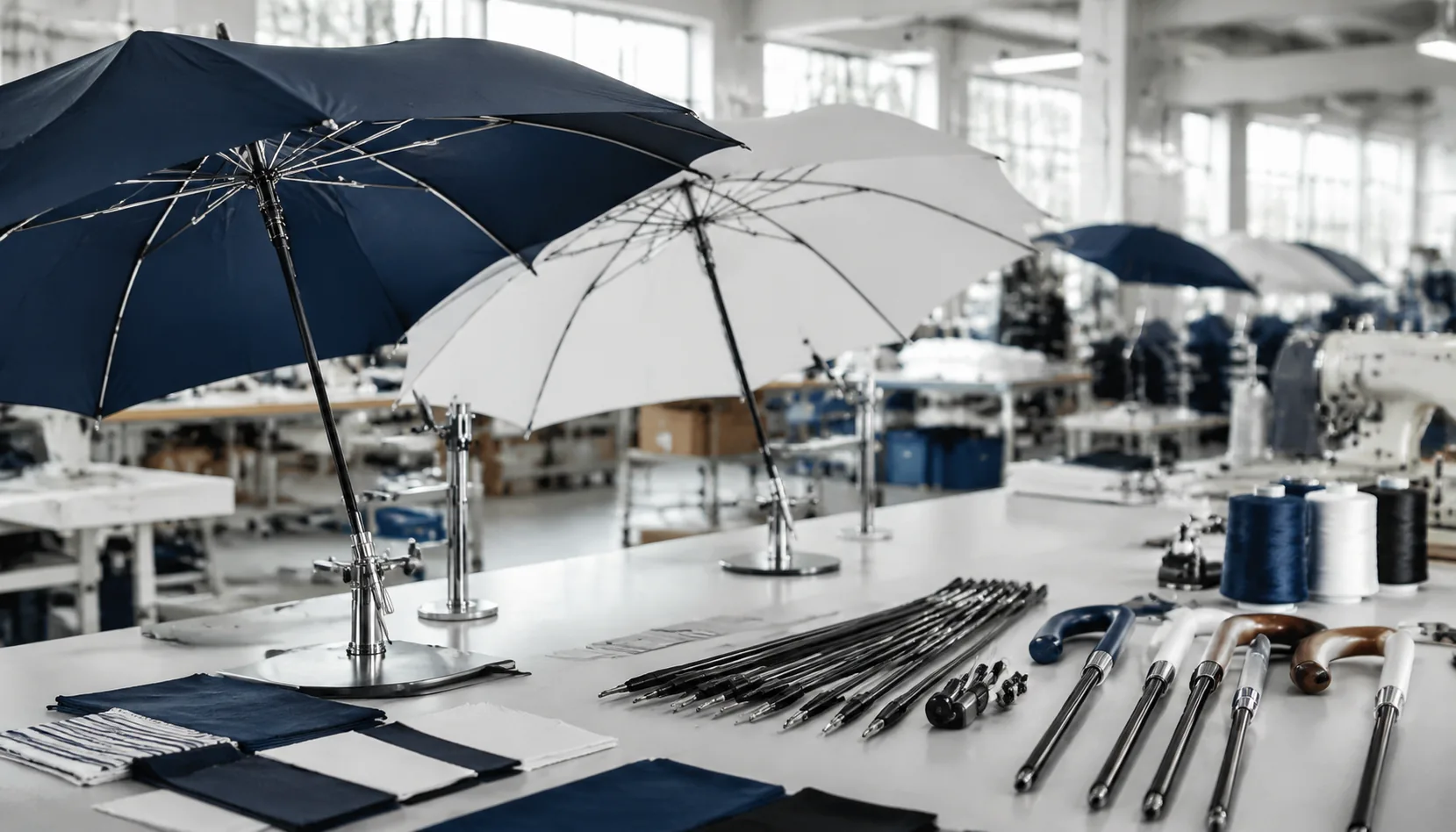
Custom Umbrellas for Cruise Lines and Shore Excursions
Source cruise-ready umbrellas with compact frames, UPF 50+ canopies, corrosion-resistant ribs, and carton plans for cabi...
Read More »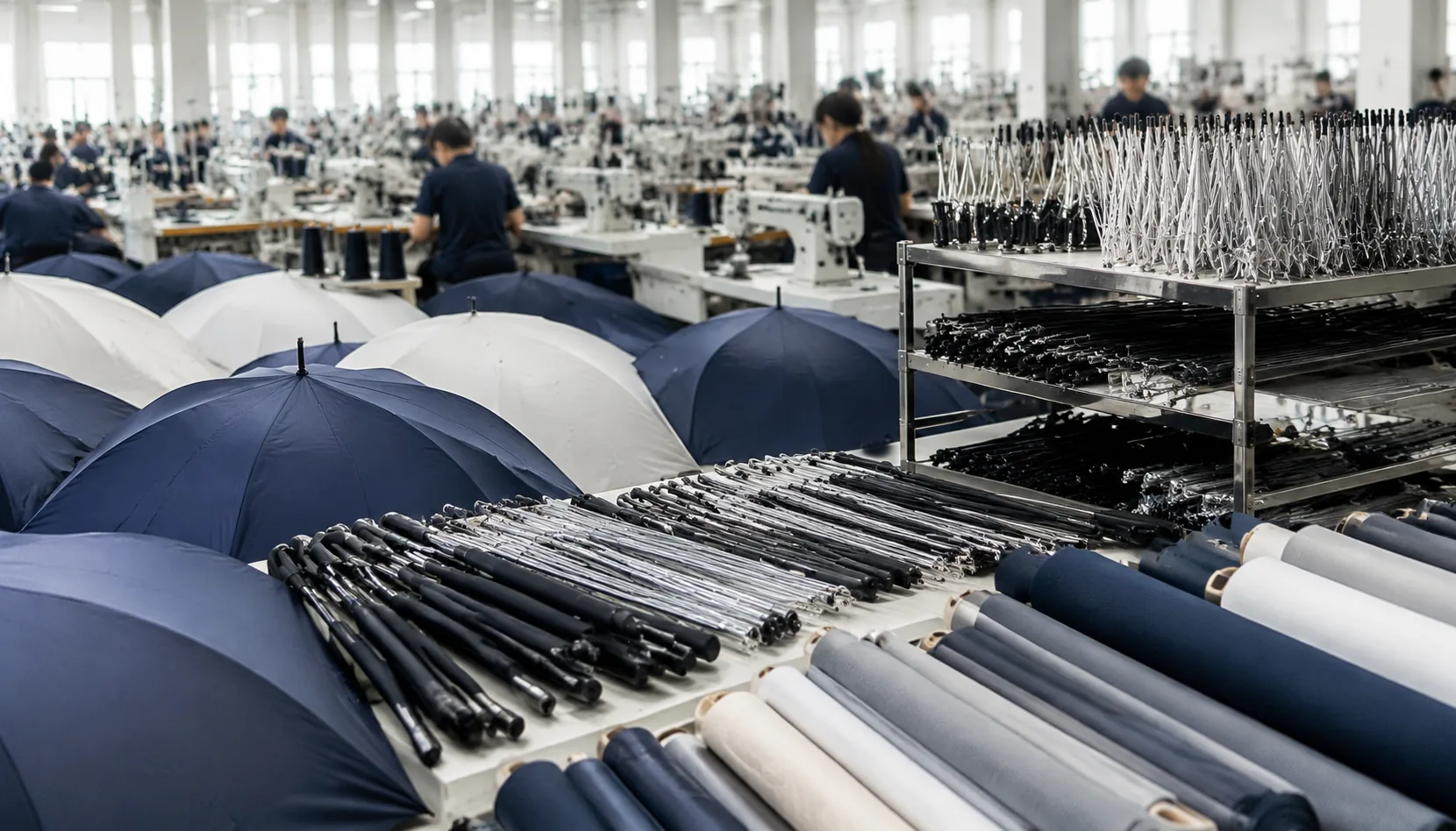
Custom Umbrellas for Cruise Lines and Ferry Operators
Source marine passenger umbrellas with windproof builds, corrosion-aware materials, and FOB/DDP planning for cruise, fer...
Read More »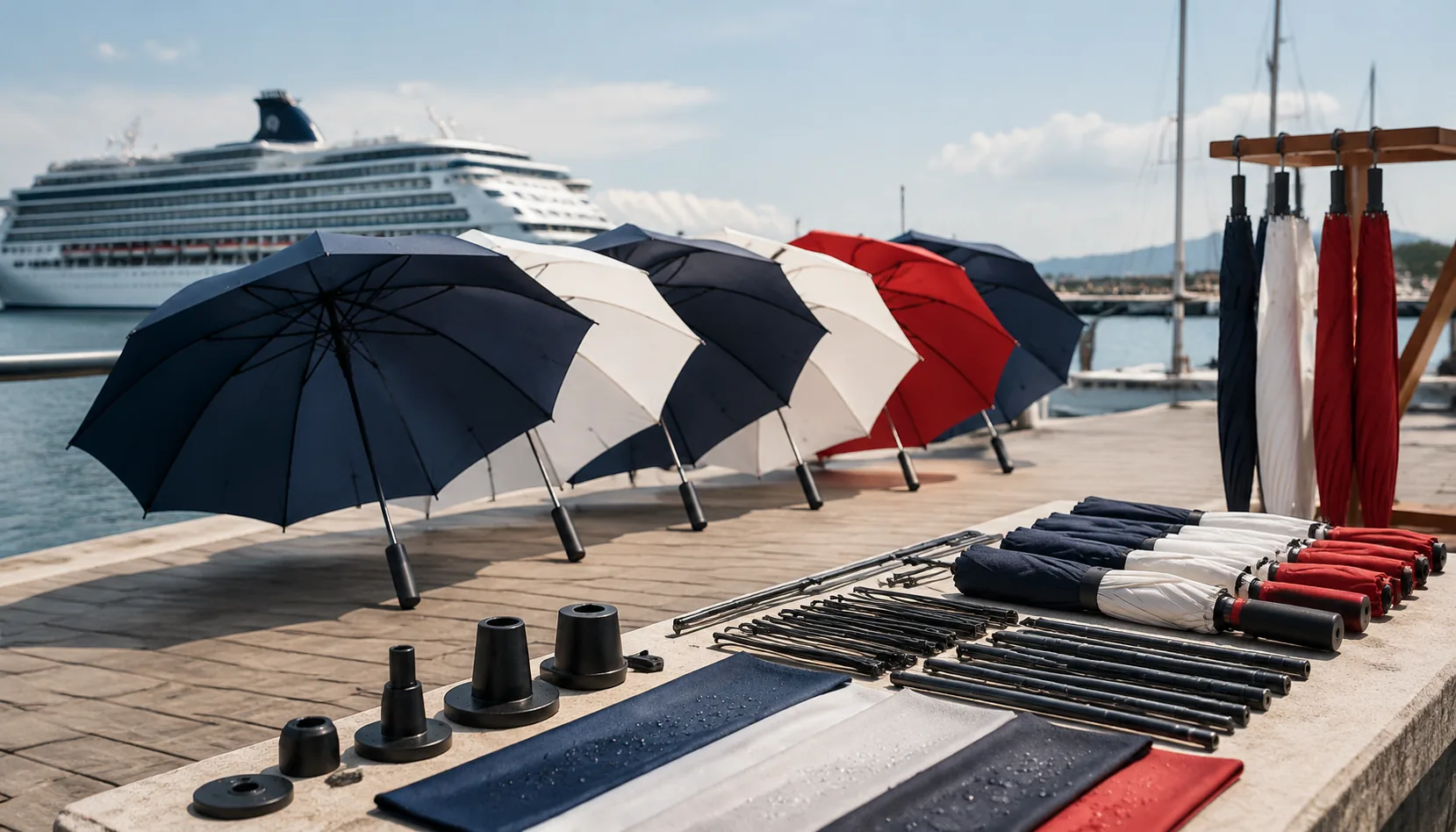
Custom Umbrellas for Cruise Lines, Marinas, and Excursions
Source umbrellas for cruise retail, marina guests, and shore excursions with marine-ready specs, branding choices, MOQ p...
Read More »