Custom Umbrellas for Cruise Lines and Ferry Operators
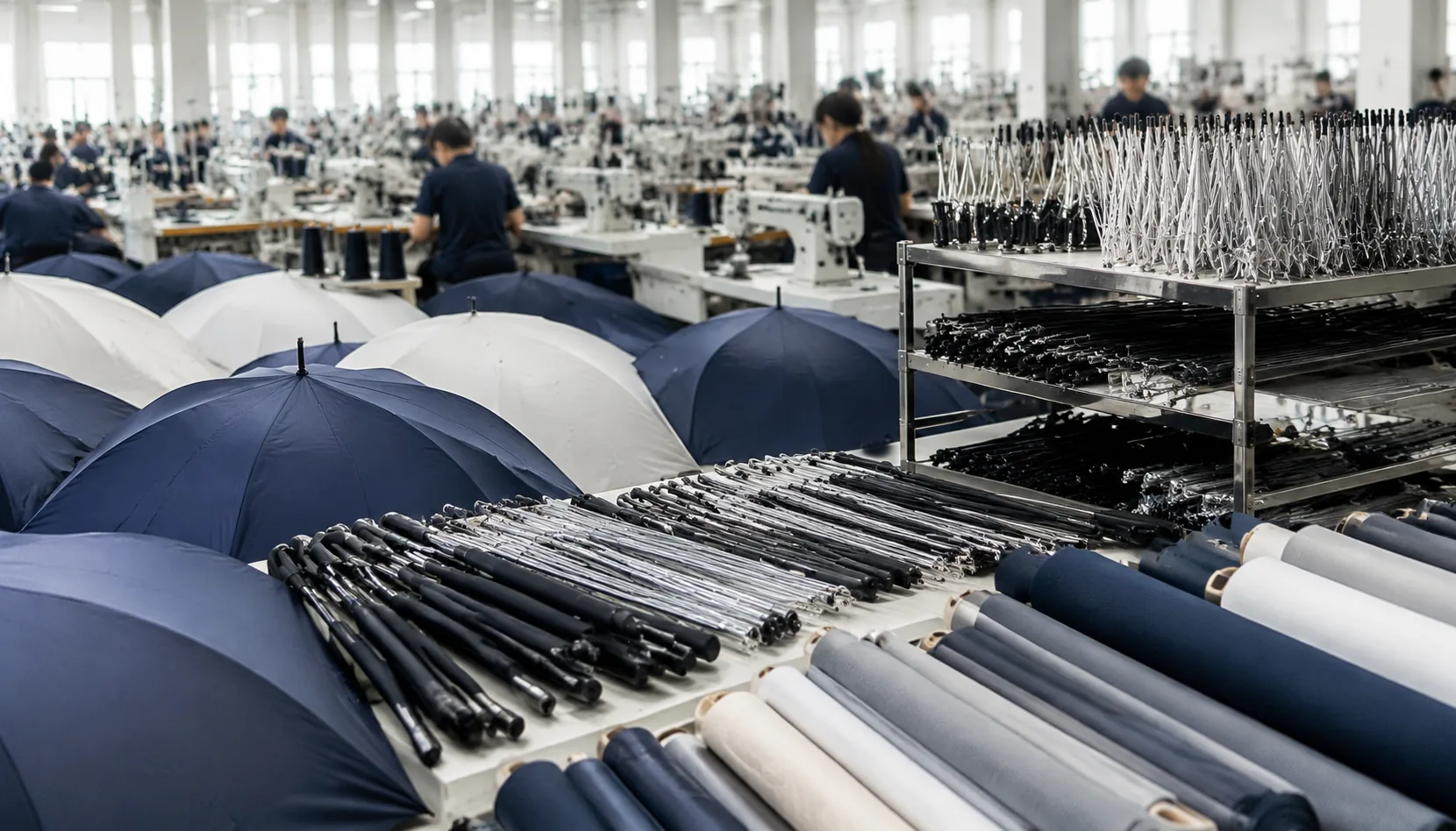
For cruise and ferry buyers, umbrellas fail fastest where salt air, gusty gangways, wet storage, and tight sailing schedules meet. When we build cruise line branded umbrellas on our Songxia factory floor, we look past canopy artwork and check rib temper, shaft coating, runner fit, drying/packing flow, and whether FOB or DDP timing can survive port call changes. The right specification prevents rust complaints, wind returns, and late replenishment across excursion desks, gift shops, and passenger service programs.
Passenger Use Cases Across Marine Travel
Marine passengers use umbrellas in short, messy intervals, not in neat retail scenarios: walking from terminal to gangway, waiting in tender queues, crossing an exposed pier, or following a guide through a rainy old-town excursion. For these touchpoints, compact 21" and 23" auto-open-close umbrellas make the most sense because they fit cabin drawers, daypacks, stroller baskets, and shore-excursion tote bags without becoming dead weight. I usually specify 190T or 210T pongee with Teflon water-repellent coating, fiberglass ribs rather than cheap painted steel, and a wrist strap that will not tear out after three wet uses. For ferry passenger umbrellas, a simpler 8K manual or auto-open frame can work if the goal is terminal transfer utility, but cruise excursion umbrellas should feel better in hand because guests associate them with the tour brand, not just the weather.
Guided groups need visibility and control, so the umbrella size changes. A tour escort holding a 27" or 30" stick umbrella with a high-contrast canopy, reflective piping, and a large screen-printed logo is easier to follow than a small folding model buried in a crowd. For windy ports, especially island terminals and open ferry decks, double-canopy vented windproof construction is worth the extra cost; a 10K fiberglass frame can survive 50+ mph wind-tunnel testing when the runner, rib tips, and stretchers are properly matched. Cruise line branded umbrellas for escorts should avoid dark-only colors unless the logo is large, because passengers need to spot staff quickly in rain, glare, and port congestion. For child-heavy or senior-heavy excursions, blunt safety tips and non-slip EVA handles matter more than a fancy box.
Onboard retail umbrellas and loyalty welcome gifts have different economics. Retail buyers can justify better fabric, UV coating at UPF 50+, sublimation artwork, and a sleeve with barcode labeling because the item sits beside ponchos, caps, and destination merchandise. Loyalty gifts need tighter cost control and carton efficiency, usually 21" compact frames packed 24 or 36 pieces per export carton, with clean one-color heat-transfer or screen printing rather than full-panel artwork. Marine travel promotional umbrellas also need salt-air-resistant components: nickel-plated shafts and low-grade steel ribs corrode quickly after damp storage, so fiberglass ribs and better rivets reduce complaints. Our standard practice at ZheBrella is to run AQL 2.5 inspection on opening force, canopy stitching, logo placement, and leakage before FOB Ningbo or Shanghai shipment; typical custom lead time is 25–35 days after artwork approval, longer if PMS-dyed fabric or molded handles are required.
Frame and Fabric Specs for Coastal Conditions
For coastal programs, I specify fiberglass ribs before I discuss logo size, because the frame fails before the print does. Steel ribs are cheaper and fine for city rain, but on exposed cruise terminals and ferry ramps they bend permanently after one bad gust and start showing red rust at cut edges, rivets, and spring joints. Fiberglass ribs flex and rebound, which matters when passengers open umbrellas beside gangways, tender boats, and open-air piers where crosswinds hit from odd angles. For cruise line branded umbrellas, an 8K fiberglass frame is acceptable for compact 21" or 23" models, while 10K or 16K ribs make more sense for 27" and 30" golf umbrellas used by shore-excursion teams. A double-canopy vented windproof build is worth the extra cost for pier staff and cruise excursion umbrellas; it lets wind bleed through instead of turning the canopy inside out. Our standard practice at ZheBrella is to pair fiberglass ribs with reinforced tips and a tested wind rating around 50+ mph when the buyer expects real outdoor use, not just cabin-gift distribution.
Fabric choice should match the use case, not just the budget line. 190T pongee is the common promotional grade: light, smooth enough for screen print or heat-transfer logos, and cost-effective for ferry passenger umbrellas handed out during delays or port events. 210T pongee has a tighter hand, better opacity, cleaner panel tension, and less show-through on navy, black, or PMS-matched canopies, so I prefer it for onboard retail umbrellas where passengers judge the product like a store item. Polyester taffeta can save money, but it feels noisier and dries less elegantly; for marine travel promotional umbrellas, that cheap feel can damage the perceived value of the operator’s brand. Quick-dry treatment matters because umbrellas are often collapsed wet before passengers board. A good water-repellent coating should bead rain after repeated open-close cycles, and Teflon treatment is better than basic PU when the umbrella will sit in salty air, cabin humidity, and luggage compartments.
The shaft and runner deserve the same attention as the ribs. A chrome-plated steel shaft looks clean on day one, but salt spray around ferry decks and cruise ports exposes weak plating fast, especially near the runner channel and lower tube joint. For cruise line branded umbrellas ordered for repeated seasonal use, I recommend fiberglass shafts, black epoxy-coated steel, or aluminum with anodized finish, depending on target price and size. Runners should use rust-resistant plating, stainless rivets where budget allows, and smooth plastic collars that do not scrape coating from the shaft during auto-open action. Manual open is reliable for staff umbrellas because fewer springs mean fewer warranty claims; auto-open is better for passenger convenience on 23" walking umbrellas; auto-open-close is useful for compact onboard retail umbrellas but needs tighter AQL 2.5 checks on spring force, closing tension, and shaft wobble. Before bulk packing, salt-air exposure checks and wet-collapse testing catch the failures that normal dry showroom inspections miss.
Design Details for Shipboard Retail and Guest Experience
Logo visibility matters more on a moving gangway than it does in a catalog mockup. For cruise line branded umbrellas, I recommend a mark height of at least 90-120 mm on a 23" folding canopy and 140-180 mm on a 27" stick umbrella, placed on alternating panels so the logo reads from 20-30 feet while guests queue at the pier. White, navy, signal red, sand, aqua, and charcoal usually print cleaner than complex gradients, especially on 190T or 210T pongee with a Teflon water-repellent finish. For a premium onboard retail umbrella, 8K fiberglass ribs with a steel shaft are a practical middle ground; full fiberglass is better for windy decks but raises cost and carton volume. Double-canopy vented designs make sense for exposed ferry terminals and island tender operations, where a 50+ mph wind-tunnel claim is more credible than a generic “windproof” label.
Retail packaging has to survive housekeeping carts, cabin drawers, and point-of-sale scanning, not just look neat in a sample room. Sleeve barcodes should be printed on a flat seam-free area, ideally with a 35 x 25 mm quiet zone, because wrinkled sleeves cause scanning complaints at ship boutiques. Hangtags should carry brand story, care instructions, fiber content, country of origin, and any UPF 50+ or water-repellent claim; if the umbrella uses auto-open-close mechanics, add a small warning icon so passengers do not test it near their face. Compact packaging is important for cabin storage: a 21" 3-fold umbrella with a slim EVA or pongee sleeve fits drawers and tote bags better than a bulky hard case. For ferry passenger umbrellas, I would avoid oversized gift boxes unless they are sold duty-free or bundled with rain ponchos.
UPF 50+ fabric adds real value on tropical itineraries, not as decoration but as a functional reason to buy before a beach transfer or shore excursion. Silver-coated pongee, black glue coating, or qualified UV treatment can block over 98% of UV radiation when tested properly, and that claim should be tied to fabric construction, not just printed on a hangtag. Cruise excursion umbrellas benefit from lighter colors outside for nautical styling and darker inner coatings for shade comfort; a 23" auto-open model is often the best balance for walking tours, while 27" manual golf umbrellas suit resort transfers and crew use. Marine travel promotional umbrellas also need salt-air tolerance, so nickel-plated or powder-coated metal parts outperform raw bright steel. Our standard practice at ZheBrella is to confirm sleeve fit, barcode readability, and AQL 2.5 appearance checks before FOB shipment, because small packaging defects become expensive once inventory is already onboard.
Operational Planning for Seasonal Sailings
Itinerary changes are where umbrella programs lose money, so build flexibility into the purchase plan before the order is placed. For marine travel promotional umbrellas tied to a summer launch, I prefer neutral canopy colors, removable belly bands, and ship-specific branding limited to hangtags or outer cartons unless the forecast is firm. Full-panel sublimation with vessel artwork looks good, but it becomes dead inventory if the ship moves from Mediterranean cruises to short ferry service. For mixed fleets, order a common base model first, then schedule logo or packaging customization in smaller batches closer to sailing dates. A practical structure is 60–70% of forecasted volume in the first bulk run, 20–30% as a planned replenishment, and 10% held back until passenger bookings and retail velocity are clearer. This approach keeps unit cost reasonable without forcing the buyer to warehouse umbrellas through a route cancellation, charter change, or port-season delay.
Inspection, Packing, and Incoterms
Inspection has to catch the failures passengers notice first: a sticky auto-open button, a loose canopy, or a logo printed 8 mm off center. For cruise line branded umbrellas, I would set AQL 2.5 for major defects and inspect by function, not just appearance. On auto-open and auto-open-close models, we cycle the shaft and runner at least 5 times per sampled unit, checking spring response, lock engagement, button rebound, and pinch points. Canopy tension is checked with the umbrella fully opened: no sagging between panels, no twisted tips, and no exposed stitch holes along the 190T or 210T pongee seams. Rib alignment matters more on 8K and 10K frames because one bent steel or fiberglass rib makes the whole umbrella look cheap on a gangway photo.
Water repellency should be tested before cartons are closed, especially for cruise excursion umbrellas used in tropical rain. A basic spray test should show clean beading on Teflon-coated pongee, with no wet-through at panel seams after short exposure. Print inspection needs a signed production sample or Pantone reference at the QC table; screen print, heat-transfer, and sublimation all fail differently, so inspectors should check color density, edge sharpness, registration across panels, and abrasion after folding. Sleeve fit is often ignored, but ferry passenger umbrellas and onboard retail umbrellas need sleeves that slide on without fighting the canopy; too tight means passengers abandon them, too loose means they fall off in gift shops or cabin closets.
For Incoterms, FOB Ningbo or FOB Shanghai is usually cleaner for cruise procurement teams that already consolidate uniforms, amenities, and retail goods through a forwarder. The factory controls export packing, commodity inspection if required, customs declaration, and delivery to the nominated vessel or warehouse cut-off; the buyer controls ocean freight, insurance, and final routing. DDP is better when marine travel promotional umbrellas must arrive at a port warehouse, concession partner, or event agency with no import team. DDP pricing should spell out destination address, duty and VAT handling, carton marks, pallet requirements, delivery appointment rules, and whether split shipment is needed across ports such as Miami, Barcelona, Singapore, or Southampton. Our standard practice at ZheBrella is to quote both FOB and DDP when the order mixes promotional giveaway stock with onboard retail umbrellas, because the landed-cost difference can change once carton volume and sailing schedule are confirmed.
Frequently Asked Questions
Are steel ribs acceptable for cruise and ferry umbrella programs?
Steel ribs can work for budget onboard retail, but fiberglass ribs are better for windy piers and coastal use. If steel is selected, buyers should specify rust-resistant finishing and confirm salt-air storage conditions.
What size umbrella is best for shore excursion groups?
A 23-inch auto-open stick or folding umbrella balances coverage and portability for guides and passengers. For premium excursions, a 16K fiberglass frame and double canopy provide stronger wind performance.
What materials work best for umbrellas used on cruise ships and ferries?
For marine environments, buyers usually specify fiberglass ribs, aluminum or stainless steel shafts, and 190T to 210T polyester or pongee canopies with a water-resistant coating. These parts hold up better in salt air and reduce corrosion issues during onboard and terminal retail use.
What is a typical MOQ for cruise line branded umbrellas?
For OEM/ODM programs, MOQ is often 300-500 pieces per design, depending on canopy color count, printing method, and handle customization. Larger runs usually get better unit pricing because setup and decoration costs are spread across more units.
How should FOB and DDP planning differ for marine travel umbrella orders?
FOB works well if your team already has freight forwarding and import handling in place, while DDP is better for buyers who want landed cost visibility at the destination. For cruise and ferry programs, DDP often simplifies replenishment planning because it includes freight, duties, and delivery.
Looking to Launch Your Custom Umbrella Line?
ZheBrella is a Zhejiang-based OEM/ODM umbrella manufacturer with 17 years of export experience. Free design, low MOQ from 100 pieces, windproof construction, full-color print.
Get Free Quote Now »People Also Search For
Related Articles
Branded Umbrellas for Cruise Lines and Ferry Operators
Source marine-ready umbrellas for shore excursions, terminals, and onboard retail with windproof frames, 210T pongee, AQ...
Read More »
Branded Umbrellas for Cruise Lines and Marine Tourism
Source umbrellas for cruise retail, shore excursions, and VIP guests with corrosion-aware specs, windproof frames, packa...
Read More »
Custom Umbrellas for Cruise Lines and Shore Excursion Teams
Source cruise-ready umbrellas for shore teams, guest retail, and excursions with windproof frames, compact packing, and ...
Read More »