Branded Umbrellas for Cruise Lines and Marine Tourism
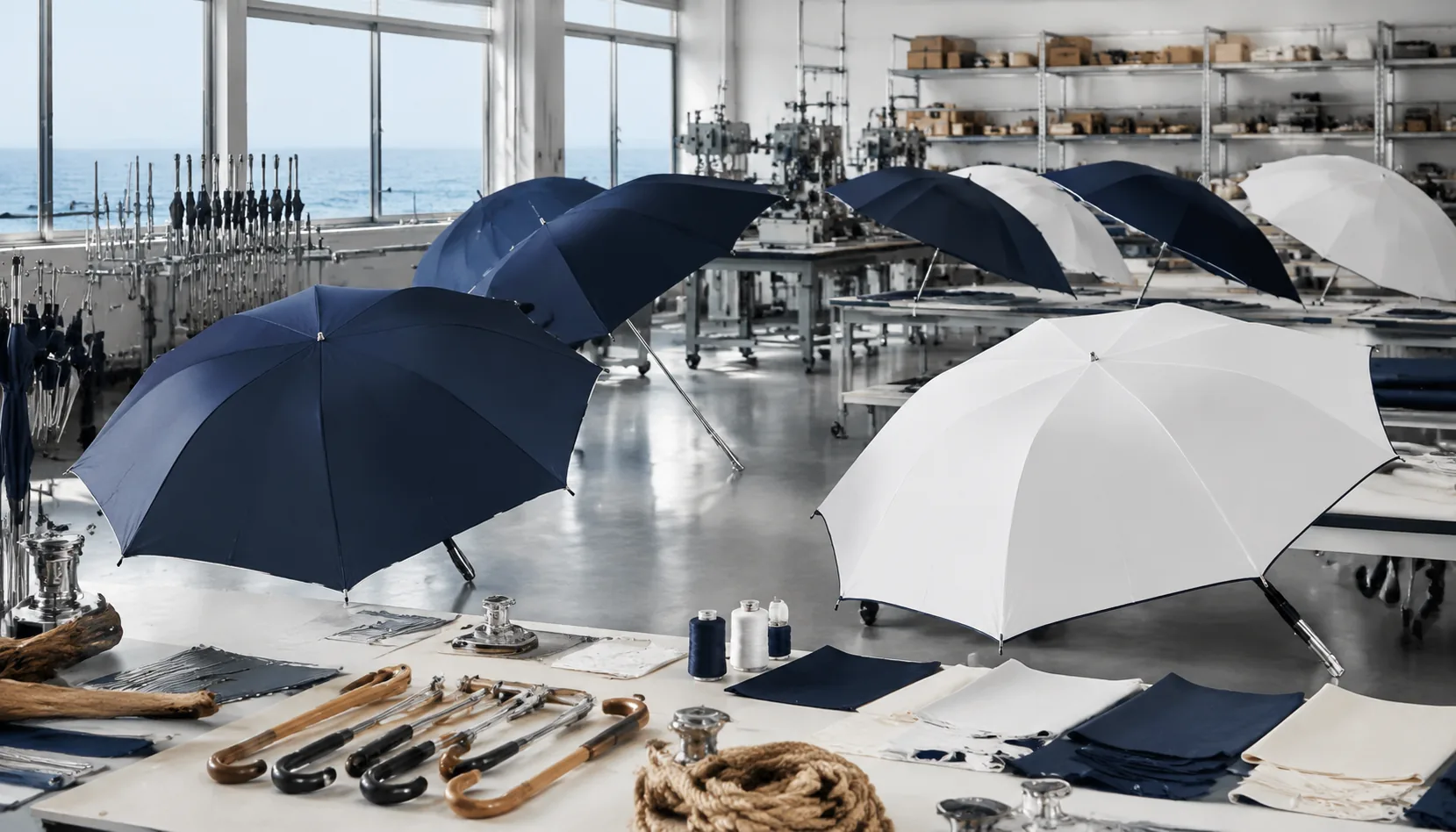
For cruise buyers, an umbrella is not just a souvenir—it has to survive salt air, wet decks, windy ports, tight cabin storage, and brand standards across retail, shore excursions, and VIP programs. When we build cruise line branded umbrellas on our factory floor in Shangyu, we look first at corrosion-prone ribs and shafts, canopy tension, windproof frame recovery, carton packing, and delivery timing so the product looks good after the first voyage, not only in the sample room.
Cruise and Marine Use Cases to Separate
Cruise line branded umbrellas should not be treated as one SKU with five labels slapped on the handle; each marine tourism channel has a different failure point. Onboard retail shops usually need margin first, so I would spec a 21" or 23" compact auto-open-close umbrella with 190T or 210T pongee, steel shaft, fiberglass ribs, and a sleeve with barcode sticker, hangtag, and retail-ready polybag. For cruise retail umbrellas, the sweet spot is often an 8K frame that survives normal dockside gusts without pushing the FOB price too high. If the buyer wants a premium shop item, move to 10K fiberglass ribs, Teflon water-repellent coating, and a molded rubber handle; the packaging should shift to a printed gift box or kraft carton sleeve because shelf presentation affects sell-through more than buyers admit.
Shore-excursion teams need faster deployment and stronger identity control, not fancy packaging. Port excursion umbrellas are often carried by guides in rain, sun, and wind while moving groups through terminals, buses, and old-town streets, so a 27" manual straight umbrella or 30" golf umbrella works better than a compact model. I prefer 8K or 10K fiberglass ribs with a steel center pole for cost control, or a full fiberglass shaft if the itinerary includes windy ports where cheap ribs invert too easily. For sun-heavy routes, add silver UV coating or black-coated 210T pongee with UPF 50+; for rainy Northern Europe or Alaska, prioritize Teflon finish and double-canopy venting rated around 50+ mph in wind-tunnel checks. Packaging can be bulk inner cartons, usually 12 or 24 pieces, because guides unpack and issue them before guests ever see the sleeve.
VIP cabins, marina partners, and rainy-port guest support need separate specs because the umbrella is judged in different places. A suite amenity should feel like cabin equipment, so use a 23" or 27" umbrella with auto-open, 10K or 16K ribs, soft-touch handle, woven label, and a fabric sleeve packed in a low-gloss gift box; these cruise line branded umbrellas can carry subtle logo embroidery or single-panel screen printing rather than loud promotional artwork. Marina partners usually prefer windproof travel umbrellas or 30" double-canopy models that tolerate salt air, gangway gusts, and repeated handouts, with corrosion-resistant plating and reinforced tips. Rainy-port guest support is the opposite: the ship needs practical emergency inventory, often 8K manual straight umbrellas in PVC, POE, or 190T pongee, packed bulk with color-coded cartons by port team. Our standard practice at ZheBrella is to separate these lines at quotation stage, then inspect to AQL 2.5 before FOB Ningbo or DDP dispatch.
Specs for Wind, Salt Air, and Frequent Handling
For exposed ports, the frame matters more than the logo. I would not specify thin black-painted steel ribs for cruise line branded umbrellas unless the program is purely indoor retail; salt air finds every scratch and hinge. Fiberglass ribs with a steel or aluminum shaft are the safer baseline, especially in 8K or 10K layouts where the umbrella can flex instead of snapping when a gust comes off the pier. On better marine tourism umbrellas, we use reinforced runner notches, thicker rib tips, and nickel-plated or epoxy-coated metal parts to slow corrosion after repeated wet handling. A double-canopy vented construction is worth the extra cost for gangway areas and open-deck use because it releases pressure instead of turning inside out. For a serious spec, ask for wind-tunnel testing around 50+ mph, not just a vague “windproof” claim on the quotation.
Guest models and staff models should not be the same umbrella. For passengers, a 21" or 23" compact auto-open travel umbrella with 190T or 210T pongee is easier to pack in a cabin drawer, sell in a cruise retail shop, or hand out before a port excursion. Auto-open-close is convenient, but the mechanism adds weight and more failure points, so I only recommend it when the buyer accepts tighter QC and a higher unit price. For excursion staff, guides, and pier coordinators, a 27" to 30" 8K golf umbrella gives real coverage over clipboards, radios, and guests waiting in rain. These larger port excursion umbrellas should use fiberglass ribs, a strong center shaft, a straight EVA handle, and a manual or auto-open runner that can survive hundreds of open-close cycles per voyage.
Canopy material should be chosen for drying speed, print durability, and UV protection, not just color matching. 190T pongee is common for compact windproof travel umbrellas, while 210T pongee gives a denser hand-feel for premium cruise retail umbrellas. A Teflon-style water-repellent finish helps rain bead off quickly before the umbrella is brought back into a cabin, and UPF 50+ coating is sensible for Caribbean, Mediterranean, and Southeast Asia routes where sun protection sells as well as rain coverage. For clear safety umbrellas used by shore staff, POE is cleaner and more cold-resistant than cheap PVC, while EVA works for softer-touch specialty designs. Our standard practice at ZheBrella is to inspect these programs under AQL 2.5, including open-close function, rib alignment, print adhesion, seam leakage checks, and salt-spray-sensitive hardware review before FOB Ningbo or Shanghai shipment.
Fabric Choices for Rain and Sun Protection
Fabric choice matters more at sea than most buyers expect, because salt air, hard sun, and repeated wet-dry cycles expose weak dyeing and cheap coatings fast. For standard souvenir programs, 190T pongee is the practical baseline for cruise line branded umbrellas: it packs cleanly, prints well by screen or heat transfer, and gives enough water repellency for port showers without pushing the unit cost too high. I do not recommend thin polyester below 170T for marine tourism umbrellas, because it tends to sag after soaking and shows pinholes around stitch lines. A properly finished 190T pongee canopy should bead water for at least the first few rainy uses, dry within 15–25 minutes in moving air, and pass basic rubbing tests without color transfer onto passenger clothing or white tote bags.
For cruise retail umbrellas sold in onboard shops or higher-end excursion bundles, 210T pongee is the better fabric. The hand feel is denser, the canopy hangs smoother on 23-inch and 27-inch frames, and brand colors look deeper, especially navy, red, black, and Pantone-matched corporate blues. We normally ask the dyeing mill for colorfastness to washing around Grade 4 and rubbing around Grade 3–4, because umbrellas stored near pool decks or tender boats will get sunscreen, sweat, and salt spray on the fabric. Water repellency should be specified clearly: standard WR is enough for giveaways, but Teflon-style repellent is worth the cost when the buyer wants quicker shake-off, less odor after packing, and fewer complaints from passengers who collapse the umbrella wet after a shore excursion.
Tropical itineraries need sun protection specified from the start, not added as an afterthought. UPF 50+ coatings are suitable for Caribbean, Mediterranean, South Pacific, and Southeast Asia routes, especially for port excursion umbrellas used during walking tours, beach transfers, and open-deck boarding lines. Silver coating gives strong UV blocking but changes the inside appearance; black UV coating looks cleaner and is common on premium windproof travel umbrellas with fiberglass ribs and auto-open frames. The coating must stay flexible after folding, or it will crease and flake near rib tips after a few cycles. For mixed rain-and-sun use, I prefer 210T pongee with black UPF 50+ coating and water-repellent face finish; it balances retail presentation, print clarity, and real protection in humid marine environments.
Branding and Packaging for Onboard Retail
For onboard retail, branding has to survive both guest handling and shipboard inventory control, so I prefer locking the graphic system before sampling: one master logo placement, one destination art zone, one sleeve layout, and one hangtag template. For cruise line branded umbrellas, the cleanest retail look is usually a 21" or 23" auto-open folding umbrella in 190T or 210T pongee, with the ship logo on one canopy panel and a route map or port-name graphic on the opposite panel. Large destination graphics can work, but only if the art is separated for screen printing or converted properly for heat transfer; thin map lines under 0.3 mm often break or fill in during production. For marine tourism umbrellas sold in humid ship shops, we normally specify colorfast ink, nickel-free metal trim, and a printed sleeve with the same barcode family as the hangtag so staff do not lose SKU identity once the umbrella is removed from display.
Sleeve printing is not decoration only; it is the first thing a guest sees in a compact display bin, so the sleeve should carry the cruise brand, itinerary name, and a small destination cue such as Alaska, Caribbean, Mediterranean, or Baltic. Hangtags should include UPC/EAN barcode labels, country of origin, canopy material, opening mechanism, care marks, and any claims such as UPF 50+ or windproof travel umbrellas tested to 50+ mph, if those claims are supported by the construction. For cruise retail umbrellas, I recommend carton-level labels showing style code, route collection, color mix, quantity, gross/net weight, and ship-shop allocation. Retail-ready cartons can be packed 12, 24, or 36 pieces depending on umbrella size, with inner polybags avoided if the buyer wants a cleaner sustainability story; paper belly bands or kraft sleeves can replace plastic, but they must be tested for scuffing during ocean freight.
MOQ decides whether itinerary-specific collections are practical or just expensive artwork. A simple logo-only umbrella may start around 300–500 pieces per design, but port excursion umbrellas with separate graphics for Nassau, Cozumel, Juneau, Santorini, or Barcelona usually need 500–1,000 pieces per artwork to keep screen setup, plate charges, and packing control reasonable. Mixed designs in one master carton are possible, but the ratio must be fixed before production, such as 6 Alaska, 6 Caribbean, and 12 logo-only units per 24-piece carton; changing the mix after sewing creates barcode and carton-label mistakes. Our standard practice at ZheBrella is to run a pre-production sample with final sleeve, hangtag, barcode, and carton mark together, then inspect under AQL 2.5 for print position, scan readability, sleeve fit, and assortment accuracy before FOB Ningbo or DDP delivery is booked. That prevents ship shops from receiving attractive umbrellas that cannot be scanned, replenished, or matched to the correct itinerary display.
Logistics for Port Delivery and Replenishment
Port replenishment fails when umbrellas are treated like generic souvenirs, because cruise schedules do not wait for late cartons. For cruise line branded umbrellas, a realistic production window is 35–55 days after artwork approval and deposit, depending on frame type, printing method, and fabric stock. A 23" auto-open straight umbrella with 190T pongee and 8K fiberglass ribs usually moves faster than a custom 30" golf model with double-canopy venting, 16K ribs, UPF 50+ coating, and multi-panel sublimation. Screen printing is predictable for one- or two-color logos, while heat transfer and sublimation need extra curing and color-matching time, especially for navy, teal, and metallic cruise-brand palettes. I always tell buyers to lock the port calendar first, then work backward: 3–5 days for pre-production sampling, 25–40 days for bulk production, 2–4 days for final inspection, and the balance for export booking and customs documents.
Inspection before shipment is not optional for marine tourism umbrellas, because defects show up quickly in wet, windy passenger use. Our standard practice at ZheBrella is AQL 2.5 final inspection after full packing, not just an inline look at loose canopies. Inspectors check rib tension, runner locking, auto-open or auto-open-close action, handle adhesion, ferrule alignment, seam leakage, print placement, barcode readability, and carton drop resistance. For windproof travel umbrellas, we also sample open-close cycles and frame recovery after inversion; a double-canopy vented model with fiberglass ribs should survive 50+ mph wind-tunnel testing if the rib joints and tips are correctly assembled. Carton planning matters just as much as product inspection: 21" folding umbrellas may pack 48–60 pieces per export carton, while 27" and 30" straight umbrellas often need 24 pieces or fewer to prevent shaft bending and handle scuffing.
FOB works best when the cruise buyer or promotional distributor already controls ocean freight, consolidation, and final delivery to a bonded warehouse or ship-chandler network. Under FOB Ningbo or Shanghai, the factory manages production, export cartons, China inland trucking, customs declaration, and delivery to the vessel nominated by the forwarder; after that, freight timing and destination charges sit with the buyer. DDP is cleaner for cruise retail umbrellas going straight to a Miami, Barcelona, Southampton, or Singapore distribution center, because duty, customs clearance, and last-mile receiving are bundled into one landed cost. For port excursion umbrellas needed by a specific sailing date, I prefer splitting risk: ship the first urgent quantity by air or express DDP, then replenish the main volume by sea. The buyer should approve carton marks early, including PO number, SKU, ship name or DC code, gross weight, dimensions, and mixed-color ratios, so receiving teams do not waste hours sorting umbrellas on the dock.
Frequently Asked Questions
Are standard steel ribs suitable for cruise umbrellas?
Steel ribs can work for low-cost onboard souvenirs, but fiberglass ribs are better for windy ports and repeated excursion use. If steel is used, specify corrosion-resistant coating and inspect rivets carefully.
Can cruise lines order different destination designs in one batch?
Yes, destination graphics can be split across one shared umbrella frame and fabric spec. The main limits are print MOQ per design, carton sorting, and barcode accuracy for onboard retail systems.
What hardware should cruise line umbrellas use to handle salt air and humidity?
For marine environments, buyers usually spec stainless steel or fiberglass components, anodized or coated metal parts, and corrosion-resistant ribs and shafts. For higher-volume programs, ask for salt-spray testing data and avoid exposed low-grade steel fittings.
What is a realistic MOQ for branded umbrellas in cruise retail programs?
For OEM/ODM cruise retail umbrellas, MOQs often start around 500-1,000 pieces per design, depending on canopy print method, handle style, and packaging. Smaller pilot orders may be possible, but custom components usually raise the minimum.
How should umbrellas be packaged for shore excursions and gift shop retail?
Retail programs usually need barcode labels, hangtags, and a carton layout that protects tips and runners during transshipment. If the umbrellas are for excursion kits, compact folding formats and individually polybagged units are common to speed distribution.
Looking to Launch Your Custom Umbrella Line?
ZheBrella is a Zhejiang-based OEM/ODM umbrella manufacturer with 17 years of export experience. Free design, low MOQ from 100 pieces, windproof construction, full-color print.
Get Free Quote Now »People Also Search For
Related Articles
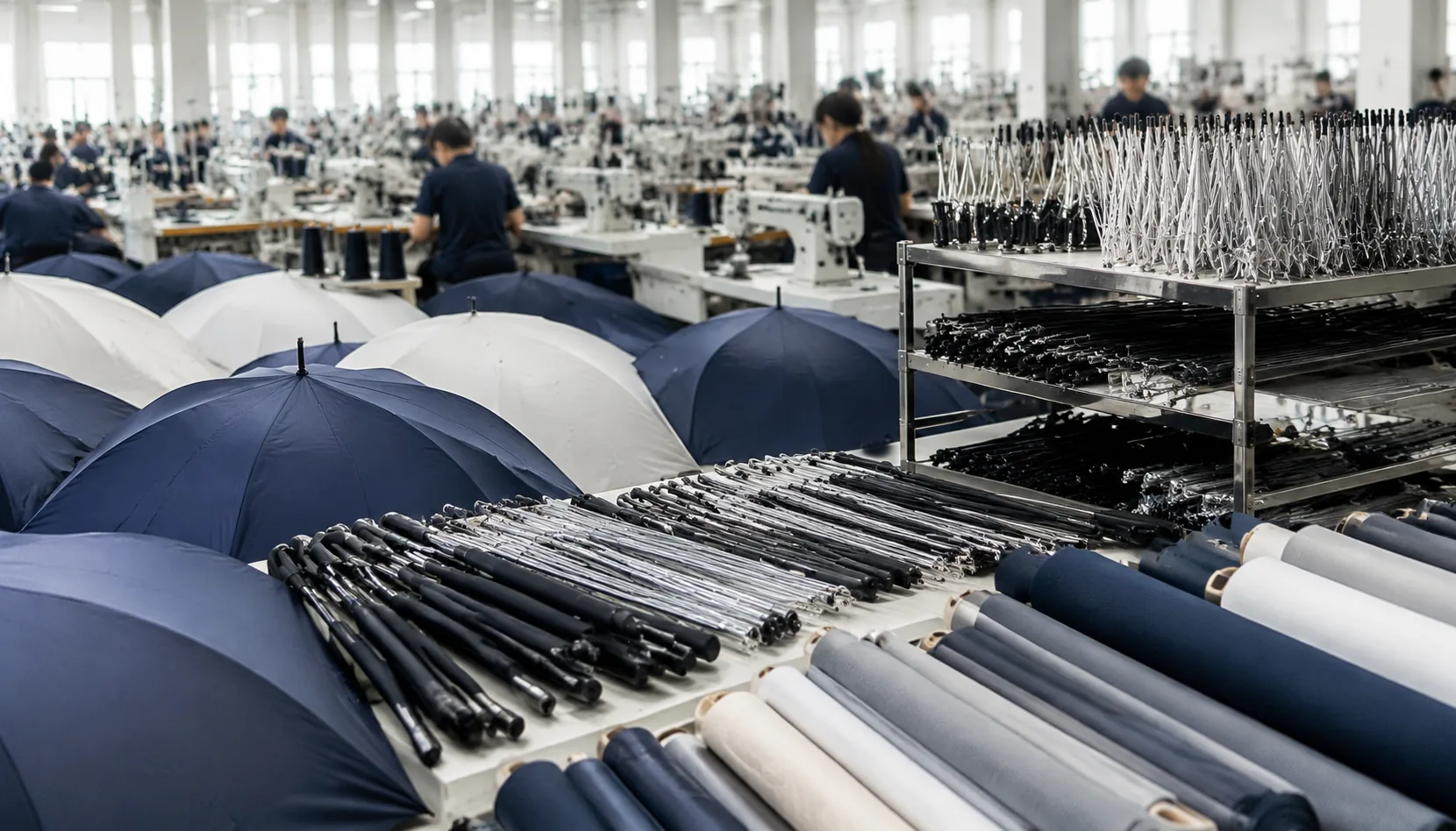
Custom Umbrellas for Cruise Lines and Ferry Operators
Source marine passenger umbrellas with windproof builds, corrosion-aware materials, and FOB/DDP planning for cruise, fer...
Read More »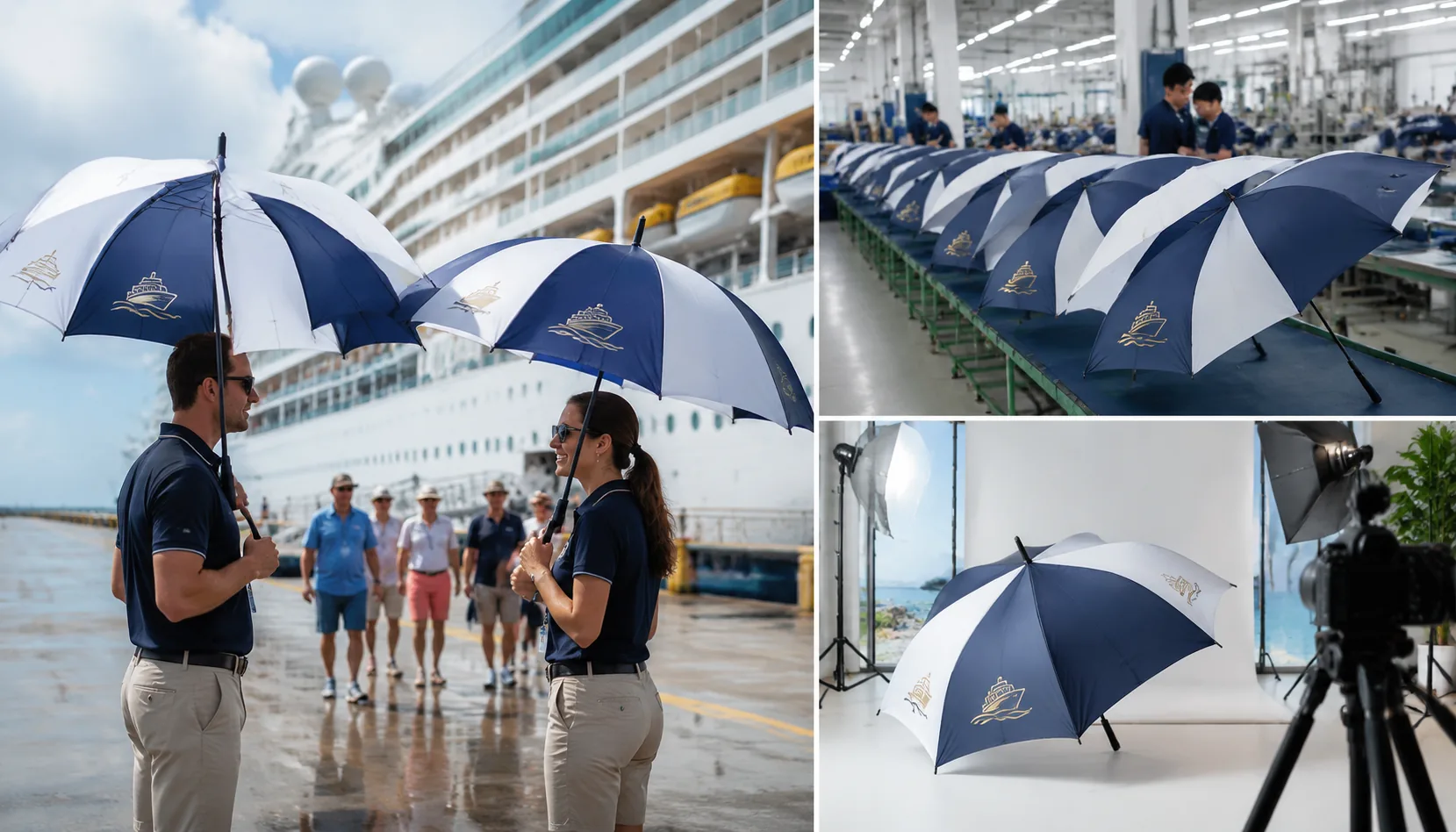
Custom Umbrellas for Cruise Lines and Shore Excursion Teams
Source cruise-ready umbrellas for shore teams, guest retail, and excursions with windproof frames, compact packing, and ...
Read More »
Branded Umbrellas for Cruise Lines and Ferry Operators
Source marine-ready umbrellas for shore excursions, terminals, and onboard retail with windproof frames, 210T pongee, AQ...
Read More »